Studio Apartment Kitchen Mistakes That Are Making Your Space Feel Smaller (And How to Fix Them)
A studio apartment kitchen is one of the hardest spaces to get right. You’ve got maybe four feet of counter space, cabinets that barely close, and the whole thing is sitting right next to your bed and couch. One wrong move and the entire place feels chaotic. Here’s the thing — most people aren’t making design mistakes in their studio kitchens. They’re making organization and layout mistakes. And those are actually easier to fix.
Whether you’re moving in or just frustrated with how your kitchen looks and feels, these are the most common studio kitchen mistakes I see — and exactly what to do instead.
Mistake #1: Covering Every Inch of Counter Space
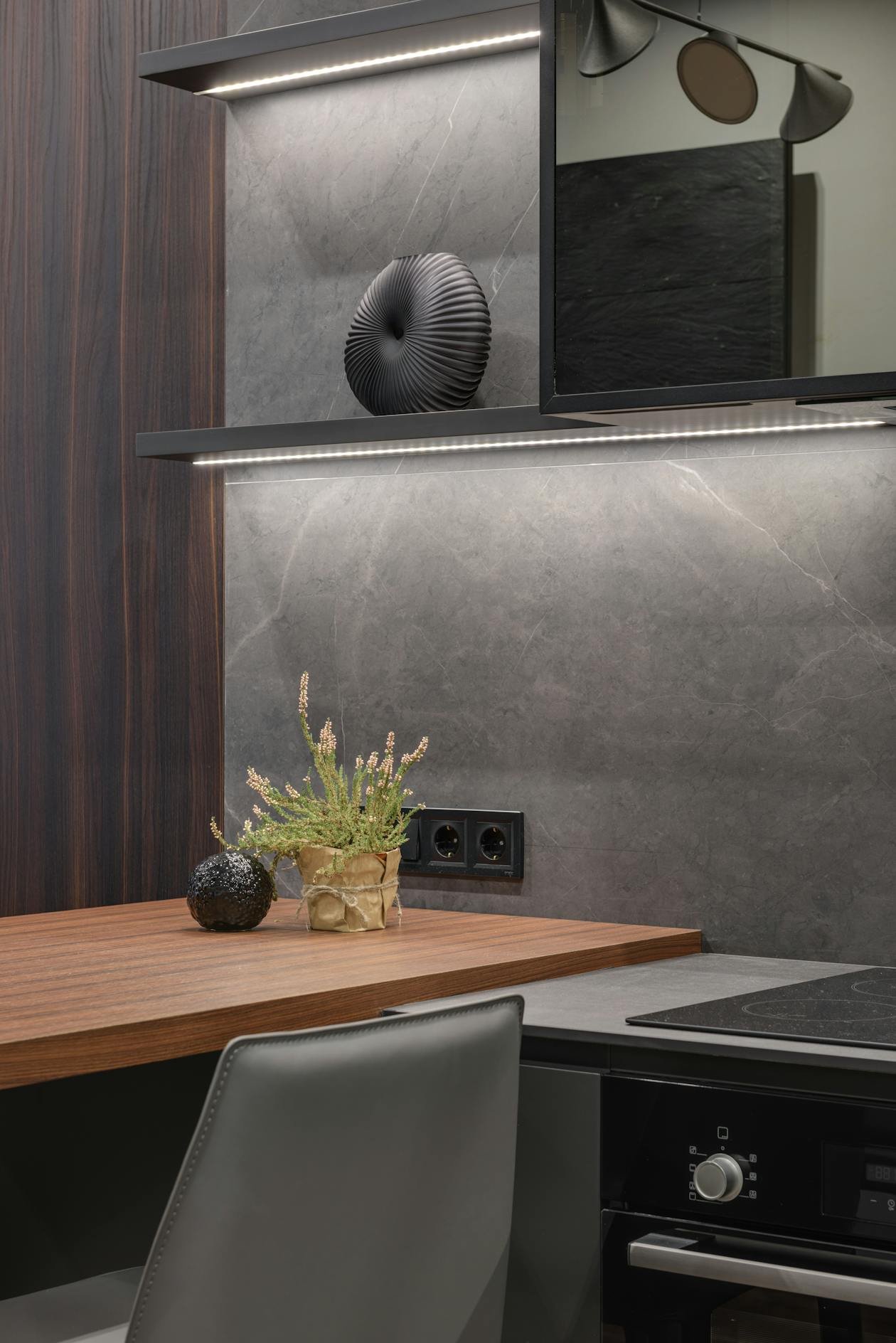
Counter space in a studio kitchen is precious. Treating it like a storage shelf is the fastest way to make the whole apartment feel cluttered and cramped. I’ve seen kitchens where the toaster, the blender, the knife block, the coffee maker, the fruit bowl, and a random collection of oils are all fighting for the same two feet of counter. It looks chaotic, it feels stressful, and it bleeds into the rest of the open space.
The fix: Keep only what you use every single day on the counter. For most people, that’s the coffee maker and maybe a dish rack. Everything else goes in a cabinet, on a shelf, or — if you rarely use it — out of the apartment entirely. A clear counter makes the whole studio breathe.
The blender that you use twice a month does not deserve prime real estate in a 400-square-foot apartment. Store it and get it out when you need it.
Mistake #2: Ignoring Vertical Space
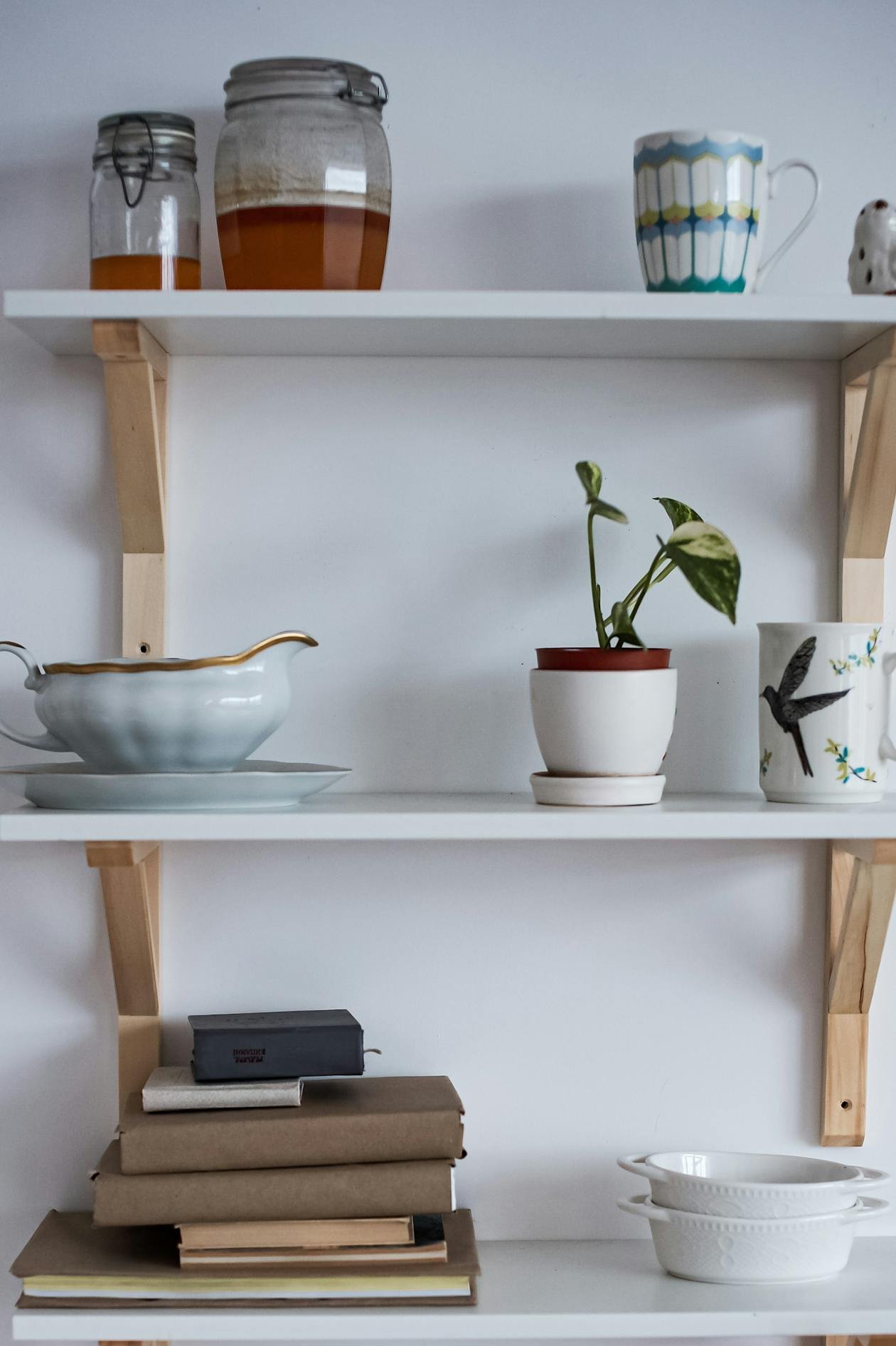
Studio kitchens are usually short on square footage but not on wall height. And yet most people stop at eye level and leave a foot or two of wall space completely unused. That’s free storage just sitting there.
Wall-mounted shelves above the counter or beside the cabinets can hold spices, small appliances, jars, or even plants. A magnetic knife strip frees up a whole drawer. A pot rack — either ceiling-mounted or wall-mounted — is genuinely one of the best things you can do in a small kitchen. It looks good and solves the “where do I put my pans” problem in one move.
Pro tip: Open shelves work best when you style them lightly. Three to five items max per shelf, with some breathing room. The moment you pile too much on, it tips from “intentional” to “storage unit.”
Renter-friendly alternative: Freestanding baker’s racks or slim utility shelves require zero drilling and give you the same vertical storage win. IKEA’s RÅSKOG cart or a narrow open shelving unit can tuck right beside the counter.
Mistake #3: Buying Appliances That Are Too Big
In a full-size kitchen, a 12-cup coffee maker, a wide toaster oven, and a big stand mixer make sense. In a studio kitchen? They eat up every flat surface and make cooking feel like an obstacle course. Scale matters.
Look for compact or “mini” versions of the appliances you actually use. A 4-cup coffee maker for a single person. A slim two-slice toaster instead of a toaster oven (unless you genuinely use it daily — then it earns its spot). A hand mixer instead of a stand mixer. Every inch you reclaim feels like a win in a small kitchen.
The same logic applies to cutting boards, colanders, and cookware. A giant stockpot you use once a year? It’s stealing cabinet space from things you reach for every week.
Mistake #4: Not Thinking About How the Kitchen Affects the Rest of the Room
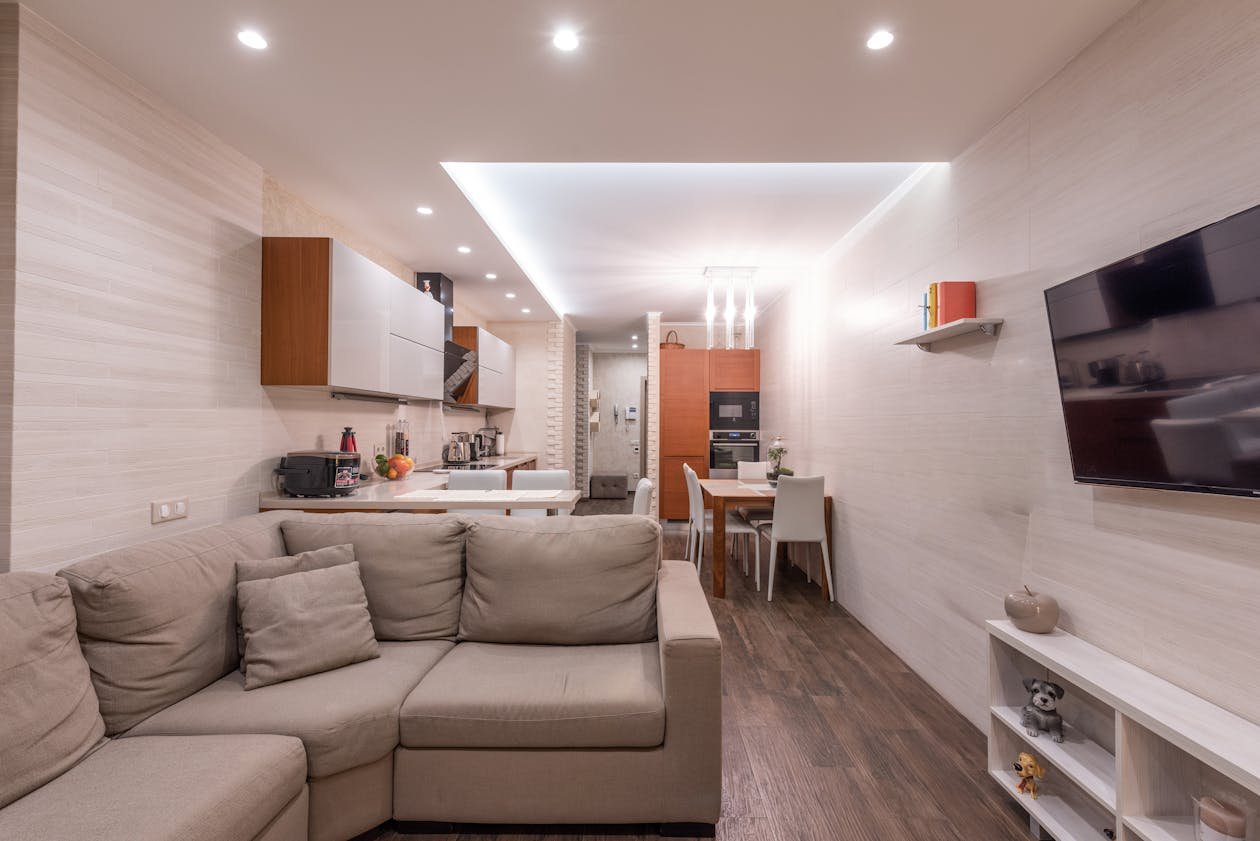
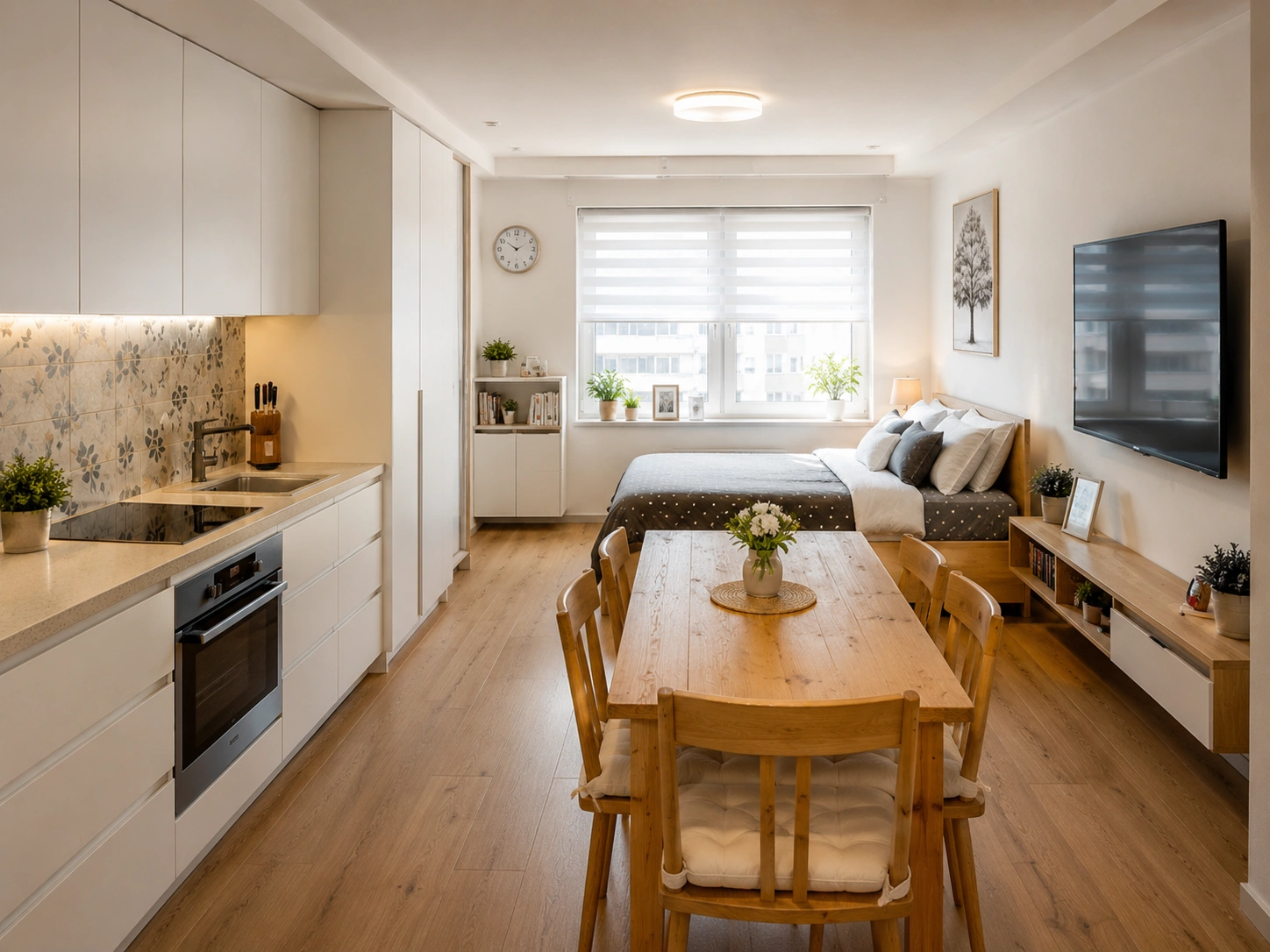
In a studio, your kitchen isn’t tucked behind a wall — it’s part of the room. That means smells, sounds, visual clutter, and even the color of your cabinets all affect how your whole apartment feels. A messy kitchen corner makes the living area feel messy too, even if the couch is perfectly styled.
Think of your kitchen as one zone in a cohesive space, not a separate room. That means:
- Keeping dish soap and sponges tucked under the sink or in a caddy, not scattered on the counter
- Using coordinated storage containers and jars rather than a mix of random plastic bags and half-open boxes
- Making sure the colors or finishes in your kitchen relate to what’s happening in the living area — a warm wood cutting board and brass fixtures feel more intentional next to a warm-toned sofa than cold chrome would
Pro tip: A small vase of fresh or dried flowers, or one potted herb on the counter, does more for your kitchen’s aesthetic than any number of trendy accessories.
Mistake #5: Skipping a Trash and Recycling Plan
This one sounds boring. It’s not. Nothing makes a studio kitchen feel grimier faster than a visible, overflowing trash can sitting in an already-tight space. And if recycling has no real home, it ends up piled on the counter or stuffed into a corner.
A slim pull-out trash bin that tucks under the sink is worth every penny. If you’re renting and can’t modify anything, look for a narrow dual-compartment bin (trash and recycling in one) that fits between the counter and the fridge. Keep a bag of grocery bags nearby for easy liner swaps.
Out of sight, out of mind — and out of the visual field of your open-plan living space.
Mistake #6: Buying Matching Everything Without Thinking About Scale
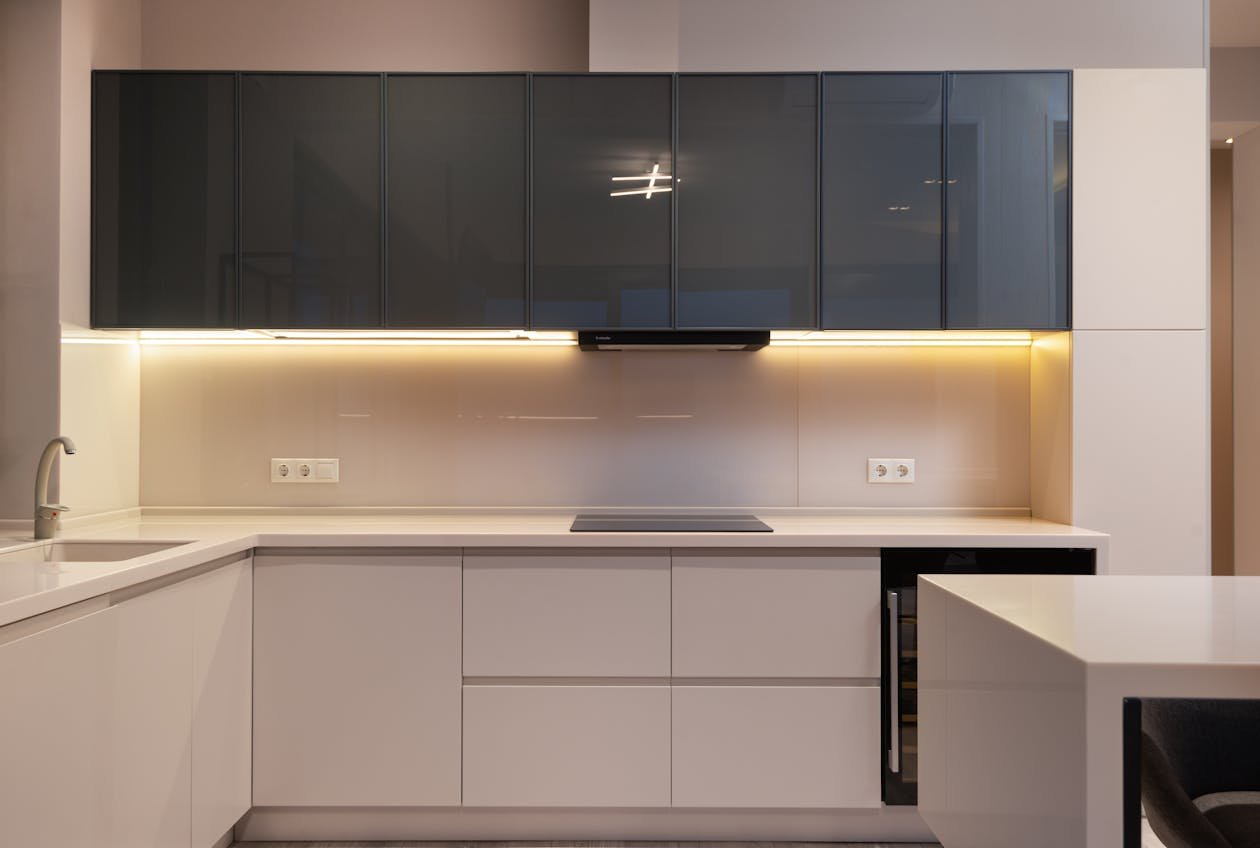
Matching dish sets, matching storage containers, matching everything — it sounds like a good idea and it does photograph well. But in a small kitchen, too much visual sameness can actually feel flat and impersonal. And a giant set of 12 matching mugs is just 10 mugs you don’t have room for.
Instead, aim for coherent, not matching. Choose a color palette — say, white, warm wood, and a single accent color like sage green or terracotta — and let different pieces share that palette. Mix textures. A ceramic mug next to a wooden utensil holder and a linen dish towel looks genuinely nice and isn’t trying too hard.
Budget vs. splurge: Save on storage containers (IKEA’s glass jars are perfectly fine). Splurge on two or three mugs you actually love instead of a set of twelve.
Mistake #7: Forgetting That Lighting Changes Everything
Most studio apartment kitchens have exactly one ceiling light, usually positioned in a way that puts half the counter in shadow. Trying to chop vegetables while squinting under bad lighting is miserable. And harsh overhead lighting makes the kitchen — and therefore the whole room — feel institutional.
If you can’t install under-cabinet lights (renters, I hear you), try battery-powered LED puck lights stuck under the cabinet edge. They’re not glamorous up close, but they make an enormous difference in usability. A small plug-in pendant or a clip lamp near the prep area can also work well.
Warm-toned bulbs (look for 2700K–3000K on the box) will make your kitchen feel warmer and more inviting, which matters in a studio where the kitchen is always visible.
Mistake #8: Ignoring the Space on Top of the Fridge and Cabinets
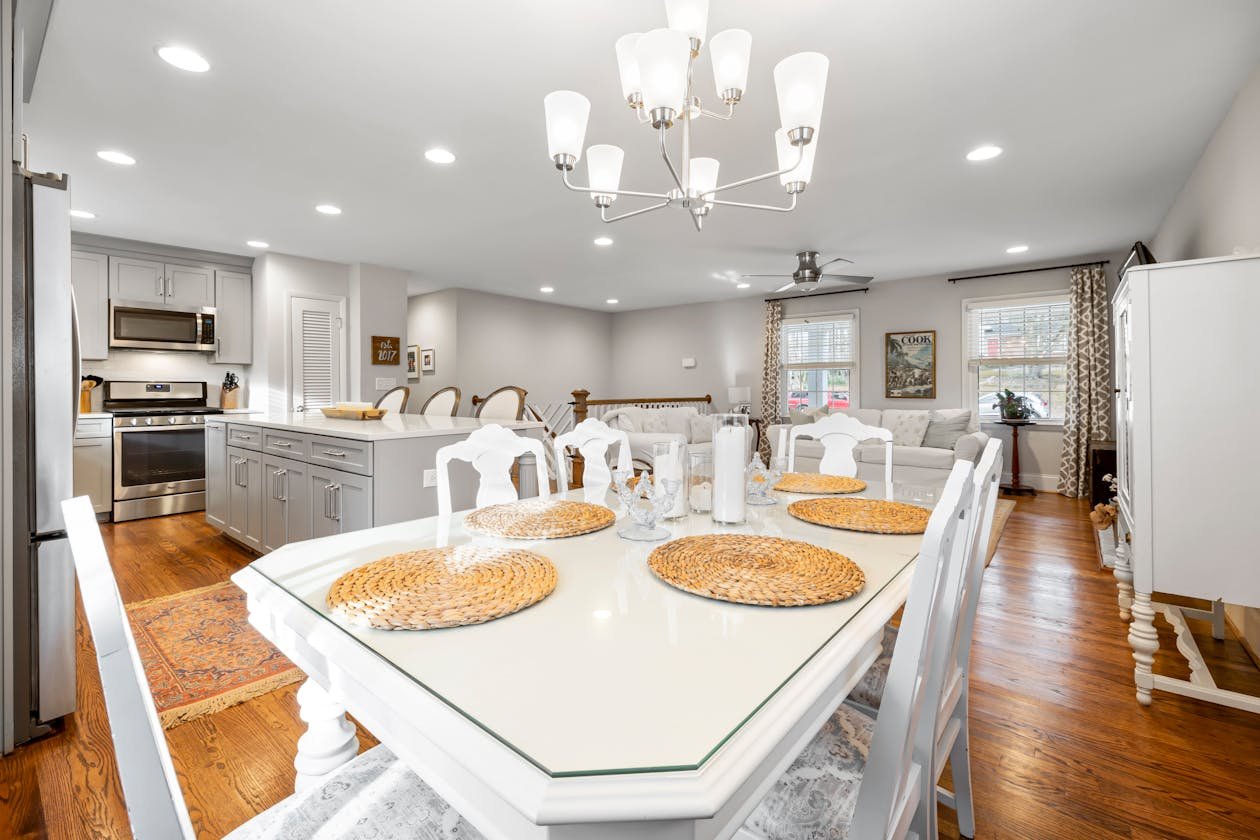
The top of the fridge and the gap between the upper cabinets and the ceiling are two zones people consistently waste. They collect dust, random cardboard boxes, or nothing at all. But with a little thought, they can work.
On top of the fridge: a flat, shallow bin or basket can hold items you use occasionally but don’t need within reach — extra paper towels, a spare dish rack, specialty appliances. Keep it neat and contained so it reads as intentional storage, not overflow.
Above the cabinets: this is trickier because it’s more visible. Use it for items that look good — a row of cookbooks, a few plants, a decorative bowl. Or use matching baskets to hide things that don’t look good but need a home. Either way, treat it as a styled shelf, not a dumping ground.
Mistake #9: Never Editing What You Own
The deepest studio kitchen mistake isn’t about layout or lighting — it’s about holding on to too much. We fill kitchens with gadgets we bought with good intentions, serving dishes for parties we haven’t hosted, and three versions of the same spatula. A small kitchen will always feel overwhelming when it contains things a much larger kitchen couldn’t justify.
Once a season, pull everything out of one cabinet and ask: do I actually use this? Have I used it in the past three months? If not, donate it, pass it on, or store it elsewhere. A small kitchen with only what you actually use is infinitely more functional and more peaceful than a large kitchen stuffed with things you might need someday.
This is the part most people skip — and that’s exactly why their kitchen feels off.
Final Thoughts
A studio apartment kitchen doesn’t need to be a source of stress. It needs to be smart, edited, and treated like part of the whole room — because it is. Small changes stack up fast: clear a counter, mount one shelf, switch to a compact trash bin. Each one makes the space feel more like a kitchen you’d actually want to cook in.
You don’t need more square footage. You need fewer things and better use of the space you have.
A small kitchen that’s calm, functional, and yours will always feel bigger than a cluttered one — no matter the square footage.
Happy decorating, Sofia
Image credits: All photos via Pexels.com 📷