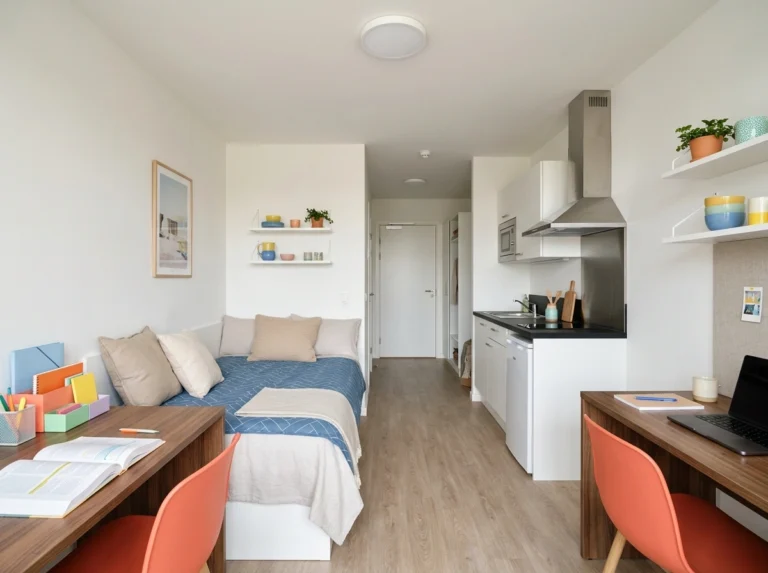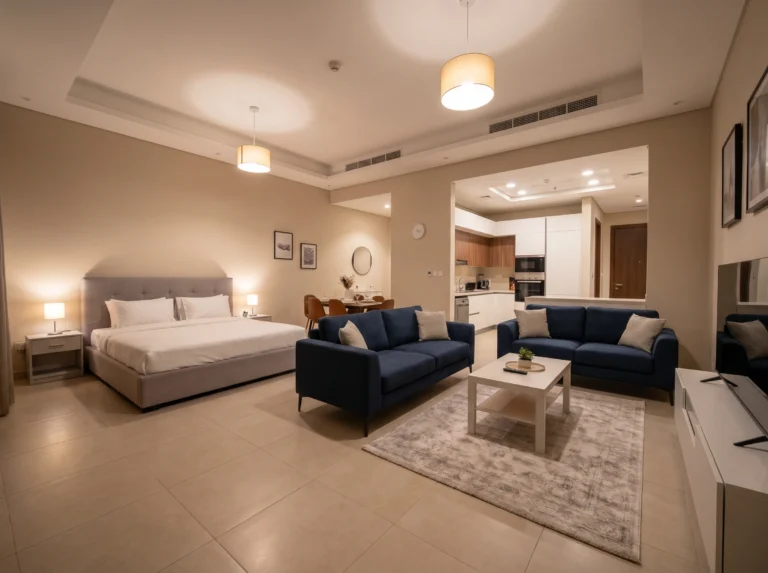
Studio Apartment Organization Mistakes to Avoid
You moved into a studio and it felt manageable at first — until suddenly it didn’t. The clutter crept in, the zones blurred, and the whole place started feeling more like a storage unit you sleep in than a home. Here’s the thing: most studio problems aren’t a space problem. They’re an organization problem. And almost all of them are fixable. Let’s go through the mistakes I see most often — and exactly what to do instead.
Mistake #1: Pushing Your Sofa Right Up Against the Bed
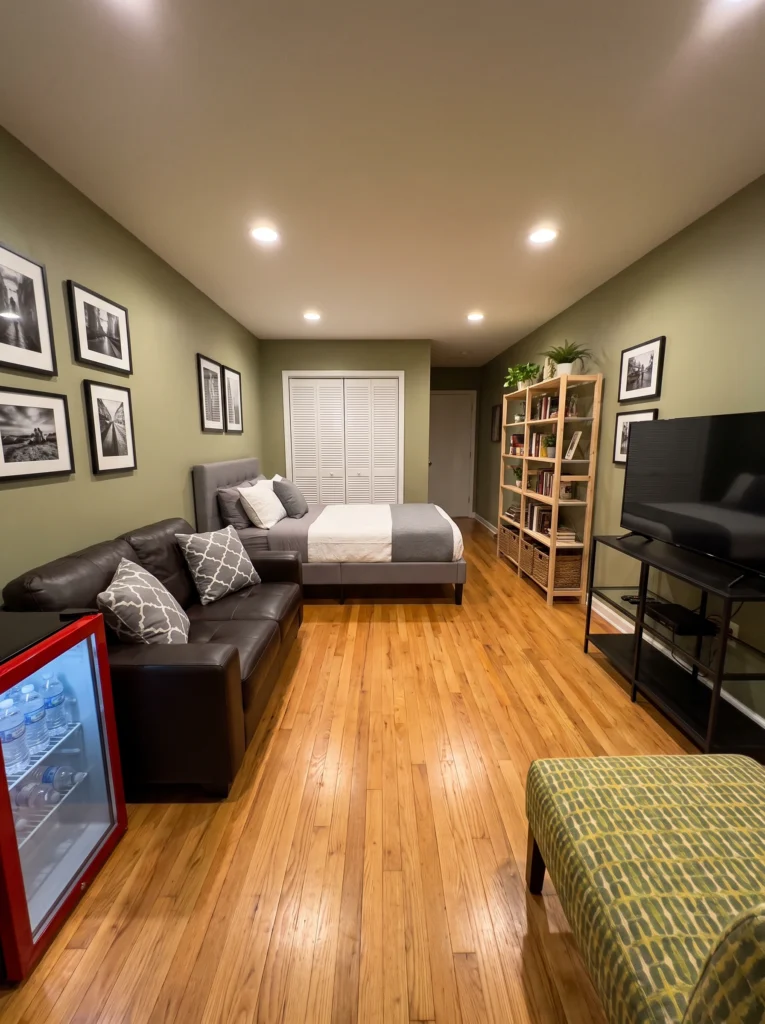
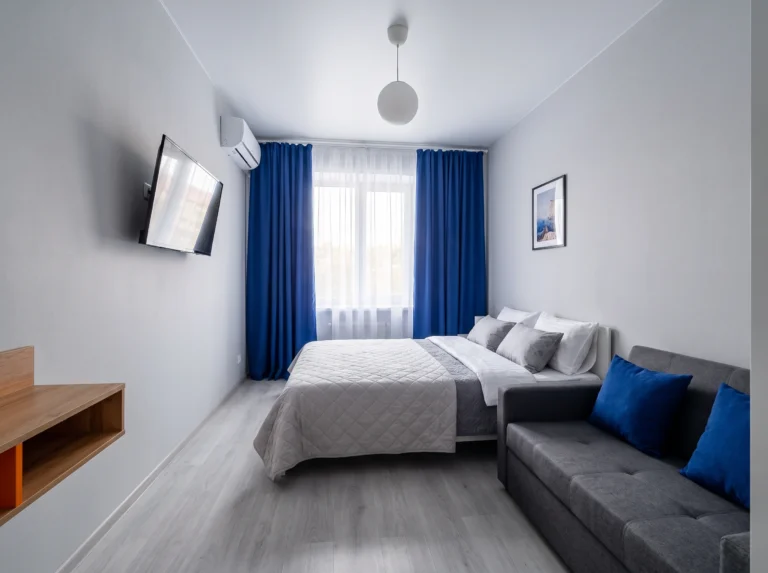
Pushing your sofa flush against the bed is one of the most common layout mistakes in a studio — and it quietly makes the whole space feel cramped and confusing. Without any visual breathing room between your sleeping and living zones, the eye reads everything as one messy pile. Pull furniture a few inches apart, angle pieces slightly, and let each zone breathe. That gap alone changes how spacious the room feels.
Pro tip: Even 12–18 inches of clearance between your sofa and bed makes a noticeable difference. You don’t need more space — you need better spacing.
Mistake #2: Choosing a Rug That’s Too Small
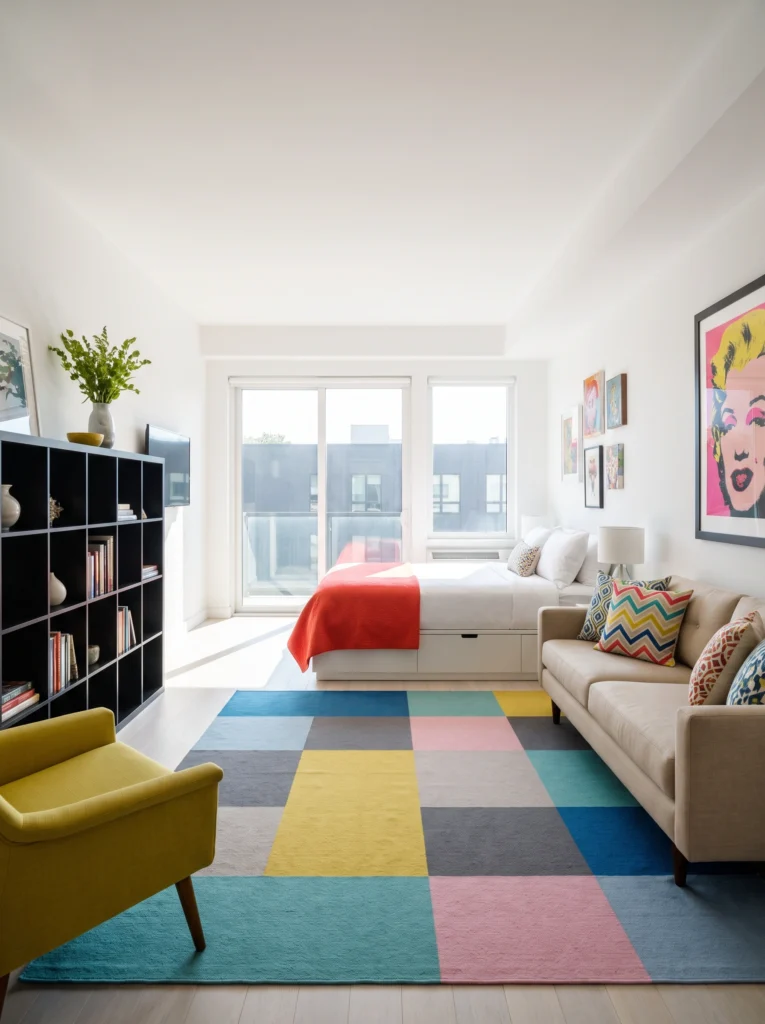
Here’s a mistake people don’t see coming: choosing a rug that’s too small. A tiny rug floating under just the coffee table fragments the room into awkward patches. A large, bold area rug — like the colorful checker pattern here — does the opposite. It anchors the entire living zone, gives the room a strong visual center, and actually makes the space feel bigger by defining where one area ends and another begins.
Sofia’s honest take: Go one size larger than you think you need. You can always layer a smaller rug on top later — but a rug that’s too small is just a sad little island in the middle of your floor.
Mistake #3: Ignoring Your Vertical Space
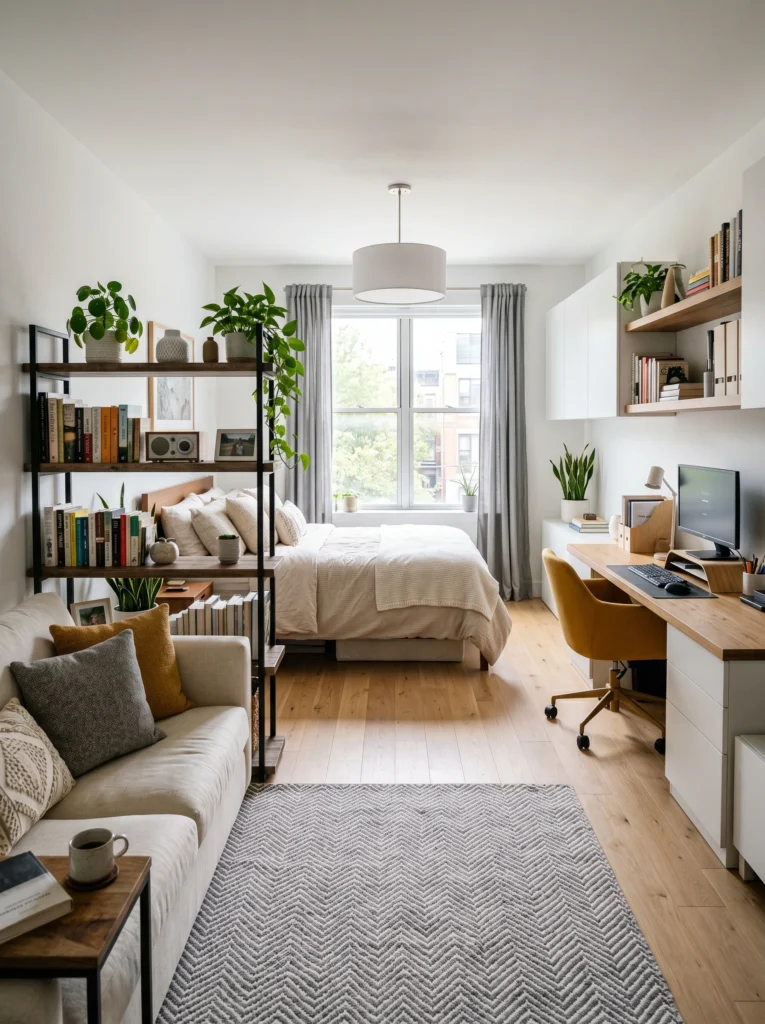
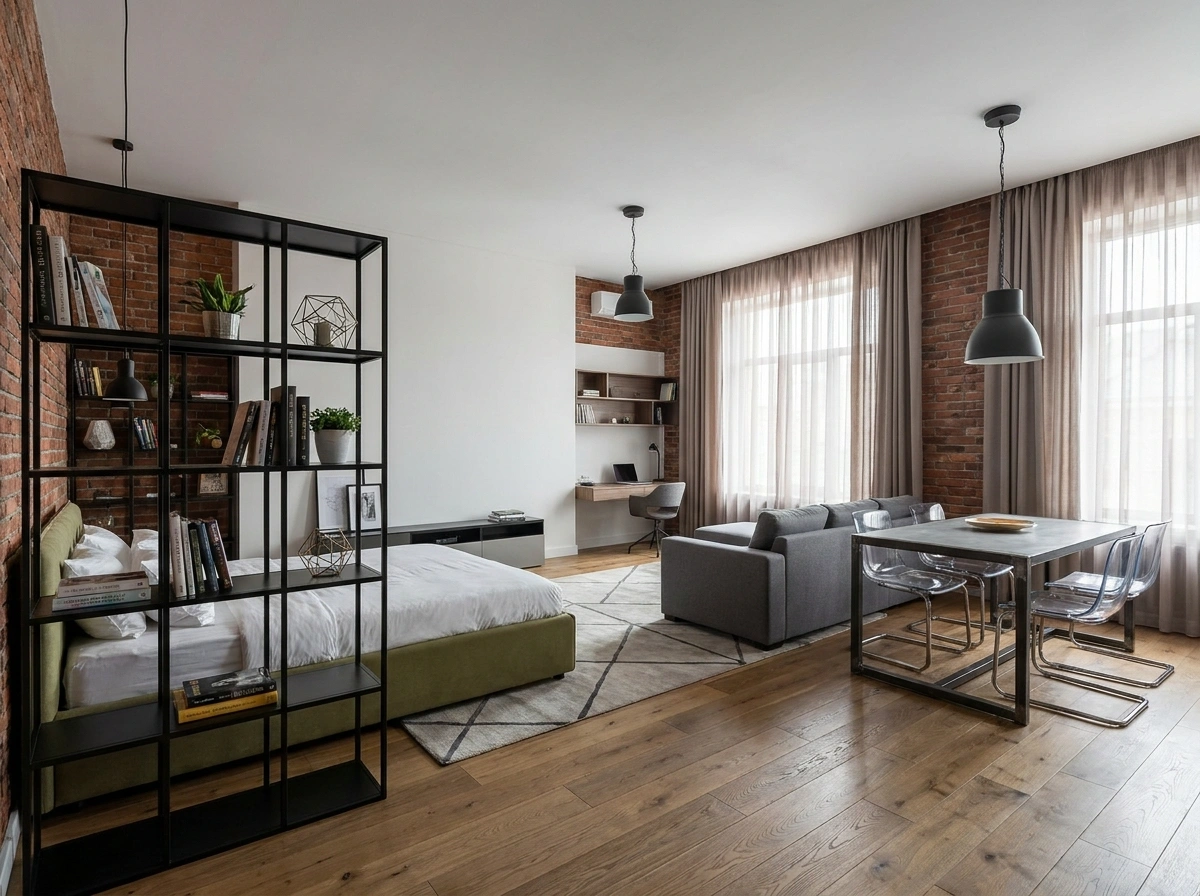
Ignoring vertical space is one of the biggest missed opportunities in a studio. Most people stop decorating at eye level and leave the upper half of their walls completely bare. Open shelving that runs tall — like the floor-to-ceiling bookshelf here used as a room divider — pulls the eye upward, creates useful storage, and carves out distinct zones without a single wall being built. Go up, not out.
My tip: Style the top shelves with plants and decorative objects, then work downward to books and everyday items. It looks intentional, not cluttered.
Mistake #4: Skipping Zone Definition Altogether
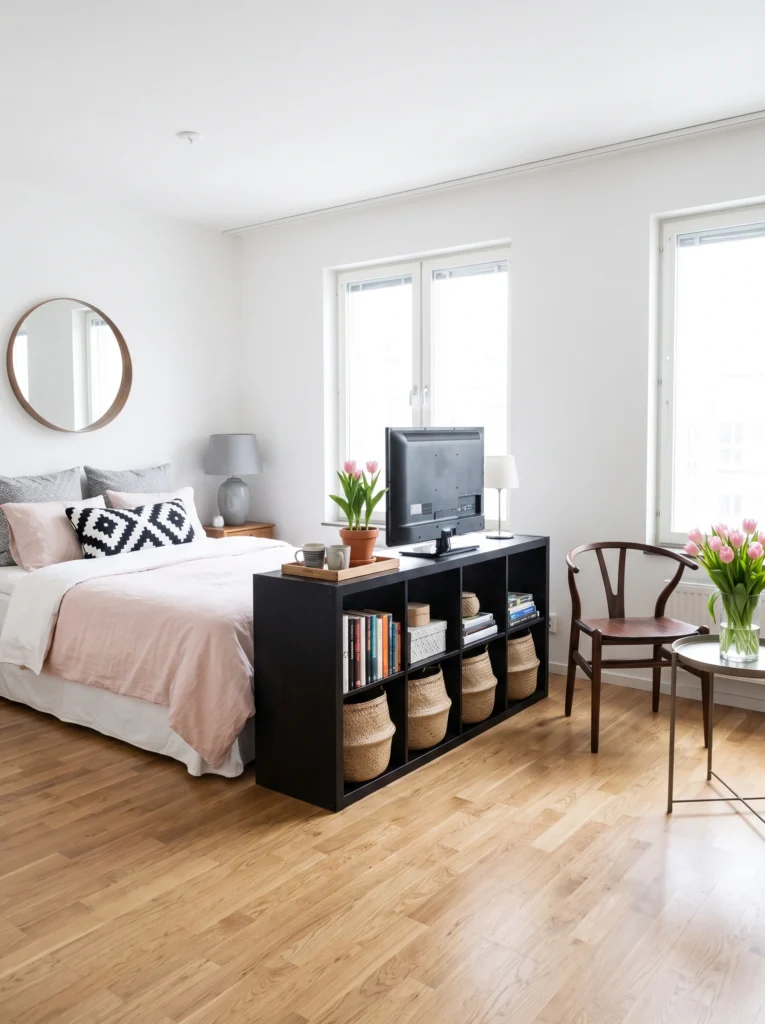
Skipping zone definition is what makes a studio feel like a storage unit instead of a home. The fix doesn’t have to be expensive or permanent. A low cube shelf placed at the foot of the bed — like the IKEA Kallax here — creates an instant visual boundary between sleeping and living areas. Fill the cubbies with wicker baskets for bonus storage. One piece of furniture, two problems solved.
Renter-friendly alternative: No tools, no damage. A Kallax (4×2 configuration) sits freestanding and moves out with you on lease day.
Mistake #5: Leaving the Bedroom and Living Areas Undefined
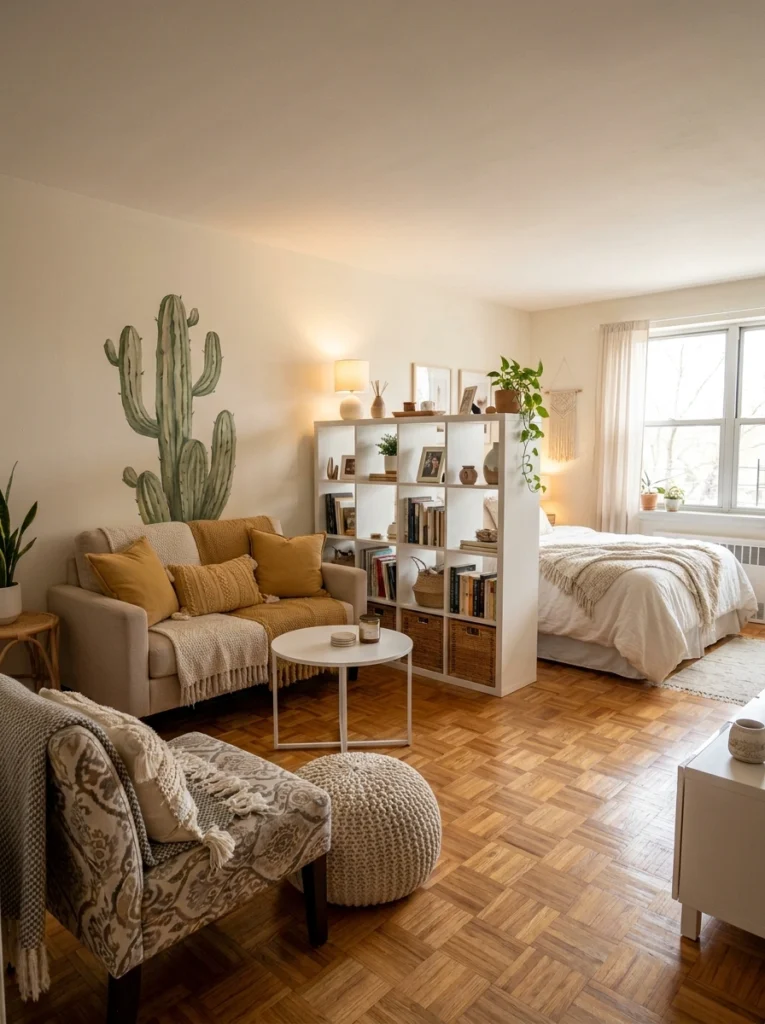
This is the big one. When your bed is three feet from your couch with nothing in between, your brain never fully switches off — you’re always half in “sleep mode,” half in “living mode.” The fix isn’t a wall. A bookshelf divider, like the one here, does the job beautifully: it creates visual separation, adds storage, and keeps the space feeling open. Even a large plant or a change in rug can signal where one zone ends and another begins.
Pro tip: Face the back of your shelf toward the bed zone and style the open side toward the living area. Double the function, none of the bulk.
Mistake #6: Underestimating What an Industrial Loft Can (and Can’t) Hide
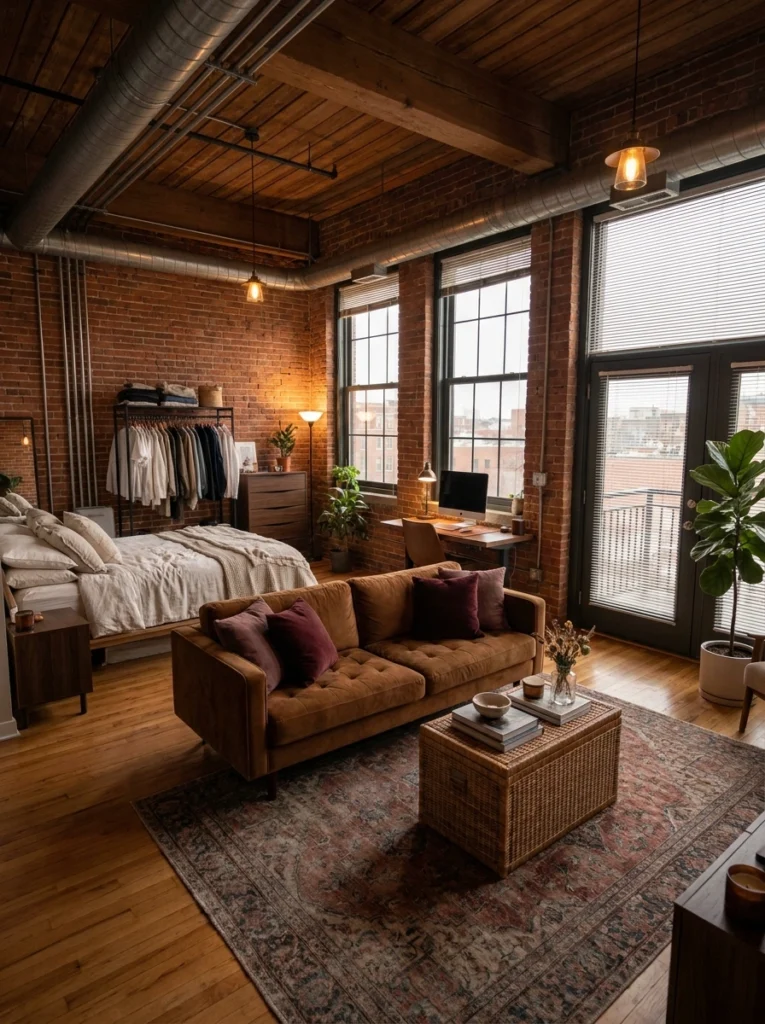
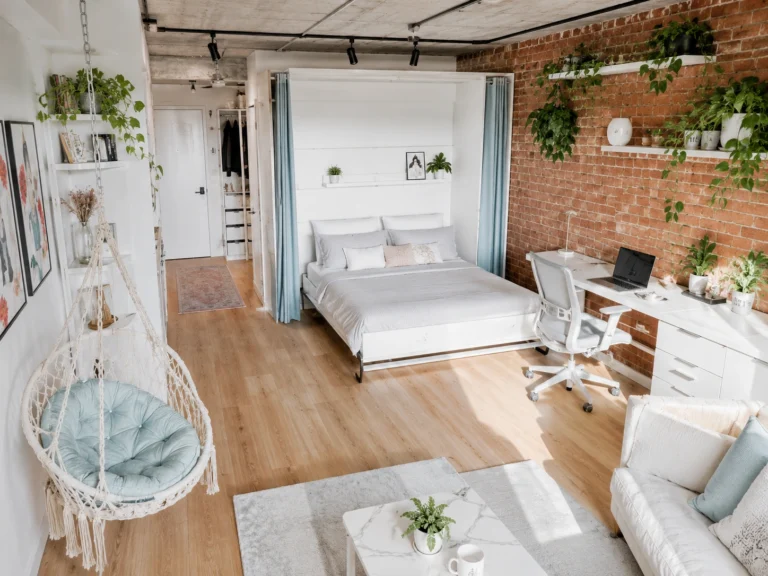
Open-concept loft studios are gorgeous — and unforgiving. Every surface is visible. That clothing rack is either a vibe or a mess, and the line between the two is thinner than you think. The key is treating everything on display as decor: matching hangers, a color-edited wardrobe, folded textiles in a consistent palette. The warm velvet sofa and layered vintage rug in this space do the heavy lifting aesthetically, which means the functional elements (the rack, the desk) get to blend in rather than scream.
If your open rack looks chaotic, it’s not an organization problem — it’s a too much stuff problem. Edit first, organize second.
Mistake #7: Playing It Too Safe with Color
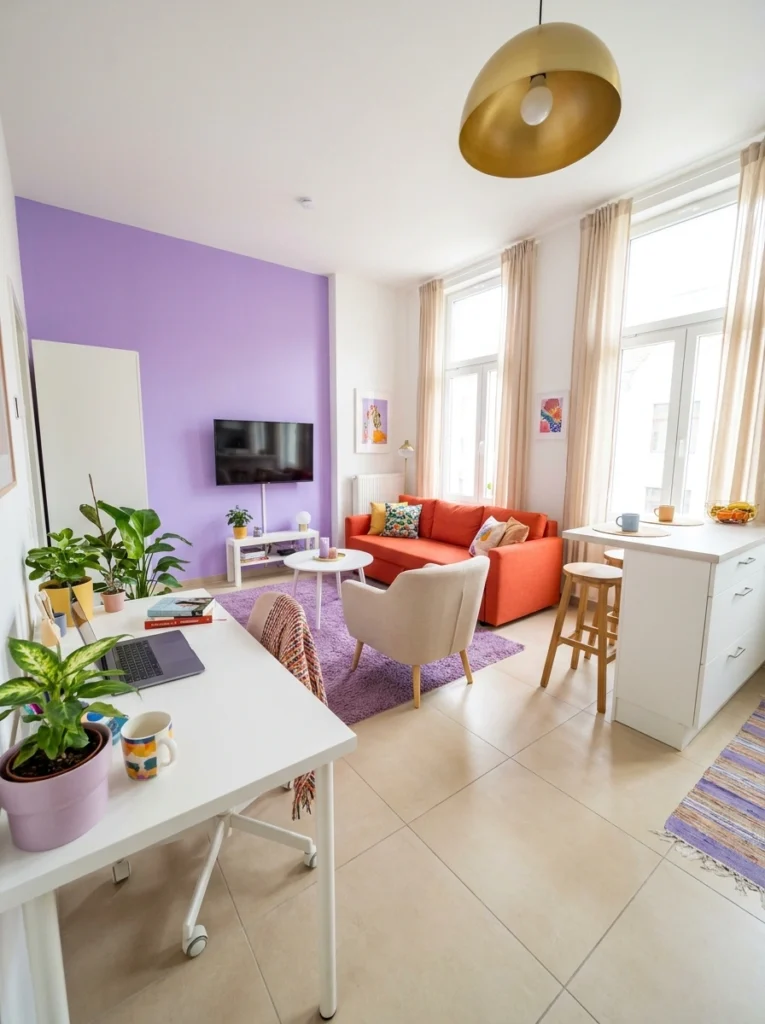
There’s a version of “keeping it neutral” that’s actually just fear. And in a studio, that fear leads to beige everything — which feels neither calm nor cohesive, just… blank. Color is one of the cheapest tools you have. A single lavender accent wall, an orange sofa, a gold pendant — this space is small and it’s alive. Color creates zones without physical dividers. It gives a room personality without a single piece of furniture. If you’re renting and can’t paint, a large colorful rug or a bold sofa does the same job.
Mistake #8: Cramming Too Much Furniture Into “Zones” That Don’t Breathe
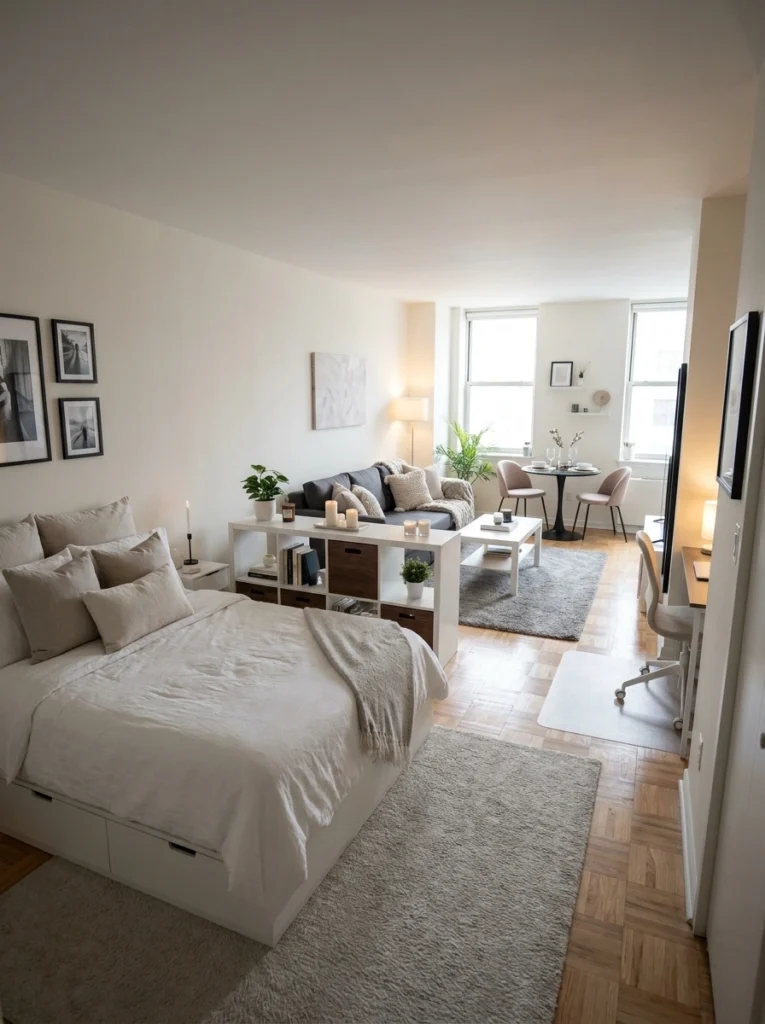
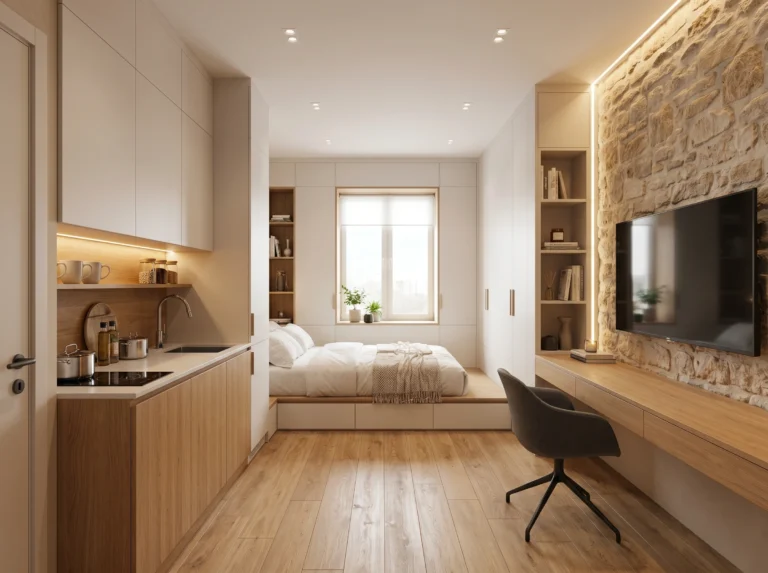
The instinct to fill every zone with the “right” furniture — a full-size bed and a sofa and a dining table and a desk — is exactly what turns a studio into an obstacle course. What actually works: scaled-down pieces, low-profile furniture, and negative space (empty floor you deliberately leave alone).
The low shelf divider here is doing triple duty: it separates the sleeping area, holds storage, and keeps sightlines open so the room feels twice its size. Less furniture, more intentionality.
Mistake #9: Ignoring the Kitchen-to-Living Flow
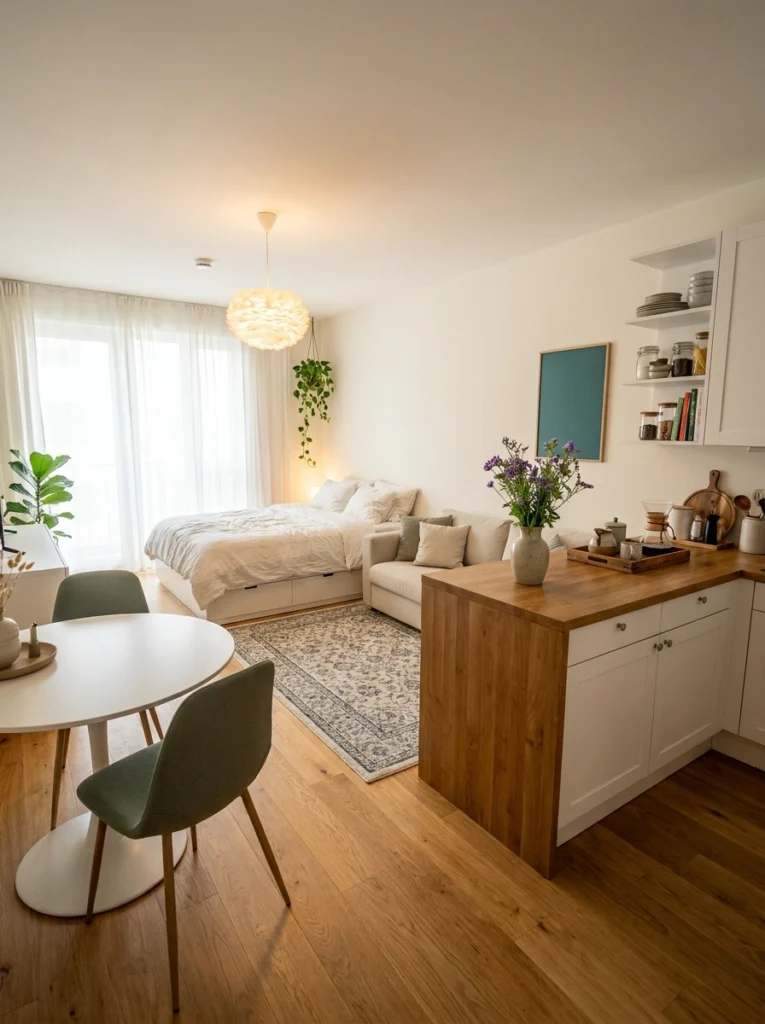
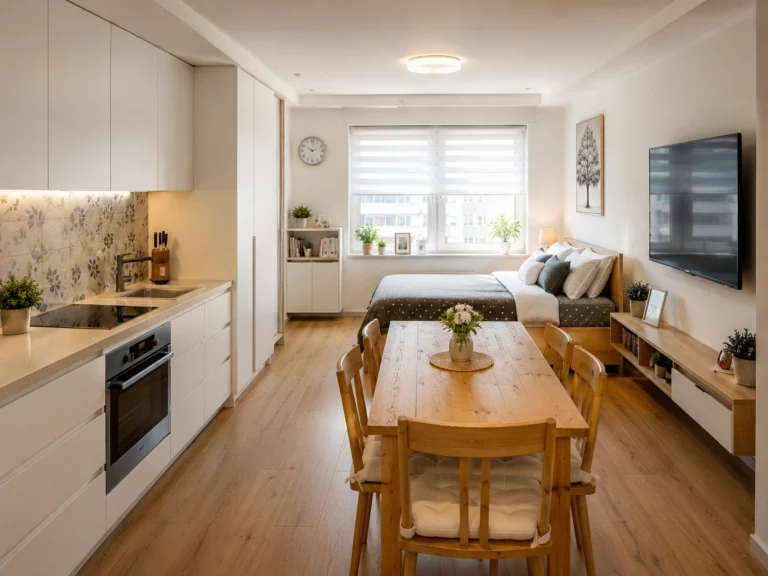
In a studio, your kitchen isn’t tucked away — it’s part of the living room. Which means if the kitchen feels chaotic, the whole apartment feels chaotic. The smartest move here: treat your kitchen surfaces like you’d treat a coffee table. Style them. A wooden island with a vase of flowers and a tray of coffee things isn’t just functional — it’s decor. Open shelving with jars and stacked ceramics looks intentional. The rule is simple: if it’s visible, it needs to earn its place.
Final Thoughts
A studio apartment doesn’t have to feel like a compromise. The spaces that work — the ones that feel cozy and considered and actually liveable — got there through small, deliberate decisions. Not expensive renovations. Not a bigger budget. Just better choices about what stays, what goes, and what zone belongs where.
Pick one mistake from this list that feels familiar. Fix that one thing this weekend. You’ll be surprised how much one shift can change the way a room — and a whole day — feels.
A beautiful studio isn’t about having more space. It’s about making peace with the space you have — and then making it yours.
— Sofia