15 Visual Tricks Interior Designers Use to Make Small Studios Look Bigger
Small studios get a bad reputation. People assume they’re cramped, dim, and impossible to make beautiful — but the truth is, the best interior designers in the world have been making tiny spaces feel huge for decades. They just don’t tell you the tricks. Here’s the thing: most of these moves cost almost nothing, and a few of them you can pull off this weekend. Below are 15 of my favorites, pulled from real studios that actually live well.
1. Use Bold Color in Tall Vertical Stripes
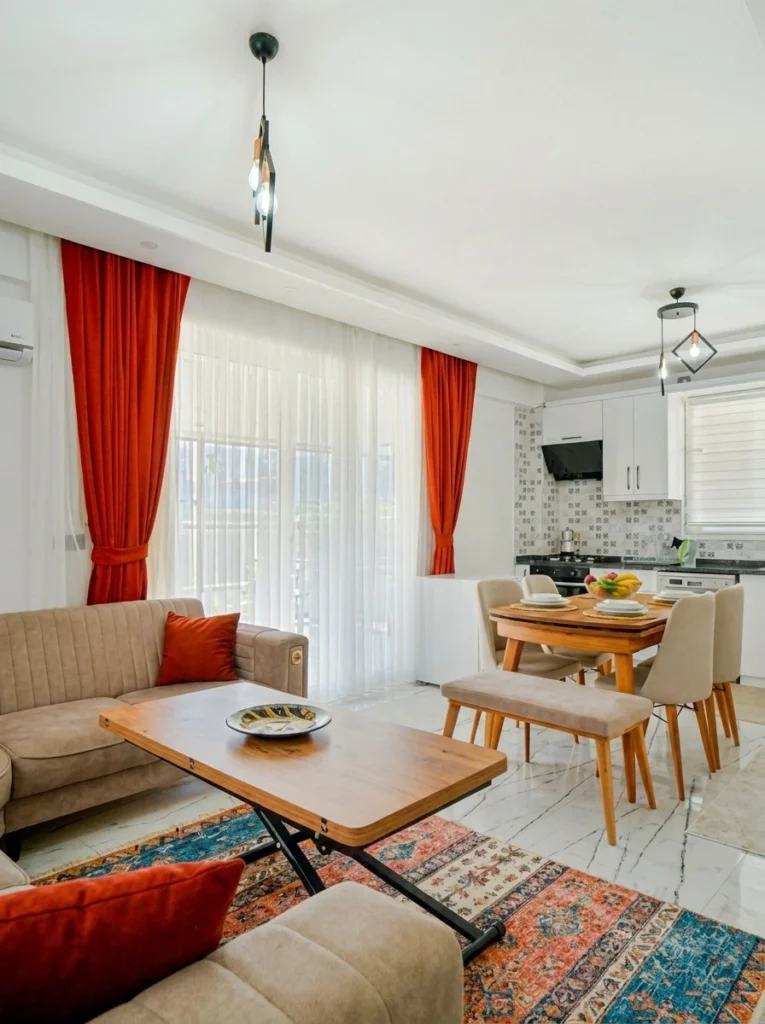
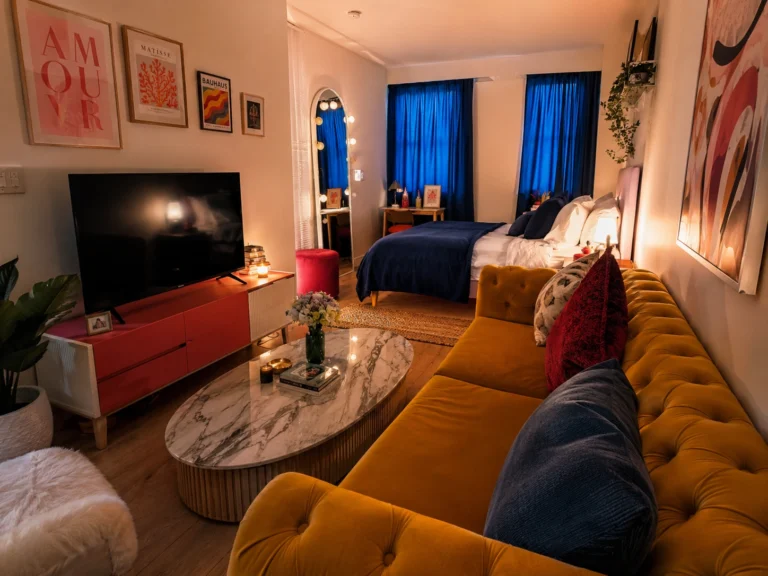
I know — bold color feels counterintuitive in a small space. But look at those tall red curtains. They aren’t shrinking the room; they’re stretching it upward. The secret is verticality. Hanging long curtains high (well above the actual window frame) and letting them puddle slightly at the floor tricks your eye into reading the wall as taller than it is. The room instantly feels grander.
Pair the boldness with crisp whites and one colorful rug for grounding, and suddenly your studio reads as designed — not just decorated.
2. Lean Into Floor-to-Ceiling Sheer Curtains
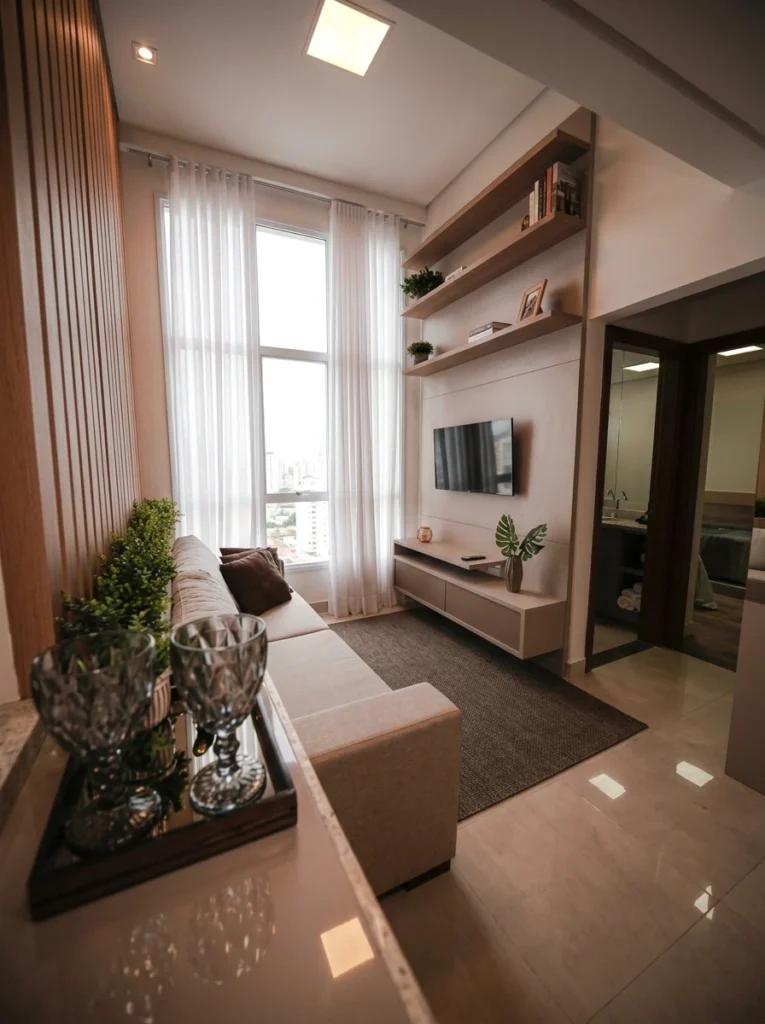
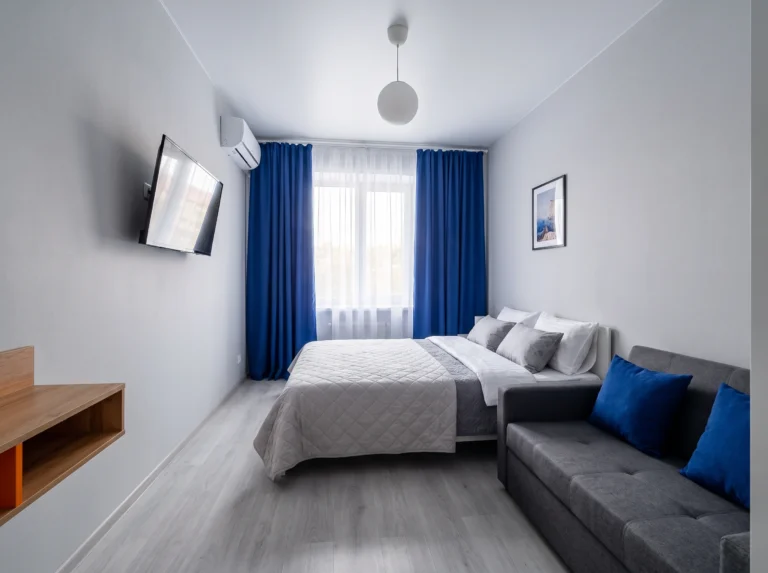
If your studio is on the narrow side, sheer curtains running floor-to-ceiling are your best friend. They filter light beautifully, soften the architecture, and — most importantly — pull your eye upward. Pair them with vertical wood slats like you see here, and the entire room reads as twice as tall as it really is.
Pro tip: Skip blackout panels in tight spaces. They feel heavy and absorb light. A layered combo of sheer plus a thin linen panel gives privacy without weight, and the room never feels closed in.
3. Hang a Cluster of Exposed Bulbs at Different Heights
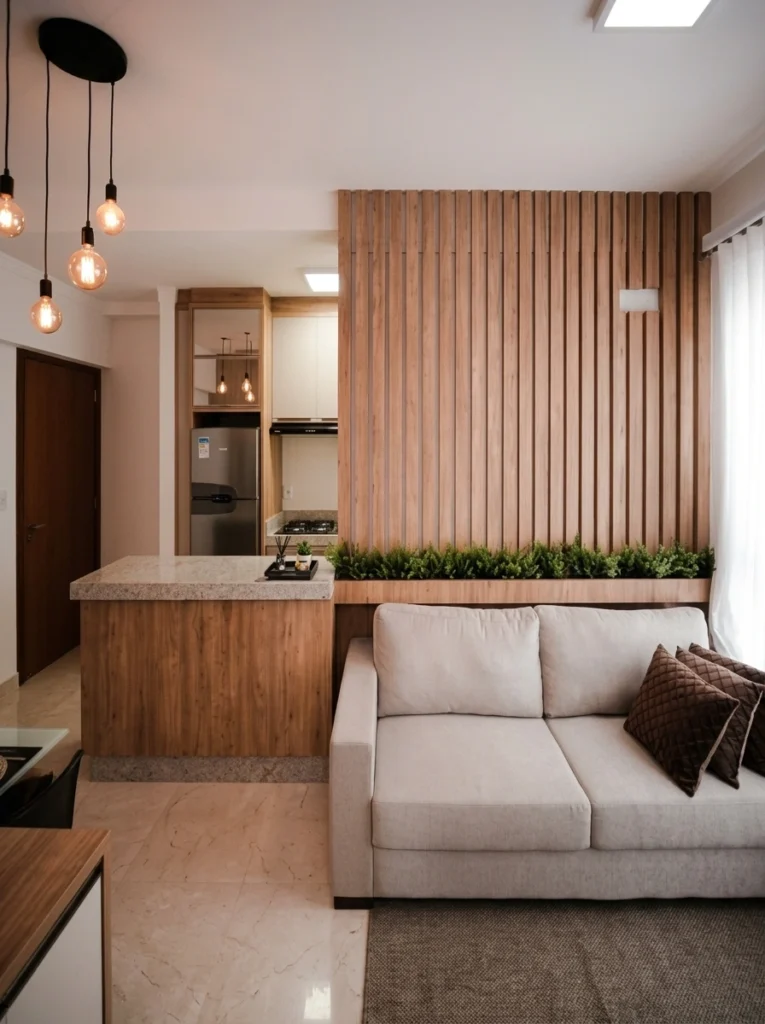
A single ceiling fixture is the most common lighting mistake in a small studio — it flattens the whole room into one even, boring layer of light. A cluster of bulbs at staggered heights, on the other hand, does something magical: it creates depth your eye reads as space. Warm Edison bulbs give that golden, restaurant-at-night glow without costing much.
My tip: Aim for three to five bulbs, hung at different drops. The varied heights are what makes it work. One bulb hung alone always looks like an afterthought; a cluster looks intentional.
4. Combine an Accent Wall With Statement Pendants
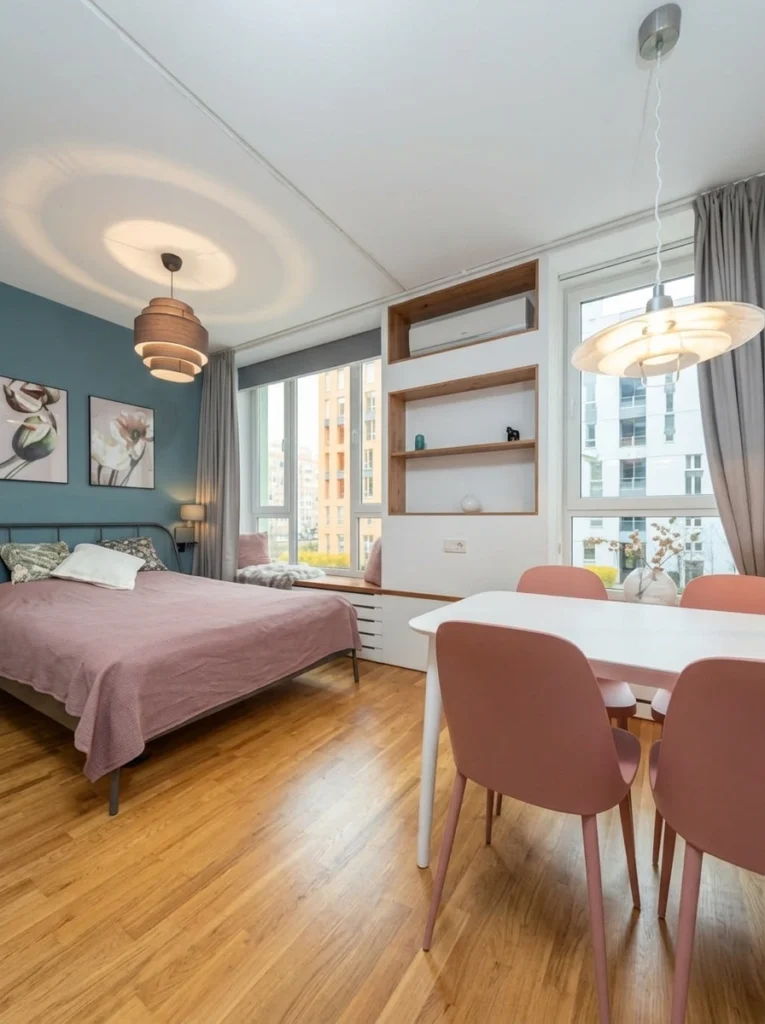
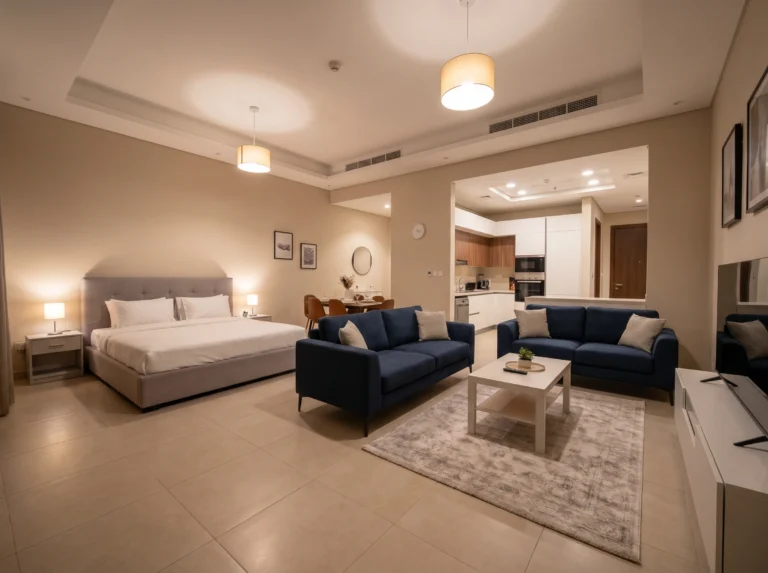
One painted wall — just one — is one of the cheapest tricks in the book. It anchors the sleeping zone without needing a divider, and it gives a small studio actual character instead of beige sameness. Add two statement pendants (one over the bed area, one over the dining spot) and suddenly your studio has two clear rooms even though it’s still technically one.
Pick deep, saturated colors over pastels for accent walls in small spaces. Pastels can feel washed out; rich tones add depth.
5. Layer Recessed and Cove Lighting
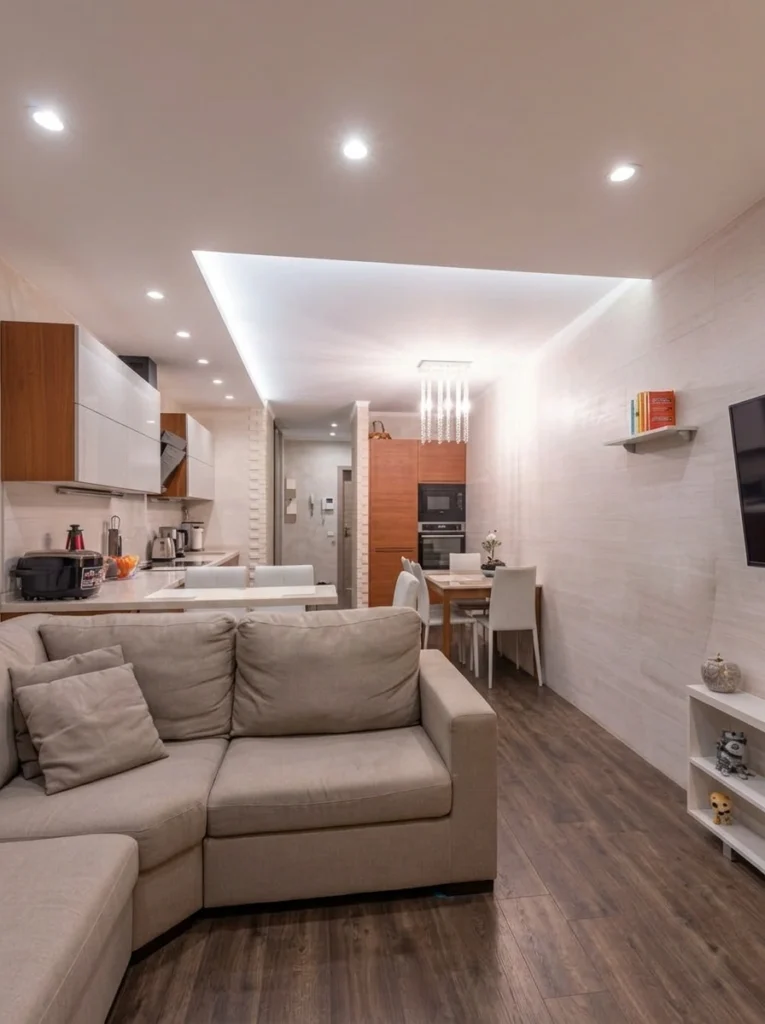
This is the move most people skip — and it’s exactly why their studio feels flat. Recessed lights alone give you that office-building vibe nobody wants. But add a strip of cove lighting (those LED strips tucked into a ceiling tray) and the whole room softens. The indirect glow bounces off the ceiling and makes it feel taller.
Renter-friendly alternative: You don’t need to rebuild your ceiling. Stick-on LED strips tucked behind a curtain rod or above a tall shelf give a similar effect for under $30. Trust me on this one.
6. Use Two Symmetrical Lamps Instead of One Big Light
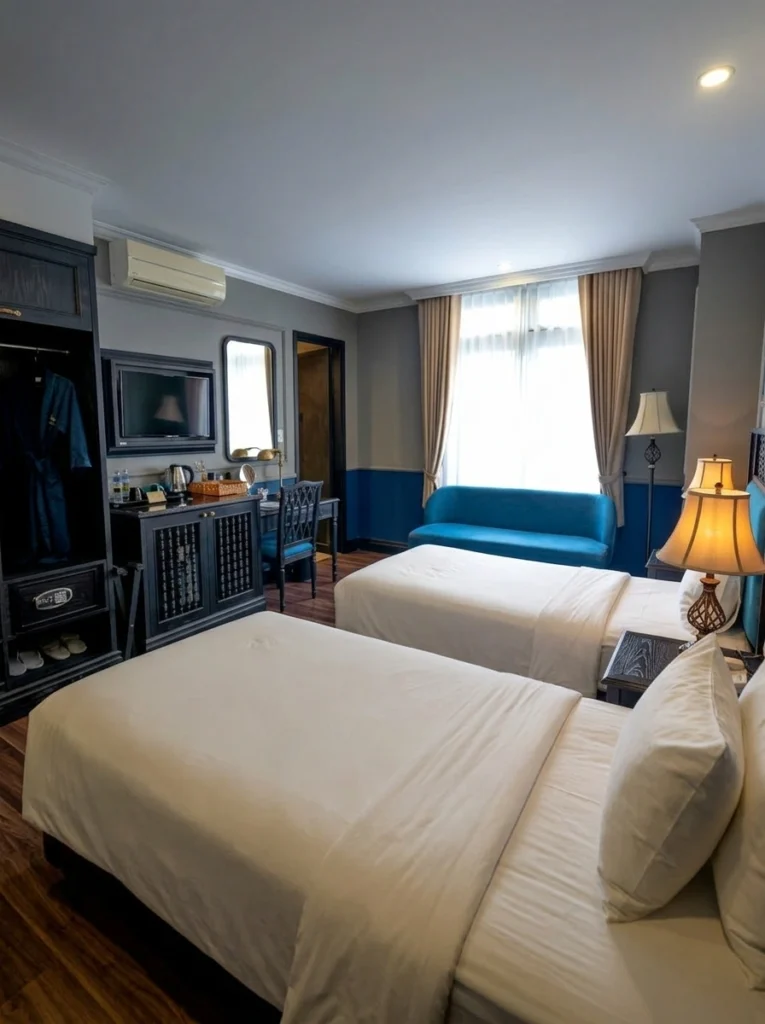
Symmetry is shorthand for calm. In a tight room, two matching lamps placed evenly — on bedside tables, on a console, flanking a sofa — make the space feel intentional and balanced instead of cramped. The matching lamps also serve a quiet visual purpose: they pull your eye outward instead of toward a single bright source.
My tip: Lampshades matter more than the lamp base in small rooms. Linen or paper shades diffuse light gently. Glass or plastic shades create harsh hot spots that magnify how tight a room feels.
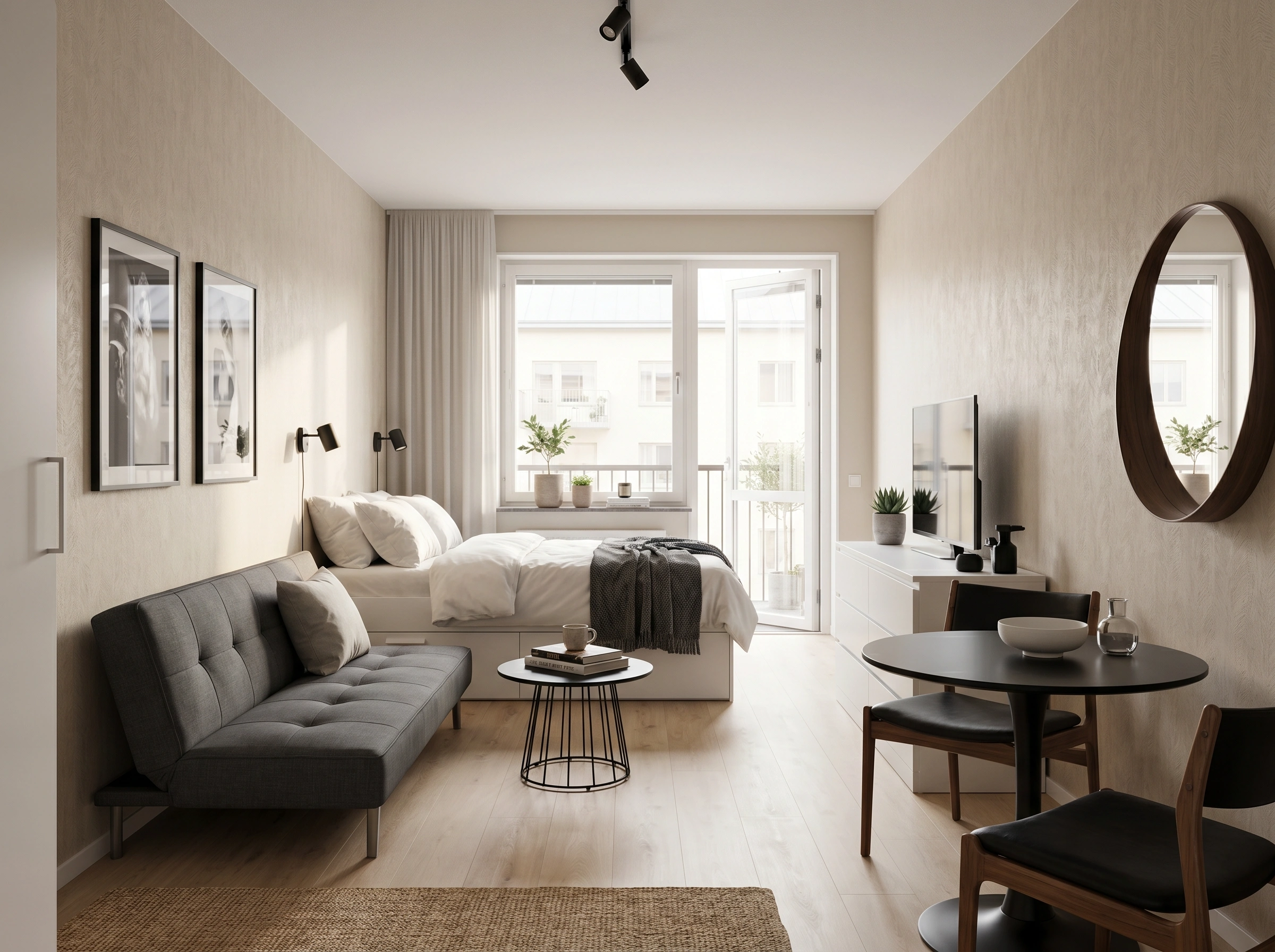
7. Add a Full-Wall Mirror to Double the Space
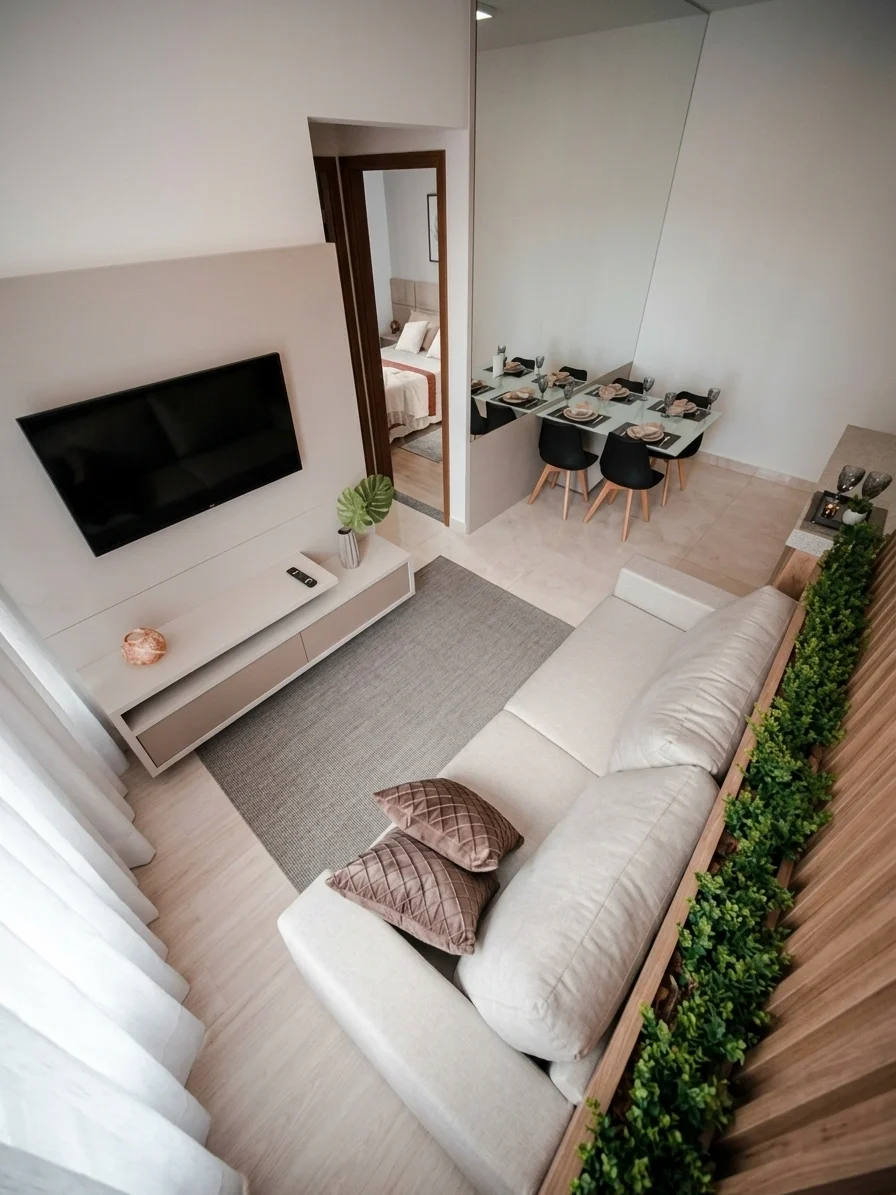
This is the single most effective trick on the entire list. A full-wall mirror genuinely doubles a small studio — not metaphorically, visually. Place it perpendicular to your main light source (a window, ideally) and the reflection multiplies daylight throughout the space. Look at this photo: the mirror creates a phantom dining room that gives the eye somewhere to travel.
Pro tip from someone who learned the hard way: Don’t put a mirror opposite the bed. It works in dining and living zones; in bedrooms it can feel disorienting at night. Save it for shared areas.
8. Carve Out a Sitting Zone Beside the Bed
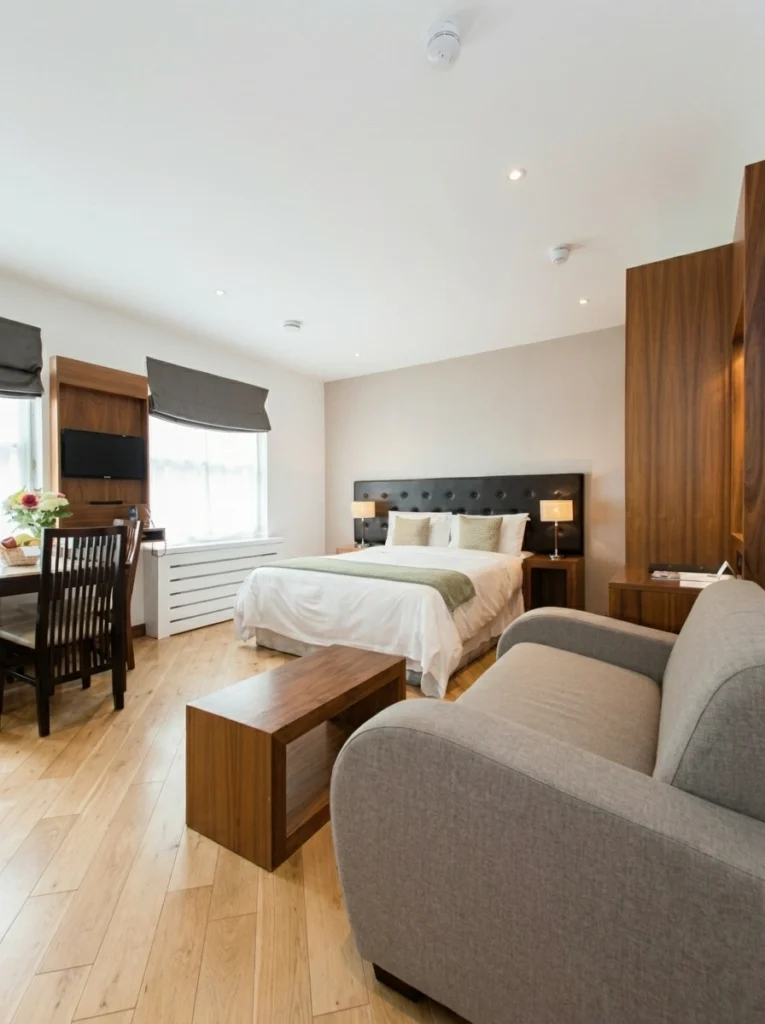
A studio that’s just a bedroom feels like a dorm. A studio with a clearly carved-out sitting zone feels like an apartment. Even a single armchair and a small coffee table is enough — it signals to your brain that you have somewhere other than the bed to land. The trick is keeping the sitting piece compact: an armchair with slim legs, not a chunky loveseat.
A reading chair is the single most underrated piece of furniture in a small studio. It makes the whole space feel like a real home.
9. Anchor the Room With an Arc Floor Lamp
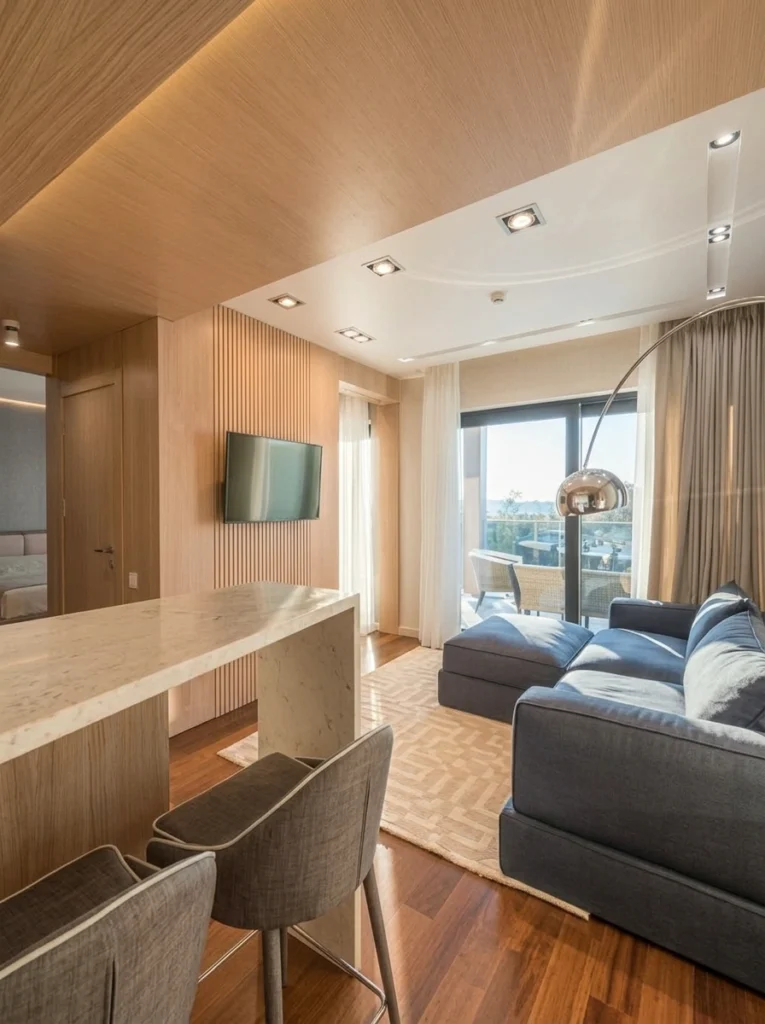
An arc lamp is the cheat code for studios without a ceiling fixture over the sofa. The long, curving arm reaches over the seating area exactly where a pendant would go — without the drilling, the wiring, or the landlord drama. The bonus? Arc lamps create a strong vertical line that pulls the eye up to the ceiling and makes the whole room feel taller.
Renter-friendly alternative: IKEA’s REGOLIT arc lamp is under $50 and looks like it costs ten times that. It’s the first thing I’d buy for a new studio.
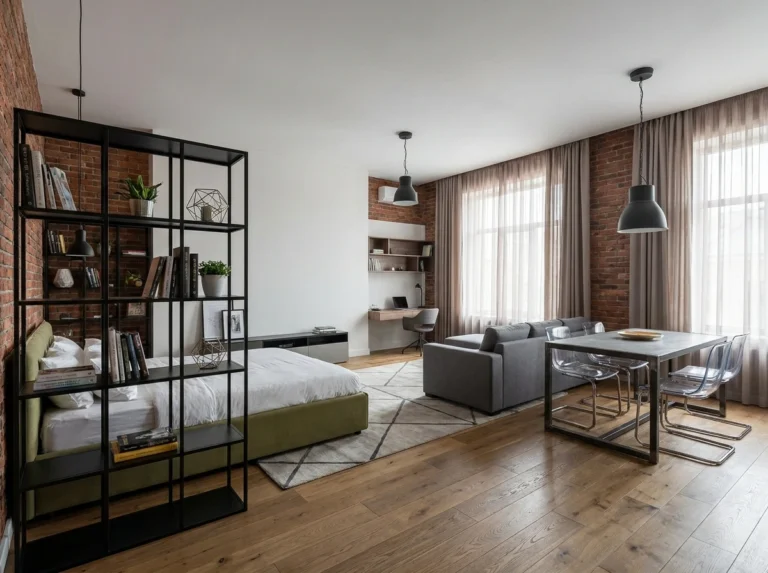
10.Use an Open Bookshelf as a Room Divider
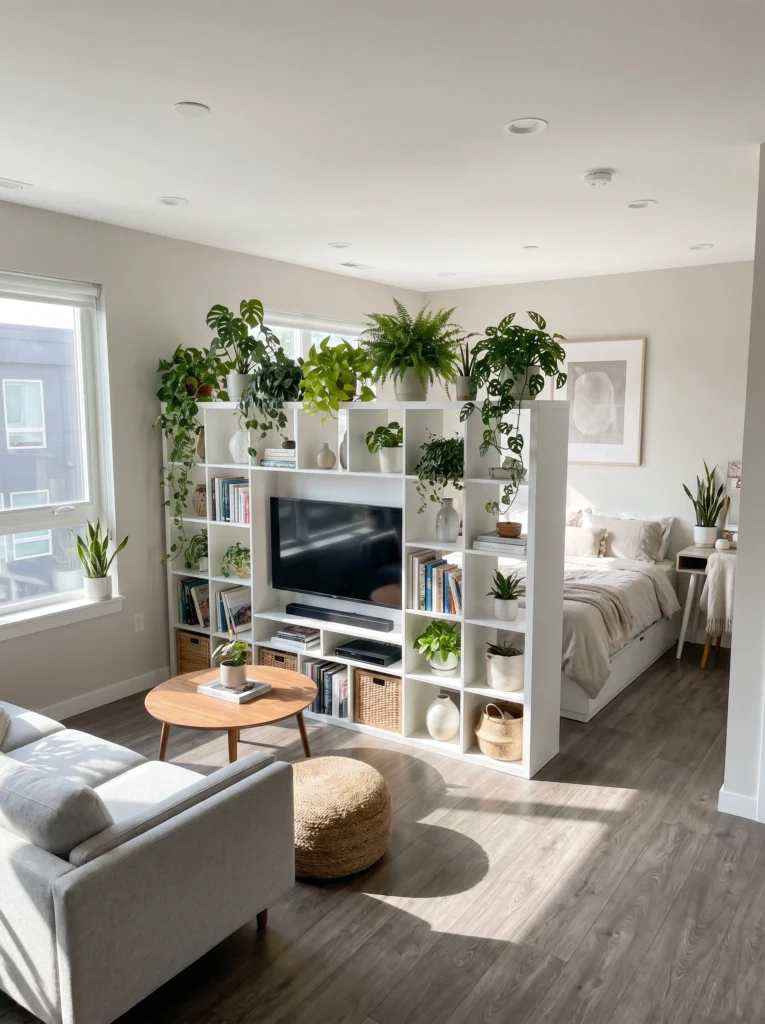
Use a bookshelf as a room divider instead of a solid wall — it separates your sleeping and living zones while keeping light flowing through the whole space. The white open-cube style (think IKEA Kallax) works especially well because it doesn’t visually chop the room in half. Load the top shelves with trailing plants like pothos or monstera, and the greenery softens the boundary even further. Two distinct zones, zero claustrophobia.
Pro tip: Orient the tallest shelving unit toward the center of the room rather than against a wall. It anchors the layout and makes the space feel intentionally designed.
11.Let One Bold Accent Do the Heavy Lifting
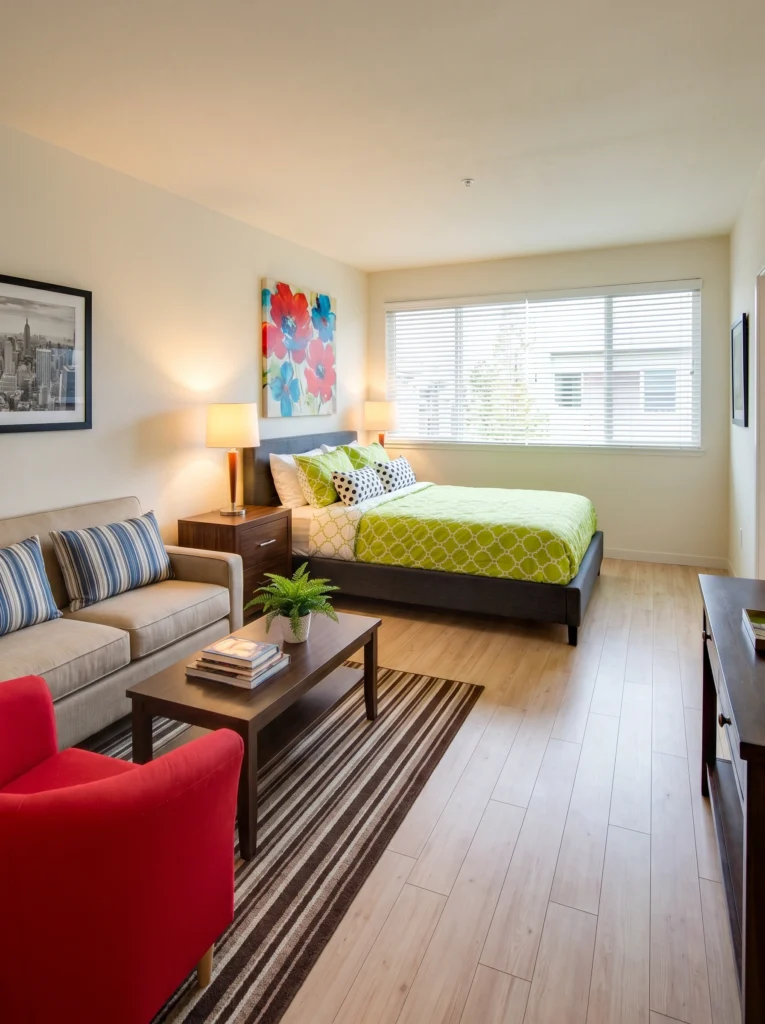
A neutral base lets you control exactly how energized a room feels — and one or two bold accent pieces do more visual work than you’d think. A red armchair, a graphic throw pillow, or a piece of colorful art above the bed pulls the eye on purpose, creating focal points that make a small room feel curated, not cluttered. Keep the walls quiet, then let one thing per zone pop.
Sofia’s honest take: More than two accent colors in a studio and it starts to feel busy. Pick one bold piece, commit to it, and let everything else breathe.
12.Anchor Each Zone With a Rug and a Gallery Wall
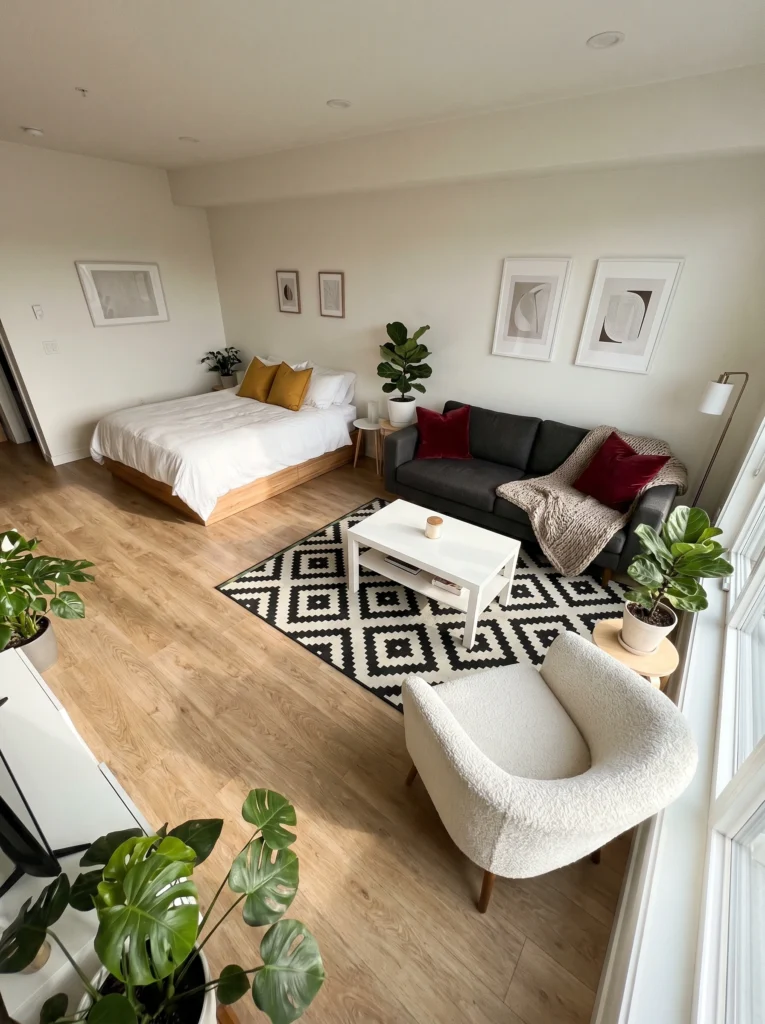
A bold geometric rug is one of the fastest ways to define a living area without using any walls. It says “this is the seating zone” without saying a word. Layer that with a gallery wall of same-size frames hung at eye level and you’ve created depth and visual rhythm that draws the eye around the room rather than straight to the far wall.
My tip: Stick to one rug pattern per zone. Two competing prints in a single studio is a fight nobody wins.
13. Choose Light Wood Tones and a Restrained Palette
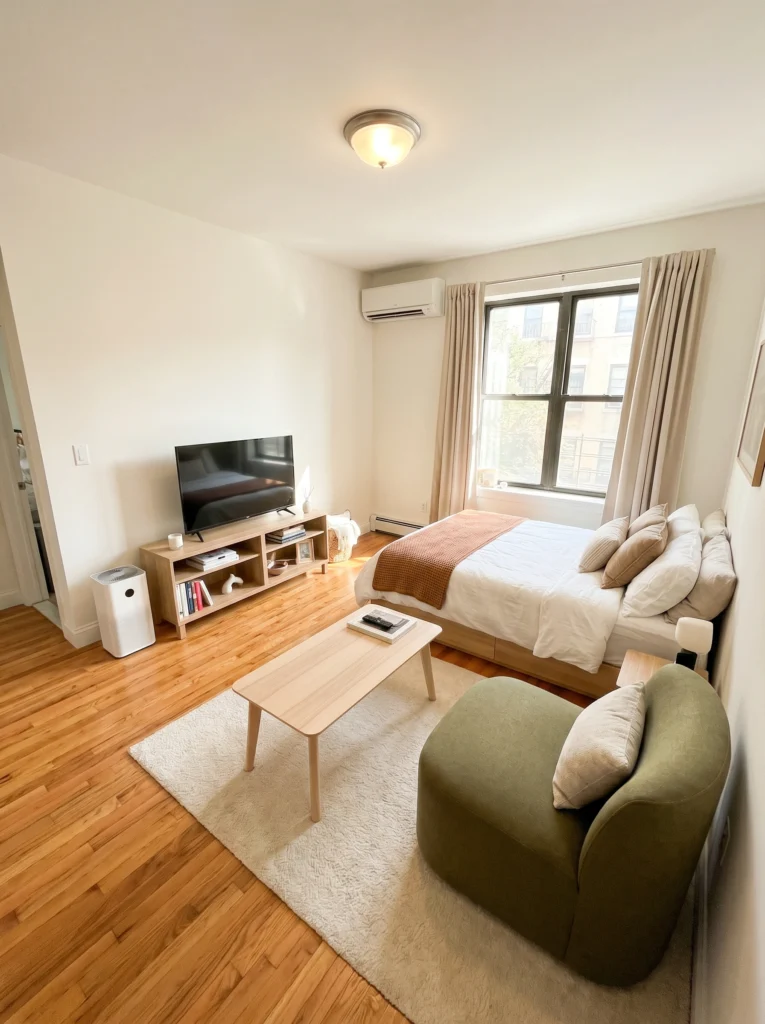
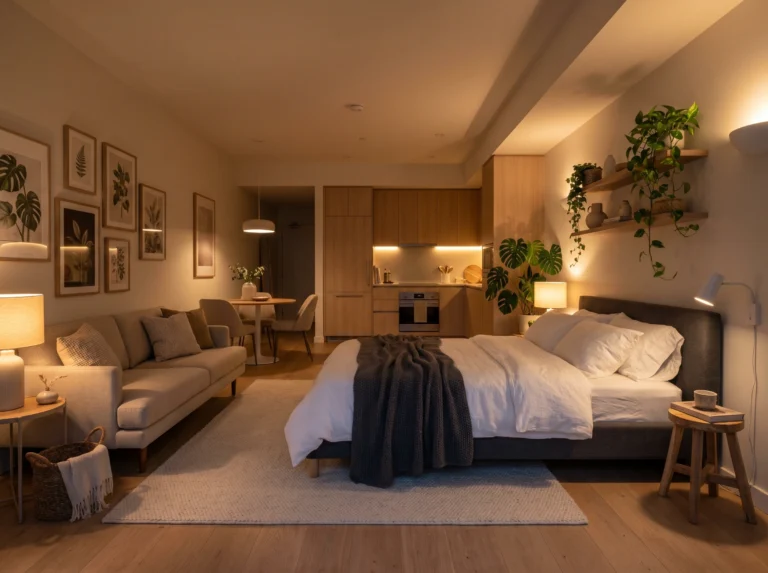
Dark, heavy furniture shrinks a room fast. Light wood tones — birch, oak, maple — keep things feeling open. A low-profile platform bed, a slim coffee table, and a sofa in a soft sage or oatmeal reads as airy rather than overstuffed. The white shag rug here adds texture without weight. This is the palette I’d recommend for any studio under 400 square feet.
Renter-friendly alternative: You can’t change the floors, but you can layer a light rug over dark ones to shift the whole room’s tone in minutes.
14. Hang Large Art and Add Adjustable Track Lighting
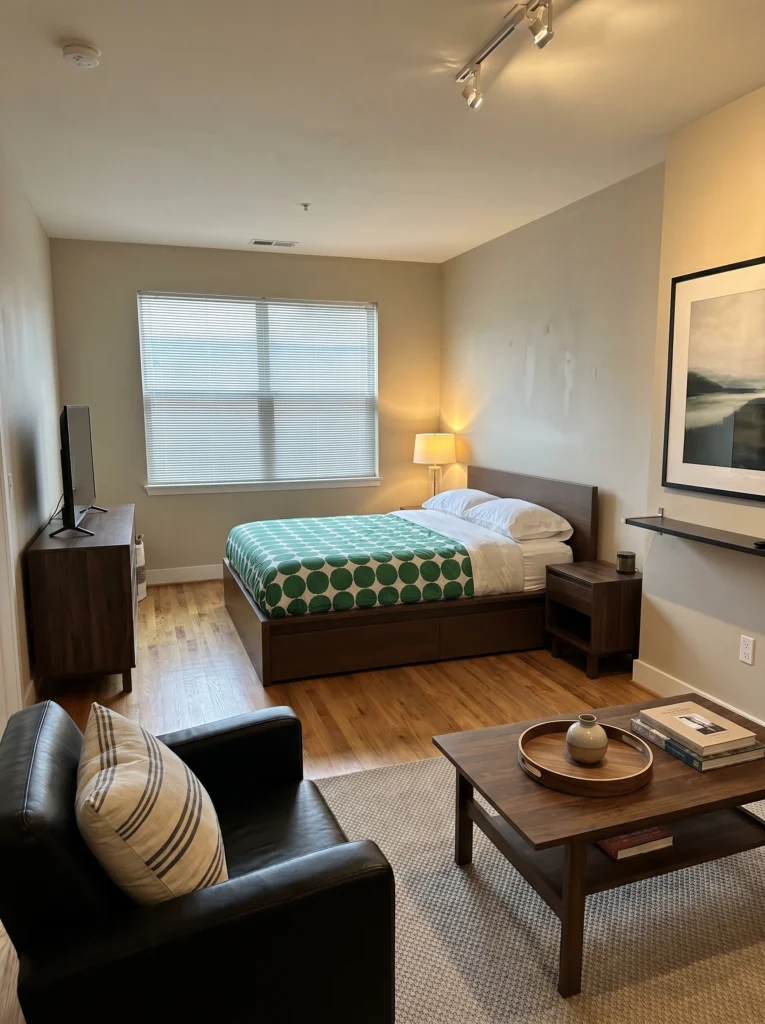
Large-scale artwork on one wall creates instant depth — your eye reads it as a window into another space. Pair that with adjustable track lighting overhead and a warm floor lamp beside the bed, and you’ve added dimension without touching the floor plan. Track lights are especially smart in rentals: no new holes, fully adjustable, and they make art look genuinely gallery-worthy.
Don’t waste your money on: A bunch of small frames scattered around. One large piece always punches harder than a cluster of 4x6s.
15. Pile on the Plants — But Keep Them Vertical
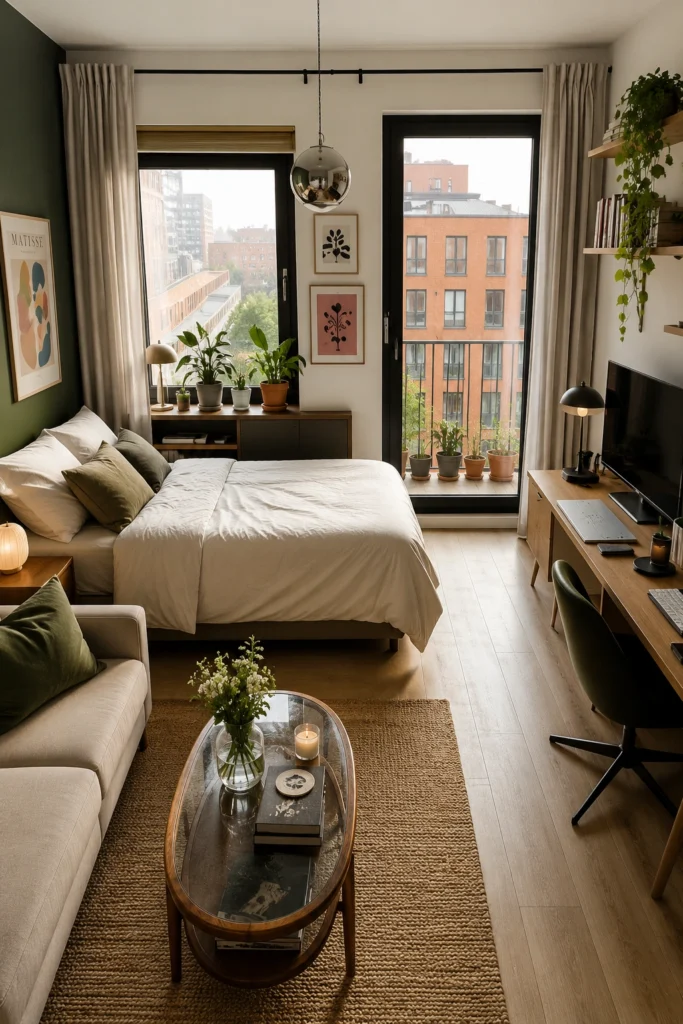
Plants make a small space feel alive. But the mistake people make is spreading them horizontally across every surface, which actually eats floor space and visually clutters the room. Instead, stack them vertically: a tall shelf with trailing plants, plants lined up on the windowsill, one floor plant in a corner. Your eye reads the green as a column instead of a mess.
My tip: Trailing plants like pothos and ivy do the heaviest lifting. They draw the eye downward in long ribbons of green that soften every hard edge in the room.
Final Thoughts
A small studio isn’t a design limitation — it’s a design challenge, and challenges are where the most interesting homes get made. Every single trick on this list comes back to the same three ideas: pull the eye up, give it somewhere to travel, and don’t fight the size. Work with what you have and your studio will start to feel less like a compromise and more like a tiny, intentional world.
Pick one trick. Try it this weekend. The first one always feels like the biggest change — after that, the rest happen naturally.
Your studio doesn’t need to be bigger. It just needs to feel like it was made for you.
— Sofia