Studio Apartment Rug Mistakes to Avoid
A rug can make or break a studio apartment. Get it right, and your one room suddenly feels like a thoughtfully designed home. Get it wrong, and the whole space looks cramped, chaotic, or weirdly unfinished — even if everything else is great. Here’s the thing: most rug mistakes aren’t about taste. They’re about placement, proportion, and a few rules people never think to question. Let’s fix that.
Mistake 1: Picking a Bold Pattern That Fights Your Furniture
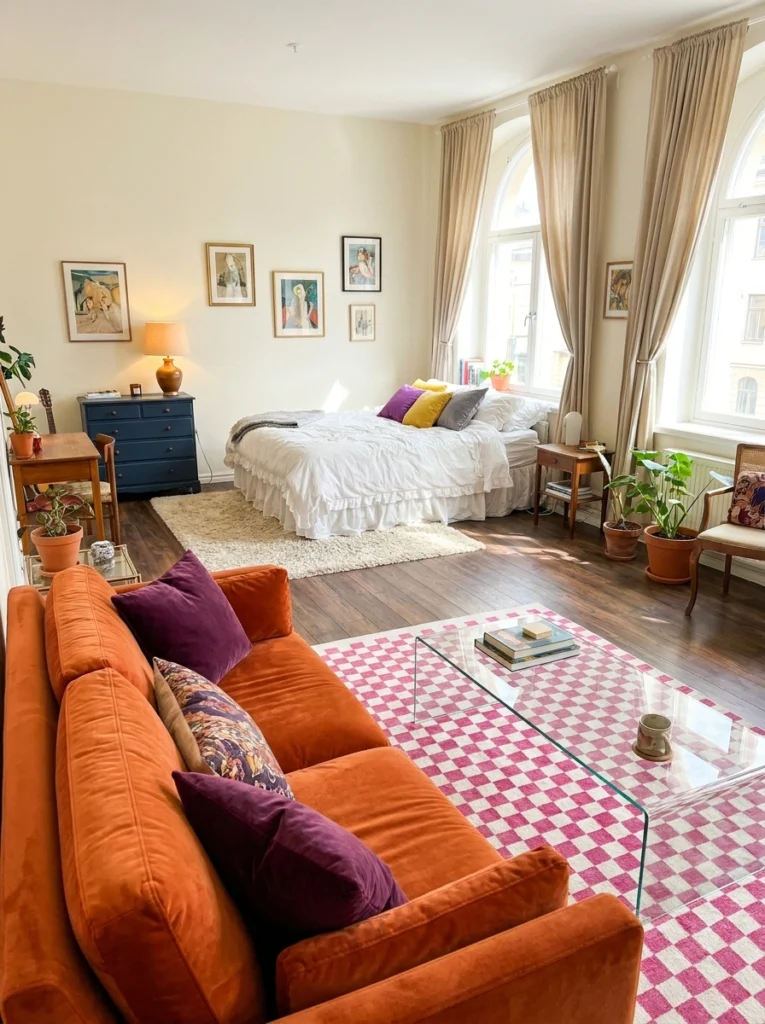
Look at that pink checkerboard rug under the orange velvet sofa — it works because the rest of the room earns it. Art on the walls, a glass coffee table, rich dark floors. But in a smaller or more neutral studio, a loud pattern rug without that visual scaffolding just creates noise. If your sofa is already a statement piece, choose a rug that plays supporting role — a solid, a subtle stripe, or a low-contrast texture. Save the checkerboard for when your whole room can handle the conversation.
Pro tip: Hold a photo of your sofa next to the rug sample in the store. If they’re competing for your eye, one of them needs to go.
Mistake 2: Buying a Rug That’s Too Small
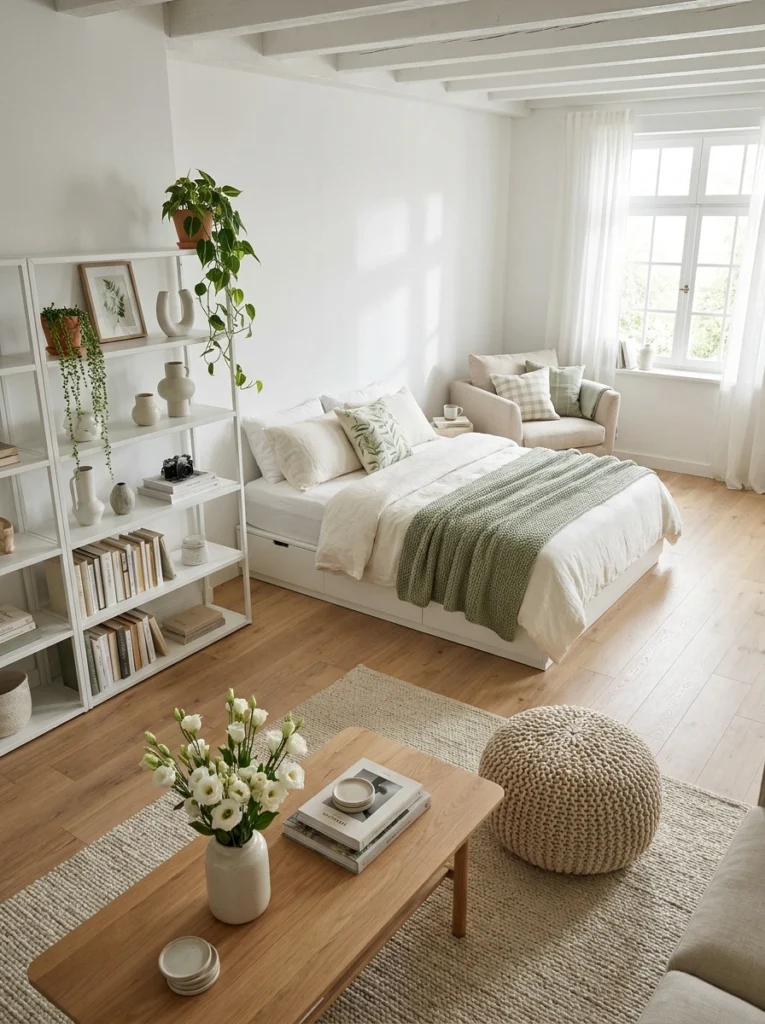
This is the most common rug mistake in studio apartments — and the most expensive to undo after the fact. A rug that’s too small makes your furniture look like it’s floating on an island. Notice how the natural jute rug in this Scandinavian studio grounds the whole seating area, connecting the coffee table and the pouf into one cohesive zone. In a studio, your living area rug should be at least 5×8, ideally 6×9 or larger. Bigger almost always looks better than you’d expect.
When in doubt, size up. You can always fold a rug under a sofa edge. You can’t un-shrink the room.
Mistake 3: Not Using Rugs to Define Your Zones
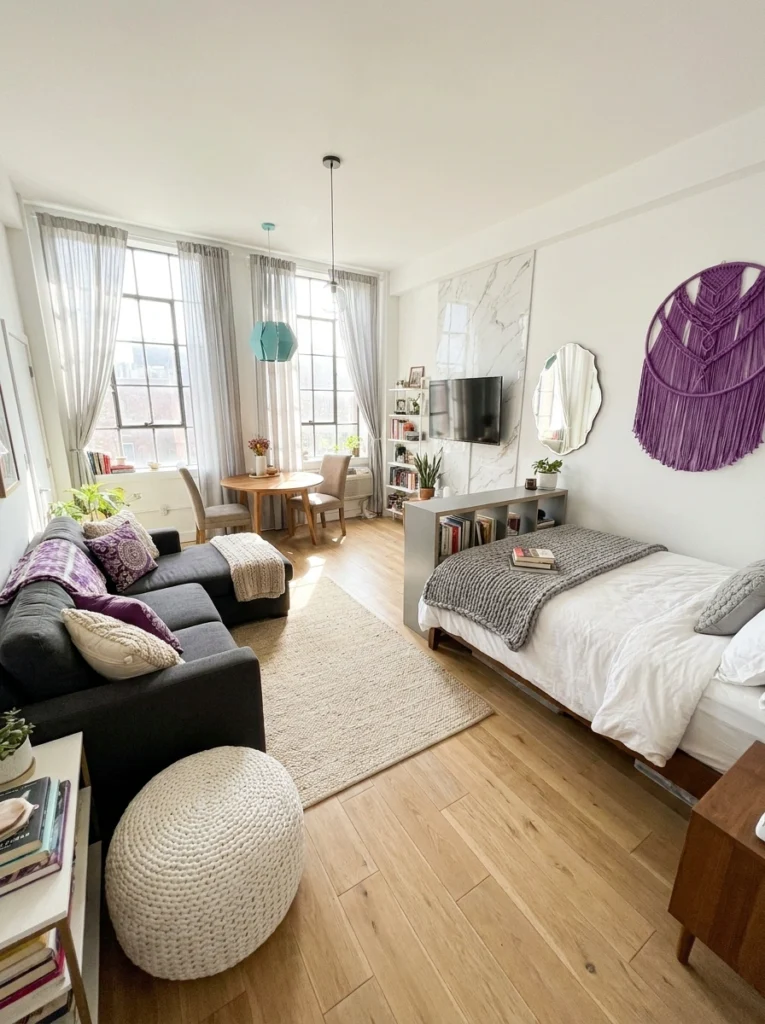
In a studio, rugs aren’t just decor — they’re architecture. That jute rug under the sofa? It tells your brain “this is the living room.” Without it, the sofa just sits in the middle of a room that is also a bedroom and also a dining area, and everything blurs together. Zone definition is one of the hardest challenges in studio living, and a well-placed rug solves it without a single wall or partition. Use different rugs (or at least different textures) to signal different spaces.
Mistake 4: Getting the Furniture Leg Placement Wrong
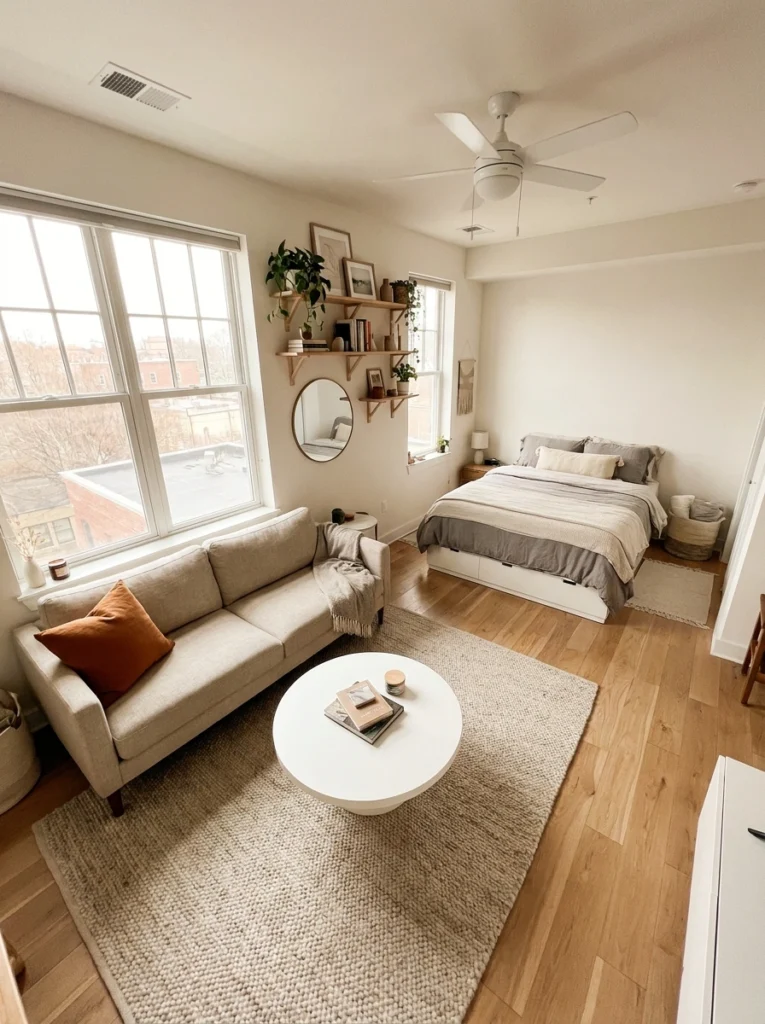
There are three acceptable ways to position furniture legs on a rug: all legs on, front legs only, or all legs off. What you can never do is two legs on and two legs off — that “floating” effect makes the rug look like it wandered into the wrong spot. In this warm studio, the sofa’s front legs land cleanly on the rug, and it anchors the whole seating area. That one decision makes the room feel intentional. Front-legs-on is the easiest rule to follow in smaller studios where a full-coverage rug isn’t budget-friendly.
Pro tip: Measure before you buy. Mark the rug’s footprint on the floor with painter’s tape first.
Mistake 5: Choosing the Wrong Rug Shape
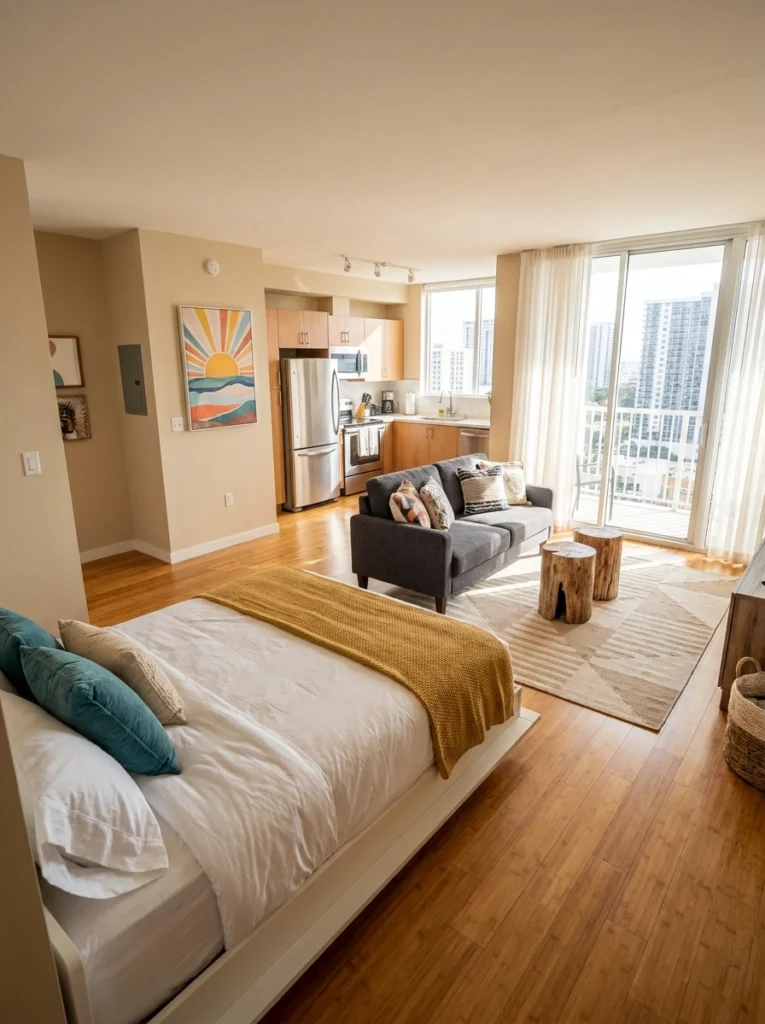
Rectangular rooms usually want rectangular rugs — and yet round rugs end up in rectangular living areas all the time. A round rug in a long, narrow studio can actually make the room feel shorter and wider than it is, which is rarely the goal. Here, a classic rectangular rug under the sofa and wood stump side tables holds the linear layout together. Round rugs shine under round dining tables, in reading corners, or beside a bed. When in doubt for your main living zone: go rectangular.
Mistake 6: Choosing a Rug Color That Fights Your Palette
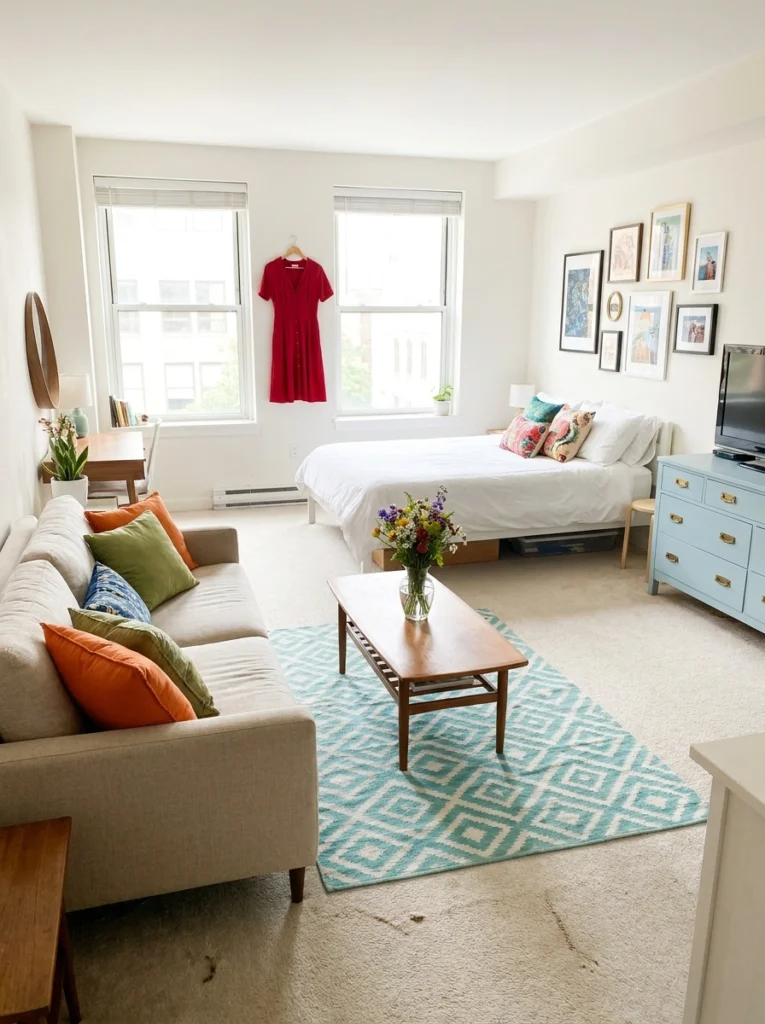
A rug introduces color whether you want it to or not. That teal geometric rug is a bold move — and it works here because it echoes the teal dresser nearby and balances the warm orange and olive pillows on the sofa. But if you drop a teal rug into a room with zero other cool tones, it’ll stick out like a foreign object. Before you buy, identify the 2-3 colors already living in your studio. Your rug should share at least one of them, even loosely.
Budget vs. splurge: Save on rug color (neutrals are forgiving and long-lasting). Splurge on rug size and quality of material.
Mistake 7: Skipping Rug Layering in a Warm Studio
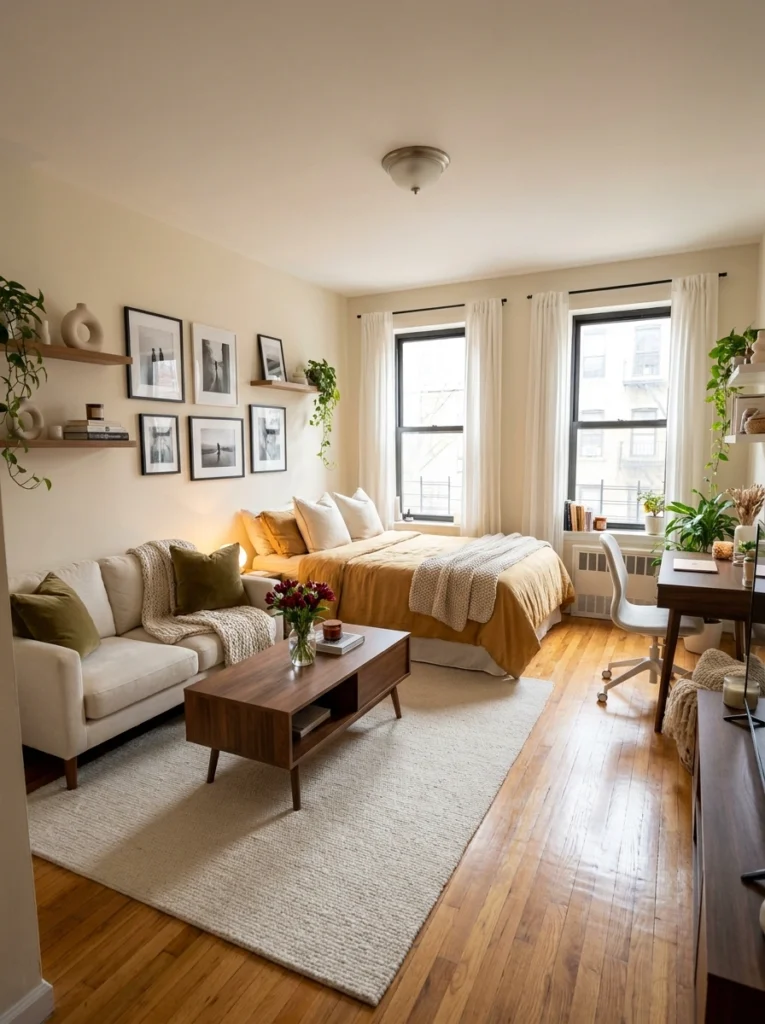
Rug layering — placing a smaller, textured or patterned rug on top of a larger flat rug — is one of the easiest ways to add depth and coziness to a studio without buying more furniture. This warm NYC studio pulls it off beautifully: the large cream rug anchors the entire living and sleeping area, while the layered texture adds warmth underfoot. A jute base rug with a Moroccan or boucle layer on top is a classic combo that costs less than one designer rug and looks twice as rich.
Mistake 8: Ignoring How the Rug Reads Against Your Flooring
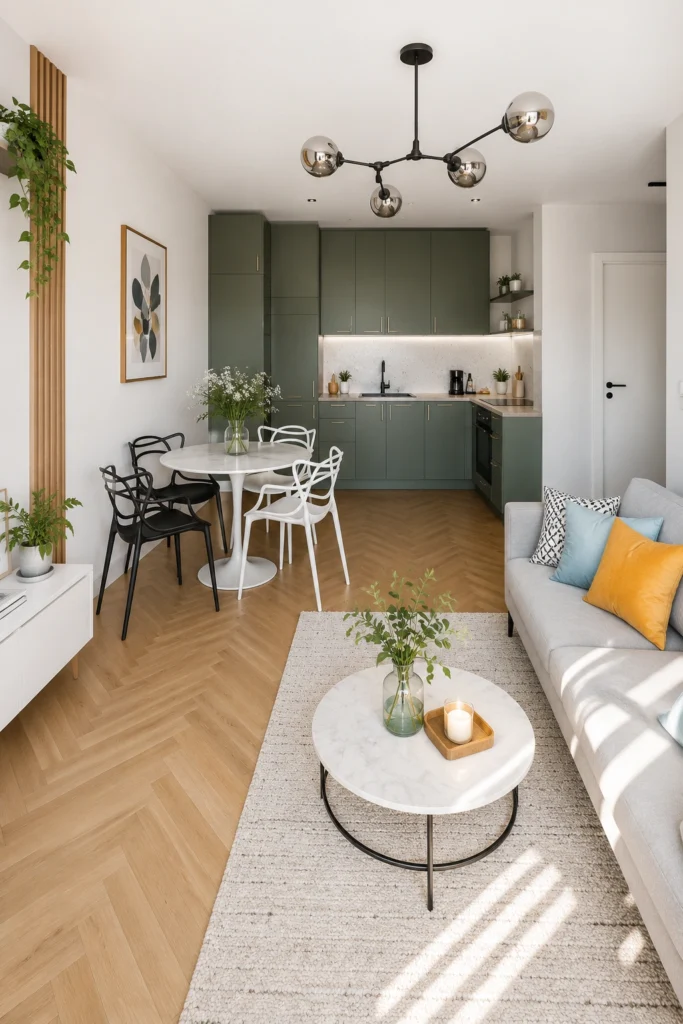
Herringbone floors are beautiful on their own — and a busy rug on top of them creates a pattern collision that exhausts the eye. In studios with distinctive flooring like this one, go for a rug with a simple, solid, or very low-contrast texture. Let the floor breathe. The cream-toned rug here does exactly that — it defines the seating zone without competing with those gorgeous chevron boards. Always consider what’s underneath before committing to what goes on top.
Pro tip: If you have patterned floors, your rug should be your most neutral piece in the room.
Mistake 9: Using One Big Rug to Cover Every Zone
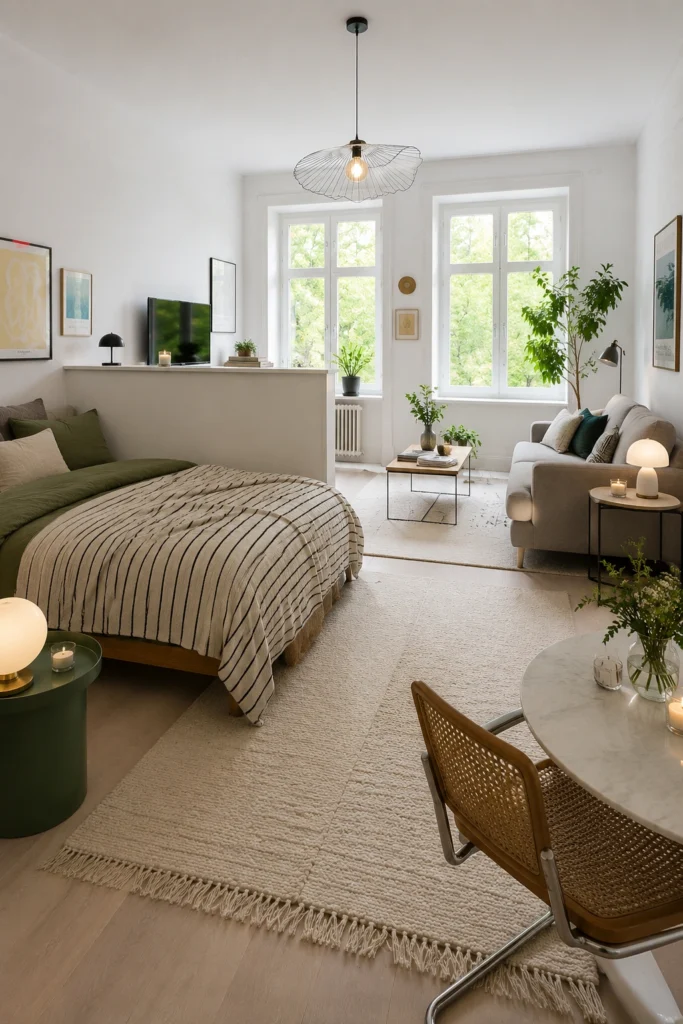
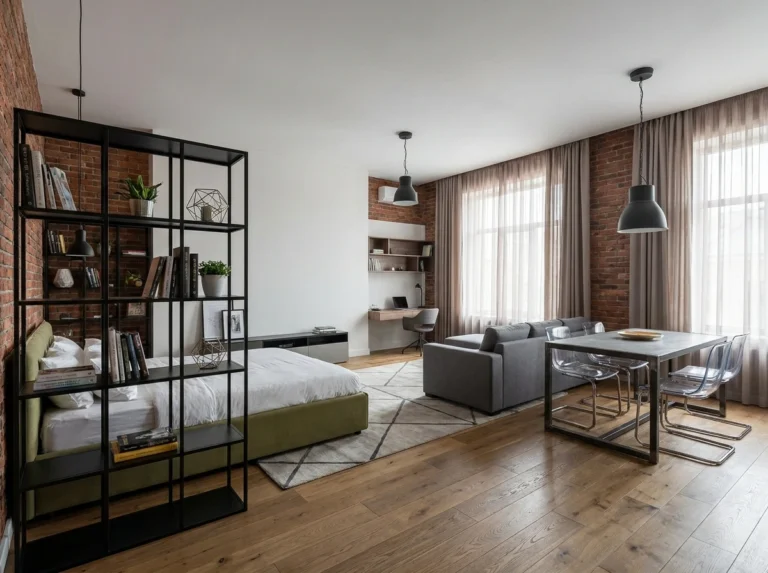
It seems logical: one big rug, one unified space. But in a studio with a sleeping zone, a living zone, and a dining area, a single wall-to-wall rug flattens everything into one undifferentiated blob. Notice how this beautifully styled Scandinavian studio uses separate rugs under the bed and under the seating area — each zone gets its own identity. The dining nook stays rug-free, which actually makes the whole layout feel more spacious. Separate rugs, properly sized for each zone, will serve you far better than one giant one.
Final Thoughts
Rugs are one of the highest-impact, most reversible decisions you can make in a studio apartment. Unlike paint or furniture, you can swap a rug in an afternoon. So if something feels off in your studio right now — a little chaotic, a little flat, or weirdly unanchored — the rug is almost always worth looking at first.
Pick one mistake from this list that resonates. Fix just that. You’ll feel the difference immediately.
A well-placed rug doesn’t just cover your floor — it tells your room what it is.
Happy decorating, Sofia