9 Studio Apartment Lighting Mistakes (and How to Fix Them)
Studio apartment lighting is one of those things that looks easy until you’re sitting in a harsh, flat room wondering why it never feels quite right. Here’s the thing — most studios aren’t dark or awkward because of their size. They’re off because of a few fixable lighting mistakes. Let’s get into it.
1. Relying on One Overhead Light
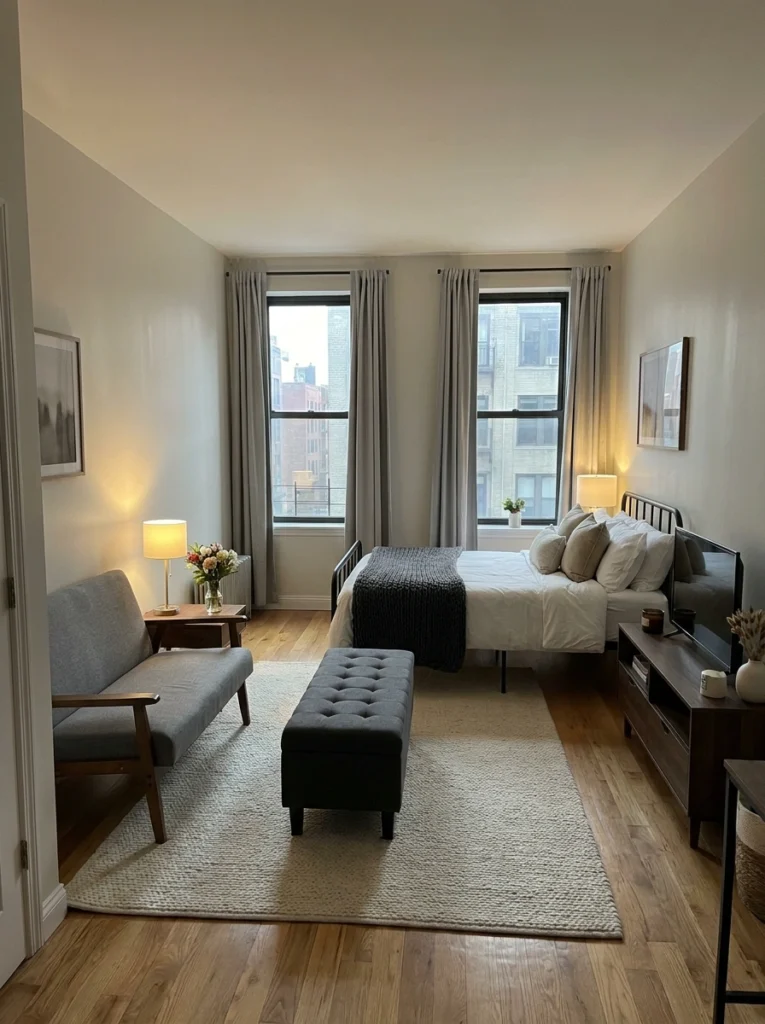
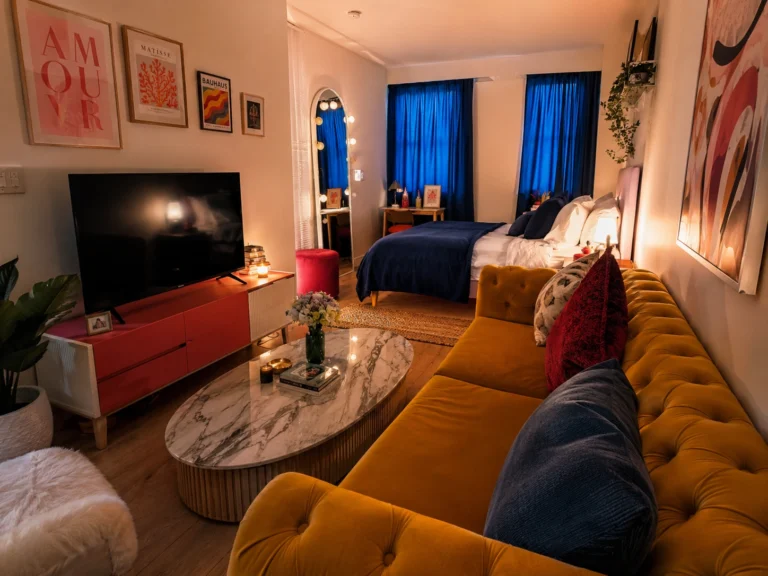
One overhead bulb doing all the work is the number-one reason studios feel sterile. It lights everything evenly — which sounds fine until you realize “evenly lit” also means “no warmth, no depth, no mood.” Look at this room: the table lamp is doing more for the atmosphere than the ceiling fixture ever could. Add one lamp per zone — bedside, sitting area, desk — and your overhead light becomes a backup, not the main act.
Pro tip: Keep your overhead on a dimmer. It costs under $20 and changes everything.
2. Forgetting Floor Lamps Exist
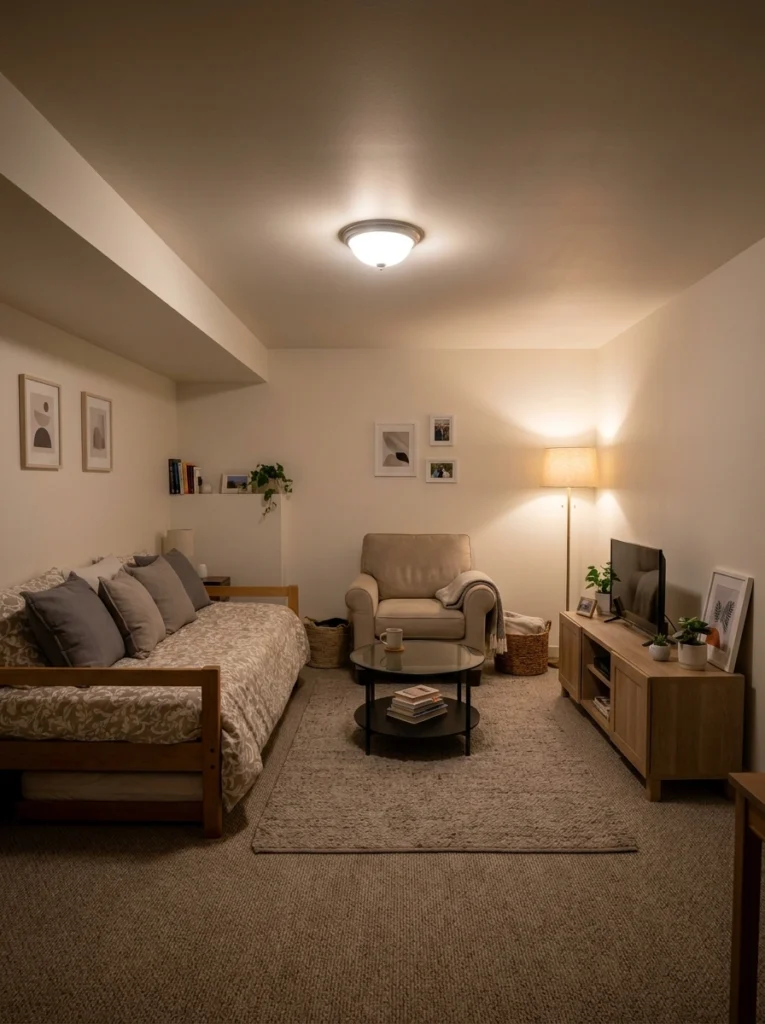
Floor lamps are the most underused piece in small apartments. They take zero counter space, throw light upward (which makes ceilings feel higher), and create that warm pool of light that makes a corner feel intentional.
This room works because the floor lamp is doing the heavy lifting — the ceiling light just fills in. A simple brass or matte black arc lamp from IKEA or Target runs $40–$80 and earns its keep every single evening.
3. Using Bulbs That Are Too Cool or Too Warm
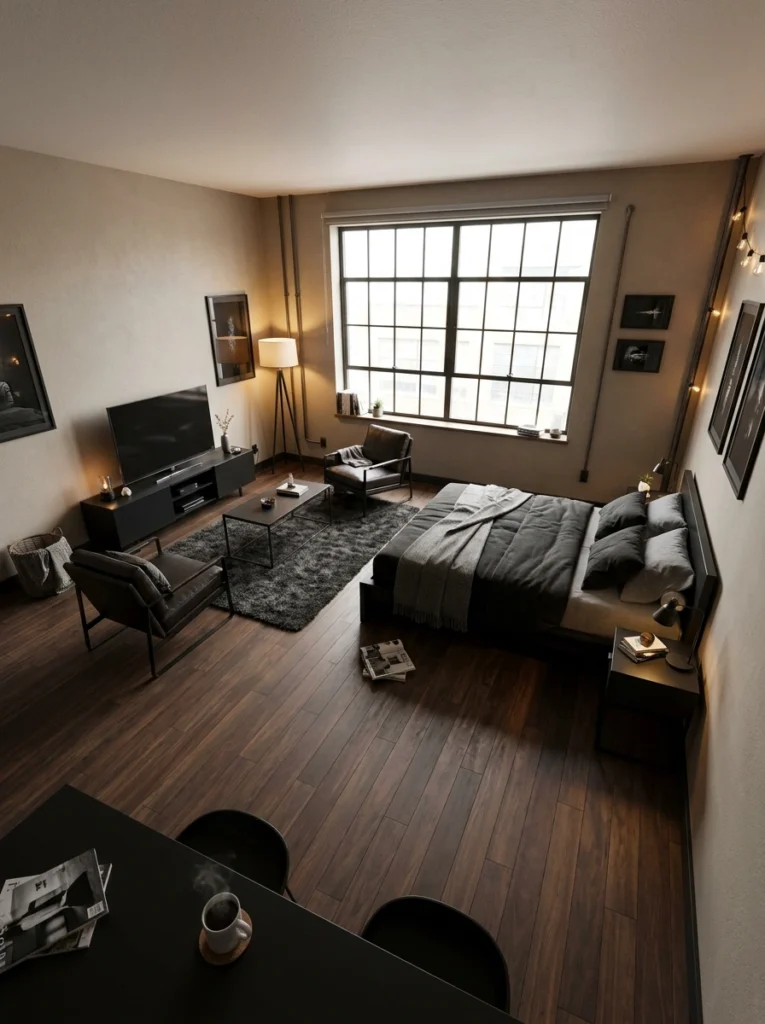
Bulb color temperature — measured in Kelvins — matters more than most people think. Anything above 3000K starts to feel clinical. Anything below 2200K can tip into dingy amber. The sweet spot for living spaces is 2700K–3000K: warm, golden, and flattering without looking like a sauna.
This industrial studio nails it — every source glows amber, and the whole room reads as intentional, not dark. Check your bulb boxes; most people are accidentally living under office lighting.
4. Ignoring the Ceiling as a Design Element
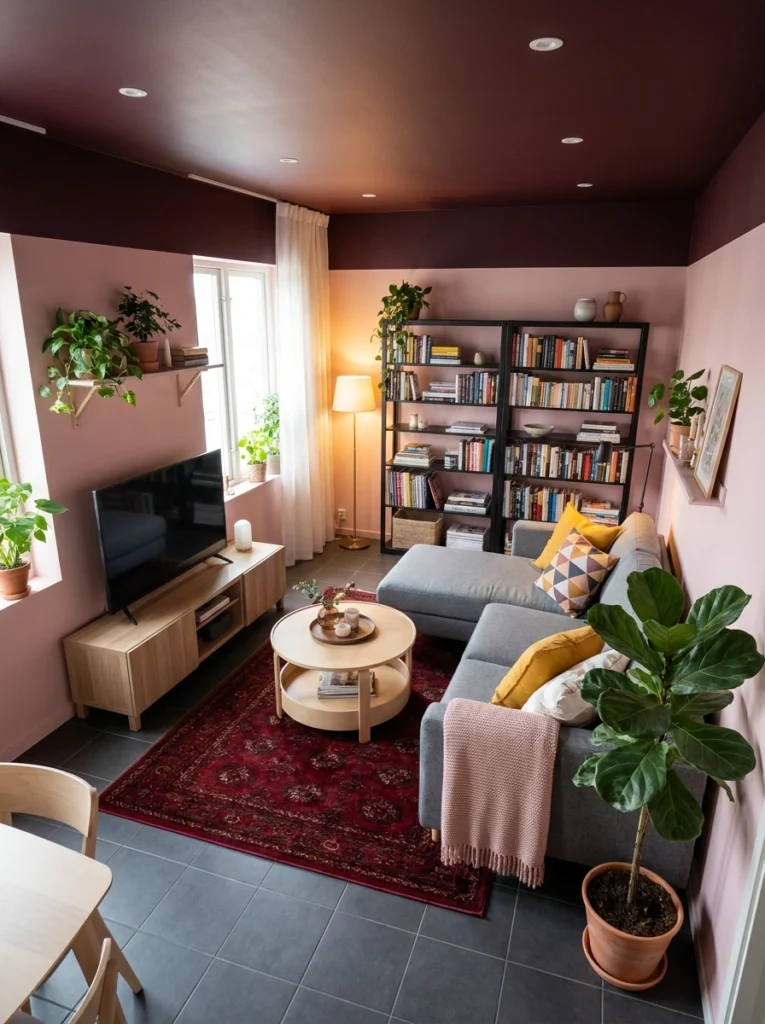
Most people treat the ceiling like a blank afterthought. But here’s the thing — a dark or painted ceiling actually makes a room feel more intimate, not smaller. This space proves it: the deep burgundy ceiling pulls everything in and gives the room a sense of being held. You don’t have to paint (renters, I see you), but even a well-placed upward-facing floor lamp that washes light across a white ceiling creates that same cocooning effect for free.
Renter-friendly alternative: Aim a floor lamp at the ceiling instead of outward. Instant glow-up.
5. Skipping Candles and Ambient Extras
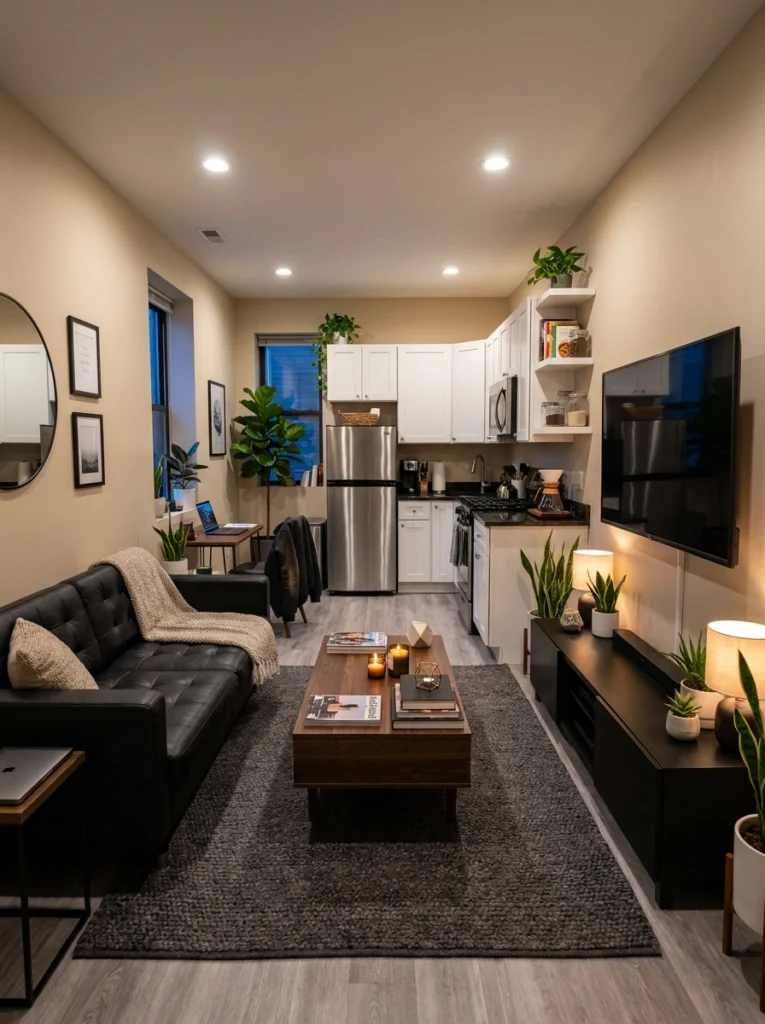
Candles aren’t just a vibe — they’re a lighting layer. Real flame adds warmth and flicker that no bulb can replicate. This studio uses recessed lights plus candles on the coffee table, and the combination feels lived-in and inviting rather than showroom-ready.
Three pillar candles on a wooden tray cost less than $15 and do more for a room’s atmosphere than any lamp shade upgrade. Battery-powered flame candles work just as well if you’re forgetful (no judgment — I’ve been there).
6. Using Fairy Lights as a Last Resort
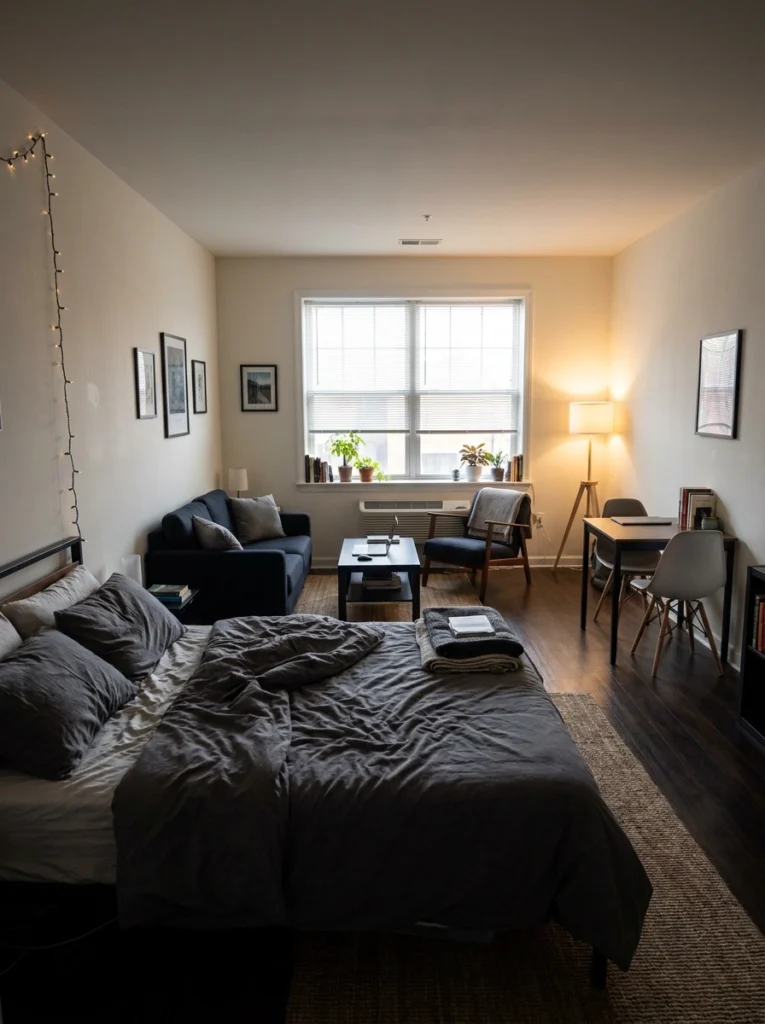
Fairy lights have a bad reputation because people treat them like a band-aid — something you throw up when nothing else is working. Used intentionally, though? They’re actually great. This room strings them vertically along a wall beside the gallery, and they add height and warmth without competing with the room’s real lighting.
The rule: fairy lights should support a lighting scheme, not substitute for one. Pair them with a proper lamp and they look deliberate. Alone, they look like a college dorm.
7. Forgetting That the Sleeping Zone Needs Its Own Light
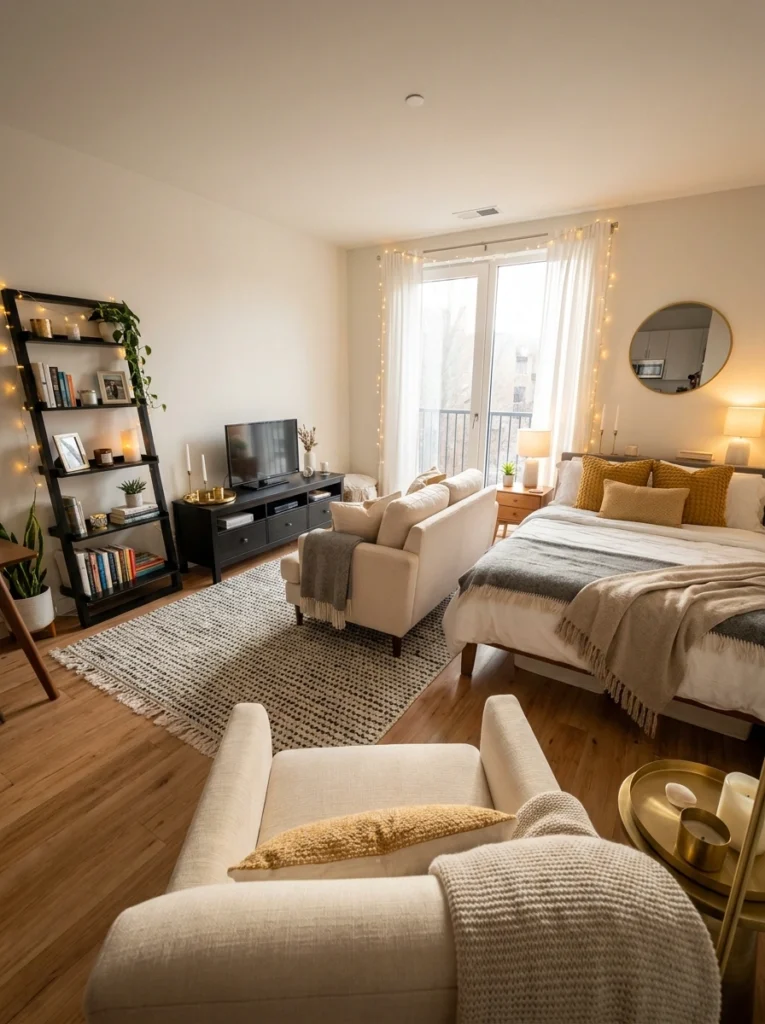
In a studio, your bed is in the same room as everything else. That means your “bedroom” needs its own lighting identity — something softer, warmer, more winding-down than the rest of the space. This room uses a bedside lamp plus delicate fairy lights framing the window to signal that this corner is for resting. It’s a visual and psychological cue.
Two warm-toned bedside lamps and blackout curtains are genuinely the best sleep investment you can make in a studio.
8. Not Layering Your Light Sources
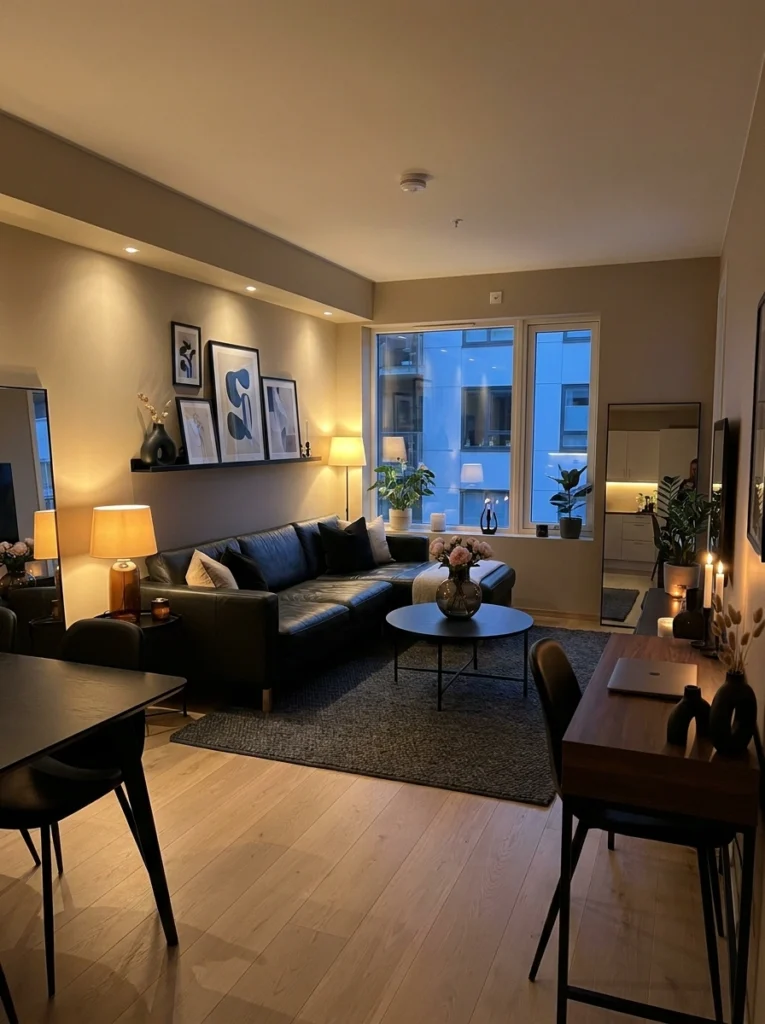
Layered lighting means having multiple sources at different heights — overhead, eye level, low — all working together. This is the part most people skip. This Scandinavian-style room is a masterclass: recessed spots up top, two table lamps at mid-height, a floor lamp, and candles at the lowest level.
The result is a room that glows rather than just… lights up. You don’t need this many sources, but aim for at least three. Overhead + floor lamp + one table lamp is the minimum for a studio that feels warm.
9. Skipping the Statement Pendant
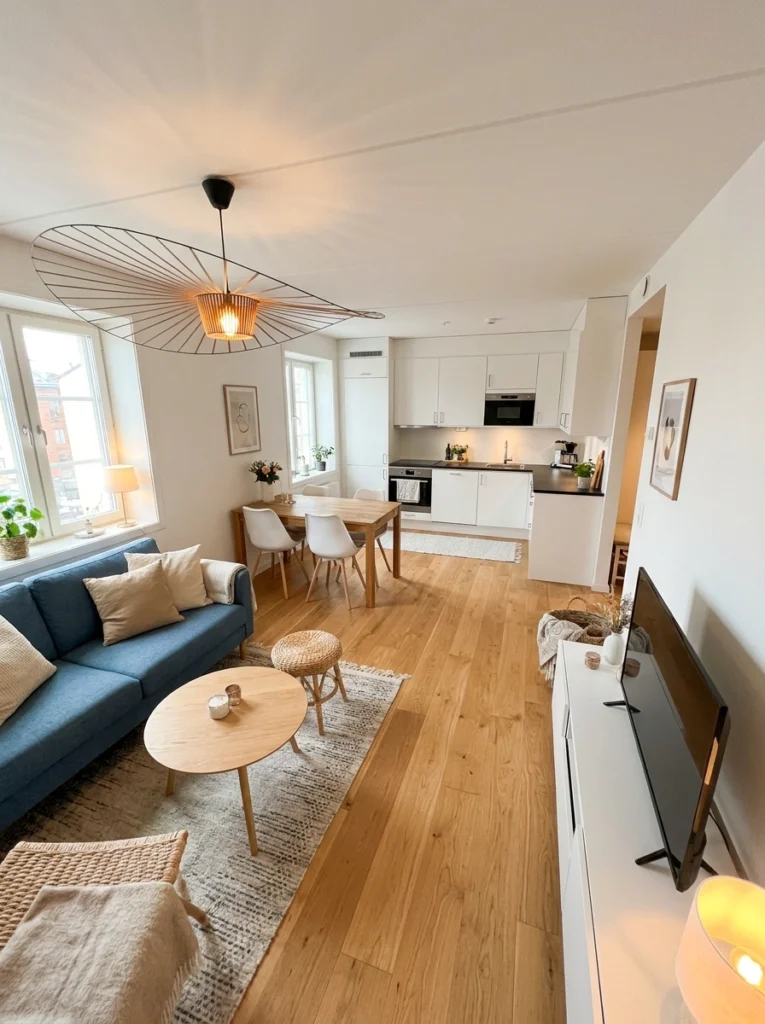
A statement pendant light is one of the few places in a small apartment where you can go big without overwhelming the space — and most people skip it entirely. This Scandinavian studio uses a dramatic wire pendant that draws the eye upward and gives the whole open-plan space an anchor. It doesn’t need to be expensive. IKEA’s SINNERLIG and REGOLIT pendants are both under $50 and genuinely beautiful. One great pendant beats three forgettable ceiling fixtures every time.
Pro tip: Hang pendants lower than you think — about 7 feet from the floor feels intimate without feeling low.
Final Thoughts
Lighting is the invisible hand that shapes how every room feels, and studios are especially sensitive to it because there’s nowhere for bad lighting to hide. None of these fixes require a renovation, a big budget, or even a trip to a fancy design store. Most of them cost less than a dinner out.
Pick the one mistake on this list that sounds most like your apartment right now. Fix that one first. You’ll feel the difference by nightfall.
The right light doesn’t make a small space bigger — it makes it feel exactly right.
Happy decorating, Sofia