10 Tiny Studio Apartment Decor Ideas for Functional Small Spaces
Studio living gets a bad reputation. One room, zero walls to hide behind, and somehow you’re supposed to make it feel like a home — not a storage unit you also sleep in. Here’s the thing: the constraint is actually a creative opportunity. Some of the most beautiful, intentional spaces I’ve ever seen have been studios under 400 square feet. These 10 ideas will show you exactly how to pull it off.
1. Use a Glass Partition to Divide Without Closing Off
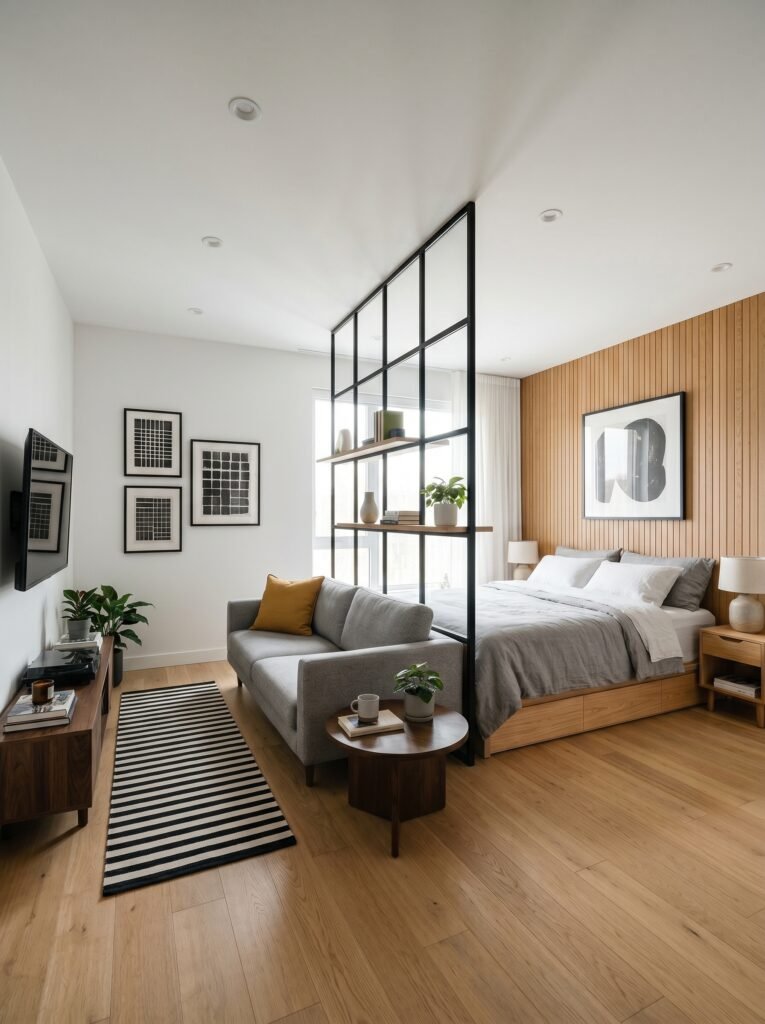
A floor-to-ceiling black steel and glass partition is the most architectural move you can make in a studio. It creates a true bedroom zone while keeping light flowing through both sides. This one even has a built-in shelf for plants and books — storage and structure in the same piece. The wood slat accent wall behind the bed does the rest.
Pro tip: Look for freestanding glass partition panels on Amazon or Wayfair. No installation required, and they move with you when you leave.
2. Let Every Element Stay in the Same Tonal Family
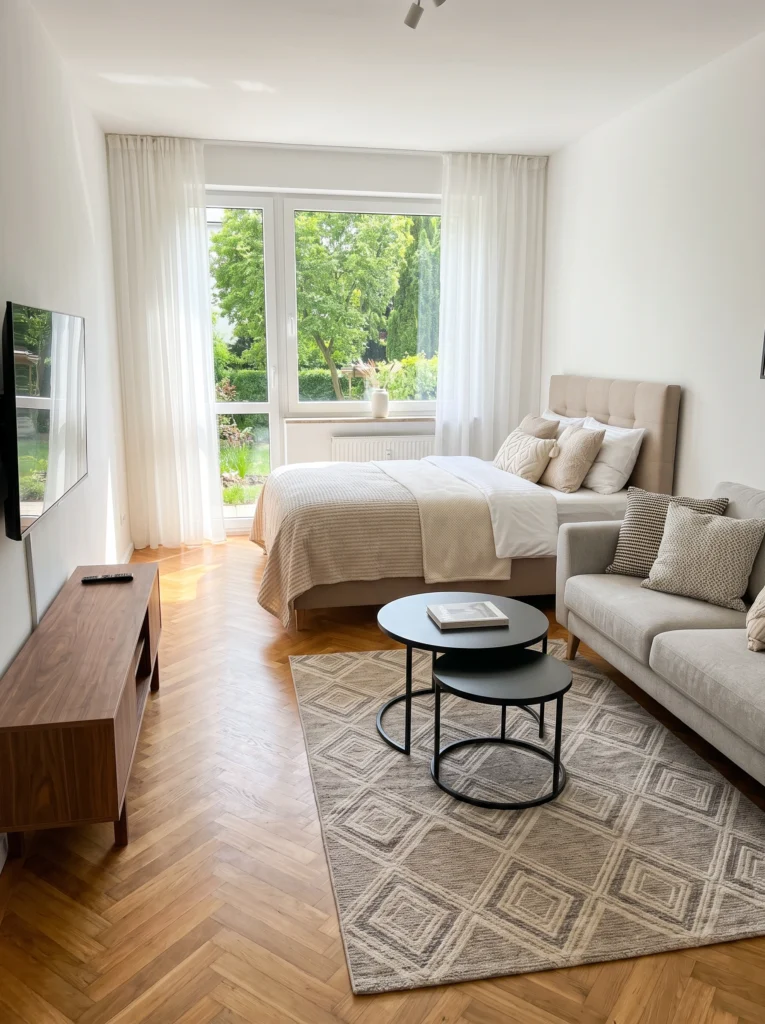
Cream walls, a sand-toned tufted headboard, white sheer curtains, a geometric rug in warm grays — every element here whispers the same quiet palette. The black nesting coffee tables are the only contrast, and they work because the rest of the room has done the restraint work for them. Tonal decorating is genuinely hard to get wrong once you commit.
Sofia’s honest take: This approach works best with great natural light. If your studio faces a dark alley, add a warm-toned floor lamp or the neutrals start reading as dull.
3. Build a Scandi Gallery Wall With a Ladder Shelf
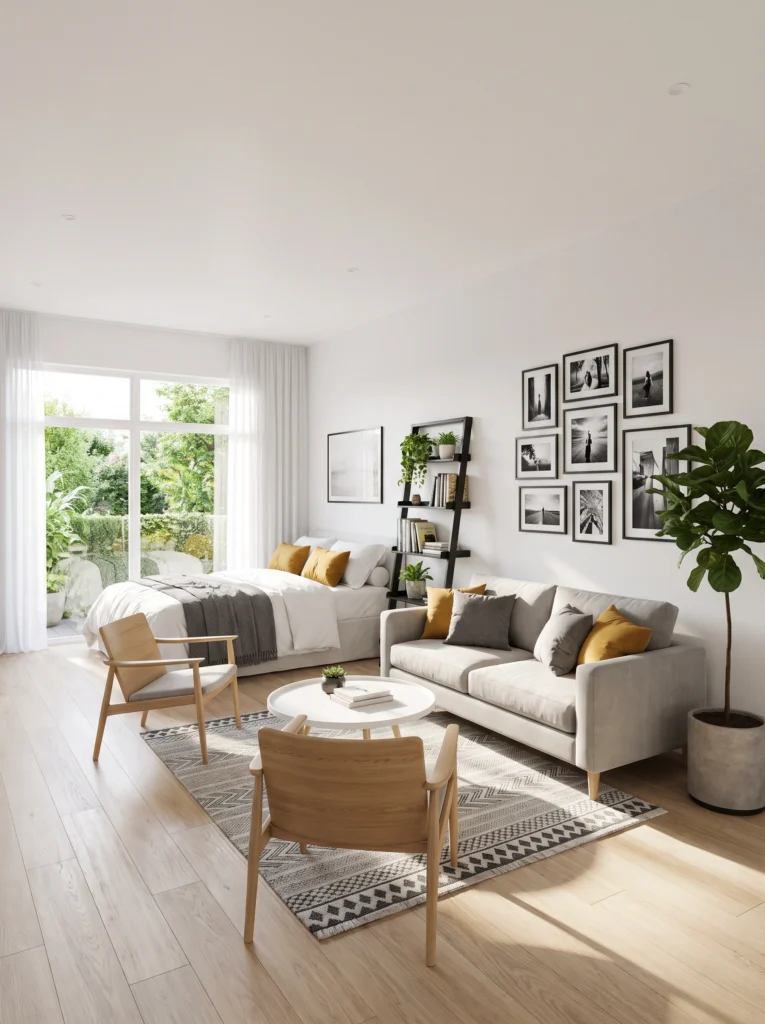
A leaning ladder shelf beside the bed holds plants, books, and small objects without drilling a single hole. The real star here is the asymmetric gallery of black-and-white photos climbing the wall above — nine frames in varying sizes, arranged loosely rather than on a grid. Mustard pillows on both the sofa and the bed pull the two zones together without matching exactly.
Renter-friendly alternative: Command strips hold frames up to 16 lbs. Arrange your gallery on the floor first, then transfer it to the wall section by section.
4. Use a Decorative Screen as a Room Divider
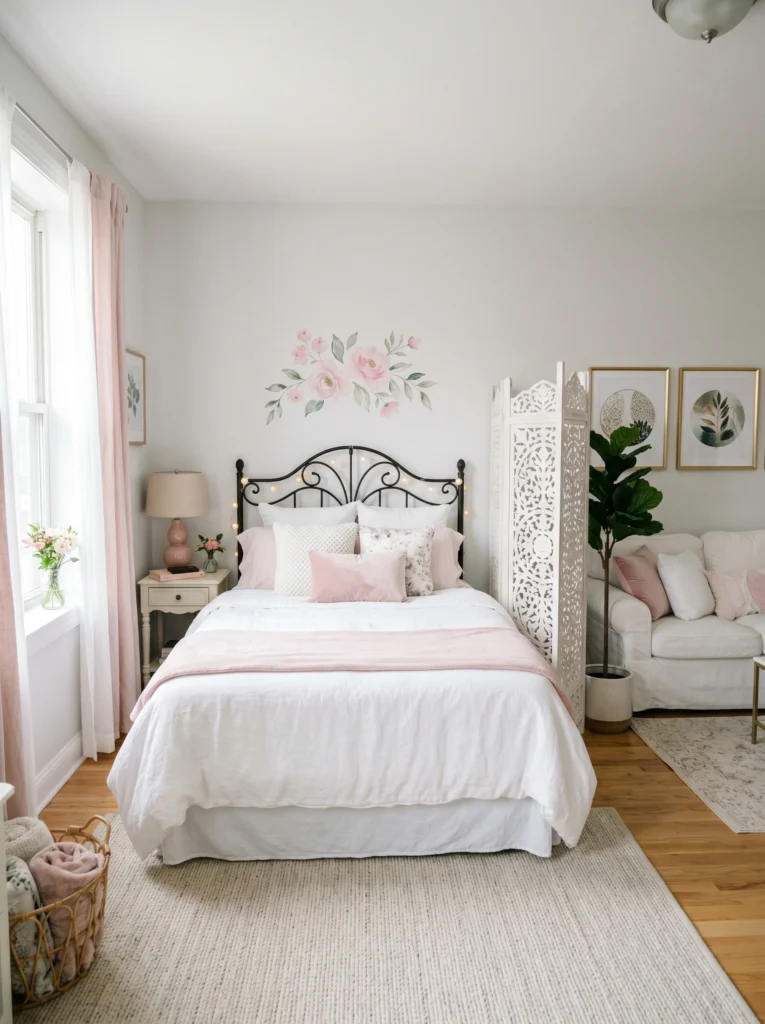
A carved white folding screen separates the bed from the sofa with zero commitment — no drilling, no damage, totally moveable. Here it pairs beautifully with watercolor floral wall decals above the iron bed, blush pink curtains, and a cream sofa. The whole room feels romantic and softly feminine without going overboard. Proof that a single decorative piece can define an entire aesthetic.
Budget vs. splurge: Carved wood screens start around $80 on Amazon. The Moroccan-style cutout ones photograph beautifully and cast the most gorgeous shadows when lit from behind.
5. Pop One Saturated Color Against an All-White Base
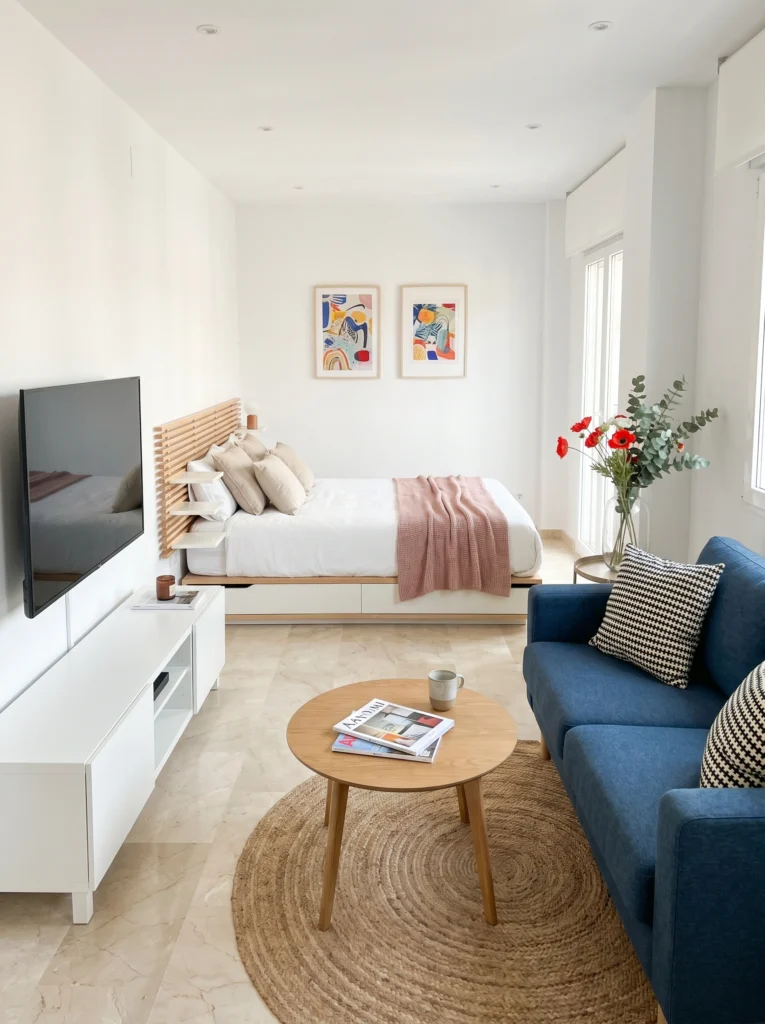
Everything in this studio is white, cream, or natural wood — except the navy blue sofa, which hits like a statement. That’s the whole strategy: keep 90% of the room neutral, then let one piece carry all the color. Two vibrant abstract prints above the slatted headboard add the second beat of interest. A round jute rug grounds it all without adding visual noise.
I’ve tested this: Navy blue is the most forgiving sofa color for small spaces — it doesn’t dominate the way red or orange can, but it gives the room a confident, pulled-together anchor.
6. Let One Statement Light Fixture Do the Heavy Lifting
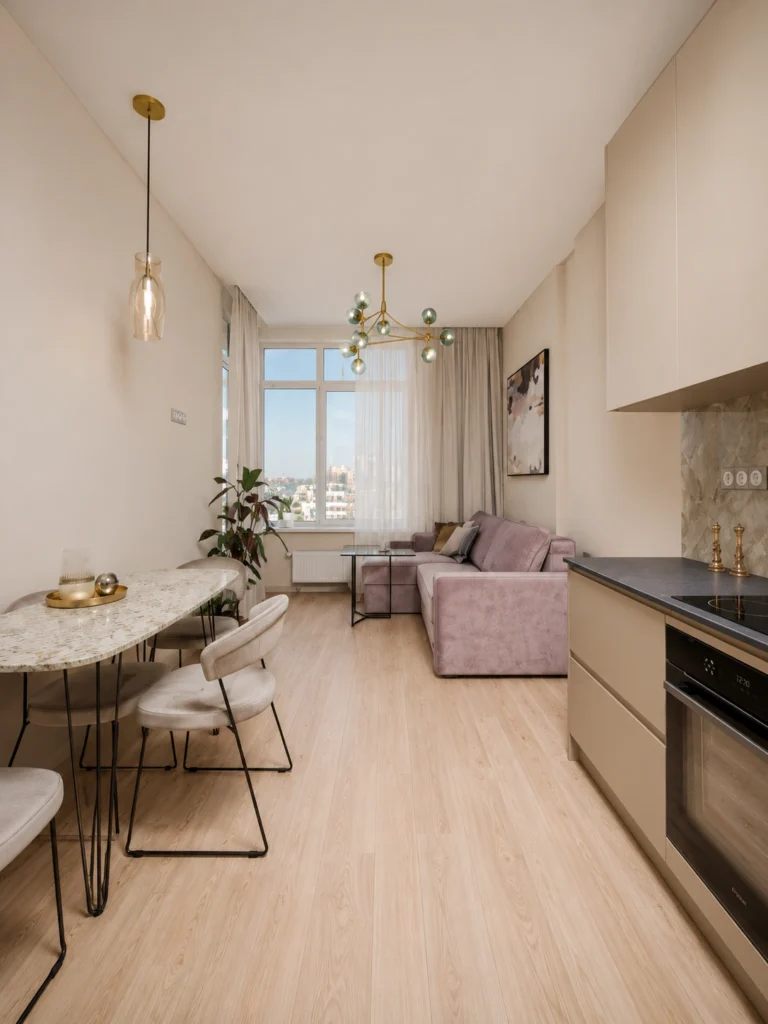
In a tiny apartment, you don’t have wall space for a gallery. You don’t have a foyer for an entry table. What you do have is a ceiling, and most people completely ignore it. A single sculptural light fixture — like this brass chandelier with smoky green glass globes — gives the whole studio a focal point and a sense of grown-up intention.
Skip the boring builder-grade flush mount. Even a $80 statement pendant from Lumens or West Elm changes the entire feel of a small space. It’s the easiest upgrade in this whole list.
7. Make Your Bed the Hero of the Room
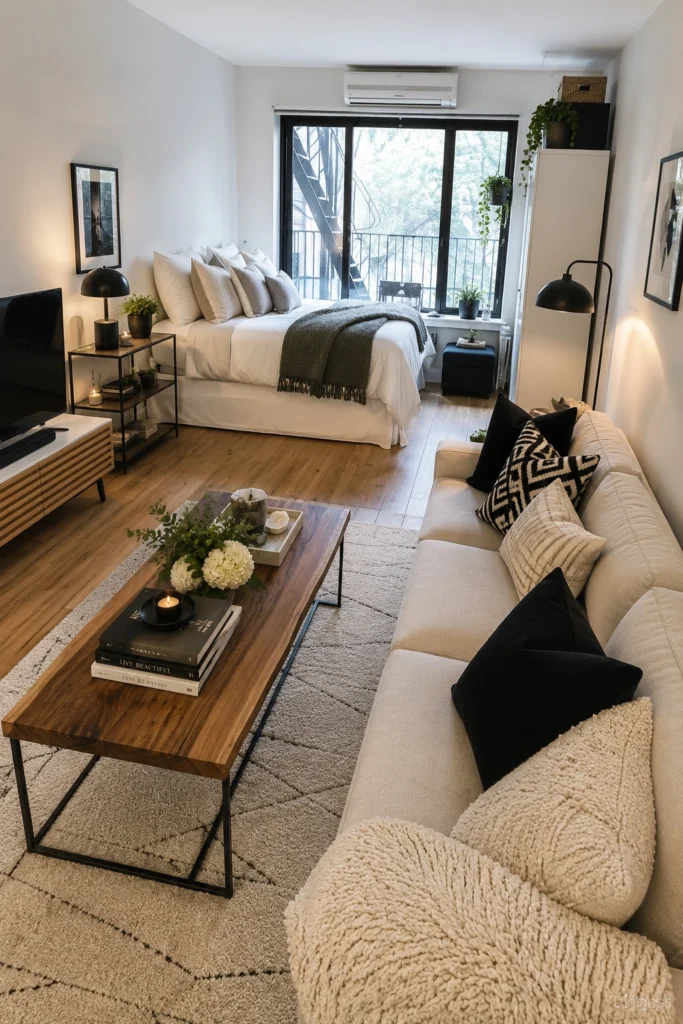
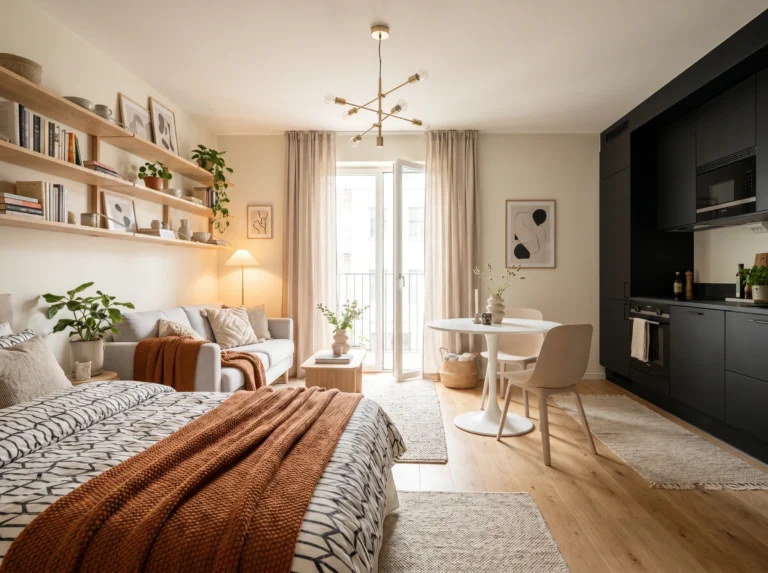
In a studio, your bed is unavoidable. It’s right there, always. So instead of trying to minimize it, make it the best-looking thing in the room. Pile on the pillows. Use a quality duvet cover in a neutral — cream, oatmeal, warm white — and add a chunky knit throw folded at the foot. Make it look intentional, not like you just rolled out of it twenty minutes ago (even if you did).
The studio above uses a cream sectional sofa and a cream bed as a continuous visual language — the whole space feels cohesive because the palette is consistent. That wooden coffee table with hairpin-style legs acts as the room’s grounding piece without taking up visual weight.
Renter-friendly alternative: No headboard? Lean a large piece of art or a framed print against the wall behind your bed instead of mounting anything. Same effect, zero holes.
8. Hang Plants to Bring Life Without Using Floor Space
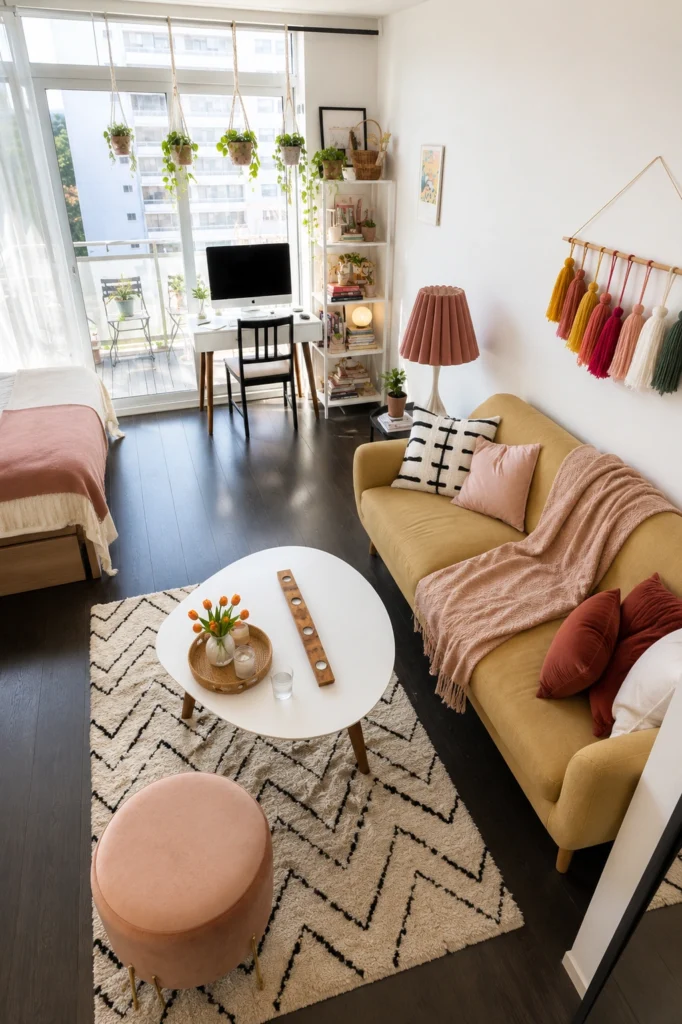
Floor space is precious. Every square foot you give to a big fiddle-leaf fig is a square foot you’re not using for living. Hanging plants are the answer. They bring in all the warmth and life of greenery while keeping your floors free, and they draw the eye upward — which makes any ceiling feel higher.
In this photo, the entire window is framed with hanging planters in macramé and clay pots — pothos, tradescantia, a few trailing varieties I can’t quite identify. The effect is lush without being cramped. The mustard yellow sofa and the pink accents give this studio a distinctly bohemian personality, and the plants are a huge part of why it feels alive rather than decorated.
Pro tip: Command hooks rated for the weight of your pots work brilliantly for renters who can’t drill into ceilings. Ceiling hooks over windows get the best light for trailing plants.
9. Layer Textures to Make a Small Space Feel Rich
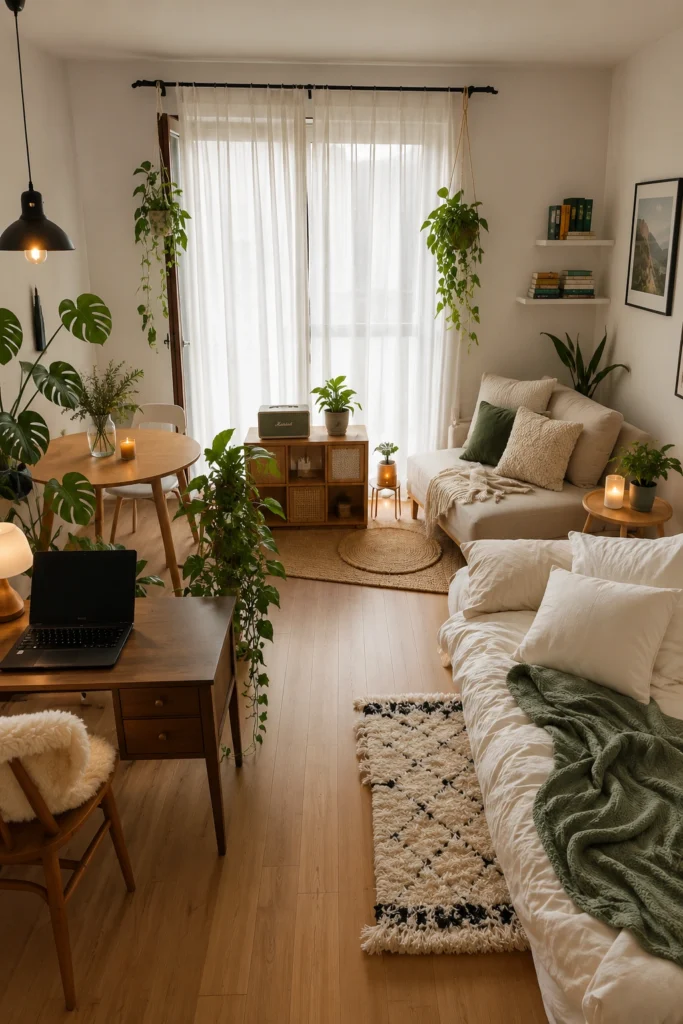
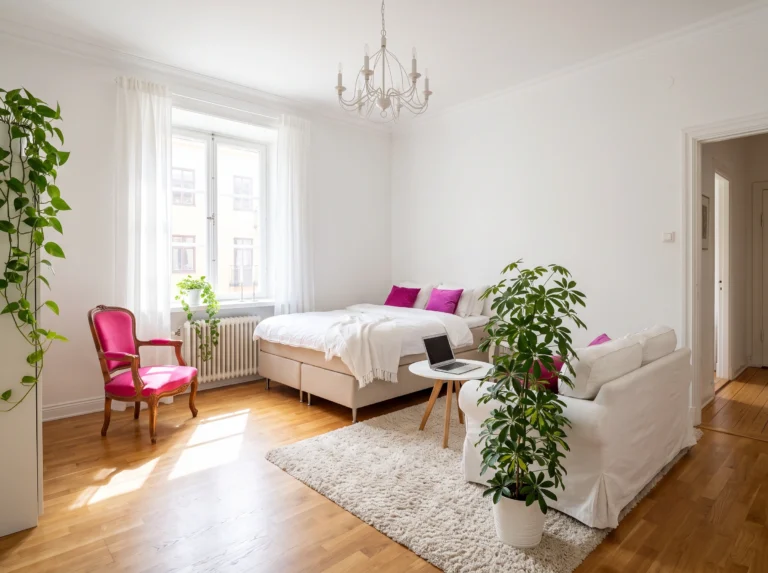
Square footage doesn’t determine how a room feels — texture does. When you’re working with limited space, layering different materials is what keeps things from looking sparse or clinical. In the photo above, notice how the shaggy Beni Ourain-style rug sits beside a woven jute circle, and a chunky knit throw gets tossed casually over the sofa. None of it matches perfectly. All of it works together.
Start with your largest surface — the floor — and build up from there. A natural fiber rug as your base, a smaller patterned rug layered on top, linen cushions, a wool throw. Each layer adds depth without adding square footage.
Pro tip: Warm wood tones (like that mid-century desk in honey oak) and cream-to-white soft furnishings are a reliable combo. They make a room feel settled and lived-in without looking chaotic.
10. Build Around a Neutral Base — Then Add Color Through Accents
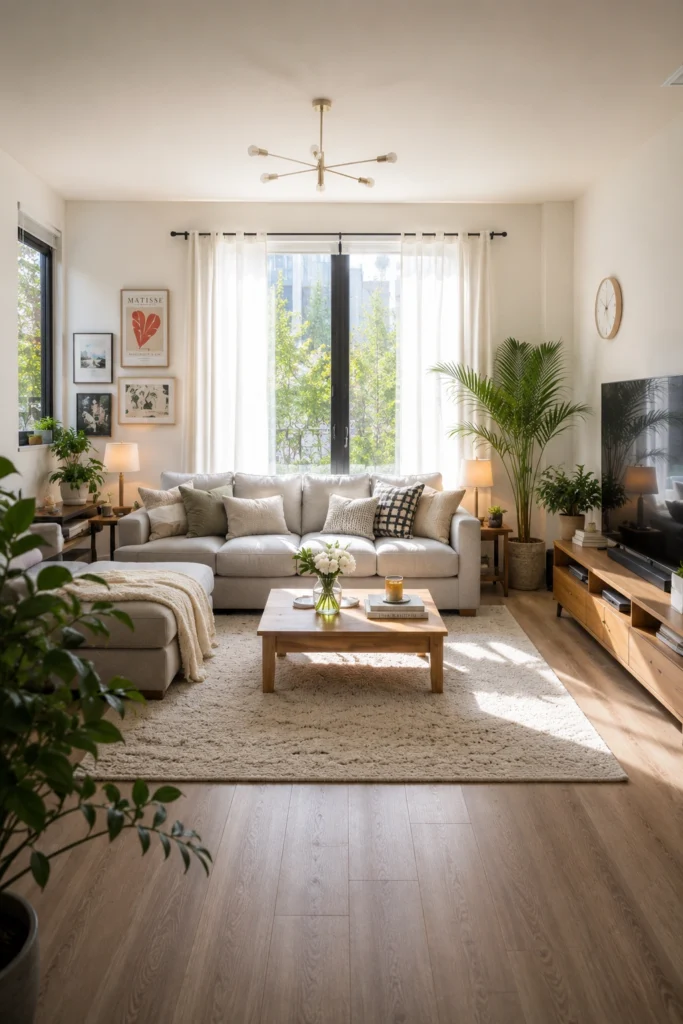
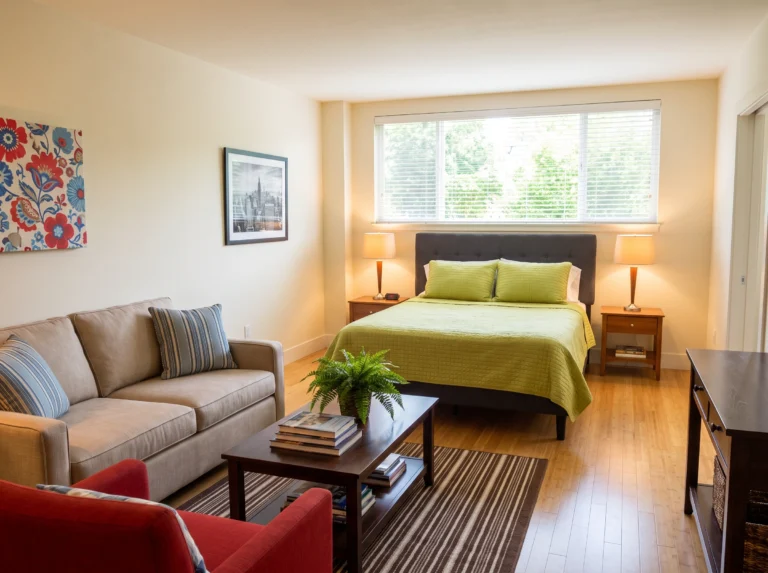
Start with a sofa, rug, and curtains in soft neutrals — cream, warm grey, oatmeal — and your room will already feel bigger and more cohesive. Here’s the thing: neutral doesn’t mean boring. It means your base is doing the hard work of making the space feel open, and your accents get to have all the fun. A few rust-colored pillows, a terracotta pot, a framed print with a pop of red — that’s personality without visual chaos.
This approach also saves money in the long run. Neutrals don’t go out of style. You can swap a pillow cover for $15 when you want a new vibe, without replacing your whole sofa.
Pro tip: Stick to two or three accent colors max. More than that and the room starts to feel like a craft fair rather than a home.
Final Thoughts
A studio apartment isn’t a compromise — it’s a challenge worth taking seriously. The best studios I’ve seen all share one quality: they feel like the person who lives there actually thought about them. Not that they spent a fortune, not that they followed a Pinterest board to the letter. Just that they made real choices about what they wanted their home to feel like.
Pick two ideas from this list. Not ten — two. Try them before the end of the month. Once the room starts responding to you, the rest will follow.
Your home should make you happy, not impressed strangers. Start there, and everything else falls into place.