13 Clever Tiny Studio Apartment Designs That Will Inspire You
You moved into a studio and suddenly realized: the living room is the bedroom, which is also the office, which is also somehow the dining room. Everything is in one room, and making it feel like a home — not just a square box you sleep in — can feel genuinely impossible.
Here’s the thing: studio apartments are actually a designer’s playground, if you know the rules. It’s not about cramming in less — it’s about being intentional with every single thing you do. Here are 13 ideas that work in real life, not just on Pinterest.
1. Use a Half-Wall to Create Two Rooms From One
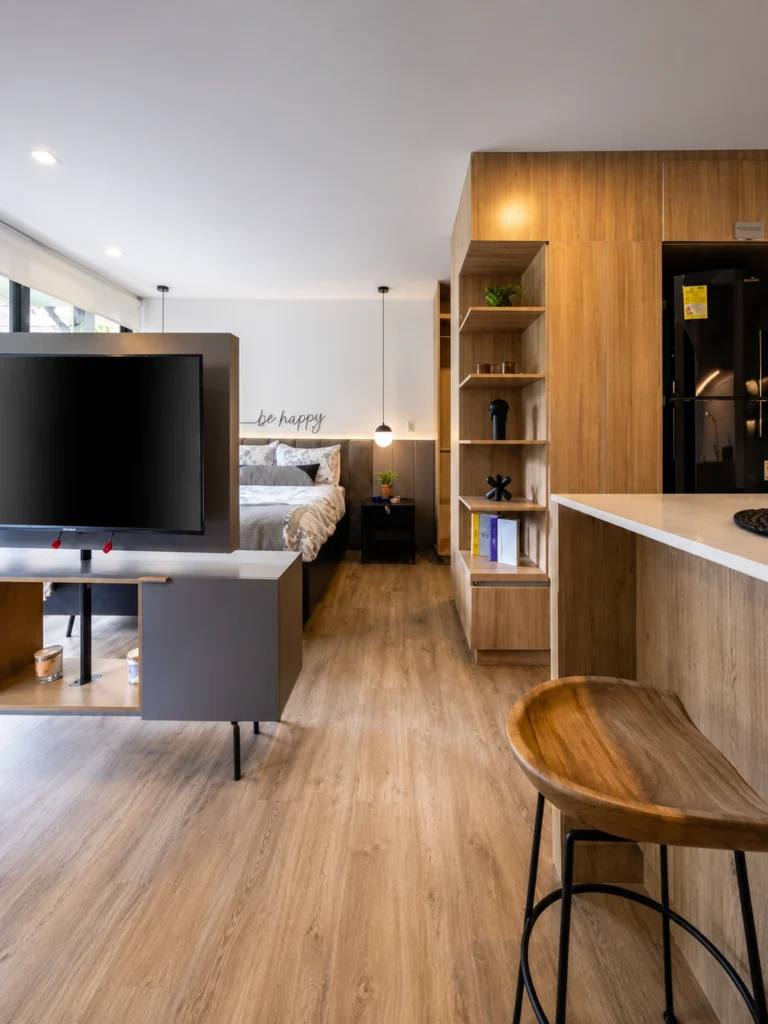
This is the move I wish more people knew about. Instead of a full wall (which kills your light and your sanity), a half-wall partition gives you a defined bedroom zone without closing anything in. Here, the half-wall doubles as a TV mount on one side and a headboard backdrop on the other. Two functions, one piece of architecture.
The “be happy” lettering above the bed is sweet without being cheesy, and the warm wood paneling on the kitchen side keeps the whole space from feeling chopped up. Everything flows.
If you can’t build a half-wall (renters, this is most of you), a tall open bookshelf does the same job — separates the zones, doesn’t block light, and gives you storage. IKEA Kallax against the back of your bed is a classic for a reason.
2. Lean Into Soft, Warm Neutrals When Space Is Tight
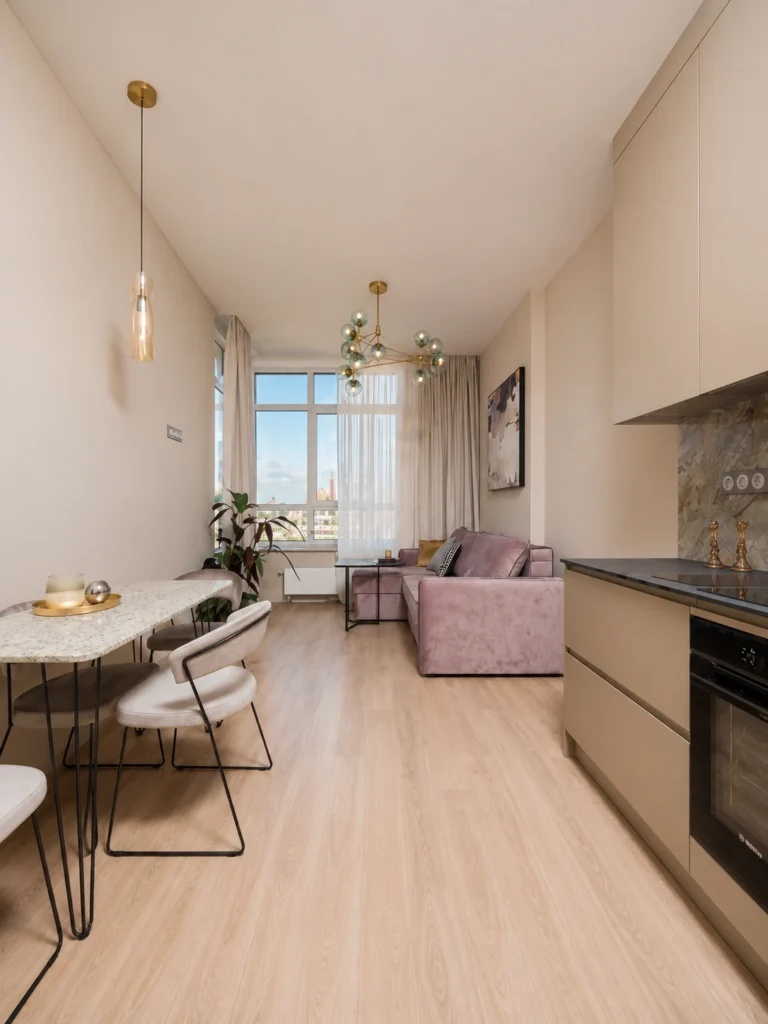
When square footage is limited, your color palette is doing more work than usual. Hard contrasts make a small space feel busy and chopped up. Soft, layered neutrals do the opposite — they make the room feel like one continuous, calm exhale.
This studio nails it: cream walls, beige cabinetry, blush pink sofa, brass accents. Nothing fights. Your eye travels from the kitchen all the way to the window without a single jarring stop, which makes the whole apartment feel longer than it is.
Pro tip: Pick one warm metal (brass, gold, or copper) and stick with it. Mixing metals in a small space is a fast way to make it feel cluttered, even when nothing is actually out of place.
3. Hide the Bed Behind a Color-Blocked Partition
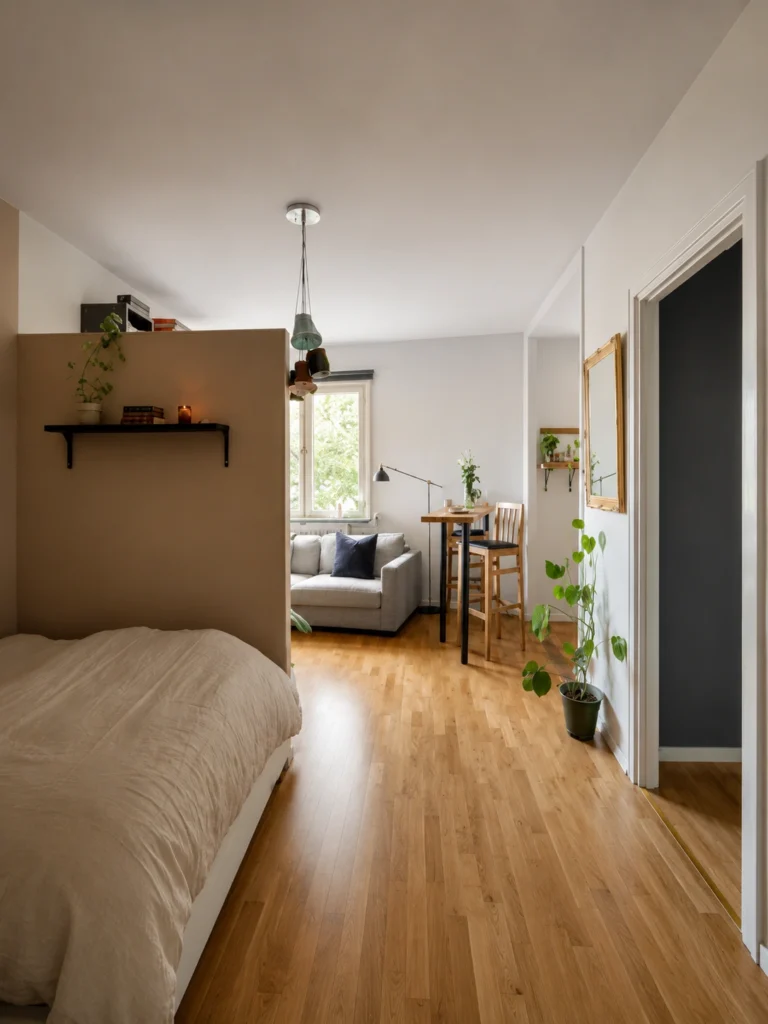
This one is brilliant for two reasons. First, painting the partition wall a warm cocoa brown (against otherwise white walls) makes it feel like an intentional design choice, not a structural compromise. Second, the partition is just tall enough to tuck the bed away — so when you have a guest over, your unmade bed isn’t the first thing they see.
I love the styling here too: a small floating shelf with books, a plant, and a candle on the partition wall does the work of an entire piece of furniture without taking any floor space.
Renter-friendly alternative: You can’t paint a wall this color in most rentals — but you can use a tall folding screen, or even hang a heavy linen curtain on a ceiling track. Same separation, zero damage.
4. Mix Industrial and Cozy for a Studio With Real Character
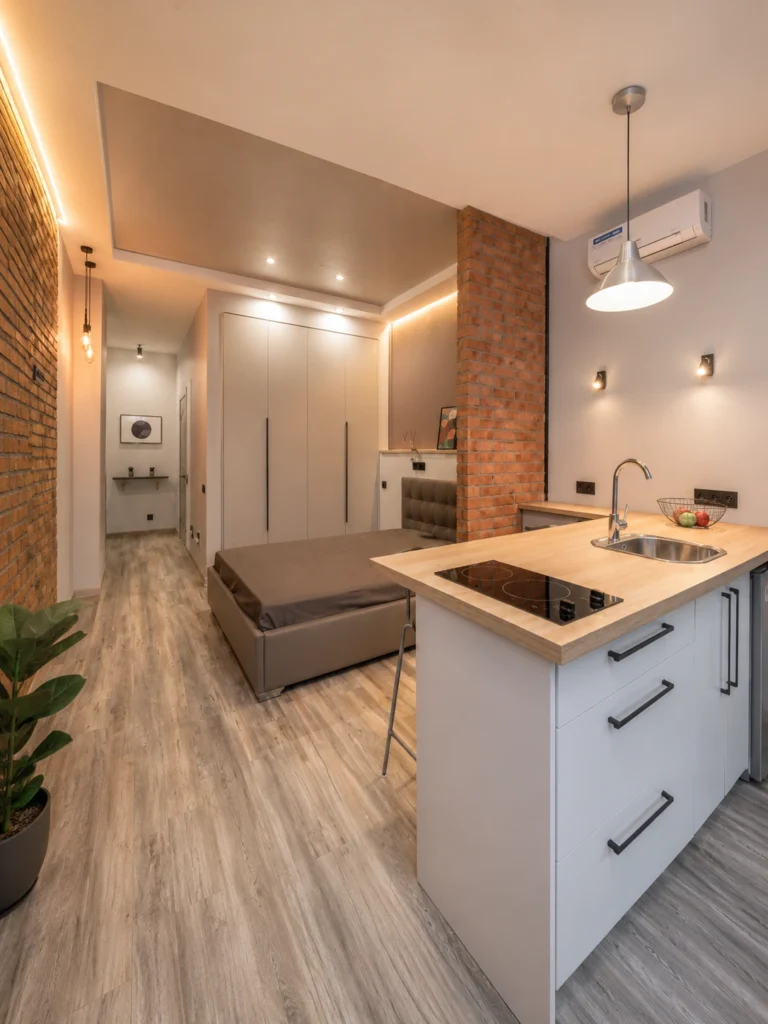
Exposed brick + warm cove lighting + butcher-block counters = the kind of studio that feels like it belongs to someone interesting. The LED strip tucked into the ceiling cove is the secret weapon here. It’s called indirect lighting, and it adds a soft, glowing warmth that overhead lights can’t touch.
If you have any architectural feature in your apartment — exposed brick, a beam, a weird nook — don’t hide it. Highlight it. Most builders would have painted over that brick wall. The person who lived here knew better.
Pro tip from someone who learned the hard way: Warm LED strips (2700K-3000K) only. Cool white LEDs will make your cozy studio look like a parking garage at night.
5. Anchor Each Zone with Its Own Rug
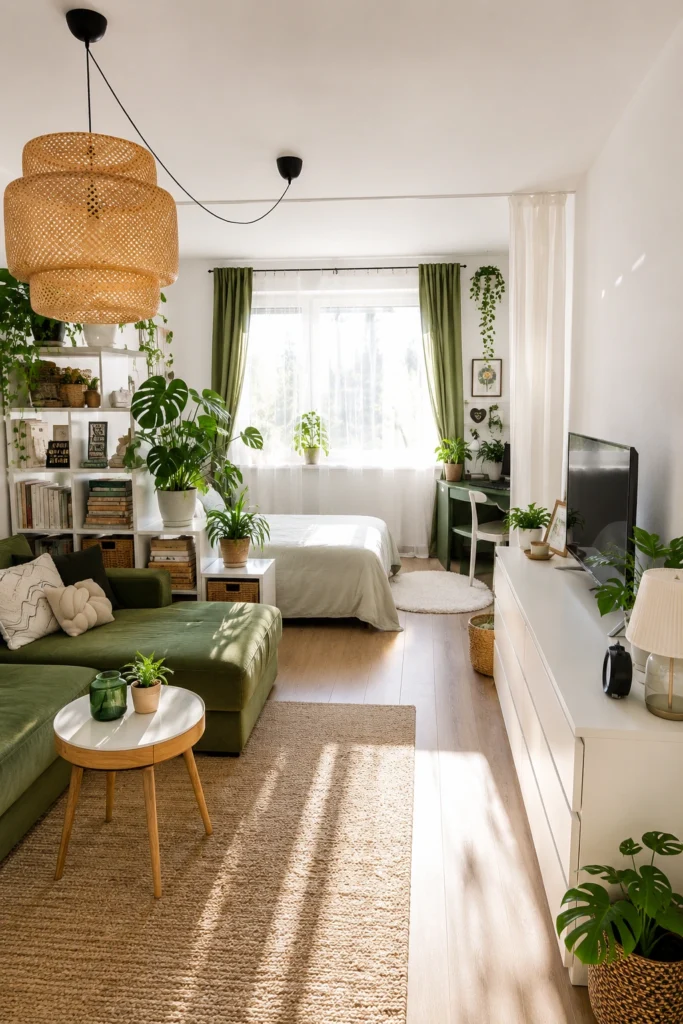
This is the part most people skip — and that’s exactly why their studio feels like one giant, confusing room. Rugs are your invisible walls. A jute rug under the sofa creates a “living room.” A round rug beside the bed signals “bedroom.” You don’t need actual walls when rugs do the zoning work for you.
Pro tip: Stick to natural fibers — jute, wool, or cotton — in warm neutrals. They layer beautifully and don’t compete with each other. If your studio has light wood floors, a jute rug is almost always the right answer.
6. Go Bird’s-Eye: Make the Layout Work Overhead
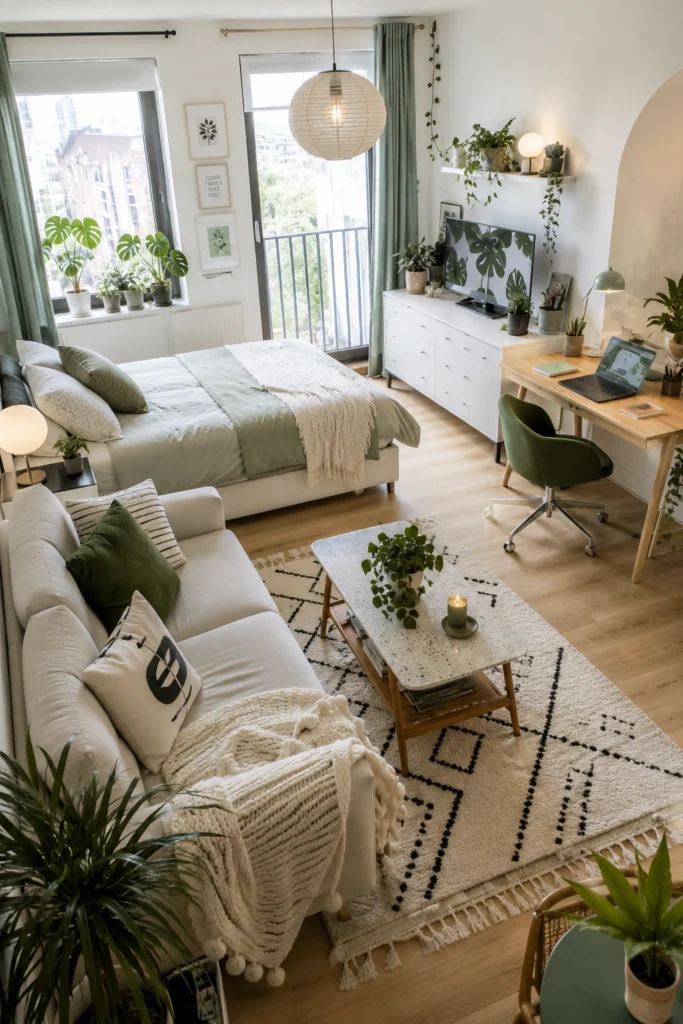
Before you move a single piece of furniture, sketch (or mentally walk through) your floor plan from above. In a studio, traffic flow is everything. You need a clear path from the door to the bed, from the kitchen to the couch. Push furniture against walls only when it makes sense — floating a sofa in the middle of the room, with a rug beneath it, actually makes the space feel bigger, not smaller.
Think of your studio in thirds: sleeping zone, living zone, working zone. Each gets its own corner. Overlap only where necessary.
7. Keep Your Color Story Cohesive
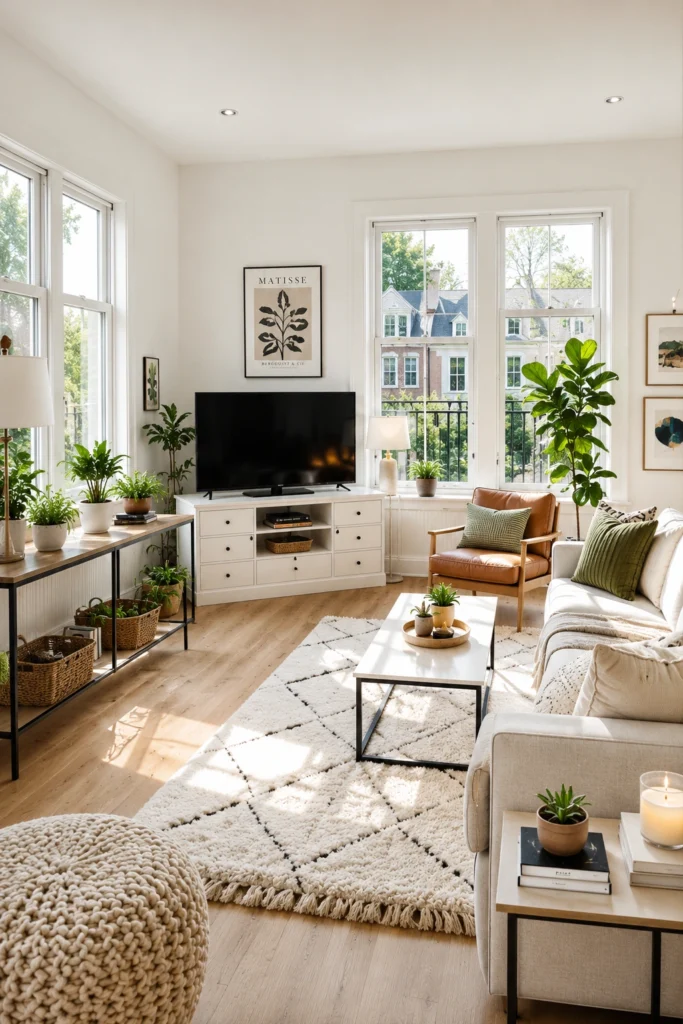
In a small space, a chaotic color palette reads as chaos — full stop. Pick two or three colors and stick to them throughout. The most successful studio palettes I’ve seen are neutral-led with one accent: cream and white with forest green, or warm beige with terracotta and brass.
Don’t be afraid of white walls. In a studio, white isn’t boring — it’s breathing room. Let your plants, textiles, and art carry the color.
8. Use a Bookshelf as a Room Divider
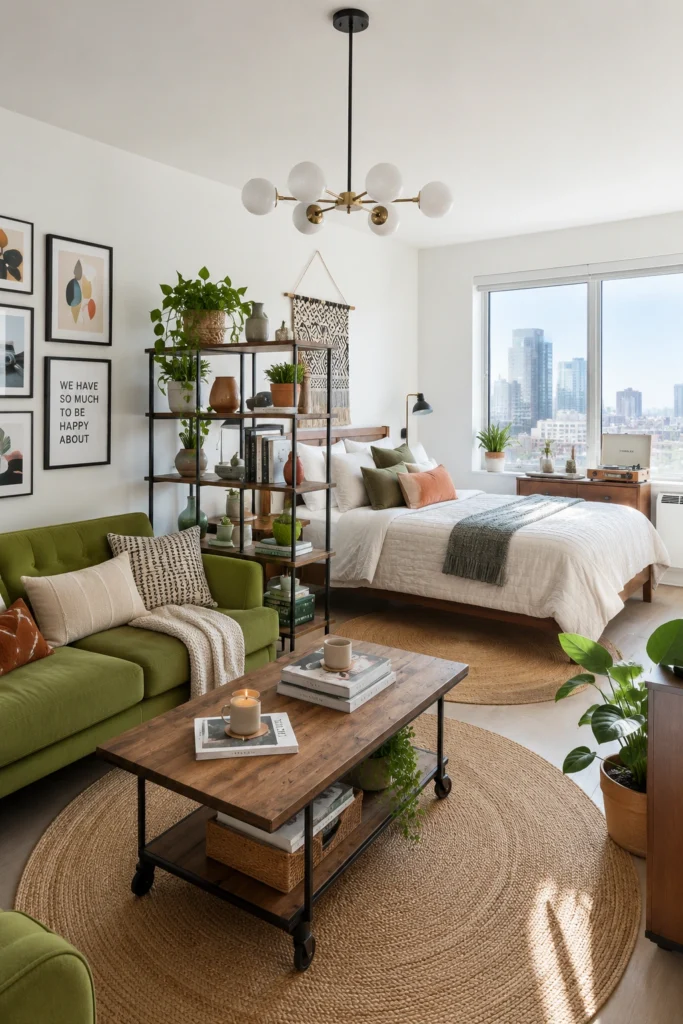
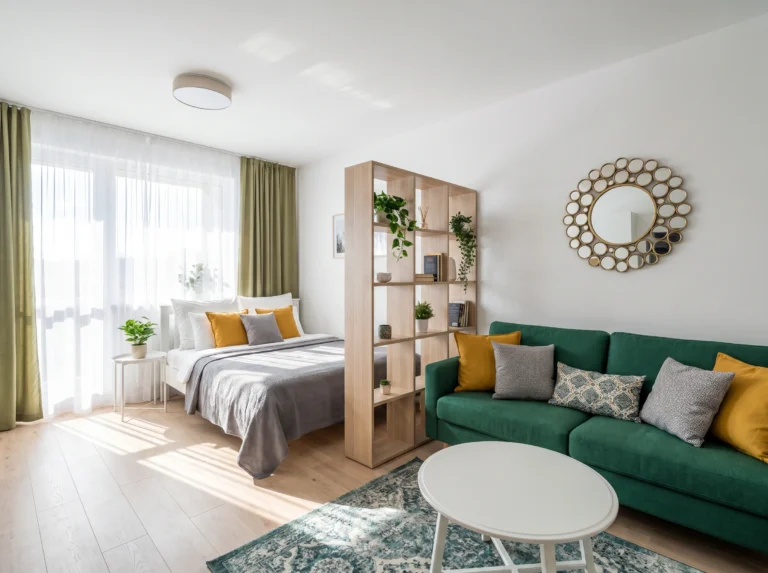
A tall, open-backed bookshelf positioned perpendicular to the wall is one of the smartest things you can do in a studio. It separates your sleeping area from your living area without blocking light or making the room feel smaller. Fill it with plants, books, small ceramics — and suddenly you have architectural interest and storage.
This works especially well with IKEA’s KALLAX or any open metal shelving unit. Keep one side styled for the living zone, the other more functional near the bed.
Renter-friendly alternative: No drilling needed — freestanding shelving units work perfectly here.
9. Let Natural Light Do the Heavy Lifting
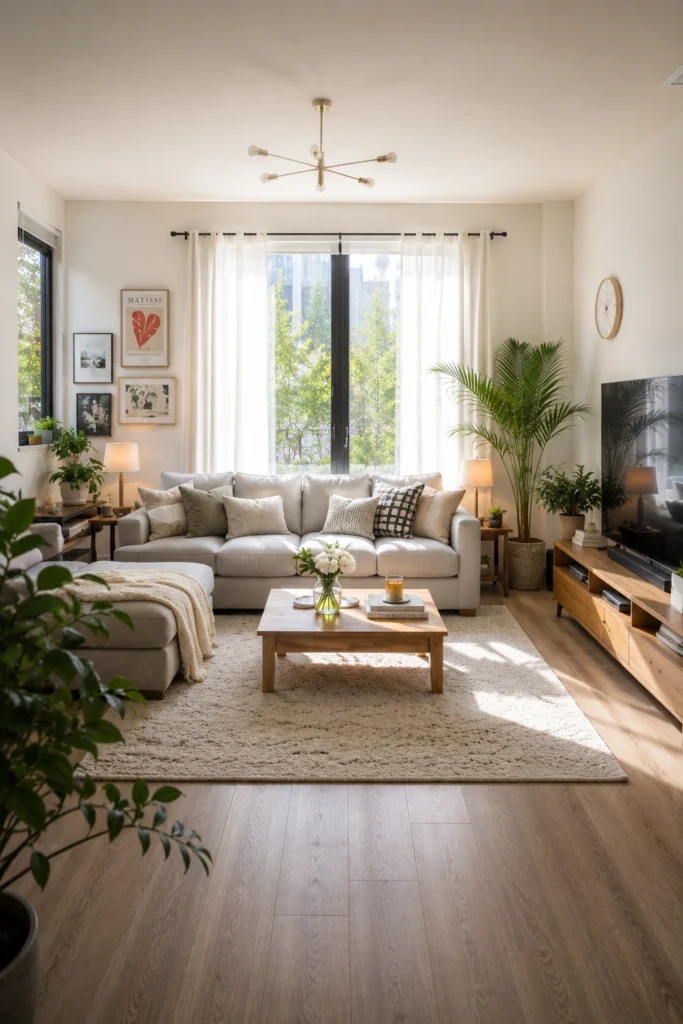
If you have a window, treat it like the most valuable thing in your apartment (because in a studio, it is). Hang curtains high — close to the ceiling — and wide — well past the window frame on both sides. This tricks the eye into seeing a much larger window than you actually have, and it floods the room with light even when the curtains are half-drawn.
Sheer white or linen curtains are your best friend here. Heavy blackouts in a studio can make the whole room feel like a cave. Save those for the bedroom zone specifically, layered behind the sheers.
10. Keep Furniture Low and Light
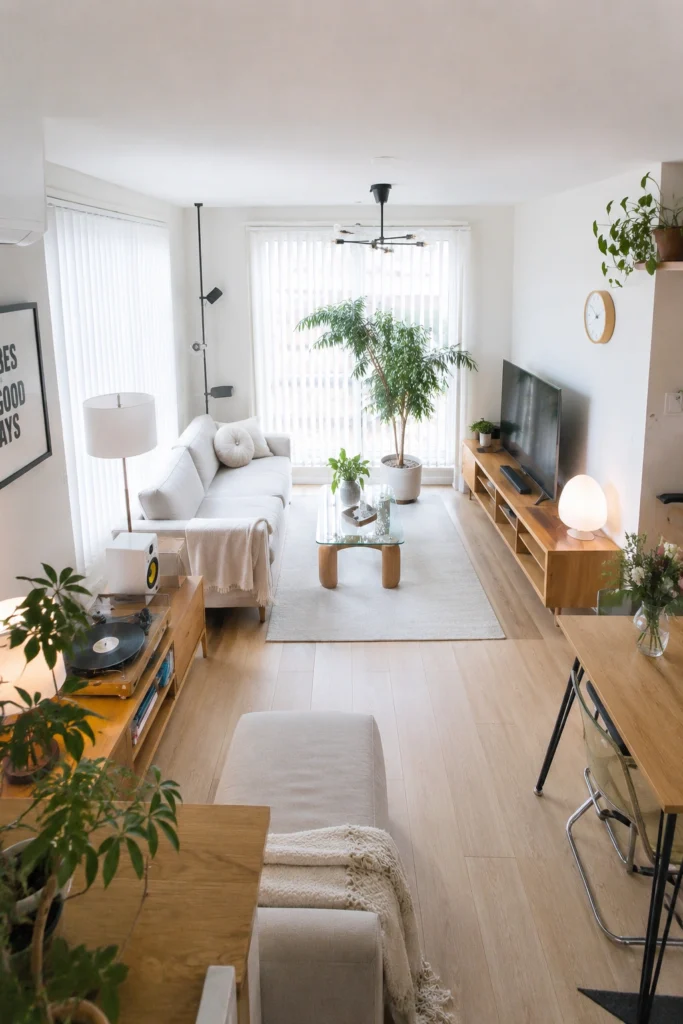
Low-profile furniture is a studio apartment’s best friend. A low sofa, a low media console, a low bed frame — all of these keep sight lines open and make the ceiling feel higher than it actually is. Pair that with furniture on legs (rather than pieces that sit flush to the floor) and you create the illusion of floor space that makes a room breathe.
Pro tip: Glass or acrylic coffee tables are worth the investment in a small space. They take up zero visual weight. You can see straight through them, which keeps the floor reading as open.
11. Make the Kitchen Feel Part of the Home, Not an Afterthought
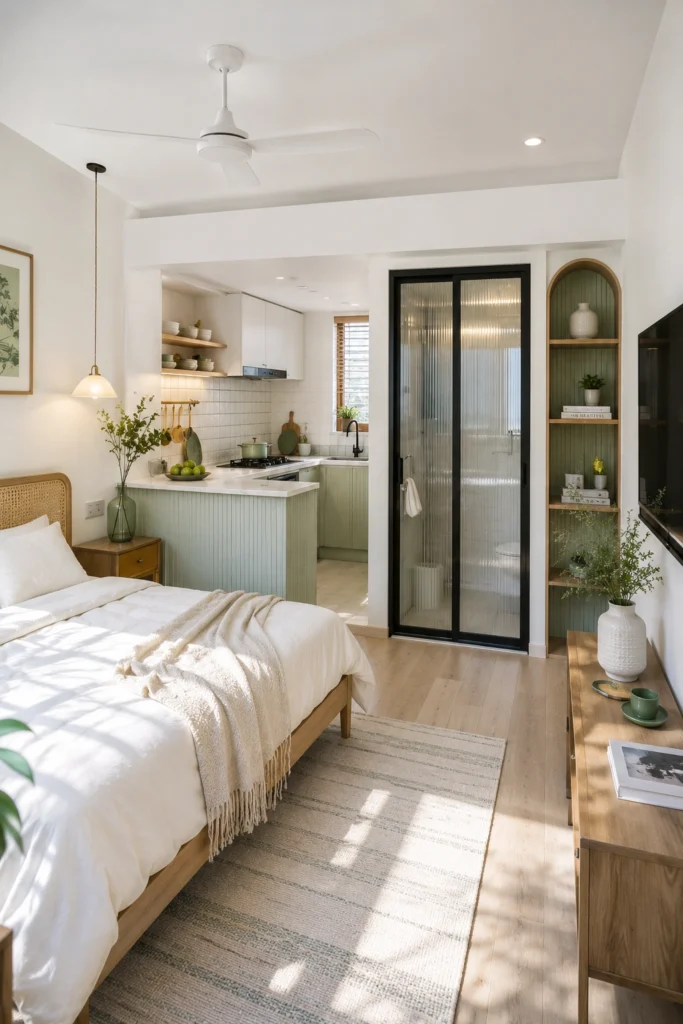
In a studio, your kitchen is always visible — so it needs to look intentional. This doesn’t mean a full renovation. Swap out basic cabinet hardware for something with personality (matte black or brushed brass go a long way). Add open shelving above the counter with matching ceramic jars and a small plant or two. Use a pendant light if you can — even a plug-in pendant hung over a kitchen island creates a separate “room” moment.
The sage green cabinets in this photo are a dream, but if you’re renting? Peel-and-stick contact paper in a muted tone can work wonders on flat cabinet fronts.
12. Think Vertically, Always
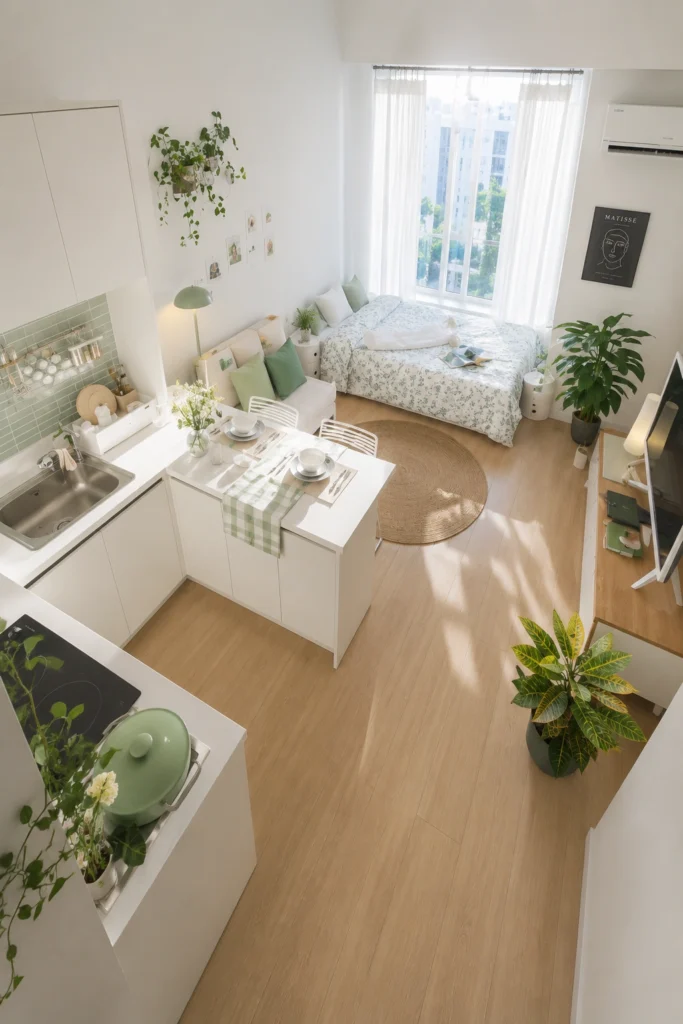
In a studio, your walls are free real estate. Floating shelves, wall-hung plants, pendant lights, art stacked vertically — these all draw the eye up, which makes the room feel taller. A trailing pothos hung high in a corner, or a collection of small art prints arranged vertically on a wall, does more for the perceived size of a room than almost any furniture swap.
The trick is to vary the heights. Don’t hang everything at the same level — stagger, layer, and let things overlap slightly for a curated-not-staged feel.
13. Define the Sleeping Zone Like It’s a Real Bedroom
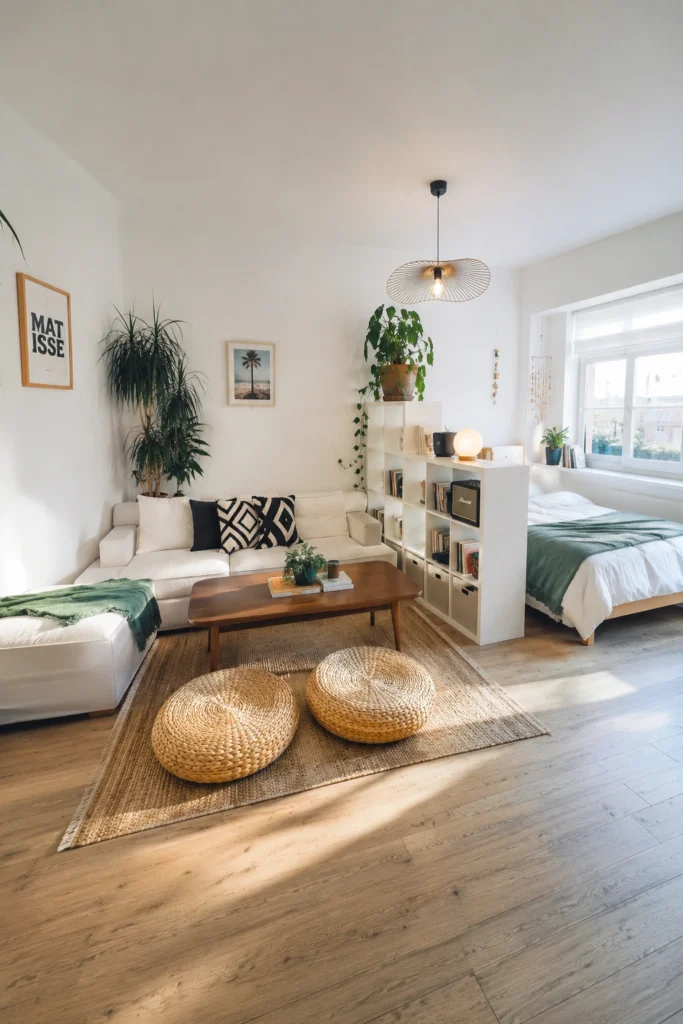
Even without walls, your bed deserves its own moment. Use a bookshelf, a curtain hung from a ceiling track, or simply the positioning of your rug to draw a clear line between sleeping and living. Add a small lamp on the nightstand side (not a floor lamp that serves the whole room), and consider a different texture on the bed — linen duvet, a heavier throw blanket — to make it feel distinct from the sofa zone.
Your sleeping space should feel like a retreat, even if it’s three feet from your couch. That psychological separation matters more than you’d think.
Final Thoughts
Studio living doesn’t have to mean compromise. The truth is, some of the most beautiful, intentional homes I’ve ever seen have been under 400 square feet. Small forces you to be deliberate — and deliberate choices are how great spaces happen.
Start with zones. Get a rug. Keep your palette tight. Let in as much light as possible. And don’t be afraid to treat your studio like a real home, because that’s exactly what it is.
A small space isn’t a limitation — it’s an invitation to be more thoughtful about what you bring into it.