12 Beautiful Neutral Color Studio Apartment Ideas for Small Spaces
Neutral doesn’t mean boring — it means flexible. In a studio, where your bed, sofa, and everything else share one room, a calm neutral base is what keeps the space from feeling chaotic. Here’s the thing: the magic is in the accents you layer on top. These 12 studio apartments prove that soft creams, warm woods, and quiet greys can feel just as rich as any bold color scheme.
1. Warm Cream with Sage Green Accents
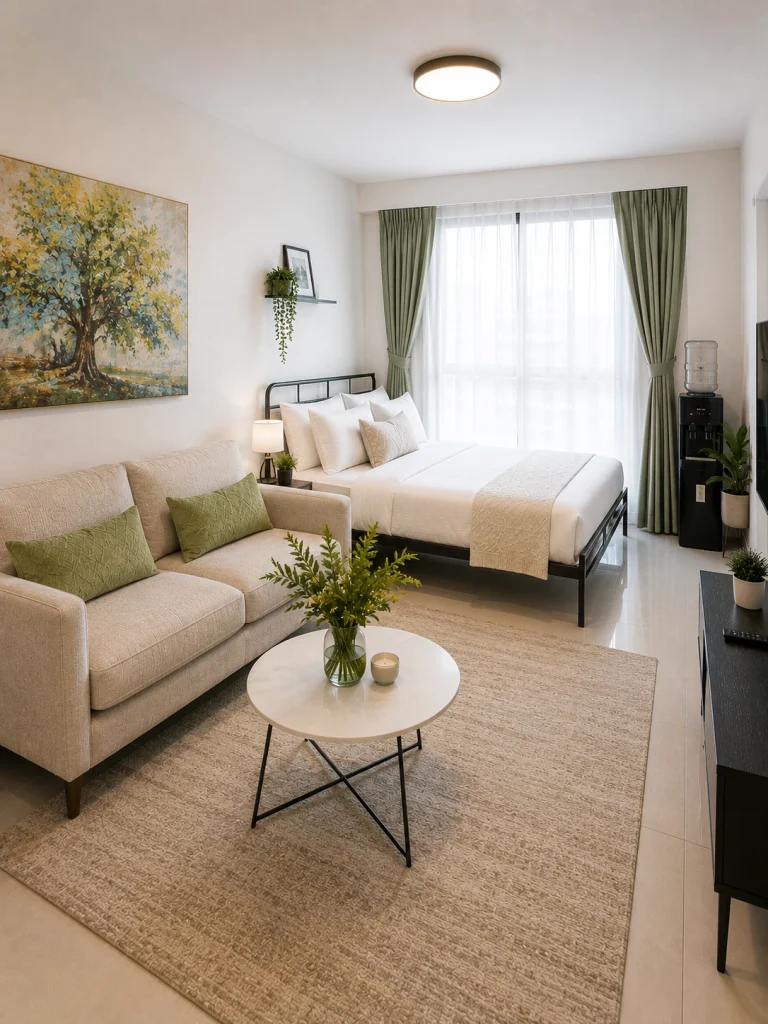
Cream is the easiest neutral to live with, and here it does all the heavy lifting. The sofa, bedding, and walls stay soft and quiet, while sage green pillows and curtains add just enough life to keep things from feeling flat. A jute rug grounds the seating zone and quietly separates it from the bed — a small trick that makes a studio read as two rooms. The green tree art overhead pulls the whole scheme together beautifully.
Pro tip: Match your curtain color to a smaller accent — like throw pillows — so the whole room feels intentional, not random.
2. Honey Wood with Earthy Warmth
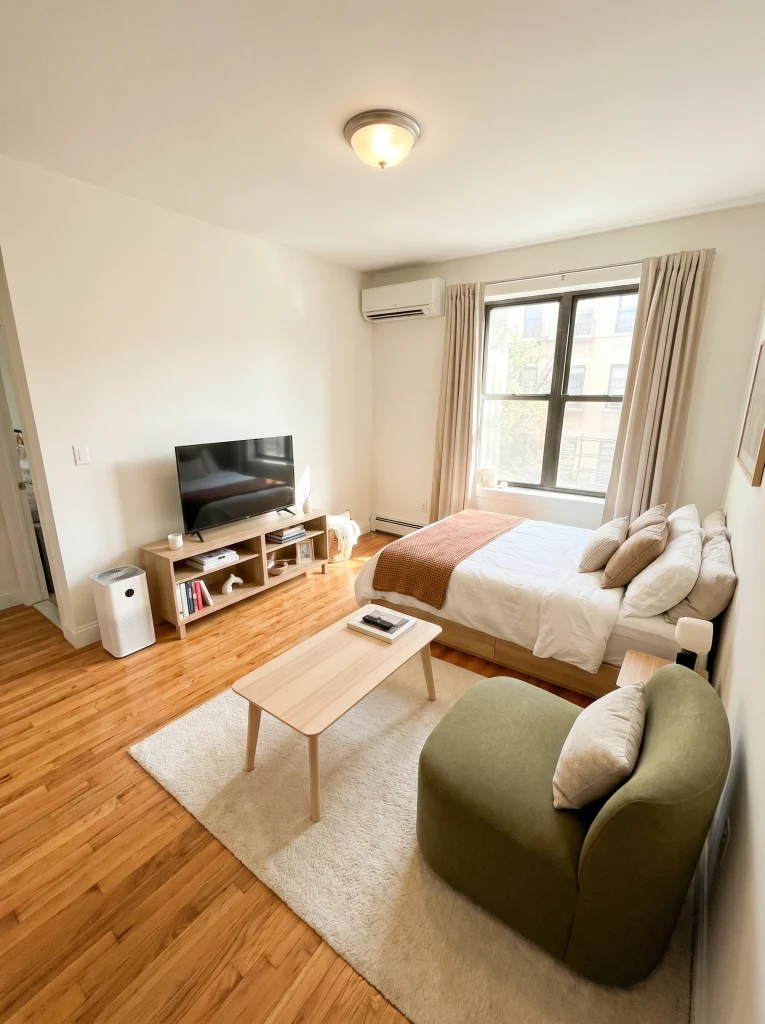
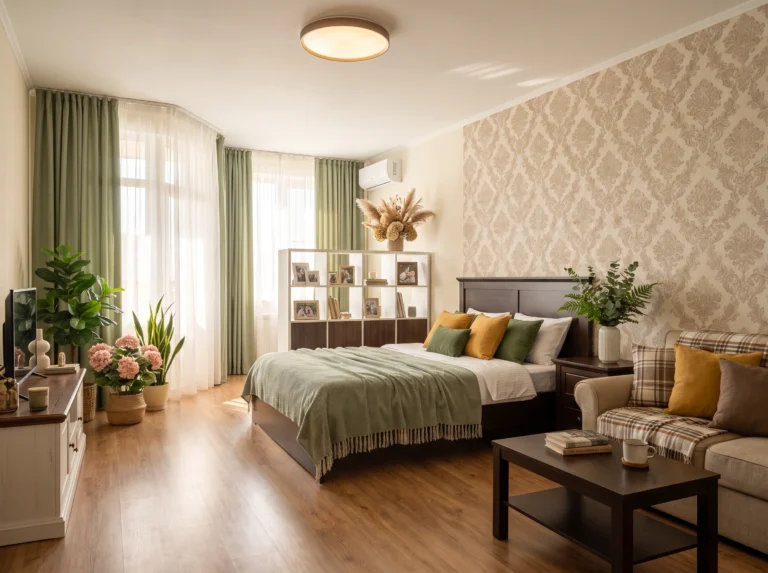
Not all neutrals are cool and pale. Warm honey wood floors instantly make a studio feel lived-in and inviting, almost like the room has been soaking up afternoon light for years. Pair them with taupe curtains and creamy bedding, then bring in an olive chair and a terracotta throw for gentle contrast. The result feels grounded and calm without a single loud color in sight — proof that texture and tone matter more than brightness.
Sofia’s honest take: Warm wood floors hide dust and scuffs far better than cool grey ones. In a small space you’ll actually appreciate that.
3. Crisp White with Black and White Contrast
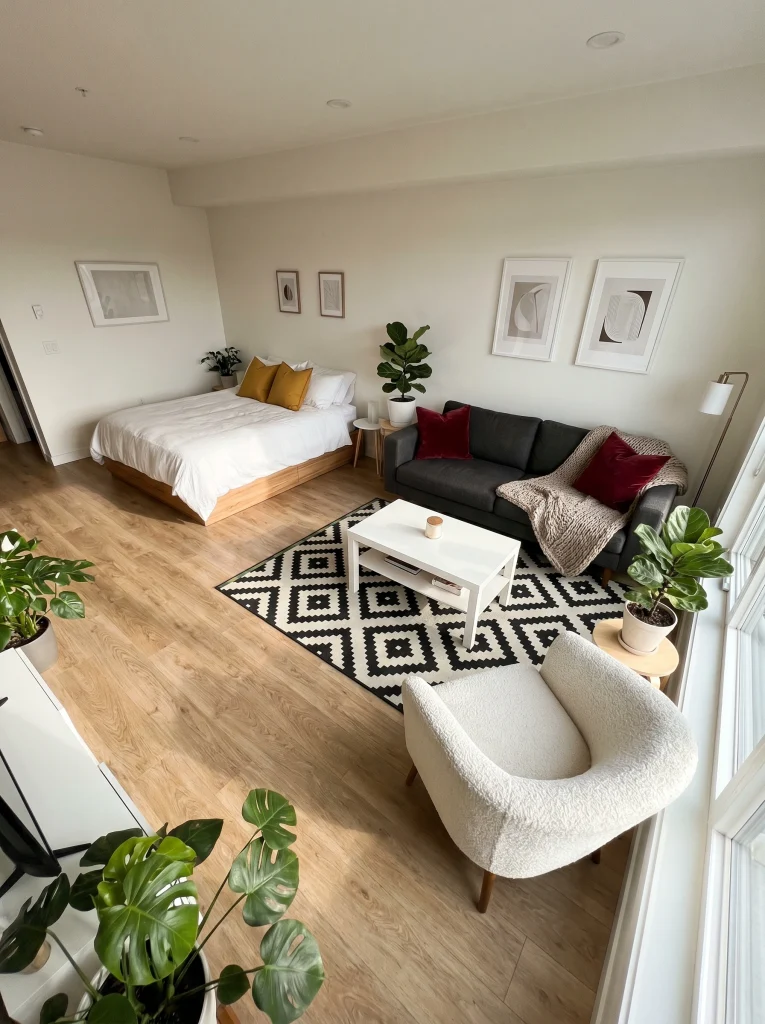
White walls make a studio feel bigger — that part’s obvious. What makes this one work is the graphic black-and-white diamond rug that anchors the living zone and gives the eye a clear focal point. A charcoal sofa and a soft boucle chair keep the palette tight, while a few leafy plants add the only real color in the room. It’s clean, modern, and endlessly easy to restyle whenever you feel like a change.
Budget vs. splurge: Save on the patterned rug (trends shift). Splurge on the boucle chair — you’ll keep that shape for years.
4. Soft Cream and Walnut for a Hotel Feel
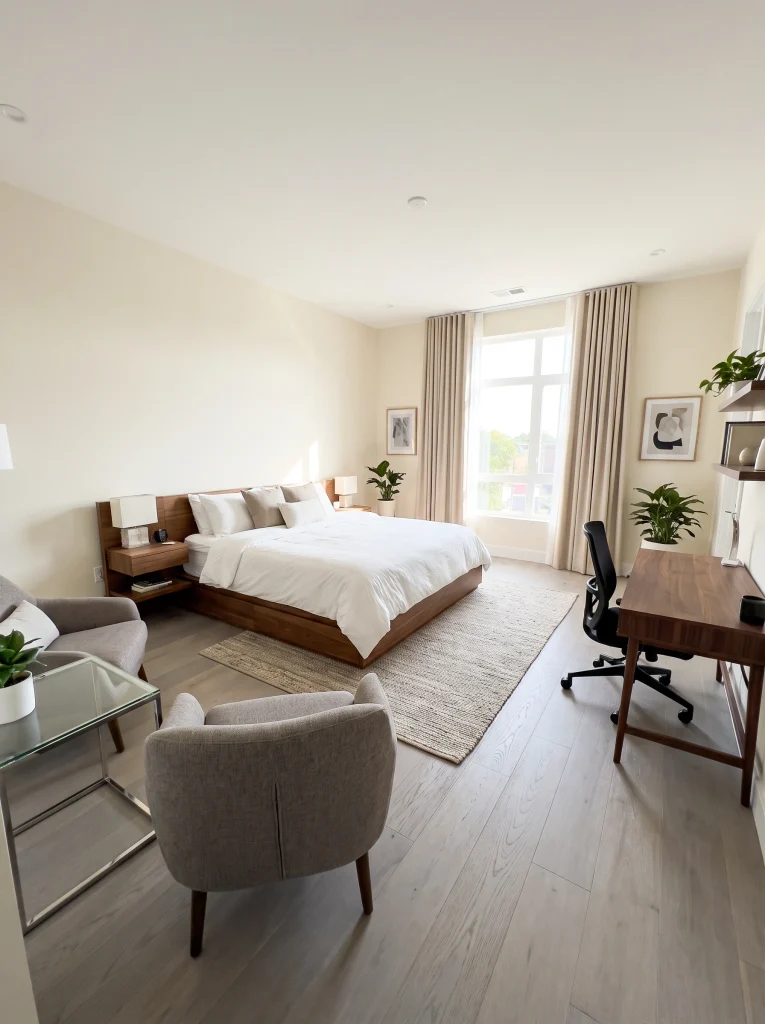
Want your studio to feel like a boutique hotel? Keep the walls creamy and let rich walnut furniture do the talking. The oatmeal rug under the bed adds softness underfoot, and matching grey armchairs create a little lounge moment tucked away from the sleeping zone. A slim walnut desk by the window sneaks in a workspace without crowding anything. Everything here whispers rather than shouts, which is exactly why it feels so restful to come home to.
My favorite: A walnut bed with built-in nightstands. It saves floor space and looks far more expensive than it usually is.
5. Neutral Base with Blush Peach Softness
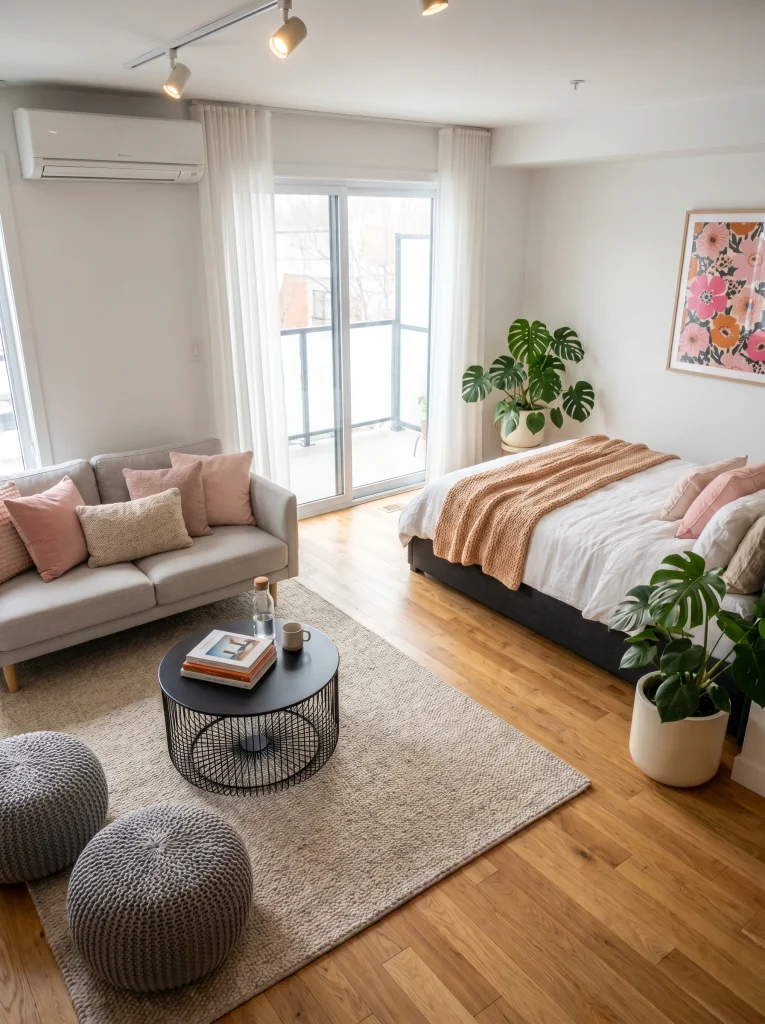
Here’s proof that neutral can still feel warm and a little romantic. A crisp white-and-oak base keeps the studio bright and open, while blush pillows and a peach knit throw add the softest hint of color without tipping into full-on pink. Grey knit poufs pull double duty as extra seating — a smart move when floor space is precious. Add a couple of leafy plants and the whole room feels fresh, gentle, and genuinely calming.
Renter-friendly alternative: Skip bulky extra chairs and use floor poufs instead. They tuck away easily and won’t leave marks on the floor.
6. Warm Beige with Bold Red Pops
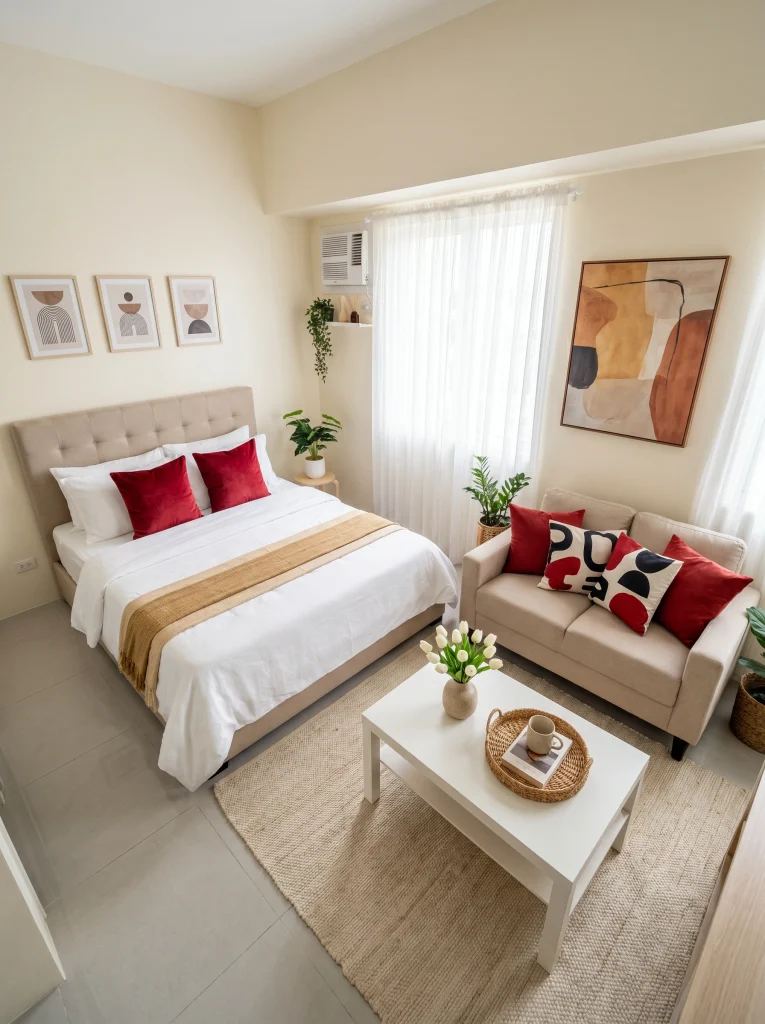
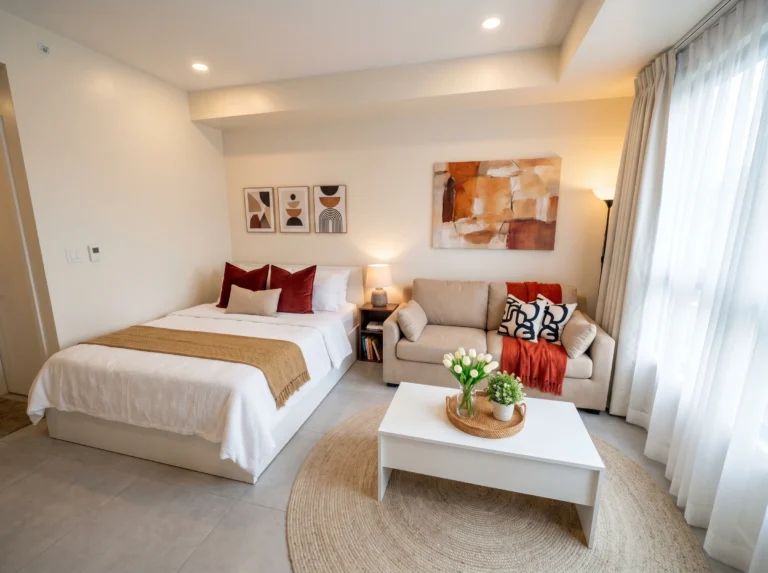
A warm beige backdrop is the perfect canvas for a punchy accent color, and red does the job beautifully here. The tufted taupe headboard and white bedding keep things soft and neutral, then a few red velvet pillows inject energy without overwhelming the small footprint. A jute rug ties the sleeping and sitting areas together so the two zones feel like one considered space. The abstract art above the sofa echoes those warm tones perfectly.
I’ve tested this: Two or three red pillows is the sweet spot. Any more and a studio this size starts to feel busy fast.
7. Greige with Olive and Mustard Layers
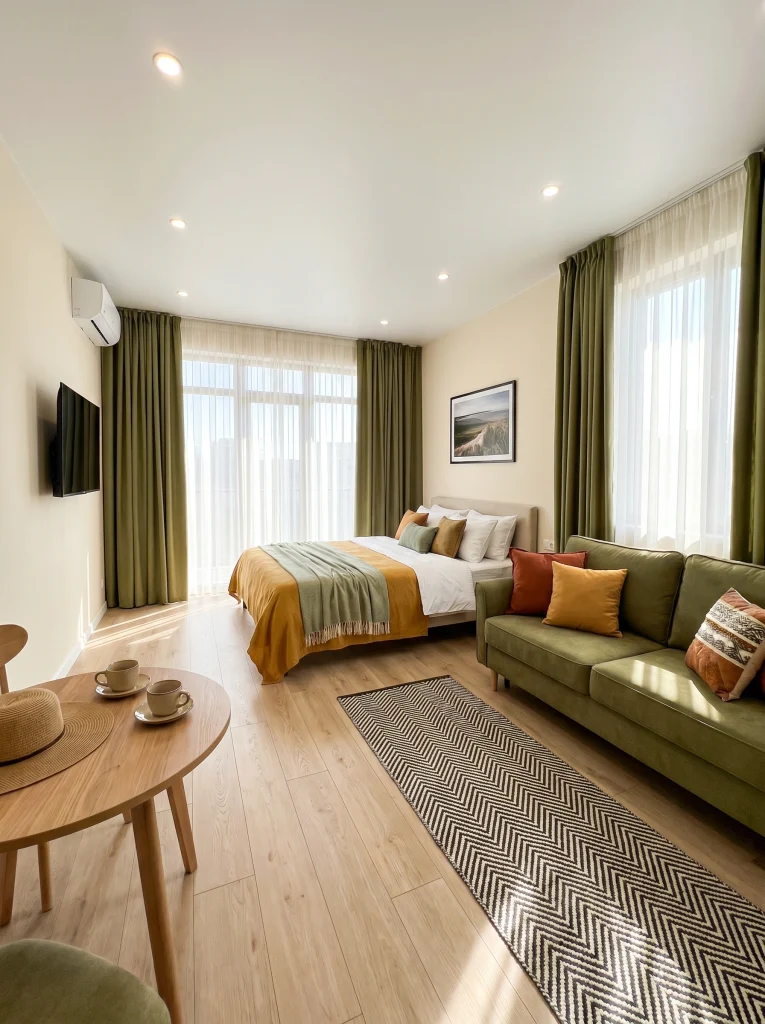
Greige — that grey-meets-beige sweet spot — is one of the most forgiving neutrals you can choose for a studio. Against light oak floors, it lets richer tones like olive and mustard truly shine. The olive sofa and matching curtains frame the space and pull your eye toward the windows, while mustard and sage bedding add a sunny, welcoming warmth. Layered, earthy, and genuinely cozy — the kind of studio you never quite want to leave.
Don’t waste your money on: Ultra-trendy neon accents. Earthy tones like olive and mustard age far better and won’t feel dated next season.
8. Bright Cream with Rust and Lime Energy
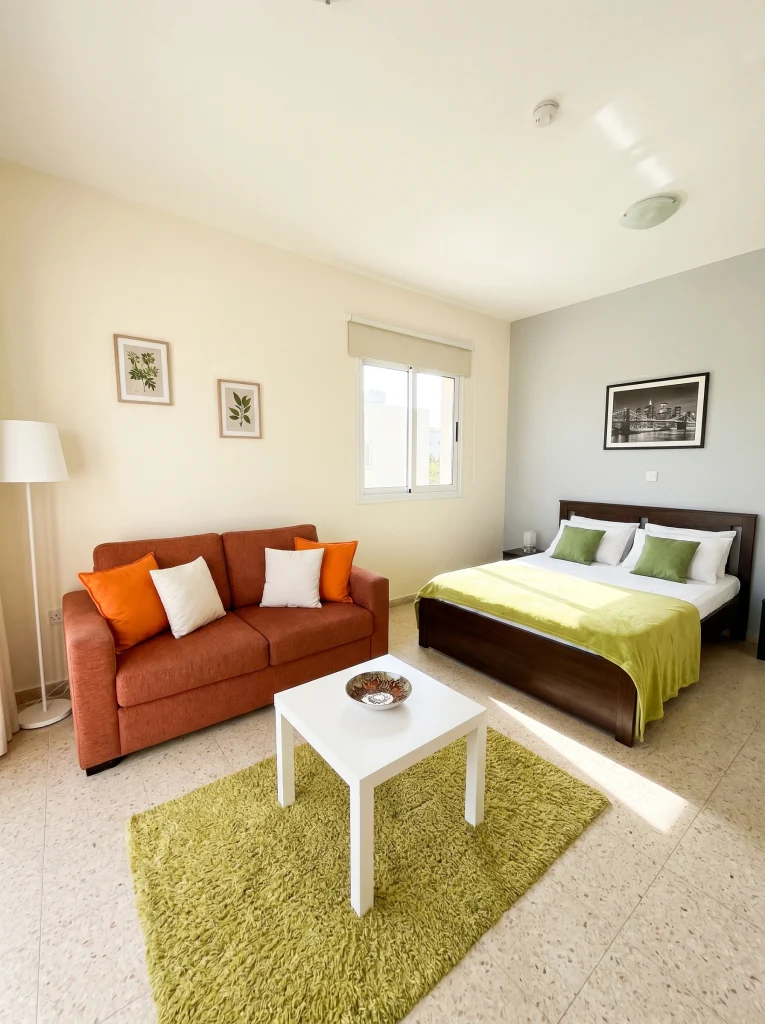
If you love color but still want a neutral foundation, this is your blueprint. Bright cream walls and pale terrazzo floors keep everything feeling open and airy, so a rust loveseat and a lime-green shag rug can go bold without closing the room in. The white coffee table keeps the center light and uncluttered. It’s playful, cheerful, and undeniably fun to walk into every single morning — a studio that genuinely lifts your mood.
My tip: In a color-heavy studio, keep your big surfaces neutral. It gives your eyes somewhere to rest between all the bright pieces.
9. Neutral Shell with Teal and Terracotta Jewel Tones
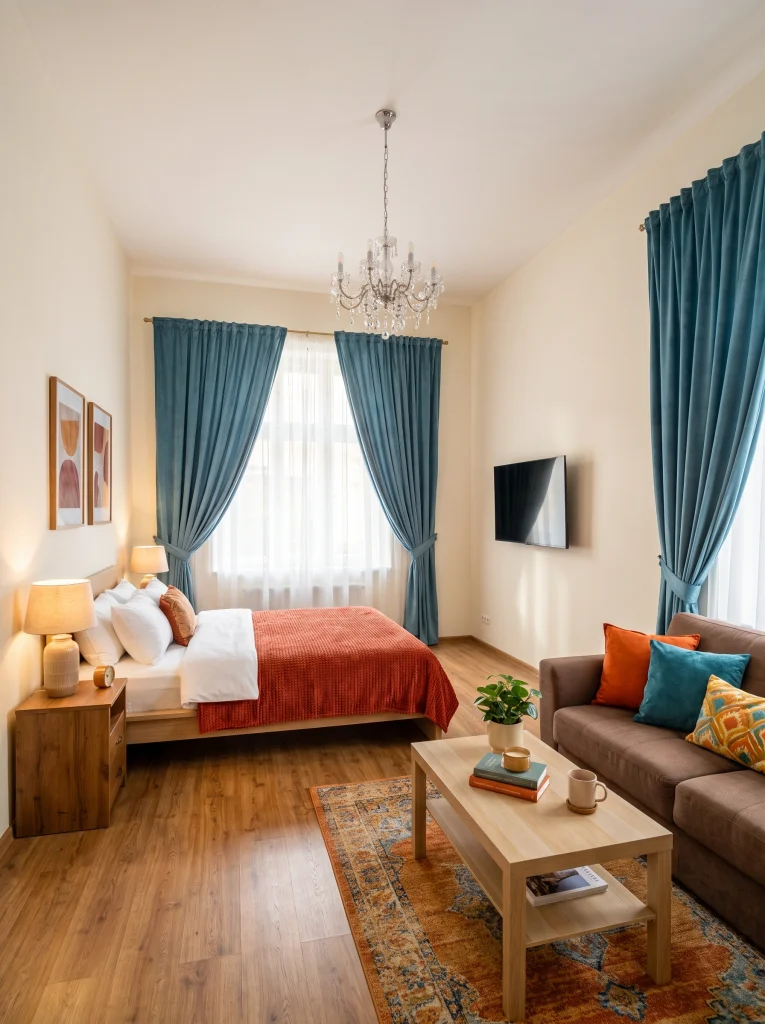
This is how you make a neutral studio feel genuinely luxurious. Cream walls and warm wood floors form a quiet shell, then teal velvet curtains and a rust bedspread bring in rich, jewel-toned drama. A patterned Persian rug ties the whole palette together underfoot, and a small crystal chandelier adds a touch of unexpected glamour overhead. The look is neutral at its core, but never plain — a masterclass in balancing calm with character.
Sofia’s honest take: Velvet curtains transform a rental more than almost anything else. They add instant weight and warmth, and you take them with you when you go.
10. Add Plants — But Not Too Many
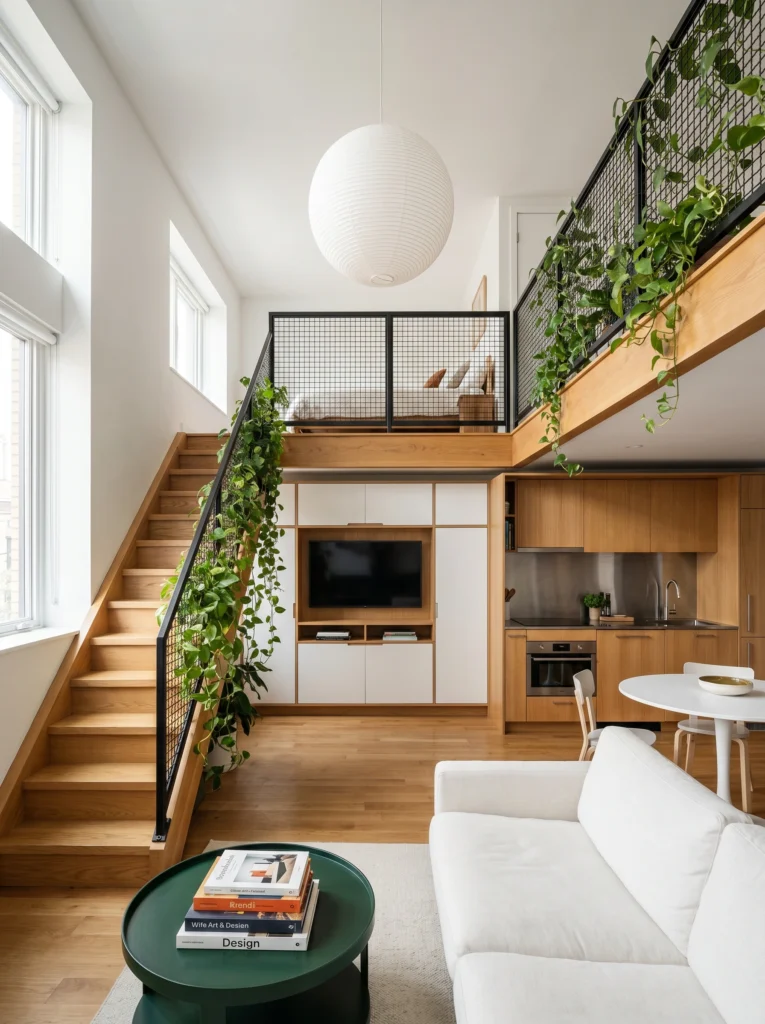
Plants are the cheapest way to add life to a neutral palette. They soften hard lines, they break up beige, and they make a small apartment feel like someone actually lives there.
But please — don’t turn your studio into a jungle. Three to five plants in different sizes, scattered through the space, will do more than fifteen crammed onto one shelf. A tall floor plant near the window, a couple of trailing pothos on a shelf, one statement monstera in a corner. Done.
If you’re a serial plant killer, buy two or three really good fakes from a place like Afloral or H&M Home. Mix them with one real plant and nobody can tell. I won’t tell either.
11. Pull the Bed Away From the Couch
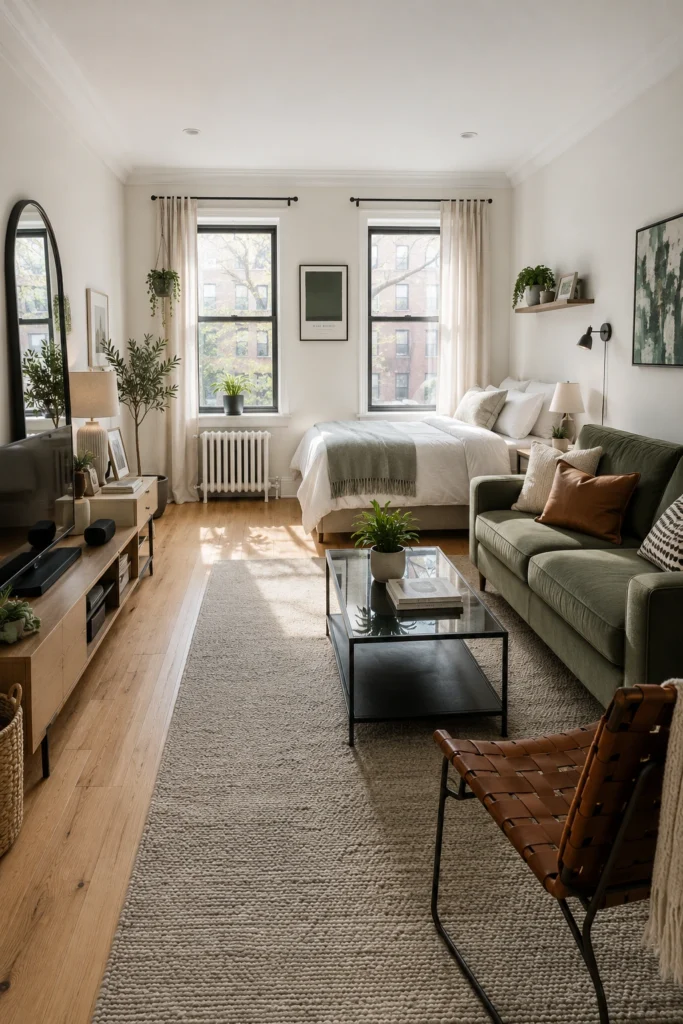
The biggest mistake I see in studios: people shove the bed against one wall, the couch against the opposite wall, and call it a day. Now the bed is the first thing you see when you walk in. The couch faces the bed. It looks like a dorm room.
Instead, orient the bed so it faces a window or a piece of art, not the living area. Even a foot or two of angle change makes the bed feel like its zone and the couch feel like another. The eye stops bouncing between them.
12. Add Olive Green as Your One Accent Color
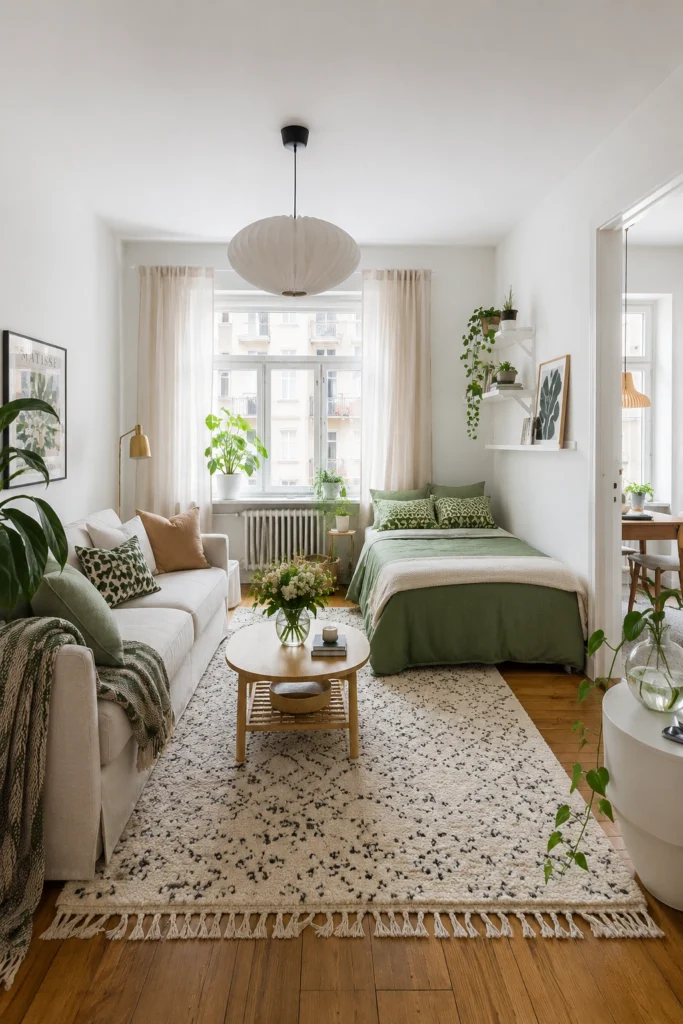
Pick one accent color and run it through the whole space — three or four times, no more. Olive green is having a long moment for a reason: it sits next to wood, cream, black, and white without arguing with any of them.
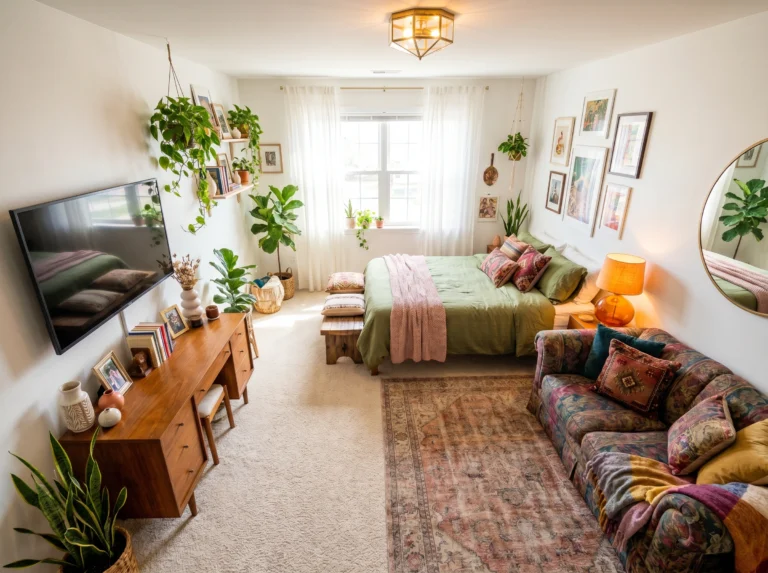
Here, the green shows up on the bedding, the throw, a couple of pillows, and one piece of framed art. That’s it. The room doesn’t feel themed, it feels intentional. Most studios fail because they have eight accent colors fighting for attention.
My tip: Choose your accent color, then walk through your studio and remove anything that doesn’t agree with it. Donate, store, or hide it. The room will breathe immediately.
Final Thoughts
A neutral palette isn’t boring — it’s the foundation that lets everything else in your studio breathe. The wood, the textures, the one accent color, the plants, the art: they all read clearer against a soft, quiet base. That’s why neutral studios feel calm instead of cramped, even when they’re small.
Pick two or three ideas from this list. You don’t need to do all thirteen. Maybe it’s the curtain divider and the gallery wall this weekend. Maybe it’s just clearing your kitchen counter and buying one good lamp. The point is to start.