How To Make A Studio Apartment Feel Less Depressing (Without Moving)
Let’s be honest: there’s a specific kind of sadness that comes with walking into a studio apartment that feels more like a hotel room than a home. One blank wall, one harsh overhead light, a bed shoved in the corner because there’s nowhere else to put it. You’re not crazy — your space really is making you feel a little flat. Here’s the thing: you don’t need to move, renovate, or spend a fortune to fix it. You just need to make a few honest changes that turn the space from “I sleep here” to “I actually live here.”
I’ve lived in three studios across two cities. Some were nicer than others. All of them taught me the same lesson: a small space isn’t a design problem — it’s a clarity problem. Once you figure out what you actually want the space to do for you, the decor part gets surprisingly easy.
Here’s how to do it.
1. Start By Naming the Real Problem
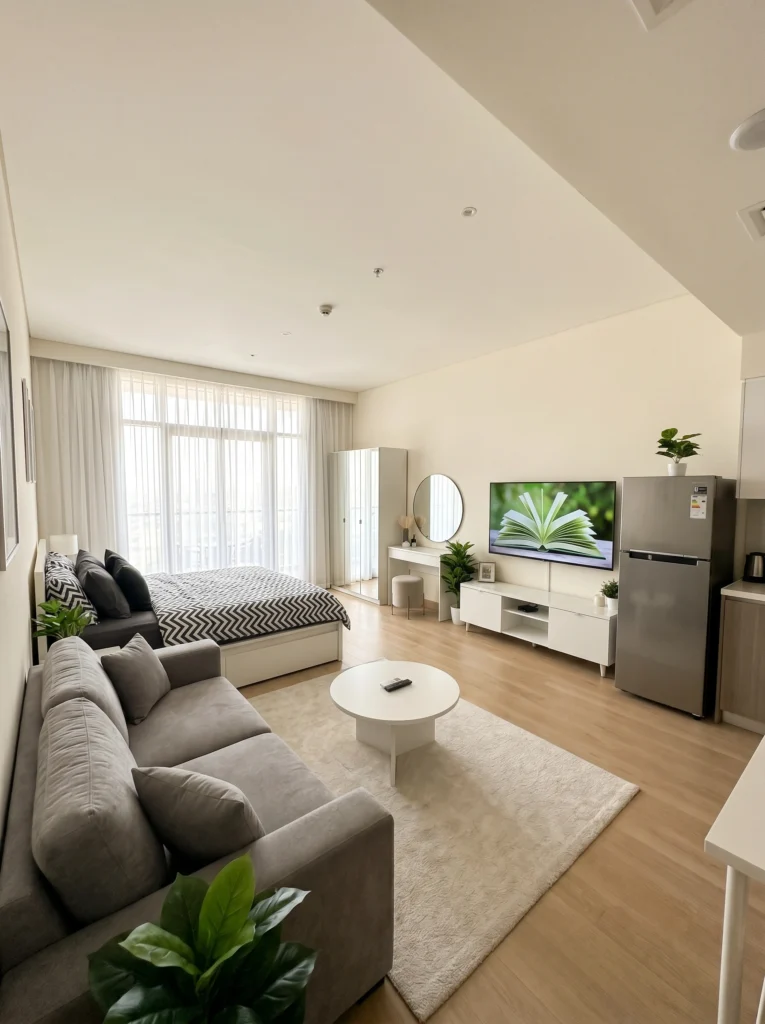
Before you buy a single throw pillow, sit on the floor of your studio and ask yourself: what specifically feels off? Is it the lighting? The lack of separation between sleeping and living? The fact that every surface is grey and beige and slightly sad? Most people skip this step and just start panic-buying decor, which is exactly why their space still feels weird six months later.
For most studios, the problem is one of three things: harsh lighting, no defined zones, or a complete absence of personality. Sometimes all three. Name yours first. Then we can actually fix it.
Pro tip: Take a photo of your studio from the doorway. Look at the photo, not the room. Apparently our brains tune out our own spaces, but photos show us the truth — including the laundry pile we’ve stopped seeing.
2. Fix the Lighting Before You Touch Anything Else
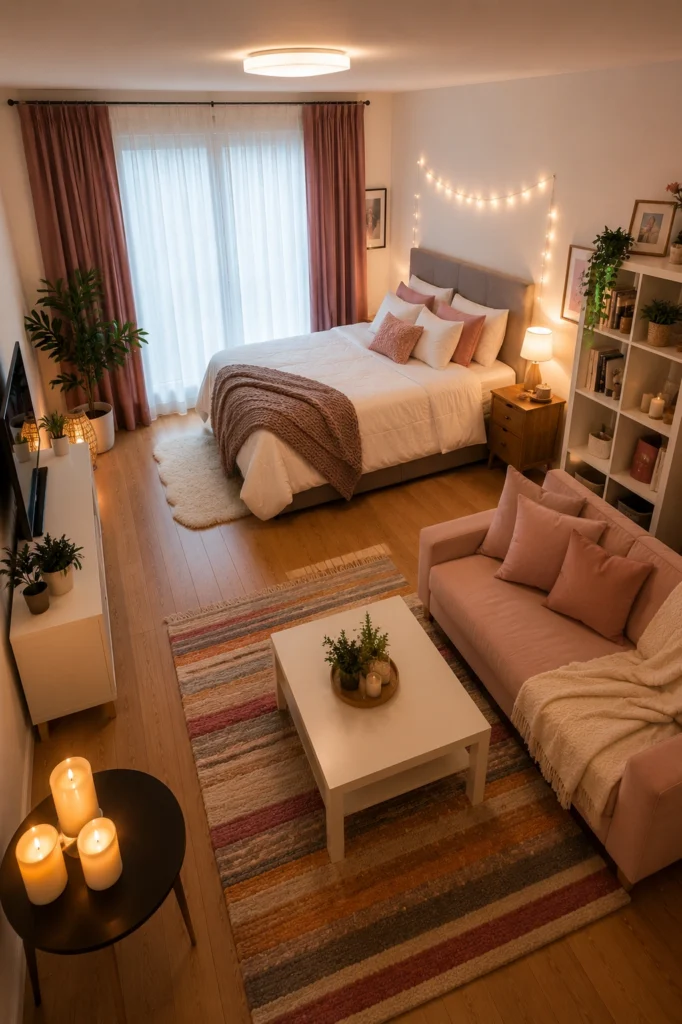
If your studio relies entirely on the overhead light that came with the apartment, that’s almost certainly the source of 80% of the depressing vibe. Builder-grade ceiling lights cast harsh, flat, blue-toned light that makes everything — including you — look tired.
The fix is layered lighting. That means at least three light sources at different heights: a table lamp on your nightstand, a floor lamp near the sofa, and something soft and ambient like string lights or a small accent lamp. Swap any cool-toned bulbs (anything labeled “daylight” or 5000K+) for warm white bulbs in the 2700K range. The difference is instant and slightly emotional. You’ll wonder why you waited.
- Aim for three lamps minimum at three different heights
- Use warm-toned bulbs (2700K — it’ll say so on the box)
- Add one candle or string light for the evening glow
3. Create Zones — Even If You Only Have 300 Square Feet
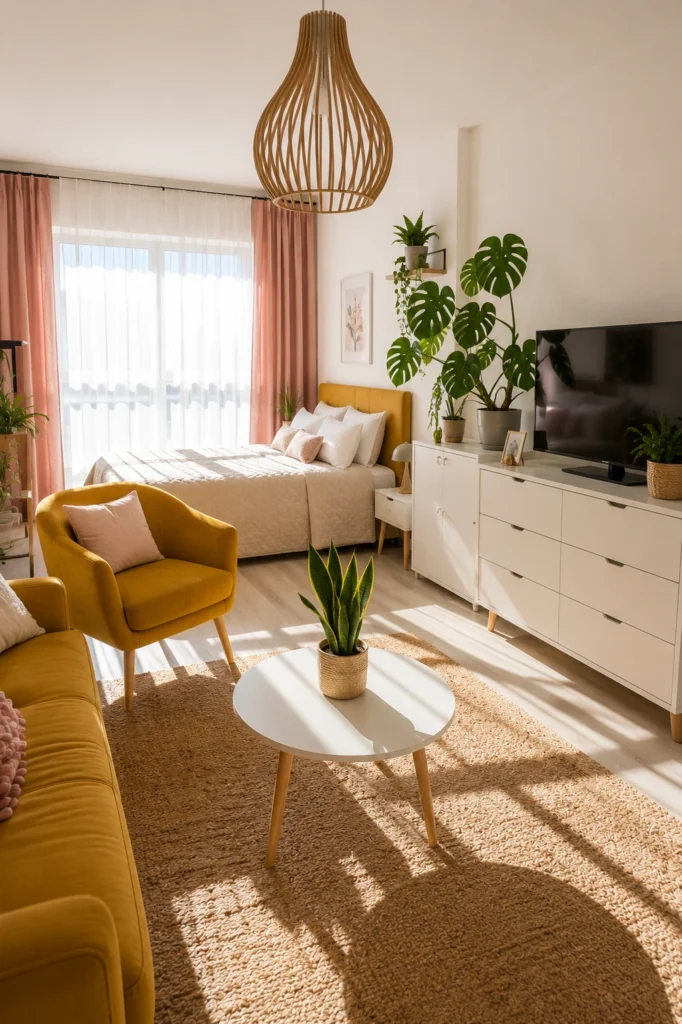
A studio that feels depressing is usually a studio where the bed, sofa, and desk are all visually mashed together with no separation. Your brain doesn’t get to “rest mode” when it’s also looking at your work pile. Zones fix this.
You don’t need walls. You need visual signals. A rug under the sofa says living room. A different rug under the bed says bedroom. A pendant light hanging over your dining nook says this is a different room now, please stop thinking about work. The eye treats these as separate spaces even when they’re technically four feet apart.
I lived in a 280-square-foot studio for two years. The single best thing I did was put a small jute rug under my sofa. It cost $40. Suddenly I had a “living room.” That’s it. That was the whole trick.
4. Use a Real Room Divider (Not a Curtain on a Tension Rod)
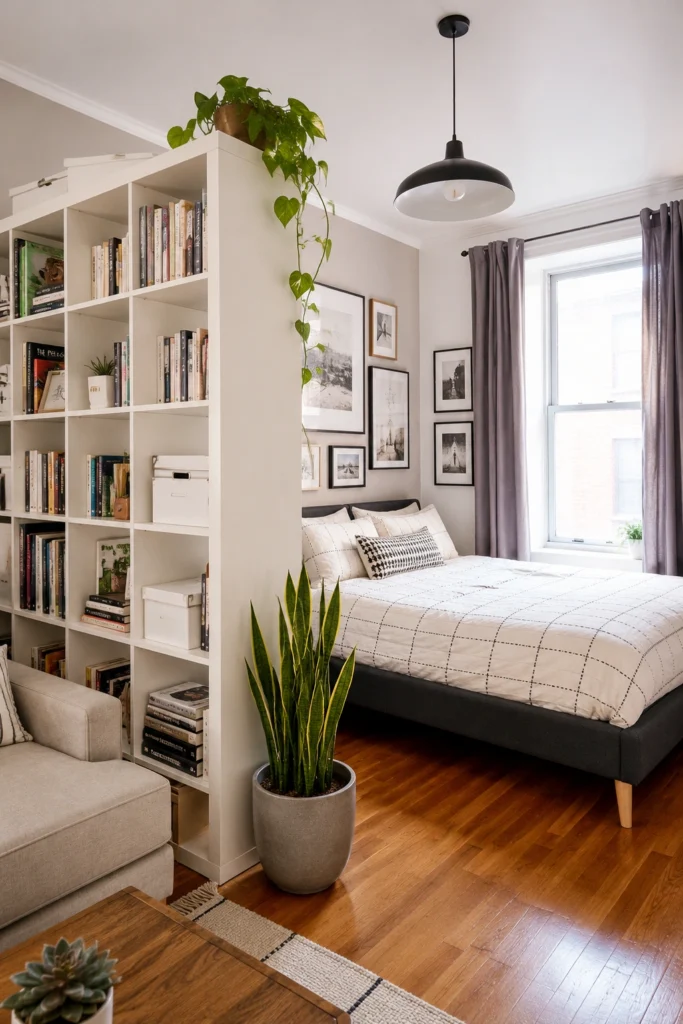
If your bed is the first thing you see when you walk in, your studio will always feel like a bedroom with extra steps. The fix is a partial divider — something that breaks the sightline without choking the space. An open bookshelf is the gold standard. It blocks the bed visually but still lets light through, doubles as storage, and gives you a surface to actually display things you love.
The classic move here is the IKEA Kallax turned on its side or stood up tall. It’s not glamorous, but it’s a workhorse. Style the cube openings with a mix of books, baskets, small plants, and one or two framed photos. The goal is 80% function, 20% pretty things. Not the other way around.
Renter-friendly alternative: If you can’t commit to a tall bookshelf, a folding screen or a tall plant (like a fiddle leaf or a snake plant in a big pot) works almost as well. It won’t fully block the view, but it’ll soften it.
5. Get the Lighting Mood Right for Night
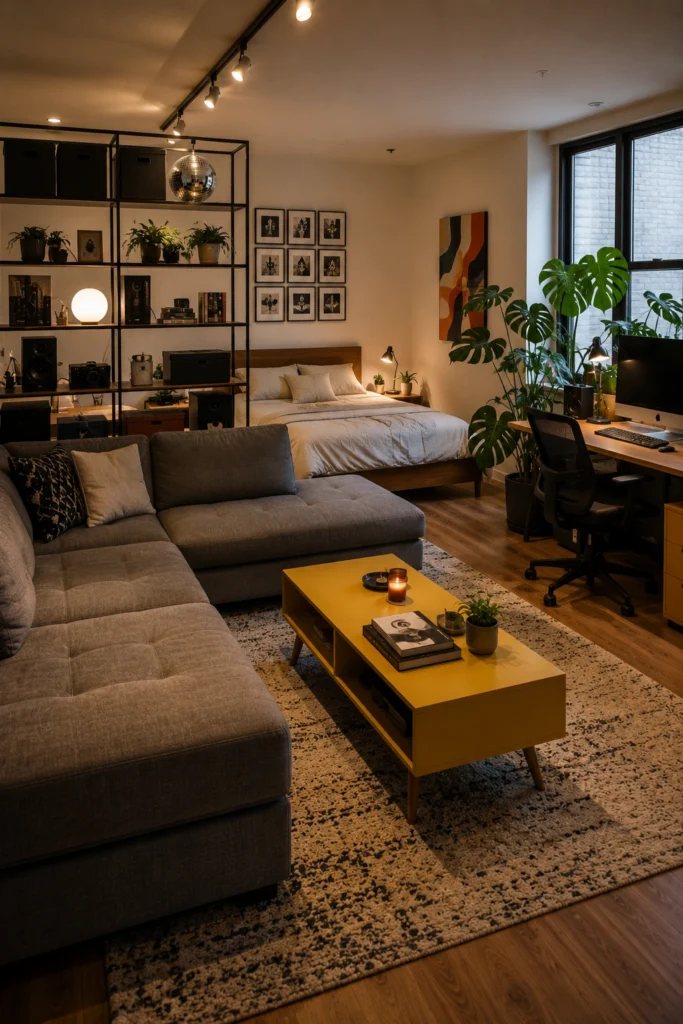
Daytime studios live and die by natural light. Nighttime studios live and die by intentional light. After sunset, kill the overhead light entirely if you can. I mean it. Don’t touch that switch. Light only the lamps you actually need for what you’re doing.
The trick is to think in pools, not in coverage. A pool of light over the sofa for reading. A pool of light over the dining spot. A small lamp by the bed. The dark corners aren’t a bug — they’re a feature. Pools of light make a space feel intimate and adult, the way a good wine bar feels at 9pm versus a fluorescent-lit pharmacy at the same hour.
Pro tip: A smart plug ($10 on Amazon) plus a normal lamp gives you a “scene” you can turn on with one tap. I have one labeled “evening” that turns on three lamps at once. It’s stupidly satisfying.
6. Embrace the Vertical (Because You Have Nowhere Else to Go)
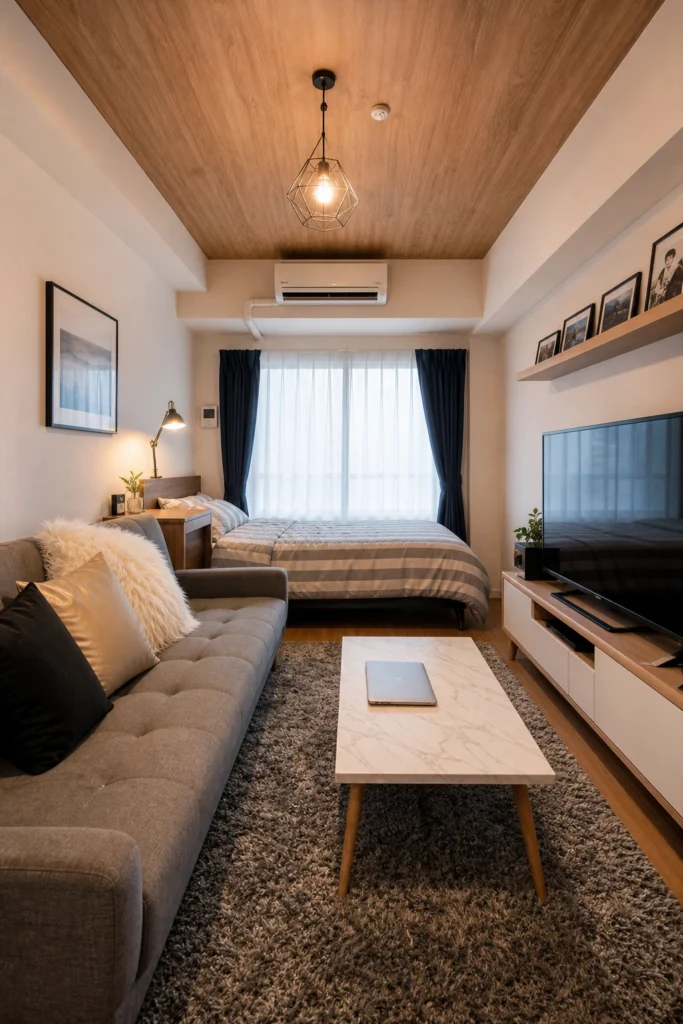
Here’s the rule almost no one follows in small spaces: decorate up, not out. Your walls are the biggest unused surface in the apartment. Floor space is precious. Wall space is just sitting there.
Hang art at eye level on at least two walls. Put a floating shelf above the sofa for books and small objects. If you have a tall ceiling, draw the eye up with a pendant light or tall curtains hung close to the ceiling (not the window frame — always go higher). Tall curtains alone can make a low-ceilinged studio feel a foot taller. It costs $30 to test this theory. Do it.
- Hang curtains 6-8 inches above the window frame, not on it
- Float a shelf above the sofa or bed for books and personality
- Put art on at least two walls — empty walls amplify the bunker feeling
7. Bring in Plants — Even If You’ve Killed Three Already
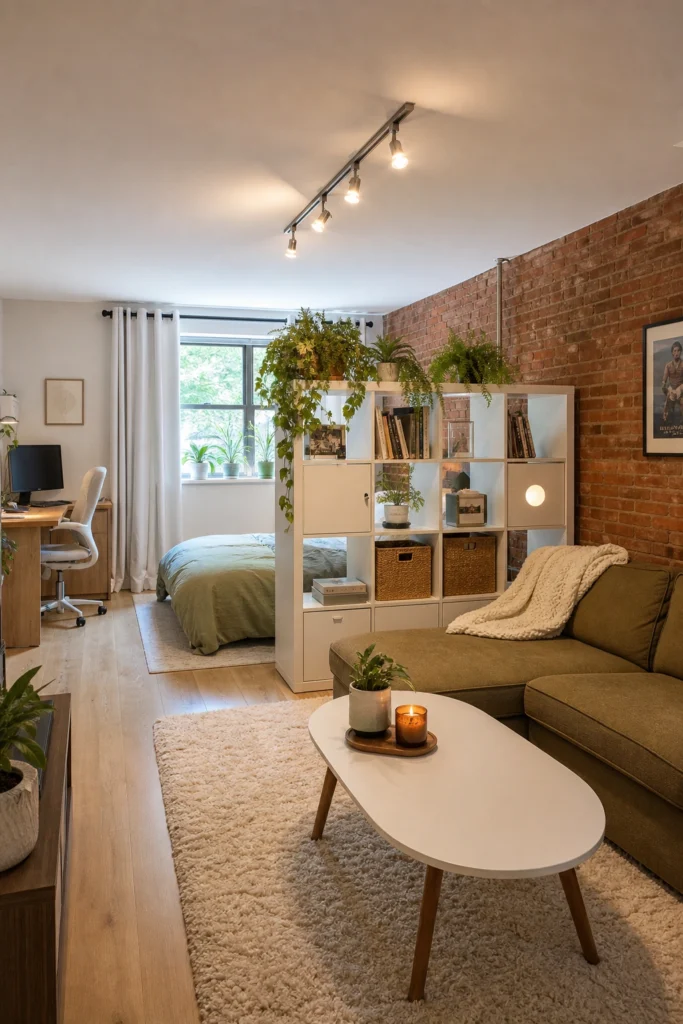
I know, I know — everyone says “add plants.” But there’s a reason. A studio without anything living in it feels stagnant in a way that’s hard to name until you fix it. Plants move the space from “rented” to “inhabited.”
You don’t need fifteen of them. You need three or four good ones, in pots that don’t scream “I came with the plant.” Try a snake plant (basically un-killable, tolerates low light), a pothos (drapes nicely off a bookshelf), and one bigger statement plant like a monstera or a fiddle leaf in the corner that’s been bothering you. If you genuinely can’t keep anything alive, get one nice fake one and one cheap real one. No one will know which is which.
Faux plants from Amazon look like faux plants from Amazon. Spend a little more — IKEA’s faux plants and the ones from West Elm look surprisingly real, especially from more than three feet away. Which is most of your apartment.
8. Pick a Palette and Stop Bringing in Random Colors
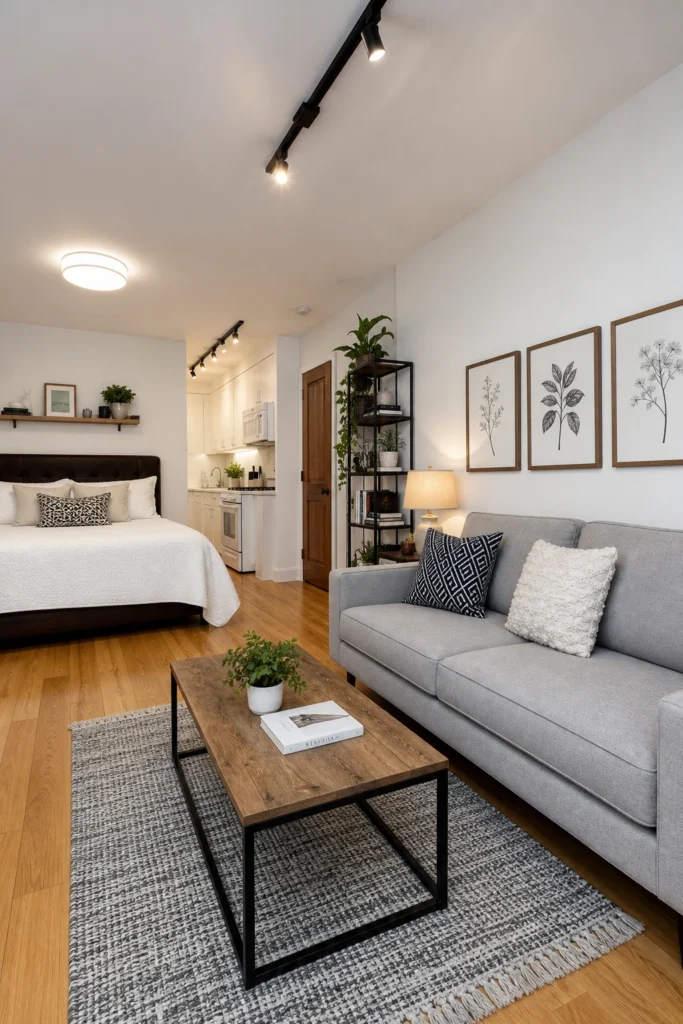
Studios get visually chaotic faster than any other space because everything is in one room at once. Your bedspread, your sofa, your kitchen towels, your rug — they’re all sharing a single eyeline. If they don’t agree with each other, the whole space feels jangly.
Pick three colors. One main neutral (white, cream, warm grey, oat), one secondary tone (dark wood, charcoal, navy, terracotta), and one accent color (the fun one — sage, rust, mustard, dusty pink, whatever you actually love). Then stick to it. Almost every piece you bring in should fall into one of those three buckets. That’s it. That’s the whole color theory you need.
Budget vs. splurge: Save on bedding and throw pillows (these are how you’ll introduce your palette, and you’ll probably change your mind in a year). Splurge on the sofa and the rug — these anchor the palette and you’ll keep them through multiple apartments.
9. Add One Personal Thing That Has Nothing to Do With Decor
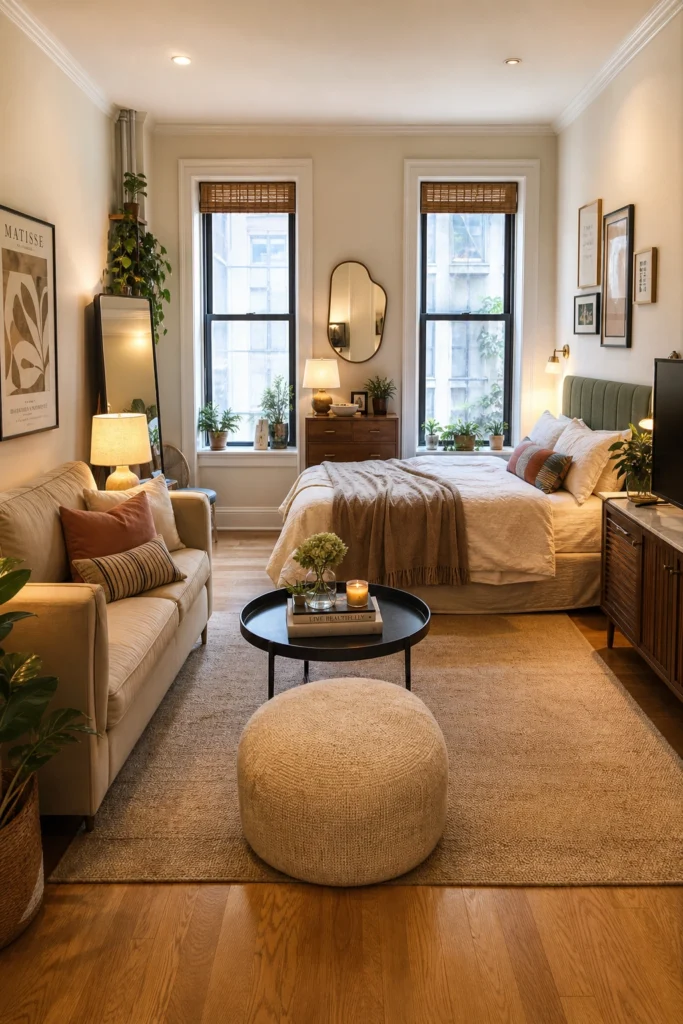
This is the part most people skip — and it’s exactly why their studio still feels like a furniture showroom even after they’ve done everything else right. Showrooms don’t have lives in them. Yours has to.
Hang the framed concert poster. Put out the weird ceramic bowl your sister made. Frame your grandmother’s recipe card. The picture of your dog on the fridge. The shelf of paperbacks you’ve actually read, dog-eared and ugly, instead of the curated coffee table books you bought to look smart. That’s what makes a space feel like yours. Not the decor — the evidence of a person living there.
This is also where studios usually start to feel like home for the first time, by the way. Not after the rug arrives. After the personal stuff goes up.
10. Define a Spot Just for Eating (Even If It’s Tiny)
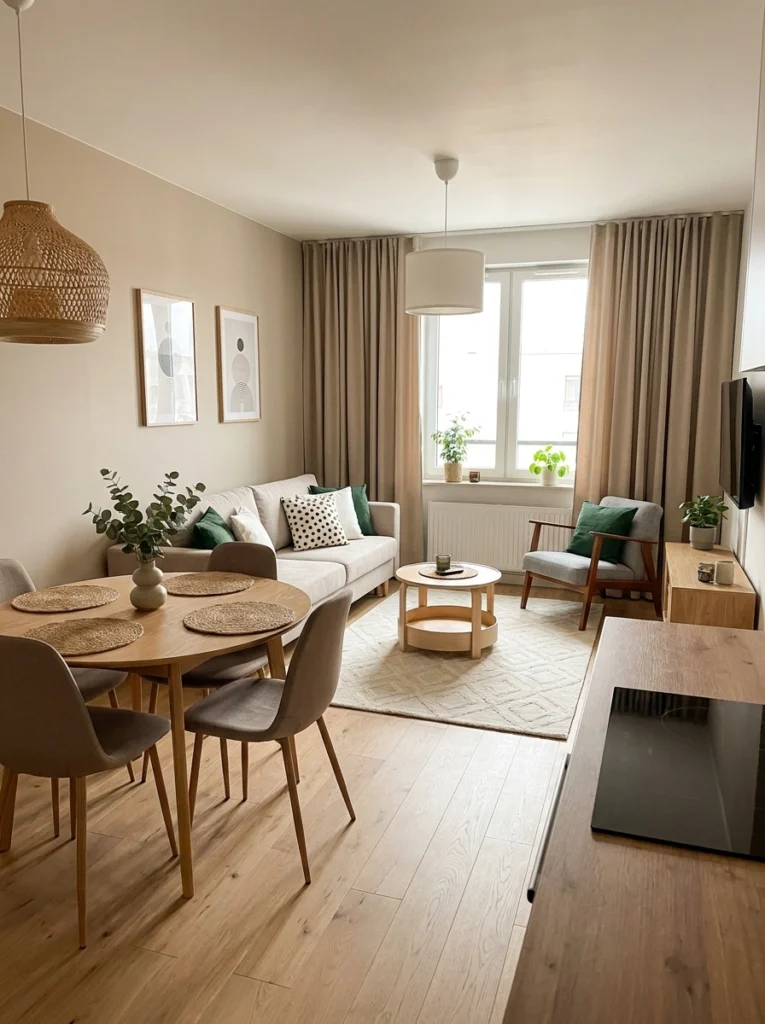
Eating every meal on your sofa or in bed is one of the quiet ways studios start to feel depressing without you noticing. There’s no transition, no ritual. You wake up, work, eat, watch TV, and sleep in the same six-foot radius. No wonder the space feels like it’s closing in.
You don’t need a full dining table. A small bistro table with two chairs, or even a narrow console you pull a chair up to, is enough. The point is somewhere that isn’t the sofa. A spot to actually sit upright, with a plate, like a person. It changes how the day feels in ways that are weirdly disproportionate to how small the change is.
- A 24-inch bistro table fits almost anywhere
- A wall-mounted drop-leaf table is renter-friendly and folds away
- Even a deep windowsill with one chair works as a “breakfast nook”
11. Don’t Underestimate the Ceiling
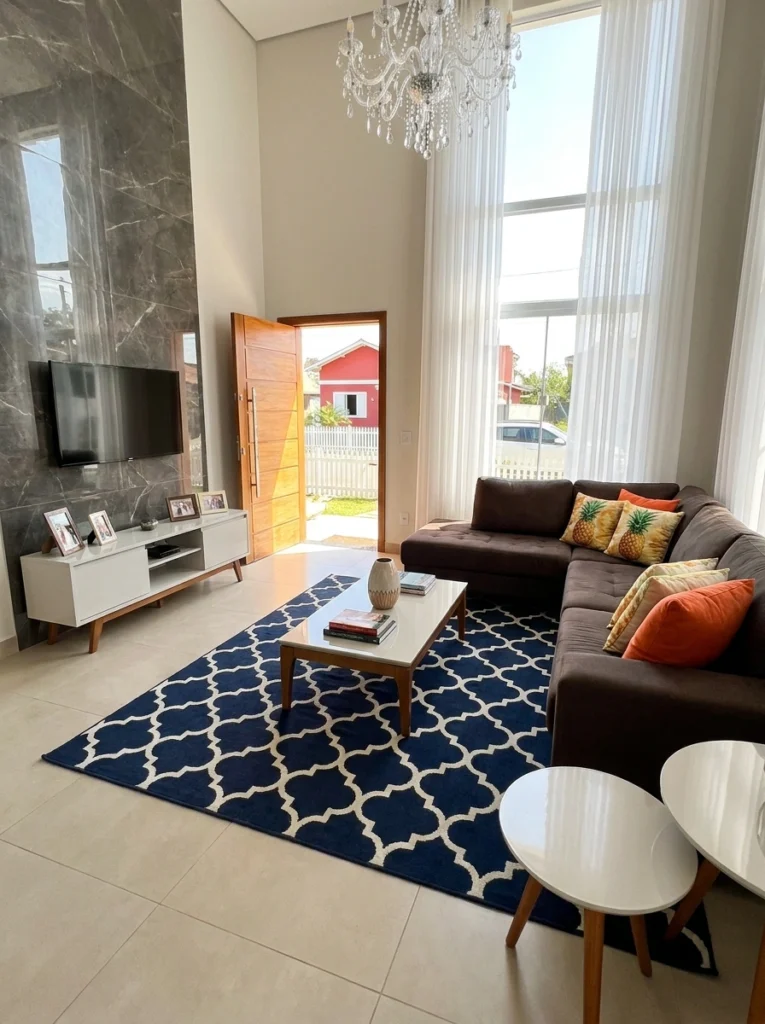
The single most ignored surface in any apartment is the ceiling. Most renters don’t think about it at all, which is fine — but it’s also a missed opportunity. If you have a builder-grade flush mount up there casting that flat, sad light, that fixture alone could be the difference between a hotel-room studio and a real apartment.
Swapping a ceiling fixture is easier than people think (it’s usually four wires and a screwdriver, twenty minutes max — and yes, you can take the new one with you when you leave and put the original back). A pendant light, a small chandelier, or even just a paper globe lantern from a thrift store can change the entire personality of the room. Look up next time you walk into your studio. If your eye lands on something boring, fix that.
Renter-friendly alternative: If you absolutely can’t change the fixture, a plug-in pendant lamp with a long cord, draped along the ceiling using small hooks, gives you 90% of the effect without touching the wiring.
12. Use the “Tonight Test” When You’re Done
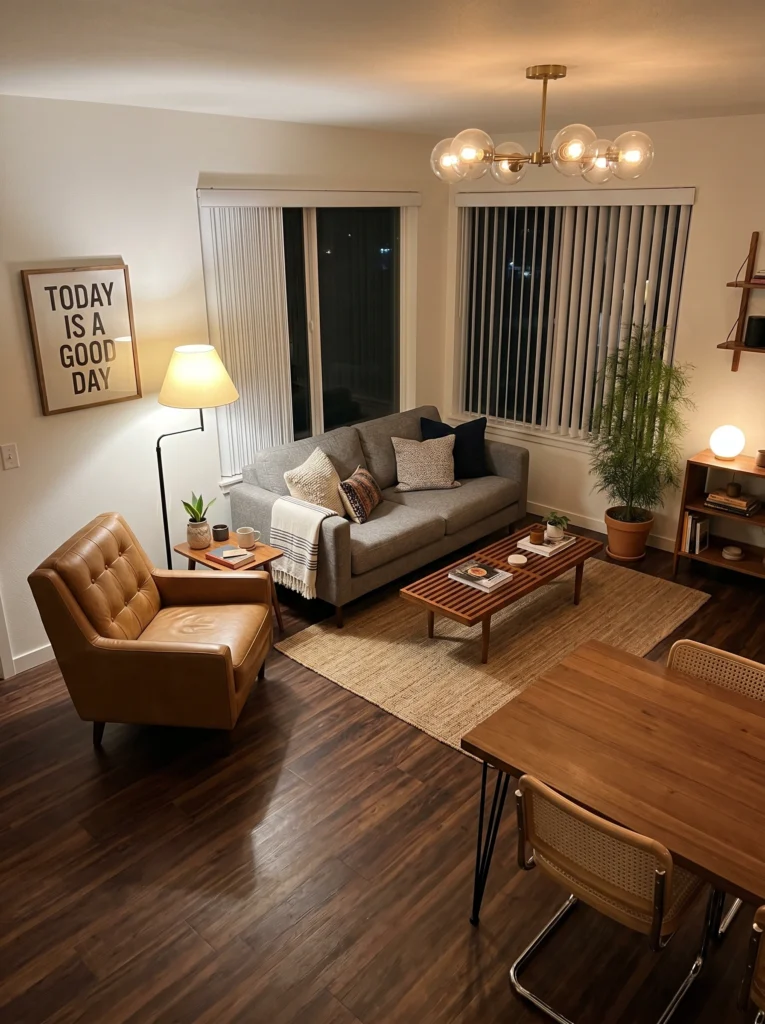
Here’s how you know your studio is no longer depressing: you come home on a Tuesday night, turn on your lamps, kick off your shoes, and feel your shoulders drop. That’s the test. That’s the whole goal. Not “would this look good on Instagram?” but “do I want to be here?”
A studio that passes this test isn’t expensive or perfectly styled. It’s lit warmly. It has zones. It has plants and a few personal things and a place to eat that isn’t the bed. It has clearly been touched by a real person with real preferences. That’s it. That’s the whole secret.
If you’ve done five things from this list, you’re probably already most of the way there.
Final Thoughts
Studios get a bad reputation, but most of the depressing ones aren’t depressing because they’re small — they’re depressing because nothing in them has been chosen. Once you start choosing — the lighting, the zones, the palette, the personal stuff — the space stops feeling like a holding pen and starts feeling like a tiny, slightly weird, completely yours apartment.
Pick one thing from this list. Just one. Maybe it’s swapping the lightbulbs. Maybe it’s putting a rug under your sofa. Maybe it’s hanging that one piece of art that’s been leaning against the wall for six months. Do it this weekend. Then do another one next weekend. In a month, you’ll walk in and barely recognize the place.
Your home should make you happy — not impressed strangers. Especially when home is one room.