Studio Apartment Storage Mistakes to Avoid
You squeezed a bed, a couch, a desk, and your entire life into one room — and somehow it still feels chaotic. Sound familiar? Here’s the thing: the problem usually isn’t how much stuff you have. It’s how you’re storing it. Studio apartment storage is its own game, and most people are playing it wrong. Let’s fix that.
1. Going All Dark Without Built-In Storage Solutions
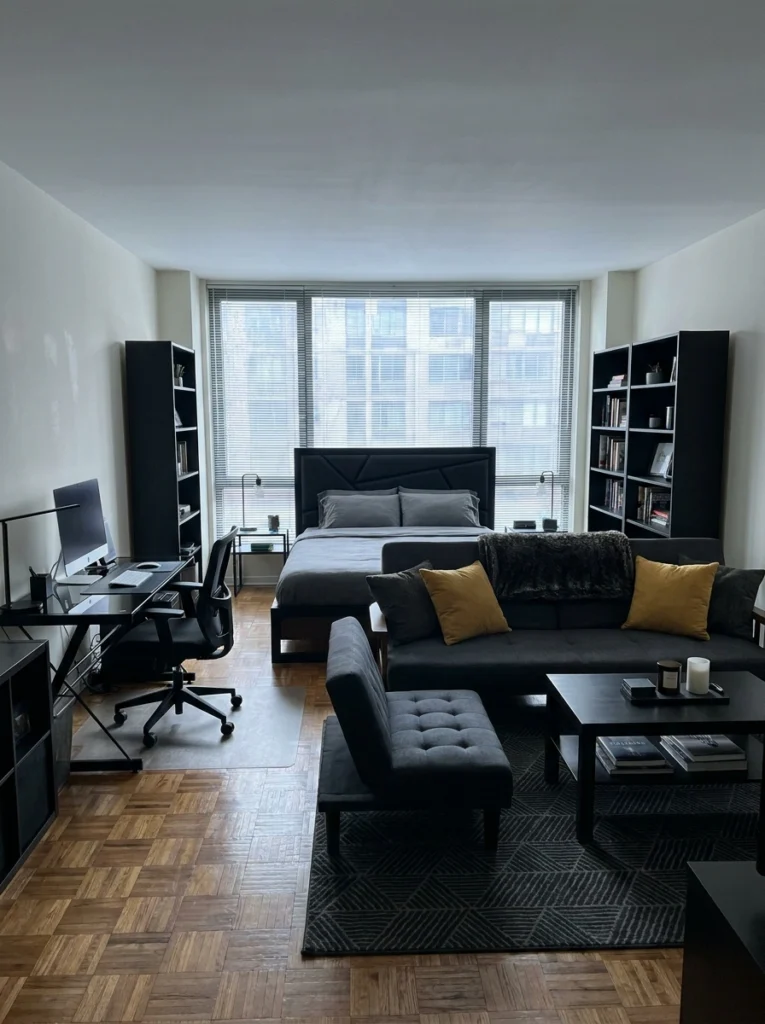
A dark, moody palette can look incredibly intentional — but if you’re going all-black without building in real storage, you’re just hiding chaos behind cool aesthetics. Notice how this studio works: tall bookshelves flank the bed symmetrically, the desk has dedicated space, and everything earns its square footage. Dark rooms need structure more than light ones do. Without it, they absorb clutter instead of containing it.
Pro tip: Use the perimeter. Floor-to-ceiling shelving along one wall does more storage work than a dozen small baskets scattered around the room.
2. Ignoring Vertical Space
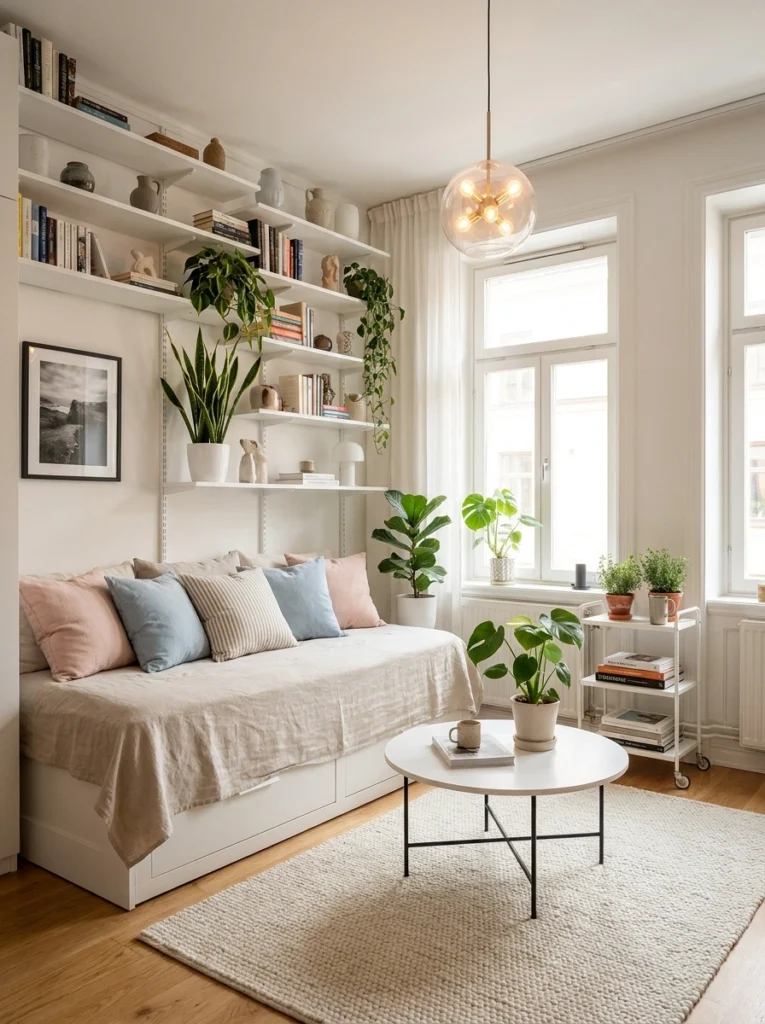
Most people think about floor space. Smart studio dwellers think about wall space. Those shelves going all the way up to the ceiling? That’s square footage most people never use. Books, plants, ceramics, and a few trailing pothos — all of it up high, all of it out of the way. The floor stays clear, the room feels open, and there’s still room for everything you own.
Renter-friendly alternative: IKEA’s ALGOT or BOAXEL systems mount with minimal wall damage and can be reconfigured endlessly.
3. Wasting the Space Under Your Bed
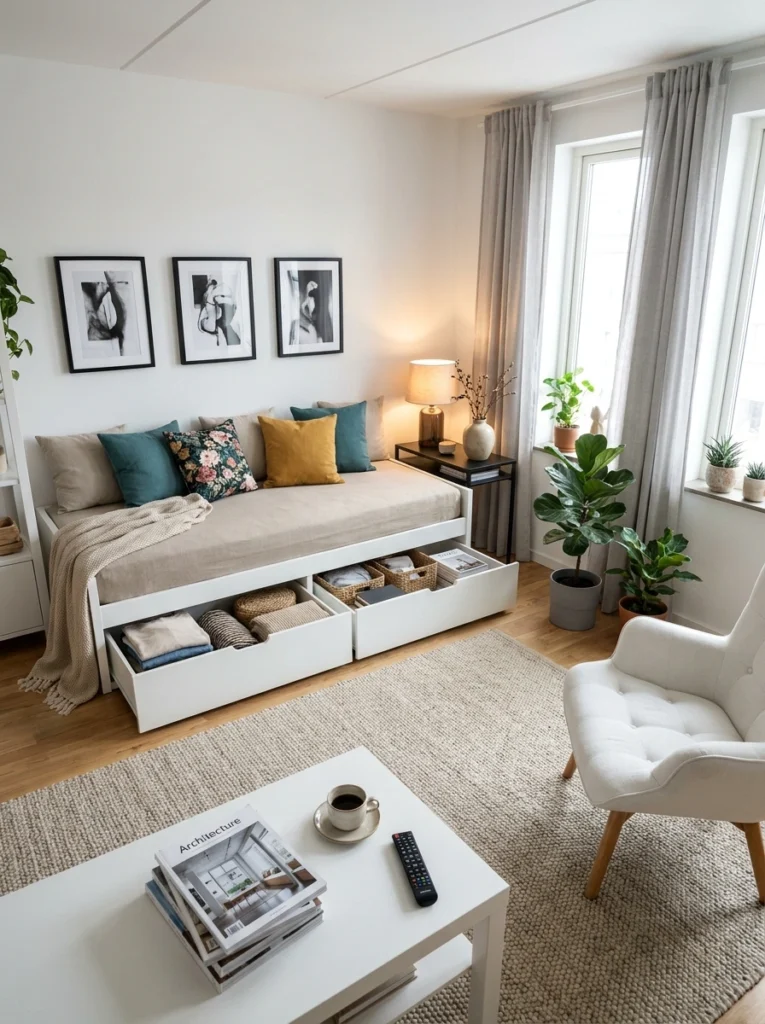
This is the part most people skip — and it’s exactly why their studio feels overstuffed. Under-bed drawers are some of the most valuable real estate in a small apartment. Extra linens, off-season clothes, spare pillows — all of it tucks away neatly and disappears. The bed becomes a sofa during the day, a gallery wall goes up above, and suddenly the room has three jobs without looking cluttered.
If your bed doesn’t have built-in storage, get bed risers and use flat storage bins underneath. Don’t leave that space empty.
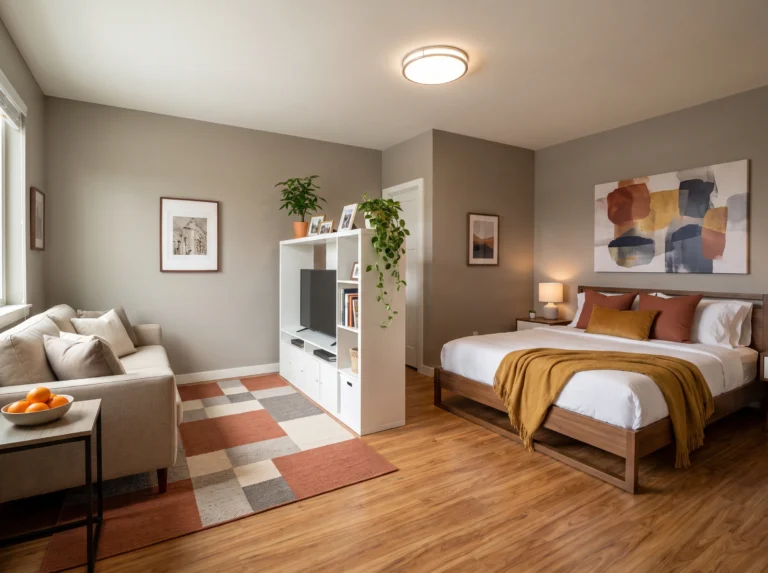
4. Skipping the Room Divider That Doubles as Storage
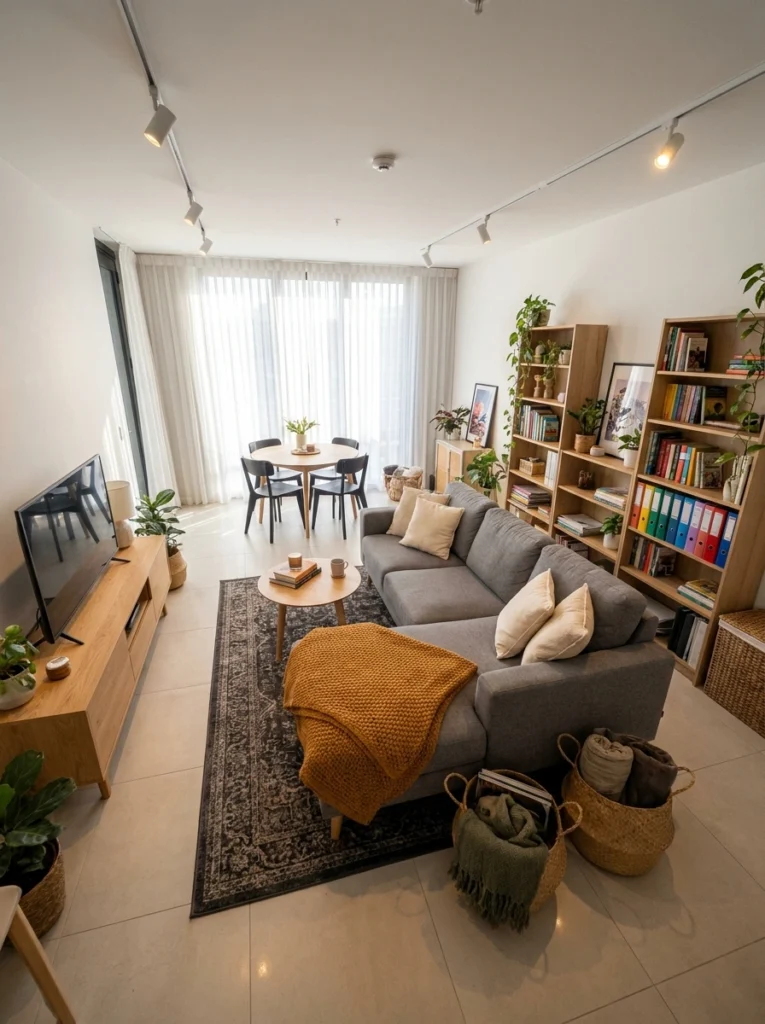
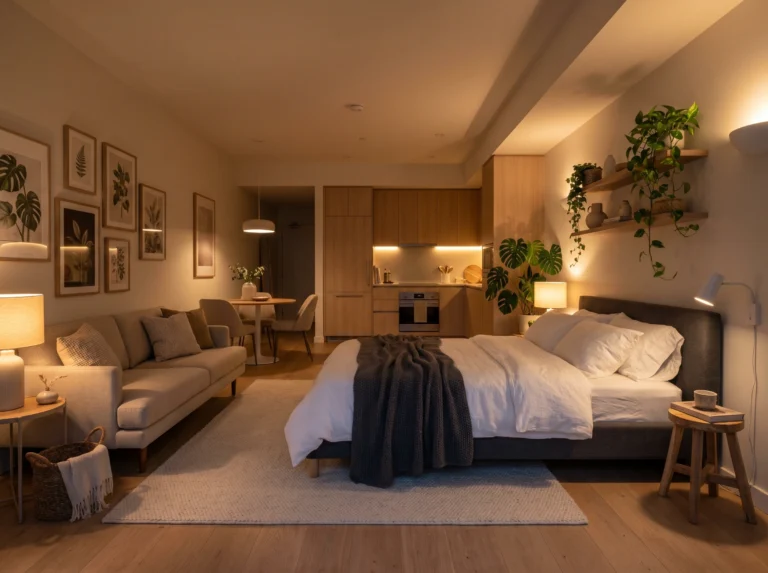
In a studio, zones matter. When everything blurs together — sleep, work, eat, relax — your brain never fully switches off. The fix? A bookshelf or open shelving unit that divides the space and holds your things. Here it’s doing double duty: separating the living area from the dining zone while holding books, plants, and baskets. One piece, two problems solved.
Pro tip: Seagrass and rattan baskets on lower shelves hide the stuff you don’t want on display. Top shelves get the pretty things.
5. Not Using Your Clothing Storage as a Design Feature
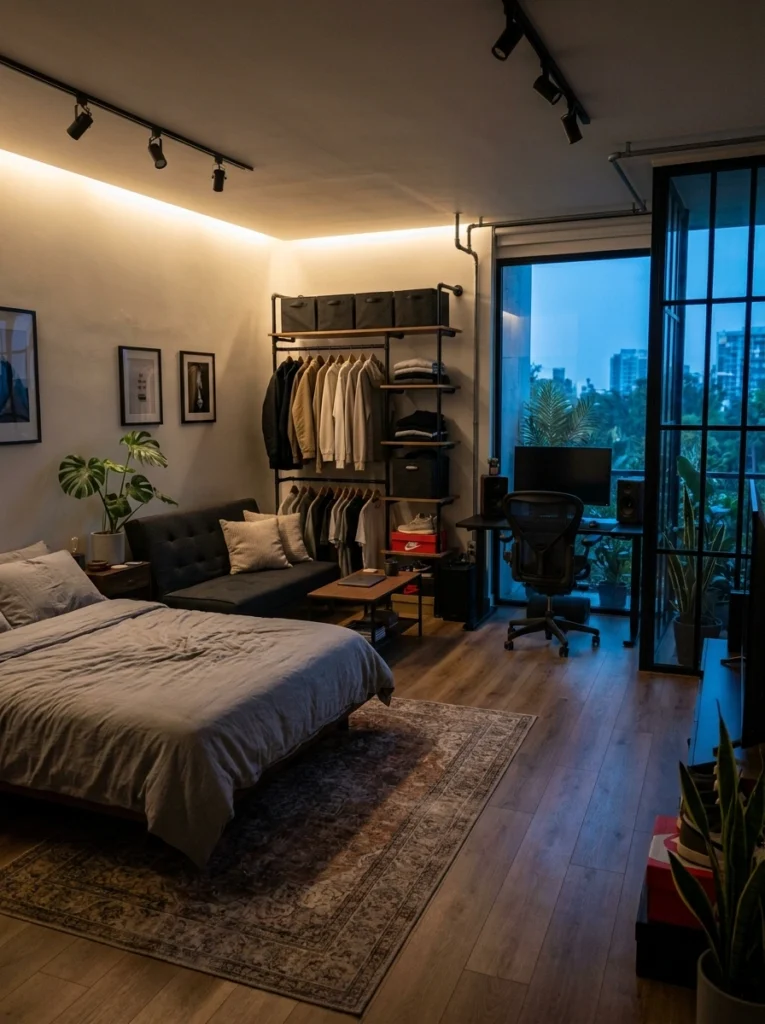
No built-in wardrobe? Stop treating that as a problem and start treating it as a design decision. An open pipe-rack wardrobe — especially in matte black or iron — reads as intentional and industrial, not like you ran out of closet space. Keep what’s hanging color-coordinated and folded items neat, and it becomes part of the room’s aesthetic. Bonus: LED cove lighting around the perimeter turns storage into atmosphere.
Budget vs. splurge: Save on the pipe rack (DIY versions run under $100). Splurge on good storage bins — cheap ones sag and look sloppy.
6. Underestimating What a Well-Styled Shelf Can Do
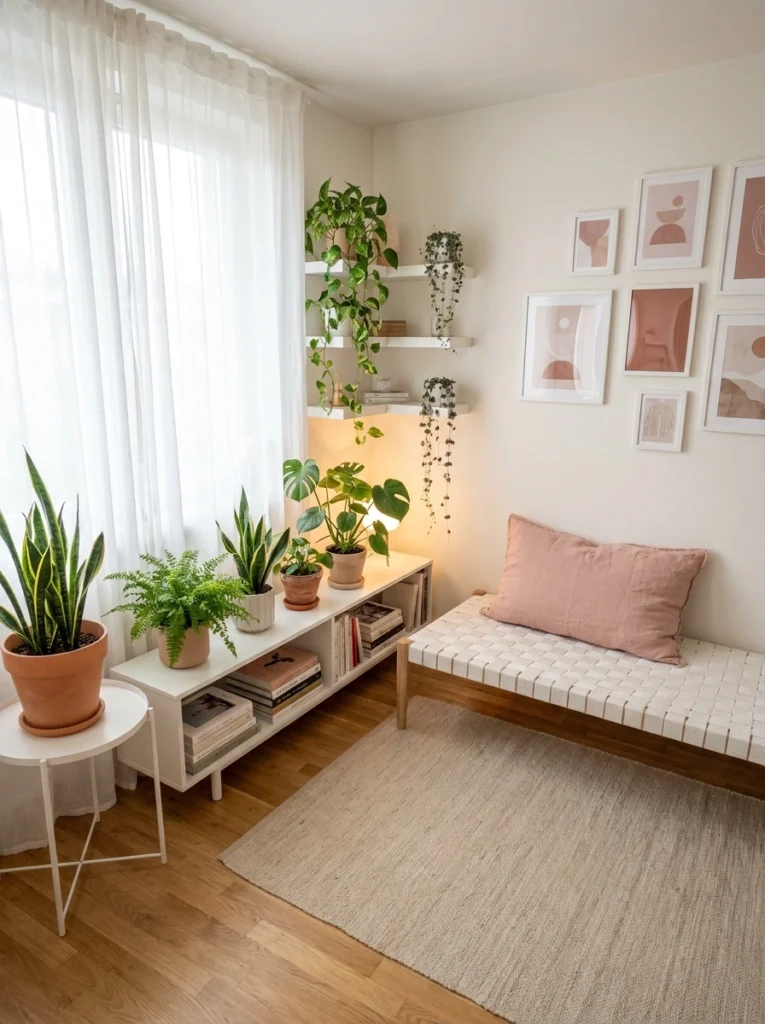
A shelf isn’t just for storage — it’s a room feature. Trailing pothos and string-of-pearls cascading down from floating shelves, a gallery wall in soft terracotta tones, a textured woven bench below: this is a corner that could have been wasted. Instead it’s the most-photographed spot in the apartment. The plants keep things alive and organic; the art keeps it personal. Neither cost much. Both make the room feel complete.
7. Letting Your Rug Define the Wrong Zone
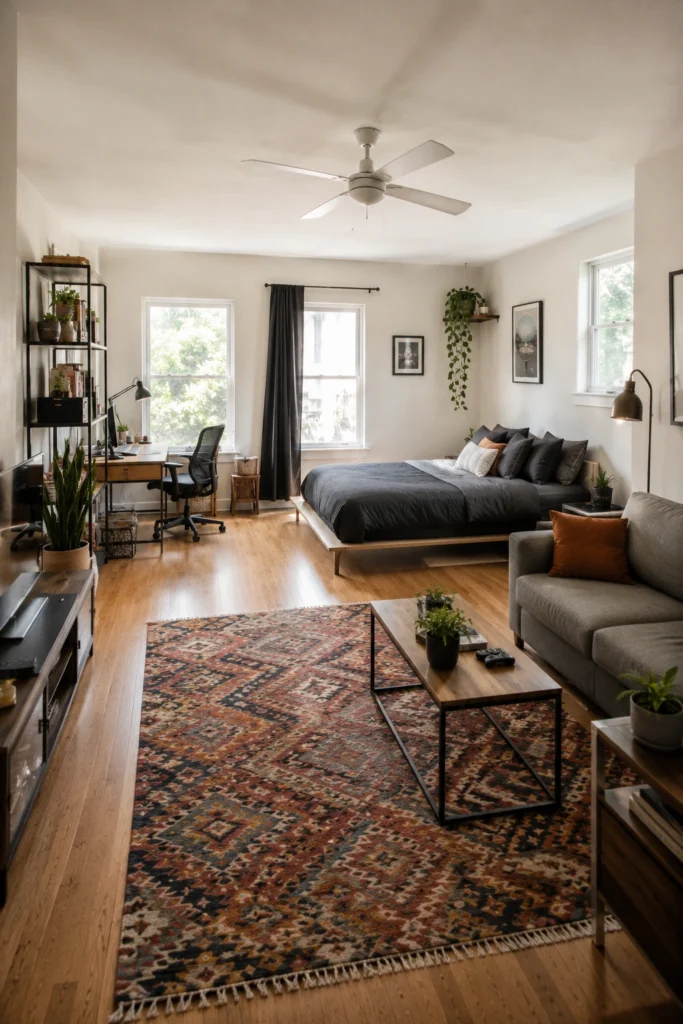
Here’s something nobody tells you: your rug is doing zone work, not just floor work. In this studio, that bold kilim rug clearly defines the living area — and everything else (the bed, the desk) exists on its own terms behind the sofa. Without the rug making that declaration, the whole room would feel like one big, undefined space. A rug that’s too small slides under only the coffee table and makes the furniture look like it’s floating awkwardly.
Pro tip: In a studio, go bigger than you think you need. Rugs that extend under the front legs of all your seating are always the right call.
8. Choosing Décor Storage Over Functional Storage
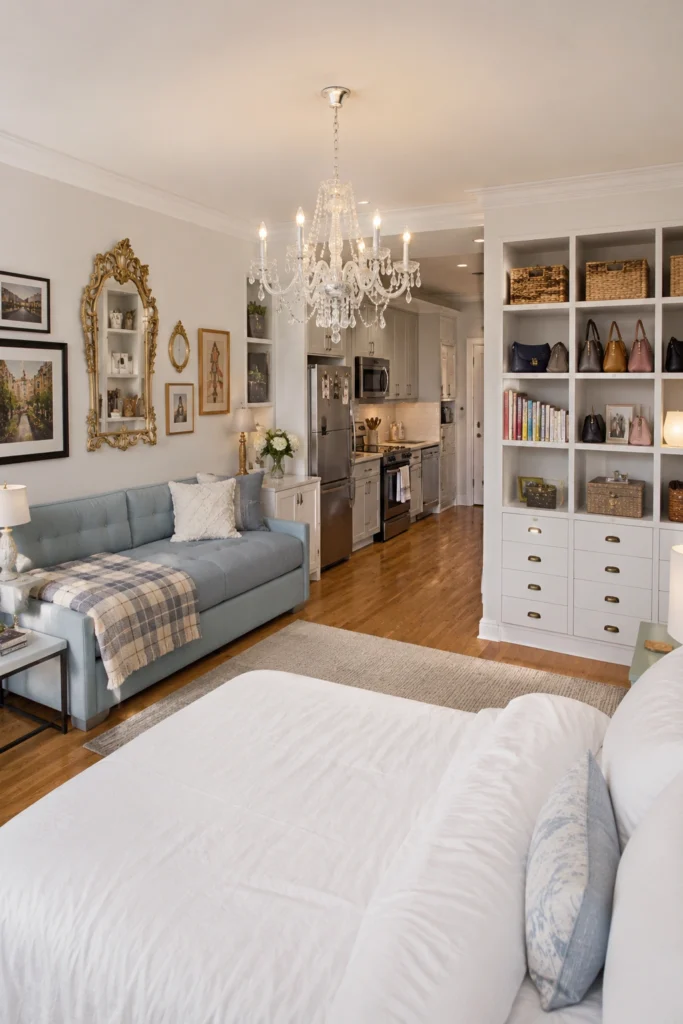
There’s a version of studio apartment storage that looks beautiful but doesn’t actually function — and then there’s this. That white cube shelving unit is doing serious work: handbags on display (accessible, organized), baskets hiding the messy stuff, books within reach, drawers for the truly private. It’s styled enough to feel intentional but practical enough to actually use every day. A chandelier and gold mirrors do the decorative lifting; the shelving does the real work.
If you’re using a shelf just for décor, you’re wasting storage. Mix a few beautiful objects with genuinely useful organization — that’s the sweet spot.
9. Using One Big Open Shelf When You Need Zone Separation
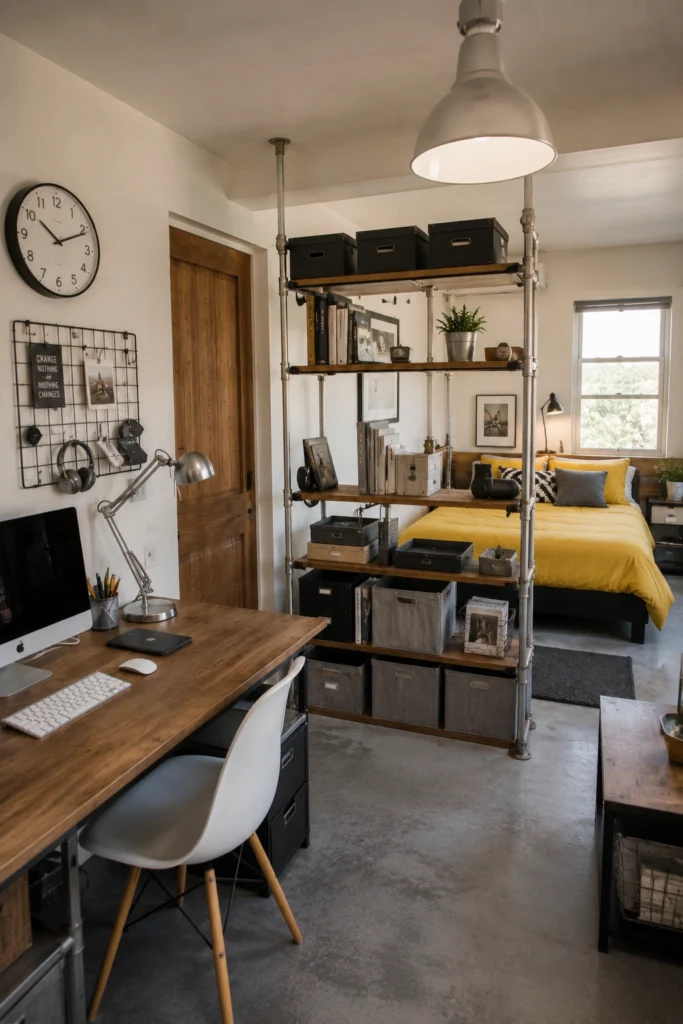
The most underrated studio trick? Using an open pipe-and-wood shelving unit as a room divider. It splits the workspace from the sleep space without closing the room off entirely — light still flows through, the ceiling stays visible, and both zones feel like their own room. The industrial shelving holds everything from storage boxes to small plants to framed photos. The divided zones make a one-room apartment feel like a real home with actual rooms.
Pro tip: Face the “pretty” side of the shelving toward whichever zone you spend more time in.
Final Thoughts
Studio apartment storage isn’t about buying more organizers — it’s about making smarter decisions with the space you already have. Use your walls. Respect your zones. Let your storage pull design weight, not just practical weight.
Pick one mistake from this list that you recognize in your own space. Just one. Fix it this weekend. You’ll be shocked how much of a difference a single, intentional change makes.
A studio apartment isn’t a limitation — it’s a puzzle. And once you figure out the storage, the whole picture clicks into place.
— Sofia