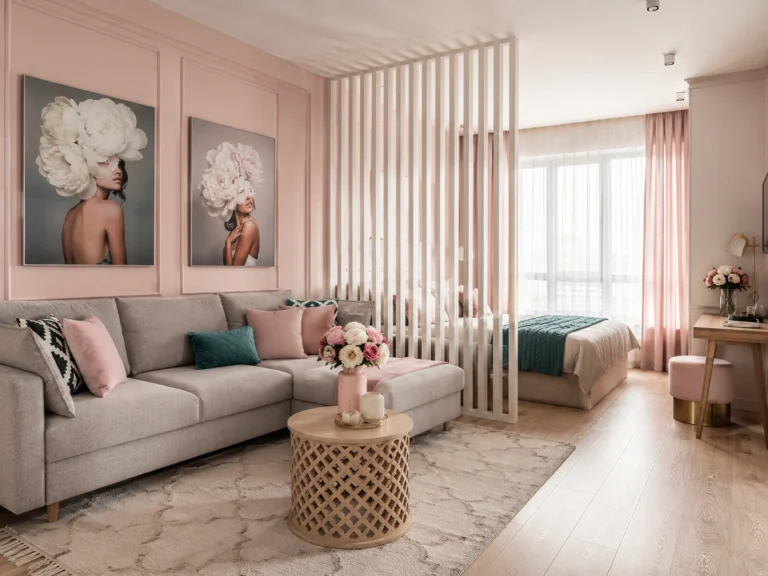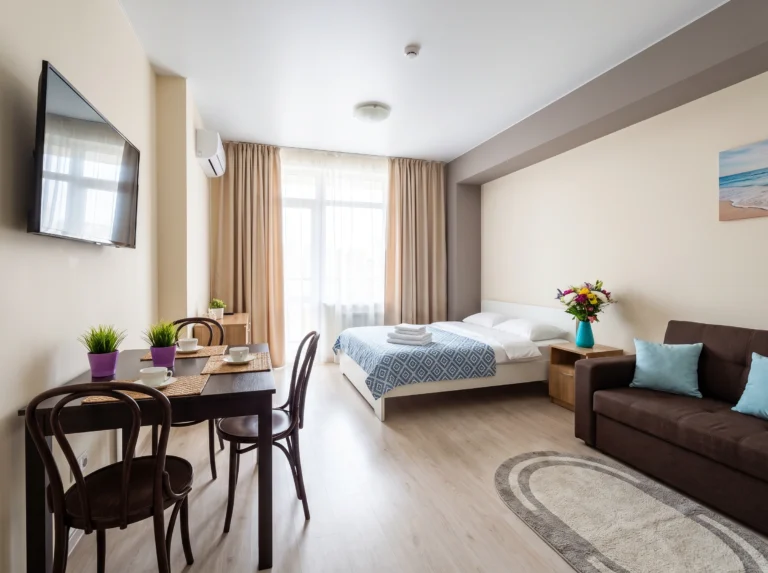
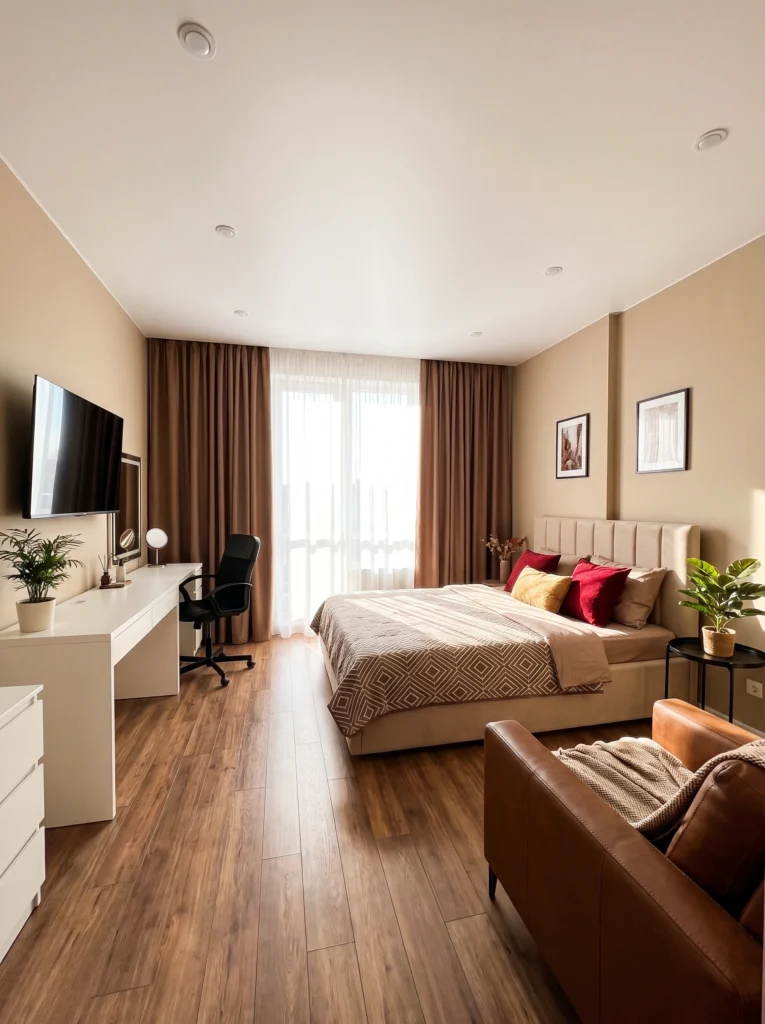
19 Studio Apartment Ideas for Creatives Who Need a Work Zone
You love what you do — but trying to do it in a studio apartment where your bed is three feet from your “office” is a special kind of chaos. Your supplies are fighting your sofa for floor space, your desk is also your dining table, and your brain can’t figure out when it’s time to create and when it’s time to rest. Here’s the good news: you don’t need a spare room to build a real work zone. You just need a smarter layout.
These 19 ideas will show you exactly how to carve out a creative space that actually feels separate — even when it’s not.
1. Line Your Desk Along the Longest Wall
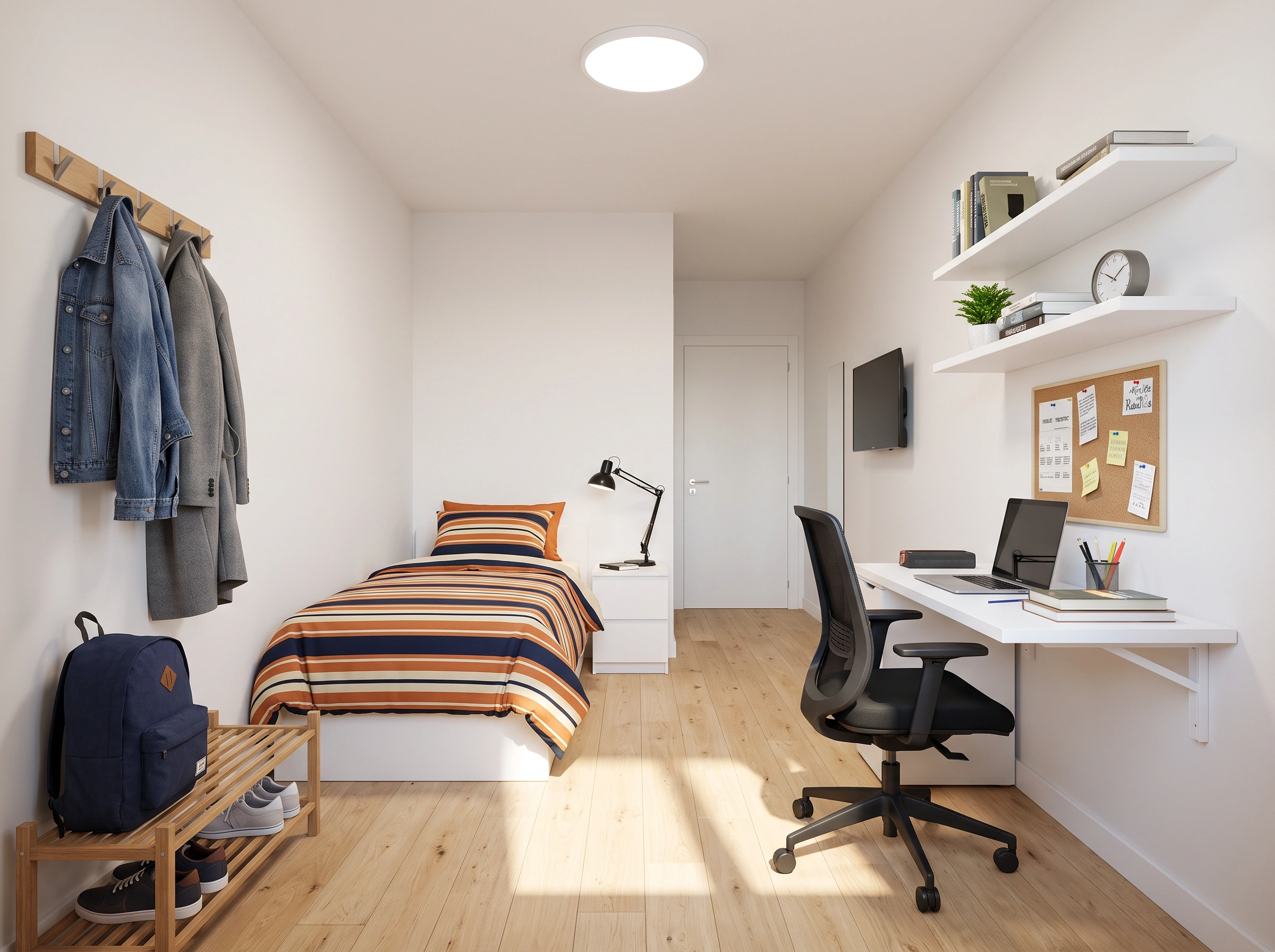
When you push your desk against the longest uninterrupted wall, you instantly create a dedicated lane for work without chopping the room in half. This setup keeps your walking path clear and gives you enough surface to spread out materials. Add a small task lamp and a plant at the corner for warmth, and this wall becomes your creative headquarters without stealing space from the rest of the studio.
Pro tip: Mount your TV above the desk on the same wall so one piece of furniture serves both work and downtime.
2. Let Your Dining Table Pull Double Duty
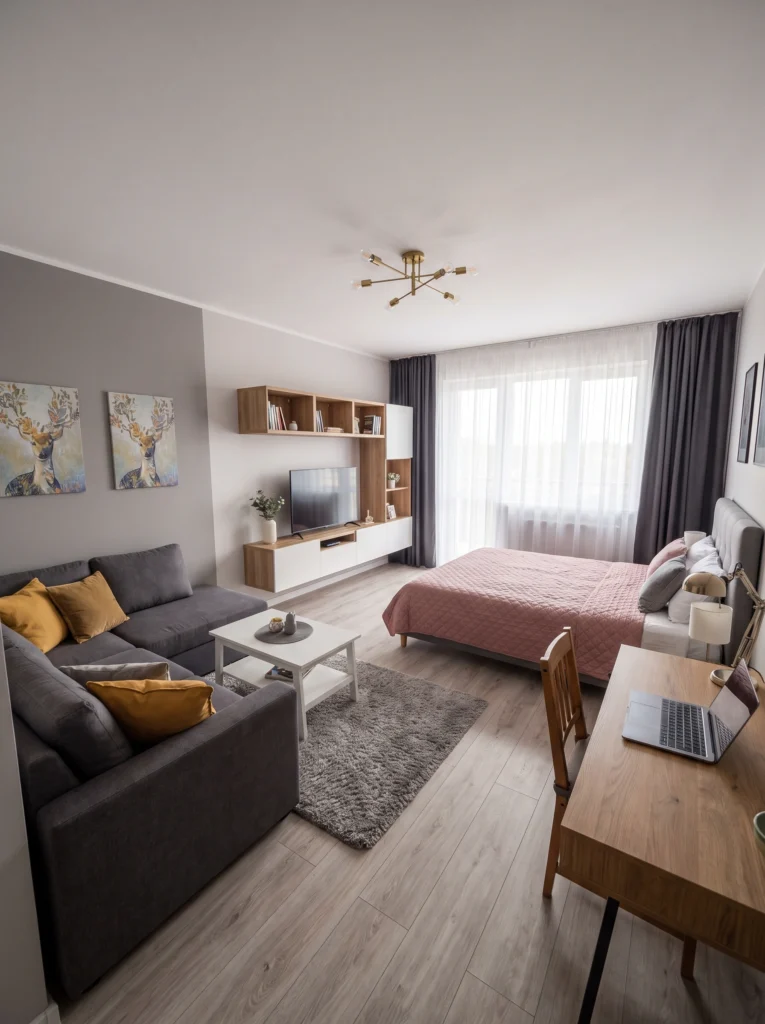
Not every creative needs a permanent desk. If your work involves a laptop, sketching, or journaling, a dining table positioned near the sofa zone can switch roles effortlessly. The trick is keeping the surface clear — a small tray or basket underneath holds your work supplies out of sight when it’s time to eat. This layout works beautifully in studios where a full desk simply won’t fit.
Sofia’s honest take: I did this for two years. It works if you’re disciplined about clearing the table every evening — otherwise it becomes a permanent mess.
3. Let a Bookshelf Be Your Room Divider and Storage
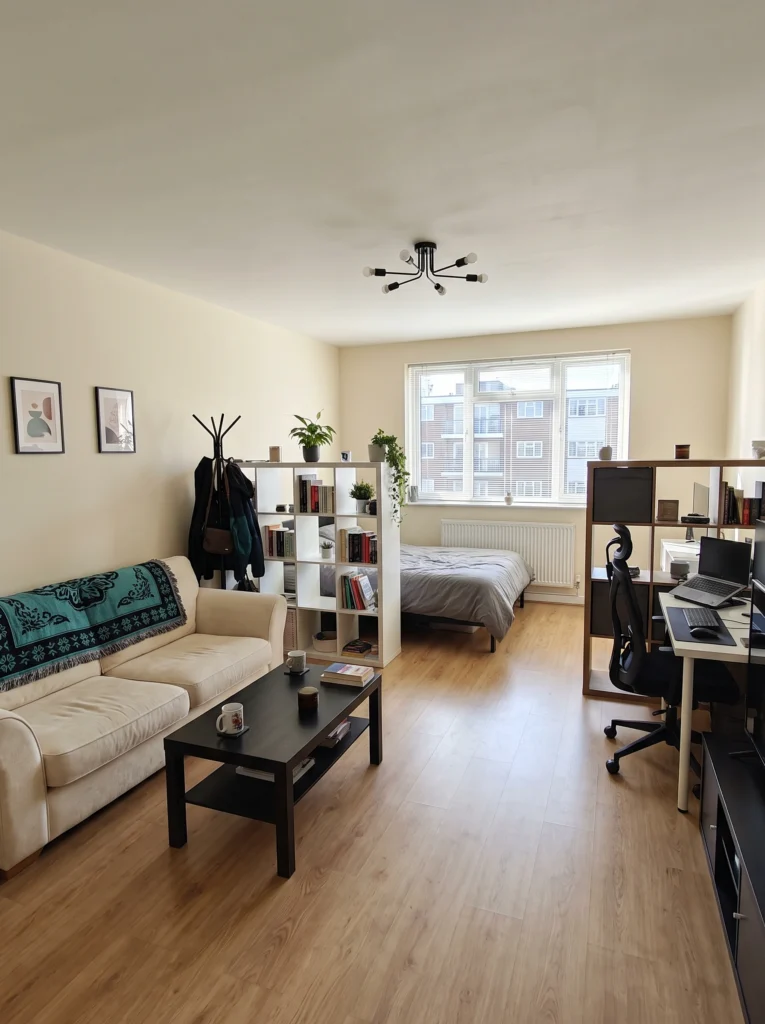
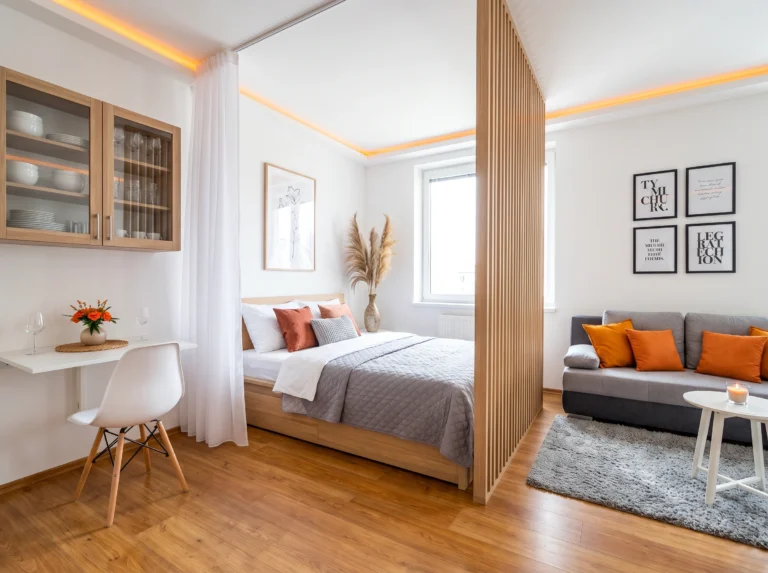
An open-back bookshelf does three jobs at once — it divides the room, stores your books and supplies, and still lets light pass through so nothing feels boxed in. Position it perpendicular to the wall between your sofa and bed, and suddenly your living area has a beginning and an end. Tuck your desk behind the second shelf for a workspace that feels genuinely separate from the rest of the room.
Renter-friendly alternative: Skip wall-mounting entirely. A sturdy KALLAX-style unit is heavy enough on its own to stay put without a single screw.
4. Squeeze a Slim Desk Between the Dresser and the Window
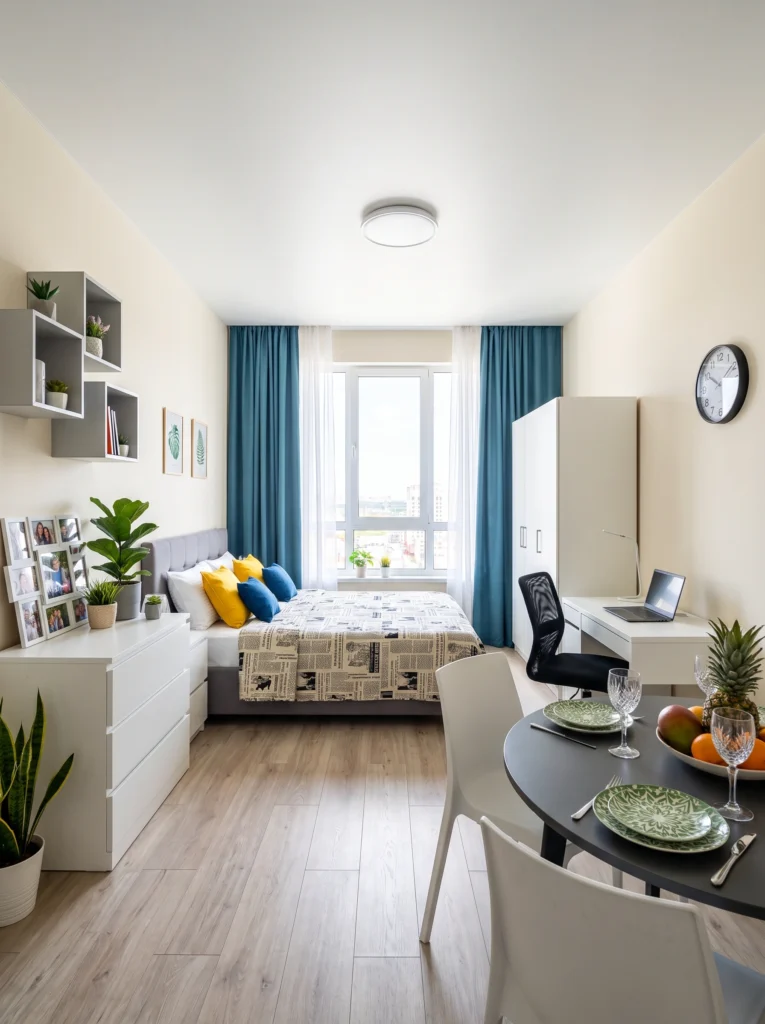
In a tight studio, your desk doesn’t need to be big — it needs to be strategic. A slim desk wedged between your dresser and the window wall takes up almost no floor space while keeping you close to natural light. Pair it with a compact rolling chair that tucks completely underneath when you’re done, and the work zone practically disappears when you need the space back.
My tip: Choose a desk the same height as your dresser so the whole wall reads as one clean surface instead of a jumble of mismatched furniture.
5. Set Up a Dual-Monitor Station Without Taking Over the Room
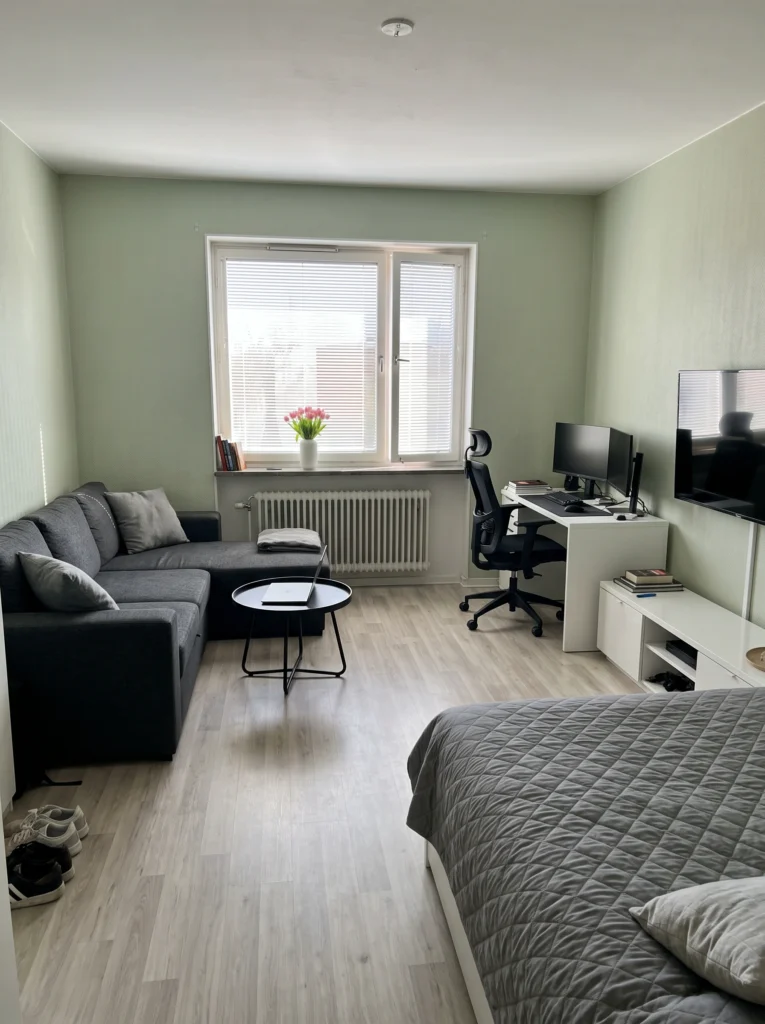
If your creative work demands screen real estate — design, video editing, music production — you can still make a dual-monitor setup work in a studio. The key is positioning the desk against a wall that naturally sits behind the sofa, so your screens face away from the living zone. This keeps the tech clutter invisible from the couch and mentally separates your “office” from your relaxation space.
I’ve tested this: A monitor arm that clamps to the desk edge frees up surface area and looks ten times cleaner than two monitors on stands.
6. Define Your Zones with Matching Wood Tones
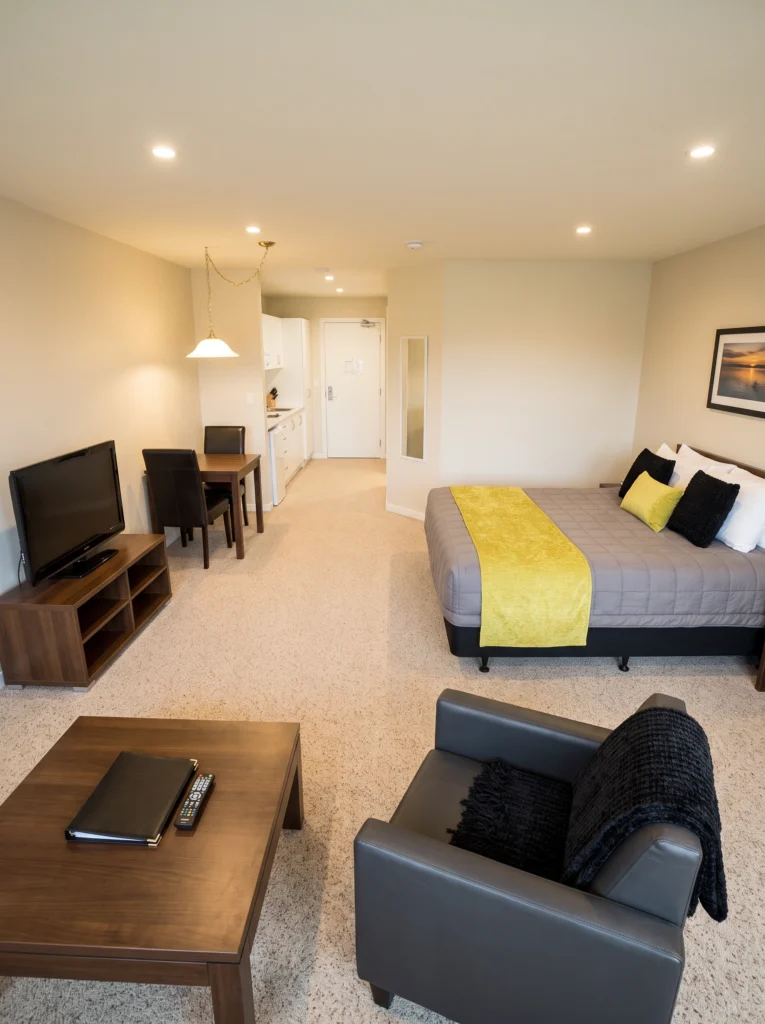
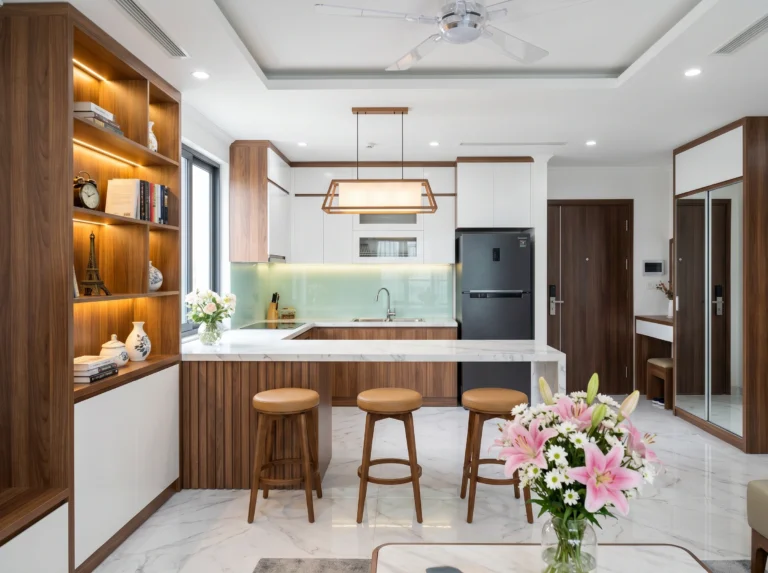
When every piece of furniture lives in one room, visual chaos comes fast. Using the same wood tone across your desk, TV stand, coffee table, and dining set ties everything together and makes the space feel intentional instead of thrown together. Dark walnut or warm oak both work well here. Even if the pieces aren’t from the same collection, matching the finish creates a quiet sense of order.
Budget vs. splurge: Save on the coffee table and side table — you can stain mismatched thrift finds to match. Splurge on the desk if you’ll use it daily.
7. Go Full Scandinavian for a Clean, Focused Feel
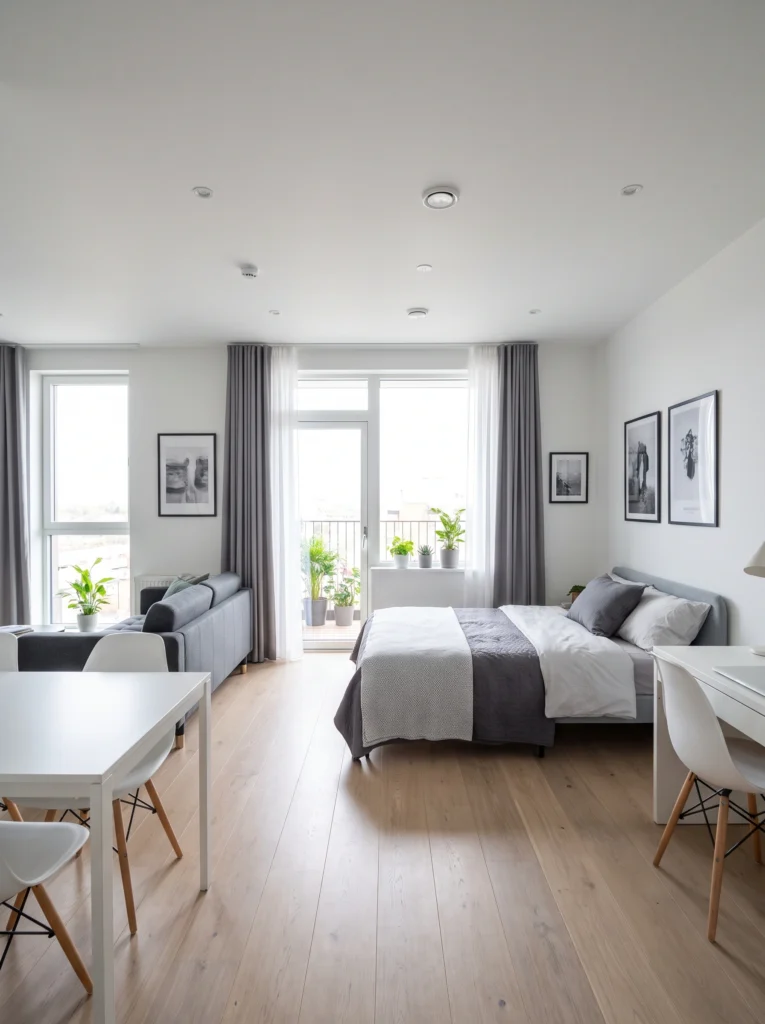
There’s a reason so many creatives gravitate toward Scandinavian design — it strips away the visual noise so your brain can focus. White furniture, light wood floors, and a restrained palette in gray and white keep the room feeling twice its actual size. Position a slim white table along one wall as your desk, and let the dining and work zones merge without friction. Plants add the only pop of color you need.
Pro tip: In a Scandi layout, your desk doesn’t need to look like a desk. A simple white table with clean legs does the job and blends into the room seamlessly.
8. Use a Shelf Divider to Create a Dedicated Office Nook
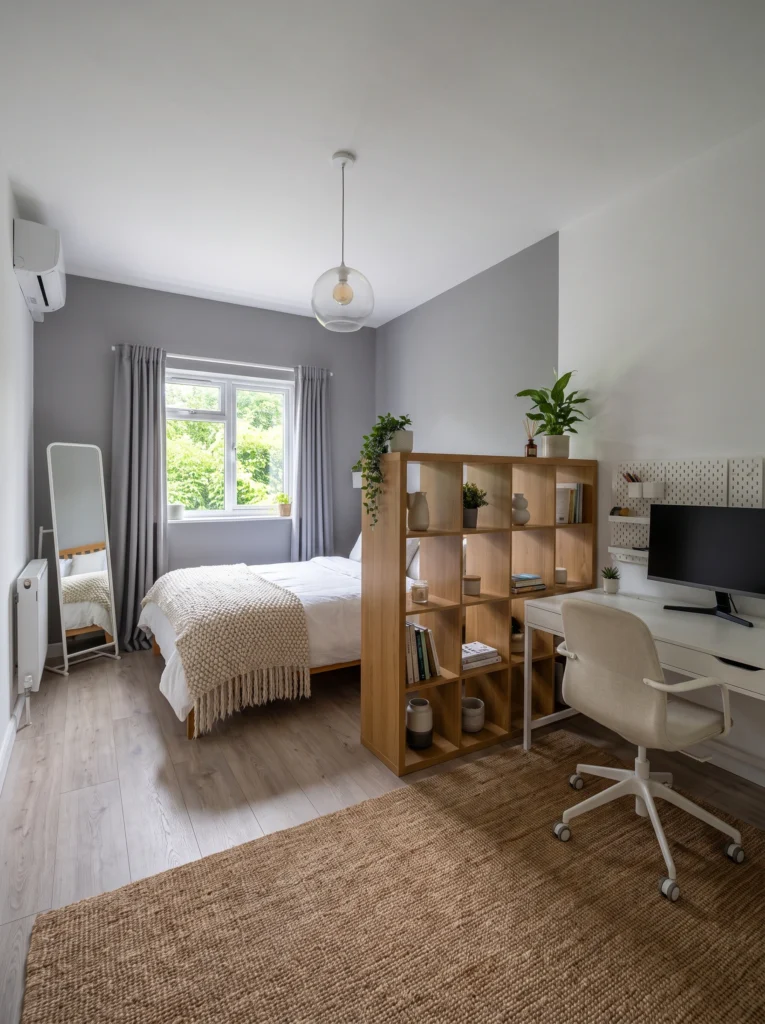
This is one of my favorite setups for creatives who work from home full-time. A mid-height wooden shelf placed at the foot of the bed creates a real boundary between sleeping and working. On the office side, a clean desk and a comfortable chair sit on a jute rug that further defines the zone. The shelf doubles as display space for books, plants, and ceramics — so the divider itself becomes decor.
My favorite: Top the shelf with trailing pothos or ivy. It softens the hard edge and adds life to the divider without costing you any floor space.
9. Add Symmetrical Bedside Lamps to Free Up Your Desk
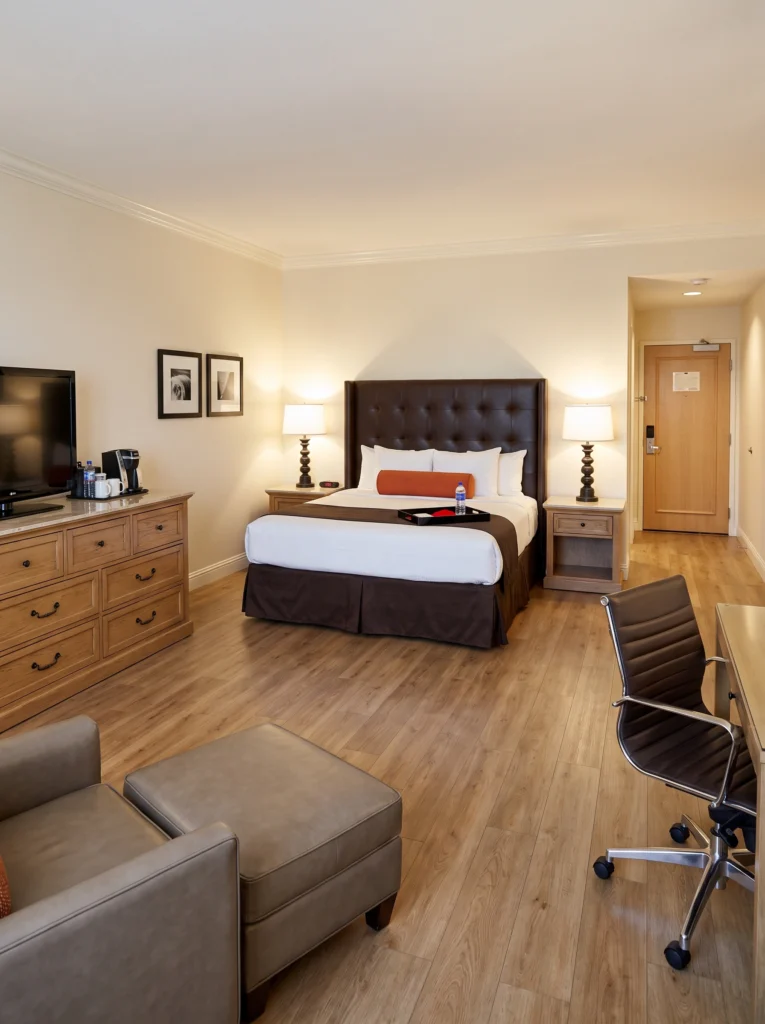
Here’s a trick most people overlook — when your bedroom lighting is handled by dedicated bedside lamps, your desk lamp can stay focused on work. Two matching table lamps flanking the headboard give the sleeping zone its own glow, which means you can keep a strong task light on your desk without it lighting up the entire room. It’s a subtle shift, but it helps your brain register two separate environments in one space.
Sofia’s honest take: Matching lamps look polished, but they don’t need to be expensive. Two identical lamps from HomeGoods for under $30 each do the job perfectly.
10. Try an Accent Wall to Anchor the Bedroom Side
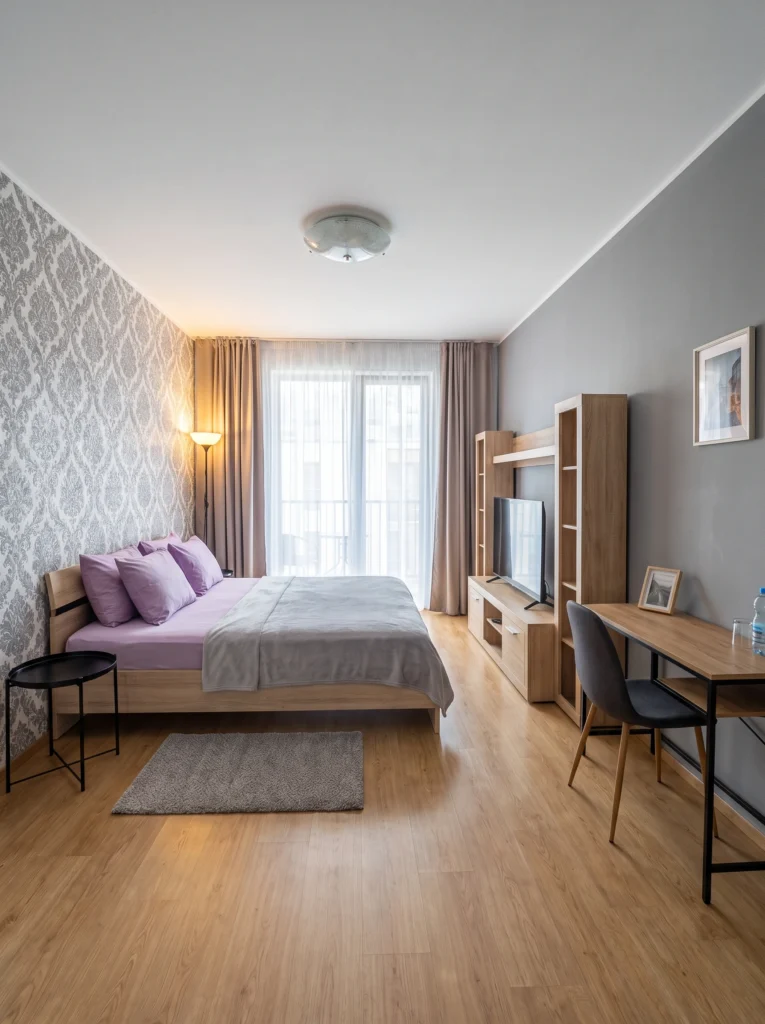
When your studio is all one color, every zone bleeds into the next. An accent wall behind the bed draws the eye and declares: this is the bedroom. That distinction frees the opposite side of the room to become your creative zone without any physical divider at all. Peel-and-stick wallpaper in a subtle damask or geometric pattern adds personality without a single paintbrush — and it peels off clean when you move.
Renter-friendly alternative: Peel-and-stick wallpaper is the single best investment for renters who want impact with zero risk. Test a small patch first to make sure it pulls off your specific wall finish cleanly.
11. Create a Boho-Inspired Creative Corner
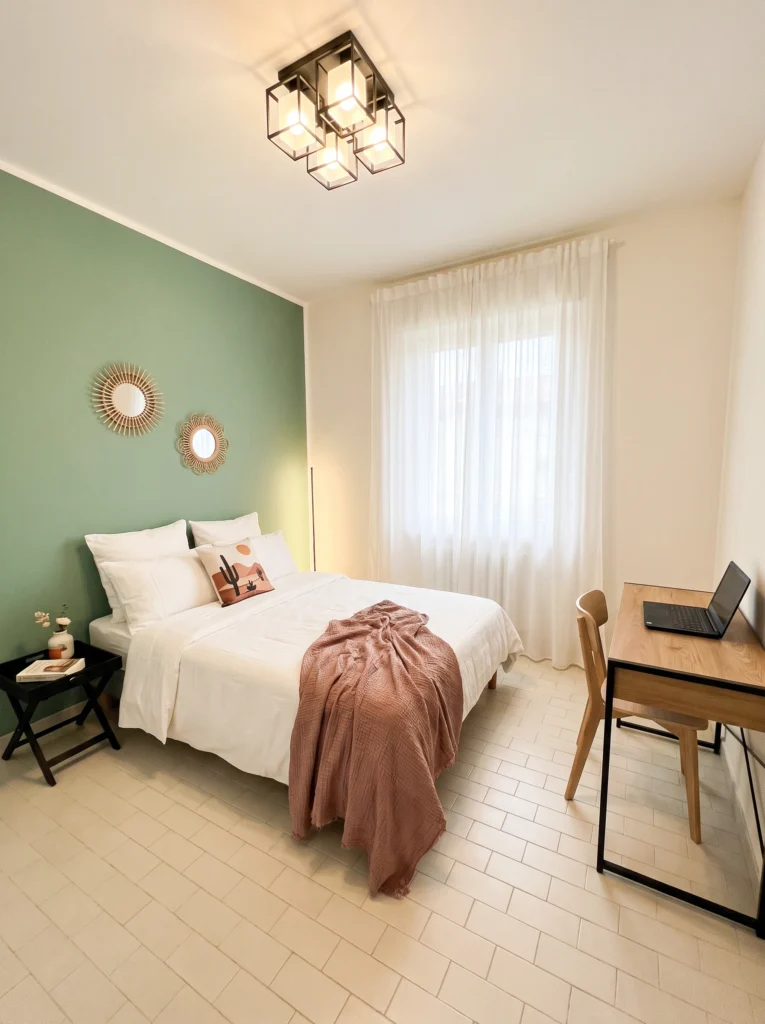
If your creative work is fueled by texture, color, and personality, lean into a boho setup that makes your studio feel like an artist’s loft. A green accent wall behind the bed sets the mood, while rattan mirrors and a terracotta throw warm up the space. Tuck a simple wooden desk against the opposite wall — nothing fancy, just a clean surface where ideas happen. The room does the inspiring for you.
My tip: Keep the desk minimal in a boho room. The decor brings enough energy — your workspace should be the calm eye of the storm.
12. Place Your Desk by the Window for Natural Light
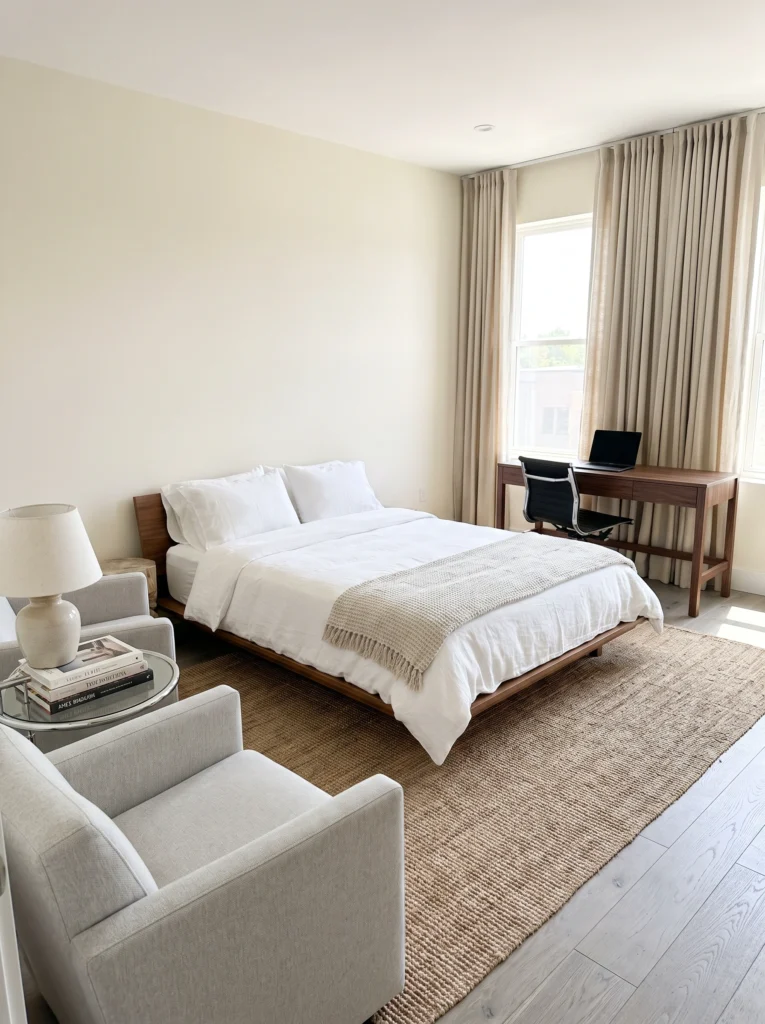
Natural light changes everything for creative work — it reduces eye strain, lifts your mood, and makes colors look accurate if you’re painting, designing, or photographing. Position your desk in front of or beside the window so you’re bathing in daylight during working hours. In this setup, the bed sits further from the window, reinforcing the visual separation between daytime energy and nighttime rest.
Don’t waste your money on: Expensive “daylight” desk lamps when you have a perfectly good window. Save the lamp budget and invest in a quality desk chair instead.
13. Use Two Shelf Units to Build a Full Room Partition
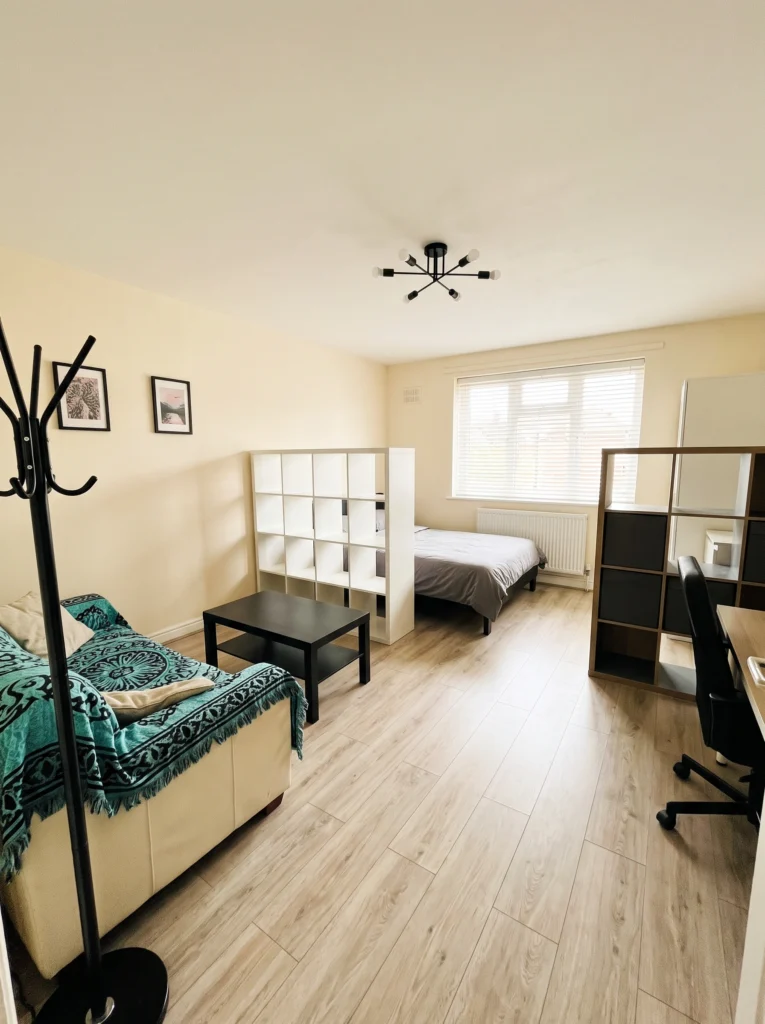
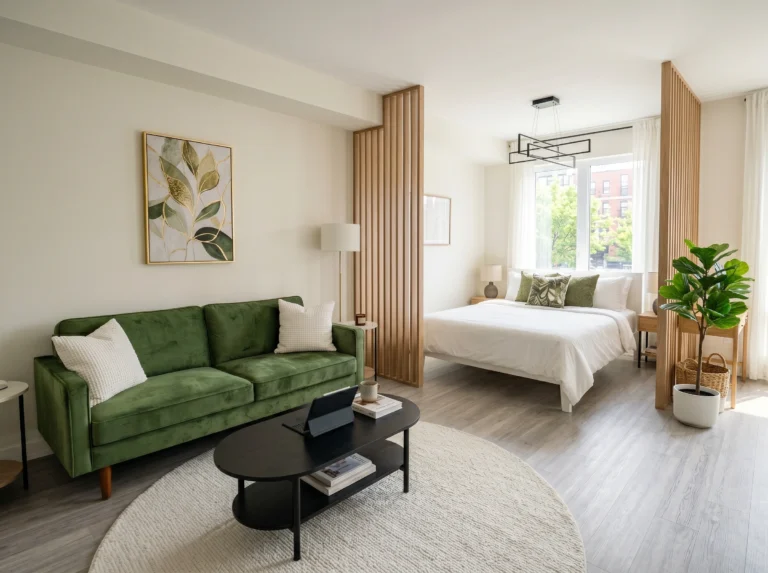
One shelf divider is good. Two create a real partition. By placing an open white shelf alongside a darker closed-back bookcase, you get privacy, storage, and visual texture in a single move. The bed tucks behind the dividers while the sofa and desk stay on the living side. The height difference between the two units keeps the arrangement from looking like a solid wall and still allows light to pass through.
I’ve tested this: Anchor both units to the wall with a simple anti-tip strap if you stack anything heavy on the upper shelves. Safety first, style second.
14. Go Monochrome for a Gallery-Studio Vibe
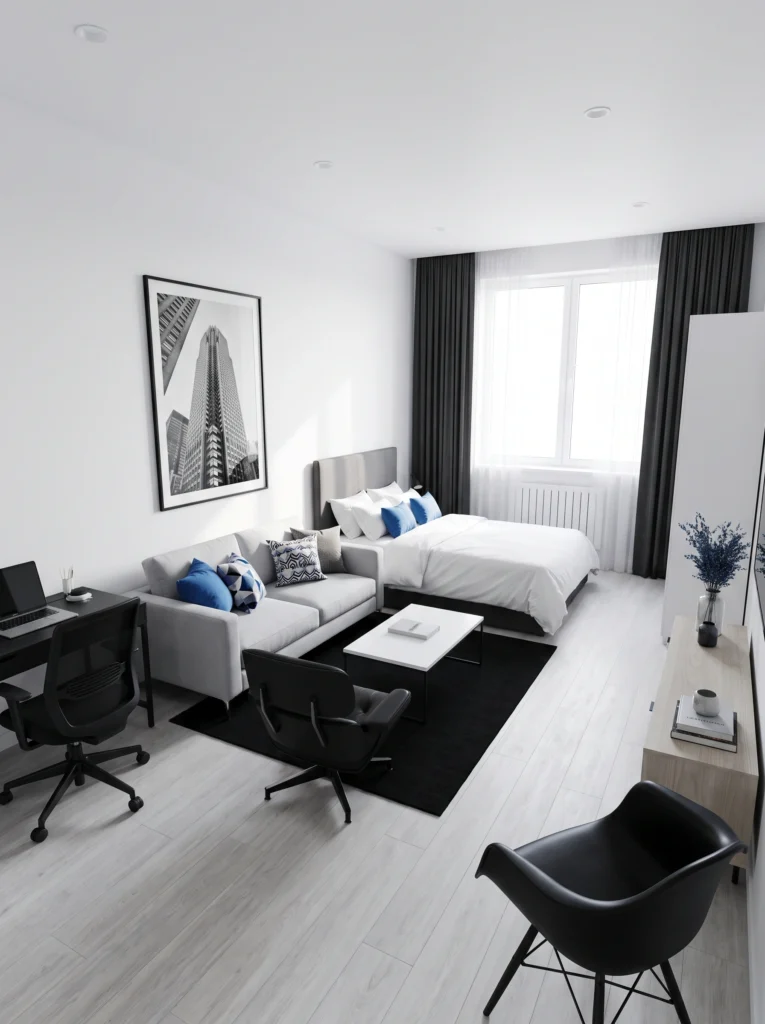
A strict black, white, and gray palette makes a studio feel like a curated creative space rather than a cramped apartment. The black desk and rug define the work zone on one side while the gray sofa anchors the living area. A single oversized art print adds drama without clutter, and blue accent pillows are the only color allowed in. This look is sharp, intentional, and surprisingly easy to maintain.
Pro tip: In a monochrome room, texture does the work that color usually handles. Mix matte, glossy, woven, and knit finishes to keep the eye moving.
15. Match Your Desk to Your Bed Frame for Cohesion
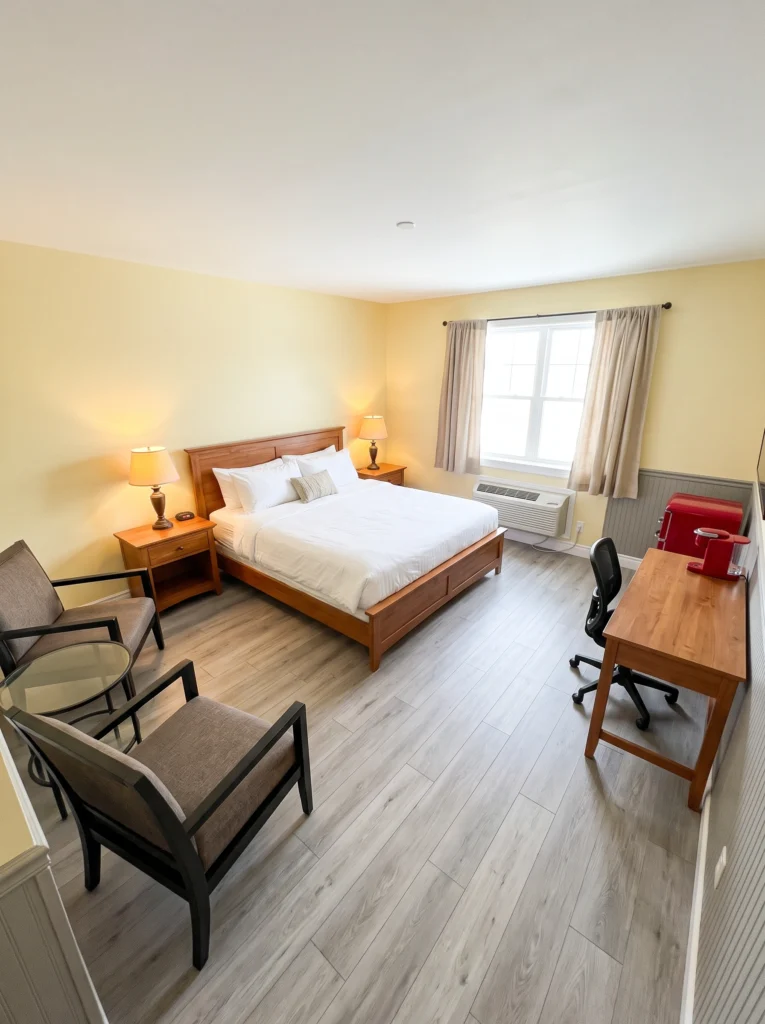
When your desk, bed frame, and nightstands share the same wood finish, the room reads as one cohesive suite instead of a collection of random furniture. Warm honey-toned wood against yellow walls creates a cozy, grounded feel that makes working from this room actually pleasant. A pair of armchairs with a small glass side table adds a sitting area that bridges the gap between work and relaxation.
Sofia’s honest take: Matching wood sets can feel old-fashioned, but in a studio they’re a lifesaver. They eliminate the visual clutter that comes from mixing too many finishes in one room.
16. Fit a Micro Desk Into Even the Tightest Layout
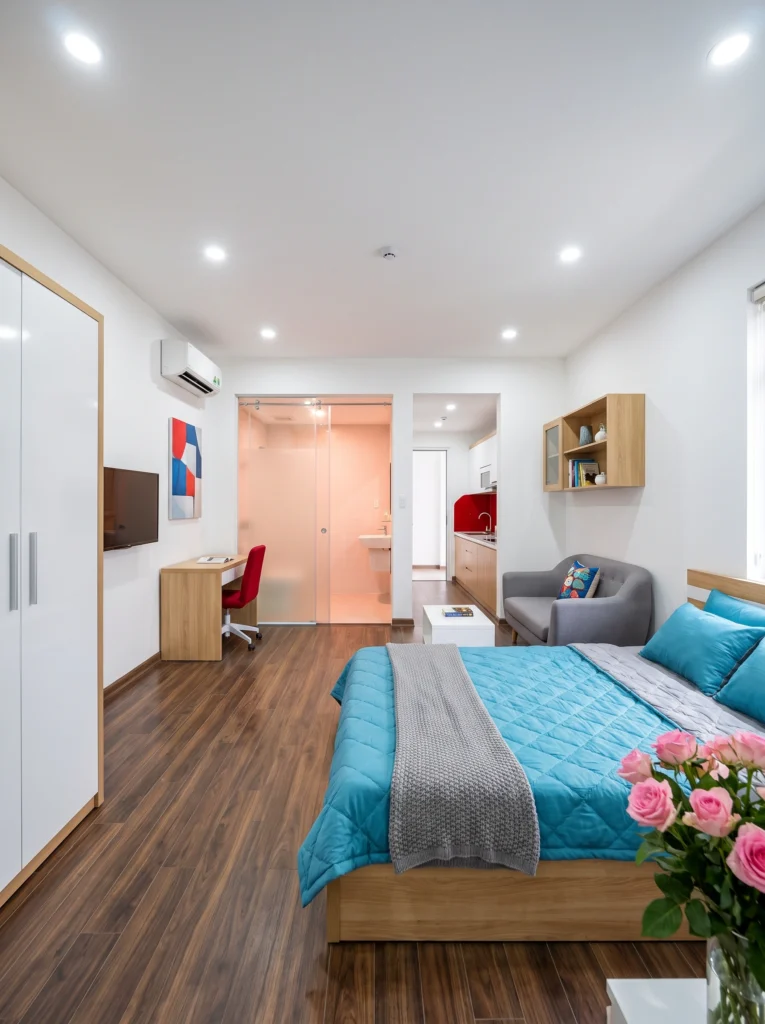
You don’t need a big desk to do big work. In this ultra-compact layout, a narrow wooden desk barely wider than a laptop fits neatly between the wardrobe and the wall. A pop of color with a red office chair makes the corner feel intentional rather than squeezed in. When space is this tight, wall-mounted shelves above the desk give you vertical storage so nothing piles up on the surface.
Budget vs. splurge: Save on the desk — a simple floating shelf mounted at desk height works just as well. Splurge on the chair, because your back will thank you.
17. Layer Your Lighting for Day-to-Night Transitions
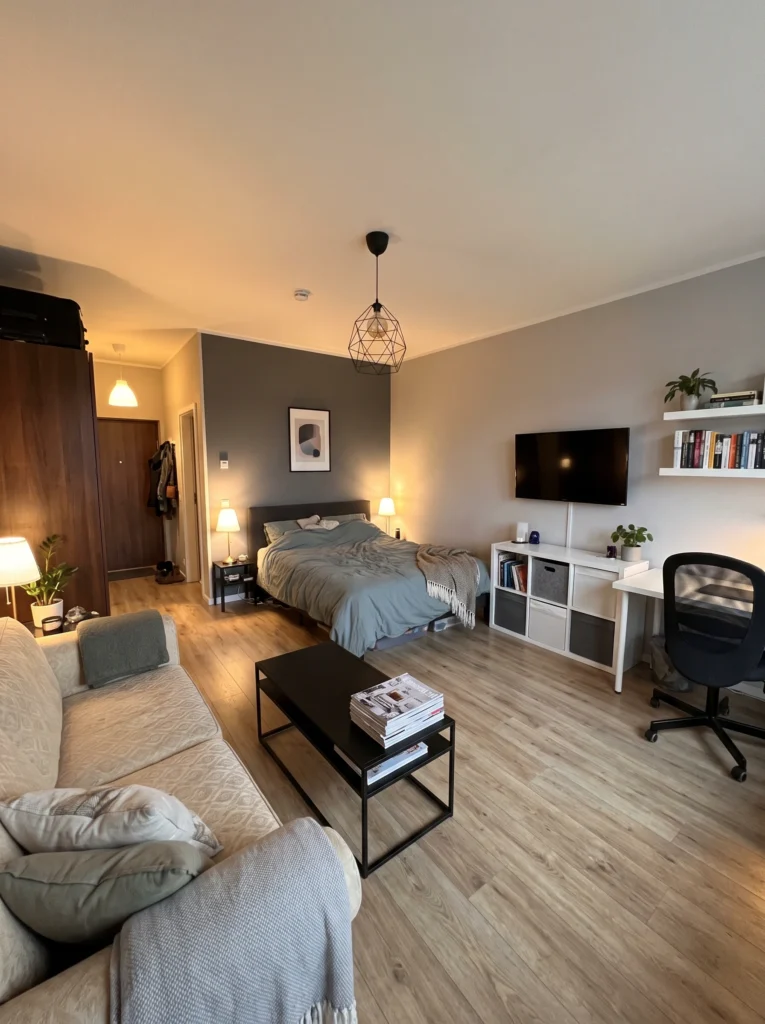
Creatives who work late know that one overhead light can make a studio feel like a fluorescent office at 10 PM. Layered lighting — a geometric pendant, bedside table lamps, and a separate desk light — lets you control the mood in each zone independently. Dim the bedroom side while keeping the desk bright, or kill the desk lamp and let the warm glow from the bed area signal that the workday is over.
My favorite: Smart bulbs in two or three fixtures let you shift the whole room from energizing cool white to cozy warm amber with one tap.
18. Use Bold Color to Visually Separate Work from Rest
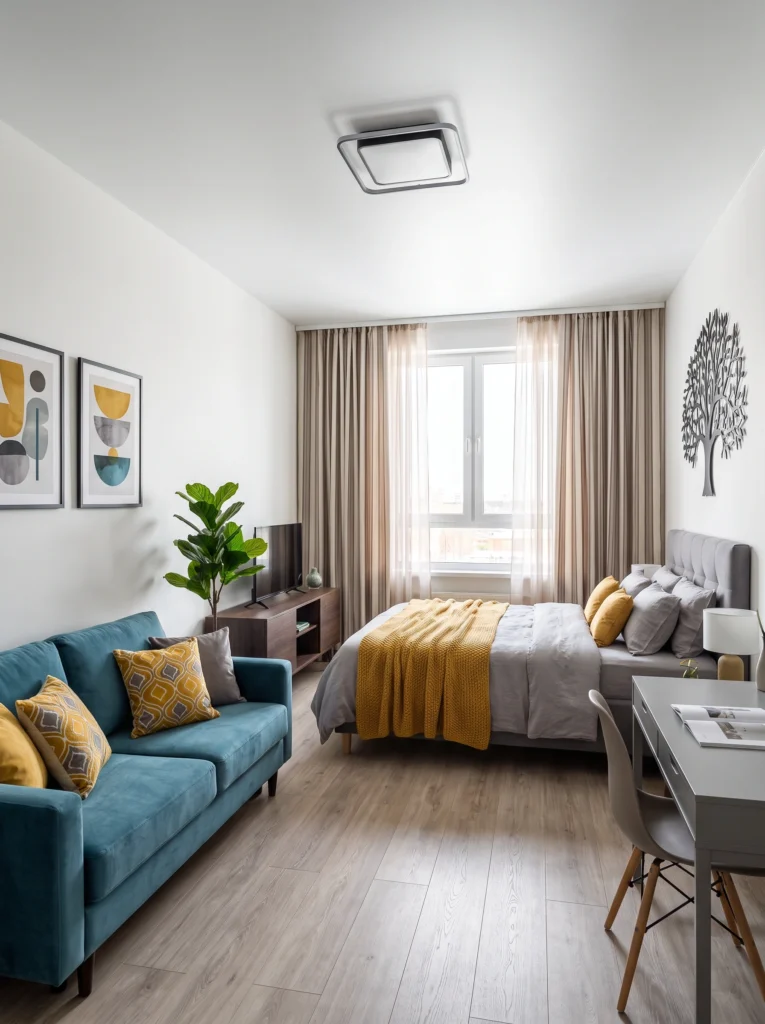
Color can do the job of a wall when you use it strategically. A teal sofa paired with mustard yellow accents on the bed creates two visually distinct zones that your brain registers as separate spaces, even though nothing physically divides them. The desk sits quietly on the side, paired with neutral tones so it doesn’t compete with the living and sleeping areas for attention. Let color draw the boundaries.
Renter-friendly alternative: If you can’t paint, let your furniture and textiles carry the color. A bold sofa and a colorful throw do more than any accent wall ever could.
19. Let the Architecture Do the Heavy Lifting
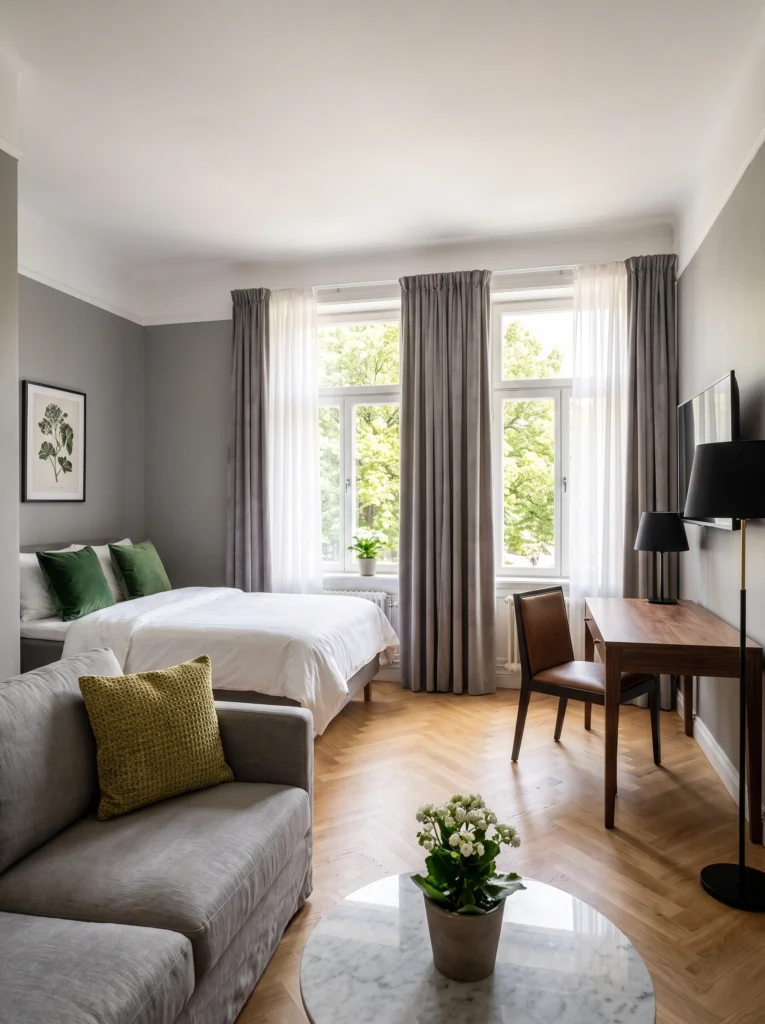
If you’re lucky enough to have a studio with high ceilings, herringbone floors, or large period windows — let those features lead the design. A walnut desk and leather chair tucked against the wall feel like they belong in this space without trying too hard. The gray walls, marble-top coffee table, and restrained palette keep everything sophisticated. Sometimes the best creative workspace is one that doesn’t look like a workspace at all.
Pro tip: In a room with strong architectural character, resist the urge to over-decorate. One statement piece per zone is plenty. Let the bones of the space speak.