How to Create a Cozy Studio Apartment Aesthetic
Living in a studio apartment means one room has to do everything — sleep, eat, work, relax, entertain. That’s a lot to ask of a single space. And if yours currently feels cramped, chaotic, or like you just gave up and shoved a bed in the corner, you’re not alone. Here’s the thing: studios aren’t a design problem. They’re a design challenge, and a fun one when you know the right moves. Here are 10 ideas that genuinely work — no renovation required.
1. Use a Bookshelf as Your Room Divider
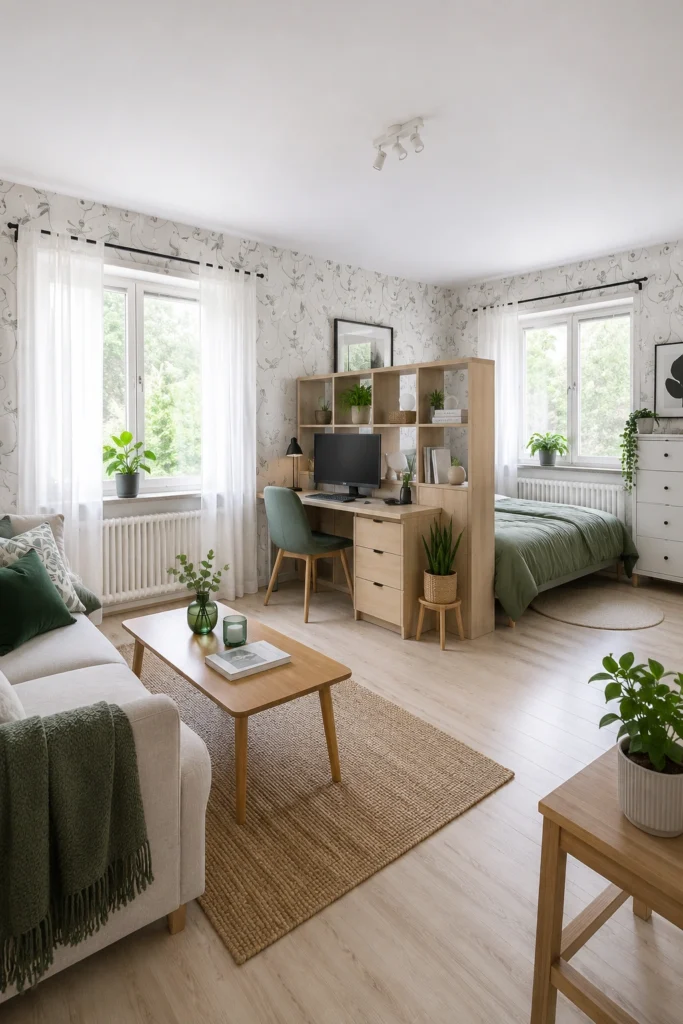
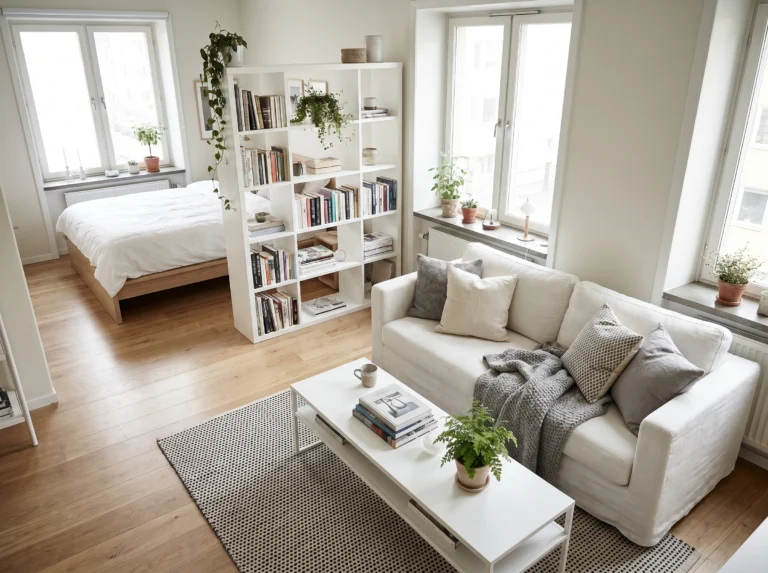
Forget curtain rods and fold-out screens. A tall, open bookshelf is the smartest room divider you can own because it does three jobs at once: it divides the space, provides storage, and adds visual interest. Style both sides of it, and suddenly you have a “living room” on one side and a “bedroom” on the other — even if you could touch both walls with your arms stretched out.
This Scandinavian-style setup nails it: a light wood unit holds a monitor, books, and plants, creating a natural boundary between the sleeping and living areas without closing the space off entirely. The openness of the shelves keeps the room feeling airy. IKEA’s Kallax or Hemnes shelving units are the go-to for this. Stack them, add legs, turn them sideways — they’re endlessly configurable.
Renter-friendly alternative: You don’t need to anchor it to the wall if you keep it at a reasonable height (under 6 feet) and don’t overload the top shelves. Just be thoughtful about weight distribution.
2. Let a Statement Rug Anchor the Whole Room
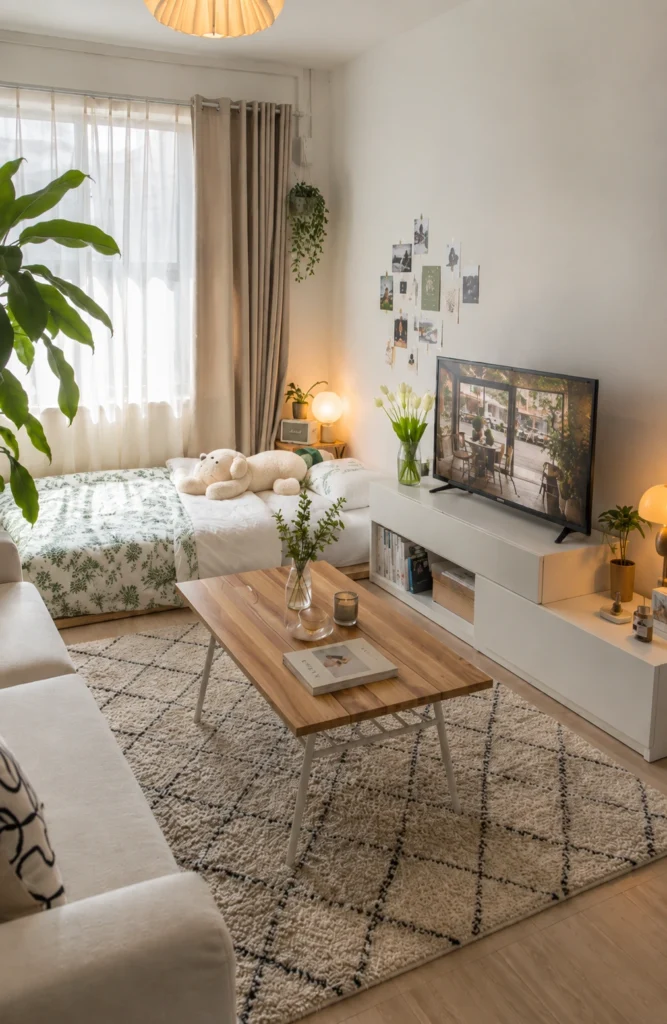
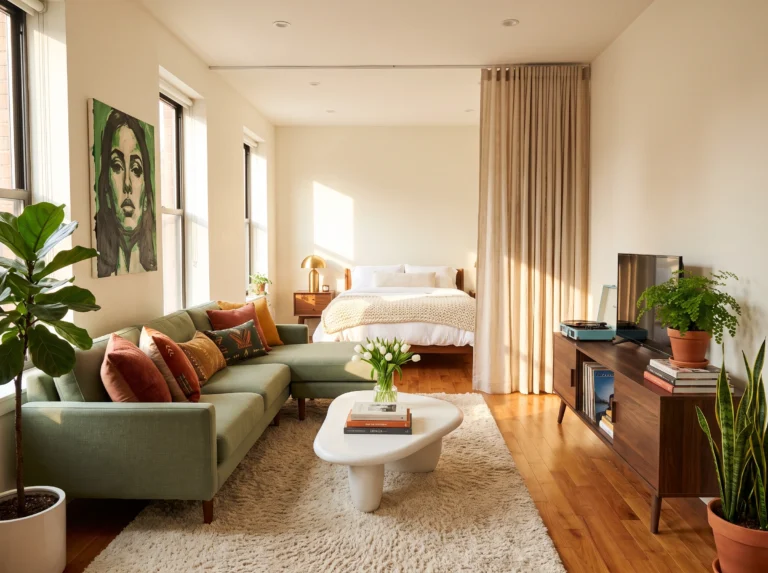
A patterned rug in a small studio is not too much. Done right, it’s the thing that makes the whole room click. This kind of softly patterned, diamond-weave rug — similar to a Moroccan Beni Ourain style — works beautifully because it has texture and pattern without loud color. It adds personality while still letting everything else breathe.
Notice how this studio uses the rug as the anchor point: the sofa, coffee table, and TV console all orbit around it. The bed sits just beyond, and the rug essentially says “living room ends here.” You don’t need to match your rug to your sofa or your cushions. You just need it to be in the same tonal family — creams, warm neutrals, soft greens. If in doubt, go for a rug with a simple repeating pattern over anything geometric or loud.
3. Maximize Natural Light — Don’t Sacrifice It for Privacy
Natural light is the one thing you cannot buy more of. In a studio, blocking it for the sake of privacy or blackout curtains is a mistake most people make once and then fix. Sheer curtains — linen, voile, or cotton gauze — filter light softly without cutting it off. You get privacy during the day and a warm, diffused glow that makes a small room feel twice its size.
This high-rise studio does it beautifully: floor-to-ceiling sheers frame the city view, and the room stays flooded with soft daylight. The furniture palette — warm whites, sage, natural wood — does the rest. If you need blackout for sleep, layer a blackout blind behind the sheers and keep it rolled up during the day. You get the best of both.
Pro tip: Hang your curtain rod as high as possible — ideally at ceiling height — and let the curtains pool slightly on the floor. It makes your windows look taller and your ceiling feel higher.
4. Use One Bold Color and Commit to It
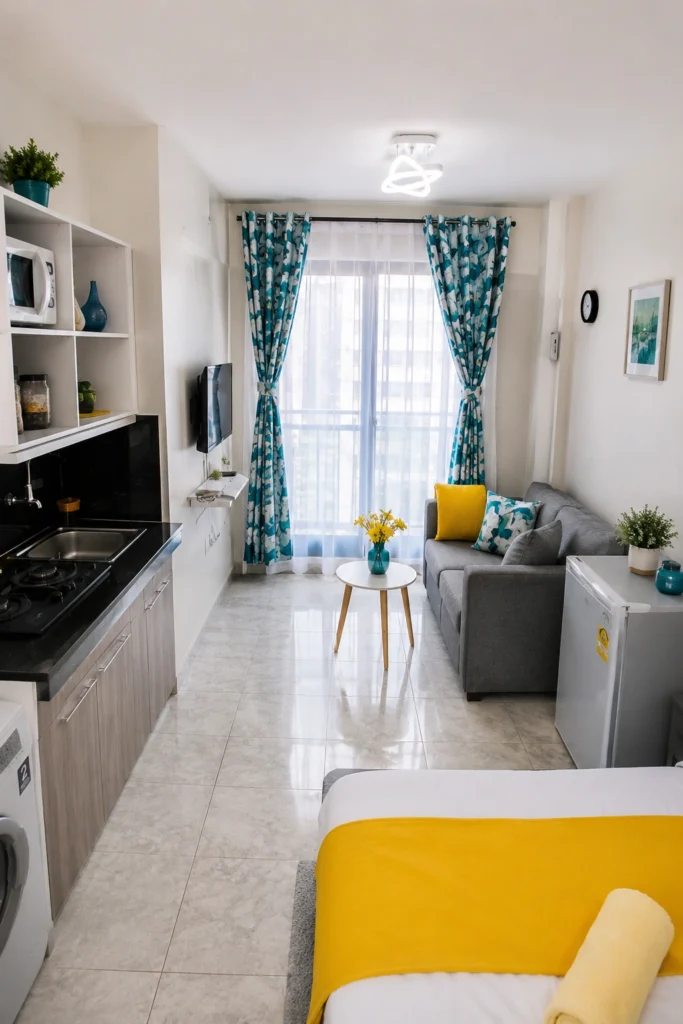
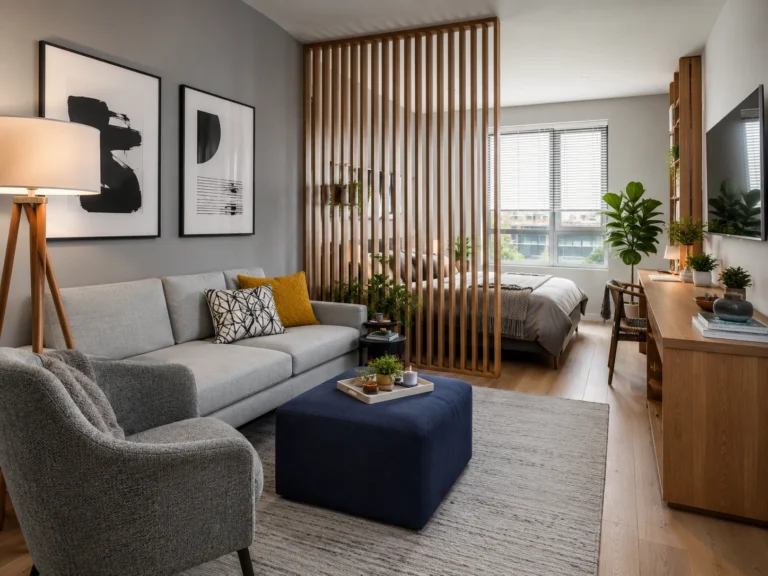
Neutral isn’t always the answer. Sometimes what a studio needs isn’t calming beige — it’s a committed pop of color that gives the whole room a point of view. This studio’s teal curtains are the whole personality of the space. They’re bold, they’re graphic, and everything else — the gray sofa, white walls, light tile — lets them lead.
Here’s the thing: one strong color used consistently is way more effective than a few colors used nervously. Pick your color (teal, terracotta, sage, mustard — anything with some warmth), and then carry it in two or three places: curtains, a throw pillow, a small vase, maybe a candle. The repetition is what makes it look intentional rather than accidental. You don’t need to paint a wall. You just need to commit.
5. Hang a Curtain to Create a “Bedroom”
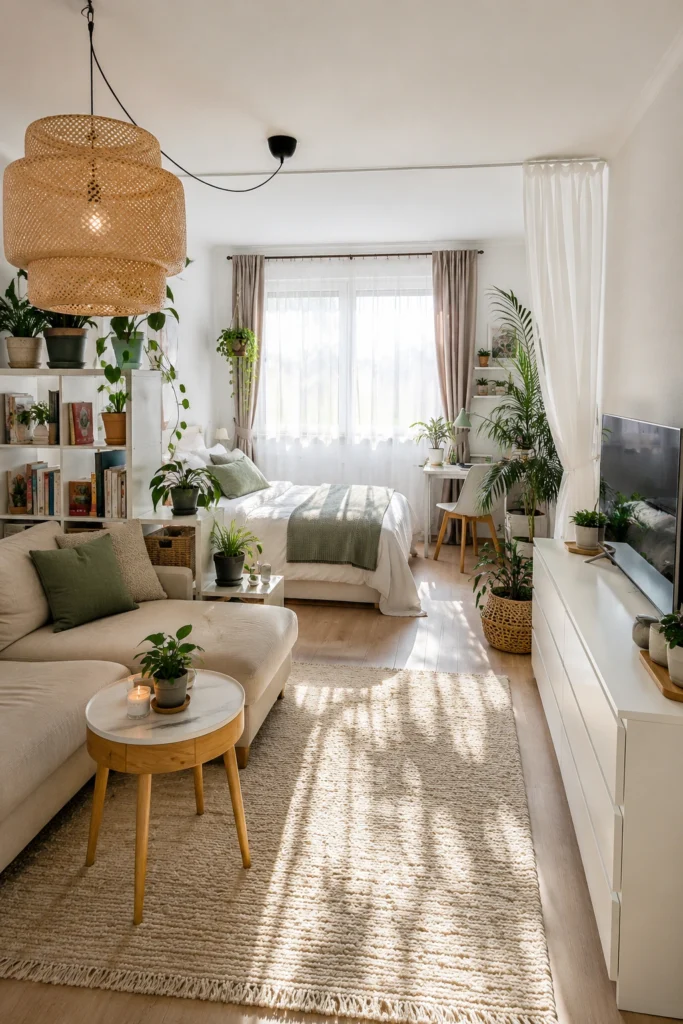
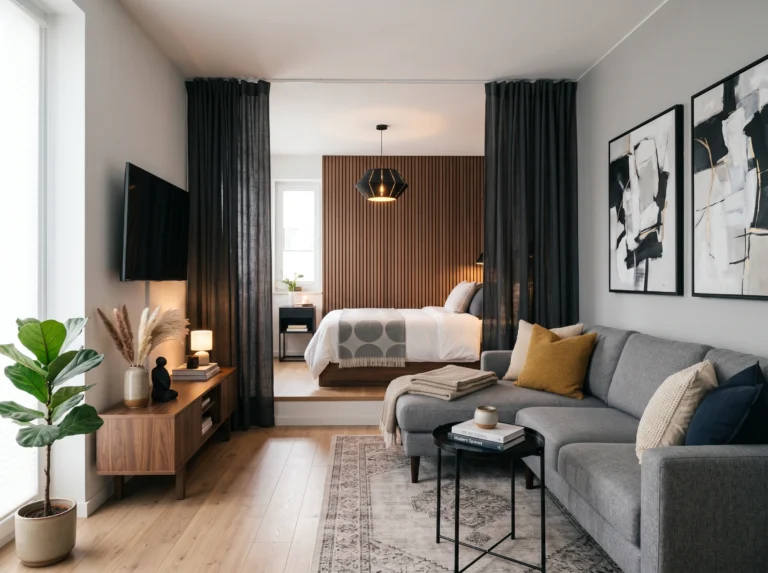
A ceiling-mounted curtain track is one of the most renter-friendly, budget-friendly ways to carve out a sleeping area in a studio. Run the track across the room, hang a sheer or semi-sheer curtain, and pull it closed at night. You’ve just created a bedroom — psychologically, at least, which honestly counts for a lot.
This setup adds a rattan pendant light and a sheer white curtain panel that separates the sleeping area from the living space. The curtain doesn’t block light entirely, which keeps the room from feeling chopped up, but it creates enough of a visual boundary that the two zones feel distinct. IKEA sells ceiling curtain track systems (the Kvartal range) that require minimal installation — and most landlords consider curtain tracks totally acceptable.
Pro tip: Hang the curtain all the way to the ceiling if you can. A curtain that stops at mid-height looks like an afterthought. Floor-to-ceiling looks like a design choice.
6. Fill It with Plants — Seriously, More Than You Think
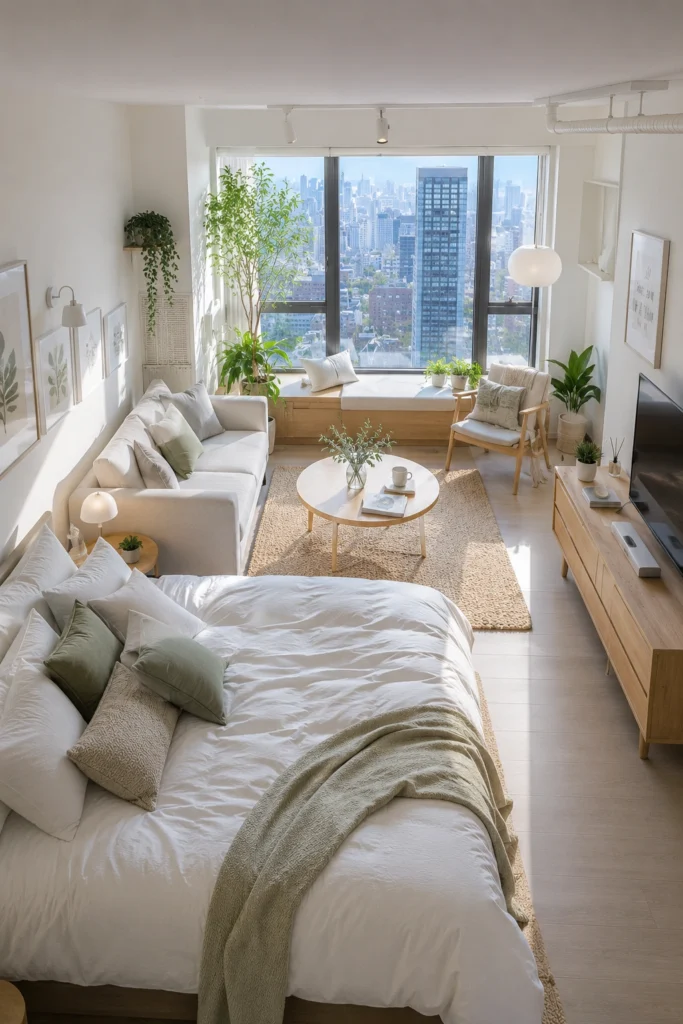
Plants in a studio apartment do something no piece of furniture can: they make the space feel alive. Not just aesthetically — they add texture, scale, movement, and a sense of something growing and breathing alongside you. A studio with five plants always feels warmer and more welcoming than a studio with none, even if everything else is identical.
Go big where you can. A tall bird of paradise or fiddle leaf fig in the corner adds height and draws the eye upward, which visually raises the ceiling. Group smaller plants together rather than scattering them — a cluster on a console or windowsill reads as a design moment rather than an afterthought. And if you’re worried about killing them (no shame), start with a pothos, a ZZ plant, or a snake plant. They thrive on neglect, which is honestly their best quality.
7. Let the Layout Work Harder Than the Decor
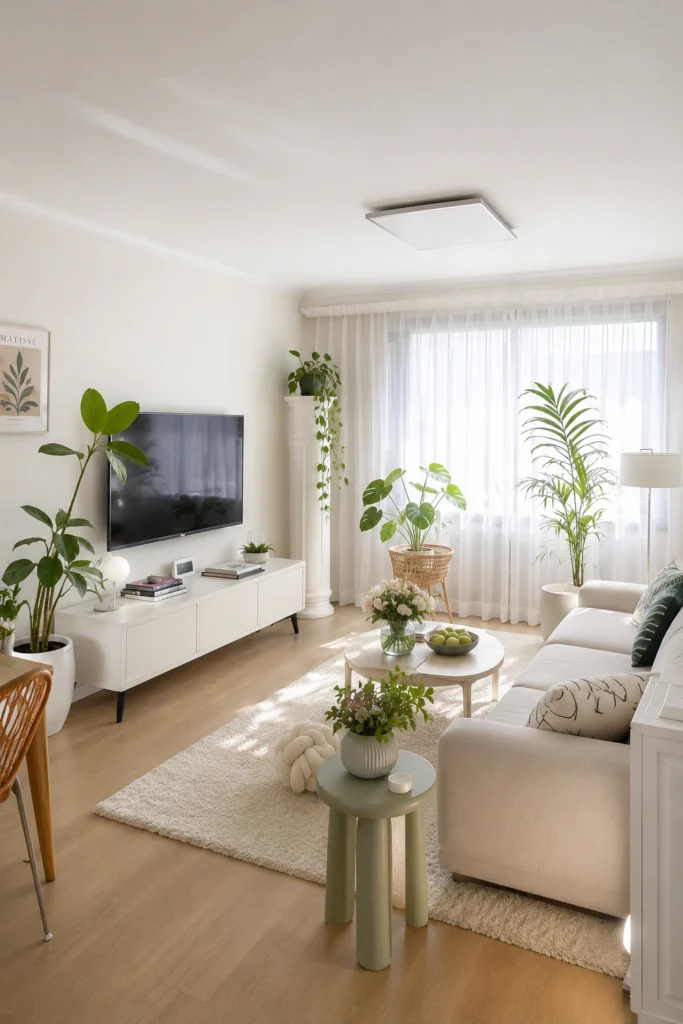
Most people redecorate when what they actually need to do is rearrange. In a studio, furniture placement is everything. The biggest mistake is pushing everything against the walls — it creates dead space in the middle and makes the room feel like a waiting room. Pull your sofa away from the wall by even eight inches. Float your bed so there’s space on both sides. Let furniture breathe.
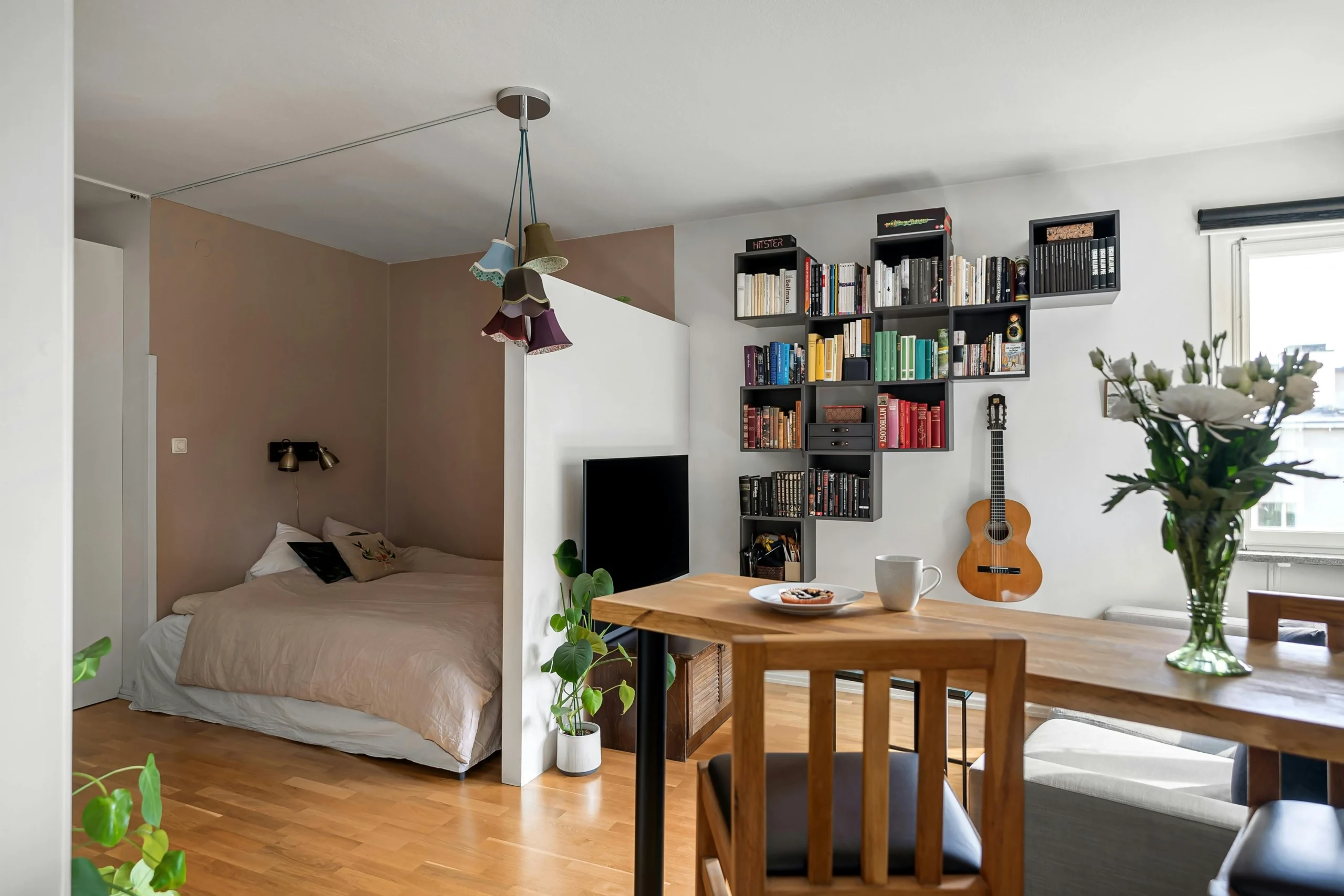
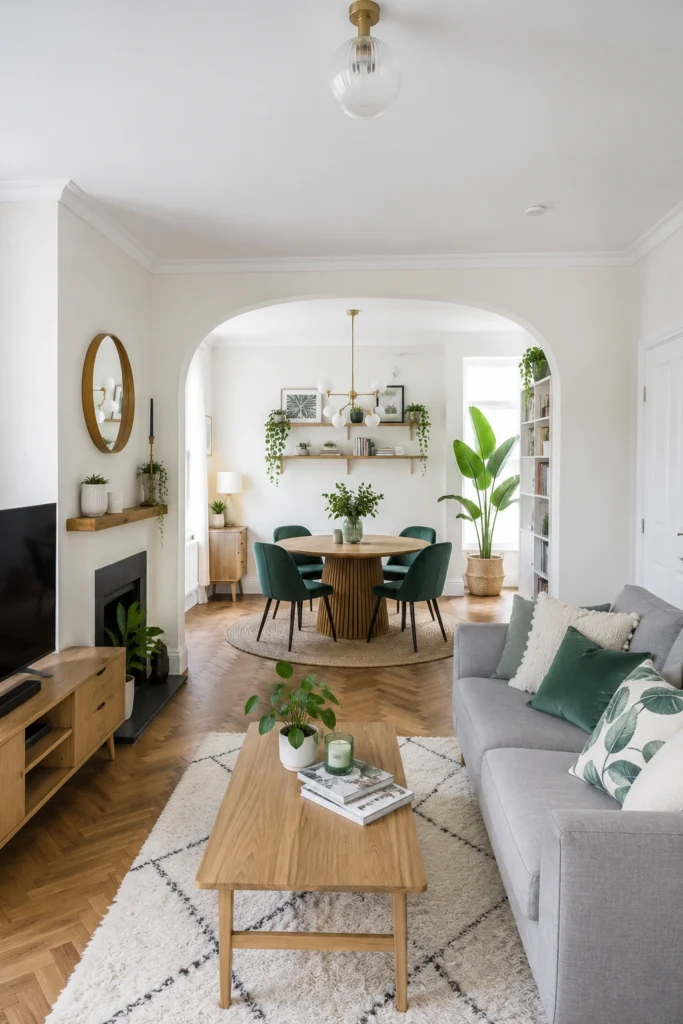
This open-plan space works because of how confidently the furniture is arranged: the sofa faces into the room, the coffee table anchors the seating zone, and the dining area beyond the archway is completely distinct without being closed off. Even if you don’t have an archway, you can create the same visual separation with a pendant light hung over the dining table or a change in rug texture between zones.
8. Put Art on the Walls — Your Walls, Your Story
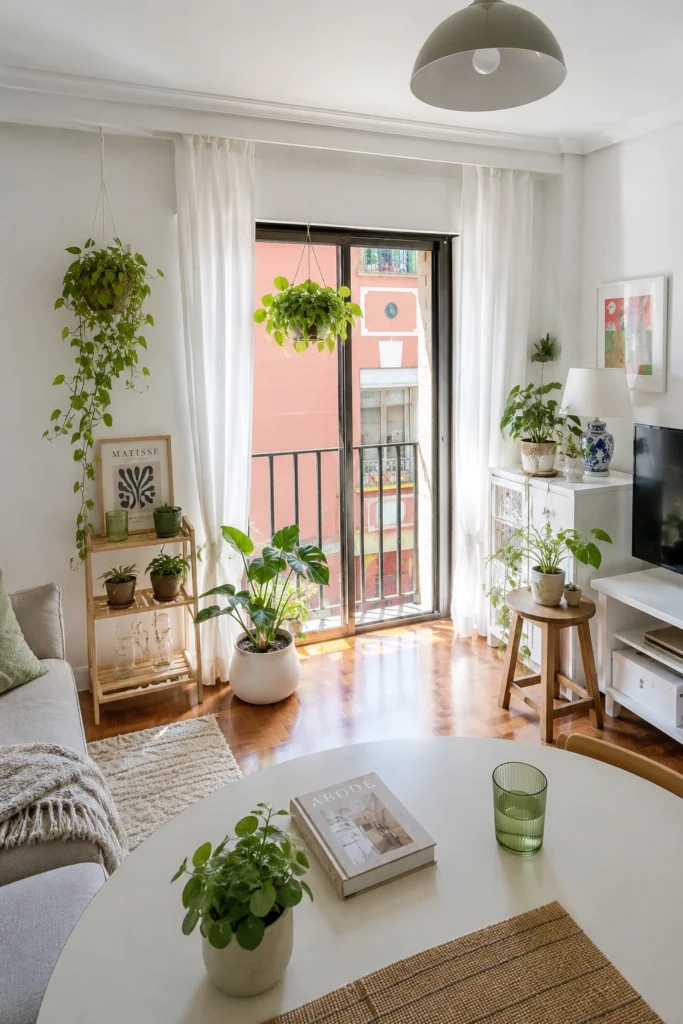
Bare walls make a studio feel like a hotel room someone checked out of in a hurry. Art — even a single framed print propped on a shelf — adds personality and signals that a real person lives here with actual tastes and interests. You don’t need expensive originals. You need intentionality.
A Matisse print, a cluster of small frames, a photo collage made with washi tape — it all works. The key is to lean into what you actually love. Art that you bought because it “goes with the sofa” is always slightly depressing. Art that makes you feel something is the whole point. Start with one wall, one piece, or one shelf moment. Once you see how much it changes the room, the rest follows naturally.
9. Define Zones with a Jute or Sisal Rug
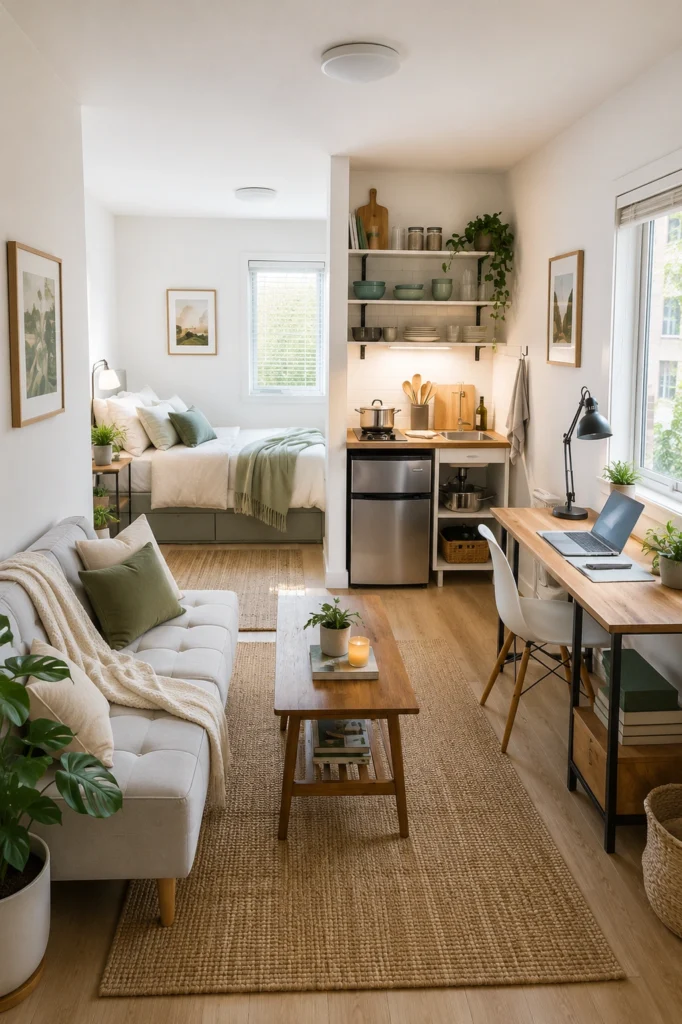
In an open-plan studio, zones don’t have walls — so you create them with rugs. A rug under your sofa and coffee table tells the eye “this is the living room,” even if your bed is six feet away. It’s one of the cheapest and most effective tricks in small-space decorating.
Natural fiber rugs — jute, sisal, seagrass — are especially good here because they’re affordable, durable, and have a texture that grounds the space without competing with anything else you’ve got going on. Size matters: go bigger than you think. A rug that only fits under the front legs of your sofa isn’t doing its job. You want all four legs on (or at least near) it.
Budget vs. splurge: Jute rugs are an honest budget pick — IKEA and Amazon both have solid options under $80. Save money here and spend it on a sofa you actually want to sit on.
10. Layer Your Lighting Like a Pro
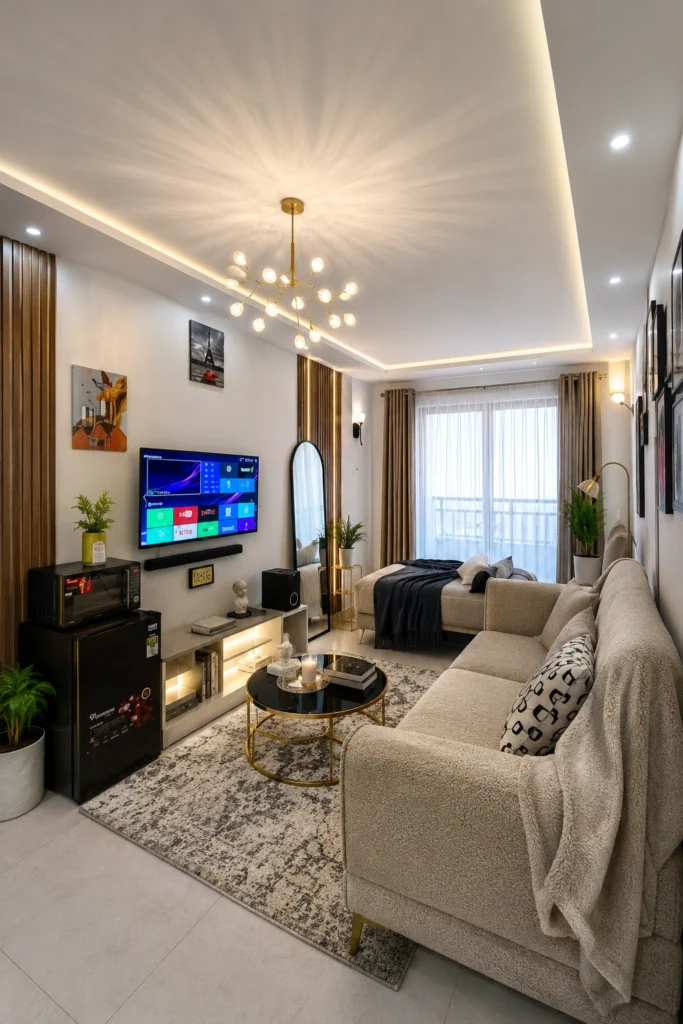
Overhead lighting is the enemy of cozy. Most studios come with one ceiling fixture that washes the entire room in flat, harsh light — and that single light source is doing more damage to your vibe than your mismatched furniture ever could. The fix is layering: combine ambient light (that ceiling fixture), task light (a desk or reading lamp), and accent light (LED strips behind furniture, a small table lamp tucked in a corner).
Look at what good lighting does to even a small space: a sculptural pendant overhead, cove lighting along the ceiling edge, and warm accent lamps underneath create depth and drama without adding a single piece of furniture. If your landlord won’t let you touch the ceiling, plug-in pendant lights and smart bulbs with warm color temperatures (look for 2700K–3000K on the box) will do the same job.
Pro tip: Put your lamps on smart plugs and set them to a schedule. Coming home to a softly lit apartment instead of darkness changes everything.
Final Thoughts
Studio living isn’t a compromise — it’s a design exercise in making every square foot count. The spaces in this article aren’t large. They’re just thoughtful. And that’s entirely within your reach, whatever your budget, whatever your rental restrictions.
Pick one idea from this list. Just one. Try it this weekend. A rug, a plant, a curtain panel, a new lamp. You’ll feel the difference immediately, and once you do, the rest falls into place.
A small apartment can hold a big life — you just have to set it up that way.