How To Simplify Studio Apartment Decorating For A Better Home
Studio apartments have a funny way of feeling cluttered even when you don’t own much. One room has to be your bedroom, living room, office, and dining spot — so every extra cushion, color, and side table shows up everywhere at once. Here’s the thing: the fix usually isn’t buying more, it’s deciding less. These 12 ideas will help you simplify your studio so it feels calmer, roomier, and far easier to live in.
1. Start With a Light, Neutral Base
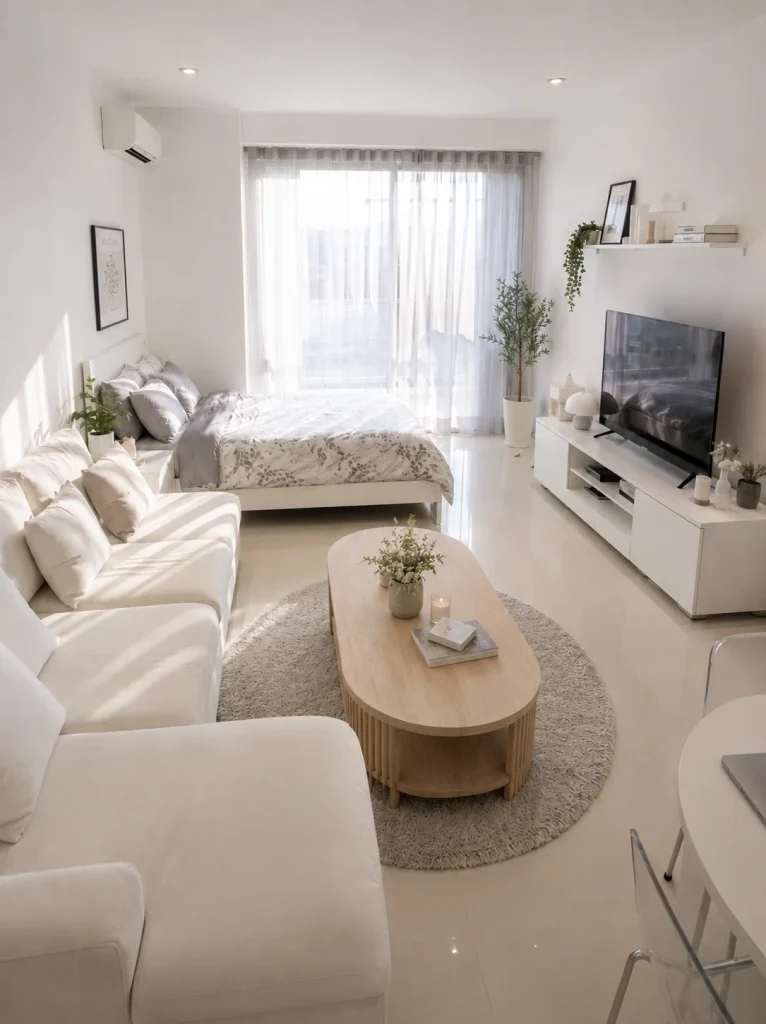
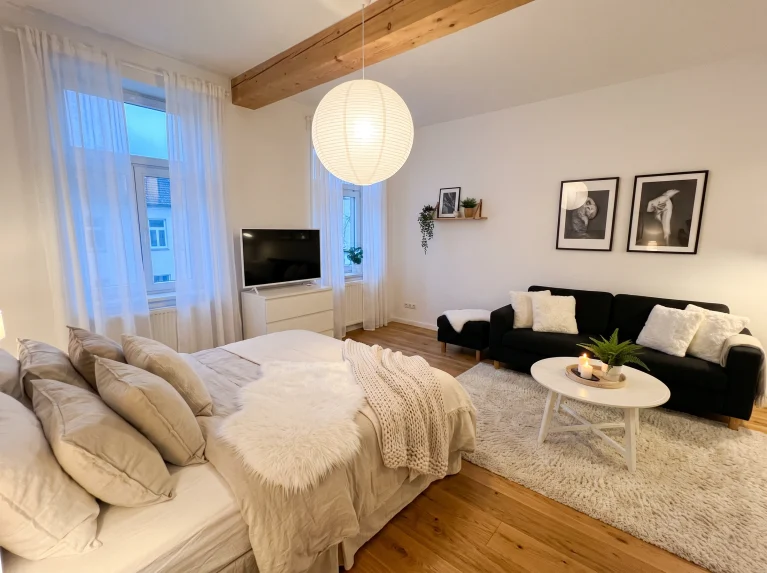
Before you buy a single accent pillow, pick your base: walls, big furniture, and curtains in one light family. This studio keeps everything in white, cream, and pale oak, so the bed, sofa, and TV console read as one calm room instead of three competing zones. Sheer curtains soften the window without blocking daylight. Once the base is quiet, a few green plants and a candle are all the decor you need.
Pro tip: Choose one wood tone and repeat it. Here, the oak coffee table is the only warm note — and that’s exactly why it works.
2. Let One Bookcase Do Two Jobs
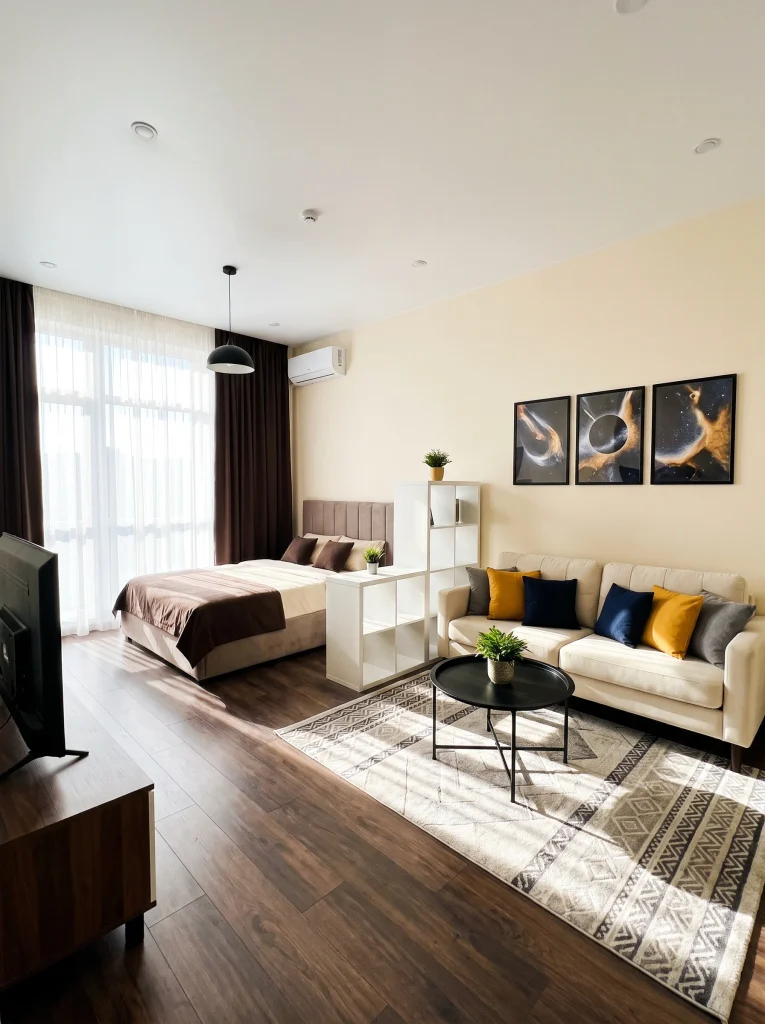
A stepped cube shelf like IKEA’s KALLAX is one of the simplest studio fixes there is. Placed between the bed and the sofa, it creates a soft boundary, holds books and baskets, and still lets light pass through the open cubes. Keep the styling light — a plant or two on top is plenty. Filling every cube turns a helpful divider into a wall of clutter, which defeats the whole point.
Open cubes look great for about a week. Add two or three fabric bins for the everyday mess, and leave the rest open.
3. Turn Your Sofa’s Back Into a Room Divider
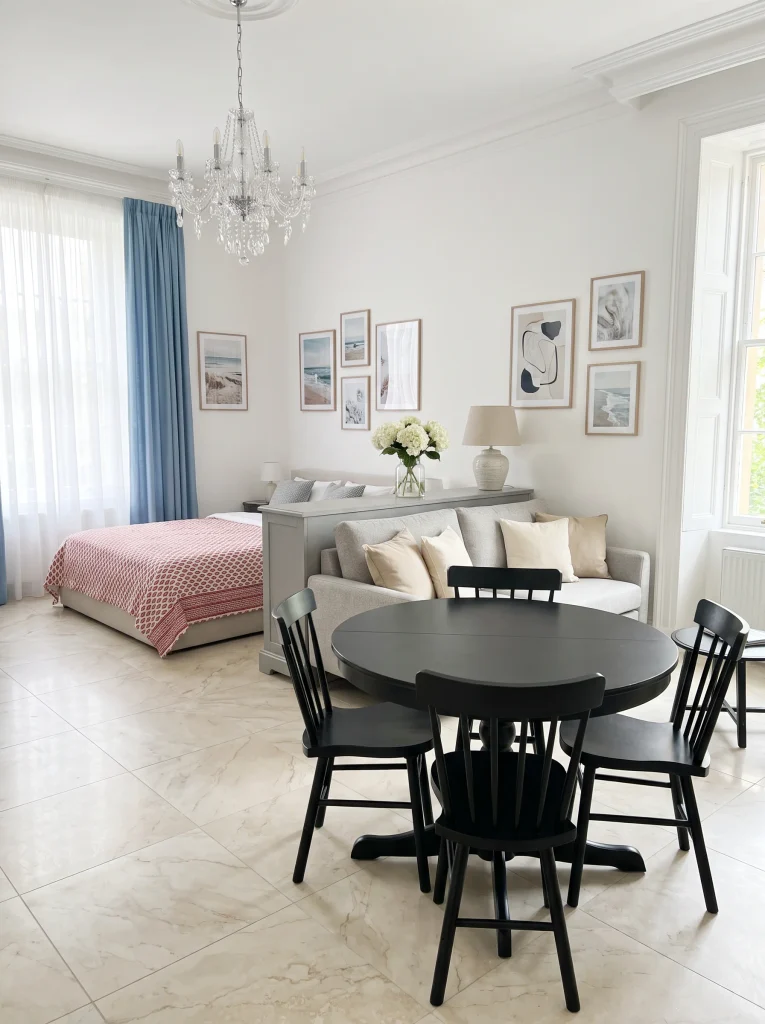
You don’t need a partition to separate sleeping and living. Here, the sofa sits with its back to the bed, and a slim console behind it acts like a half-wall — it hides the mattress from the seating area and gives you a surface for a lamp and fresh flowers. A round black dining table fills the front of the room without sharp corners to bump into. Three zones, zero construction.
My tip: Keep the console no taller than the sofa back. Anything higher starts to feel like a barrier in a small room.
4. Keep One Clear Path From Door to Window
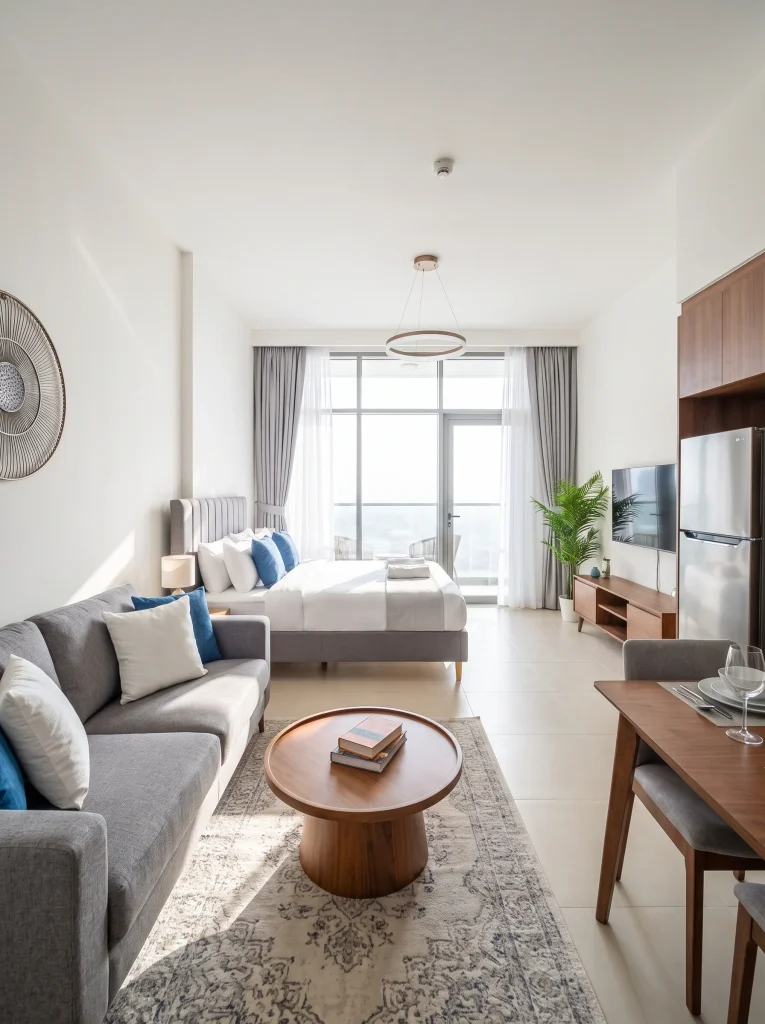
Long, narrow studios feel twice as big when your eye can travel straight to the window. In this layout, the sofa hugs one wall, the dining table and fridge line the other, and the middle stays open all the way to the balcony. A round pedestal coffee table helps too — no corners sticking into the walkway. Before adding anything new, ask yourself one question: does it block the path?
Budget vs. splurge: Save on the rug. Splurge on a solid wood coffee table — it’s the piece you’ll touch, move, and see every single day.
5. Float What You Can
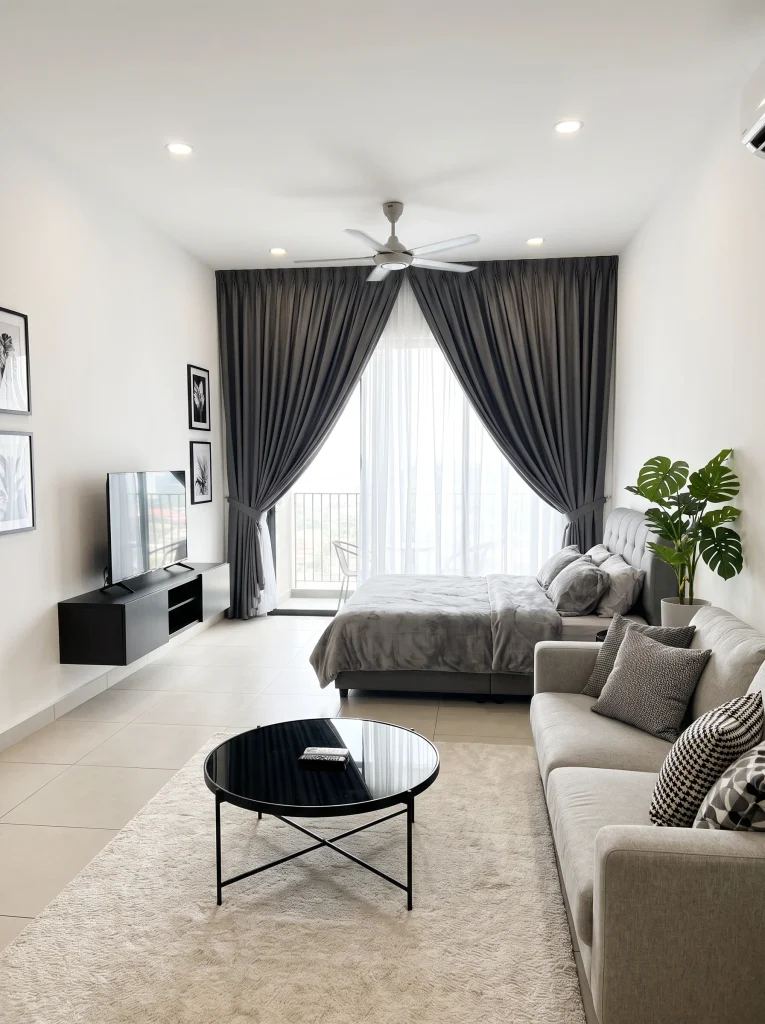
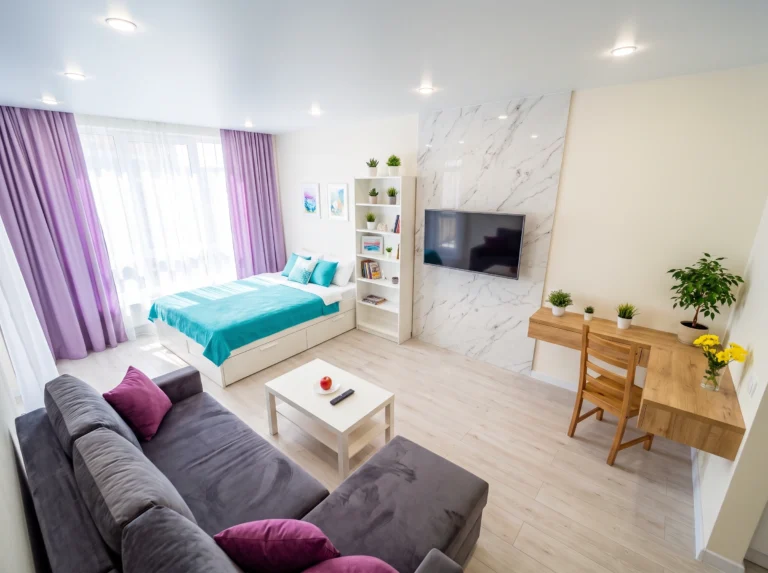
The more floor you can see, the bigger a studio feels. This wall-mounted TV console hovers above the tiles, and the glass-top coffee table on thin black legs almost disappears. Everything else sticks to grey, black, and white, so the room looks put-together without effort. Charcoal curtains tied back at the sides frame the balcony and add privacy at night — no extra decor required.
Renter-friendly alternative: Can’t drill? Pick a low console on slim legs instead. You keep most of the floating effect, and your deposit stays safe.
6. Let Texture Do the Decorating
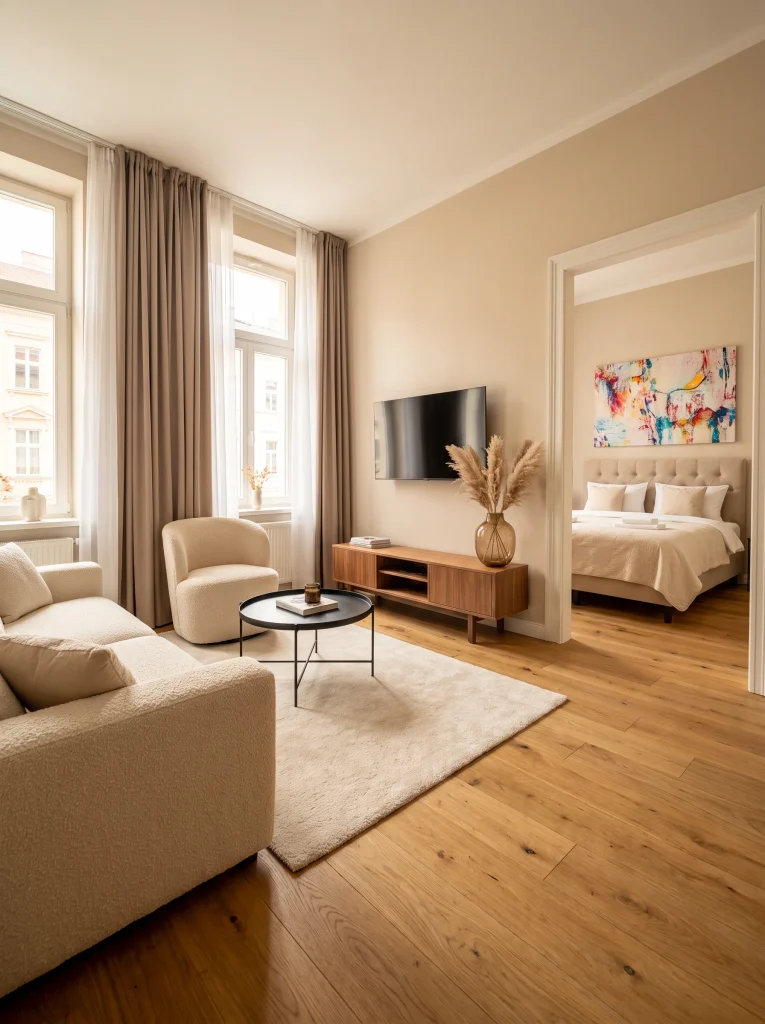
When a small space starts to feel busy, swap objects for texture. This beige room has almost no accessories — just a boucle sofa, a matching swivel chair, a plush cream rug, and a vase of pampas grass. The nubby fabrics and warm oak floor give the eye plenty to enjoy, so shelves and side tables stay nearly empty. Soft, calm, and wonderfully low-maintenance to clean.
I’ve tested this: Boucle hides lint and pet hair better than smooth velvet. It’s one of the most forgiving fabrics for small, busy homes.
7. Use Rugs to Draw Your Zones
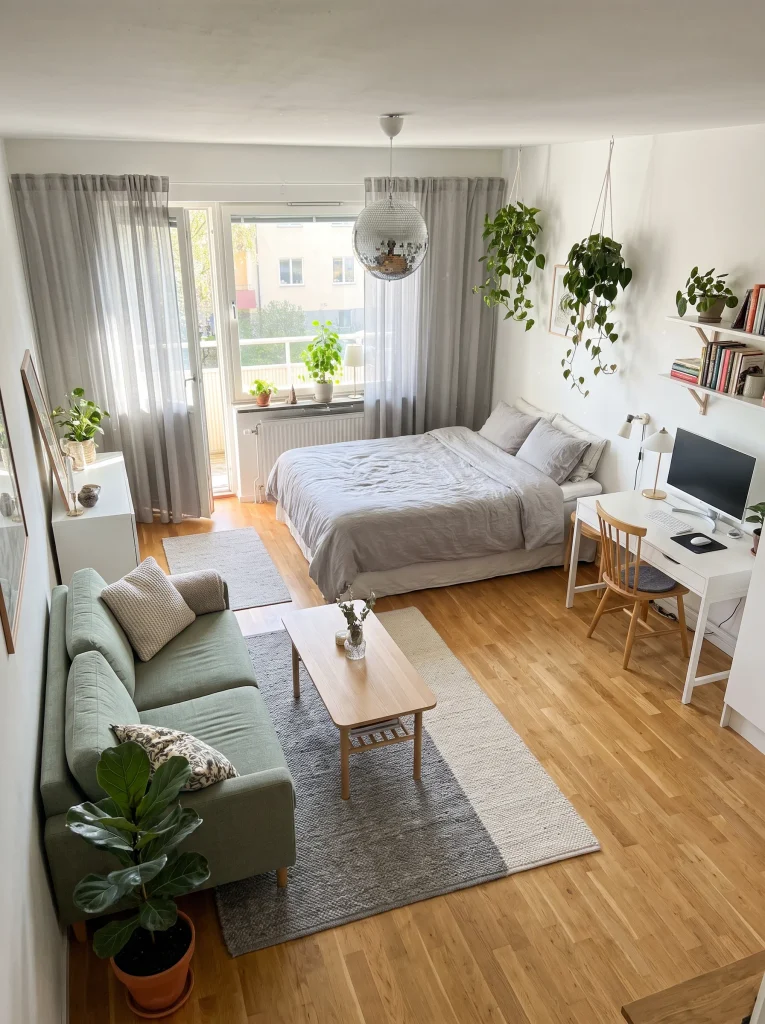
Rugs are the easiest, cheapest way to tell a studio where each zone begins and ends. Here, a large two-tone rug anchors the sofa and coffee table, while a slim runner sits beside the bed. The desk stays on bare wood, so it reads as its own corner. Add hanging plants and a few wall shelves, and the floor stays clear for actually walking around.
Don’t waste your money on a rug that’s too small. If the front legs of your sofa can’t sit on it, the zone looks unfinished.
8. Swap Solid Walls for Glass
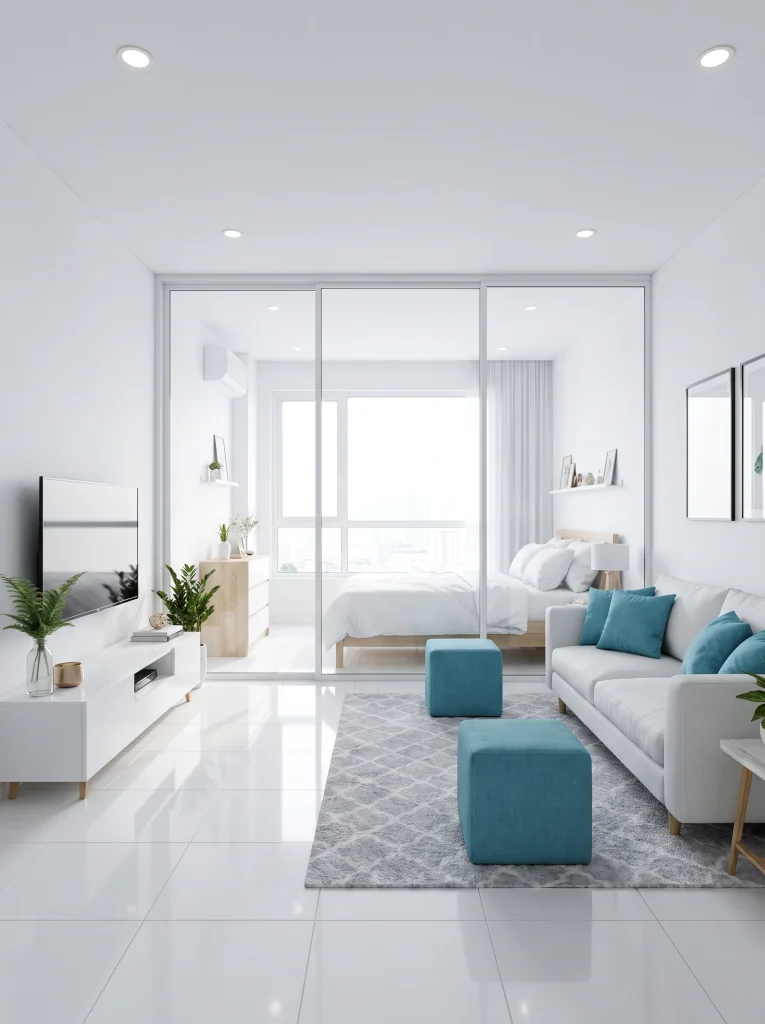
A glass partition gives your bed its own room without stealing a single ray of daylight. In this all-white studio, sliding glass panels close off the sleeping area, yet the window still lights the whole space. The living side stays minimal: a white sofa, a patterned grey rug, and two teal cube ottomans that work as extra seats or footrests whenever friends come over.
My favorite: Those cube ottomans. They add color, slide anywhere, and replace a bulky armchair in one move.
9. Mount the TV on Your Divider
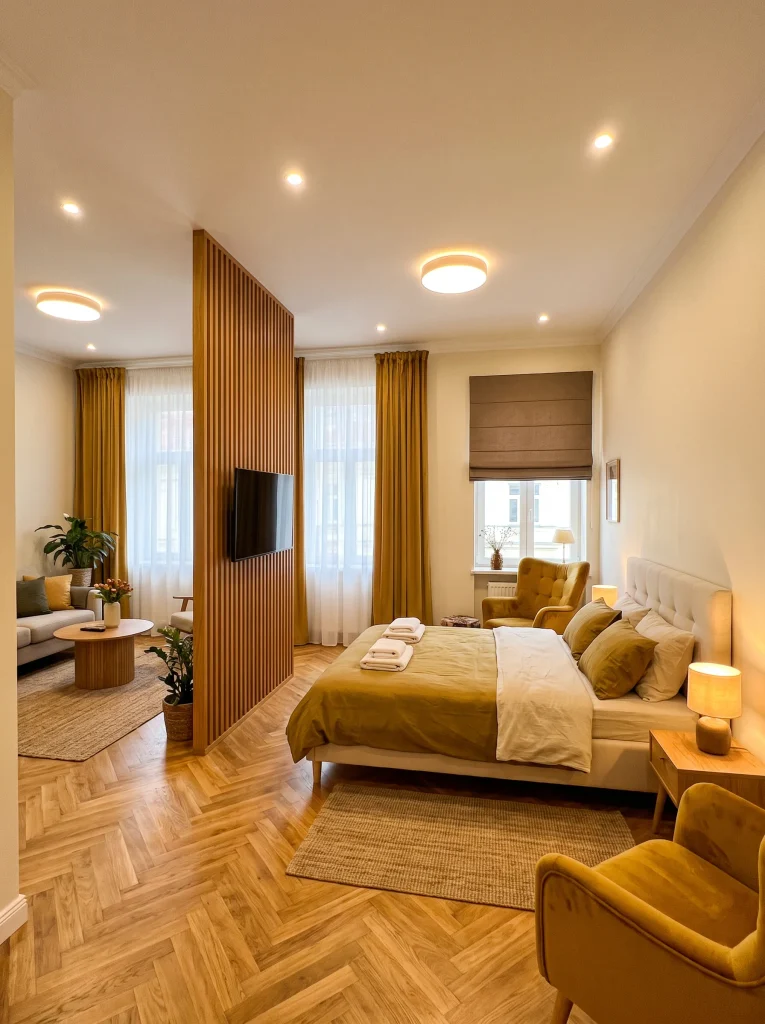
If you’re adding a divider anyway, make it earn its spot. This oak slat wall separates the bedroom from the lounge and holds the TV, so there’s no bulky media unit taking up floor space. The slats keep light and air moving between both sides. Mustard curtains, velvet armchairs, and olive bedding repeat one warm color family, which keeps two zones feeling like one home.
Pro tip: Run cables through a slat channel or a paintable cord cover. Visible wires undo all your simplifying in one glance.
10. Pick One Bold Color Pair and Stop There
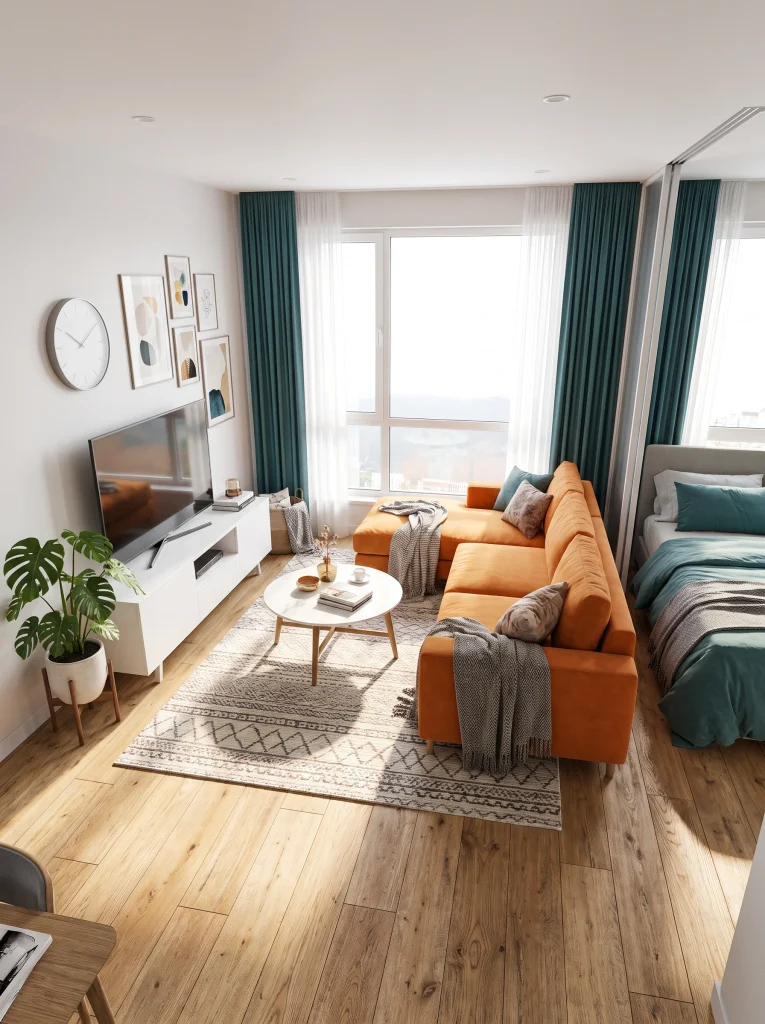
Love color? Choose two shades and commit. This studio pairs a burnt orange sectional with teal curtains and teal bedding, then lets white walls, pale oak floors, and a neutral patterned rug fill in the rest. The pairing feels bold but never chaotic because every other piece steps back. Grey knit throws and a small abstract gallery wall pull both colors together.
My tip: Test your color pair with pillows first. They’re cheap, easy to swap, and tell you fast whether you’ll love it long term.
11. Choose Furniture That Hides Clutter
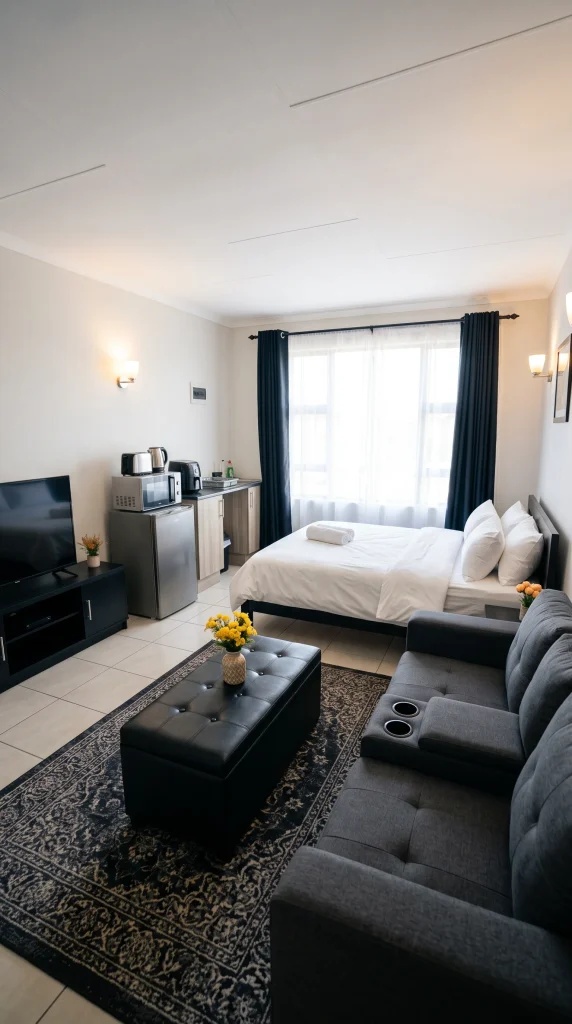
In a studio with a kitchenette in plain sight, hidden storage matters more than decor. The tufted leather ottoman here works as a coffee table, footrest, and a lid for blankets, remotes, and chargers. The grey sofa even has built-in cup holders. Navy curtains on a simple black rod and two wall sconces keep the lighting soft, so the room feels calm instead of cramped.
Countertop appliances are the real clutter culprits. Keep out only what you use daily and store the rest in a cabinet.
12. Build Storage Up, Not Out
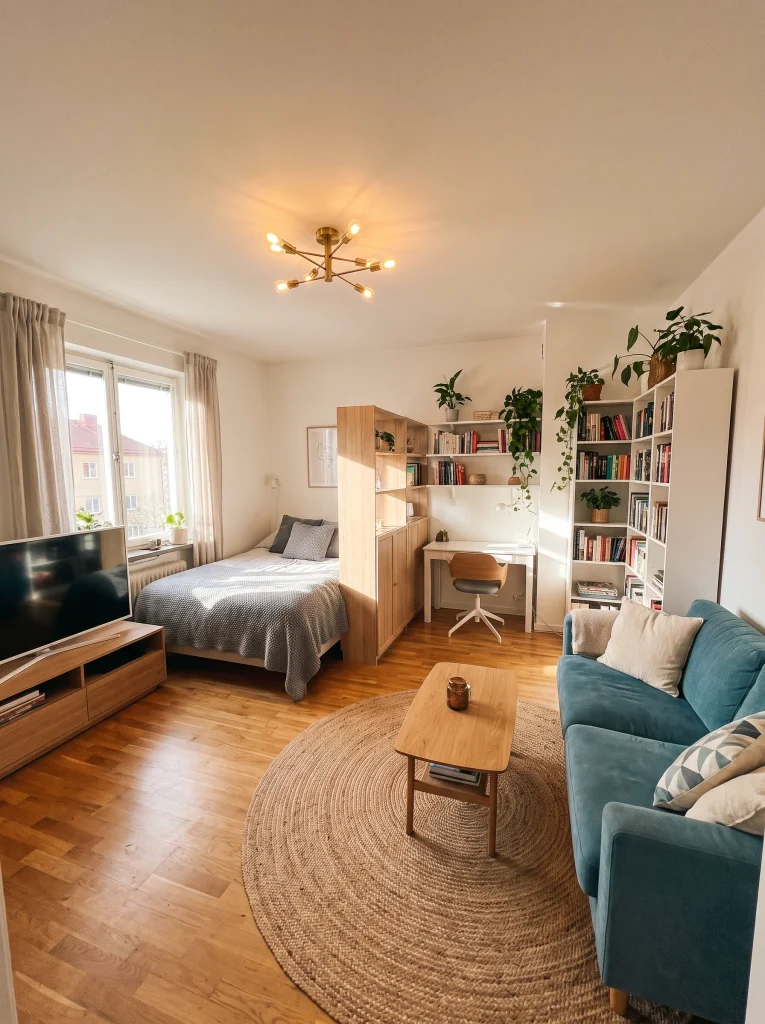
When the floor fills up, look at your walls. This studio stacks books on tall white bookcases and floating shelves, keeping everything off the ground. A tall oak cabinet tucks the bed on one side and a small white desk on the other. Below, a round jute rug softens the teal sofa zone, and a brass sputnik light warms up the whole room after dark.
Don’t waste your money on more floor bins. One tall bookcase holds more and uses a fraction of the space.
Final Thoughts
Simplifying a studio isn’t about owning less for the sake of it. It’s about letting every piece do a clear job — one palette, one open path, one smart divider, and storage that hides the chaos. Pick one idea from this list. Just one. Try it this weekend and notice how much easier the room feels to live in.
A simple studio isn’t an empty one — it’s a home where everything you see has earned its place.