How To Easily Decorate A Studio Apartment in A Small Home
Decorating a studio apartment sounds easy until you actually try it. You’ve got one room doing the job of five, and every piece of furniture is fighting for the same real estate. Here’s the thing — a good studio isn’t about squeezing in more stuff. It’s about making every square foot pull double duty and feel like a real home, not a dorm. These 12 ideas will show you exactly how.
1. Zone the Space with Furniture Placement
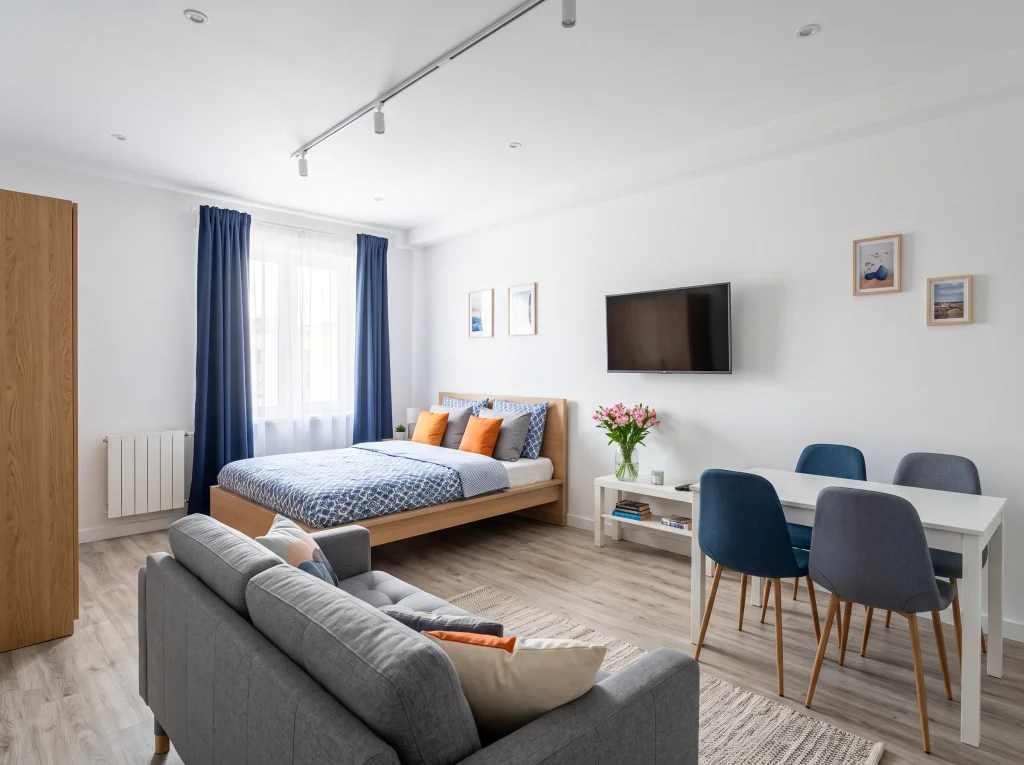
When your bed, sofa, and dining table share one room, the trick isn’t hiding them — it’s giving each one a defined spot. Push the bed against a wall, turn your sofa to face away from it, and tuck the dining table into the corner. Suddenly you have three rooms in one.
Pro tip: Let the back of your sofa act as the invisible wall that separates sleep from lounge.
2. Anchor the Living Area with a Bold Rug
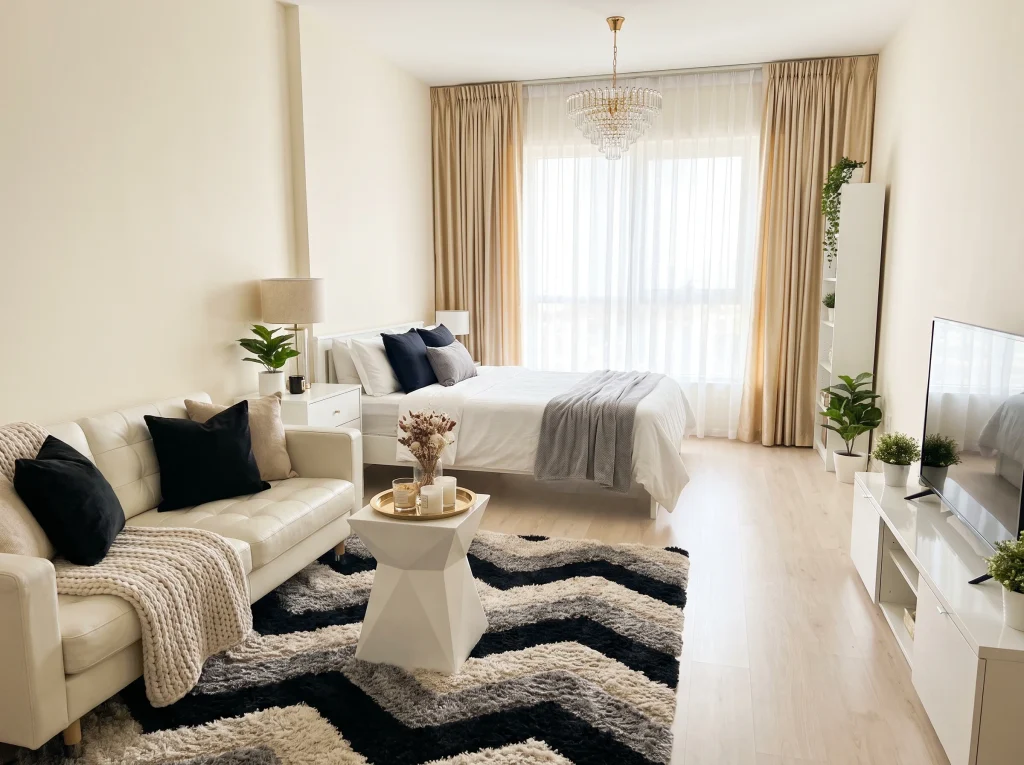
Neutrals are calming, but too many of them can leave a studio feeling flat. A bold graphic rug — black, cream, and gray in chevron here — instantly gives the living zone weight without adding a single piece of furniture. Choose one large enough that the sofa’s front legs sit on it.
My tip: Rugs are cheaper than statement furniture and easier to swap when you’re tired of them.
3. Use an Open Cube Shelf as a Room Divider
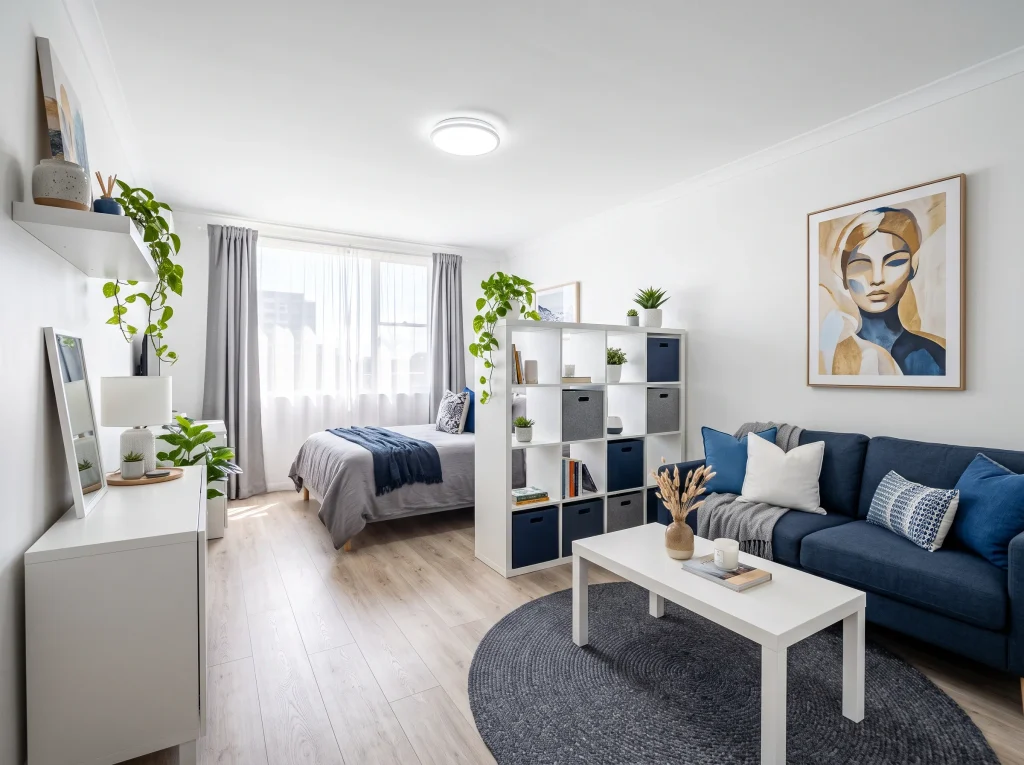
If you can’t build a wall, build a shelf that acts like one. An open cube unit (IKEA’s KALLAX is the gold standard) creates a visual break between your bed and living area while still letting light travel through. Fill the cubes with baskets, books, and trailing plants for double duty.
Renter-friendly alternative: No drilling, no damage — it stands freely and moves with you when the lease is up.
4. Repeat One Accent Color Everywhere
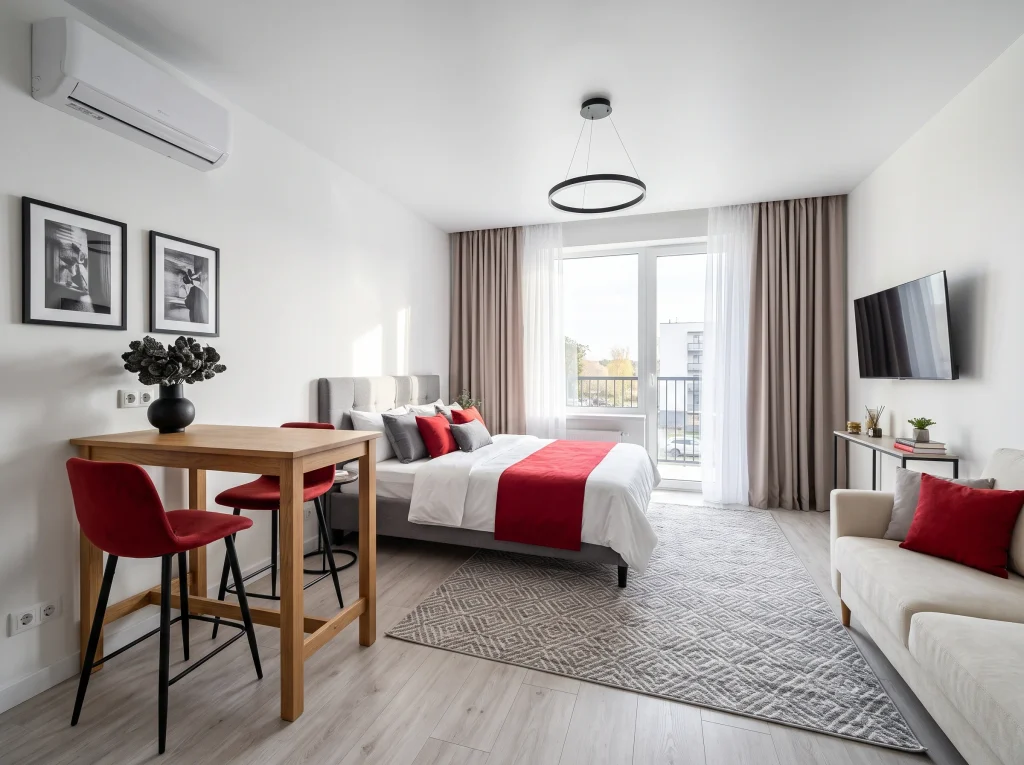
Pick one bright color and repeat it three times minimum — pillows, dining chairs, a throw. Here it’s red, and the eye keeps moving because there’s a thread pulling everything together. This is how a small space stops feeling scattered and starts feeling designed.
Don’t try to add every color you love. Pick one, commit, and let the neutrals do the calming work in the background.
5. Layer Textures for a Cozy, Lived-In Feel
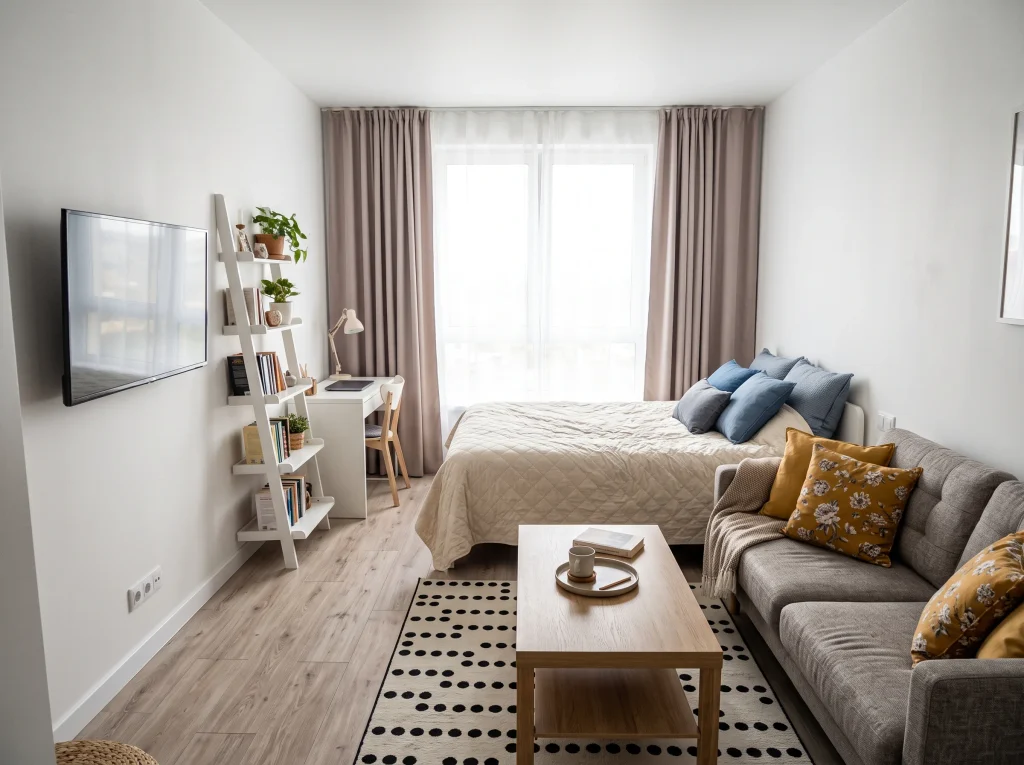
When your palette is soft — beiges, blues, warm woods — texture becomes your best friend. A quilted duvet, a floral pillow, a knit throw, a wooden ladder shelf: each surface adds depth so nothing feels flat. This is the difference between a studio that looks lived-in and one that looks half-finished.
My favorite: Layering a chunky throw over a smooth duvet — instant coziness for under twenty dollars.
6. Go Bold with Statement Curtains

Curtains are the biggest fabric surface in most studios — use them. Bold orange panels here take the window from ordinary to intentional and make the whole apartment feel deliberate. Pair them with a couple of matching pillows and one abstract art print pulling the same tones.
Pro tip: Hang curtain rods a foot above the window and wider than the frame. It makes ceilings look taller instantly.
7. Work with What You Already Have

Not every studio comes with hardwood floors and floor-to-ceiling windows. If you’re renting a place with tile floors and beige walls, don’t fight it — soften it. Add a plush round rug under the coffee table, a green throw across the bed, and a small gallery wall.
Renter-friendly alternative: Command strips hold framed art up to five pounds without leaving a mark on the paint.
8. Invest in One Statement Light Fixture
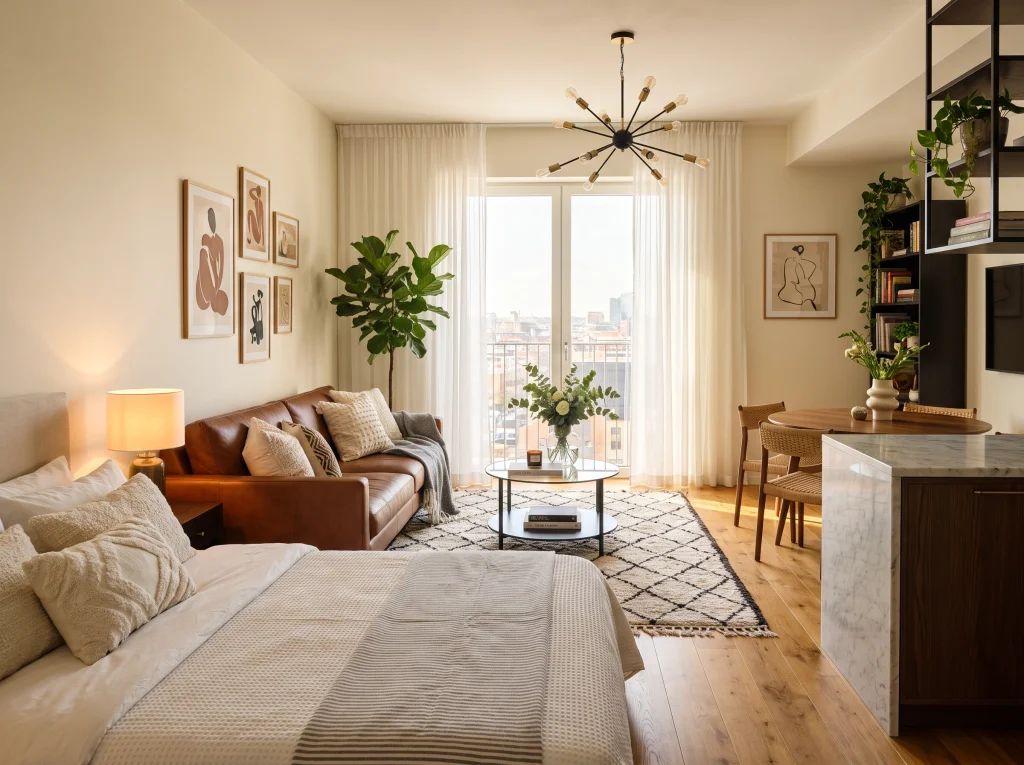
If your studio budget is tight, pour a chunk of it into one incredible light fixture. A sputnik chandelier like this one becomes the room’s centerpiece and does more than any accent chair ever could. Everything below it — leather sofa, gallery wall, marble counter — just has to play a supporting role.
Budget vs. splurge: Save on the sofa, splurge on the light. You’ll notice it every single day.
9. Layer Your Lighting Sources
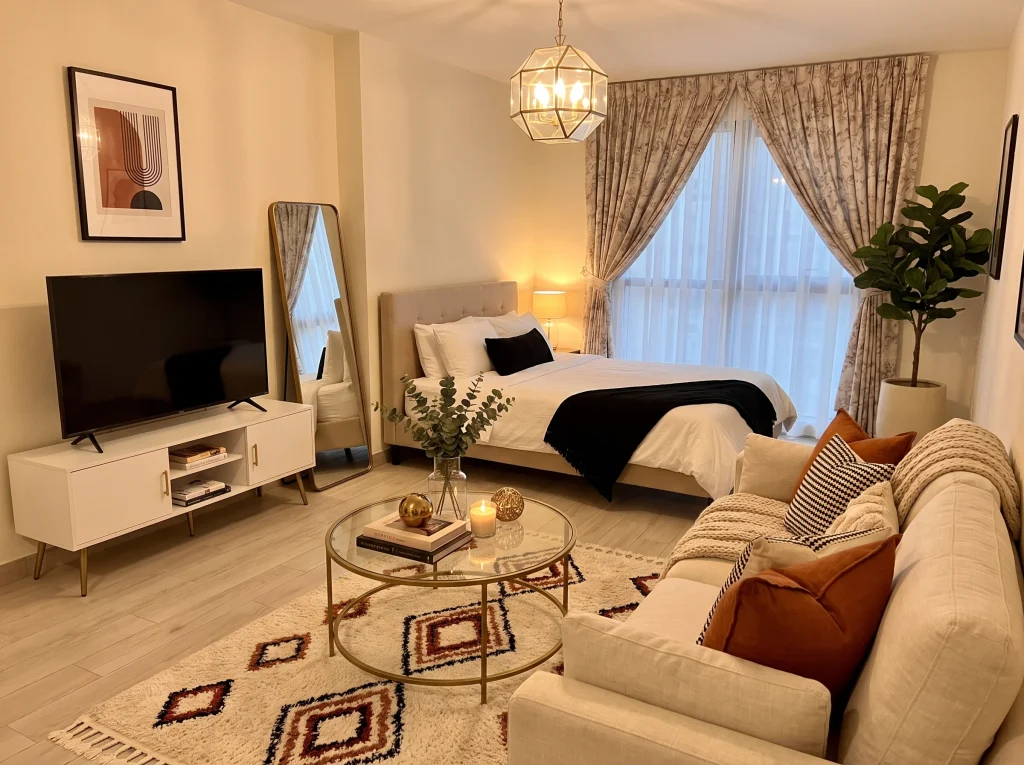
One overhead light is why so many studios feel cold at night. Add a pendant near the sleeping area, a table lamp beside the sofa, a small lamp on the console — and switch off the ceiling light entirely. That warm, low glow makes the whole space feel like a cozy hotel suite.
I’ve tested this: Three warm-white bulbs beat one bright overhead every single time.
10. Keep Your Palette Tight and Neutral
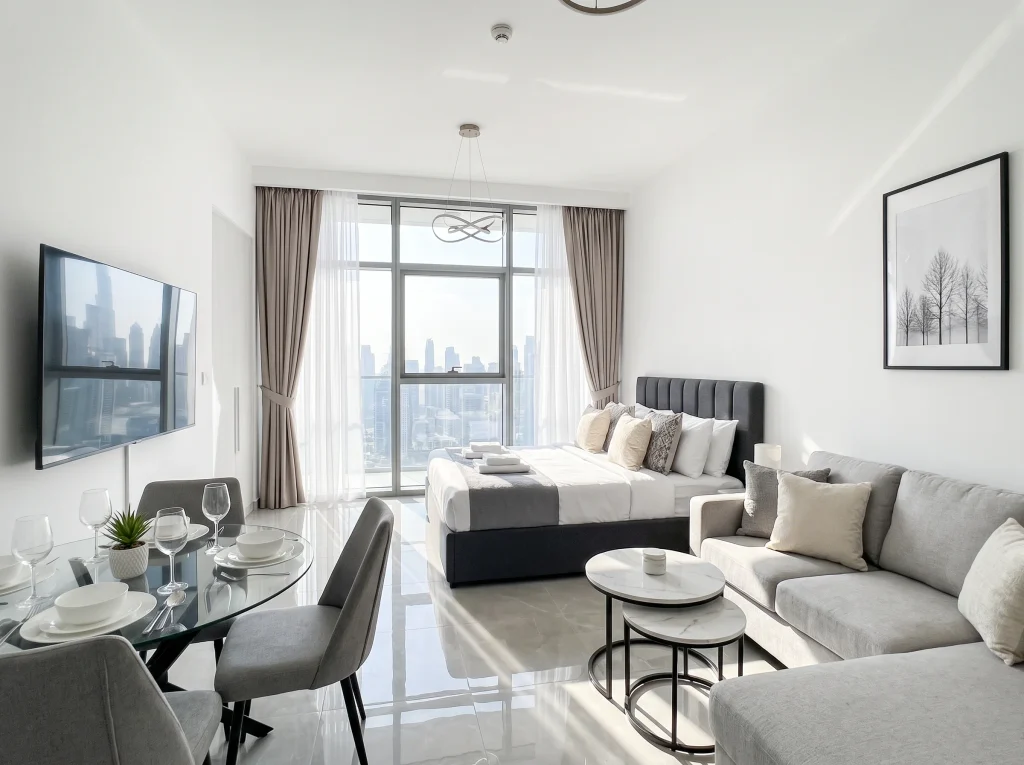
For that clean, hotel-suite look, stick to three colors max — here it’s gray, cream, and taupe. When every piece speaks the same language, a studio reads as intentional instead of cluttered, even with a bed and dining table just feet apart.
Minimalism gets a bad rap for feeling cold. Warm it up with soft fabrics — linen, boucle, wool — and you get calm, not sterile.
11. Paint One Accent Wall Behind the Bed
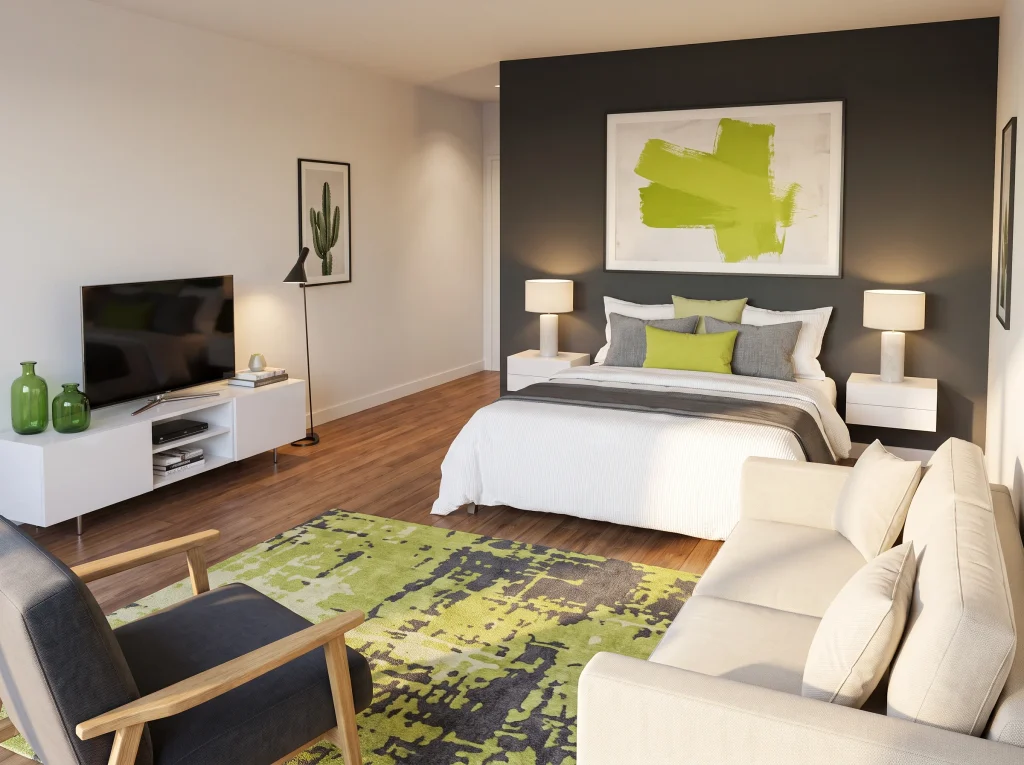
Painting one wall behind the bed does what no room divider can — it gives the sleep zone its own visual identity without taking an inch of floor space. A dark charcoal or deep green works especially well because it makes the bed feel like a proper focal point.
Pro tip: Paint only the wall the headboard touches. Painting more than that will shrink the whole studio visually.
12. Push Furniture Against the Walls in a Narrow Layout
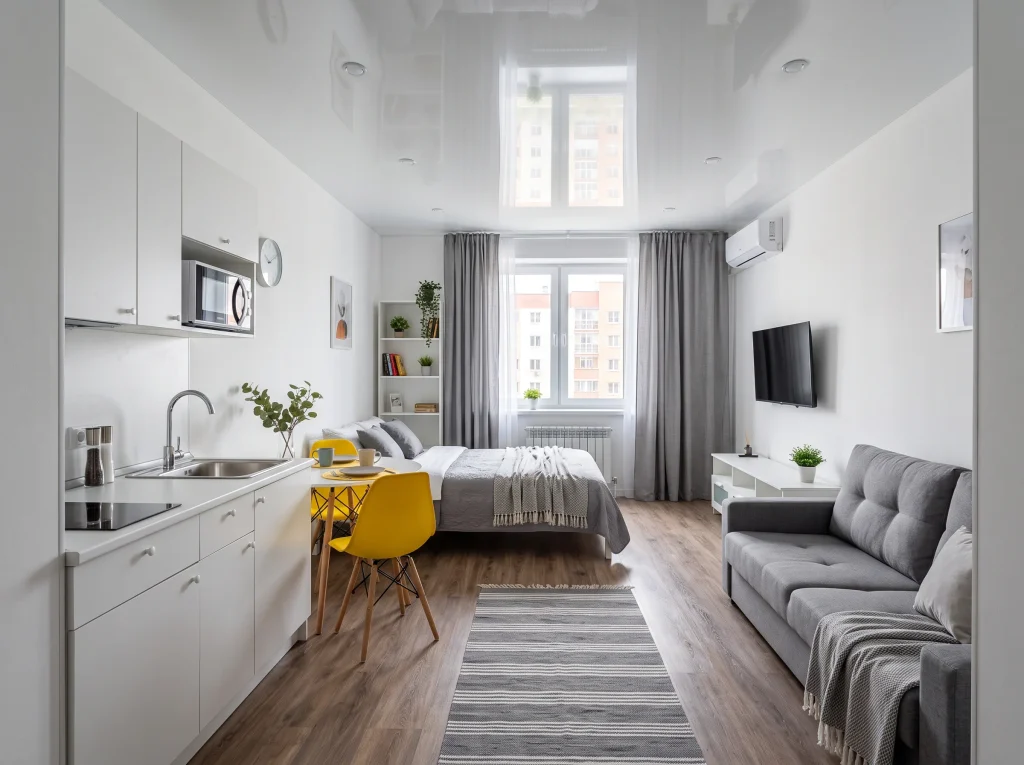
In a truly narrow studio, floating furniture doesn’t work. Push everything against the walls to open the floor and give yourself a runway through the middle. One pop color — a couple of yellow chairs here — keeps it from feeling like a hallway.
Don’t waste your money on: Bulky sectional sofas for tiny studios. A compact two-seater with storage underneath will serve you infinitely better.
Final Thoughts
Decorating a studio isn’t about pretending you have more space than you do — it’s about making the space you have work harder and look better while it does. Every one of these 12 ideas is something you can start this weekend, whether that’s rearranging your sofa, swapping in a bolder rug, or finally hanging the curtains you’ve had rolled up in the closet since move-in day.
Pick one idea from this list. Just one. Try it before Sunday night. You’ll feel the difference the moment you step back and see your studio with new eyes.
A small home isn’t a design limitation — it’s an invitation to be intentional about every single choice. Start there, and the rest falls into place.