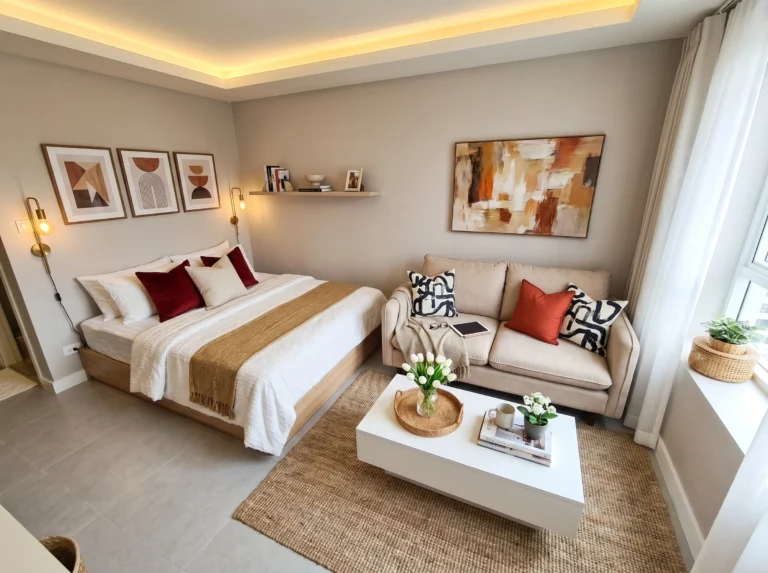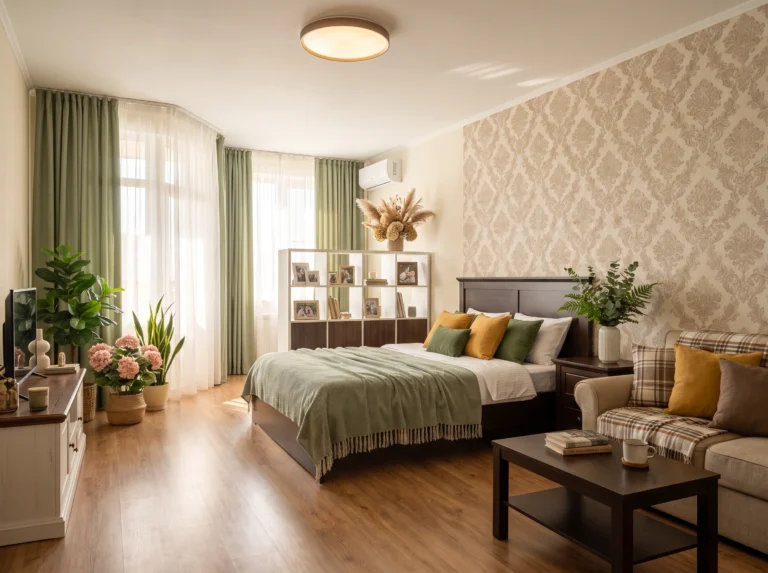
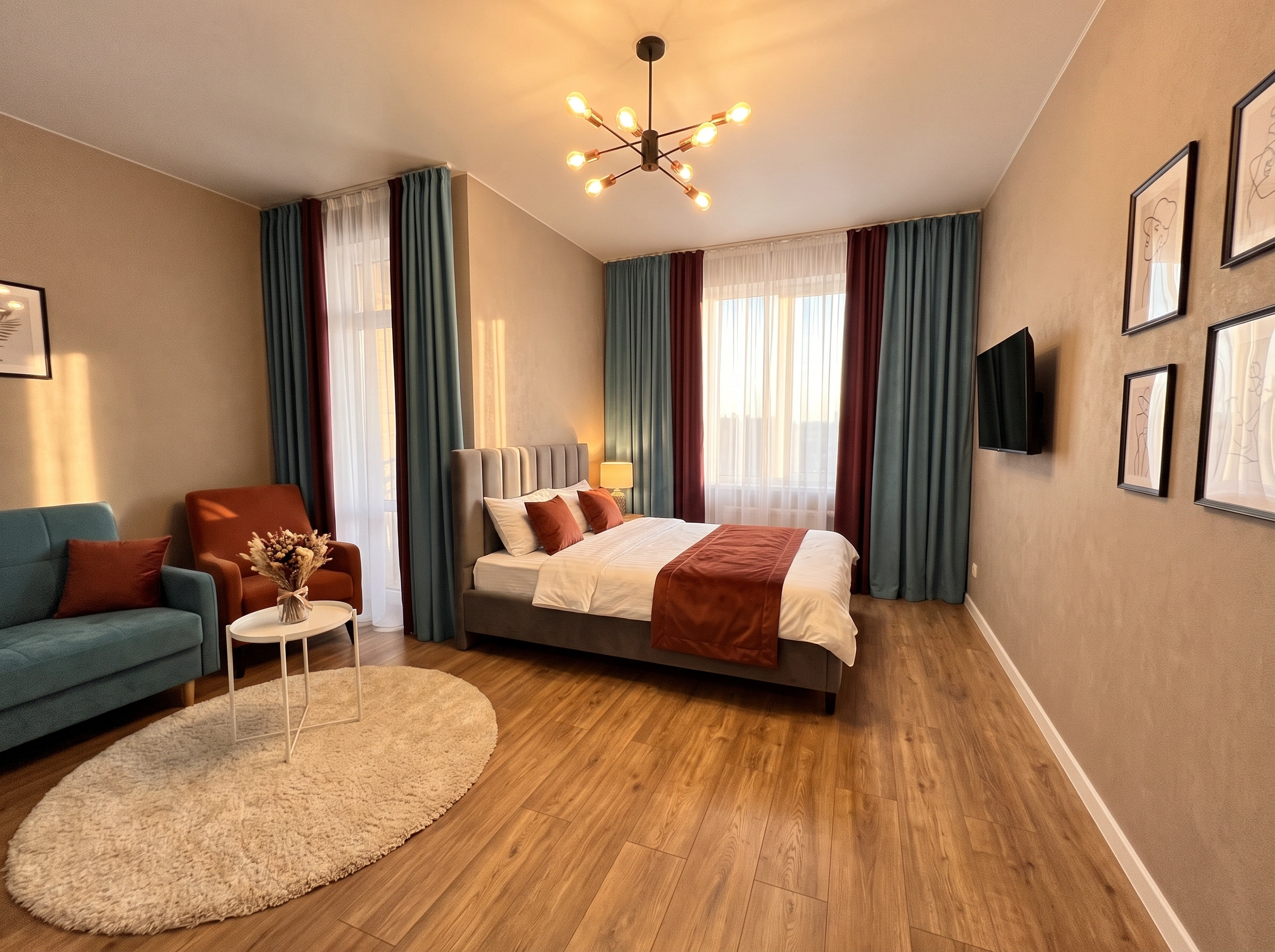
16 Studio Apartment Ideas for Couples Living Together
Sharing a studio with your partner is either the most romantic thing in the world or a slow-motion test of your relationship — and honestly, the difference usually comes down to the layout. When two people share one room for sleeping, eating, working, watching TV, and occasionally hiding from each other, every square foot has to earn its keep.
Here’s the thing: you don’t need more space. You need smarter space. These 16 ideas are the ones I’ve seen work in real studios — small, weird, rented, awkward — and they’re built for two people who actually have to live in them.
1. Create Two Zones Inside One Room
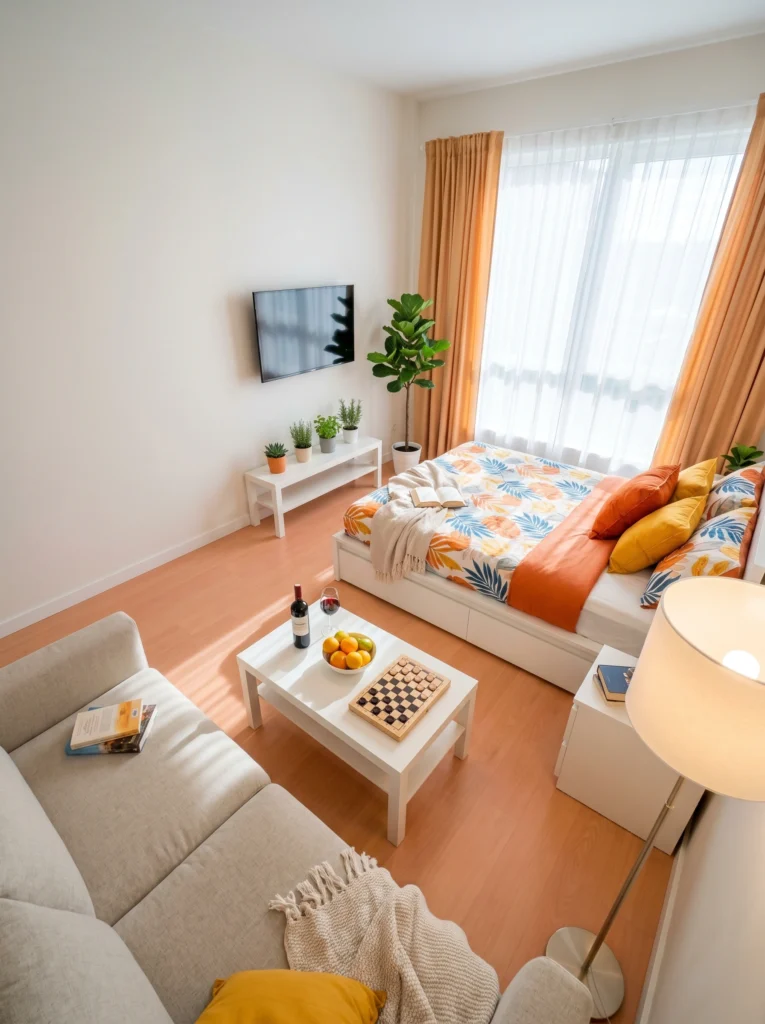
When you share a studio, every inch has to pull double duty — but that doesn’t mean it has to feel cramped. The trick is treating your space like a proper apartment by creating distinct zones. Position your sofa with its back slightly toward the bed, use the TV as a visual anchor for the living side, and let a low console table signal where “bedroom” ends and “living room” begins. Two people need that structure.
Pro tip: A sofa with a visible back panel (not a low-slung sectional) naturally divides zones without blocking light.
2. Commit to a Shared Color Palette
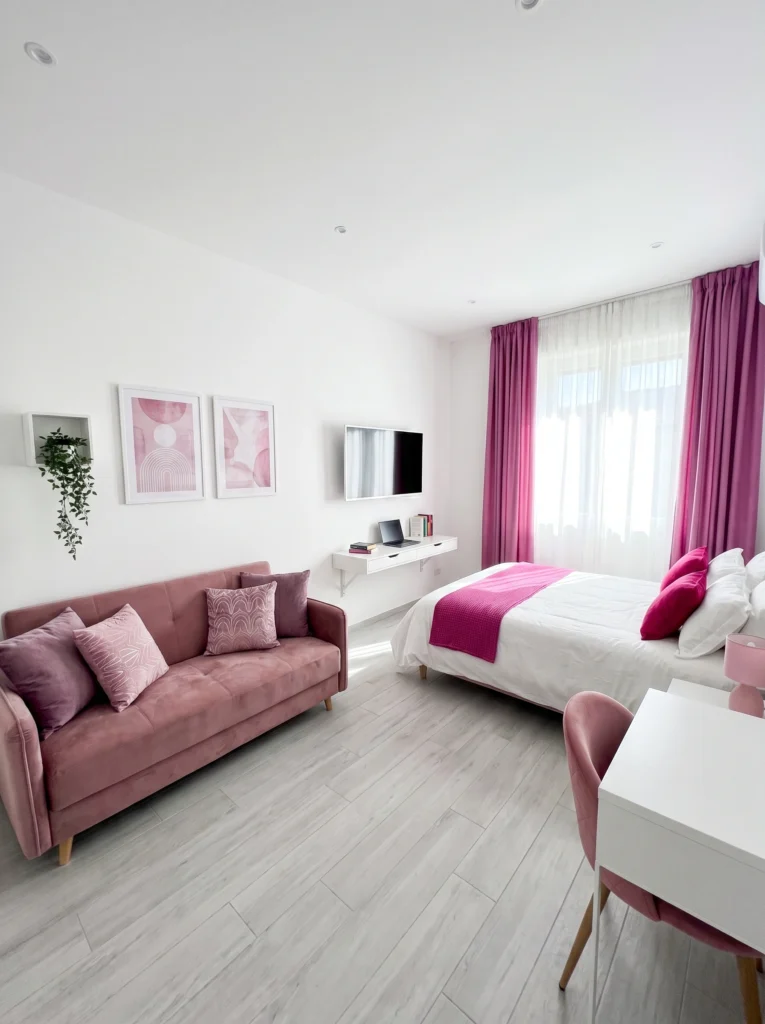
When you’re decorating together, committing to a shared color palette is the fastest way to stop the “I hate what you picked” argument. Pick one dominant color, one accent, and one neutral — then stay in your lane. Here, a rosy pink runs through every element: the sofa, the curtains, the art, even the desk chair. The result feels intentional rather than random, and both partners had a hand in it.
Renter-friendly alternative: Can’t paint? Color-match your curtains, throw pillows, and art prints instead — same cohesion, zero damage to the walls.
3. Make the Bed the Star of the Room
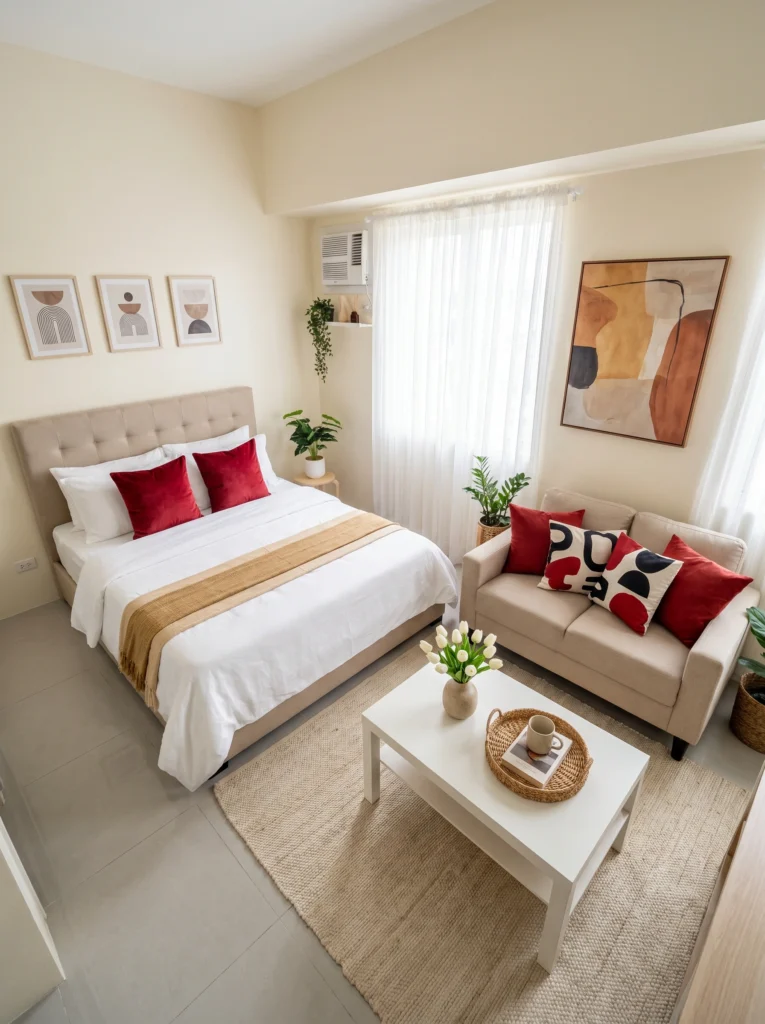
In a studio, the bed is unavoidably the biggest thing in the room — so it might as well be the star. A tufted headboard in linen or velvet gives it presence without being fussy. Layer your bedding in two or three tones, then add throw pillows in bolder colors to tie it into the living area palette. Here, red velvet cushions link the bed to the loveseat across the room seamlessly.
Budget vs. splurge: Splurge on a headboard (you’ll see it every day). Save on throw pillows — you’ll swap them seasonally anyway.
4. Use Rugs to Define Each Zone
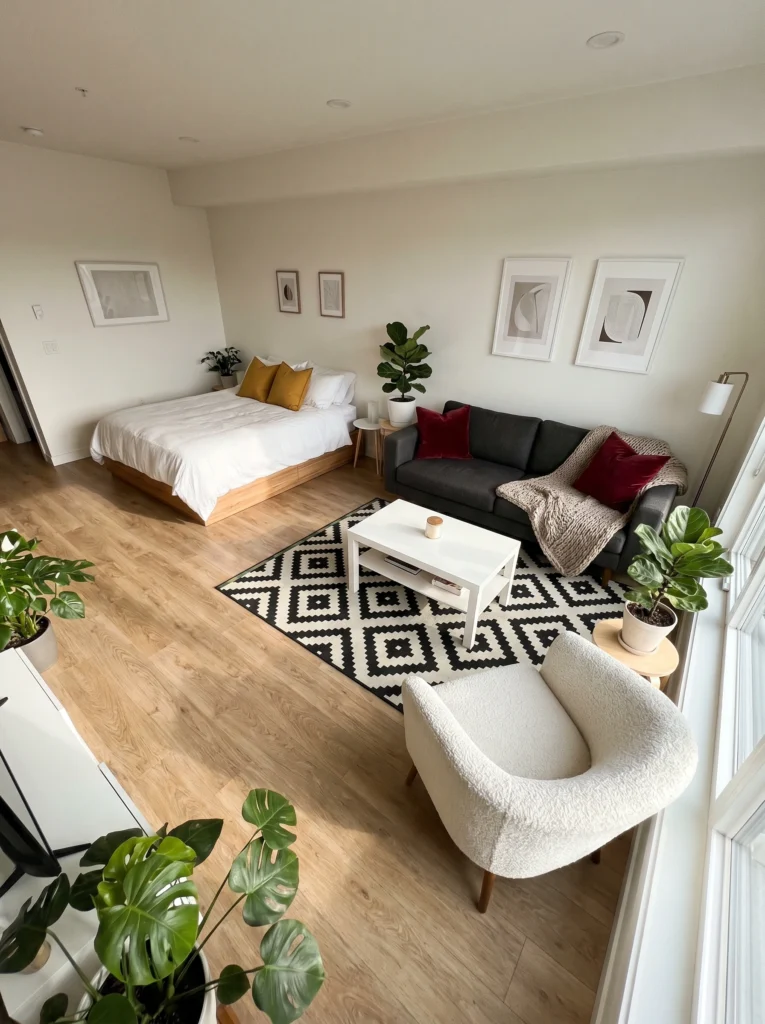
Rugs are the most underrated zone-makers in a studio apartment. Place one under the sofa and coffee table, a different one under the bed — and suddenly you have two rooms inside one. The patterns don’t have to match, but they should share at least one color. Here, a bold black-and-white diamond rug defines the living area clearly, while the bed sits on bare wood, giving each space its own identity.
I’ve tested this: Two rugs in the same studio sounds like a lot — until you try it. The visual separation is immediate and genuinely useful.
5. Add Personality with Bold Accents (Without Painting)
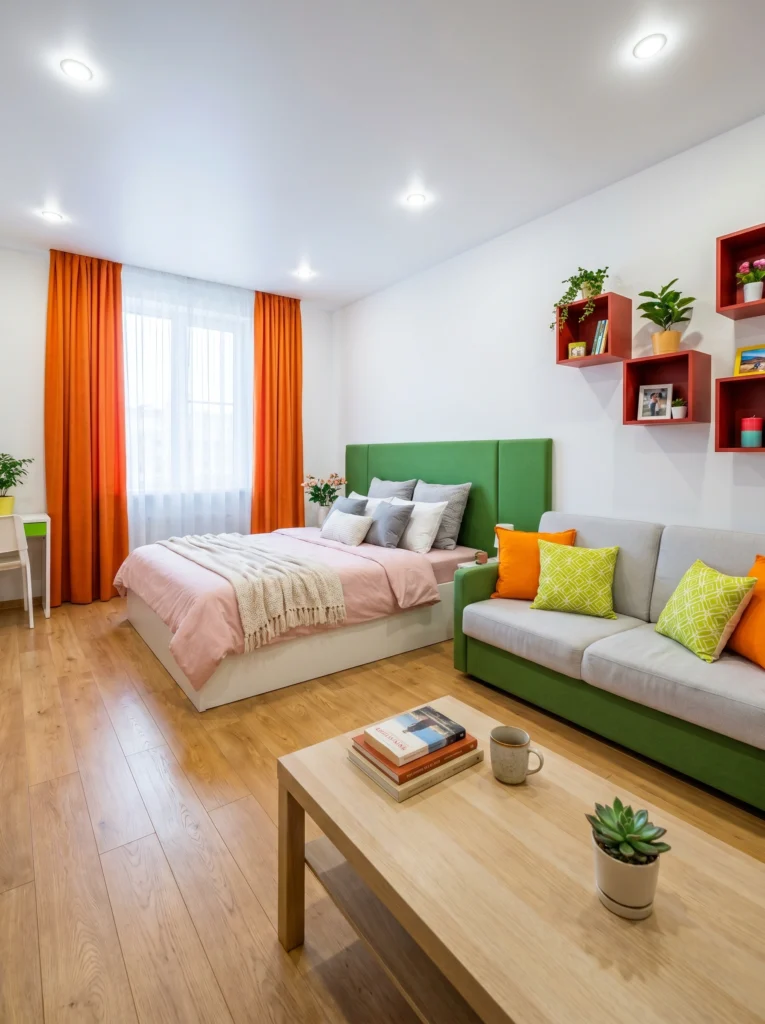
Neutral walls don’t have to mean a boring room — especially when you’re a couple who wants a home that actually reflects you. Bold color accents through curtains, shelving, and soft furnishings let you commit to a personality without painting a single wall. These red cube shelves and orange drapes bring energy to a white room without permanence. Perfect for renters who still want their apartment to feel like theirs.
My tip: Floating cube shelves in a contrasting color double as display and storage — two problems solved with one purchase.
6. Find a Palette That Works for Both of You
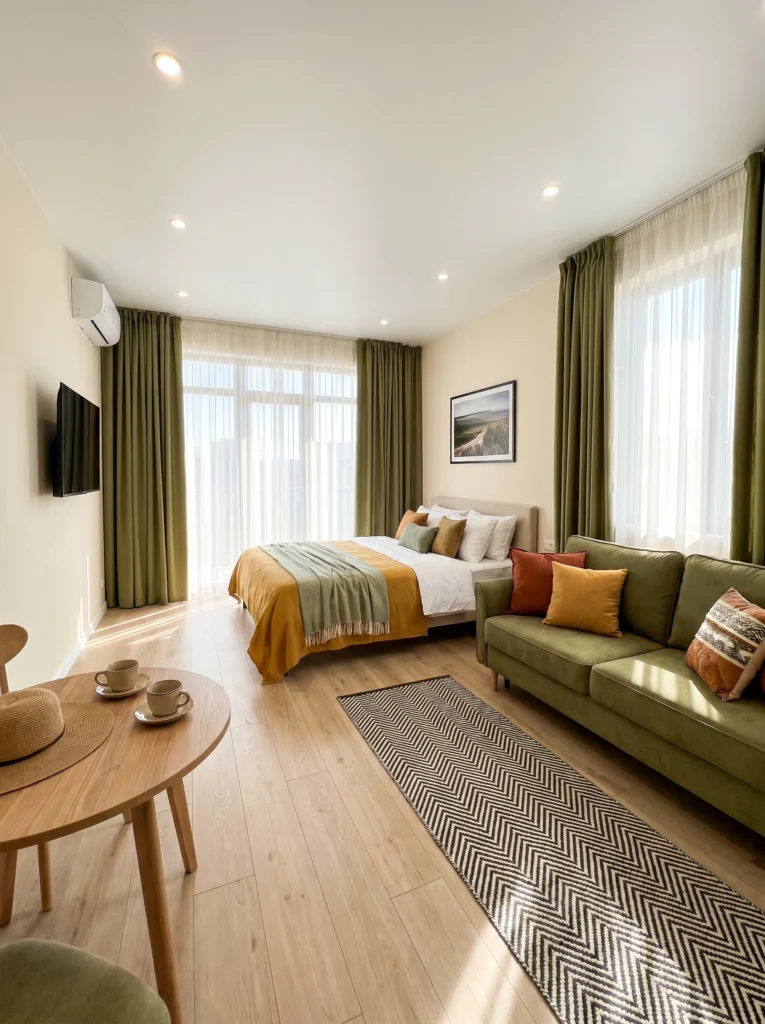
The hardest part of decorating as a couple isn’t budget — it’s compromise. One person loves minimalism, the other wants warmth. Earthy tones are the answer. Olive green, mustard yellow, burnt rust, and warm cream work for practically everyone because they feel grounded rather than stark. Here, the olive sofa and curtains unify the room while the mustard bedding adds the warmth one partner was probably quietly lobbying for.
My favorite: A herringbone runner rug between the bed and sofa adds texture in a long, narrow studio without eating up floor space.
7. Layer Your Lighting for Two Different Moods
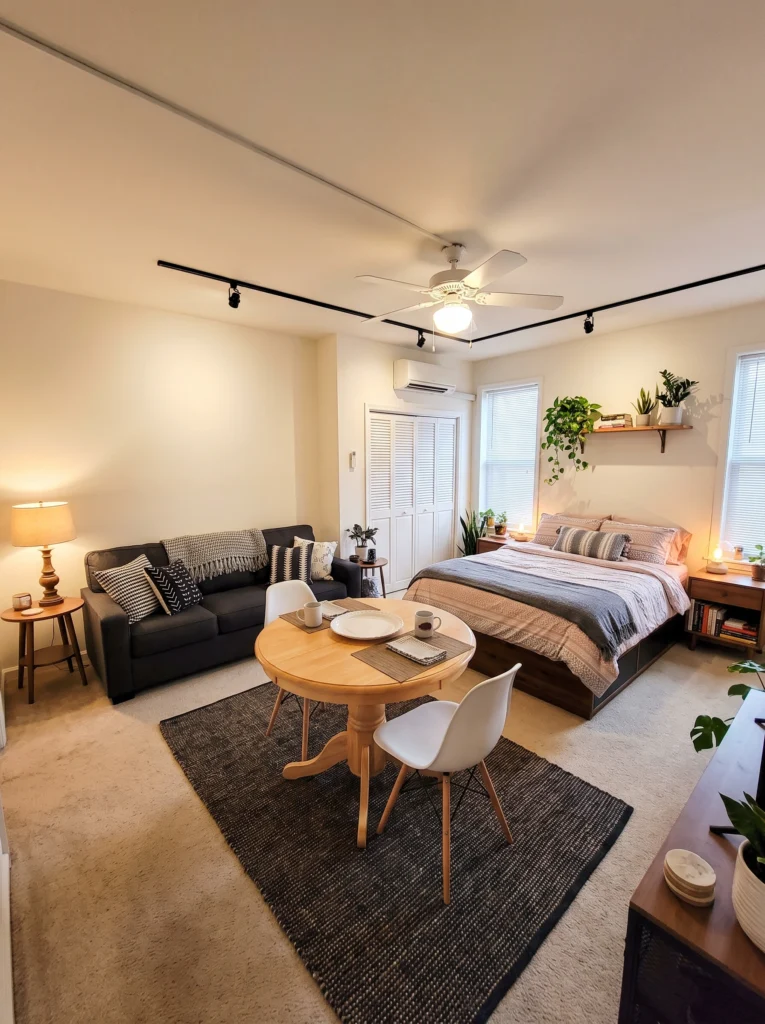
Studios rarely have enough overhead lighting, but the right layered setup changes the whole mood. A ceiling fan keeps air moving in tight quarters. Track lighting gives you directional control over work and living areas. Add a warm table lamp for evening wind-down, and suddenly you can shift the room from “productive” to “relaxed” without moving a single piece of furniture. That emotional range matters enormously when two people share one space.
Don’t waste your money on: Cheap LED strips as your only lighting solution. They look great in photos and harsh in real life — invest in at least one warm-toned table lamp.
8. Anchor the Living Zone with a Statement Rug
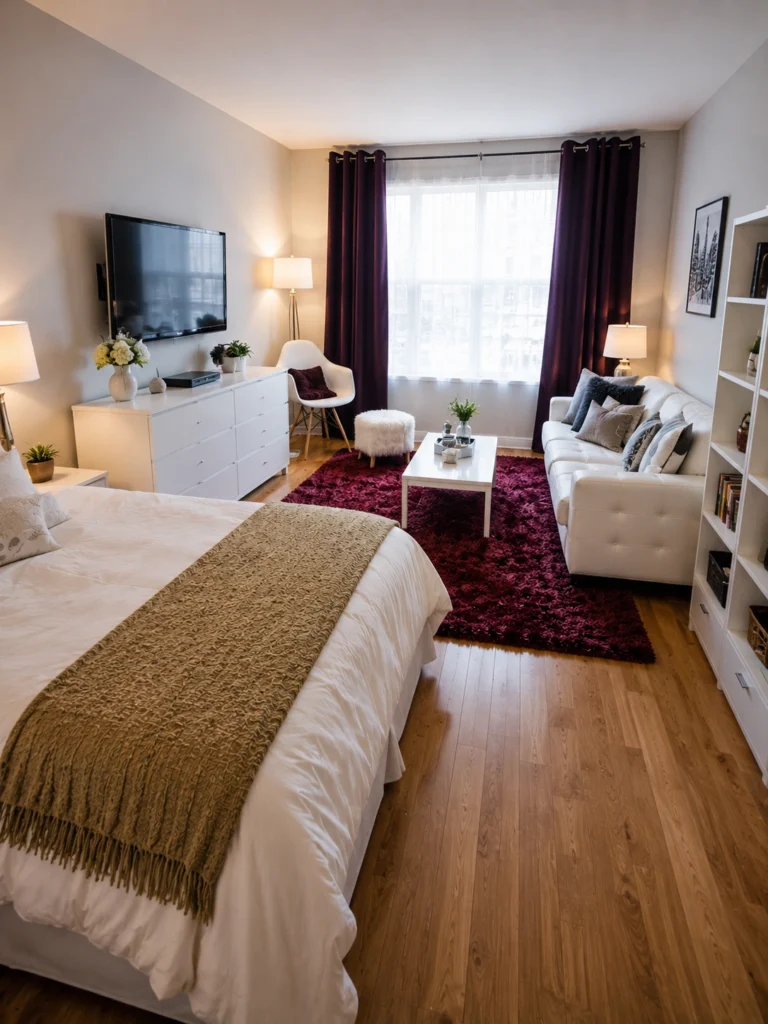
A statement rug in the living zone does two things at once: it anchors your sofa-and-coffee-table arrangement visually, and it psychologically “closes off” that area from the sleeping side. A deep burgundy shag like this one adds texture, warmth, and an undeniable focal point to an otherwise simple white setup. Don’t be afraid to go bold with the rug — it’s the one decor choice that’s easy to swap when your tastes evolve.
Pro tip: Size matters more than pattern. A rug that’s too small makes the whole living area look like an afterthought. Go at least 8×10 if floor space allows.
9. Make Room for a Real Dining Table
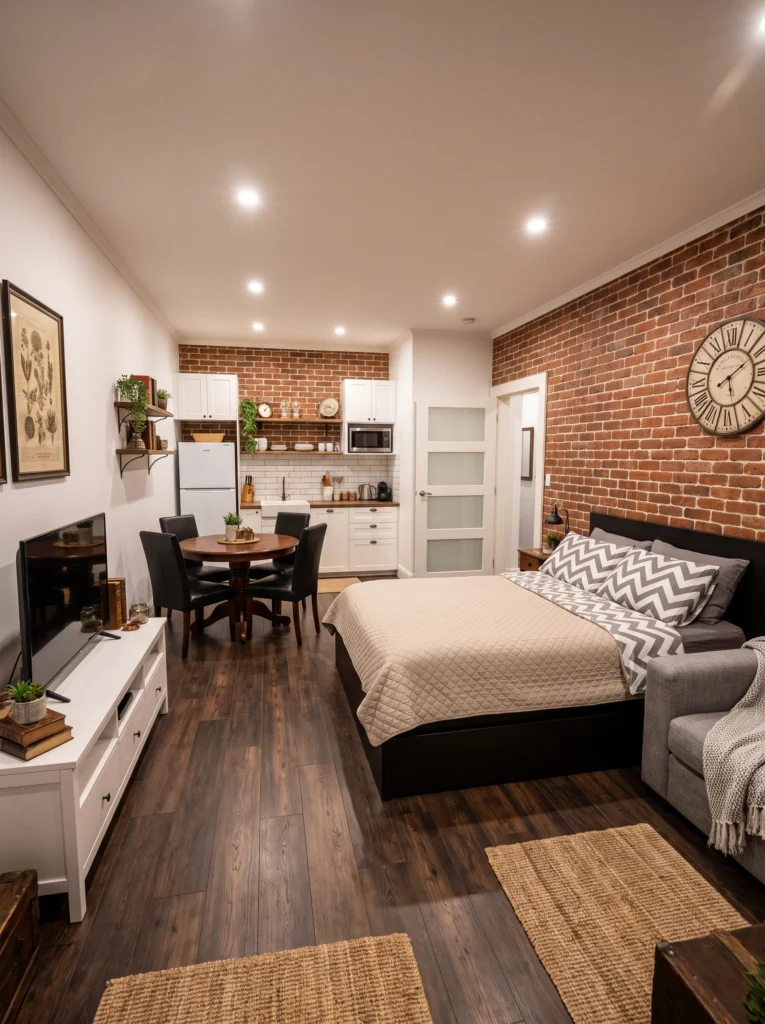
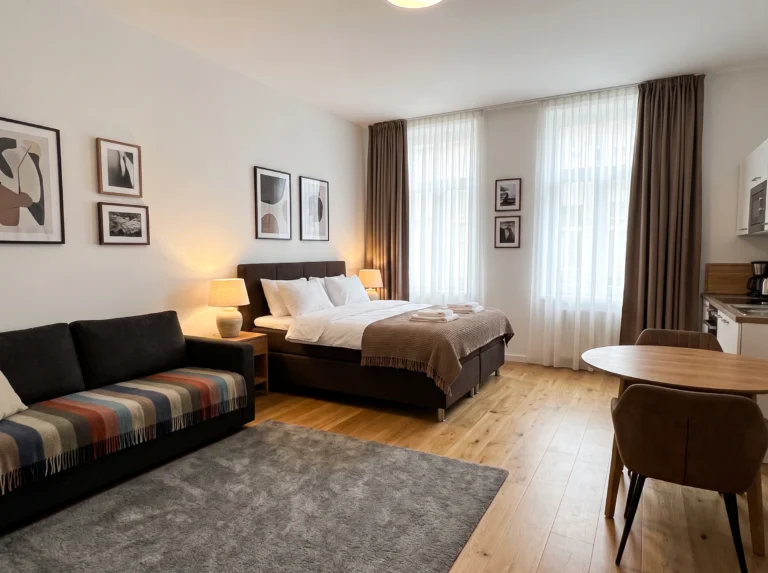
A real dining table changes everything for couples. Eating at your coffee table works for a night — not a relationship. A small round table with two chairs (look for 36-inch diameter versions) fits even compact studios and creates a daily ritual that grounds you both. In this space, a rich wood table with dark leather chairs sits close to the kitchen without swallowing the room. That proximity matters more than size.
Sofia’s honest take: Round tables are better than rectangular ones in small spaces — no sharp corners competing for floor space, and easier to squeeze past.
10. Zone Your Studio with Furniture, Not Walls
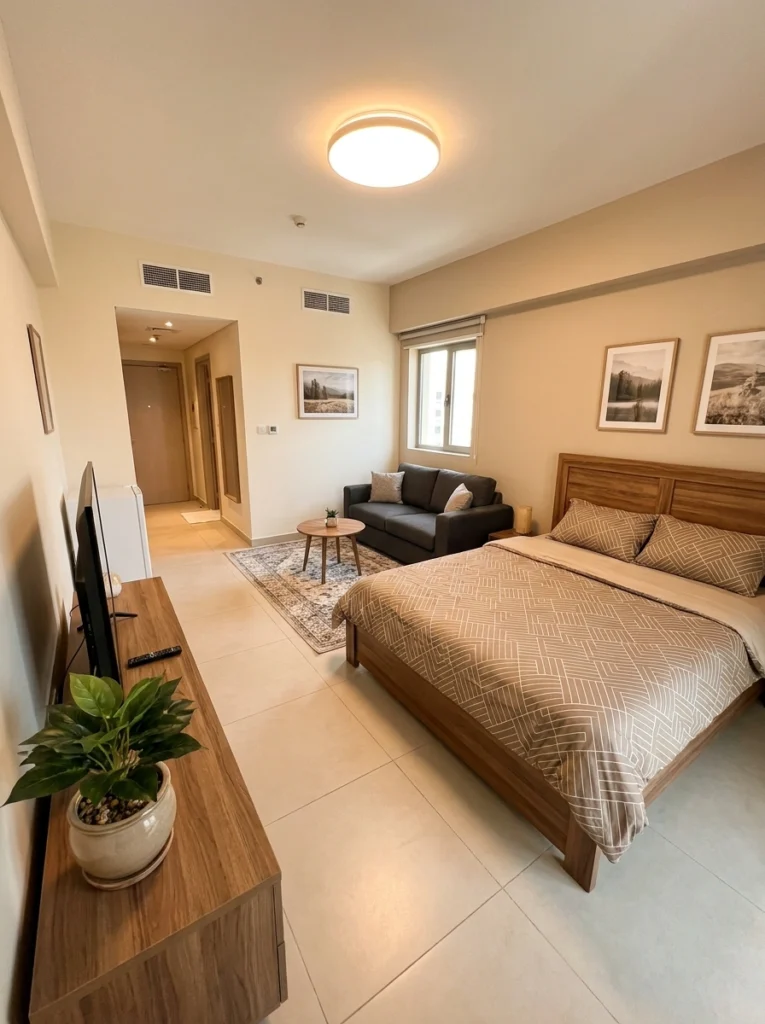
The first rule of studio living for two: stop thinking “one room” and start thinking “three little rooms in one.” A small loveseat facing away from the bed instantly creates a living zone. A low TV console anchors the entertainment area. A round coffee table on a rug pulls everything together. You’re using furniture as soft walls — no construction, no permission, no deposit lost. The bed stops being the main event and starts being just one piece of a real apartment.
11. Invest in a Murphy Bed or Wall Bed
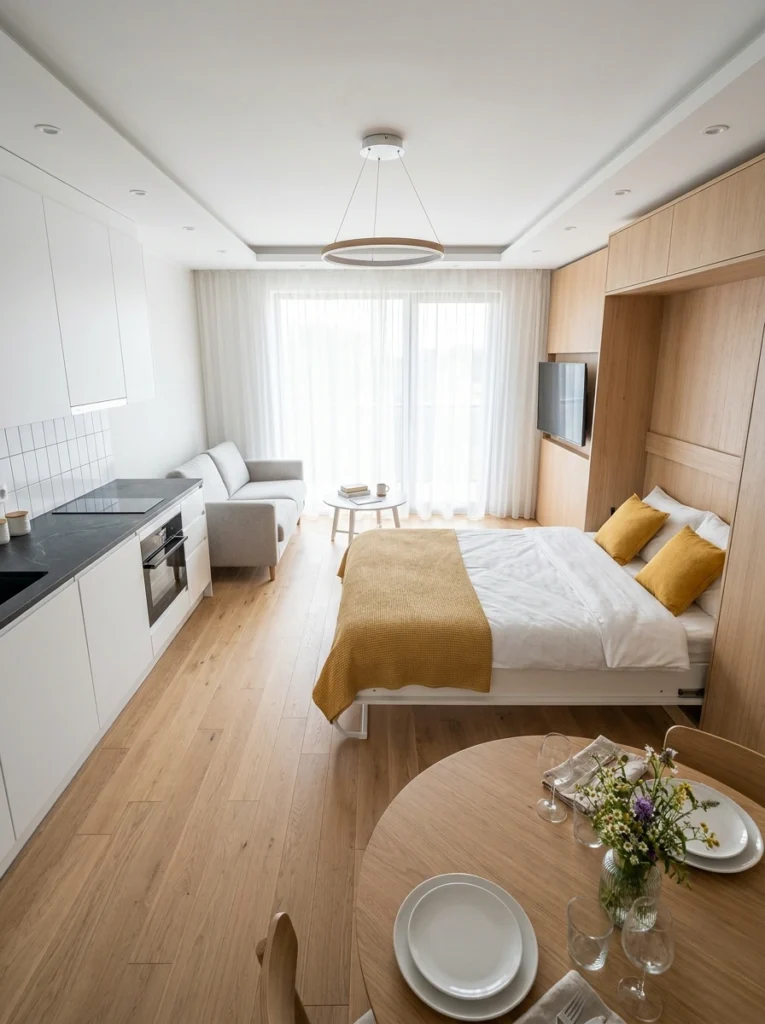
If your studio is genuinely tiny, the bed is the elephant in the room — literally. A Murphy bed solves it. By day, you have a real living room. By night, you fold the bed down and you’re set. The cabinetry around it doubles as storage, which is exactly what two people sharing 400 square feet need. Yes, the upfront cost is real. But if you’re staying in this place for more than two years, it’s the smartest furniture investment you’ll make.
12. Raise the Bed on a Platform
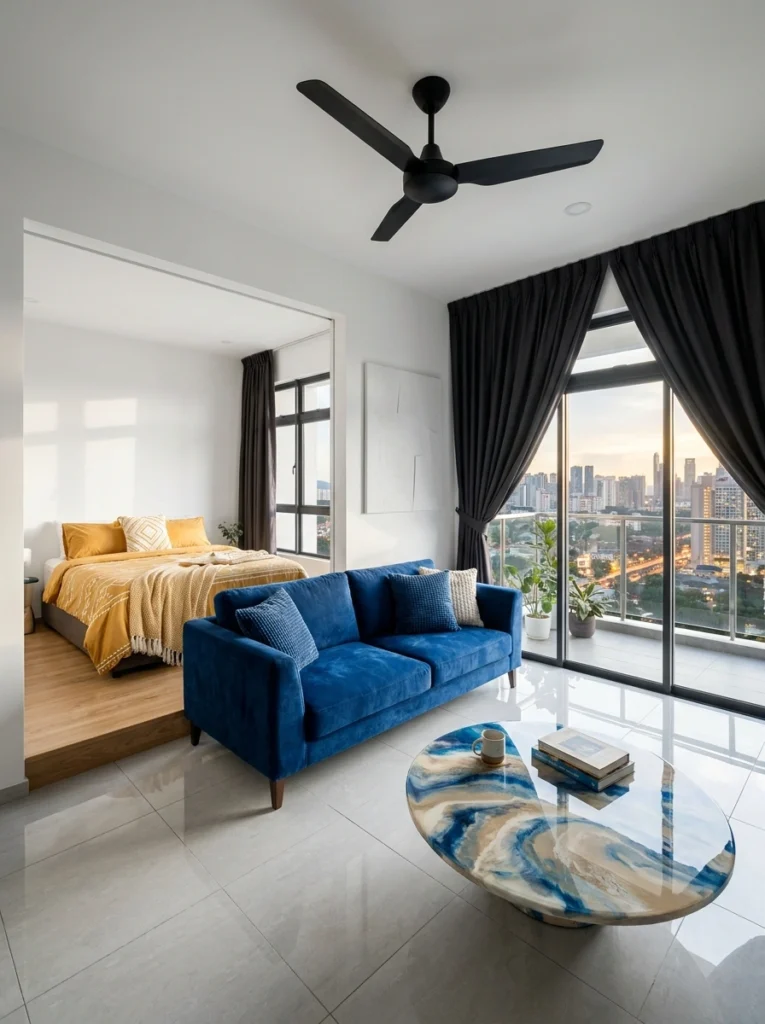
A raised platform under the bed does what a wall would do, without being a wall. Just a small step-up — even 15 to 20 centimeters — creates the feeling of crossing into a different room. The bedroom feels intentional, the living area feels grown-up, and storage drawers can hide inside the platform. Pair it with a real statement sofa (that blue velvet is doing the lord’s work here) and the two zones feel like separate rooms even though they share the same air.
13. Let Plants Do the Dividing
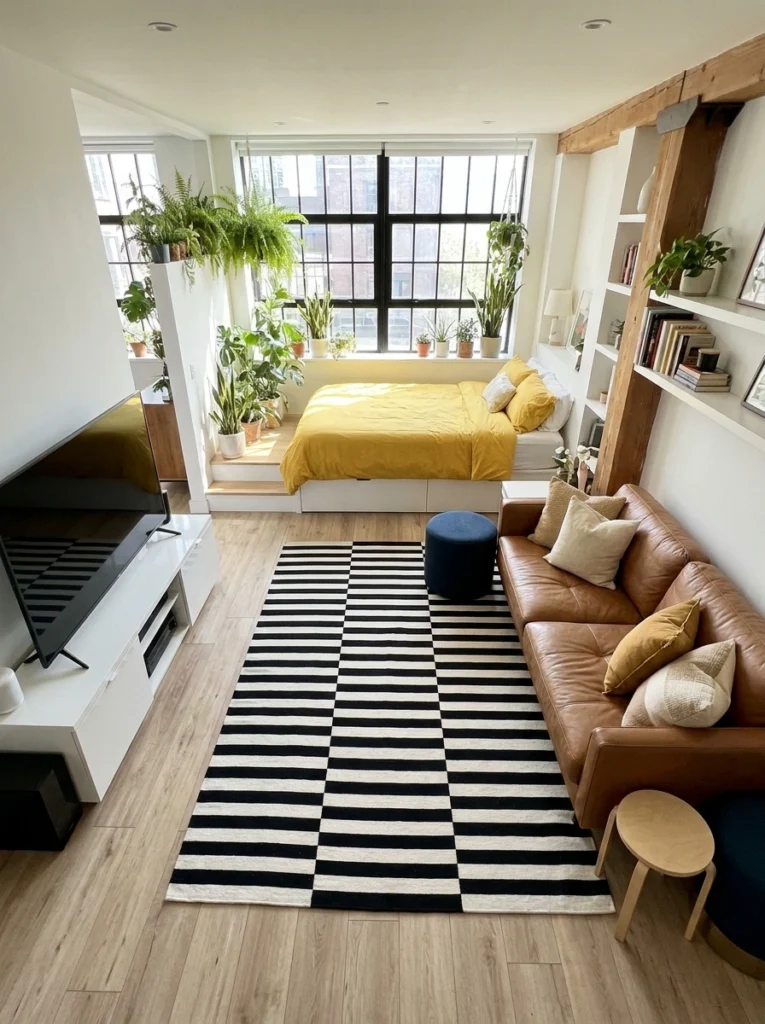
Plants are the most underrated room dividers in existence. A row of pothos on a windowsill, a tall snake plant at the foot of the bed, a hanging fern over a console — you’re creating a soft, green curtain between zones without buying a single piece of furniture. They also fix the one thing studios usually lack: life. Two people living in a sterile box gets old fast. A studio full of plants feels like a place someone actually loves living in.
14. Lean Into Scandi Simplicity
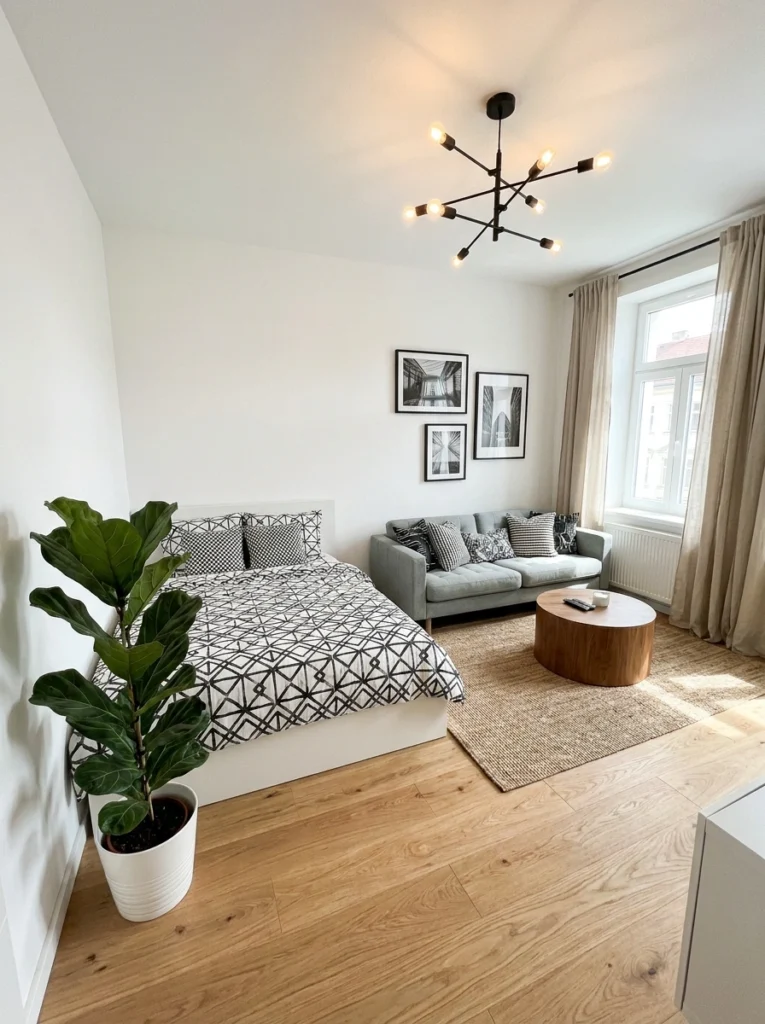
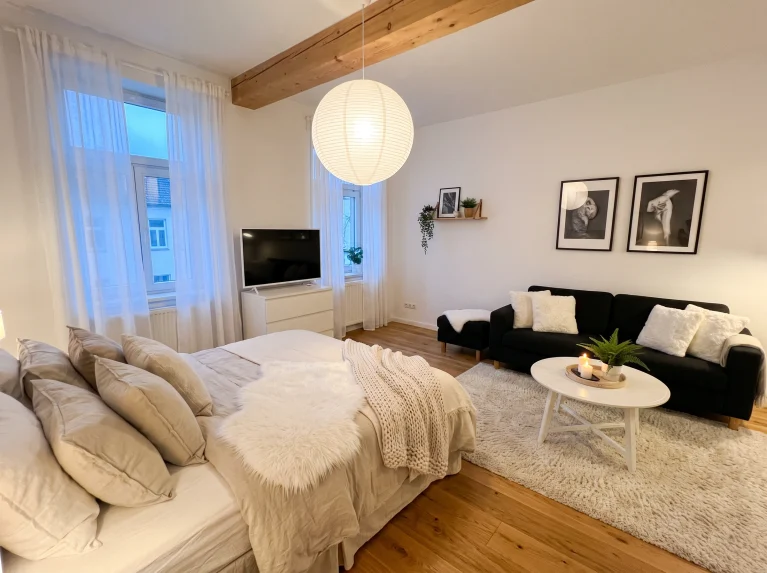
When two people share a small space, visual clutter doubles fast. Scandinavian style isn’t about being cold or minimal for the sake of it — it’s about giving your eyes a place to rest. White walls, warm wood floors, one statement light fixture, a single large plant. The bed and sofa sit in the same room without fighting because everything around them is calm.
Pro tip: Stick to three colors max for the larger pieces. Save the personality for pillows and art.
15. Give Yourselves a Real Dining Spot
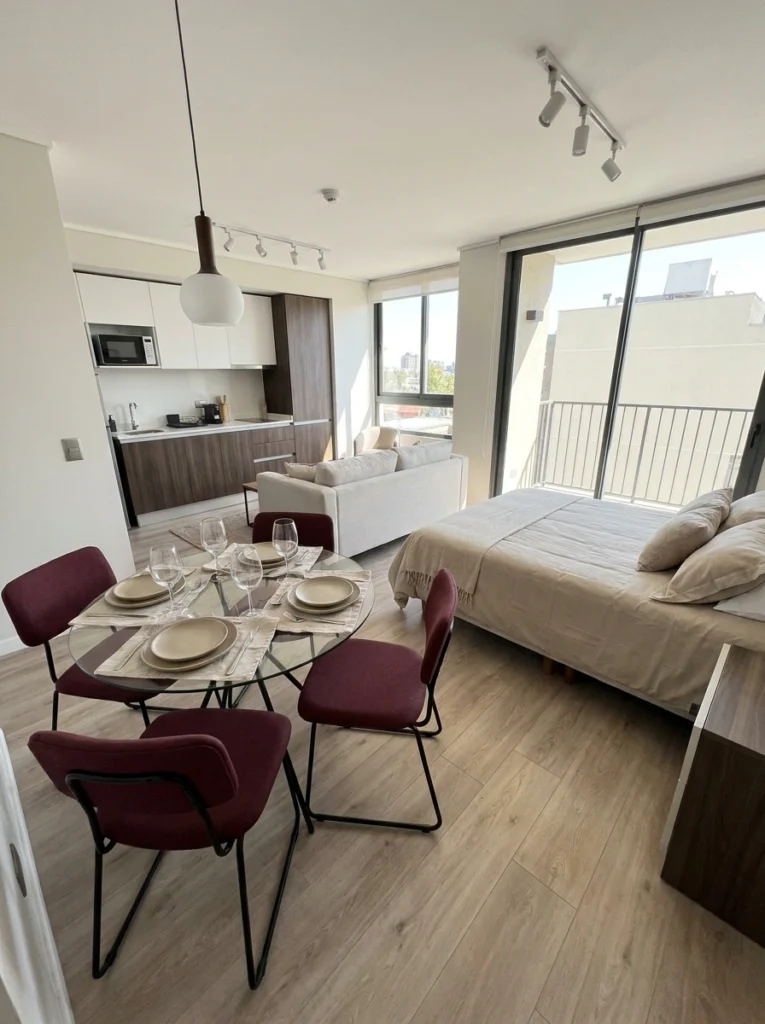
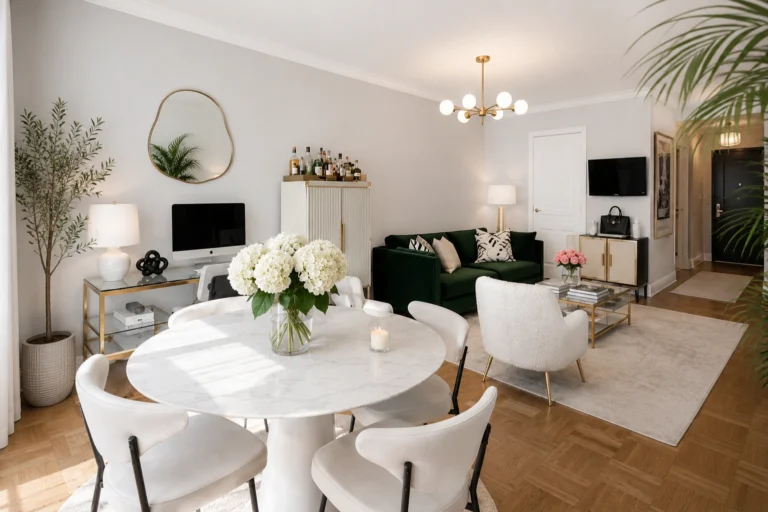
Eating dinner on the couch every night sounds cute until you’ve done it for six months and forgotten what a table feels like. A small round dining table — even a 90cm one — does something almost magical for a couple in a studio. It gives you a place to actually sit across from each other. To work side by side. To host one friend without it being weird. Glass tops keep things visually light, and burgundy or rust-colored chairs add personality without crowding the space.
16. Use a Bookshelf as a Room Divider
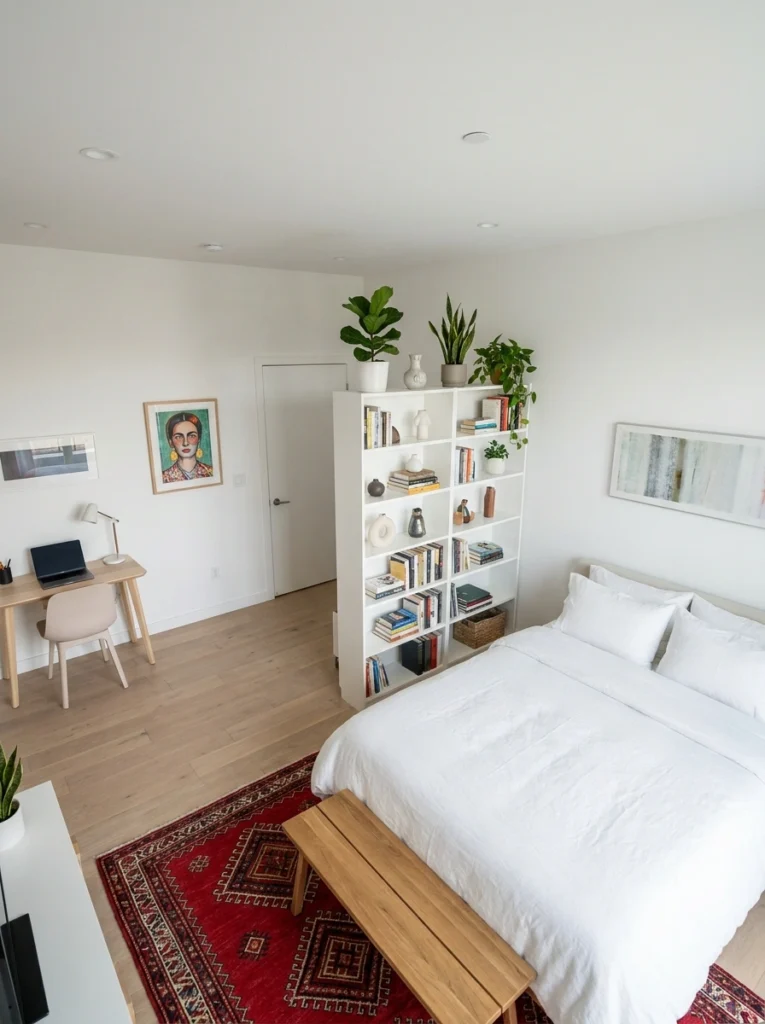
This is the single best move for couples sharing a studio. An open bookshelf — IKEA’s Kallax is the obvious one — gives you a real visual barrier between the bed and the rest of the apartment without blocking light or making the space feel chopped up. One side faces your “bedroom,” the other faces your living area. Fill it with books, plants, baskets, and a few sentimental objects. You get storage and privacy in the same piece of furniture. I’ve never seen this not work.
Final Thoughts
A studio apartment can feel like a temporary hardship or it can feel like one of the most romantic chapters of your life — it really does come down to how you treat the space. Pick two or three ideas from this list. Not all sixteen. Start with the one thing that’s been bothering you most: maybe it’s the lack of a dining spot, maybe it’s that you and your partner can’t both work in the same room without losing your minds.
Try one thing this weekend. Move the sofa. Hang the shelf. Paint the wall.
A studio with the right layout isn’t smaller than a one-bedroom — it just makes you live closer. And honestly, that’s the whole point of living with someone you love.
— Sofia