13 Dreamy Studio Apartment Decor Ideas for a Soft Cozy Look
Studio apartments get a bad reputation. People talk about them like they’re a punishment — a temporary stop on the way to a “real” home. Here’s the thing: some of the most beautiful, personal spaces I’ve ever stepped into were under 400 square feet. The trick isn’t more square footage. It’s a few smart choices that make every inch earn its place.
Below are 13 studio looks I keep coming back to, with the exact details that make them work. Steal what you like, skip what you don’t.
1. Define Zones with Rugs, Not Walls
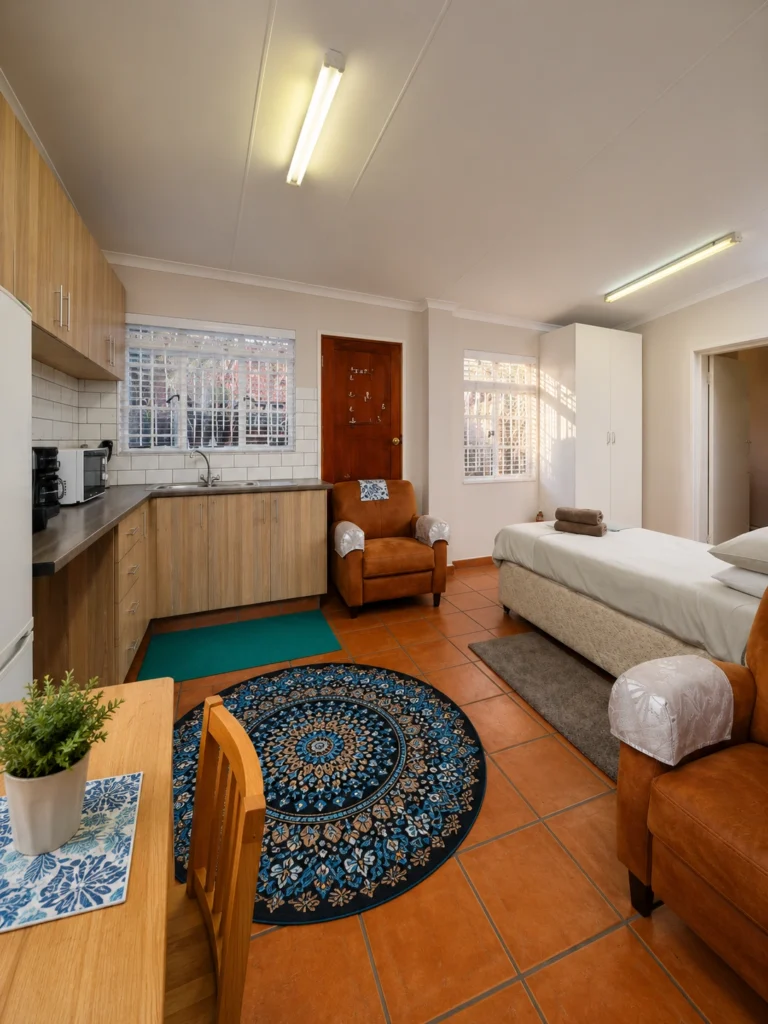
The fastest way to make a studio feel like a real apartment — not just one big room with furniture floating in it — is to use rugs to draw invisible walls on the floor. One rug under the bed, one under the seating area, one in front of the kitchen if you have the space. Suddenly the eye reads three rooms instead of one chaotic blob.
Look at the example above: a round patterned rug anchors the sitting zone, a smaller mat lives under the bed, and the kitchen floor stays bare for easy cleaning. Three zones, zero construction.
Pro tip: Rugs need to be the right size, not just present. Aim for the front legs of your furniture to sit on the rug. A tiny mat floating in the middle of the floor looks like a postage stamp and shrinks the room.
2. Use a Half-Wall or Partial Divider for the Bed
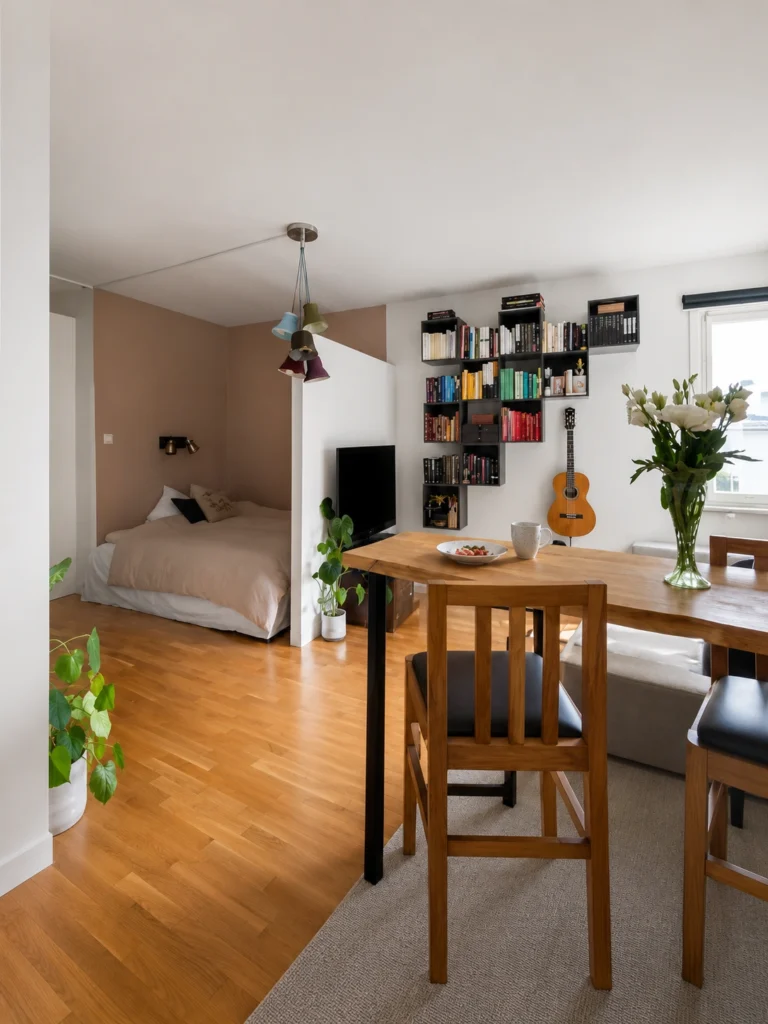
If you can swing it, a partial wall behind the bed is one of the best moves you can make in a studio. It gives you the feeling of a separate bedroom without closing off the light or chopping the square footage. The bed gets its own pocket of calm, and the rest of the apartment stays open.
What I love in the example above is that the partial wall is painted a warm dusty terracotta on the bedroom side — a sneaky little trick that makes the sleeping nook feel intentional and grown-up. From the dining area, you barely register that there’s a bed in the room.
3. Try an Open Wooden Frame as a “See-Through” Wall
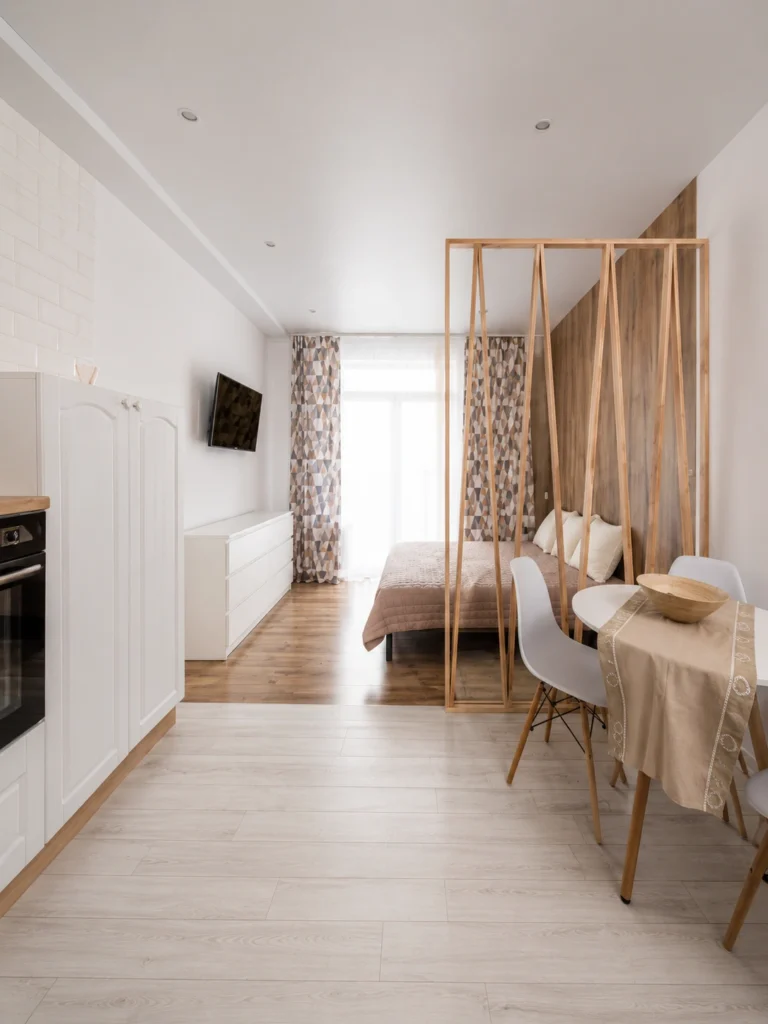
This is my favorite renter-friendly trick. An open wooden frame — basically a tall ladder-like structure with no actual panels — visually marks where the bedroom ends and the rest of the apartment begins, without blocking a single ray of light. From across the room, your brain reads “separate spaces.” But the natural light still flows.
You can buy these as freestanding room dividers, or DIY one with 1×2 lumber and a weekend. Lean it against the ceiling, anchor it lightly, and you’re done. No drilling into walls, no landlord drama.
Renter-friendly alternative: If even a freestanding frame feels like too much, a tall open-back bookshelf (like the IKEA Kallax turned on its side) does the same job and gives you storage as a bonus.
4. Lean Into the Loft Look (Don’t Fight It)
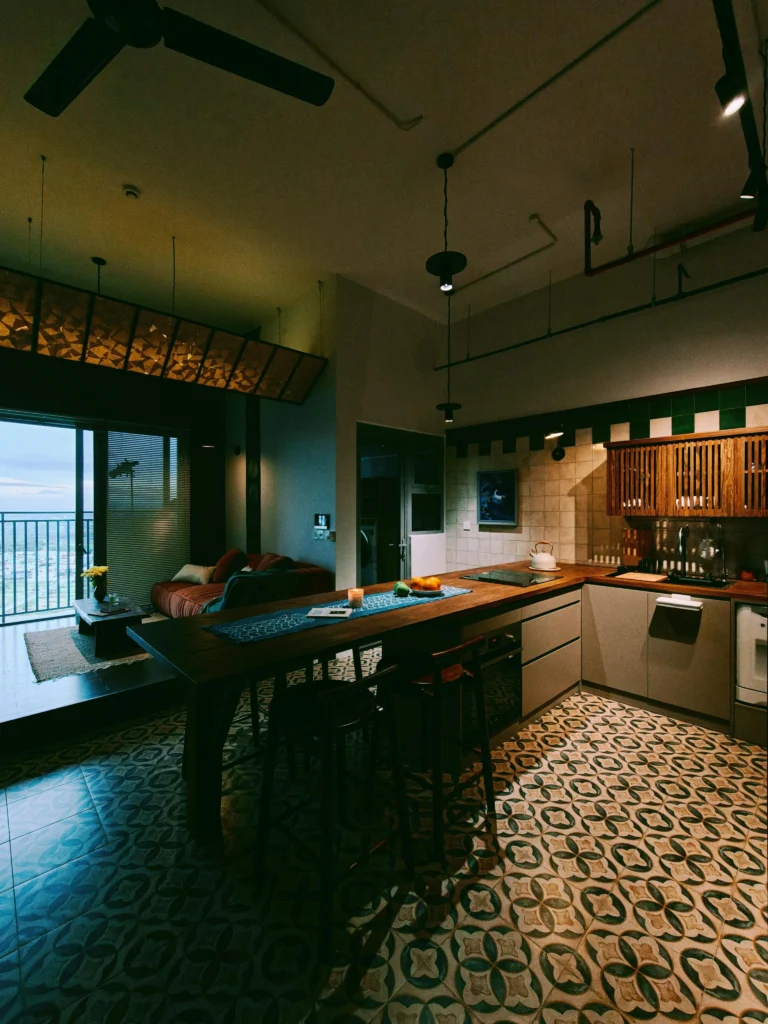
If your studio came with exposed pipes, a concrete ceiling, or weird ductwork — stop trying to hide it. Painting all of that out in matte black turns “unfinished” into “intentional” in about a weekend. Pair it with a long wooden countertop that pulls double duty as dining table and kitchen prep space, and suddenly the layout that felt cramped feels considered.
The patterned cement tile underfoot here does a lot of work, too. Busy floor, simple walls — that’s the formula. It lets the eye land somewhere without overwhelming the room.
Pro tip: A single bold floor (tile, a big patterned rug, painted wood planks) reads as one design choice. Three competing patterns reads as chaos. Pick one hero and let the rest sit quiet.
5. Use a Trellis or Open Frame to Divide Without Walling Off
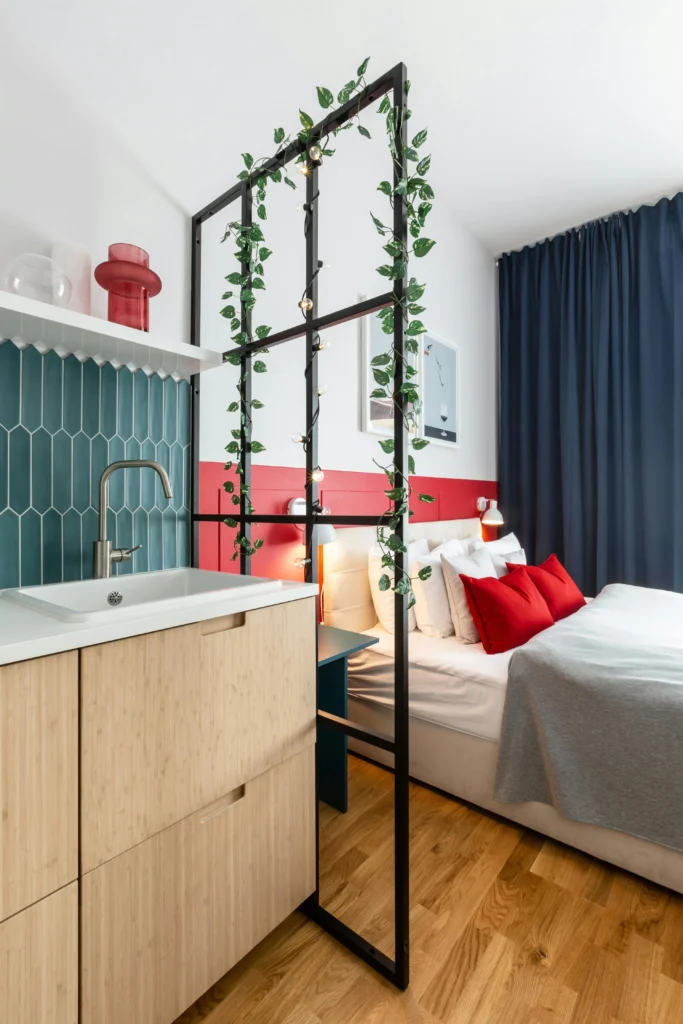
The biggest mistake I see in studios is people shoving everything against the walls and leaving one giant awkward floor in the middle. You don’t need a wall to define a space — you need a suggestion of one.
A slim metal trellis with a trailing pothos vine wound through it does the job beautifully. It tells your brain “this is the sleeping side, that’s the kitchen side” without blocking a single ray of light. Add a strand of warm fairy bulbs woven in and the bed corner gets its own little mood after dark.
Renter-friendly alternative: If you can’t bolt anything down, look for freestanding room divider frames at IKEA or Wayfair. Most are under $80 and weigh almost nothing.
6. Pick One Soft Color and Let It Carry the Room
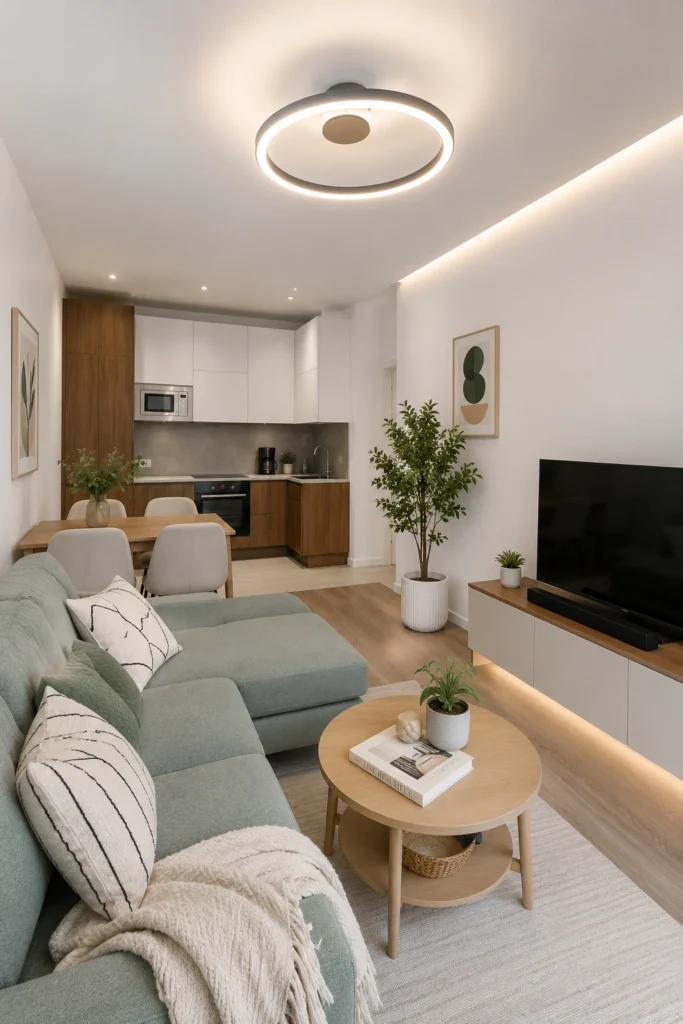
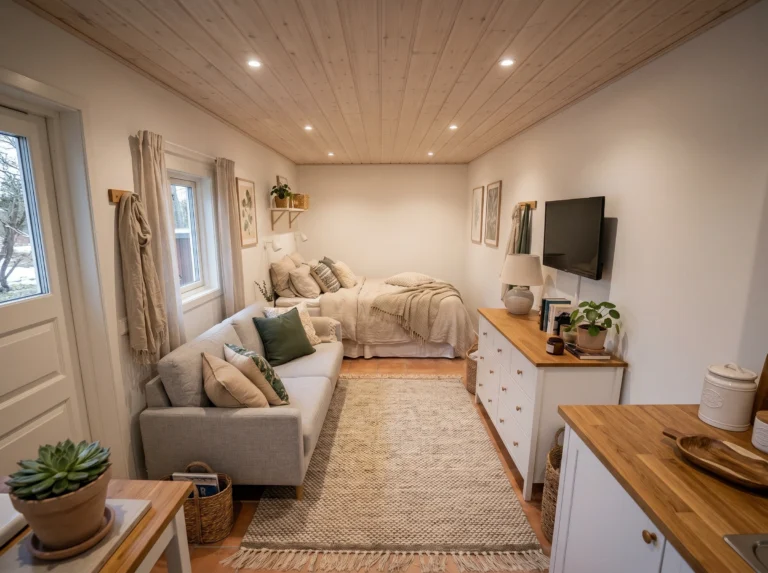
Long, narrow studios are tricky. Too much color and the room shrinks. Too little and it feels like a dentist’s office. The fix: one calm color, applied generously.
Sage green works almost everywhere — soft enough to feel restful, warm enough not to feel cold. Put it on the sofa, echo it in a small plant or two, and stop. Don’t add a yellow chair and a pink throw and a blue rug “for personality.” Personality comes from how a room feels, not how many colors are competing in it.
The hidden cove lighting along the ceiling and under the TV unit is the real magic here. It removes shadows in a tight space, which makes the whole room read as larger.
7. Mix Warm Wood With Cool Neutrals
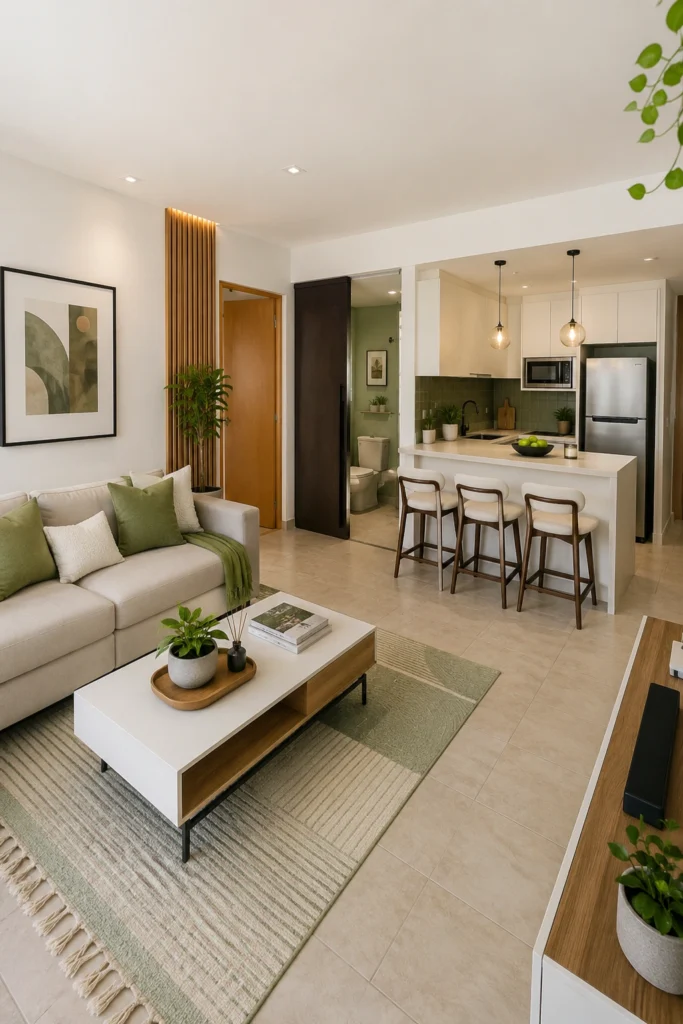
Cream walls. Cool gray tile. So far, kind of bland. Now add a vertical wood slat wall, two glass pendant lights with warm bulbs, and a few touches of olive green on the cushions and the kitchen tile — and the whole thing comes alive.
This is the contrast trick: a mostly cool, neutral base needs at least one warm material to keep it from feeling clinical. Wood is the easiest one to introduce because it works with literally every style. You can buy peel-and-stick slat wall panels online for the price of a nice dinner.
used to think slat walls were a trend that would age badly. Two years in, mine still looks great. They add texture and warmth without being loud, and that’s a rare combination.
8. Let Your Bed Be Part of the Living Room
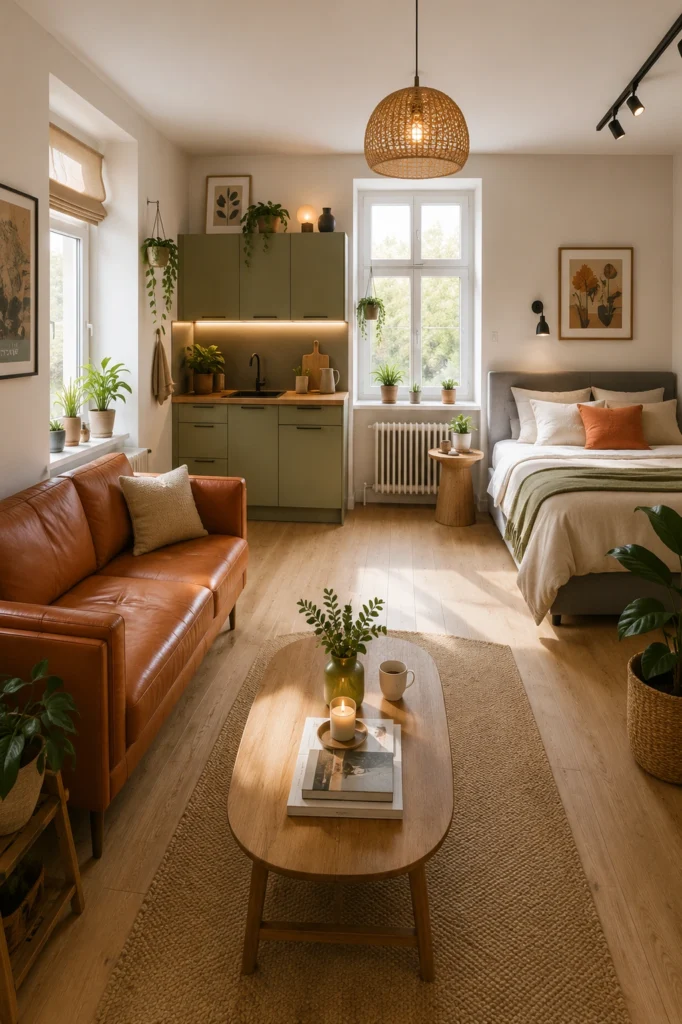
In a studio, the bed is a piece of furniture in your living room. There’s no hiding it, so make it look like you meant to put it there.
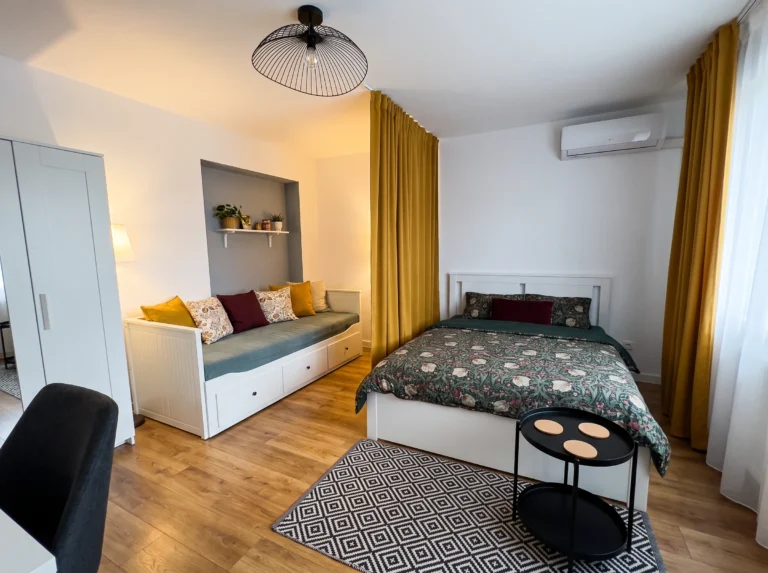
Dress it like a daybed: a few structured pillows propped against the headboard, a textured throw, no rumpled comforter exploding off the side. Then echo the bed’s color in your sofa cushions or curtains — that rust pillow on the bed talking to the cognac leather of the couch is what ties the whole room together.
A jute rug under the coffee table area helps too. It anchors the “living” half visually, so even though everything’s in one room, your brain reads two distinct zones.
9. Keep It Almost All White When the Space Is Tiny
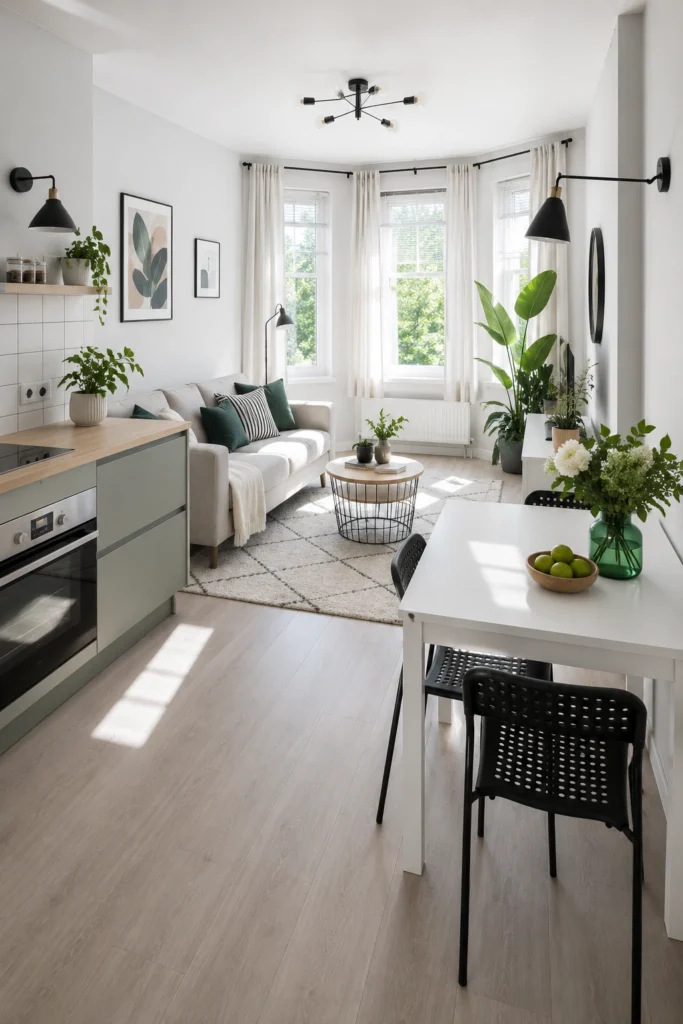
I know “white walls” sounds boring. Hear me out. In a truly tiny studio with one or two windows, white walls don’t make the space feel sterile — they make it feel bigger. Light bounces. Shadows shrink. The whole place breathes.
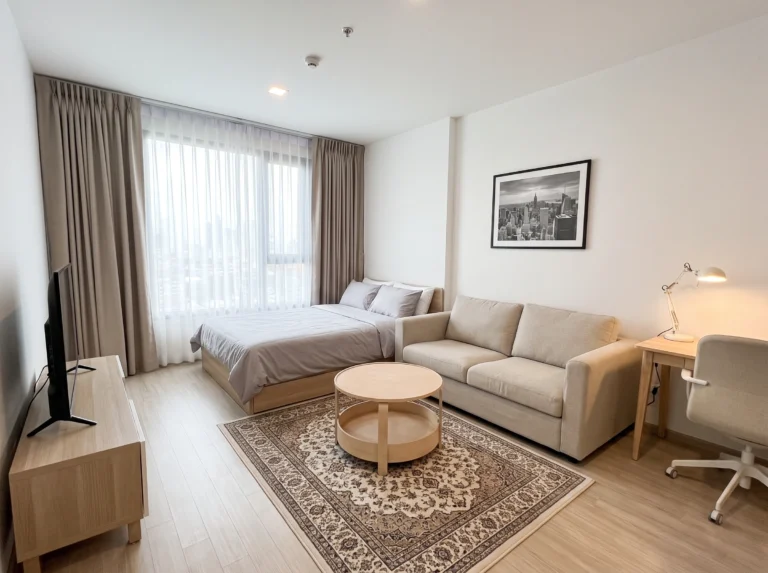
The job then becomes adding warmth through everything else: a soft cream rug, a wood countertop, real plants in clay pots, sheer curtains that filter sunlight instead of blocking it. The black sconces and chair frames give the room just enough contrast to feel grown-up instead of dorm-room blank.
Budget vs. splurge: Save on the white paint (any decent brand works). Splurge on one large plant — a fiddle leaf, a bird of paradise, or even a tall faux one. A single big plant changes a studio more than ten small ones.
10. Use a Bookshelf as Your Room Divider
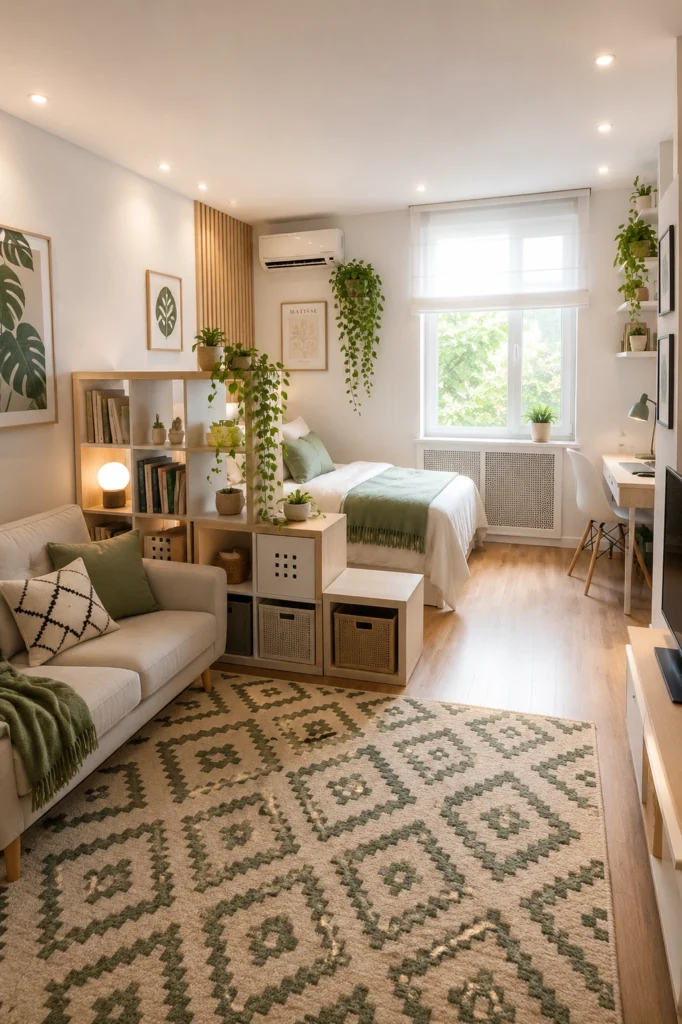
This is the studio hack I recommend most often, because it solves two problems at once. An open cube bookshelf gives you the divided-room feeling without blocking light, and it stores all the stuff that would otherwise live in piles on the floor.
The IKEA Kallax is the obvious pick — affordable, comes in multiple sizes, and the cube openings work for books, baskets, plants, or all three. Place it perpendicular to the wall, put plants on top, and tuck woven baskets into the lower cubes for the things you don’t want on display.
The bed sits on one side, the sofa on the other, and neither one feels like it’s spying on the other. Studio problem solved for under $200.
11. Go Bold With a Statement Sofa
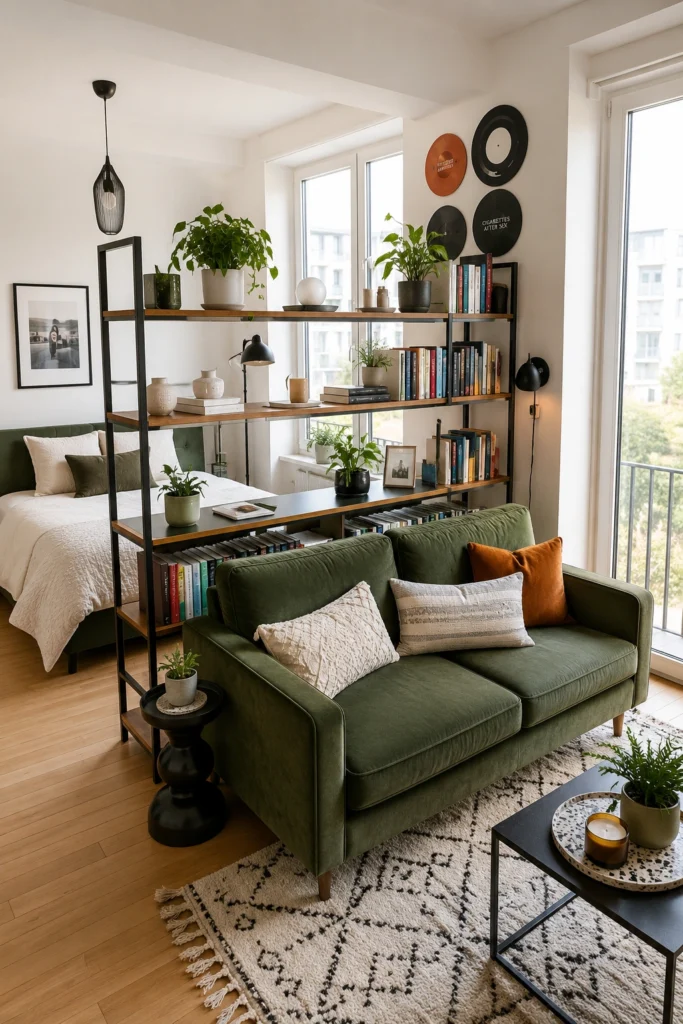
If you’re going to spend money on one piece in a studio, make it the sofa. You see it from the bed, from the kitchen, from the doorway. It’s the visual anchor of the entire apartment.
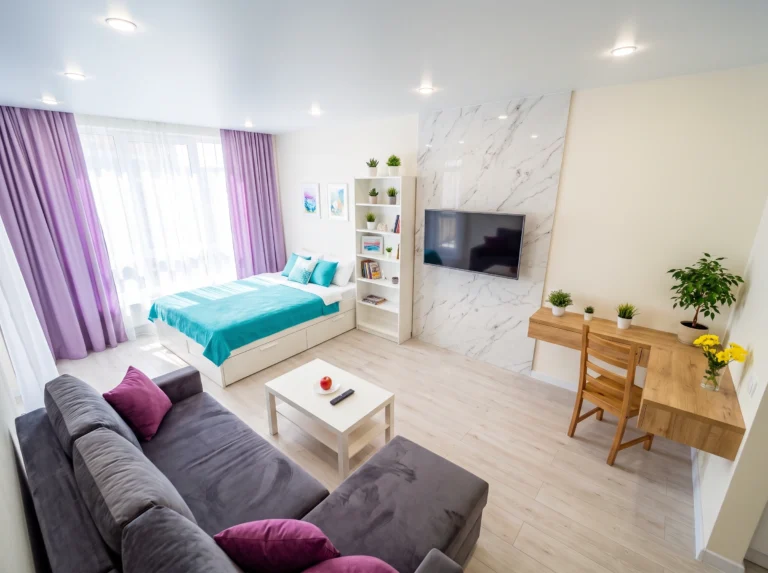
A deep forest green velvet sofa in a small space sounds risky, but it works because everything around it is quiet — white walls, light wood floor, simple shelving. The sofa gets to be the star without anything else fighting for attention. Add a couple of throw pillows in cream and burnt orange, and you’ve got a room with actual style, not just stuff.
Velvet looks luxurious but it’s a pain with pets. If you have a shedder, go with a performance velvet (yes, that exists) or a tightly woven boucle in a similar tone. Same drama, less lint roller.
12. Build a Boho Corner That Tells Your Story
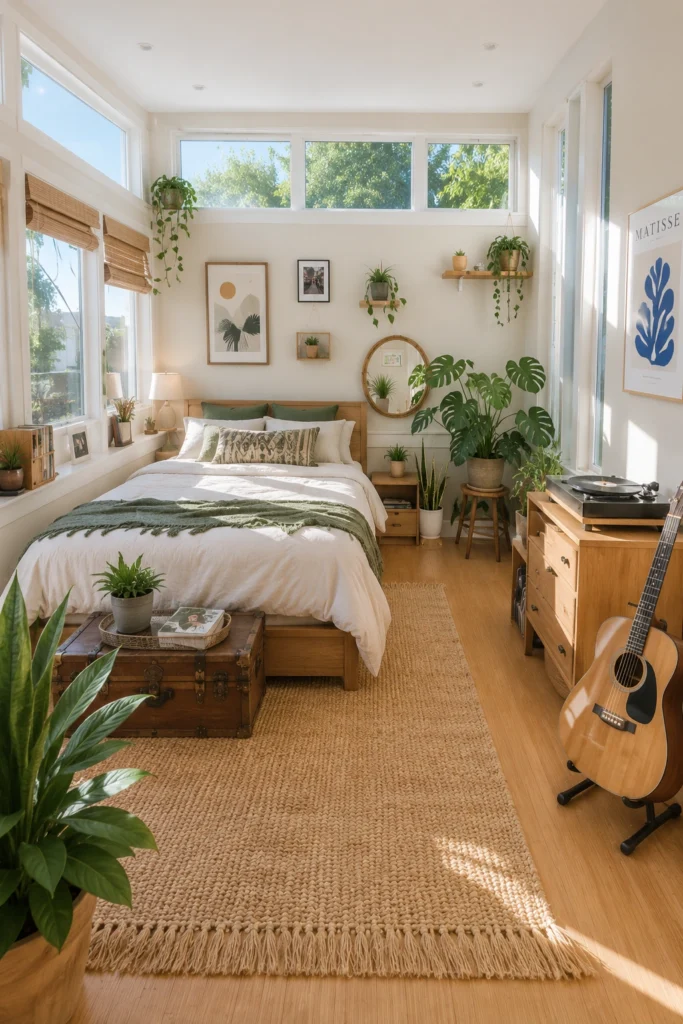
The studios I love most are the ones that feel like the person who lives there couldn’t possibly live anywhere else. This one nails it — plants spilling off every surface, an old trunk as a coffee table, a guitar leaning against the dresser like it just got played.
You don’t decorate this kind of room from a catalog. You build it slowly: one thrift store find, one print you actually like, one plant you didn’t kill. The jute rug and natural wood keep it grounded so the personal details can stand out instead of competing.
Pro tip: Put your hobbies out. A guitar on a stand, a stack of cookbooks, a half-finished puzzle on a tray. Hidden hobbies make a home feel like a hotel. Visible ones make it feel like yours.
13. Try a Folding Screen for Maximum Flexibility
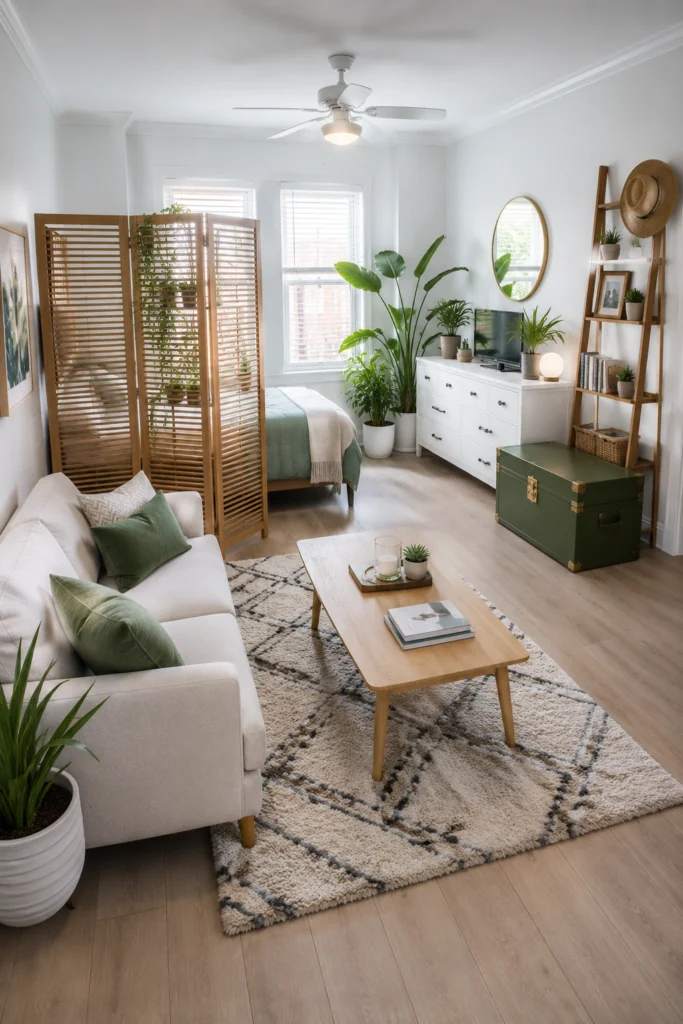
If you want privacy only sometimes — when guests are over, or during a video call — a folding screen is better than any permanent divider. Fold it open at night to let the bed area breathe, fold it closed during the day to hide the unmade sheets.
A wooden slatted screen lets light pass through, so it never makes the room feel claustrophobic. The vintage green trunk doing double duty as side table and storage is another one of those small choices that adds character without adding clutter.
Renter-friendly alternative: Folding screens require zero installation. You can buy a four-panel one for around $100, fold it flat when you move, and take it with you forever. That’s the kind of investment that pays you back across multiple apartments.
Final Thoughts
A small studio doesn’t ask for less design — it asks for better design. Every piece you own is on display. Every color has to earn its spot. You can’t hide a bad rug in a back room because there isn’t a back room.
But that constraint is actually the gift. Studios force you to be deliberate, and deliberate spaces are the ones that feel like home. Don’t try to make your 350 square feet pretend it’s a two-bedroom. Make it the best version of itself.
Pick one idea from this list. Try it this weekend. The transformation isn’t about money or size — it’s about a handful of small, intentional moves that add up to a space that finally feels like yours.
Your home should make you happy — not impressed strangers. Start there, and everything else falls into place.