21 Studio Apartment Ideas Everyone Is Saving Right Now
If you’ve ever stared at your studio and thought, “I live, sleep, eat, and work in one room — how is this supposed to feel like a home?” — you’re not alone. Studio apartments are one of the hardest spaces to decorate well, and most advice out there either assumes you have a huge budget or ignores the fact that your bed and your couch are basically roommates.
Here’s the thing: the studios that stop people mid-scroll aren’t the biggest ones. They’re the ones where someone made deliberate, smart choices about layout, light, and personality. These 21 ideas are exactly that — real, saveable, doable.
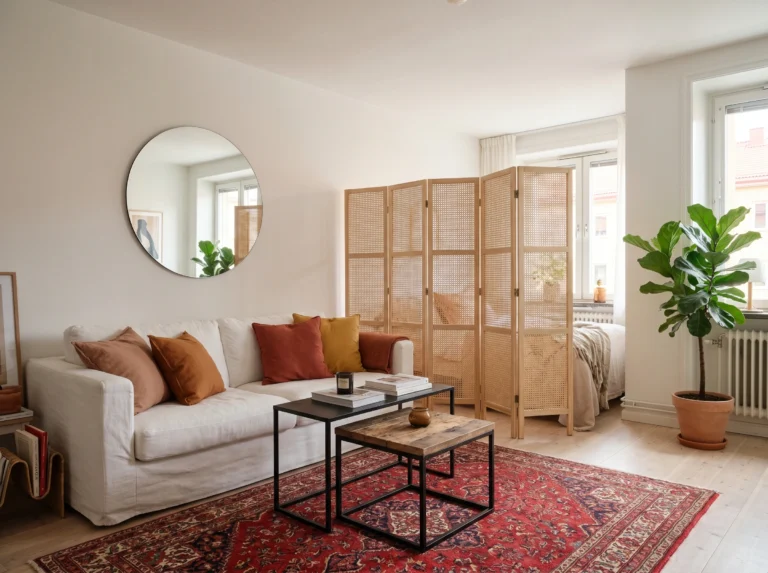
1. Keep It Neutral, Then Add One Warm Layer
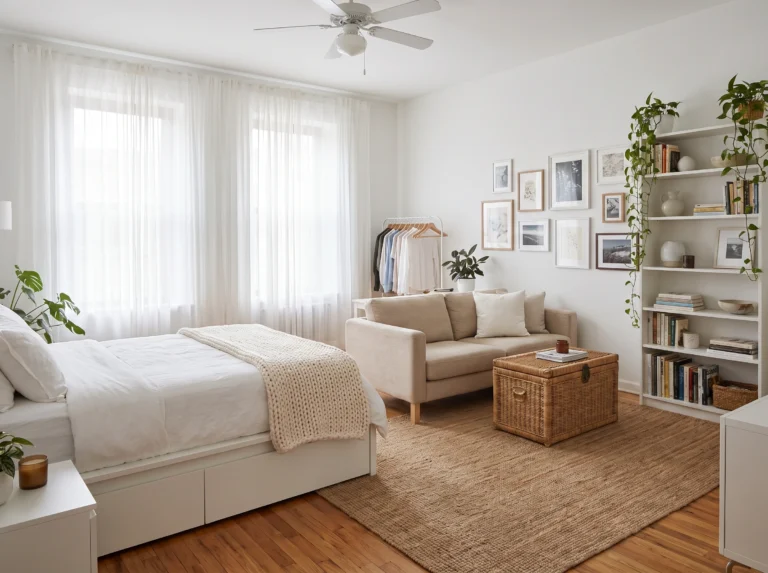
A neutral base — white walls, light floors, furniture in grey, beige, or cream — makes a small space feel twice as big. But all-neutral can tip into cold and impersonal fast. The fix isn’t adding color everywhere. It’s adding warmth in one or two places.
Think: a terracotta throw, a warm-toned rug, a woven pendant light, a wooden coffee table. Just one or two of these pulls a neutral room from “hotel room” to “someone actually lives here.” You don’t need a renovation for this. You need one good lamp and a textile that doesn’t match perfectly.
Budget vs. splurge: Save on the rug (check IKEA, Ruggable, or Amazon). Splurge on one quality light fixture — it changes the whole feel of the room and you’ll have it for years.
2. Use a Bookshelf as a Room Divider
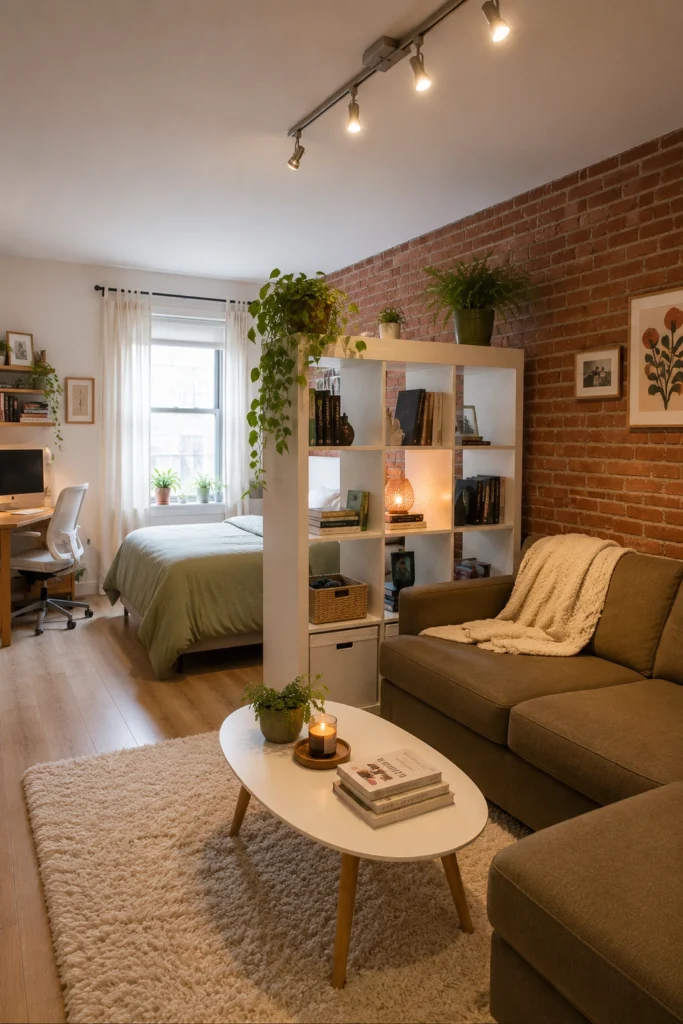
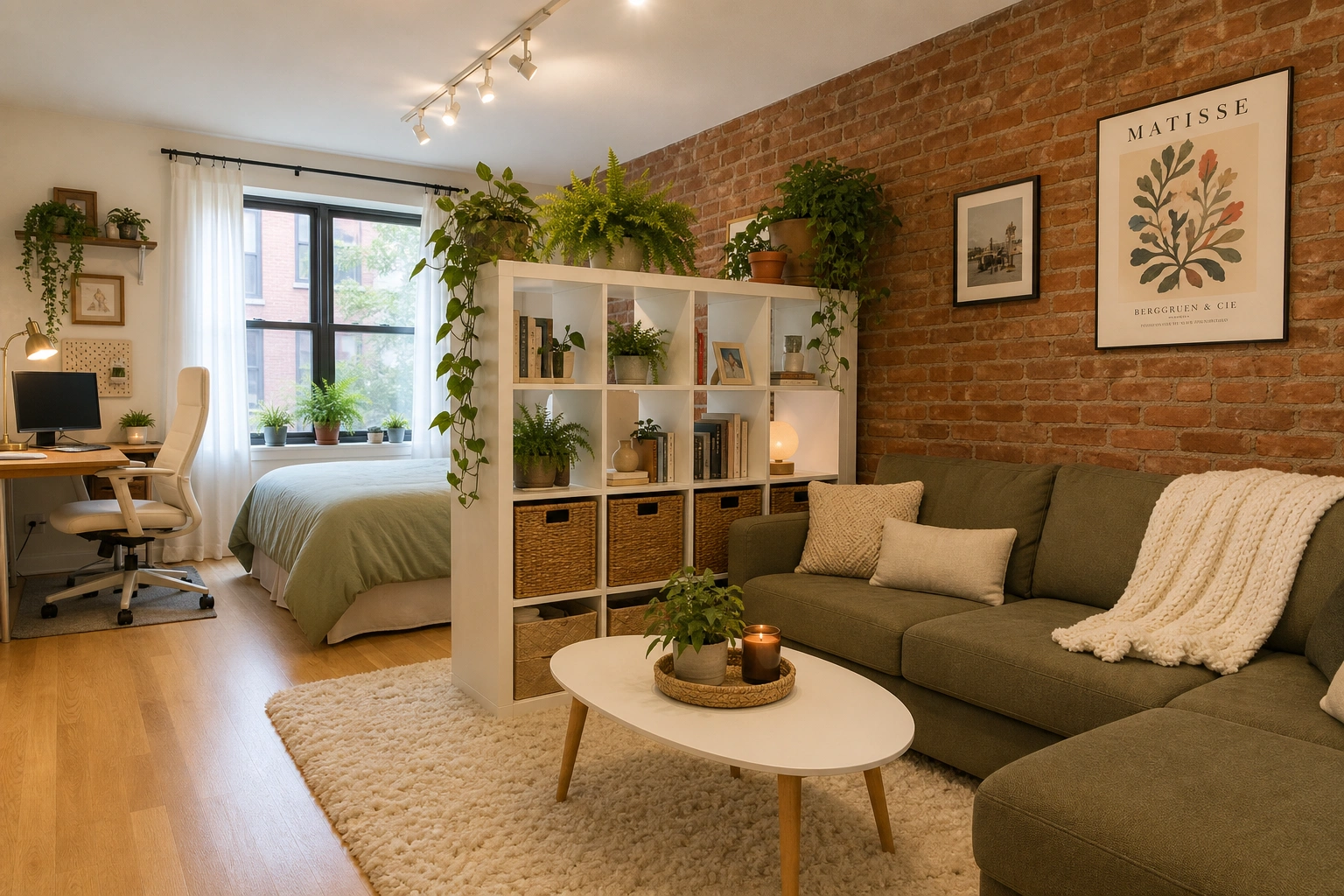
This is the move I recommend to almost every studio dweller who asks how to create a sense of separation between sleeping and living without walls. A freestanding bookshelf — positioned perpendicular to the wall — does the job without blocking light or making the space feel smaller.
Here, a white IKEA Kallax unit sits between the living area and the sleeping area, with plants cascading over the top and books, baskets, and small decor tucked inside. The exposed brick wall behind adds warmth and texture you couldn’t buy if you tried. The couch faces the living area; the bed faces the window. Two rooms, technically one.
Pro tip: Anchor your bookshelf to the wall with an anti-tip strap (IKEA includes these). Freestanding units used as dividers can shift, and in a rental, the last thing you need is a toppled shelf. A small L-bracket into a stud works too.
3. Define a Workspace That Feels Separate
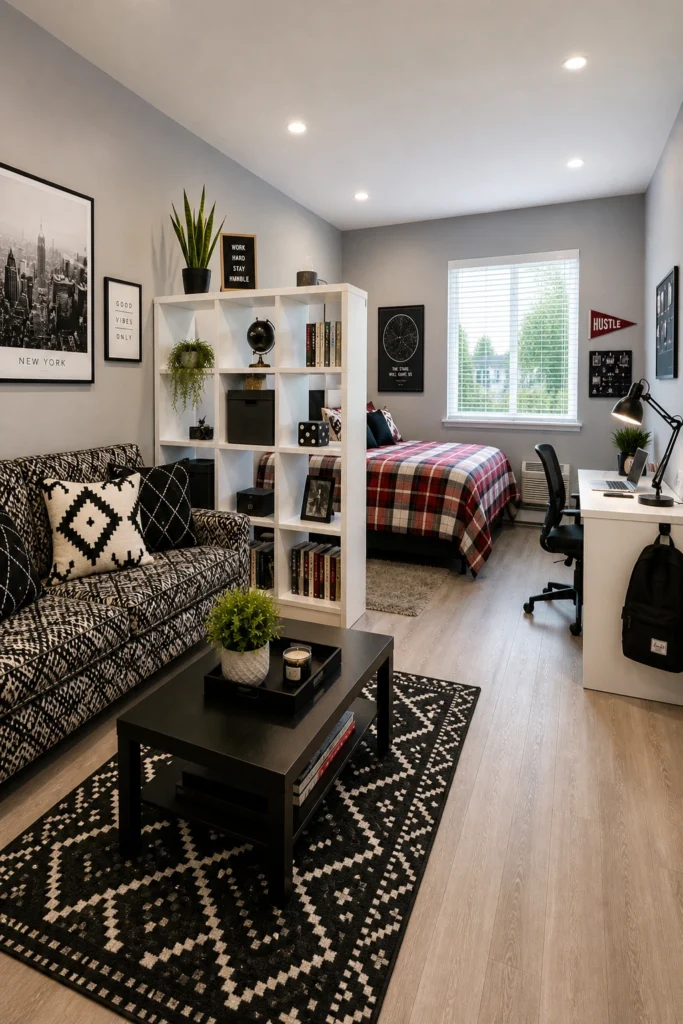
Working from home in a studio is genuinely hard. When your bed is ten feet from your laptop, the mental boundary between “work” and “life” basically dissolves. The goal isn’t to hide your desk — it’s to give it enough visual separation that your brain registers a shift when you sit down at it.
This studio does it well: the desk is in its own corner with a dedicated lamp, the chair is properly ergonomic (not a dining chair), and the open shelf divider creates a subtle visual break between the workspace and the rest of the room. Wall art above the sofa and desk both reinforce the “zone” feeling — city prints on one side, posters on the other.
If you can’t physically separate your desk, at minimum give it a distinct lamp and a rug underneath. Small signals matter more than you’d think.
Renter-friendly alternative: Don’t want to drill shelves? Command strips hold surprisingly well for lighter items. For a full shelf unit, freestanding ladder shelves work beautifully and move with you.
4. Layer Rugs to Define Each Zone
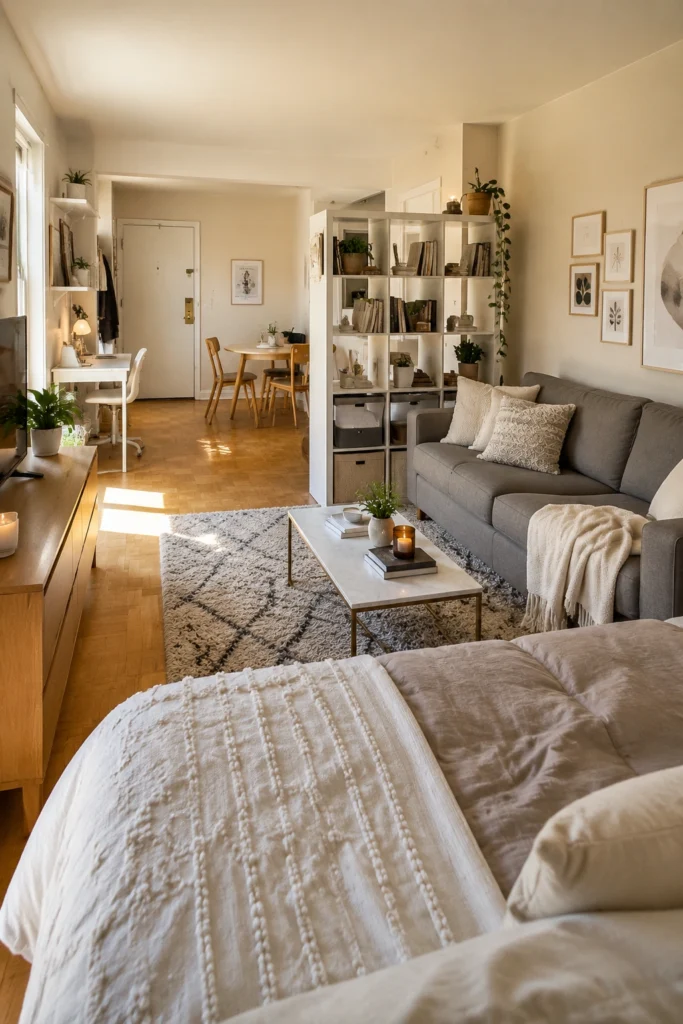
In a studio, rugs aren’t just about warmth underfoot — they’re zone markers. Place a larger rug under your sofa and coffee table to anchor the living area, and a smaller one under or beside your bed to define the sleeping zone. Two different rugs in the same space: suddenly you have two rooms.
They don’t have to match. They just shouldn’t fight each other. A neutral base rug with a patterned layer on top works beautifully. A solid in one area and a vintage-style Moroccan or Persian print in another is a classic that still works every time.
I’ve lived with this layout. It works — and it makes your studio feel far less like “one big room where everything happens” and more like a home with actual purpose to each corner.
5. Use a Bookshelf to Divide Without Closing Off
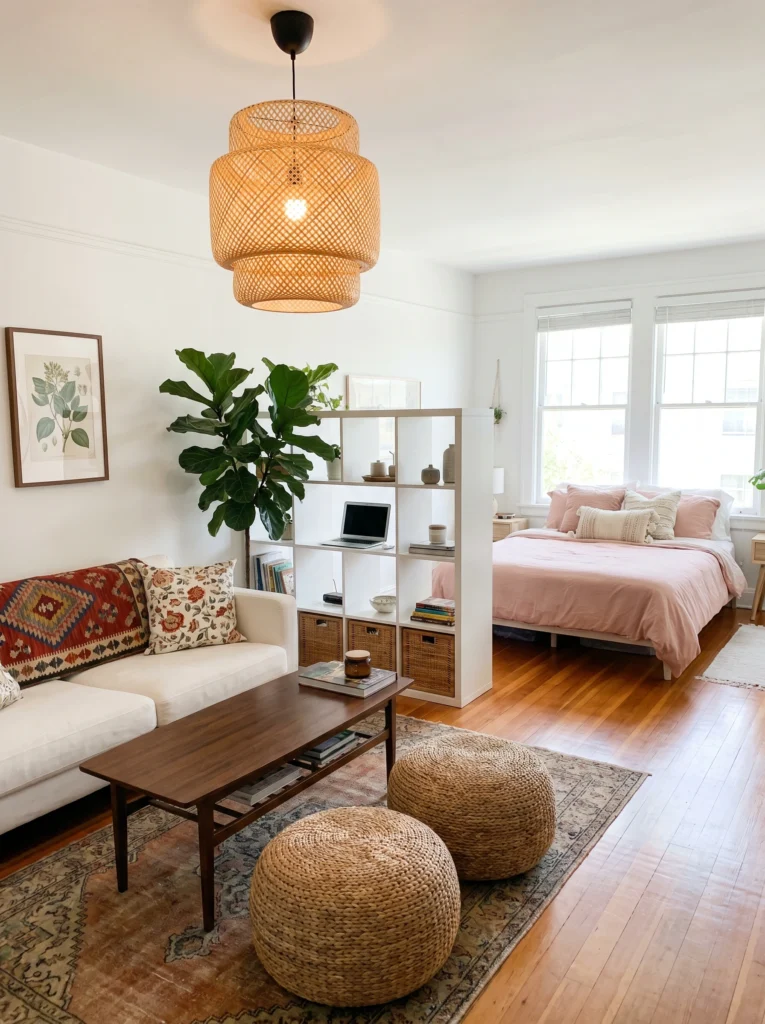
A wall doesn’t have to be permanent to do its job. An open bookshelf — like the IKEA Kallax or Expedit — placed perpendicular to the room creates a visual boundary between your sleeping and living areas without blocking light or making the space feel boxed in. You get two distinct zones; the room still breathes.
This works best when the shelves aren’t crammed full. Mix books with a few plants, some baskets for hidden storage, and a little empty space in between. That breathing room is what keeps it feeling intentional rather than chaotic.
Pro tip: Position the shelf so it’s visible from both sides. What faces the living area becomes display. What faces the bed becomes your bedside catch-all.
6. Go Warm and Moody for a Cozy Studio Vibe
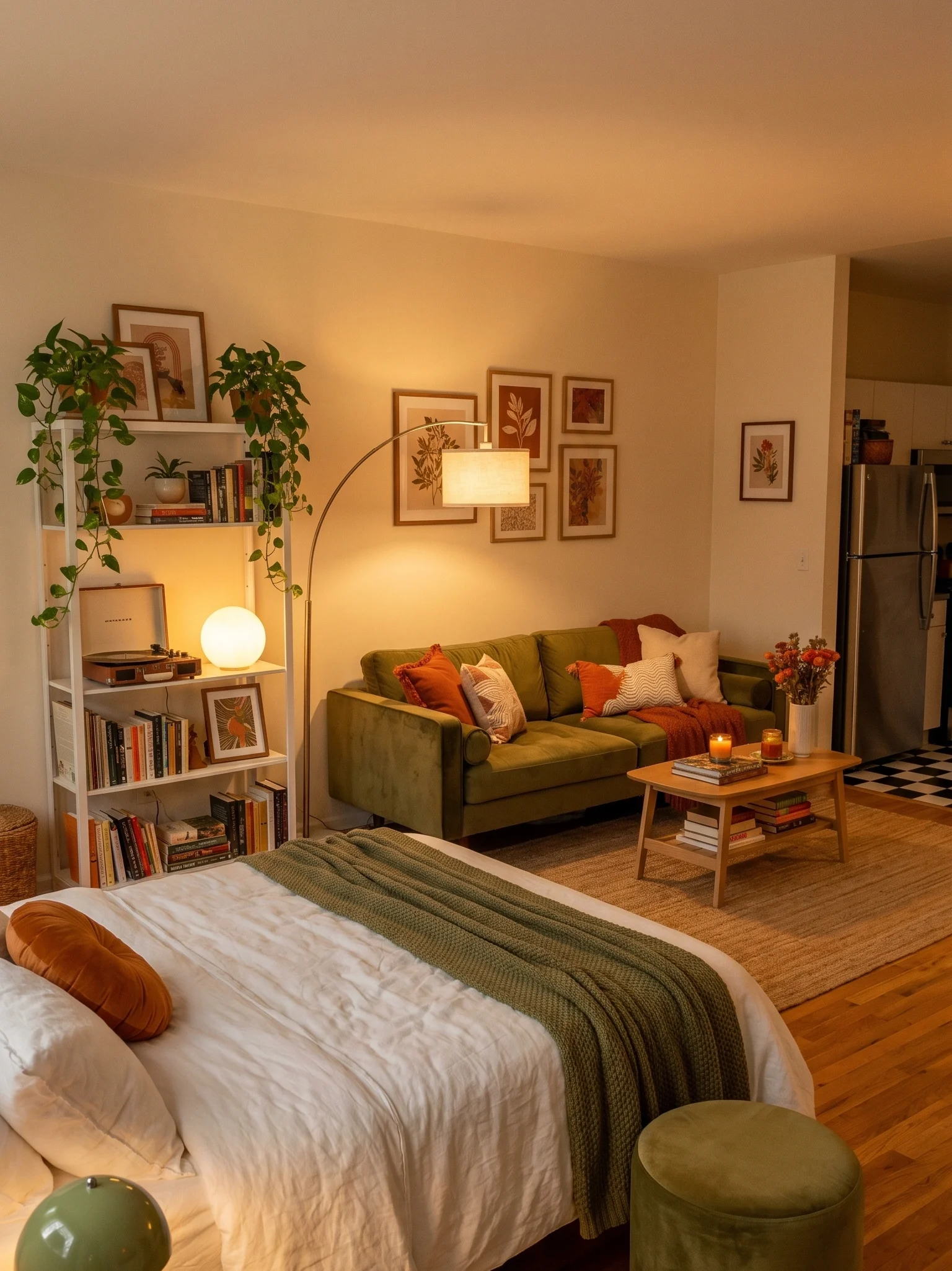
Not every studio has to be white, bright, and minimal. This one leans into warmth — dark green velvet sofa, rich amber lighting, layered rugs in sisal and jute, and a gallery wall with eclectic art — and the result is a space that feels impossibly cozy for its size.
Warm, moody studios work when you commit to the palette. Everything here pulls from earthy tones: rust, forest green, honey wood, cream. There’s a globe pendant, an arc floor lamp with a cream shade, and small table lamps on the shelf — all warm-toned, all working together. The layered lighting means no single harsh source, just a gentle amber wash over the whole room.
This is the kind of studio that looks even better at night. If your space has that slightly dark, cozy-cave quality, lean into it instead of fighting it with stark white paint and bright bulbs.
Velvet sofas look incredible in moody studios. But if you have a pet or toddler in the mix, get a performance velvet (brands like Article and Joybird both o
7. Go Full Boho if That’s Who You Are
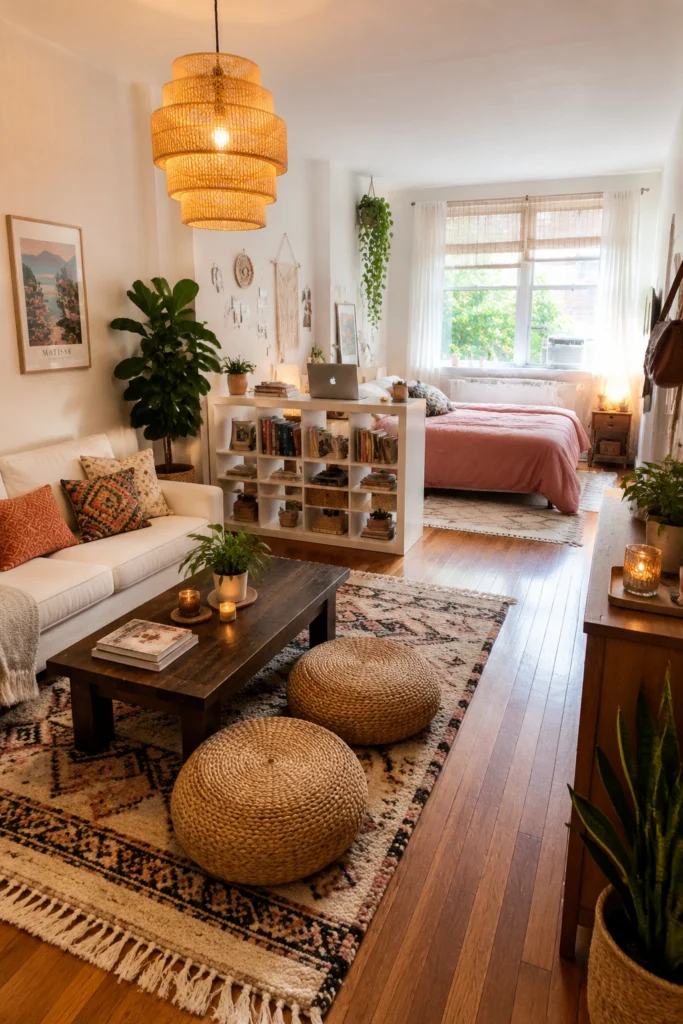
The worst thing you can do in a small space isn’t having too much personality — it’s having not enough. A studio that’s playing it too safe ends up feeling beige and forgettable. If your style runs bohemian, commit to it. Warm rattan lighting. A Moroccan or kilim-style rug. Layered textiles. A fiddle-leaf fig that’s getting a bit out of hand. Macramé, if you’re into it (I’m not judging, I’m jealous).
The secret to making maximalist work in a small space is keeping the walls and large furniture light. White sofa, white shelves, creamy walls — then pile on the pattern and texture everywhere else. It gives the eye somewhere to land without the room feeling suffocating.
Sofia’s honest take: You don’t have to pick a “style.” But a studio that leans into something always photographs better, lives better, and feels more like yours.
8. Go Japandi in a Long, Narrow Space
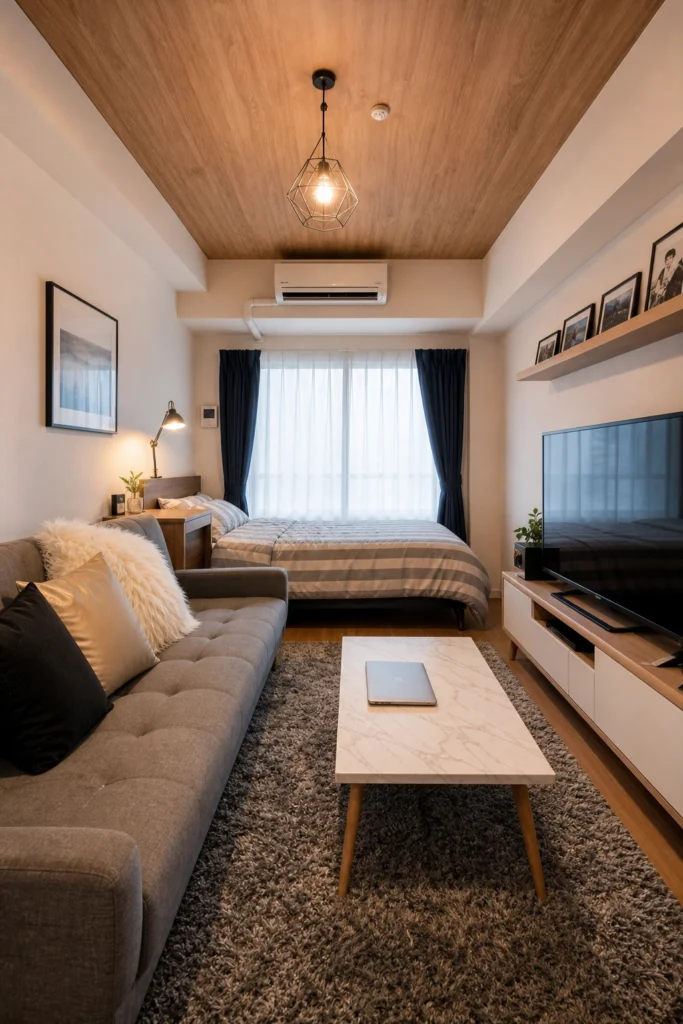
Long, narrow studios are notoriously tricky to lay out. The temptation is to push everything against the walls, which makes the room feel like a hallway. The better approach: anchor the sofa in the middle of the space, run the bed parallel behind it, and keep the furniture low-profile so the room breathes.
This studio nails the Japandi approach — that quiet, understated mix of Japanese minimalism and Scandinavian warmth. Wood-paneled ceiling (a renter-friendly option exists in peel-and-stick wood panels that are surprisingly convincing), warm grey sofa, marble-topped coffee table, and a geometric cage pendant in matte black. Nothing is competing for attention. Everything belongs.
The sheer curtains are doing a lot of work here: they soften the window without blocking the light, which is crucial in narrow spaces that can feel cramped if the window is visually cut off.
9. Go Dark and Moody If That’s Your Thing
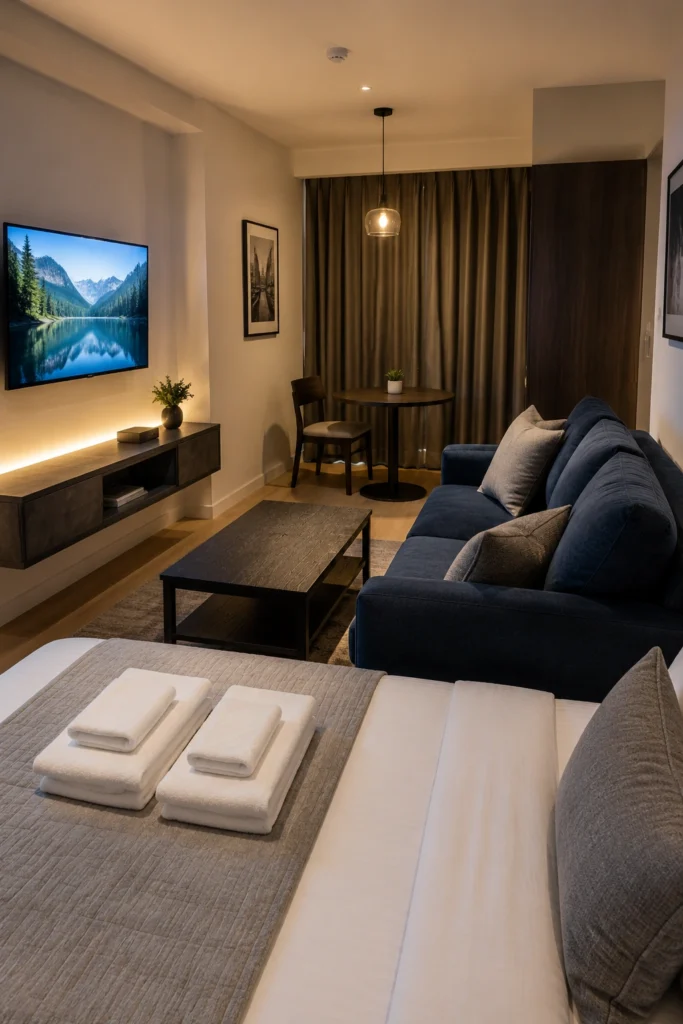
Not every studio needs shiplap and linen. If your instinct runs darker — navy sofas, walnut furniture, moody curtains, warm Edison-bulb lighting — trust it. Dark palettes in small spaces get a bad reputation they don’t deserve. Done right, they feel intimate, not cramped.
The key: keep light sources warm and low. Overhead cold-white lighting in a dark room feels like a horror movie. But a pendant light over a small dining nook, LED strips behind a TV console, and a floor lamp throwing a warm pool of light? That’s a boutique hotel vibe you didn’t have to pay boutique hotel prices for.
Pro tip: If you go dark on furniture and curtains, keep your rug lighter — cream, oatmeal, or a warm grey — to balance the room and keep the floor from visually disappearing.
10. Build Vertical Storage That Does Double Duty
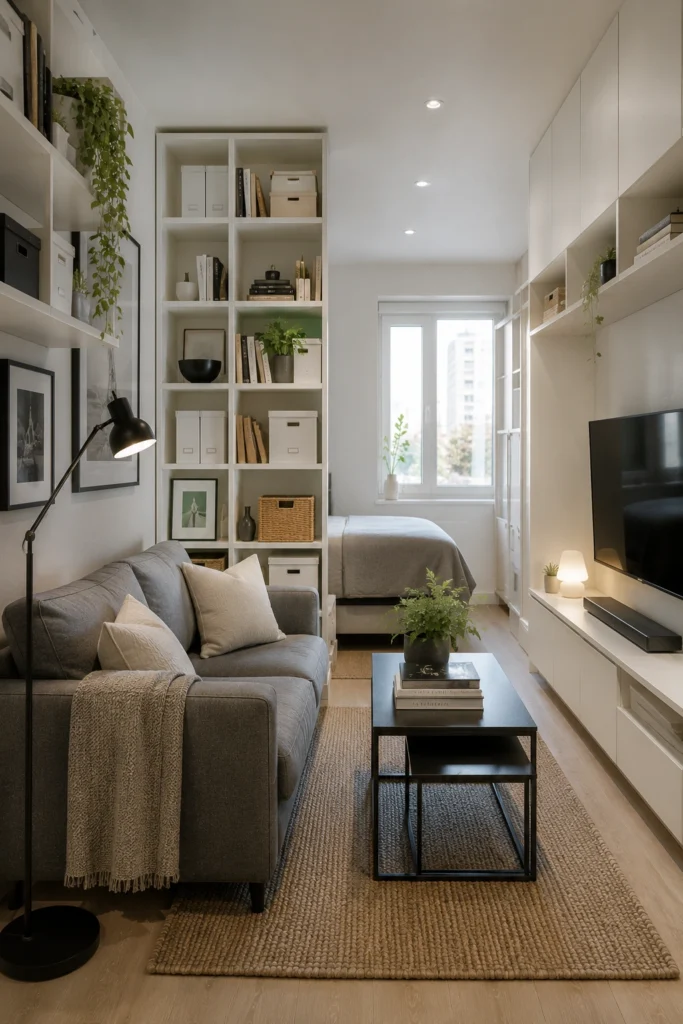
Floor space is precious. Wall space is free. If you’re not using your vertical real estate in a studio, you’re leaving your best asset untapped. Floor-to-ceiling shelving — especially open units like IKEA’s Kallax or Billy systems — can store books, baskets, and plants while also acting as a visual backdrop that makes the room feel more designed and intentional.
In this studio, white built-in-style shelves line the wall from floor to ceiling on one side, while a lower unit acts as a room divider between the sleeping area and the living space. The key is how they styled it: not crammed, not bare. A mix of boxes for hidden storage, a few trailing plants, and some framed prints breaks it up visually.
Budget vs. splurge: IKEA Billy or Kallax for the shelving (budget win). Spend a little more on matching baskets and boxes to keep the look cohesive — cheap mismatched storage bins will undermine the whole thing.
11. Let the Bed Be the Focal Point
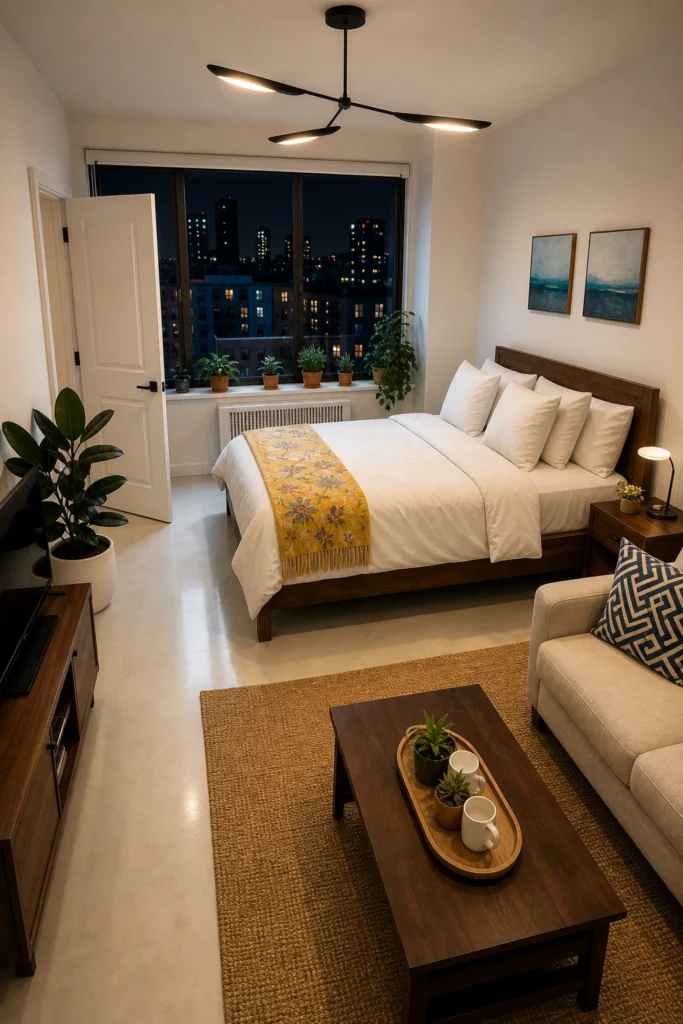
In a studio, your bed is the largest piece of furniture in the room. You can fight that fact or you can make it work for you. Making it the focal point — styling it beautifully, investing in a real headboard or a solid wood frame, layering your bedding intentionally — makes the whole studio feel more composed.
This studio leans into it: a substantial walnut-toned platform frame with crisp white bedding and a patterned runner across the foot. Windowsill plants line the entire ledge, giving a living, breathing backdrop behind the bed. A jute rug grounds the sleeping zone without competing with the bed itself.
You don’t need a matching bedroom suite. You need one great bed frame and well-made bedding. Everything else can be simple.
Budget vs. splurge: Splurge on the bed frame (you see it constantly). Save on throw pillows and seasonal bedding swaps.
12. Create a Warm, Personal Feel With Cream and Caramel Tones
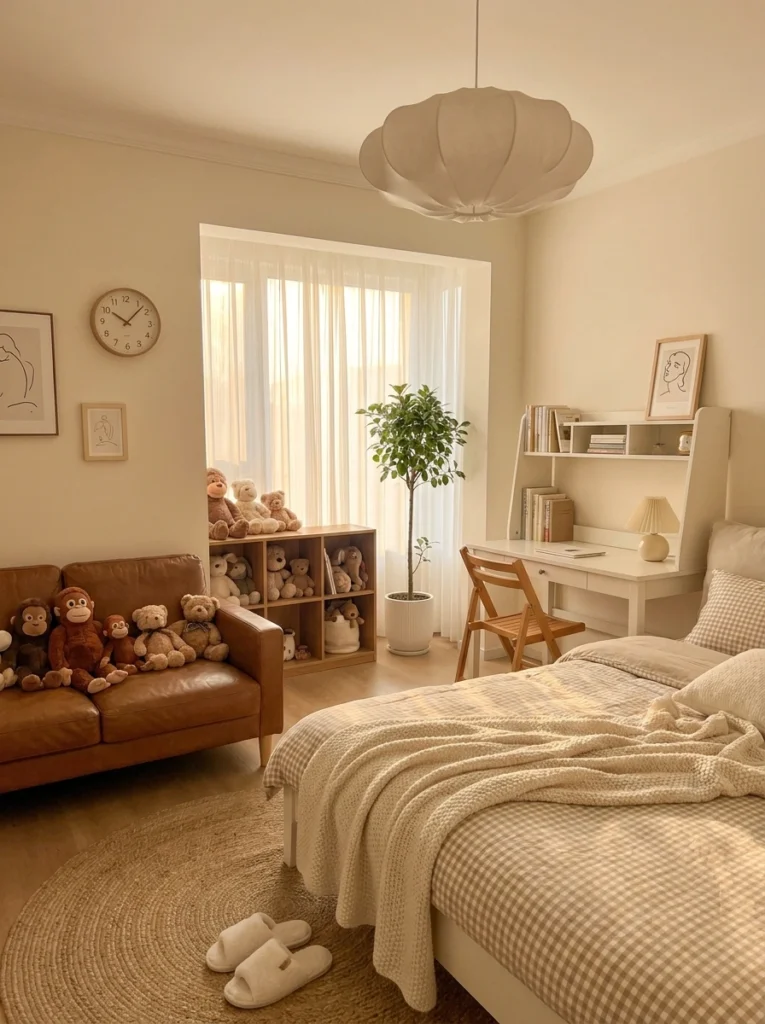
Not every studio needs to be a design exercise in spatial tricks. Sometimes the goal is simply: feel good in here. This space does that with a palette built around cream, caramel, and warm white — a combo that reads as “effortlessly cozy” without trying too hard.
The tan leather loveseat is a brilliant choice for a small studio. It has presence and warmth without the bulk of a larger sofa, and leather wipes clean (a practical bonus most people don’t consider until they’ve ruined a fabric sofa). The gingham bedding in muted grey-brown keeps it grounded, and the sculptural pendant light — that soft petal-shaped shade — adds a moment of personality without dominating the ceiling.
Plants, a small desk, warm lamp on the nightstand. That’s it. Sometimes simple is exactly right.
Pro tip: If you’re going warm and creamy, be consistent about your whites. Mixing warm whites with cool whites in the same room creates a subtle visual tension that’s hard to name but easy to feel. Pick a side.
13. Use Earthy Tones and Natural Materials for a Scandinavian Studio Look
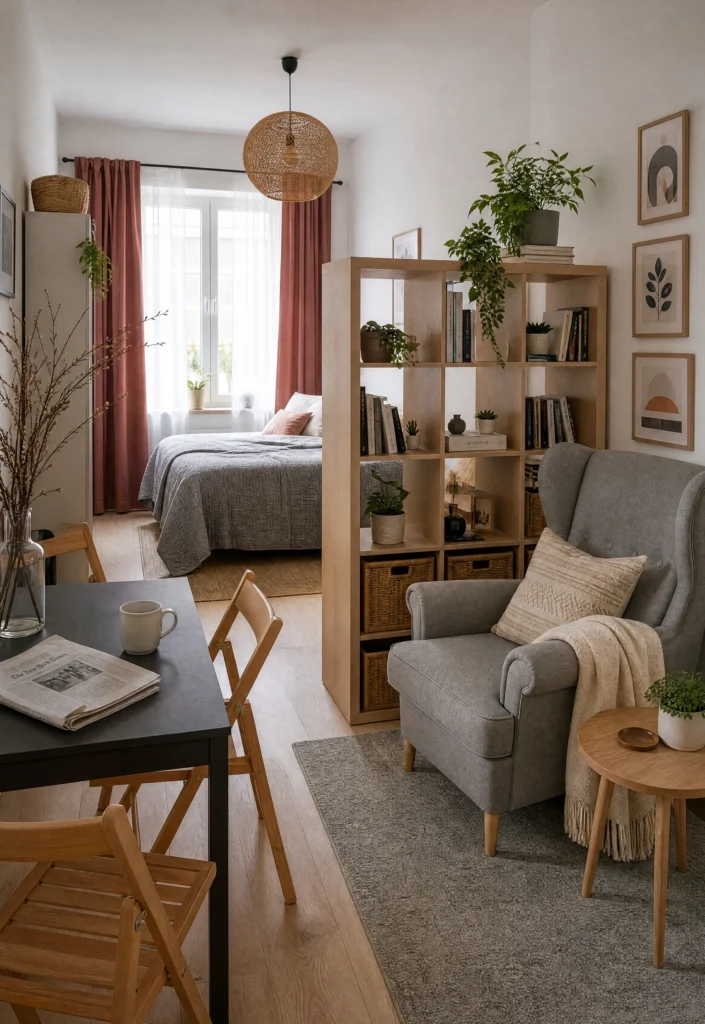
Dusty rose curtains. A natural oak Kallax unit overflowing with trailing plants. A grey wingback armchair with a cream throw. Abstract botanical prints in warm wood frames. This studio looks like it came from a design magazine, and yet every single piece in it is either IKEA or easily findable at a mid-range home goods store.
The secret isn’t the individual pieces — it’s how they work together. Every material is natural: wood, linen, rattan, cotton. Every color is muted and pulled from the same earthy family. There’s no chrome, no glossy surfaces, no cool-toned greys. Just warm neutrals and dusty accents.
The woven pendant light ties the whole thing together. It’s the kind of detail that reads as expensive but costs under $60 at most places. If you’ve been sleeping on rattan or wicker light fixtures, wake up.
My favorite: The oak Kallax as a room divider here is genius. It’s not fully opaque, so it separates the sleeping and living zones while still letting light through and showing off the books and plants inside.
14. Go for Glam — Even in a Tiny Space
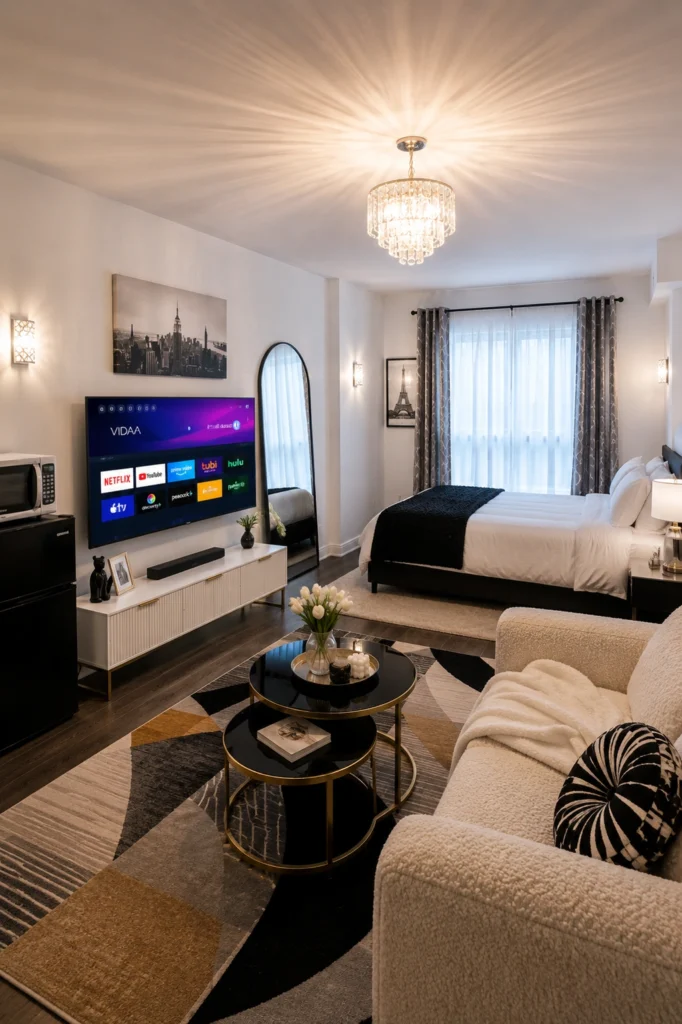
Who says studio apartments can’t be dramatic? This one leans fully into glam — crystal chandelier, gold-rimmed coffee table, cream boucle sofa, large arched mirror, wall sconces — and it works because everything is cohesive. Black, cream, and gold. That’s the whole palette. Nothing else gets in.
The arched mirror next to the TV is a clever move: it bounces light and adds architectural interest without taking up floor space. The chandelier gives the ceiling some drama in a space where ceilings can feel low. And the oversized area rug in a graphic pattern visually anchors the whole living zone without the room feeling chaotic.
Glam studios are high-maintenance. That boucle sofa shows everything. The gold coffee table shows fingerprints. If you have the patience (and the lint roller), the look is stunning. If you don’t, go with something slightly more forgiving — a bouclé in a slightly warmer off-white hides more than pure white does.
15. Make Lighting Do the Heavy Lifting at Night
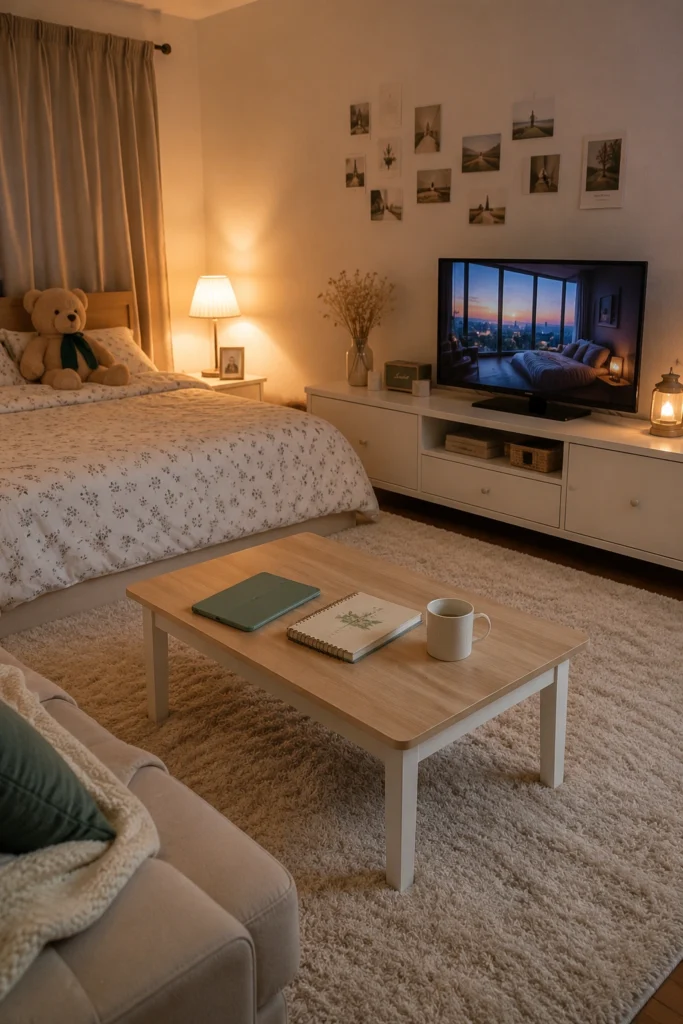
This is the part most people skip — and that’s exactly why their studio feels off at night. Overhead lighting is the enemy of cozy. One ceiling fixture washing the whole space in the same bright light makes your studio feel like a waiting room, not a home.
Layer your lighting instead. A table lamp beside the bed, a floor lamp near the sofa, maybe a string of warm globe lights along one wall. When you turn off the overhead and switch to lamps, the room drops ten degrees warmer and feels ten times more inviting. It’s not magic. It’s color temperature — the warm amber glow of a 2700K bulb vs. the cool white of most ceiling fixtures.
Renter-friendly alternative: You don’t need to hardwire anything. Plug-in pendant lights, battery-operated sconces, and plug-in floor lamps all do the job and leave no trace when you move.
16. Make Your Bedroom Corner Feel Like a Bedroom
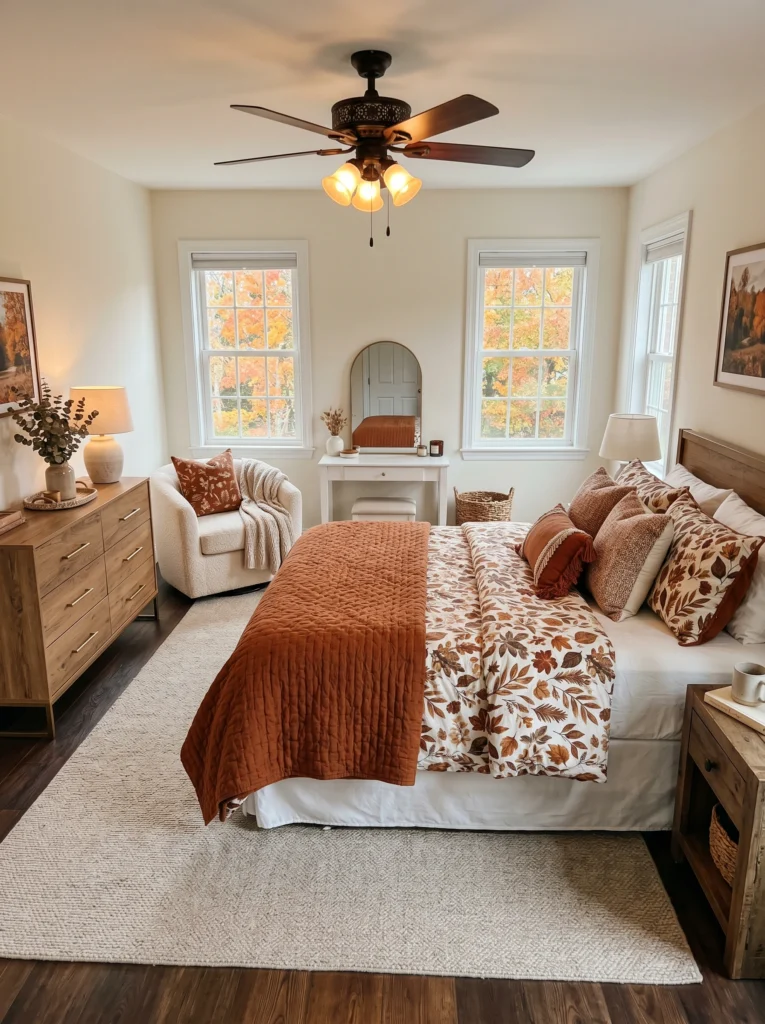
Here’s the thing with studios: the sleeping area often gets the least attention because it feels like a given. Bed goes against the wall, done. But the bedroom corner is actually the most important zone to get right — it’s where you start and end every day.
Layer your bedding like you mean it. A duvet, a quilt or coverlet folded at the foot, a throw draped over one side, and three to four pillows in different textures. Add a rug under the bed that extends far enough to actually feel when you step out in the morning. One good lamp on a nightstand. Maybe a plant if you have a window nearby.
Seasonal swaps are especially satisfying here. Swapping your duvet for a warm-toned quilt and adding rust-colored pillows in autumn costs almost nothing and makes the whole room feel considered.
17. Keep the Bedroom Airy and the Rest Warm
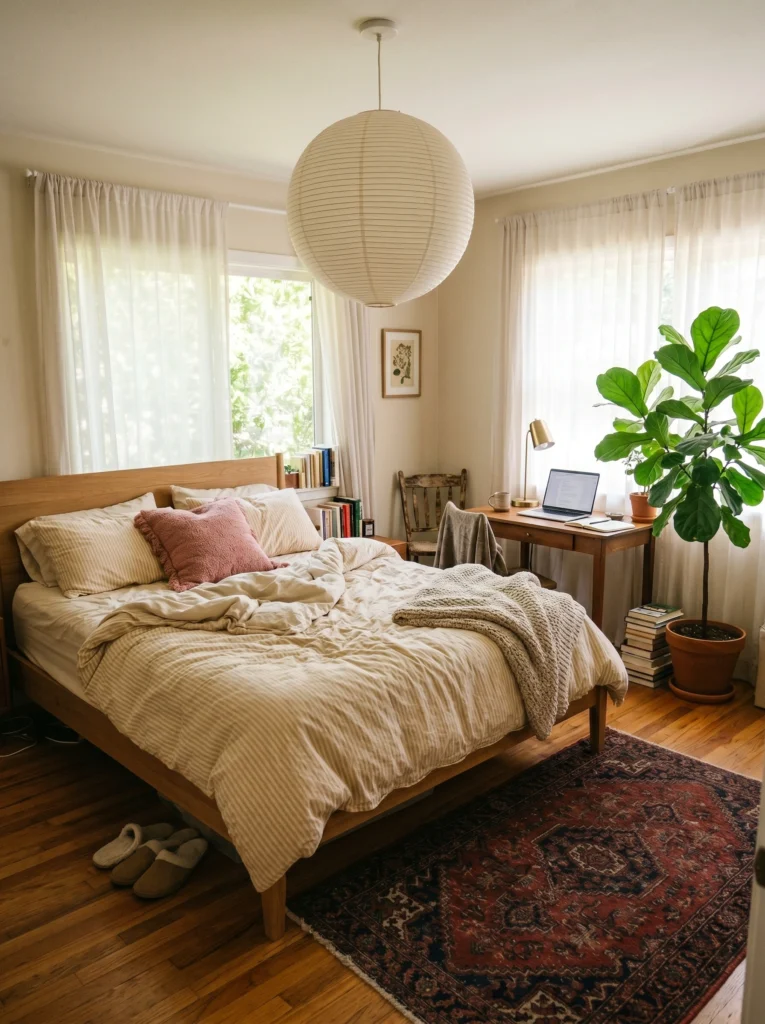
In a studio, the sleeping zone benefits from feeling slightly cooler and calmer than the rest of the space. Light linen bedding in white, cream, or pale stripe. Sheer curtains that actually let natural light in. A paper globe pendant instead of a harsh overhead fixture. A wood bed frame that’s warm-toned but not heavy.
Contrast this with a living area that runs warmer and more textured, and you get zones that feel distinct without needing a wall between them. Your brain registers the difference even if you can’t articulate why — and that feeling of “oh, this is where I sleep” vs. “this is where I live” is what makes a studio feel intentional.
I had a version of this in my old apartment and it genuinely made mornings easier. Stepping into light, airy softness first thing is a small but real luxury.
18. String Lights Are Still Cool (When Used Right)
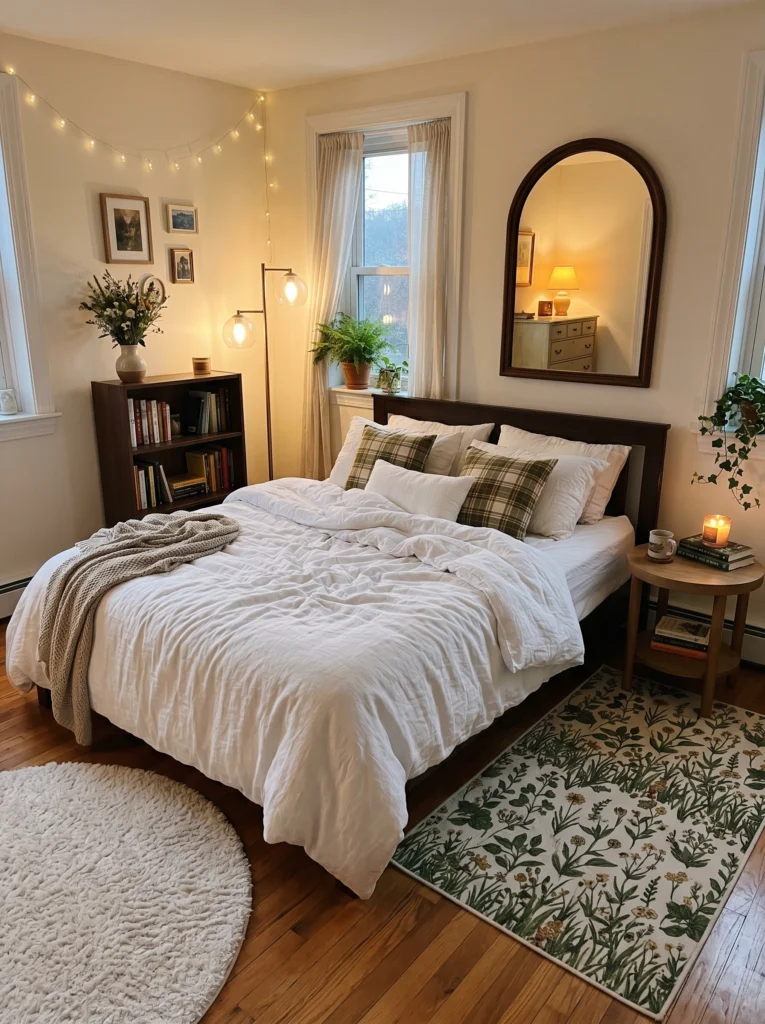
Yes, string lights. I know they’ve been everywhere for ten years. But the reason they keep showing up in the most-saved studio photos is because they actually work — specifically when used as ambient lighting, not decoration.
Draped along the top of a wall rather than cluttered around a mirror or stuffed into a jar, string lights add a warm, low glow that no other budget option replicates. Pair them with a floor lamp and a candle on the nightstand and you have genuinely beautiful lighting for around $20 total.
The version that doesn’t work: multicolored lights, plastic casings, or stringing them randomly everywhere hoping for the best. Go warm white. Use them intentionally. One well-placed strand beats a room full of random twinkle.
19. Let the Room Tell Your Story
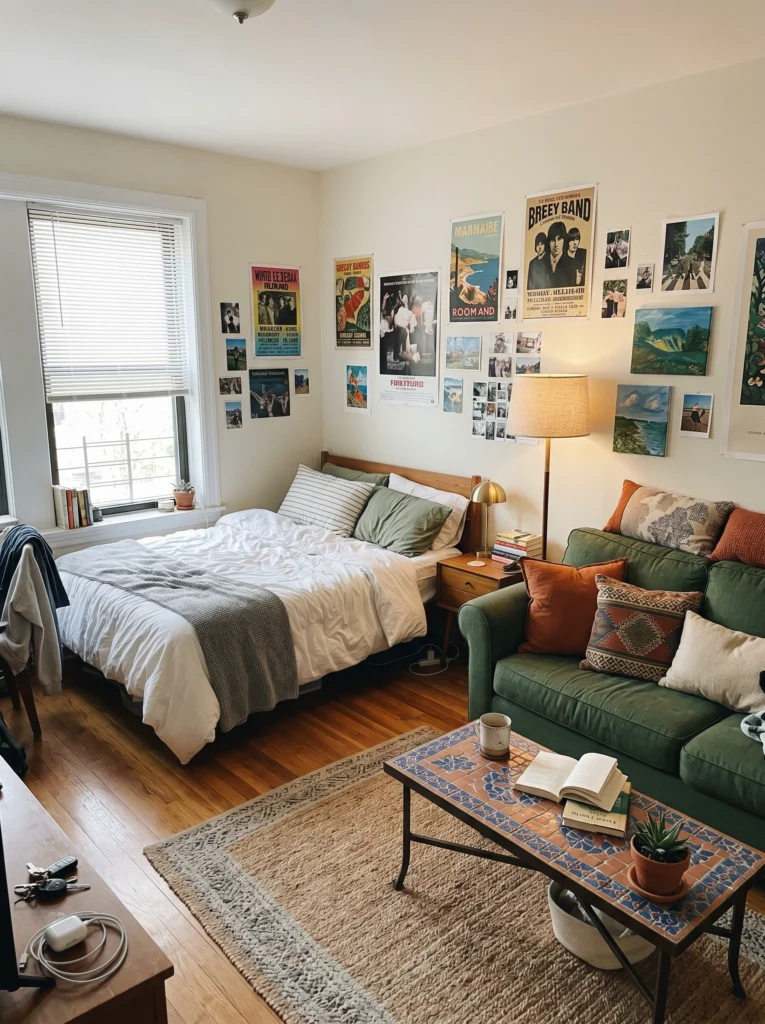
The studios that stop the scroll have one thing in common: they feel like someone actually lives there. Not a model unit. Not a showroom. A real person with a Matisse print they bought at a museum and a tile-topped coffee table they found at a flea market and a stack of books they’re actually reading.
Posters, photos pinned to the wall, a souvenir piece of furniture, a mug on the table — this is the stuff that makes a home feel like yours. And it costs nothing to add. The instinct to keep everything “clean” and matching is understandable, but it’s also what makes spaces feel generic and forgettable.
20 Industrial Moody Studio
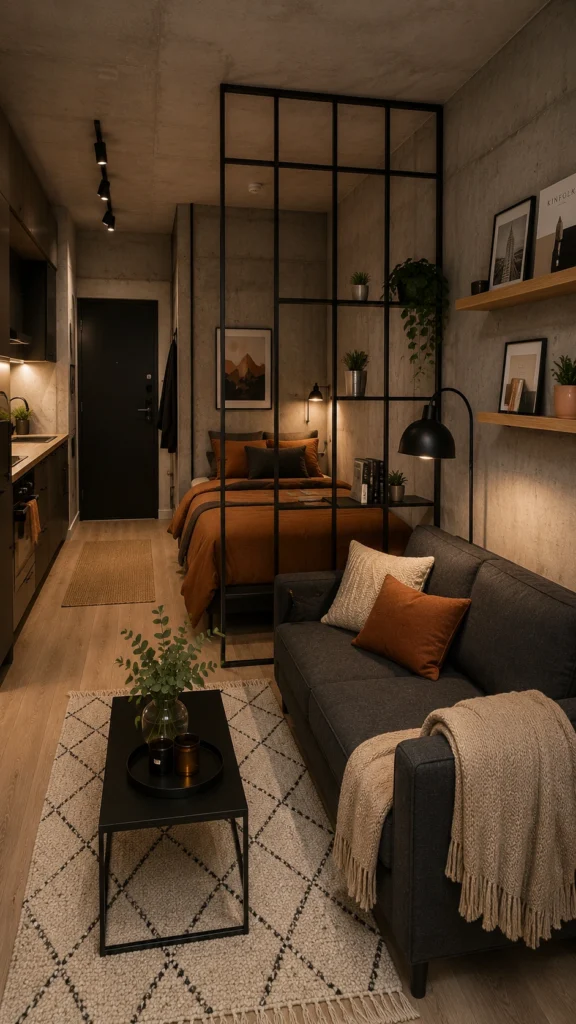
A compact studio apartment blending raw industrial materials with warm, intimate ambiance.
A thoughtfully designed studio that uses a black steel grid partition to divide the sleeping and living zones without sacrificing openness. Warm amber and burnt-rust tones create a cozy, moody atmosphere against raw concrete walls — a perfect balance of edge and comfort.
21. Use Layered Lighting to Create Zones
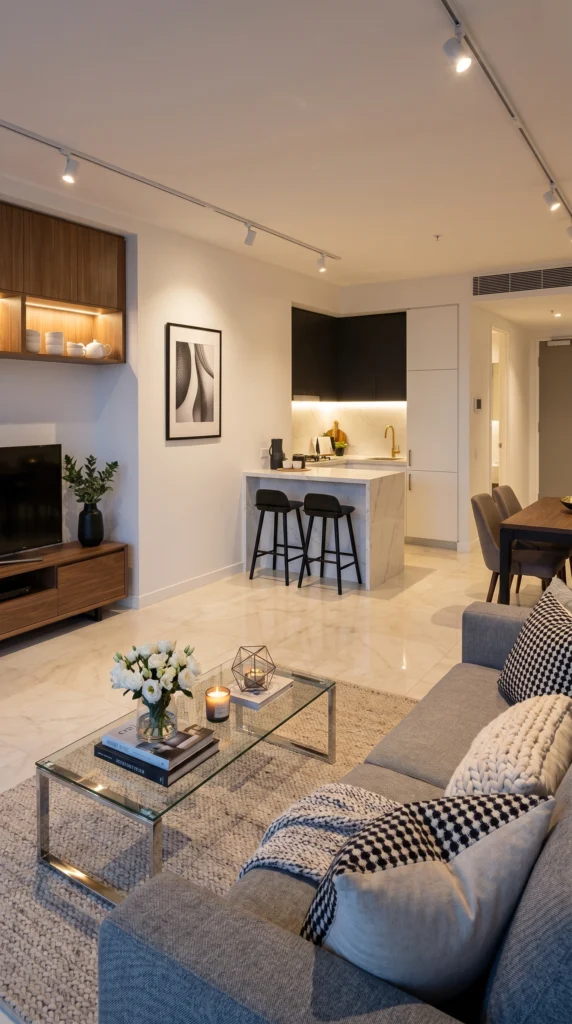
Here’s the thing about overhead lighting in studios: it flattens everything. One ceiling fixture trying to do all the work makes a small space feel like a waiting room. The fix is layered lighting — combining ambient light (overhead or track), task light (lamps, under-cabinet strips), and accent light (shelf lighting, LED strips behind furniture) so different areas of the room have their own glow.
Look at how this studio uses warm recessed LEDs under the kitchen island, warm-toned pendant lights above it, and track lighting on the ceiling for directional control. The living zone gets its own softer warmth from a floor lamp. The result? One room that reads as several. Each “zone” has its own mood.
Pro tip: Replace any cool-white bulbs (above 4000K) with warm whites (2700K–3000K). That single swap makes a studio feel instantly cozier and more intentional.
Final Thoughts
Studio apartments are a real design challenge — but they’re also an invitation to be intentional. Every piece has to earn its place. Every zone has to work harder. And somehow, that constraint produces the most characterful homes I’ve ever seen.
Pick one of these ideas. Just one. Move the shelf. Add a lamp. Layer a rug. See how it feels. You’ll know pretty quickly if it’s right — and if it is, the next thing will follow naturally.
A studio isn’t a compromise. It’s a small home that’s entirely yours — and that’s actually a beautiful thing to work with.