13 Modern Studio Apartment Designs For Small Spaces
If you’re looking for a little spark to finally tackle that room makeover you’ve been putting off, you’re in the right place. Designing a space that actually feels like you doesn’t have to be complicated. Sometimes, it’s just about finding the right layout, adding a pop of color, or bringing in some cozy textures. Grab a cup of coffee, and let’s walk through some gorgeous setups that blend comfort, style, and everyday functionality.
1. Line Everything Along One Long Wall
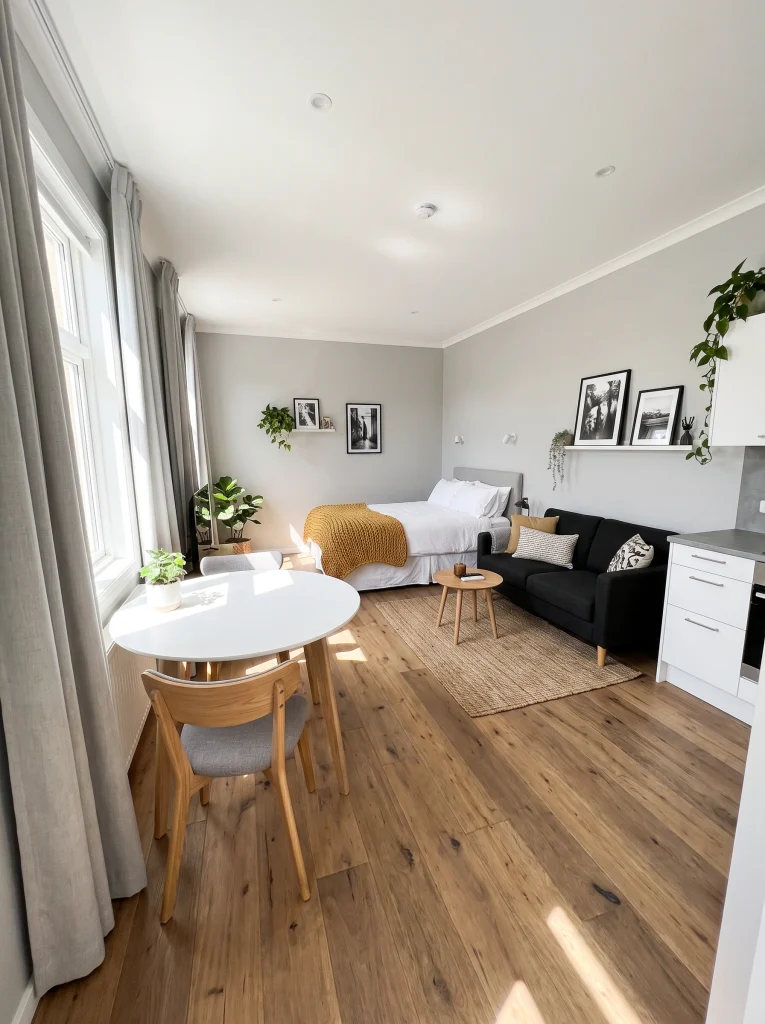
When your studio is long and narrow, stop fighting it. Run your zones down one side in sequence: dining table by the window, bed in the middle, sofa near the kitchen. It keeps the floor open and the walkway clear, so the room reads as intentional instead of crammed. A jute rug under the sofa quietly marks where the living zone begins.
Pro tip: Keep your rug tones warm and natural so the separate zones still feel like one cohesive space.
2. Use a Bookshelf as a Room Divider
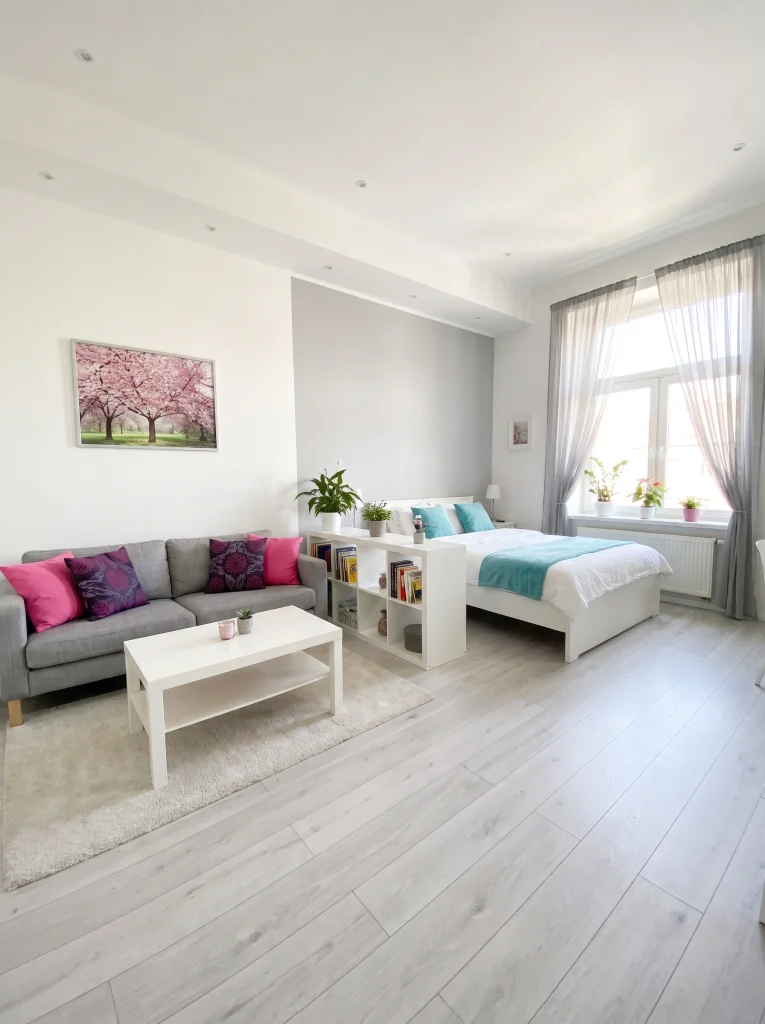
A cube shelf is the renter’s best friend. Placed between the bed and sofa, it splits the room into “sleep” and “lounge” without blocking a drop of light. You get storage on both sides and a low, psychological wall that makes the bed feel tucked into its own space. Fill it with books, baskets, and a plant or two so both sides look styled, not like the back of a bookcase.
Renter-friendly alternative: No drilling, no permanence — just slide an open shelving unit into place and move it whenever you like.
3. Add a Slatted Wood Partition
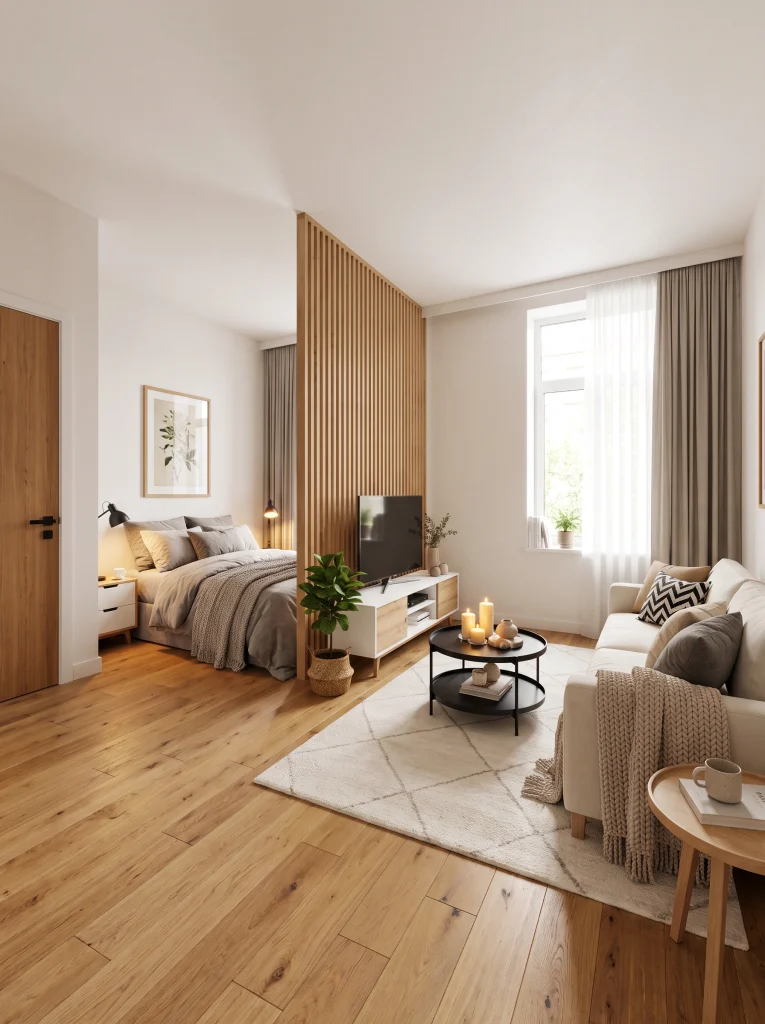
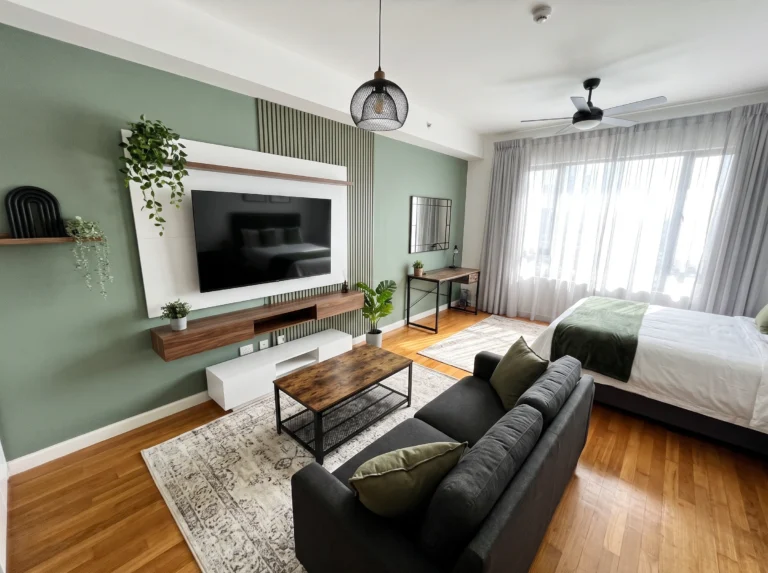
Slatted wood partitions are having a real moment, and for good reason. This one screens the bed from the living area while still letting light pass through the gaps, so nothing feels boxed in or dark. Mount a TV on the living-room side and you’ve got a double-duty divider that earns its footprint. The warm oak tone keeps the whole space feeling soft, natural, and grounded rather than chopped in half.
Sofia’s honest take: This is the upgrade that makes a studio finally feel like a proper apartment. Worth every penny.
4. Treat It Like a Hotel Suite
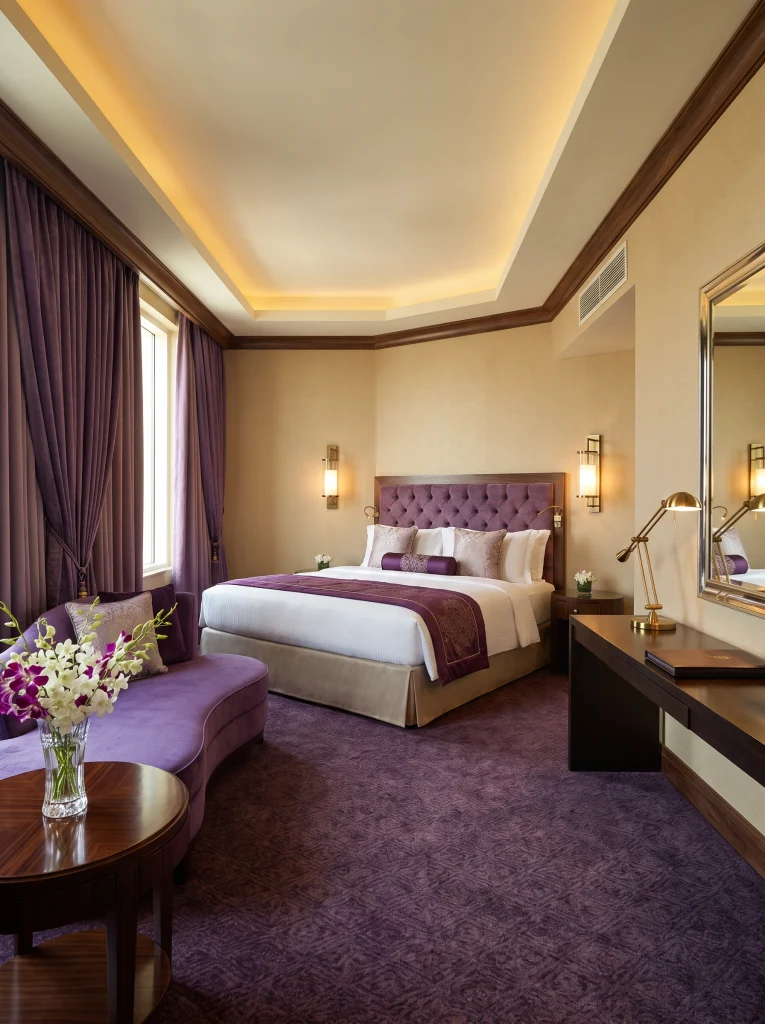
Who says a studio can’t feel luxurious? Borrow the hotel-suite playbook: a statement tufted headboard, a chaise or small settee at the foot of the bed, and warm layered lighting from sconces and lamps. That seating area gives you somewhere to land that isn’t the mattress, which instantly makes the room feel bigger. Cove lighting overhead wraps the whole space in a golden, restful glow at night.
Budget vs. splurge: Save on the lamps, splurge on the headboard — it’s the piece that sets the entire mood.
5. Anchor the Bed With an Accent Wall
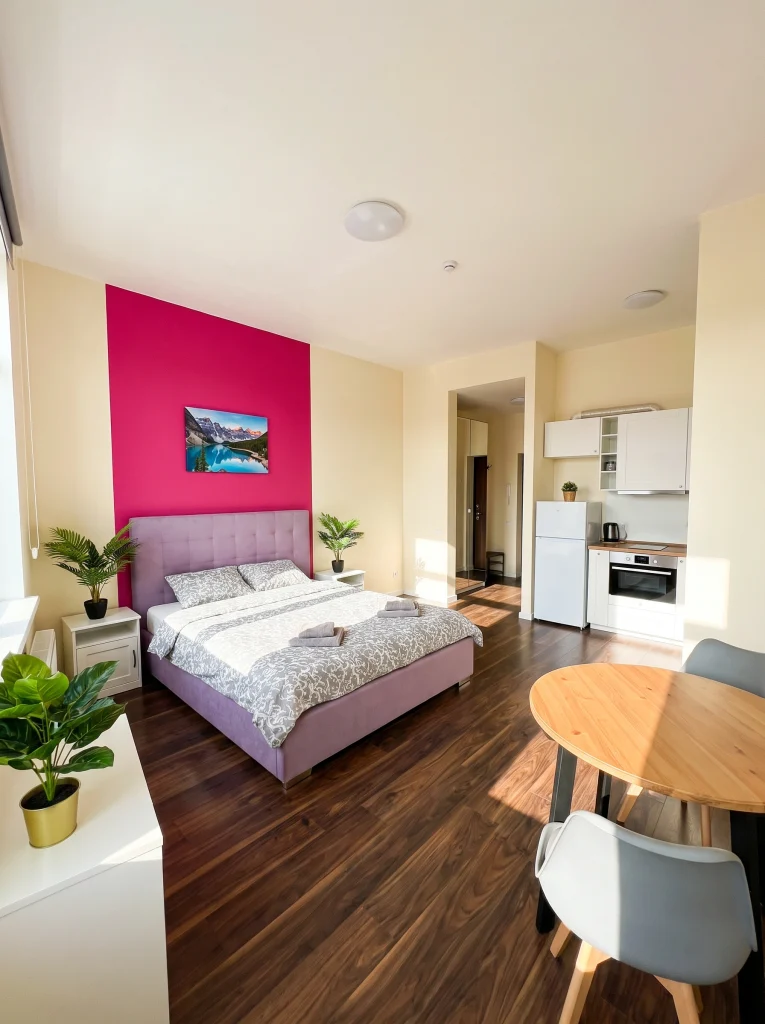
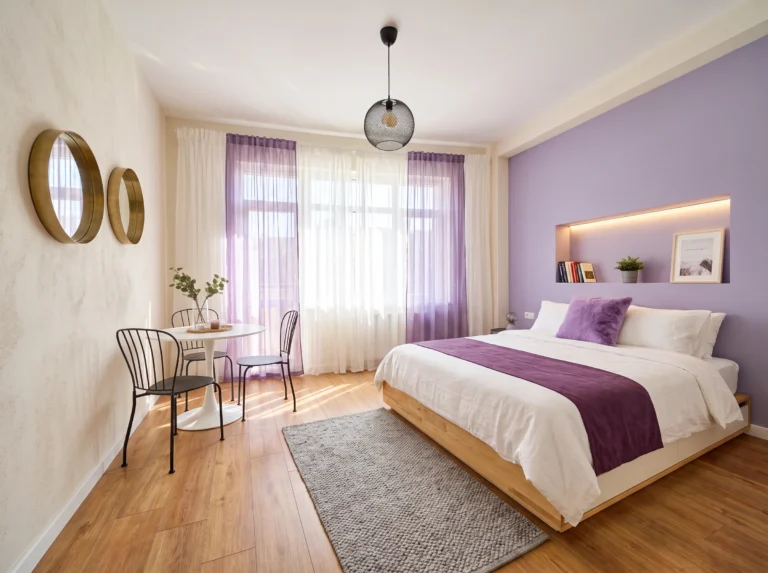
Give your bed a job: make it the focal point. A single painted accent wall behind the headboard instantly defines the sleeping zone, so the bed looks placed on purpose rather than parked wherever it fit. Flank it with matching nightstands and a couple of plants for symmetry. Then keep the kitchen and dining side neutral so the color has room to breathe.
My favorite: One bold wall does more for a studio than a whole gallery of small art.
6. Build a Real Living Room Up Front
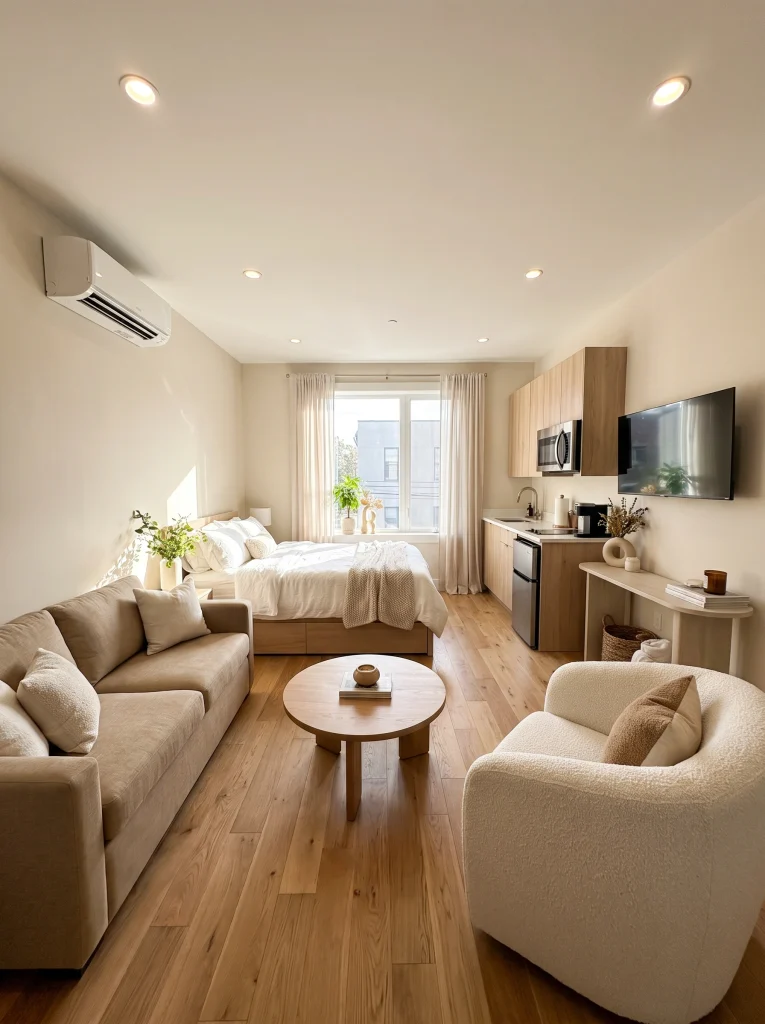
Push the bed to the far wall under the window and give the front of the room to a proper lounge. Two sofas around a coffee table create a real conversation area — the kind that makes guests forget they’re standing in your bedroom. The bed becomes a quiet backdrop instead of the star. Warm woods and creamy textiles tie both zones together.
My tip: A round coffee table keeps traffic flowing in a tight footprint — no sharp corners to dodge.
7. Float the Sofa to Zone the Room
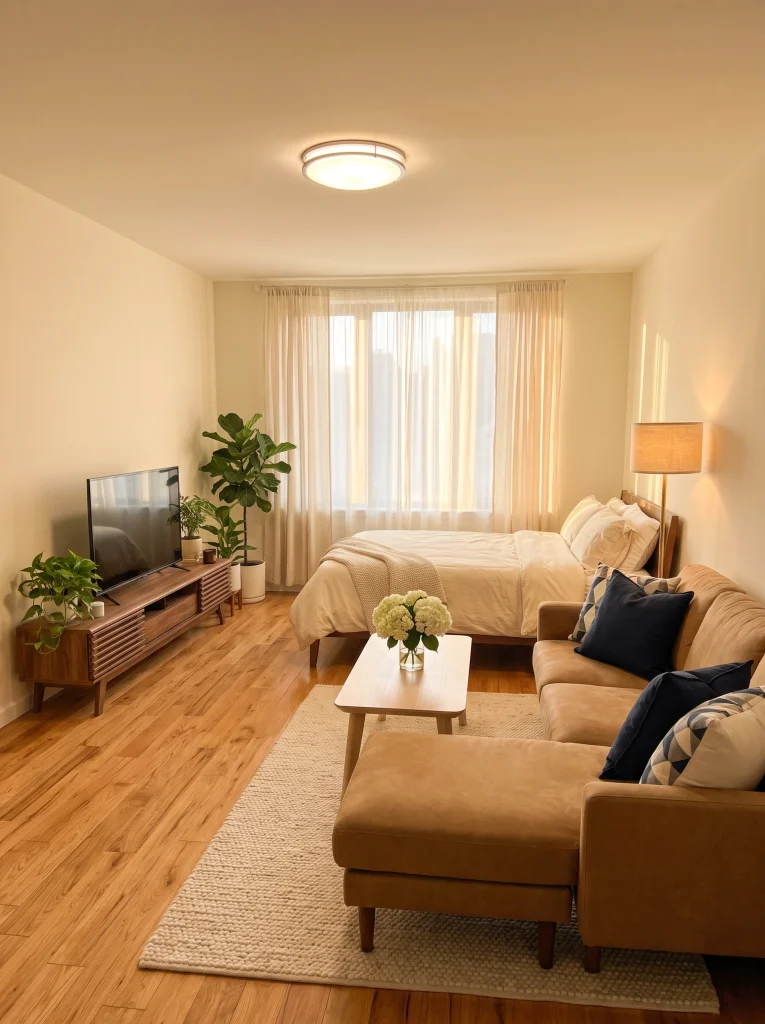
Your sofa doesn’t have to hug a wall. Float a sectional in the middle of the room with its back to the bed, and you’ve drawn an invisible line between living and sleeping. The TV console anchors the lounge zone, while a floor lamp by the bed creates a separate pool of light for winding down. It’s simple, and it completely changes the flow.
I’ve tested this: Floating furniture feels wrong until you try it — then you never go back.
8. Put the Sofa Back-to-Back With the Bed
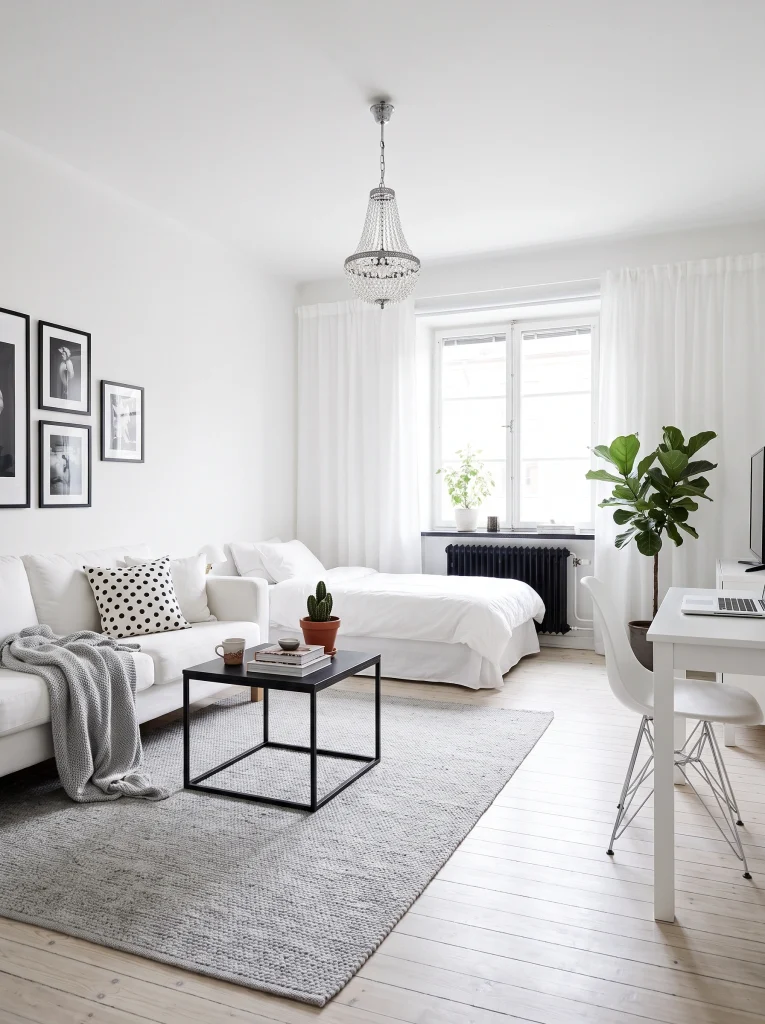
Short on room? Line the sofa up directly behind the bed so the backrest becomes the divider. It’s the most space-efficient trick in the book — zero wasted floor, two clear zones. Tuck a slim desk into the corner for a work-from-home nook, and keep the palette bright white so everything feels open. A gallery wall adds personality without eating an inch.
Don’t waste your money on: Bulky partitions here — your own furniture is already doing the work.
9. City Studio
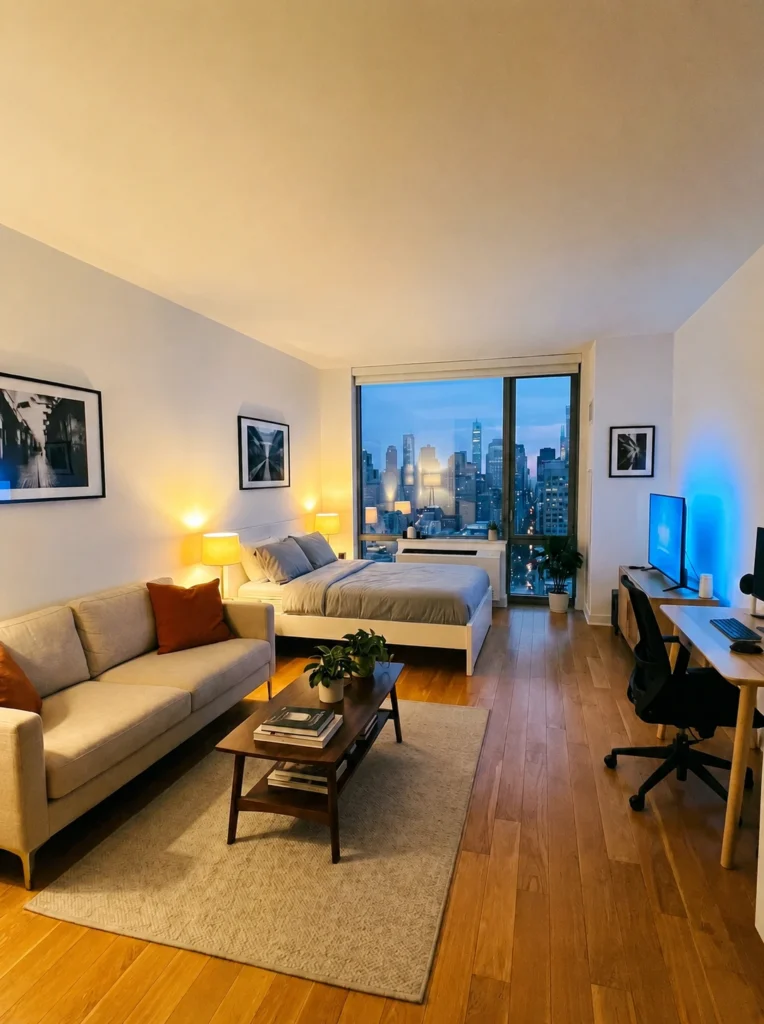
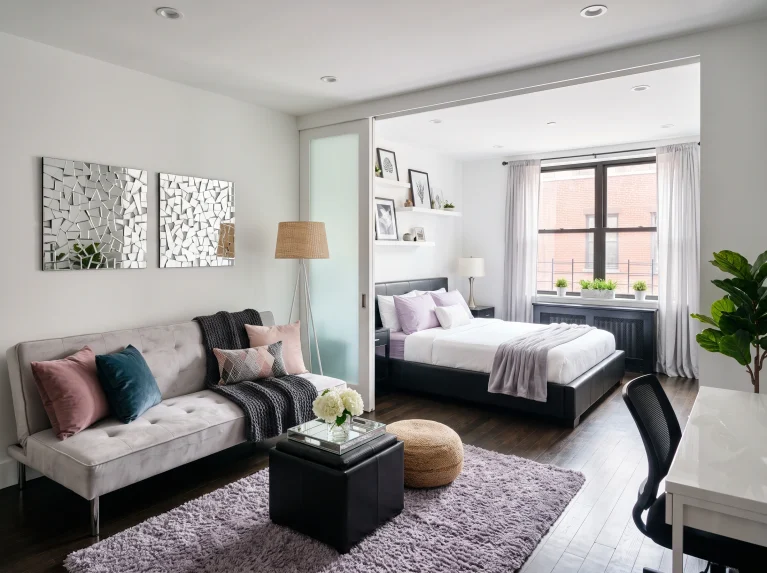
Maximize your studio apartment by creating distinct zones. Place a sleek, light grey sofa facing the center to separate your lounging area from your sleep space. Opt for a dark wood, mid-century coffee table to anchor the room. Set up a minimalist wooden desk against the wall, adding a blue LED backlight to your monitor for a cool, modern contrast against your warm table lamps. Let that stunning city skyline do the talking by keeping your window treatments completely minimal.
10. Pattern Play
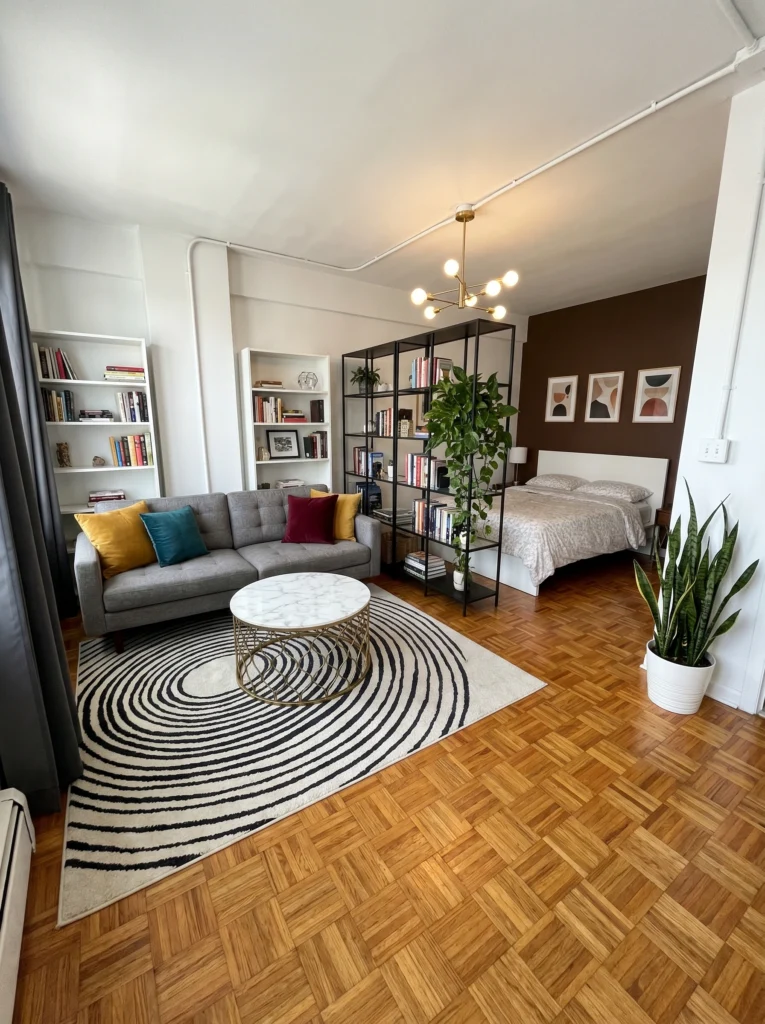
Define your main living area instantly with a bold, black-and-white swirl patterned rug. Place a comfortable, mid-grey sofa right in the center, and dress it up with vibrant mustard yellow and teal throw pillows. Use a tall, open-backed black metal shelving unit to cleverly divide the bedroom from the living space without blocking the light. Fill the shelves with lush potted plants and a curated library of books. Opt for a round, marble-topped coffee table to add a touch of elegance that breaks up the geometric lines perfectly.
11. Industrial Edge
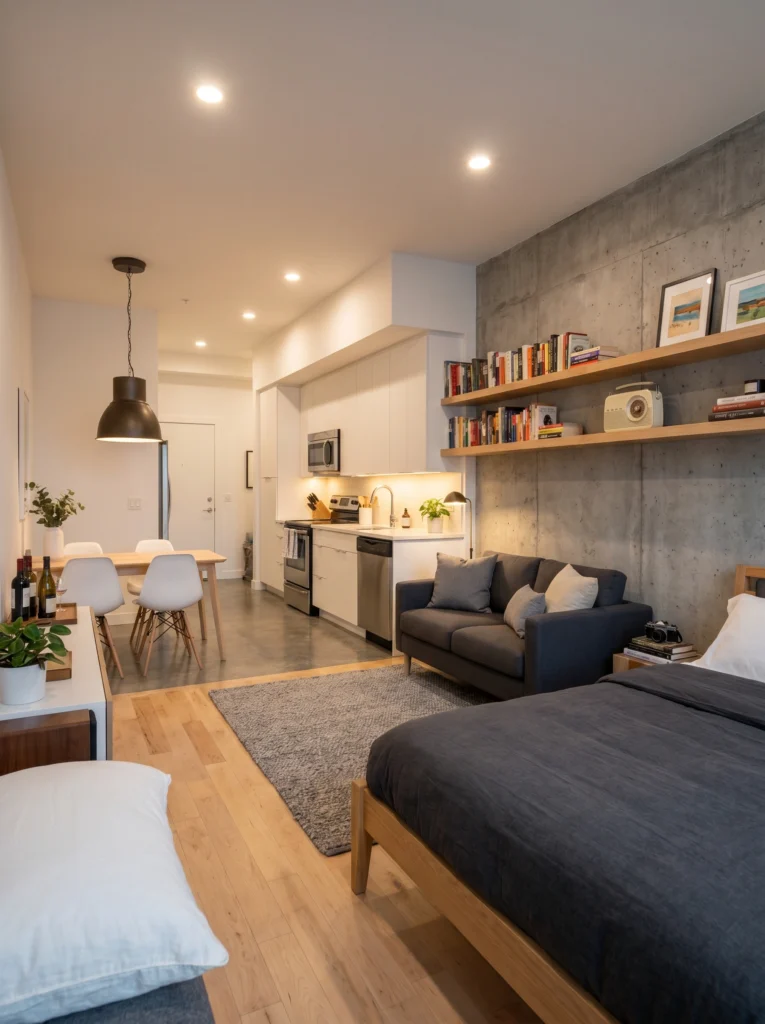
Embrace raw textures by letting a concrete accent wall take center stage. Install long, light-wood floating shelves above your seating area to show off your favorite books and framed art. Choose a tailored, charcoal grey loveseat to anchor the living zone comfortably. Opt for a sleek, minimalist wooden bed frame dressed in simple, dark linens to match the moody industrial vibe. Hang a bold, matte black pendant light over a small dining table to create a dedicated eating spot that seamlessly bridges the kitchen and living space.
12. Glossy Minimal
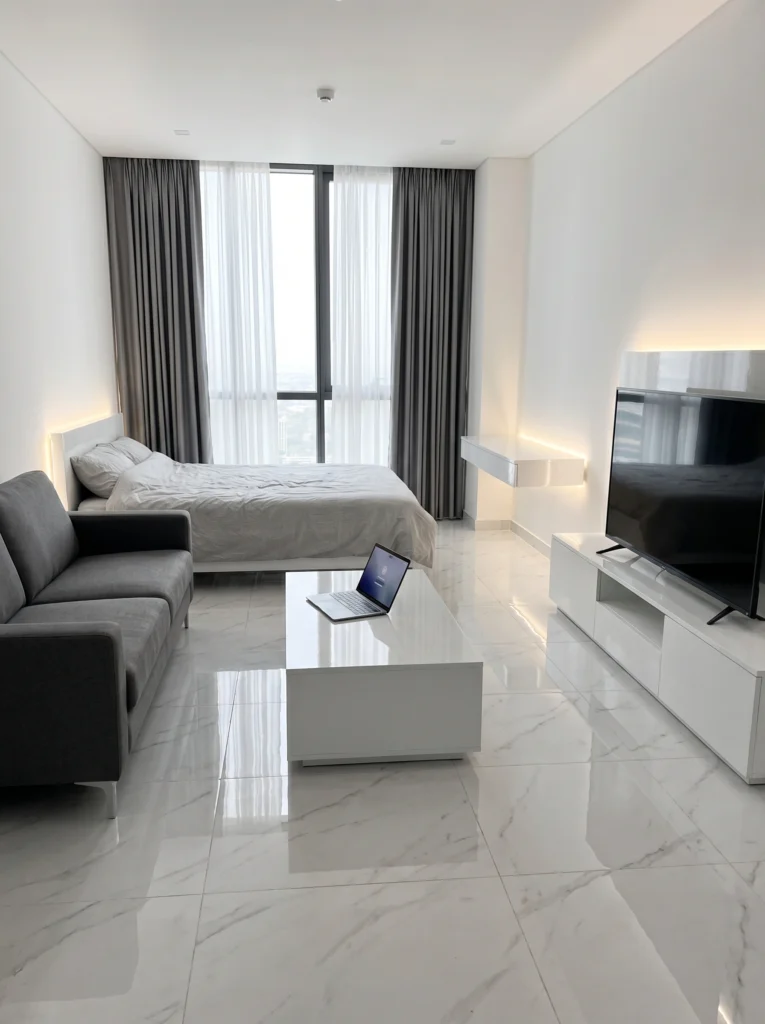
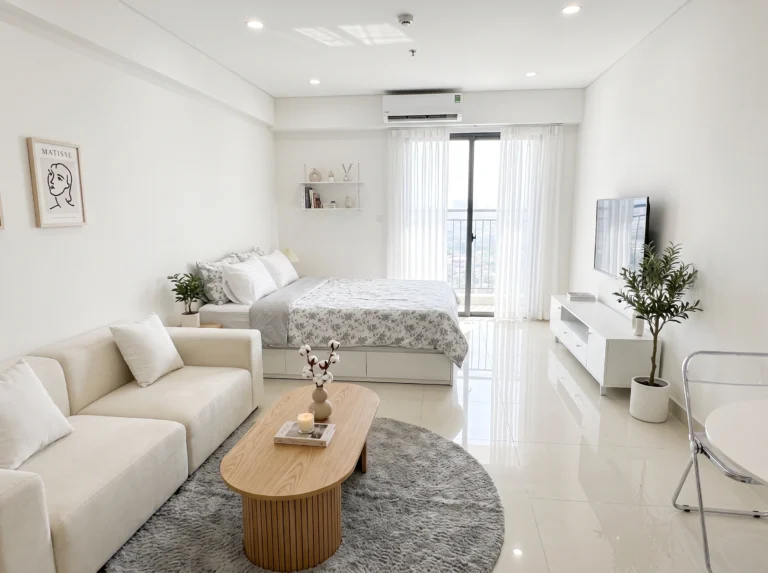
Create an ultra-modern, airy sanctuary by embracing high-gloss white marble tile floors. Position a clean-lined, dark grey sofa facing a sleek, low-profile white TV console for a perfectly balanced lounge area. Use heavy, charcoal grey floor-to-ceiling curtains to frame your large windows, adding dramatic height to the room. Opt for a simple white coffee table right in the center to rest your laptop or a cup of tea. Keep the color palette strictly monochromatic to ensure the space feels incredibly calm, uncluttered, and sophisticated.
13. Bright Divider
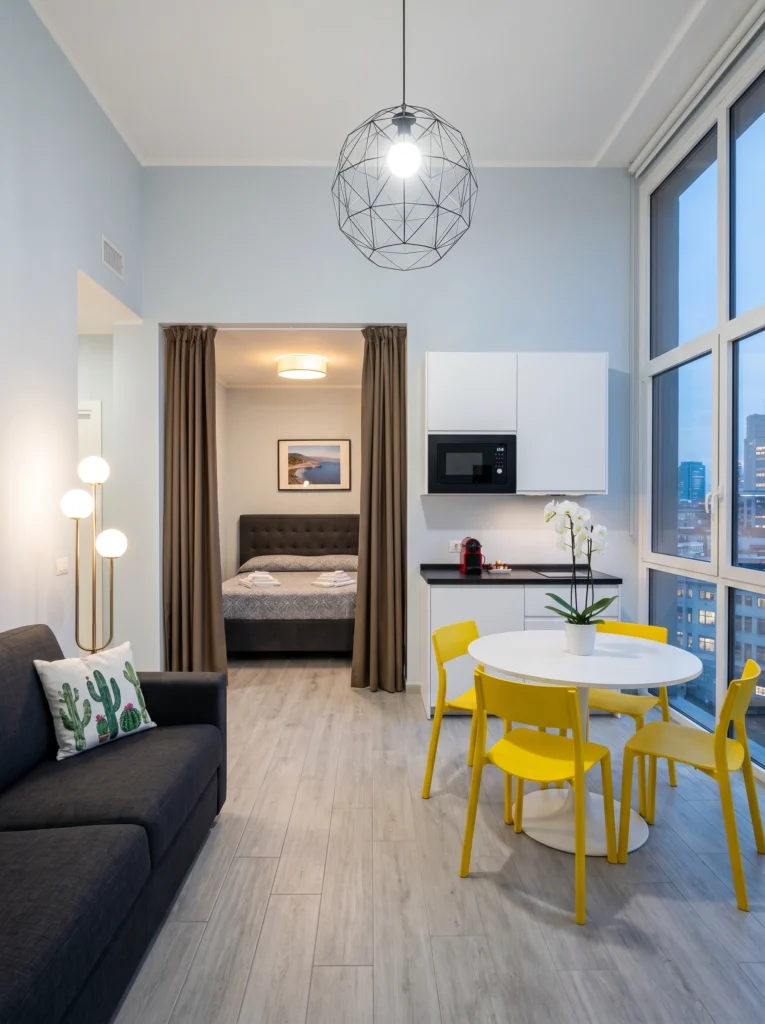
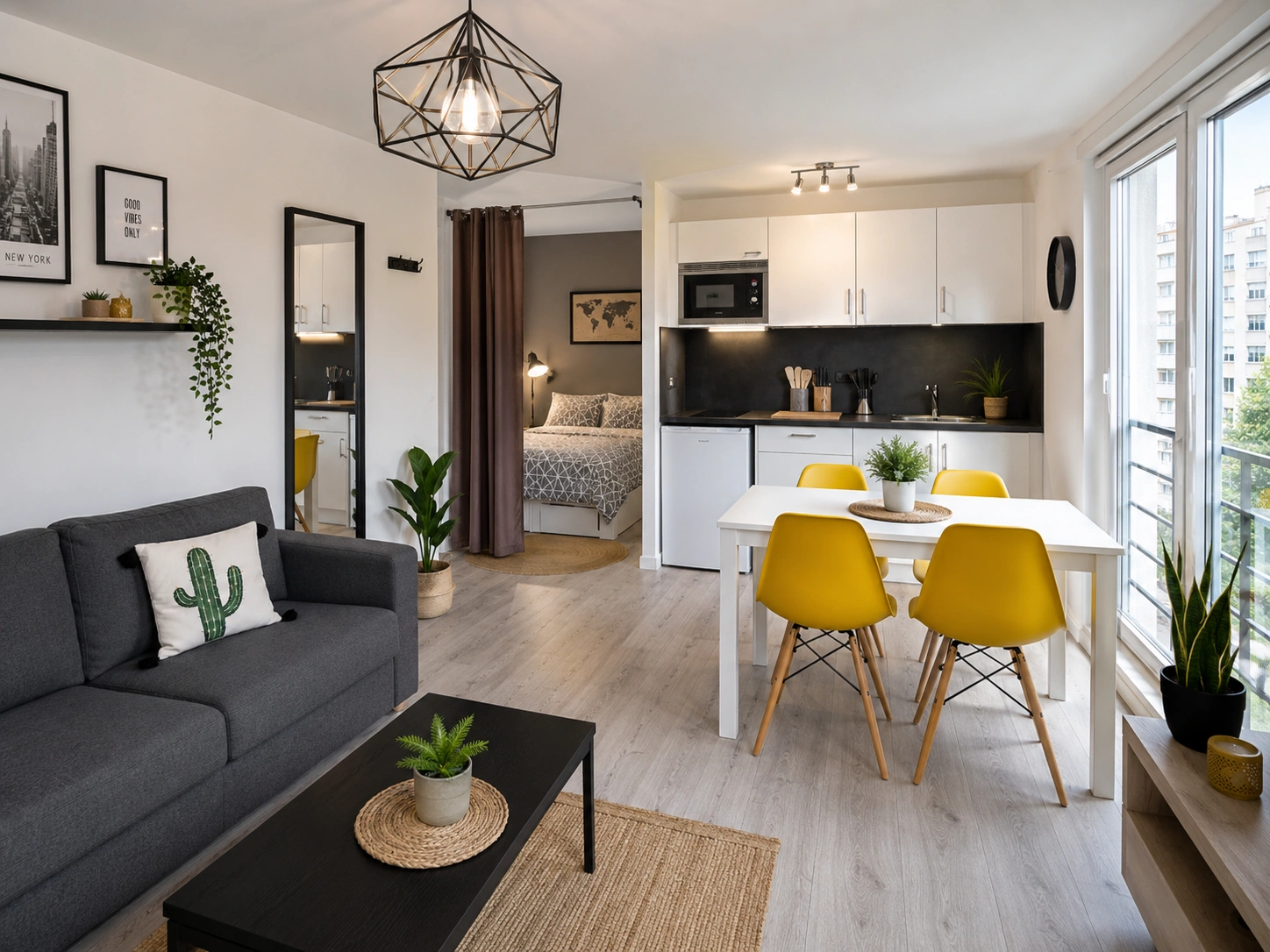
Section off your sleeping alcove by installing thick, chocolate-brown curtains for instant privacy. Place a crisp white dining table right by the kitchen, and surround it with vibrant yellow chairs to inject a cheerful pop of color. Opt for a compact, dark grey loveseat in the main living area, and toss on a fun cactus-print pillow to keep things lighthearted. Use a modern, wire-caged pendant light overhead to add a touch of geometric flair without cluttering the visual space. Keep the flooring light to ensure the whole room feels open and airy.
Conclusion
Whether you are working with a compact studio layout or a spacious living room, creating a home you love comes down to intentional choices. By mixing warm textures, strategic lighting, and pieces that showcase your personality, you can transform any blank canvas into a beautifully curated sanctuary. Remember to have fun with the process, trust your eye, and let your space evolve with you over time.
Frequently Asked Questions
How do I make a small room feel larger? Opt for a lighter color palette for your walls and larger furniture pieces to reflect natural light. Use clear materials like glass or acrylic for coffee tables, and rely heavily on mirrors to create the illusion of depth. Drawing the eye upward with floor-to-ceiling curtains also makes ceilings feel much higher.
What is the best way to mix interior design styles? Stick to a cohesive color palette to tie different styles together seamlessly. Follow the 80/20 rule: let one style dominate 80% of the room (like modern minimalism) and use the remaining 20% for accent pieces from another style (like vintage or bohemian decor).
How important is lighting in interior design? Lighting is everything! Avoid relying solely on overhead fixtures. Instead, layer your lighting by combining task lighting (like desk or reading lamps), ambient lighting (like soft floor lamps or wall sconces), and accent lighting (like candles or picture lights) to create a warm, inviting atmosphere.