19 Small Studio Apartment Decor Ideas on a Budget: Creative Ideas to Try!
Small apartments have a way of making you feel like good design is reserved for people with more square footage and a bigger bank account. It’s not. I’ve decorated tiny places on tight budgets more times than I can count, and I can tell you honestly — some of the most beautiful, functional, personality-packed homes I’ve ever seen were under 500 square feet. The secret isn’t space or money. It’s knowing which moves actually matter.
Here are 19 ideas that work in small apartments, for real budgets.
1. Use a Bookshelf as a Room Divider
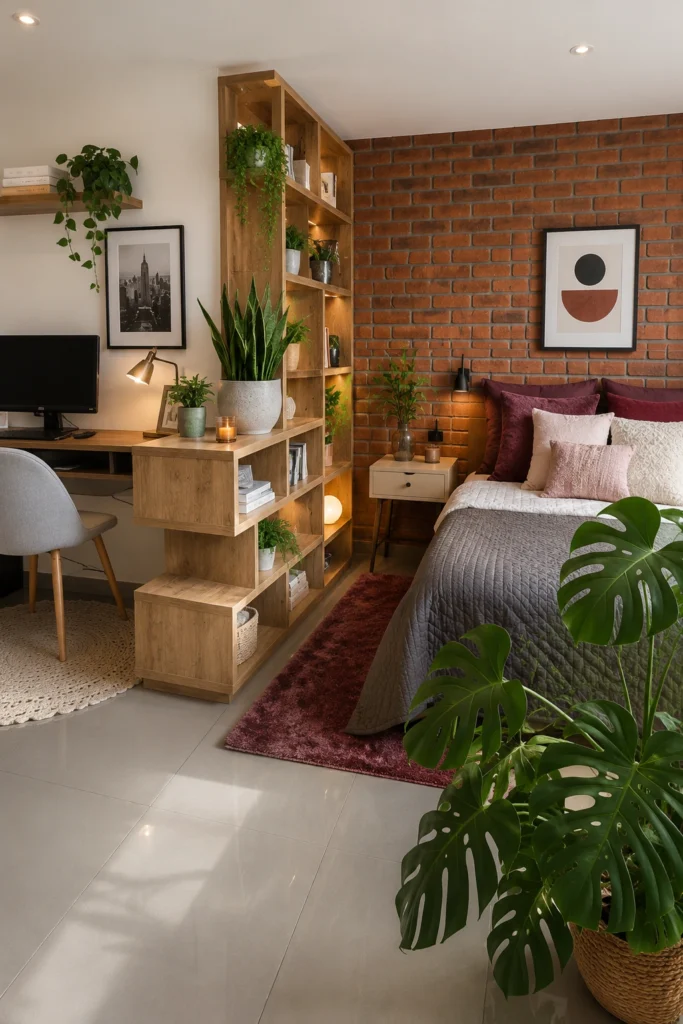
This is one of my favorite small apartment tricks because it solves two problems at once: it creates visual separation between zones without closing off the space, and it gives you actual storage and display surface. An open-backed bookshelf like the IKEA KALLAX or Billy series works perfectly. Load it with a mix of books, small plants, candles, and baskets, and it becomes a focal feature rather than just a divider.
The key is not to overstuff it. Leave some negative space (empty shelves, or shelves with just one or two objects) so it breathes. A cluttered divider just moves the chaos from one side of the room to the other.
I’ve seen people buy freestanding wardrobes as dividers and instantly regret it — they’re too solid, too dark, and make the space feel like a storage unit. Open shelving is almost always the better call.
2. Don’t Be Afraid of an Industrial or Eclectic Look
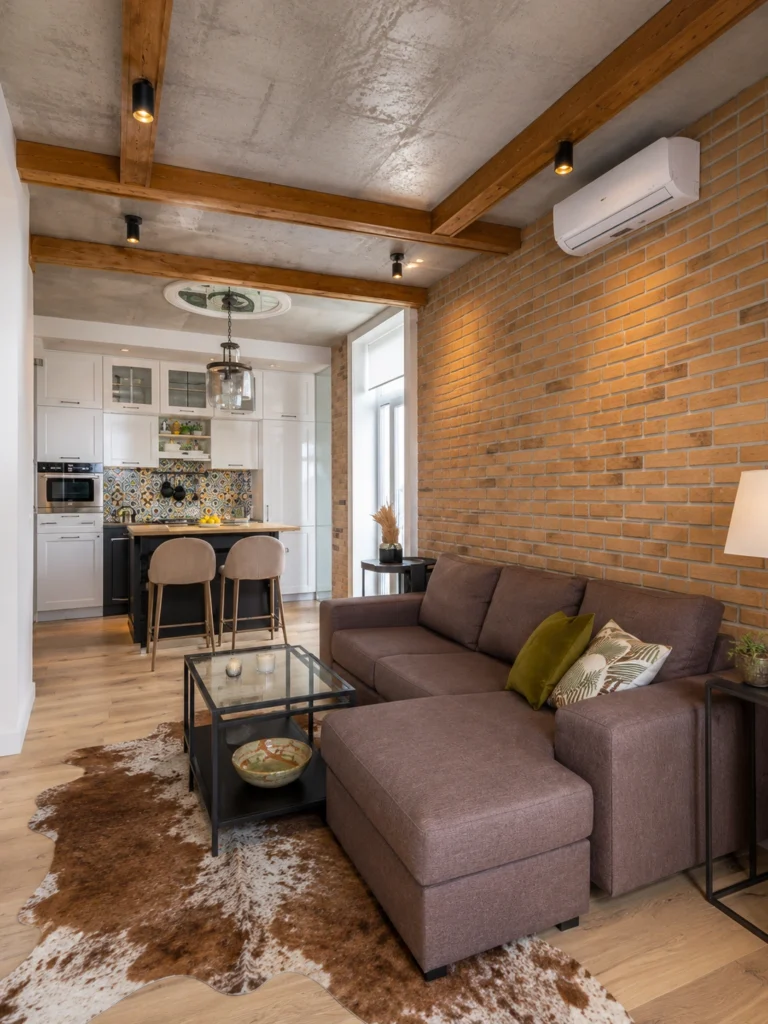
Not every small apartment has smooth walls and good bones. Some have exposed brick, raw ceilings, or architectural quirks that feel difficult to work with. Here’s the thing: lean into it. Exposed brick paired with warm wood tones, a comfortable sectional, and a few well-chosen plants can look incredibly intentional — like an urban loft, not a neglected flat.
Industrial style is also genuinely budget-friendly. Raw materials (concrete, brick, metal) don’t need to be dressed up. A glass-and-steel coffee table, a simple track lighting system, and a cowhide or jute rug will make a character-filled space feel styled without spending a lot.
Pro tip: In an industrial-leaning space, add softness through textiles and plants. Without them, it reads cold. With them, it reads cool.
3. Don’t Skip the Small Side Tables and Functional Details
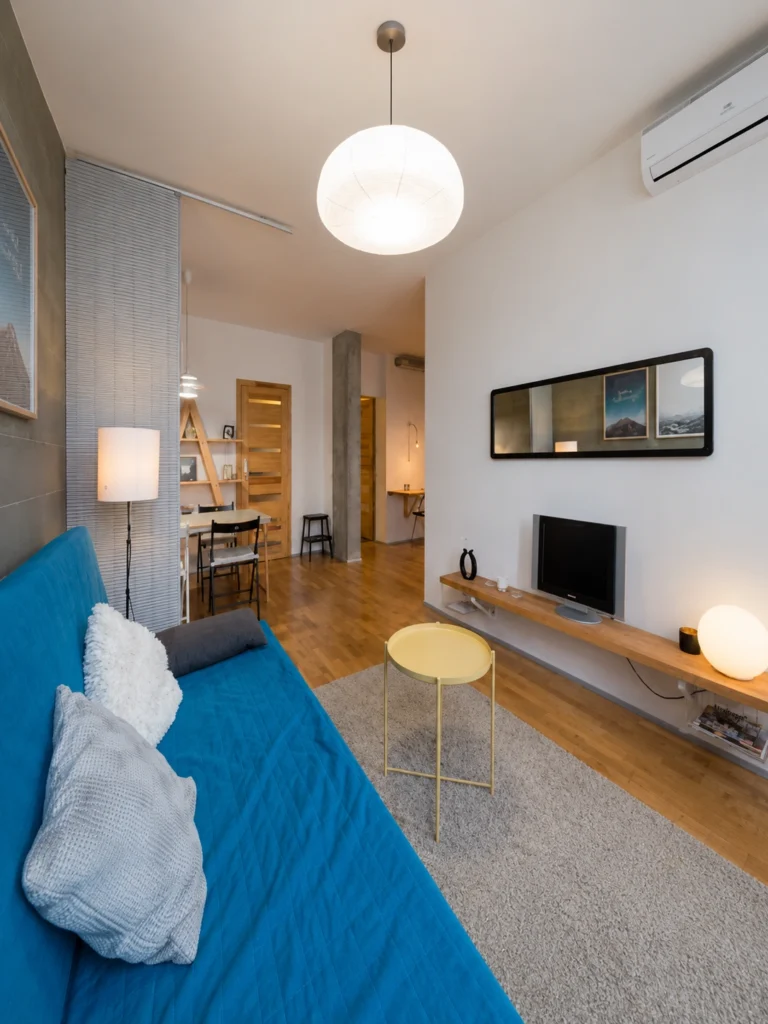
Side tables, tray tables, and small occasional tables do a lot of heavy lifting in a small apartment. They give you a surface to set a lamp, a cup of coffee, a book — and they signal “this room is finished.” Without them, furniture floats and the room feels incomplete.
In small spaces, look for tables with slim profiles and open bases (hairpin legs, thin metal frames, clear acrylic). They take up visual space without taking up physical space. A small $25 tray table from IKEA next to a sofa makes that corner feel like a real sitting area. It’s a small move with a surprisingly big effect.
Budget vs. splurge: Save here. Side tables are one of the easiest things to find second-hand or on the cheap. Spend your money elsewhere.
4. A Carved Room Divider Is Prettier Than Any Curtain
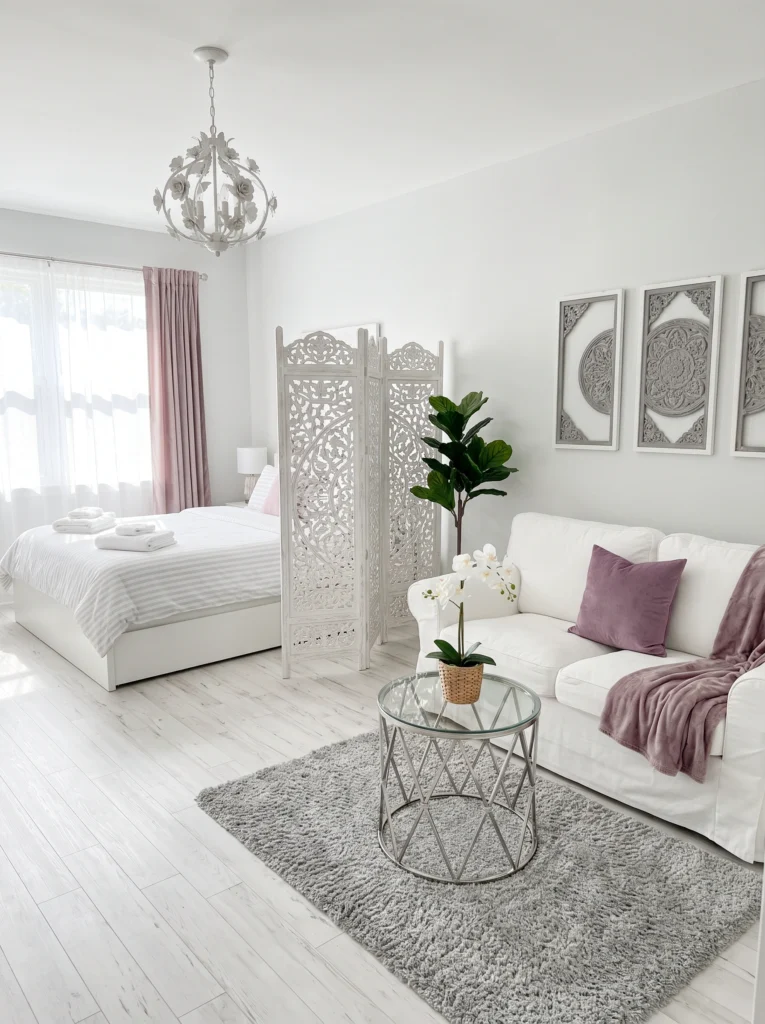
A folding screen does what a curtain can’t — it stands on its own, adds architectural detail, and looks intentional from every angle. This carved white Moroccan-style divider separates the bed from the sofa without closing the room off completely. Light passes through the fretwork, keeping both zones bright. The mauve cushions and grey shag rug add just enough color warmth to stop all-white from feeling clinical. Feminine, elegant, and completely renter-friendly.
Budget vs. splurge: Carved folding screens run $80–$200 online and look far more expensive than they cost. Splurge instead on the chandelier — one good ceiling fixture in a white room does more visual work than any other single piece.
5. Wallpaper an Entire Room for Under $200
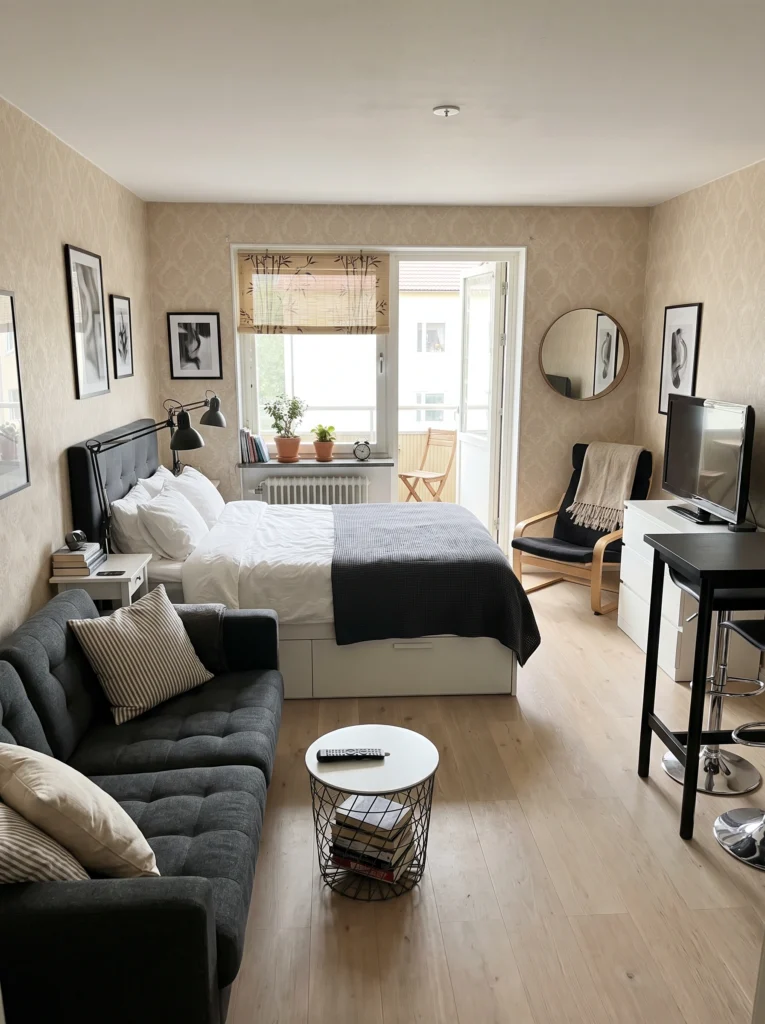
Wallpapering every wall in a small room sounds counterintuitive — but in practice it creates a cocooning effect that makes the space feel curated rather than cramped. This warm cream damask pattern wraps the whole studio in a single continuous texture, making the ceiling feel higher and the walls feel intentional. The dark charcoal sofa and black accessories ground it. A bamboo roman shade and terracotta pots keep it from going too formal. The result feels like a boutique hotel room in the best possible way.
I’ve tested this: Peel-and-stick wallpaper on all four walls of a small studio runs about $150–$220 in materials and one weekend in labor. The transformation is dramatic enough that you’ll never go back to plain white walls.
6. A Bookshelf Divider Is the Most Useful Wall in Your Studio
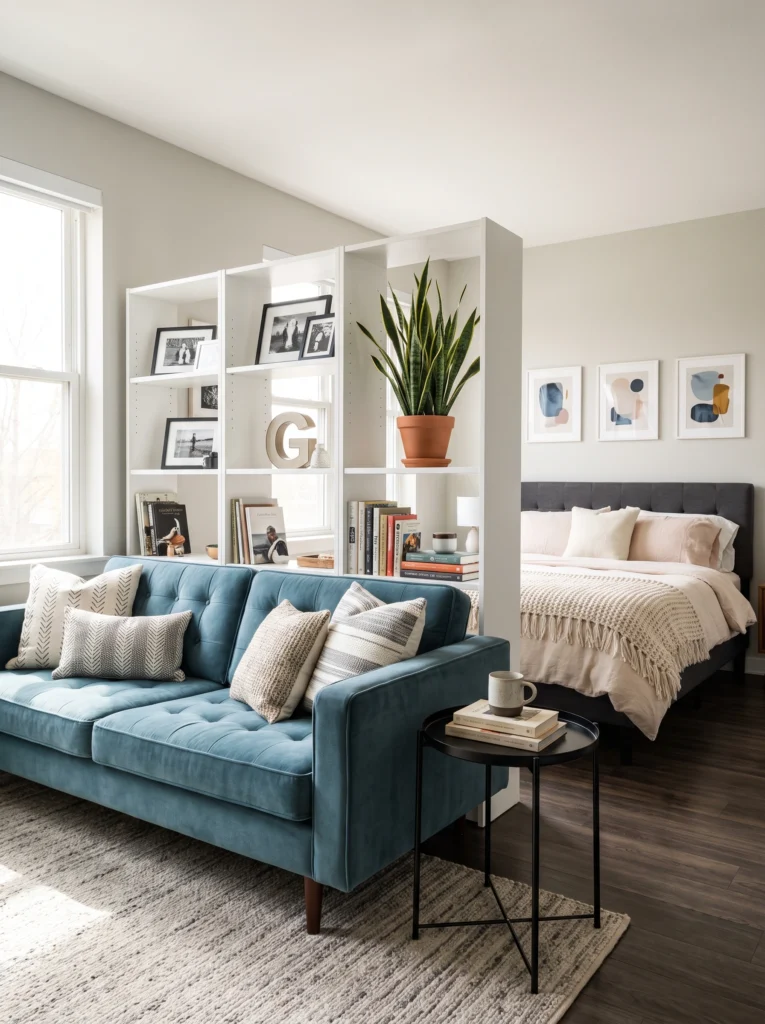
A white cube bookshelf used as a room divider — loaded with family photos in black frames, stacked books, a snake plant, a small lamp — creates a proper wall between living and sleeping without blocking light or air. The teal velvet sofa facing it turns the living side into a real room. Behind it, the blush bedding and soft art prints make the sleeping zone feel private and calm. Same square footage, two completely different emotional environments.
My tip: When using a shelf as a divider, place your tallest plants and most decorative objects on the top — they draw the eye up and make the shelf feel like an architectural feature rather than just storage.
7. A Wood Panel Accent Wall Costs Less Than You Think
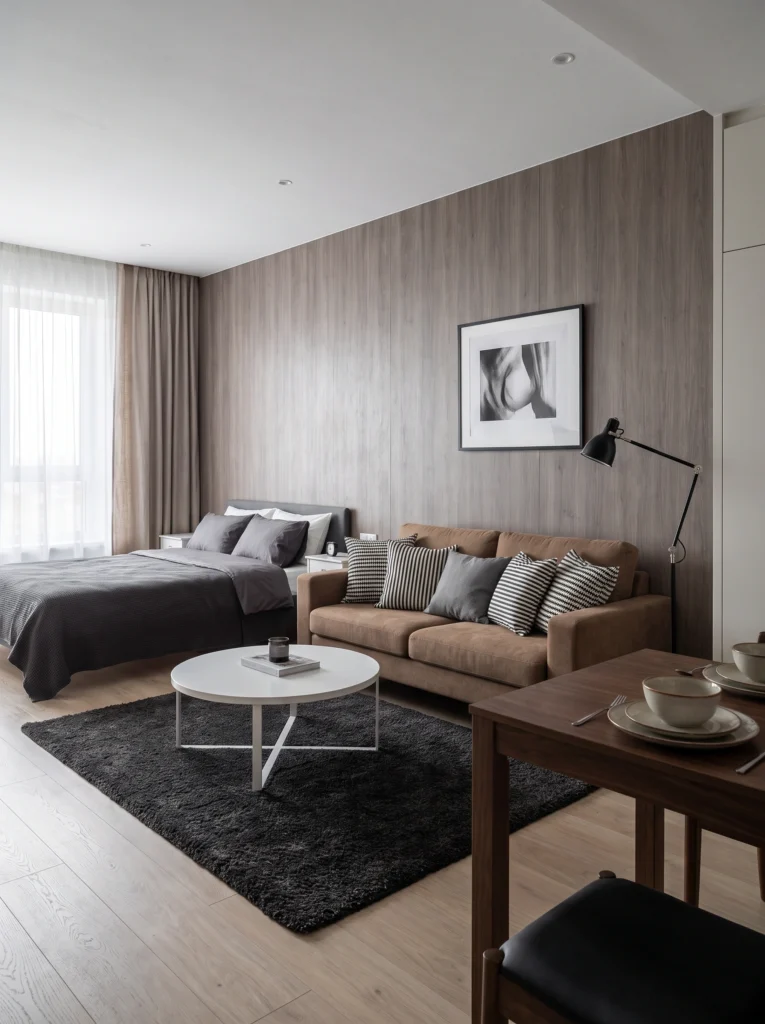
Floor-to-ceiling woodgrain panelling on the back wall turns a plain studio into something that looks genuinely designed. The grey wood tone is sophisticated without being cold — it reads as texture rather than color, which is why it works with everything from the caramel sofa to the charcoal bedding. A black architect floor lamp and matching abstract print reinforce the editorial feel. This is a look that usually requires a designer. Here it’s achieved with one wall treatment and a clear point of view.
My favorite: Peel-and-stick wood panel wallpaper (available from $40–$80 per roll) replicates this exact look without any construction. Installed floor-to-ceiling on one wall, it transforms a studio entirely.
8. A Black Accent Wall Is Bolder Than You Think — and Easier to Live With
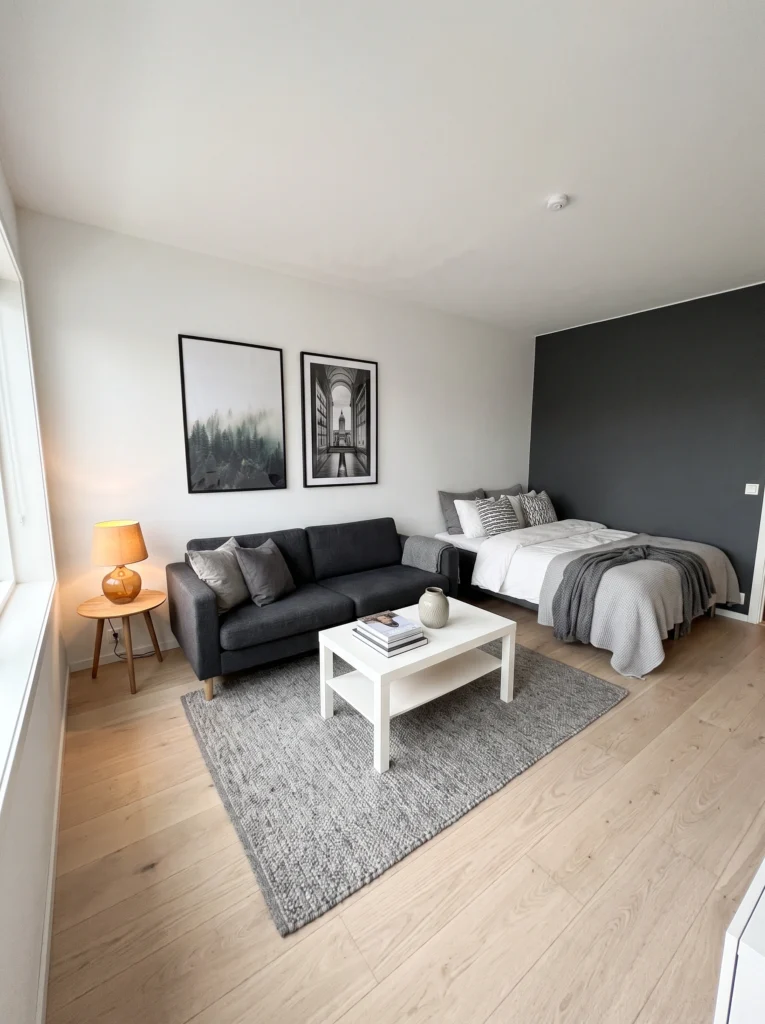
A matte black wall behind the bed looks intimidating in theory and stunning in practice. It makes the white bedding and grey throw pop like a photo against a dark backdrop. The living side stays crisp white, so the contrast between zones is clean and deliberate. Two oversized B&W photography prints above the charcoal sofa carry the dark tone forward without painting anything else. The warm amber lamp on the oak side table is the one piece of warmth that stops the whole room from going too cold.
Don’t waste your money on: Expensive paint samples if you’re going dark. Most major brands offer tester pots for under $5 — always test a black on your actual wall before committing. Black reads very differently in morning light versus evening light.
9. Three Line-Art Prints and a Good Rug Are Enough
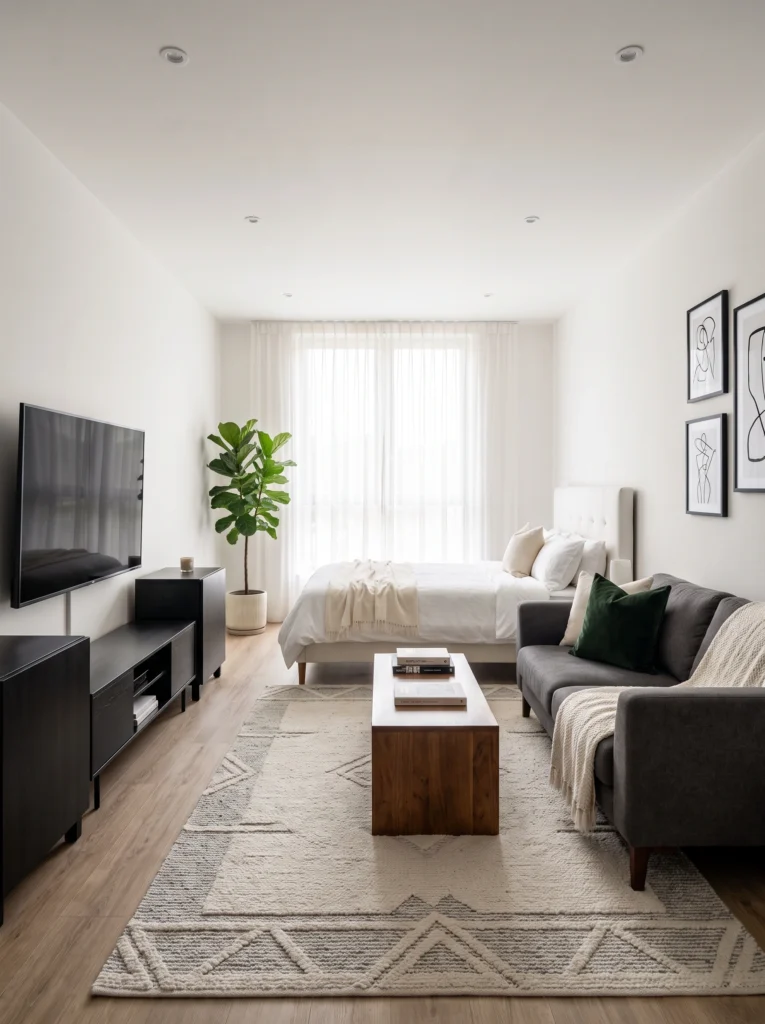
This studio proves that you don’t need much to make a room feel finished. Three black-framed line-art prints. A cream Berber rug with a quiet geometric pattern. A single fiddle-leaf fig. A walnut coffee table bench. That’s the whole decorating story — and it works because every piece is chosen with confidence. The forest green cushion is the only real color note, and it hits exactly right against the grey sofa and white walls. Restraint, when it’s deliberate, is its own kind of boldness.
Pro tip: Line-art prints are the most versatile and budget-friendly wall art available. A set of three in matching black frames costs $30–$60 on Etsy or Society6 and works in virtually any style of room.
10. Floor-to-Ceiling Bookshelves Are the Ultimate Studio Upgrade
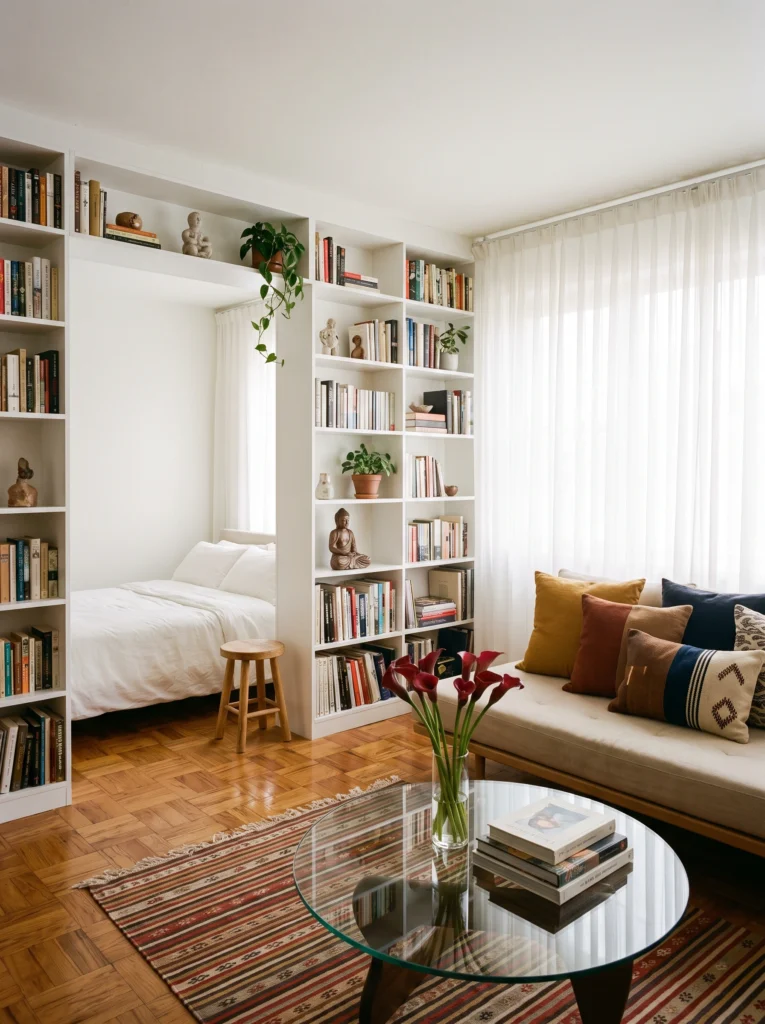
Built-in floor-to-ceiling bookshelves wrapping around a bed nook — this is the studio idea that makes every book lover’s heart stop. The shelves hold hundreds of books, small sculptures, trailing plants, and ceramic objects, turning the entire back wall into a living installation. The bed tucks into the nook like a ship’s berth, protected and private. Outside it: a cream daybed loaded with cushions, a glass coffee table with red calla lilies, and a Kilim rug. A whole life contained in one beautiful room.
Sofia’s honest take: If you have a lot of books and nowhere to put them, stop hiding them in boxes. Books are some of the best décor you own — display them, mix in a few objects between the spines, and call it a gallery wall that also has a library.
11. Make the Kitchen Feel Like It Belongs
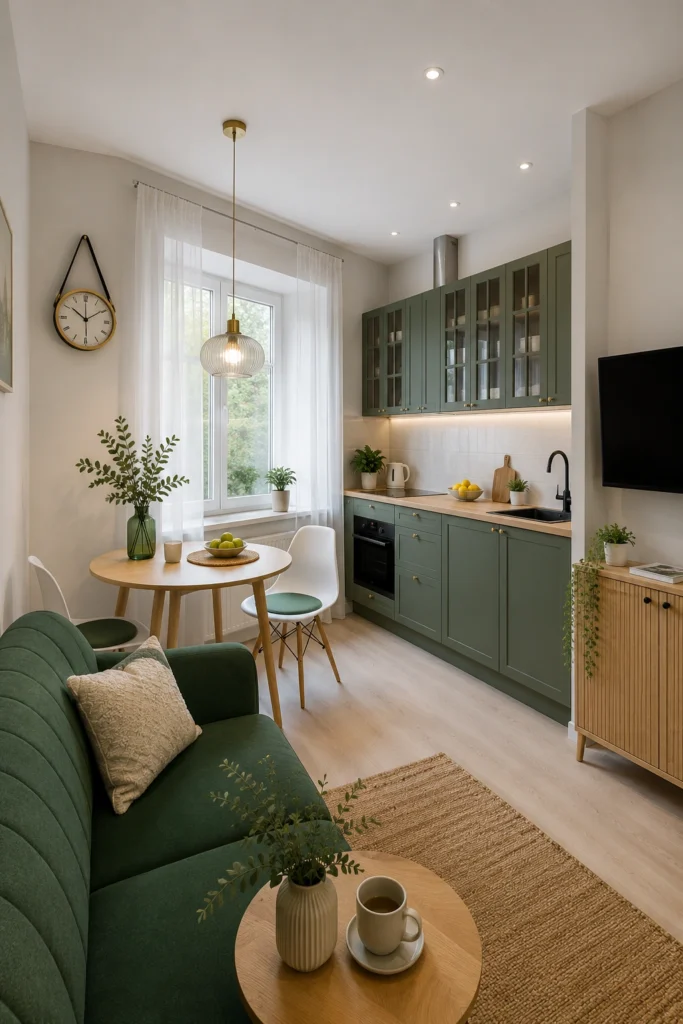
In a small apartment, your kitchen is usually right there — visible from the living room, part of every gathering. So it deserves the same decorating attention as the rest of the space. A cohesive color palette that links the kitchen and living area makes the whole apartment feel more intentional. Sage green cabinets paired with a green sofa, for example, or warm wood tones running through both spaces.
You don’t need a renovation to make a kitchen feel more styled. New cabinet hardware (a set of brass or black pulls runs $30–$60 for a small kitchen), an herb garden on the windowsill, a pendant light over a small dining table — these small details make your kitchen feel like it belongs to the rest of your home.
12. Use Geometric Accents and Bold Color to Add Visual Energy
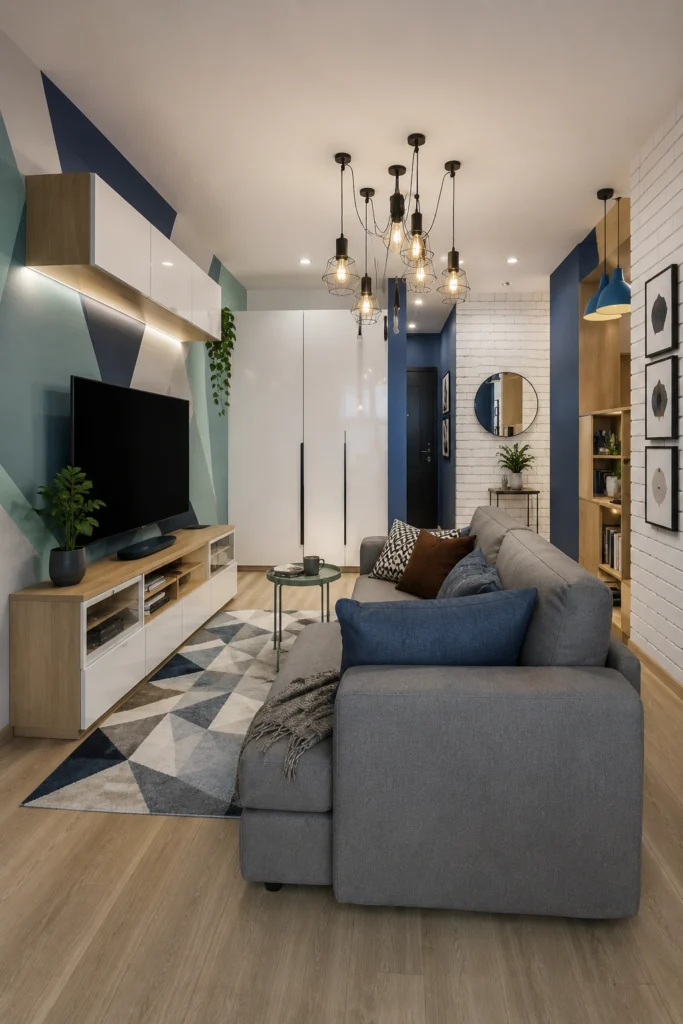
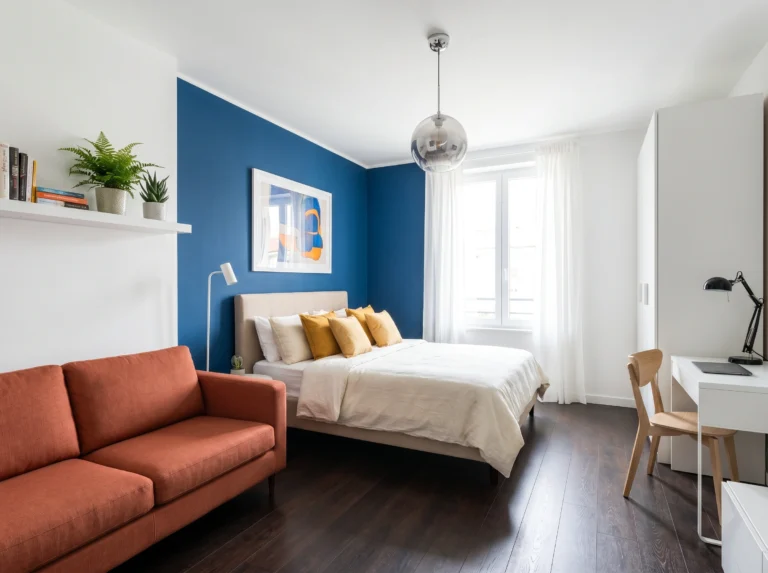
Here’s the thing about small rooms — they don’t have to be timid. One of the easiest ways to make a compact space feel intentional rather than cramped is to lean into pattern and color deliberately. A geometric rug in navy, grey, and white anchors the room and draws the eye down, making the floor feel like a design feature. Pair it with one bold accent color on a single wall — deep navy or forest green both work beautifully — and suddenly your room has a point of view.
You don’t need to commit to a full paint job either. A large piece of graphic wall art or removable wallpaper on one wall gives the same energy without a lease violation.
Pro tip: Keep your furniture in neutral tones (a grey sofa, a white media unit) so the bold accents do the talking. If everything is competing, nothing wins.
13. Layer Your Lighting — and Ditch the Overhead
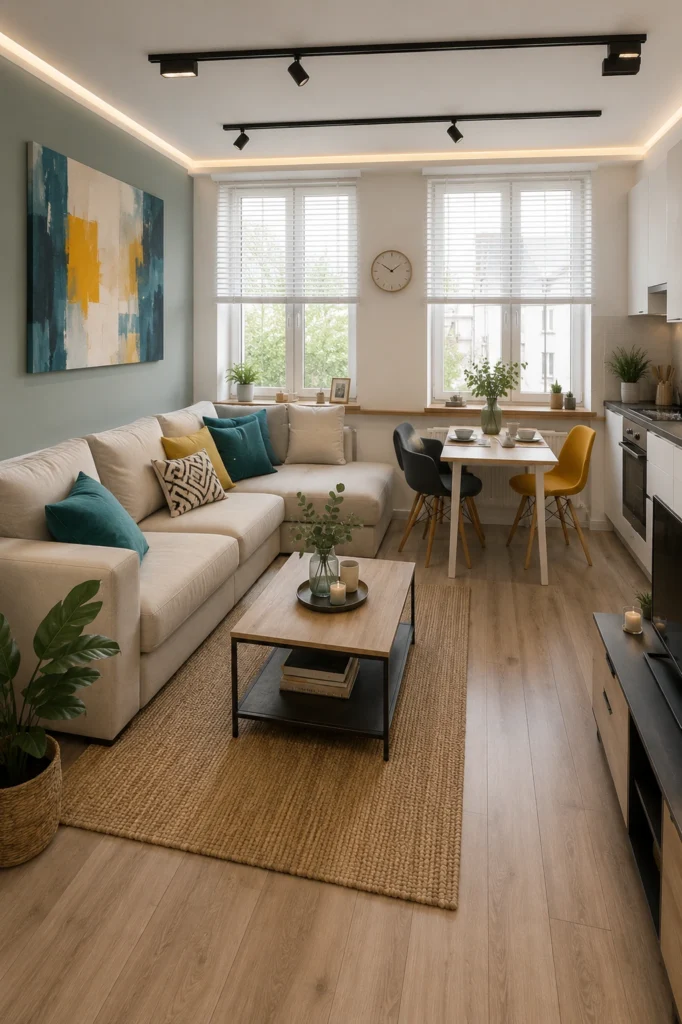
This is the part most people skip — and it’s exactly why so many small apartments feel like waiting rooms at 8pm. Overhead lighting is useful for getting dressed, not for living. Layered lighting — meaning multiple light sources at different heights — is what makes a room feel warm and considered instead of flat and institutional.
Track lighting pointed at walls (not downward) bounces light around the room and makes ceilings feel higher. LED cove lighting tucked into a ceiling recess adds a soft ambient glow without taking up any floor space. Add a small table lamp or two and you have three distinct light layers working together.
Budget vs. splurge: A IKEA RANARP floor lamp runs about $40. A set of warm-tone LED strip lights for a cove? Under $25. Neither will break you, and both will change how your apartment feels after dark.
14. Keep Your Palette Warm and Layered for a Cozy Feel
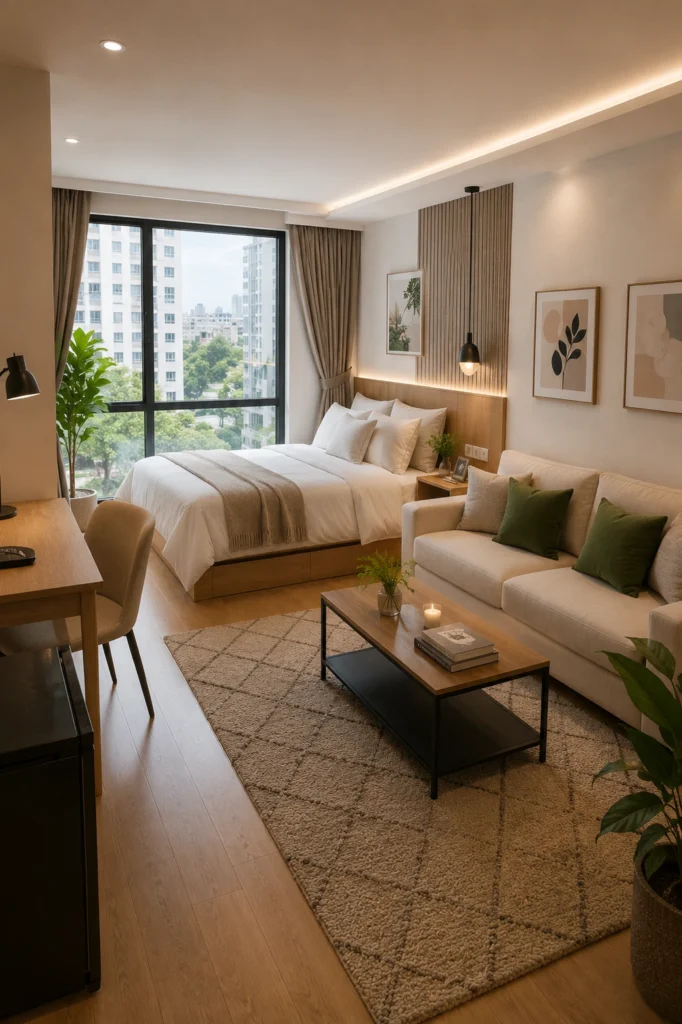
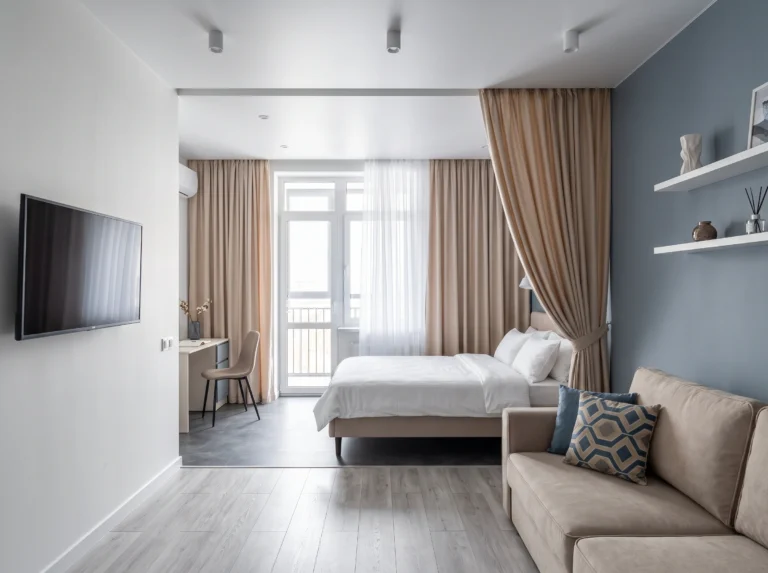
Warm tones make small rooms feel more intentional and inviting. Think sand, warm white, sage green, soft terracotta, natural wood. These colors absorb and reflect light in a way that makes a space feel finished even when it isn’t. Cool greys and bright whites can work, but they’re less forgiving — every corner and shadow shows.
Layering warm tones also helps define a space. A jute rug under a linen sofa with warm wood accents reads as a complete, considered room even if you only have five pieces of furniture. Add a rattan pendant light, and suddenly your tiny apartment feels like someone who cares about their home lives there.
15. Use a Large Mirror to Open Up the Space
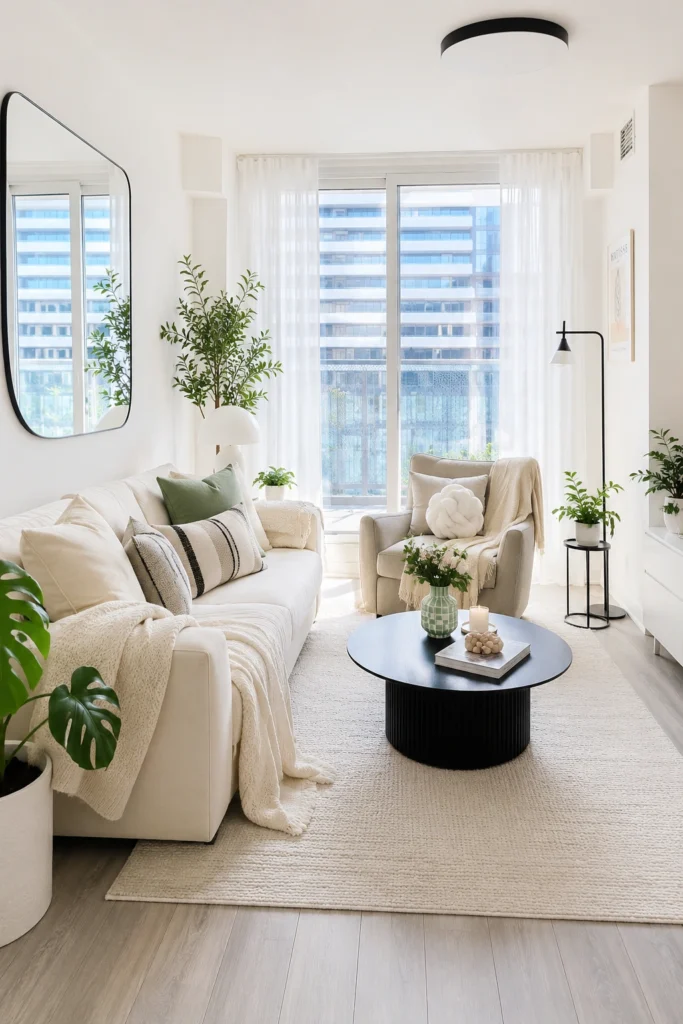
Mirrors are one of the oldest tricks in the small-space playbook — and they keep making the list because they actually work. A large mirror (at least 24×36″) reflects light back into the room and creates the illusion of depth. Lean it against a wall if you’d rather not drill, or hang it across from a window to double the natural light you’re working with.
The key is scale. A tiny decorative mirror does almost nothing for a small room. You want something that commands the wall. Black or brass frames feel current without being trendy-in-a-bad-way. And the good news: oversized mirrors from IKEA’s NISSEDAL or similar budget retailers run between $40–$80. That’s one of the highest-ROI purchases you can make for a small space.
16. Embrace the Studio — Zone Your Space with Rugs and Furniture Placement
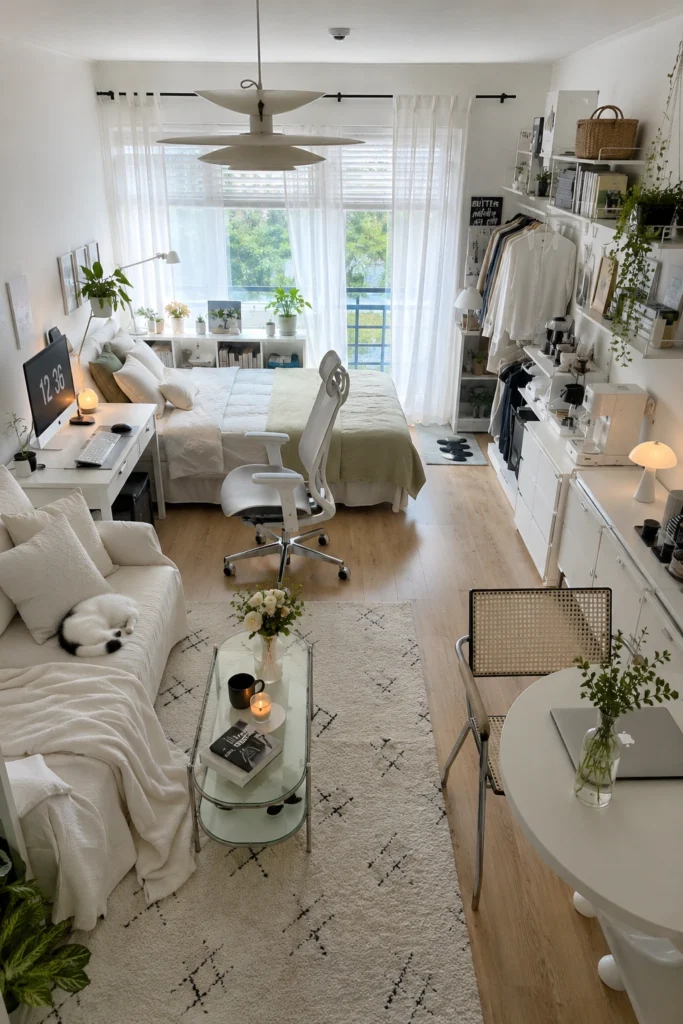
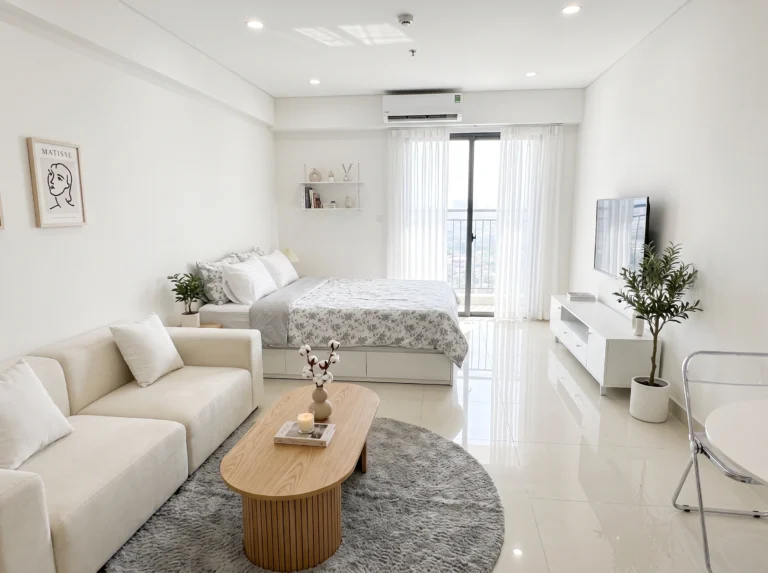
If you’re in a studio, you already know the struggle: everything is in one room, and it can feel like a jumbled mess if you’re not intentional about it. The solution isn’t walls — it’s zones. Use a rug to define your living area. Position your bed with its head against a wall or partially screened off with a bookshelf. Put your desk in a corner with its own small lamp so it reads as a separate workspace.
Each zone should have its own light source — this is the part most people skip, and it’s exactly why some studios feel like hospital waiting rooms at night. A desk lamp here, a bedside lamp there, a floor lamp in the living corner. Suddenly one room feels like three.
Renter-friendly alternative: No drilling needed — freestanding shelving units (like IKEA KALLAX) make great room dividers and double as storage.
17. Go Vertical with Greenery and Shelving
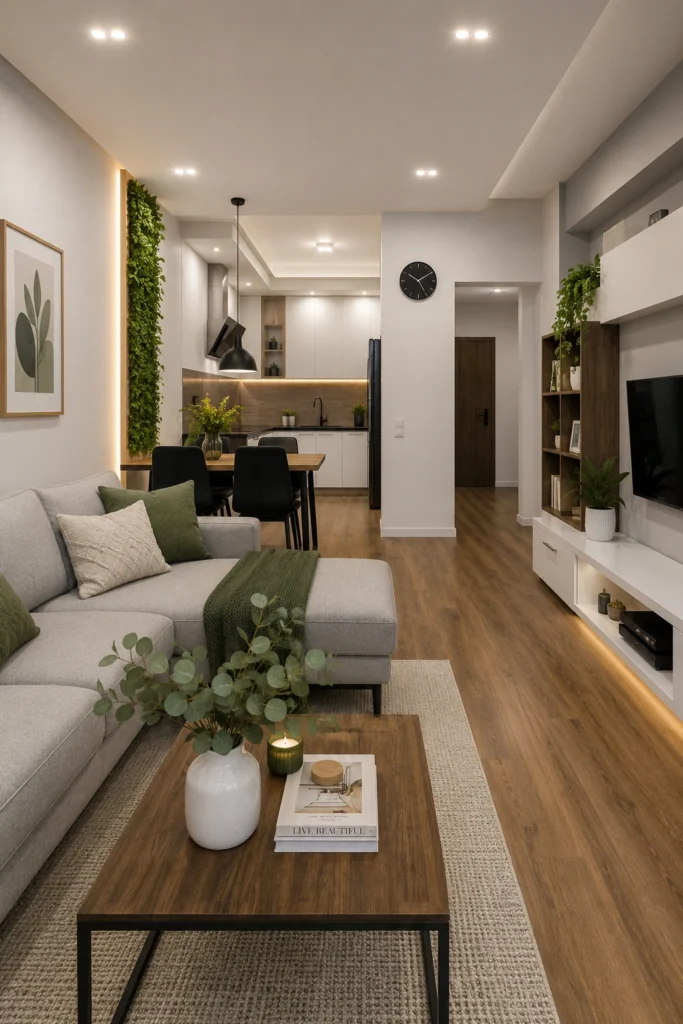
When floor space is limited, think up. Vertical shelving pulls the eye upward and makes ceilings feel higher. Wall-mounted shelves above a sofa or desk give you display space without eating into your square footage. And plants — especially trailing varieties like pothos or string of pearls — add life and color at a fraction of the cost of art or furniture.
A living wall or a tall plant corner (like a floor-to-ceiling arrangement with a fiddle leaf fig or areca palm) creates drama and draws the eye upward in a way that genuinely makes a small room feel taller. You don’t need a fancy installation — a tall plant in a good-looking basket planter does most of the work.
Pro tip: Group plants in odd numbers (three or five) at varying heights. It looks intentional, not just “I have a lot of plants.”
18. Make Every Square Foot Count — Design Zone by Zone
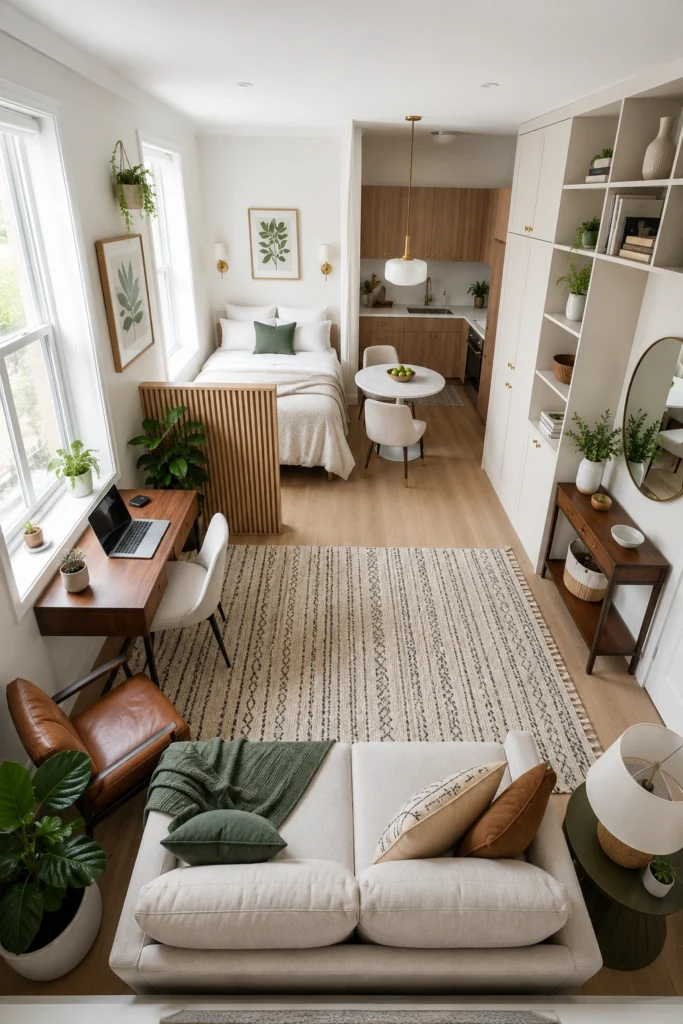
In a studio or small one-bedroom, the biggest mistake is treating the whole space as one undifferentiated room. It isn’t. You eat somewhere, sleep somewhere, work somewhere, and relax somewhere — those are four different zones, even if they share 400 square feet.
Rugs are your best friend here. A jute rug under the living area, a small patterned runner beside the bed, and a round rug under the dining table all signal distinct spaces without walls or dividers. Furniture arrangement does the rest: a sofa with its back to the sleeping area creates a subtle visual boundary. A slatted wood screen between the bed and the living zone adds privacy and texture.
Pro tip: Floating shelves mounted on the wall do double duty — storage and visual division — without eating into precious floor space.
19. Bring in Natural Texture for Warmth
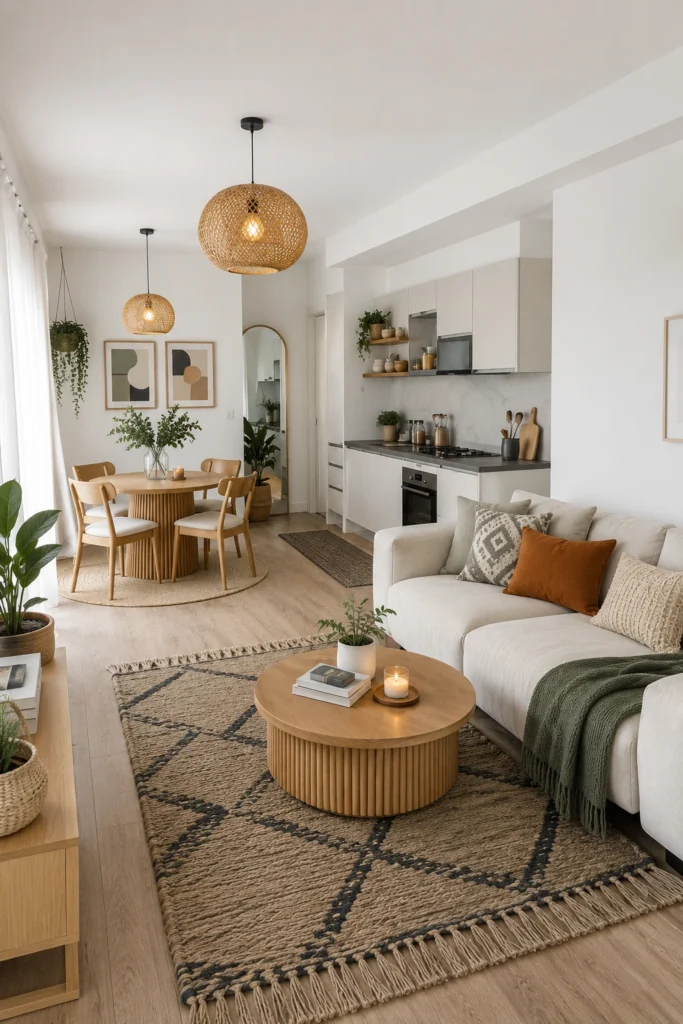
If your apartment feels cold or too sterile, the issue often isn’t your furniture — it’s your materials. Smooth, shiny, and synthetic surfaces reflect light harshly and feel clinical. Natural textures absorb and diffuse light, making a room feel warmer and more inviting.
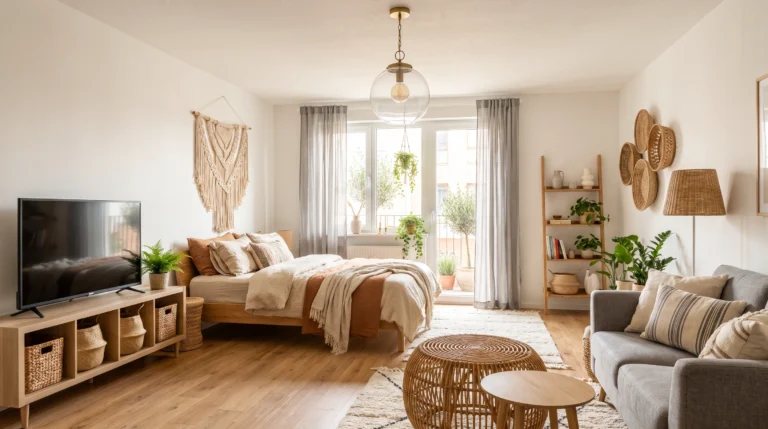
Rattan or wicker pendant lights are one of the most affordable ways to add warmth to a room — they cast beautiful, dappled light and add organic texture overhead. A jute rug underfoot is tactile and grounding. A ribbed wood coffee table, some woven baskets for storage, a chunky knit throw draped over the sofa. None of these are expensive, and together they create an atmosphere that feels genuinely cozy rather than decorated.
My favorite: A large woven rattan pendant shade from Amazon or IKEA for $30-50. It looks like it costs three times that, and it changes the entire mood of a room.
Final Thoughts
Small apartments don’t need big budgets or big renovations to feel like real homes. What they need is intention — a few good decisions made thoughtfully rather than a hundred random purchases that never quite add up to anything. Pick one idea from this list. Just one. Try it this weekend.
You’ll feel the difference, and once you do, you’ll know exactly what to try next.
Your home doesn’t have to be big to feel like yours. It just has to feel like you.
Happy decorating, Sadik Sofia