15 Cozy Studio Apartment Styling Secrets Designers Use
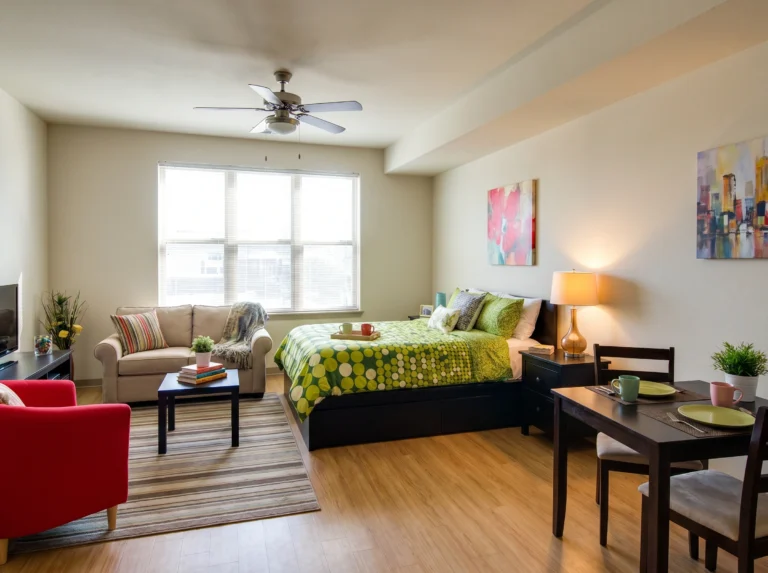
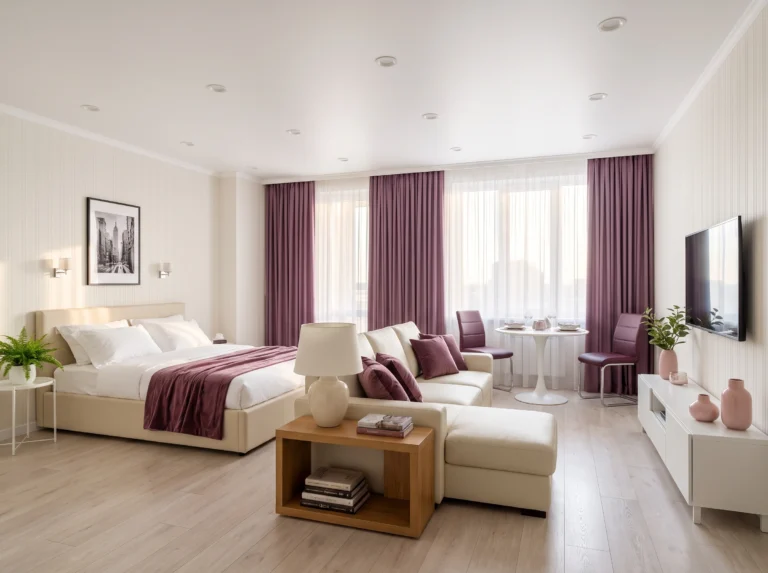
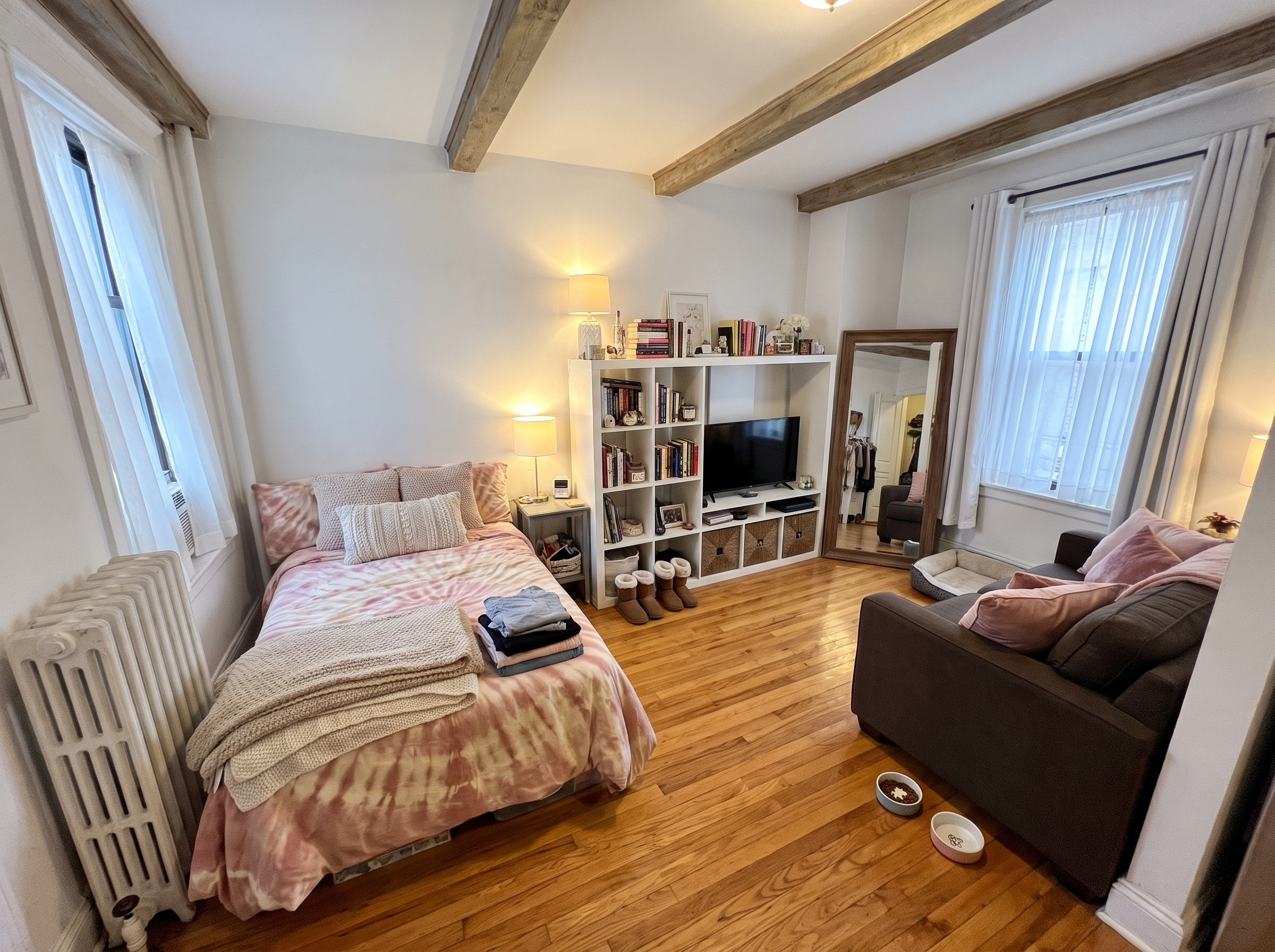
Cozy isn’t accidental. When you walk into a studio that feels warm, layered, and intentional — the kind you kick your shoes off in and stay for hours — that feeling was built. Piece by piece, using techniques designers rely on quietly. The best part? Almost none of them require a bigger budget or a bigger apartment. Just the right moves in the right order. Here are 15 of my favorites.
1. Layer warm-toned textiles across every zone
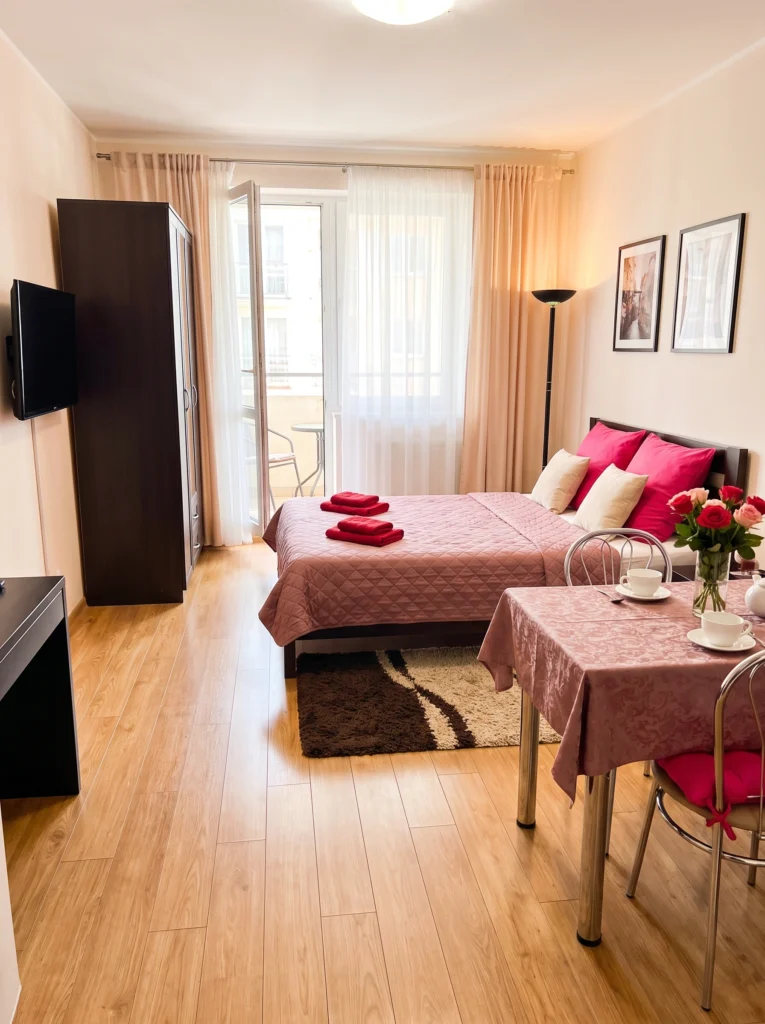
There’s something about a bed dressed in soft pinks and dusty roses that instantly makes a studio feel like a retreat. Designers love this trick — layer a quilted coverlet, mix cream and jewel-toned pillows, then drape a matching cloth on your dining table nearby. The repetition ties two zones together in a single glance. Add fresh flowers and sheer curtains for that warm afternoon glow, and you’re done.
Pro tip: Repeat one accent color in at least three spots — the bed, the table, a chair cushion — and the whole room clicks together.
2. Pull one warm palette through every piece
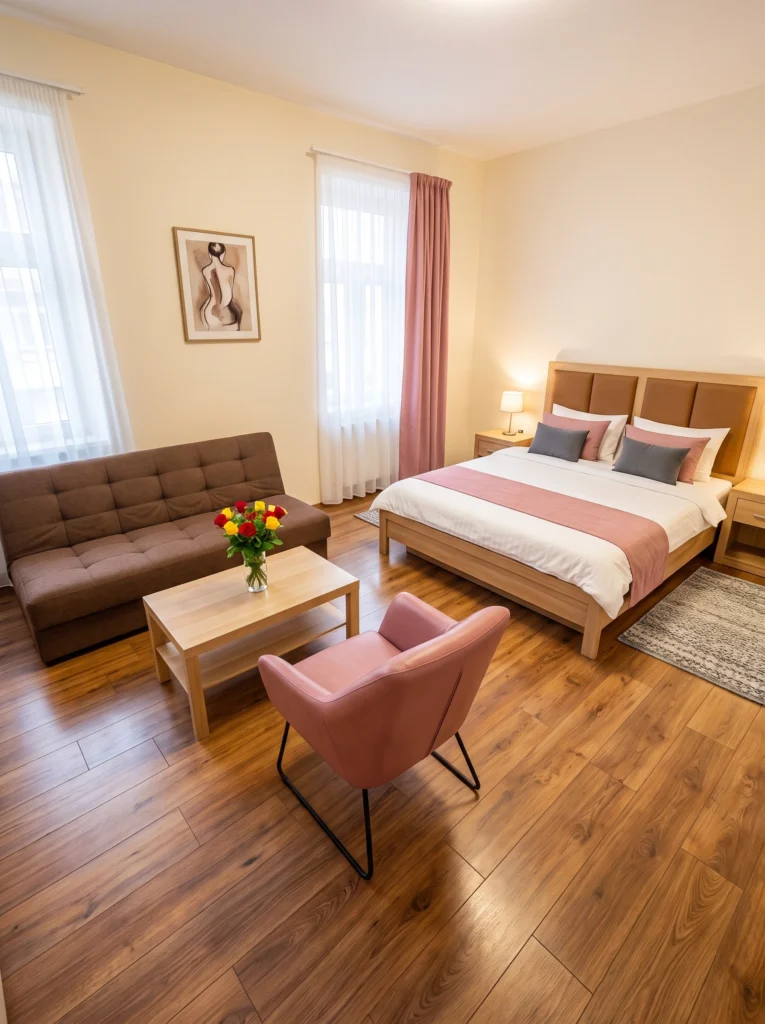
Notice how every piece in this room speaks the same language — warm browns, dusty pinks, honeyed wood tones. That’s the designer secret behind cohesion. When you’re working with a studio, mixing wildly different color families reads as chaos. Pick one warm family, then let each piece pull from it: your bed frame, your sofa, your curtains, your accent chair. The result feels intentional without trying too hard.
My tip: Build a small Pinterest board with your palette before you buy anything. If it feels off on screen, it’ll feel off in person.
3. Zone the room with an open bookshelf divider
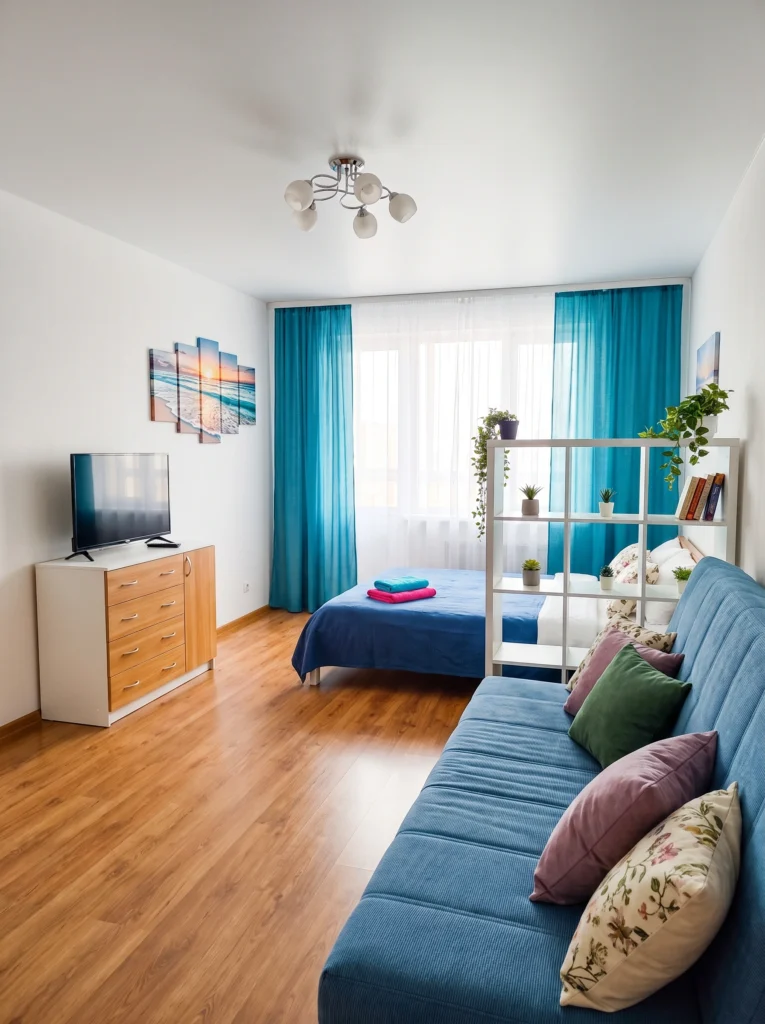
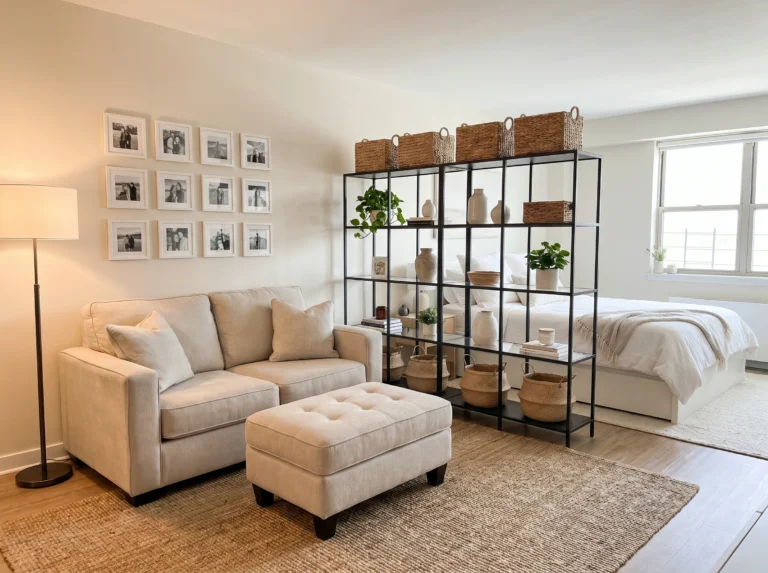
Here’s the thing about studios — they can feel like one giant, confusing box. A tall open bookshelf placed between your bed and living area quietly solves that. It signals two rooms without blocking light or air. Fill it with books, small plants, and a few decorative bits so it feels styled, not just functional. Designers use this constantly. It’s the closest thing to adding a wall without construction.
Sofia’s honest take: Solid room dividers make small spaces feel claustrophobic. Always choose open shelving over closed panels.
4. Anchor the space with one bold statement wall
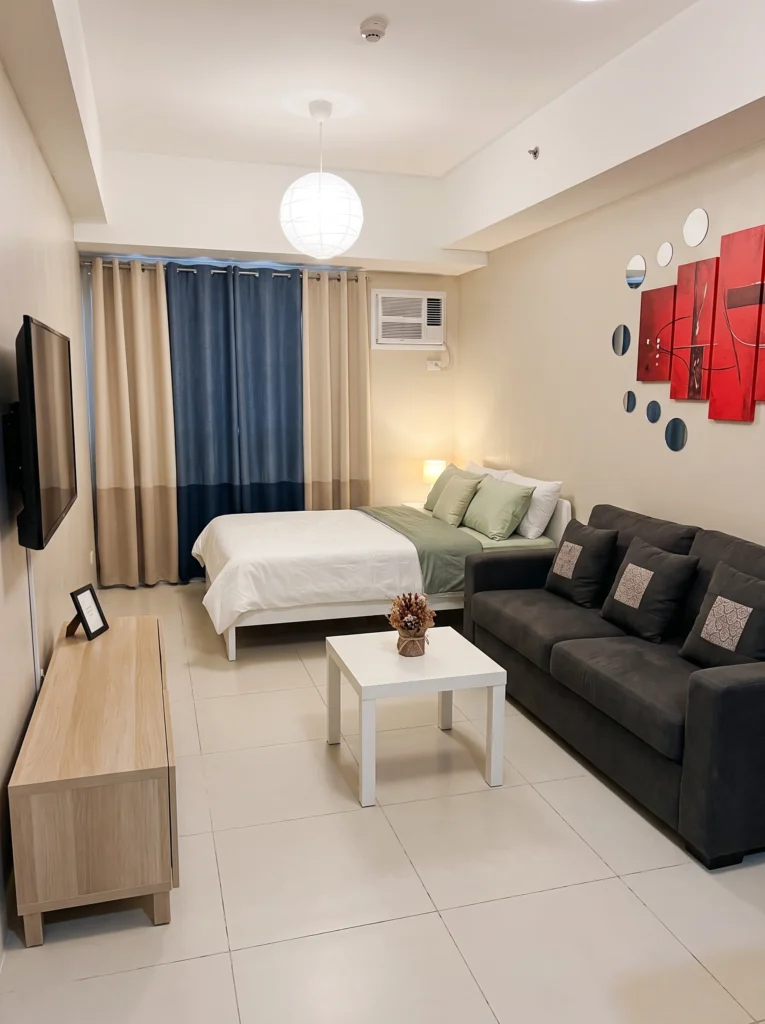
Every well-styled studio needs one moment that stops the eye. In this space, that gallery of red panels and round mirrors does all the heavy lifting — it turns a plain wall into the room’s focal point. Designers call this an anchor piece, and once you have one, you can keep everything else quiet. Green pillows, a paper lantern, a simple coffee table. Nothing competes, and the whole space feels curated.
My favorite: One large art piece almost always looks more expensive than three small ones. When in doubt, go bigger.
5. Cluster small prints into a considered grid
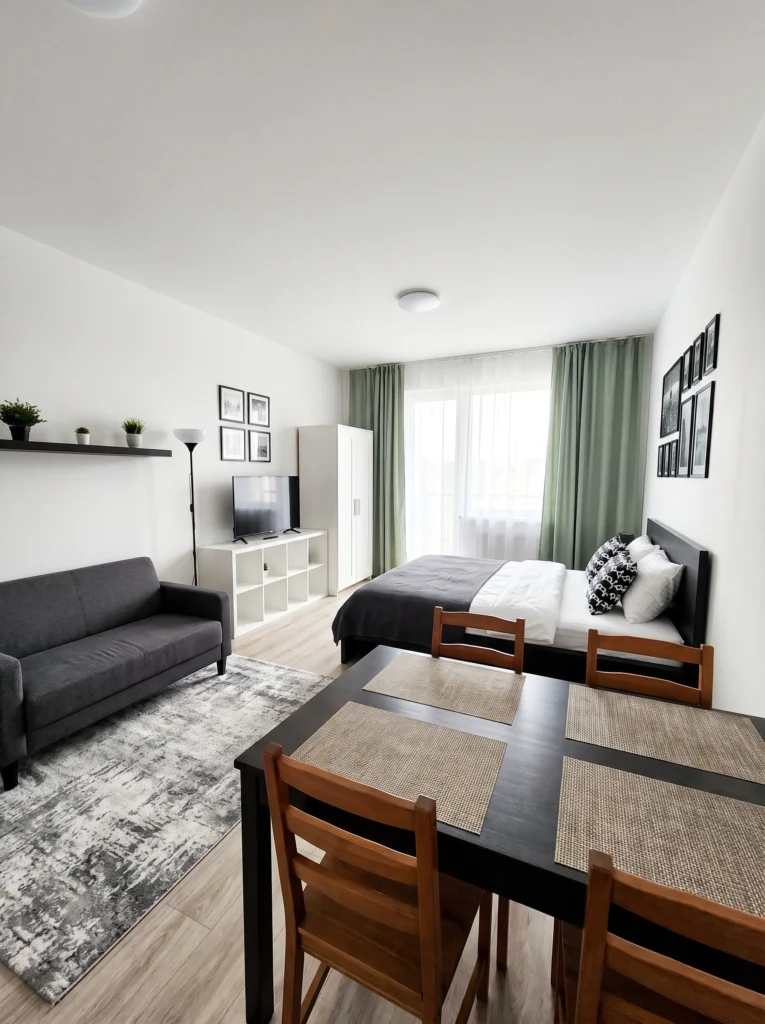
A single small print on a big wall always looks lonely. What works in this studio is the clustering — four framed prints above the sofa, a second grouping over the dining area. Suddenly the walls feel considered instead of forgotten. Keep your frames the same color for cohesion, but vary the print styles inside. Black frames wrapped around mixed black-and-white photography is a designer classic for a reason.
Pro tip: Aim for three light sources in every studio zone — never rely on the ceiling alone.
6. Layer recessed lighting with a warm wall sconce
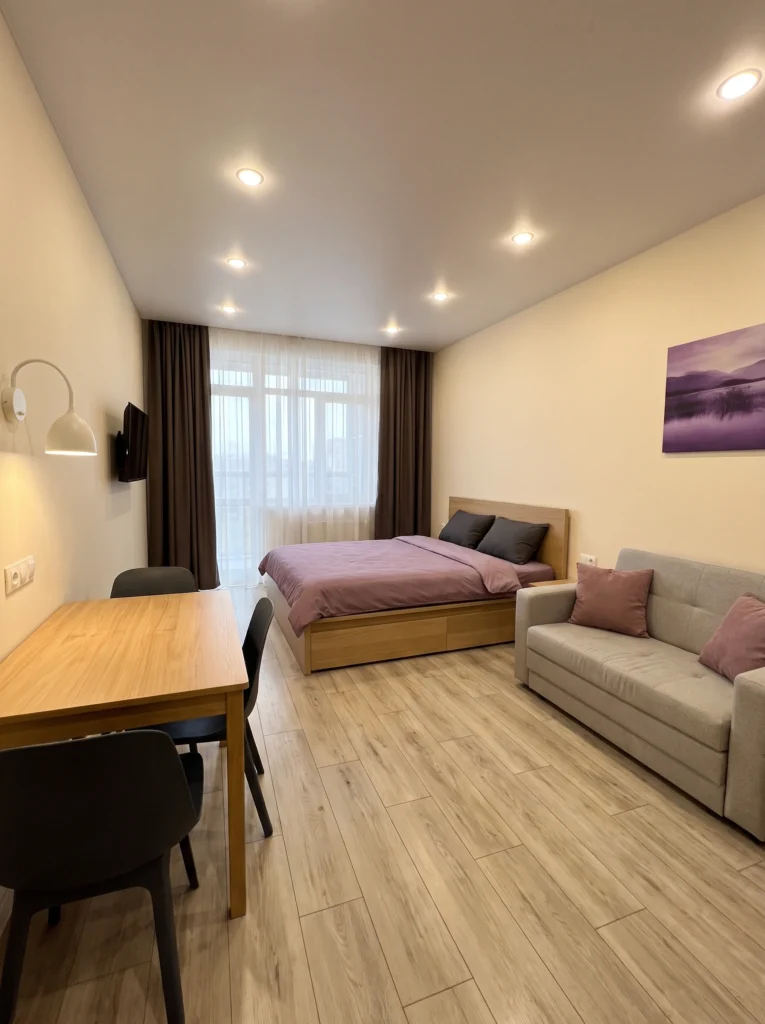
Overhead lights alone always make a studio feel like a hotel lobby. Look what’s happening here: recessed downlights spread ambient glow, and a swan-neck wall sconce reads warm at night. The layered effect makes even a small space feel intentional. Designers call this three-point lighting — ceiling, wall, and eventually a task light near the sofa. Trust me on this one, it changes the whole mood after sunset.
I’ve tested this: A dimmable warm-white bulb in your wall sconce is non-negotiable. It transforms the room after 7pm.
7. Add a full-length mirror to double the light
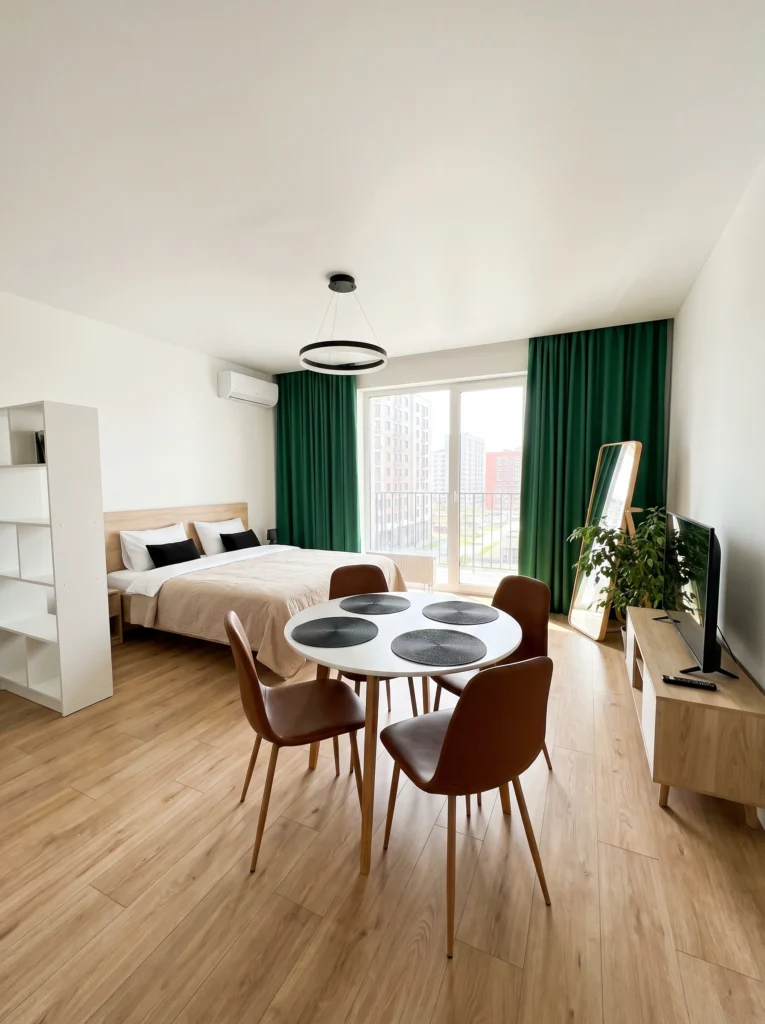
That leaning full-length mirror isn’t just for outfit checks — it’s a designer trick to bounce natural light around the room and visually stretch the wall. This studio would feel noticeably smaller without it. Prop yours near a window, angle it slightly toward the light source, and watch the whole space open up. The rich green curtains and warm leather chairs get a second life reflected back into the room.
Budget vs. splurge: Save on the frame — IKEA works fine. Splurge on height. The taller the mirror, the bigger the room reads.
8. Let your curtains carry the accent color
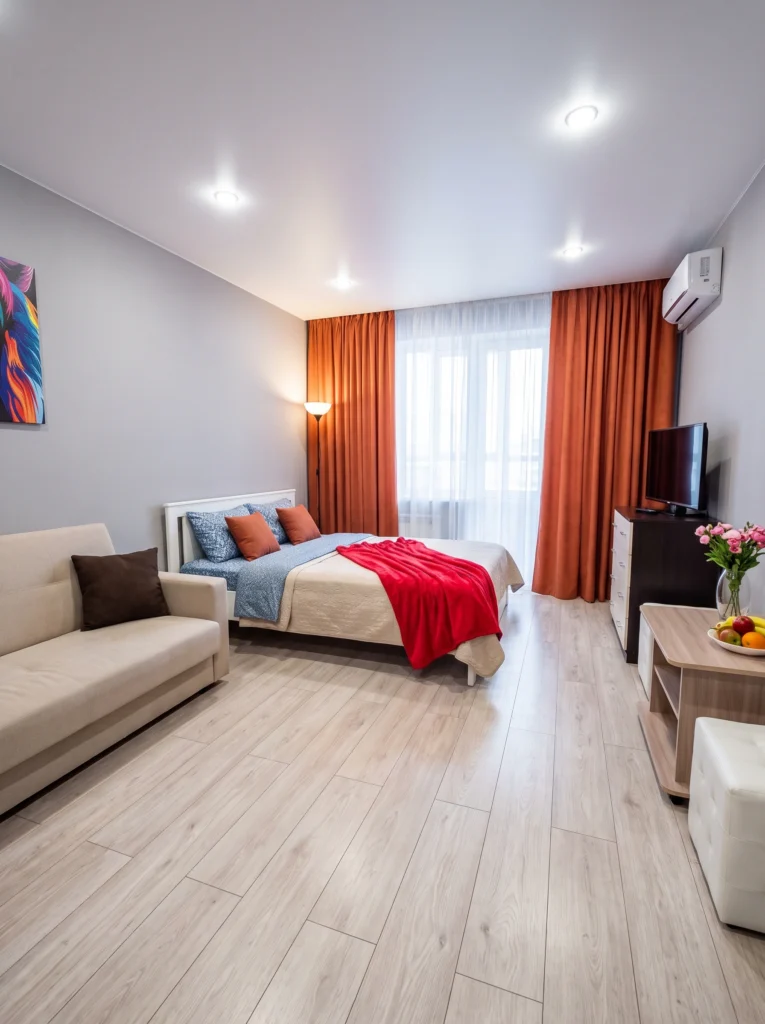
Instead of chasing accent colors through a dozen small accessories, let the curtains do the shouting. These floor-to-ceiling rust panels command the whole room, and everything else — the red throw, the orange pillows, that vivid lion print — quietly echoes them. Designers love this move because it’s high-impact and easy to change. Bored in a year? Swap the curtains, redo the throw, and the whole room shifts.
Sofia’s honest take: Blackout-lined curtains in a bold color are worth every extra dollar. They serve the room and they serve your sleep.
9. Turn one wall into a wallpaper feature
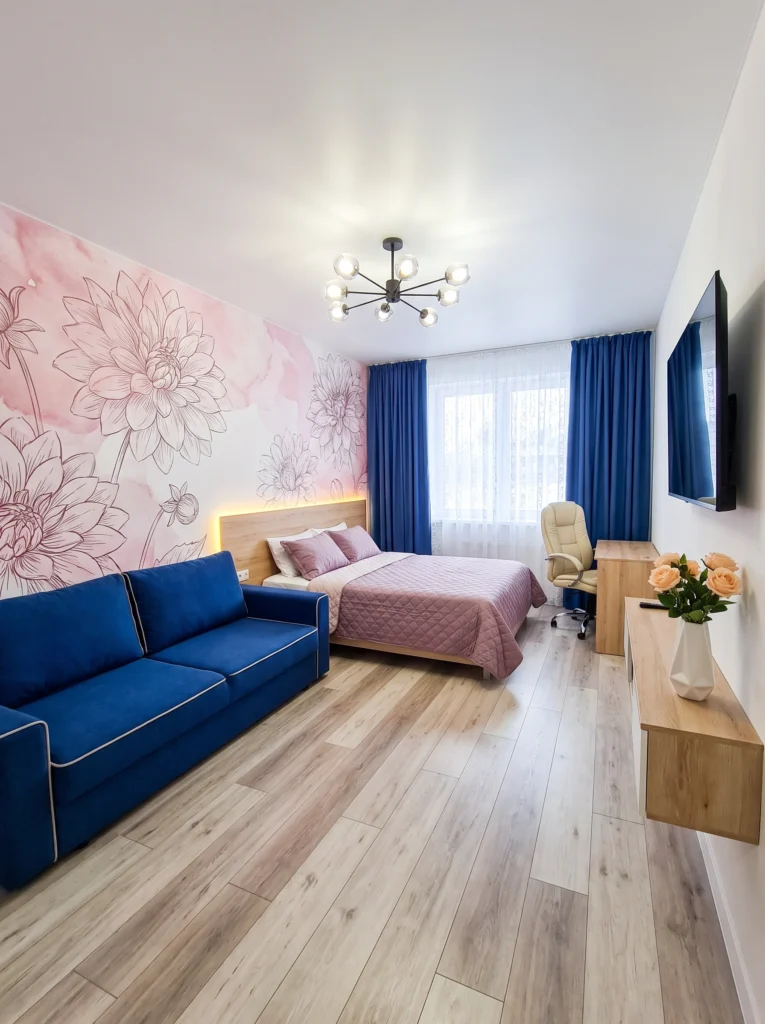
One decorated wall is often all a studio needs to feel completely styled. The soft pink dahlia mural behind the bed here does more than a hundred throw pillows ever could. It gives the room a defined center, a bit of romance, and something to build the rest of the palette around. It also lets the rest of the space stay quiet, so the eye has one clear place to land.
Renter-friendly alternative: Peel-and-stick murals from Etsy shops give you the same drama, cost a fraction of traditional wallpaper, and come off cleanly at move-out.
10. Use a round or oval rug to soften a boxy layout
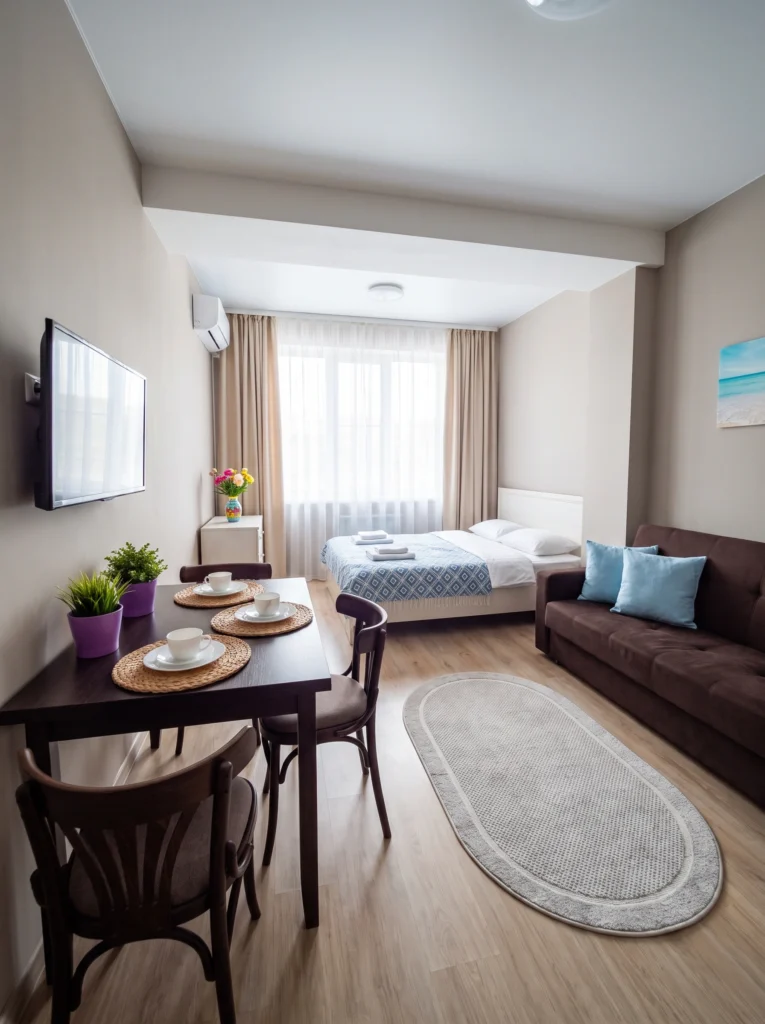
Studios are almost always rectangular, and every piece of furniture inside is boxy — bed, sofa, dining table. A round or oval rug breaks up all those hard lines and instantly softens the room. It also creates a visual living zone between the sofa and dining table without needing extra furniture to define it. Budget-friendly, foolproof, and one of my favorite fixes when a space feels rigid or cramped.
My tip: Round rugs work best in awkward layouts — they never fight with your walls or the shape of your furniture.
11. Use cube shelving to divide and store at once
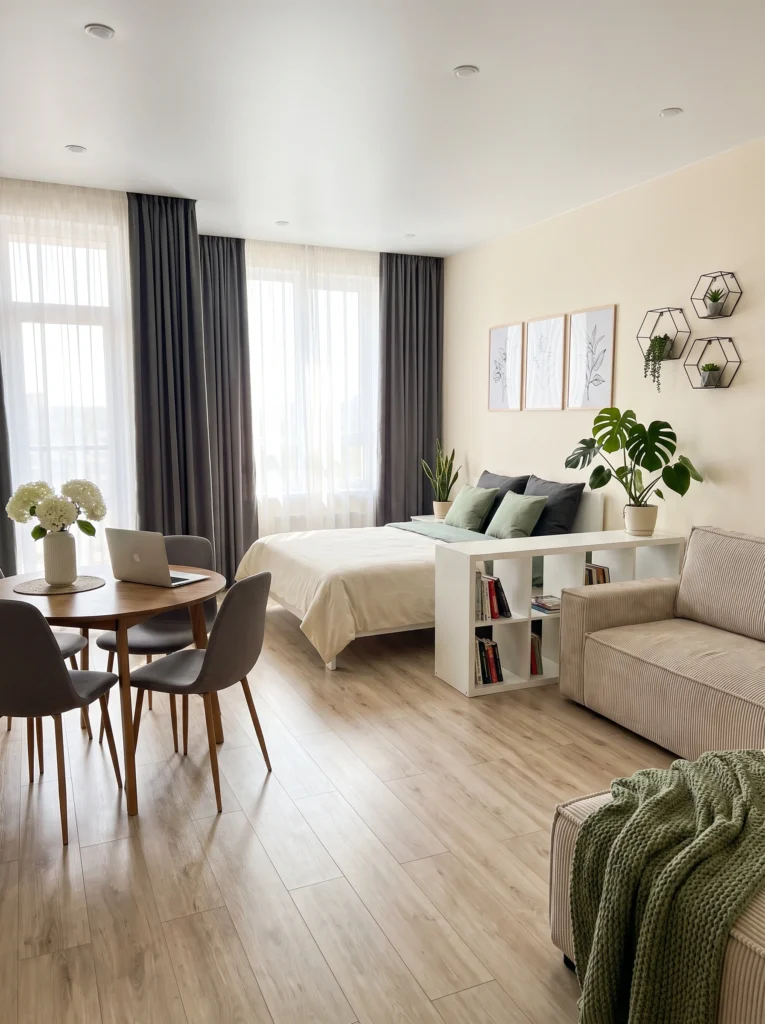
A cube shelving unit placed at the foot of the bed is one of the smartest studio moves you’ll ever make. It hides your bed from the front door, gives you actual storage for books and baskets, and lets light pass through so the room never feels chopped up. This setup pairs it with plants and cozy corduroy — proof that practical furniture can still look completely designed and never disruptive.
Pro tip: Anchor your cube divider to the wall or ceiling if you have pets or kids. Safety first, style second.
12. Ground a quiet palette with a patterned rug
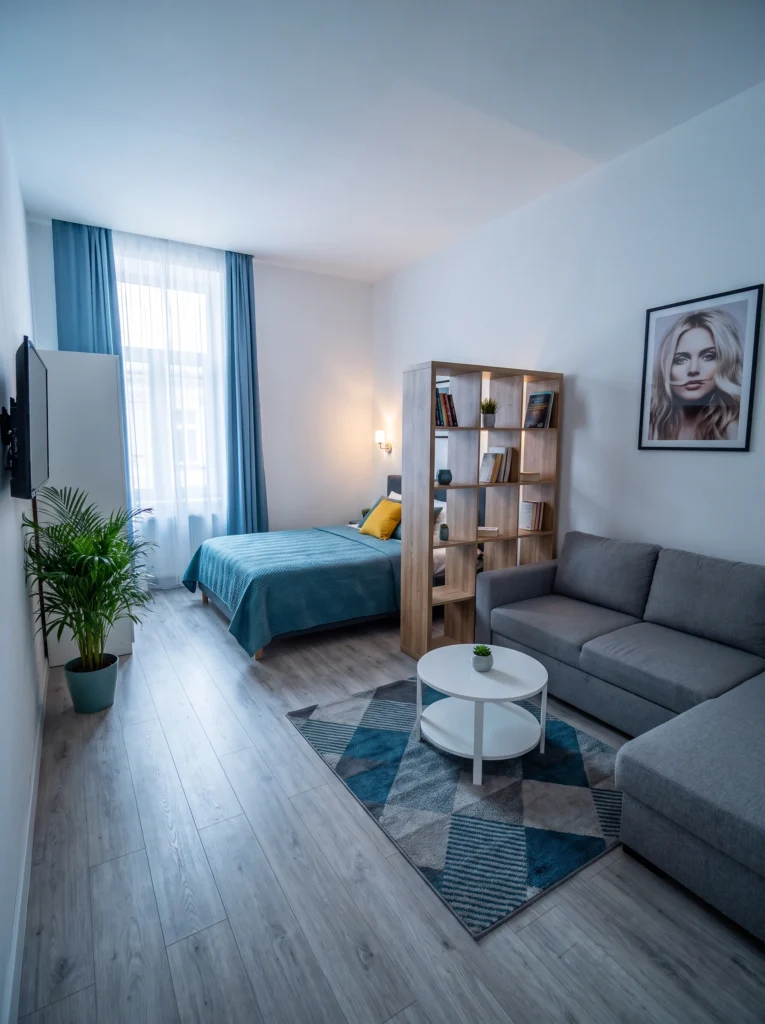
When your palette is mostly quiet — grays, whites, natural wood — a patterned rug becomes the personality of the room. The geometric blue and beige print here pulls in every accent color scattered elsewhere: the teal bed, the yellow pillow, the artwork above the sofa. Designers use rugs like this as a bridge, tying loose color threads into something coherent. Choose the rug first, then build the room around it.
My favorite: Vintage patterned rugs from estate sales beat brand-new ones every single time. Character can’t be bought new.
13. Commit to a strict two-color palette
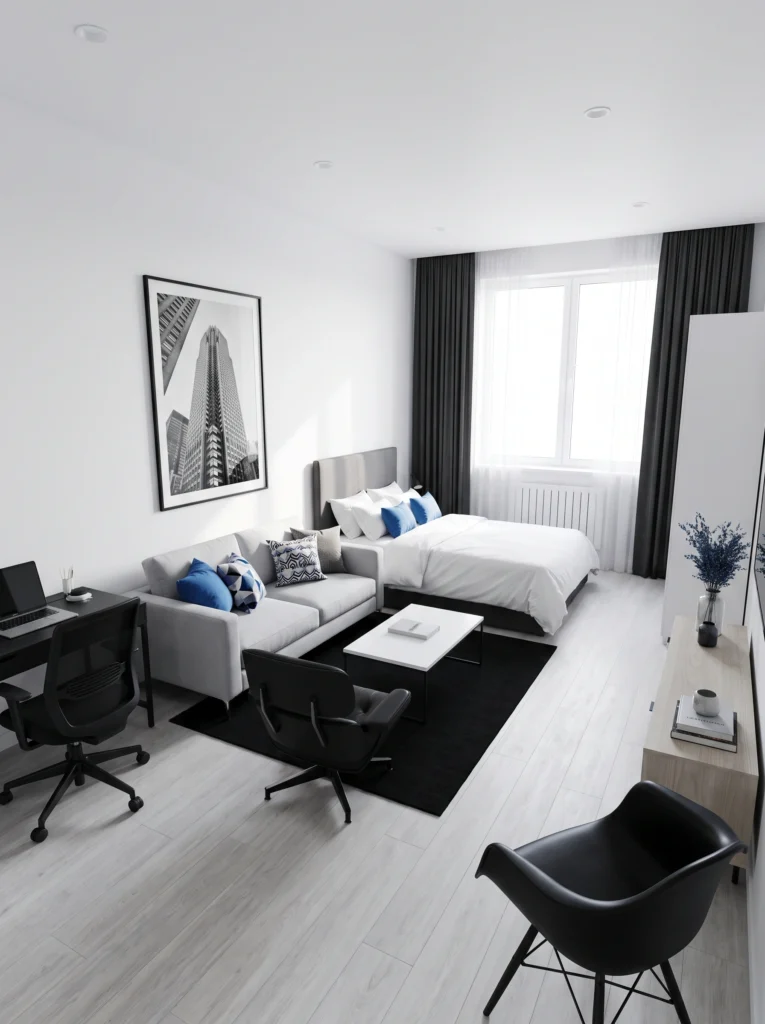
There’s a reason monochrome studios always look editorial — restriction breeds calm. This space commits entirely to black, white, and soft gray, and the discipline pays off. Every piece feels considered because nothing is fighting for attention. A hint of denim blue in the pillows is the only real color, and even that reads as neutral. If your studio feels chaotic, pull everything back to two shades. You’ll be shocked.
Don’t waste your money on: Loud throw pillows when you’re aiming for calm. Stick to neutrals and let texture do the talking instead.
14. Layer soft textures for full hygge mode
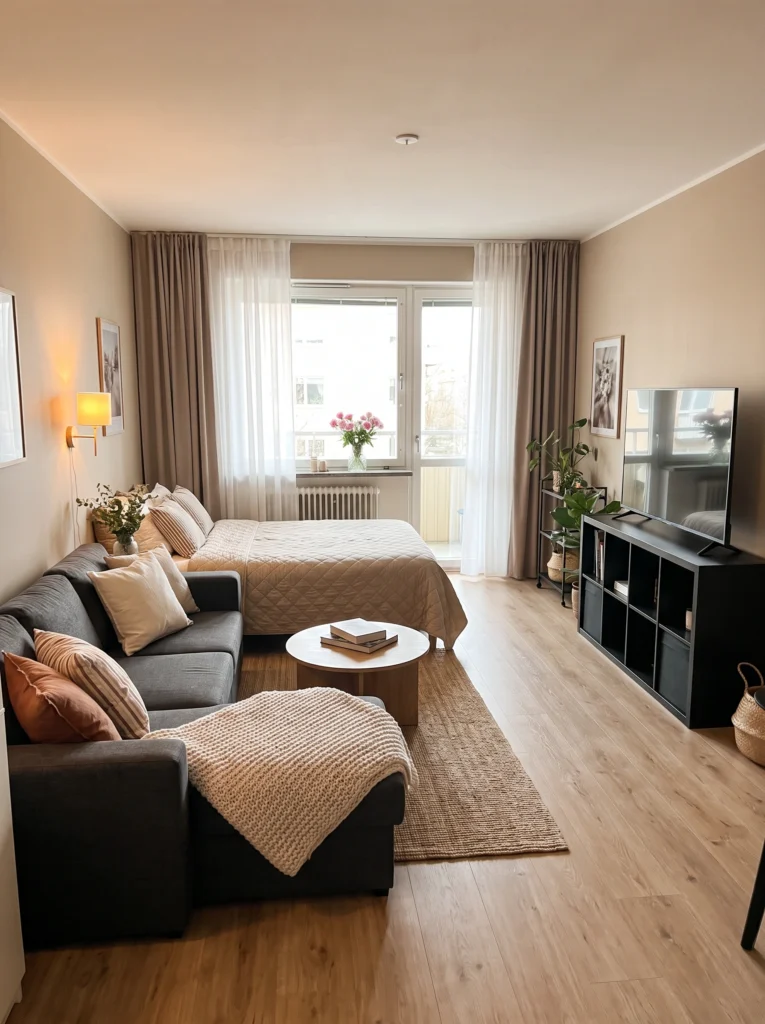
This is what full hygge looks like in a studio: a chunky knit throw draped over the ottoman, a quilted bedspread, mixed pillows, a jute rug, and one soft wall sconce doing all the mood work. Designers layer textures the way chefs layer flavors — different weights and finishes stacked together until the whole room feels like a hug. Pick one warm bulb and one cozy blanket, then start from there.
I’ve tested this: A jute rug topped with a chunky knit throw is the fastest cozy upgrade you can make in under ten minutes.
15. Use bar-height dining to save floor space
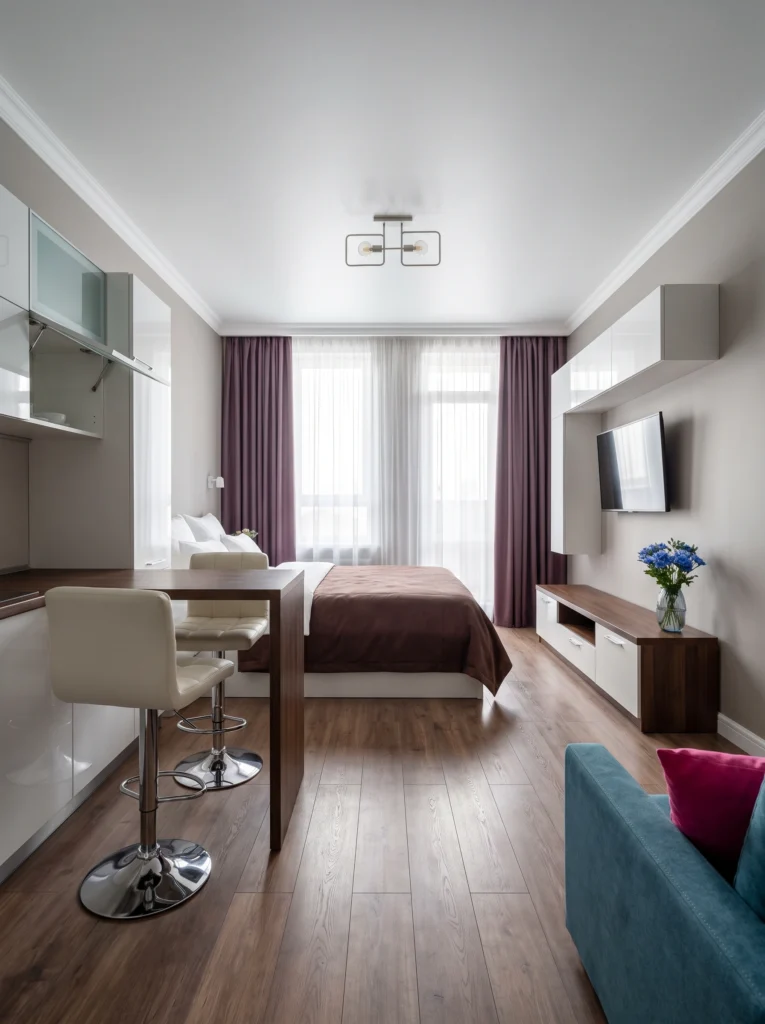
A traditional dining table eats up serious real estate in a studio. A slim bar-height counter tucked against the kitchen? It seats two, doubles as prep space, and takes up half the footprint. This layout is genius — the bar stools slide clean under the ledge when you’re not using them, and the whole area reads as a proper eating zone without swallowing the room. Efficient, elegant, and totally worth stealing.
Sofia’s honest take: Skip the six-chair dining set for a studio. Two barstools and a good countertop will serve you better than any table ever could.
Final Thoughts
Cozy is layered. Cozy is chosen. Cozy is a bookshelf placed just so, a rust curtain that catches the afternoon light, a chunky throw draped exactly where your hand lands when you sink into the sofa. None of these tricks require a renovation or a design degree — just a slow eye and a willingness to try one thing at a time. Pick a favorite from this list. Start there. Your studio will thank you.
A studio isn’t small — it’s just concentrated. Make every choice matter, and the whole room comes alive.