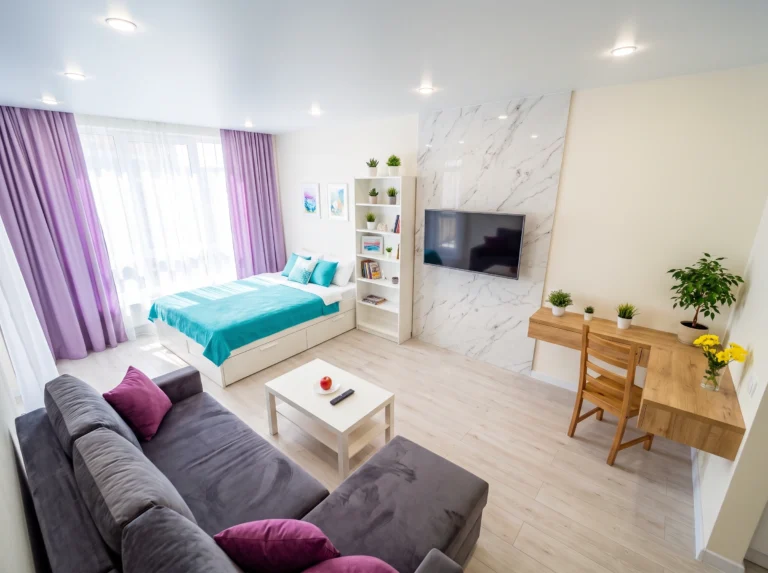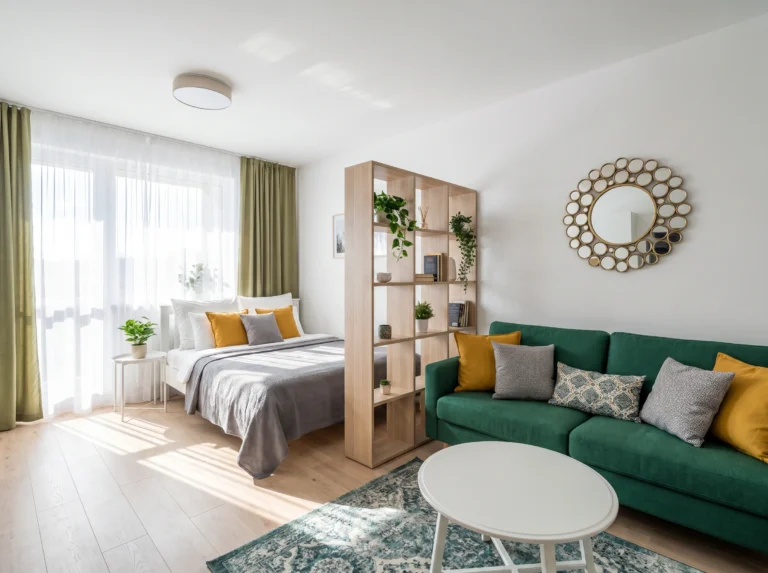
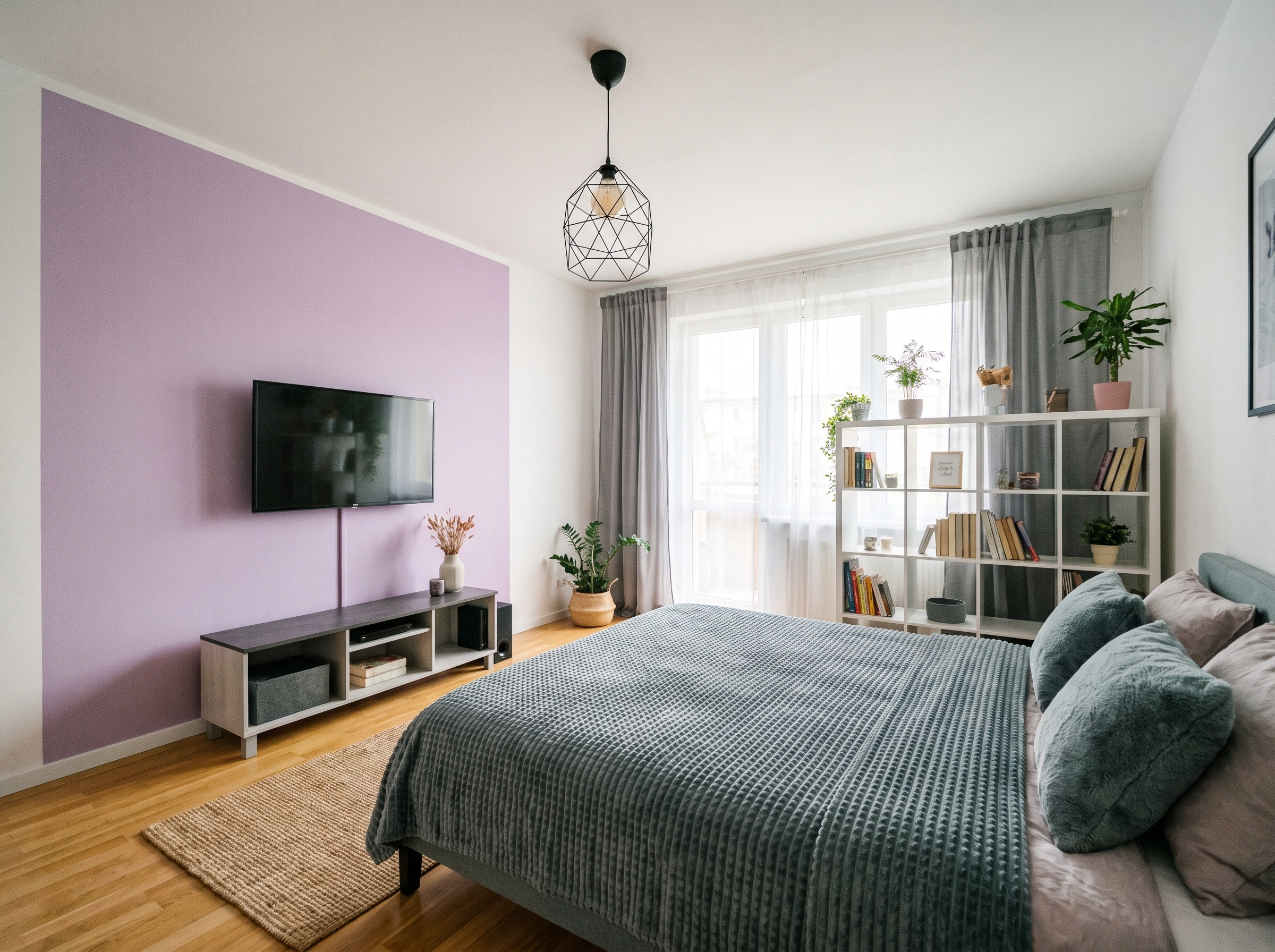
15 Beautiful Studio Apartment Interior Design Ideas for Small Spaces
There’s something uniquely exciting about designing a studio apartment. Every square foot matters, every piece of furniture pulls double duty, and the payoff — when you get it right — is a space that feels ten times bigger than it actually is. Here’s the thing: small doesn’t have to mean boring, cramped, or impersonal. These 15 real studio apartments prove that great interior design isn’t about how much room you have. It’s about what you do with it.
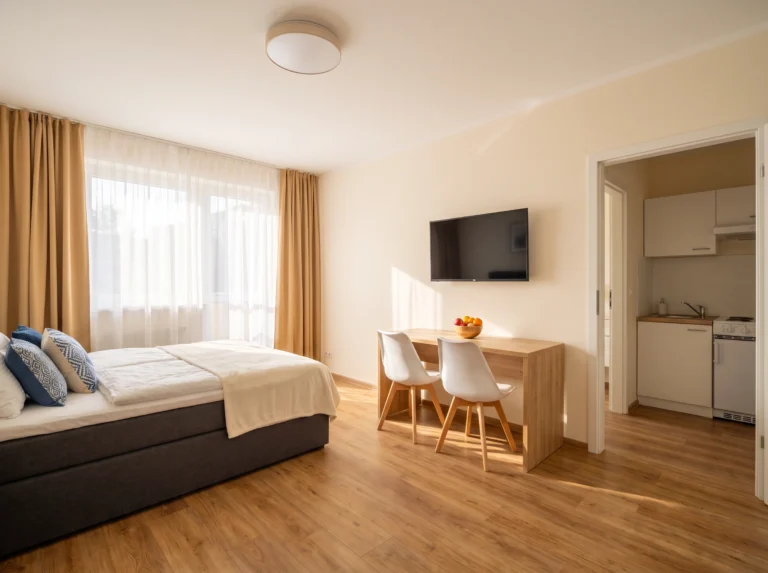
1. Go Warm and Open with a Sunny Color Palette
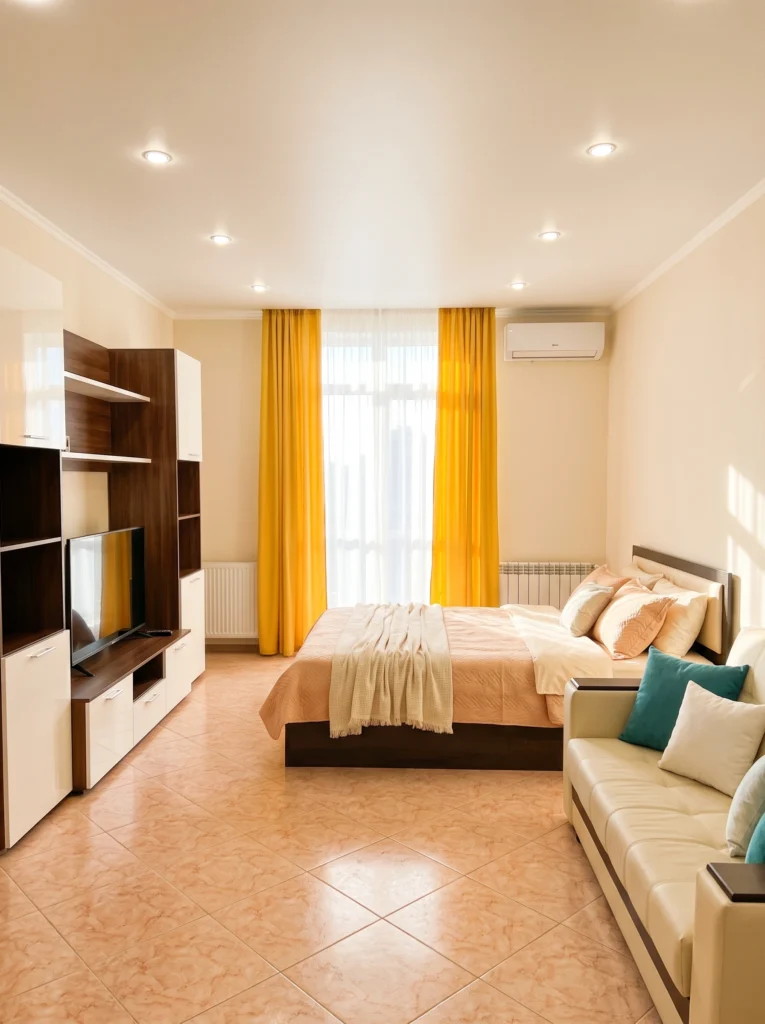
A warm color palette instantly makes a studio feel inviting instead of cramped. This space pairs golden yellow curtains with peach-toned tile and cream upholstery for a layout that practically glows. The entertainment unit anchors the living side while the bed sits near the window for natural light. It’s proof that warm tones can open a room up just as well as cool whites — sometimes better.
Pro tip: Match your curtain color to one accent in your bedding. It ties the whole room together without trying too hard.
2. Use an Open Shelf as a Room Divider
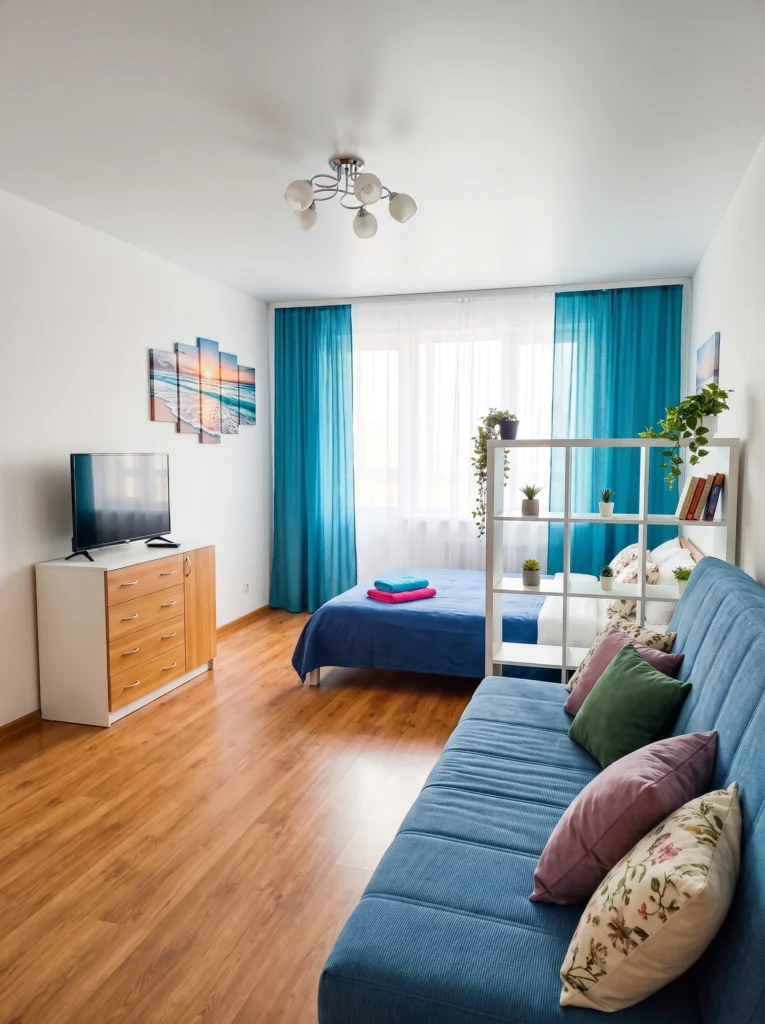
This is one of my favorite studio tricks. An open-back shelf unit — like the IKEA KALLAX — separates the sleeping area from the living zone without blocking light or sightlines. This space layers it beautifully with teal curtains, a matching sofa, and small plants on each shelf. You get visual separation and extra storage in a single piece of furniture. That’s a win in any studio.
Sofia’s honest take: Closed bookcases as dividers make studios feel like a storage unit. Open shelves keep things airy — trust me on this one.
3. Define Zones with an Area Rug
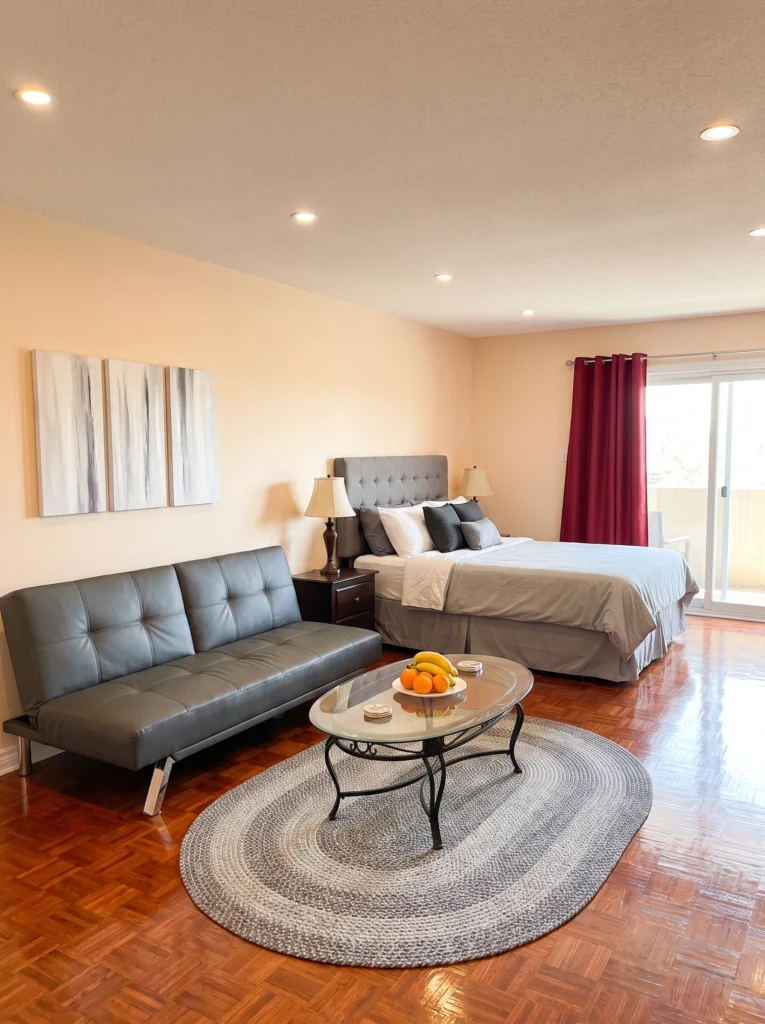
When you can’t build walls, a rug draws invisible ones. This studio uses a large braided oval rug to anchor the living area and create a clear boundary between the sofa zone and the bed. The glass coffee table keeps things feeling open, and the tufted headboard adds a touch of polish. It’s simple, budget-friendly, and it works every single time in small spaces.
Renter-friendly alternative: Skip wall-to-wall carpeting and layer two different rugs — one under the sofa, one beside the bed — to carve out separate zones without touching a single wall.
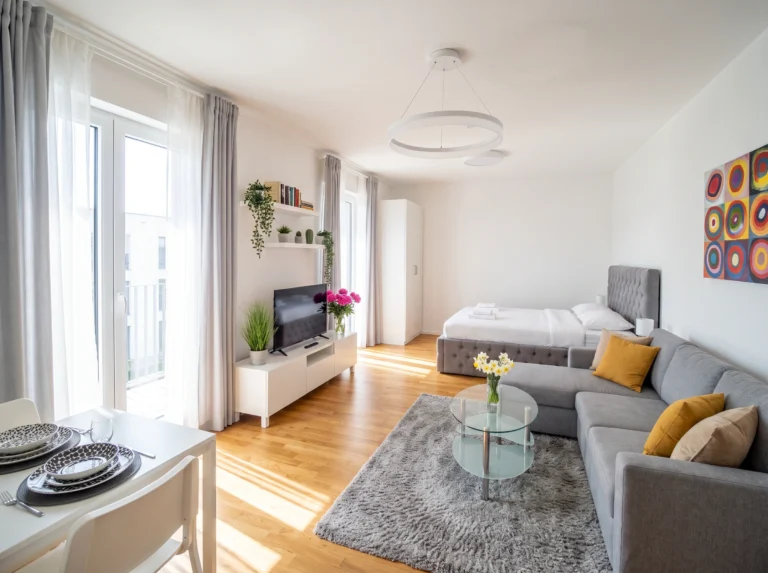
4. Lean Into Light, Neutral Minimalism
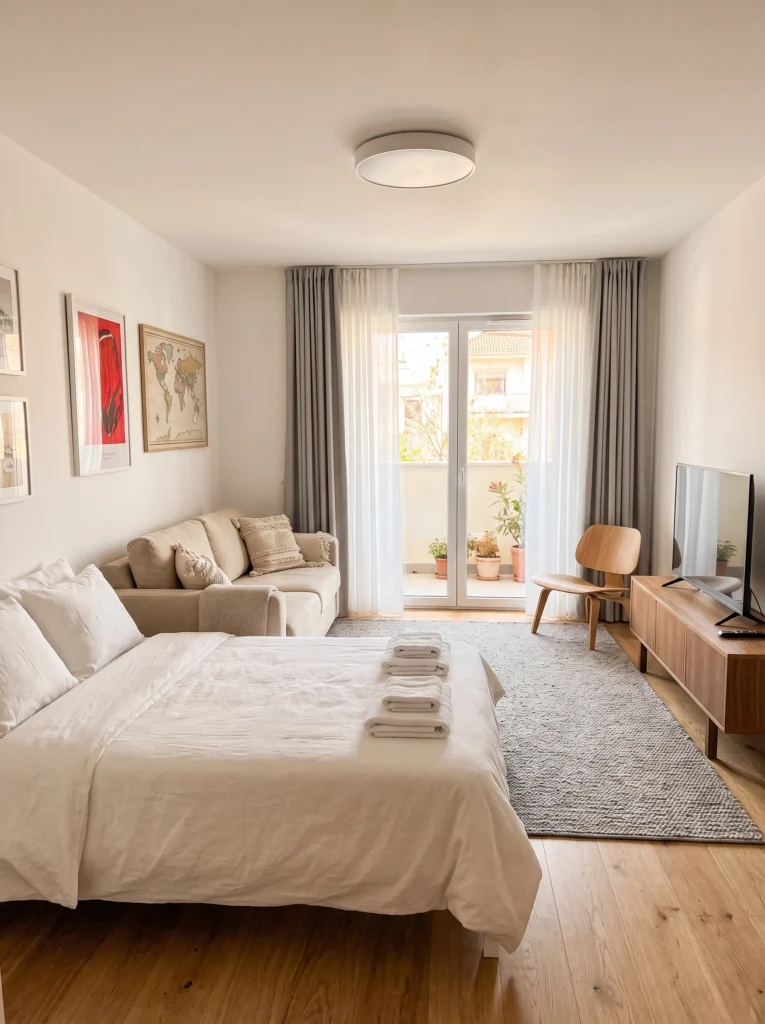
If you want a small space to breathe, a light neutral palette is your best friend. White linens, warm oak floors, a beige sofa with textured cushions, and soft gray curtains — this studio feels calm and surprisingly spacious. The balcony access floods the room with natural light, and the low-profile TV console keeps the visual weight down. Less really is more here.
My tip: Stick to two or three neutral tones and add texture through linen, wool, or woven baskets instead of adding more color. It keeps things rich without the visual clutter.
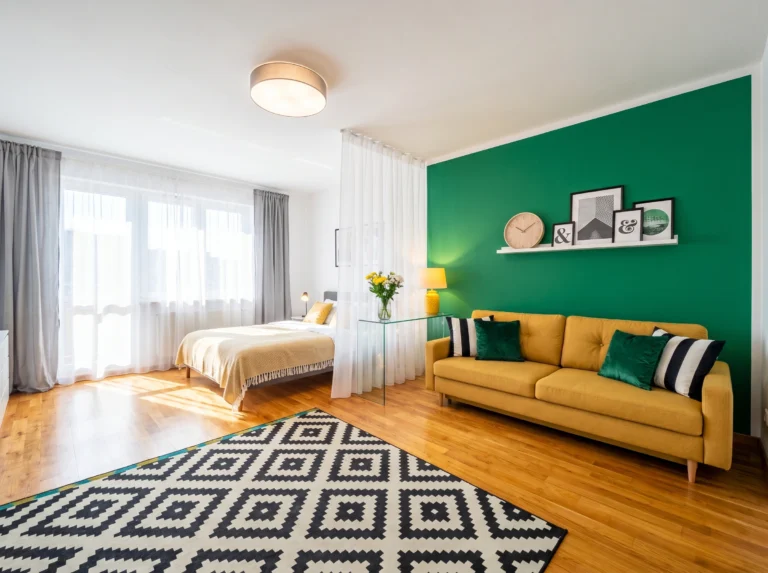
5. Go Bold with Mid-Century Color
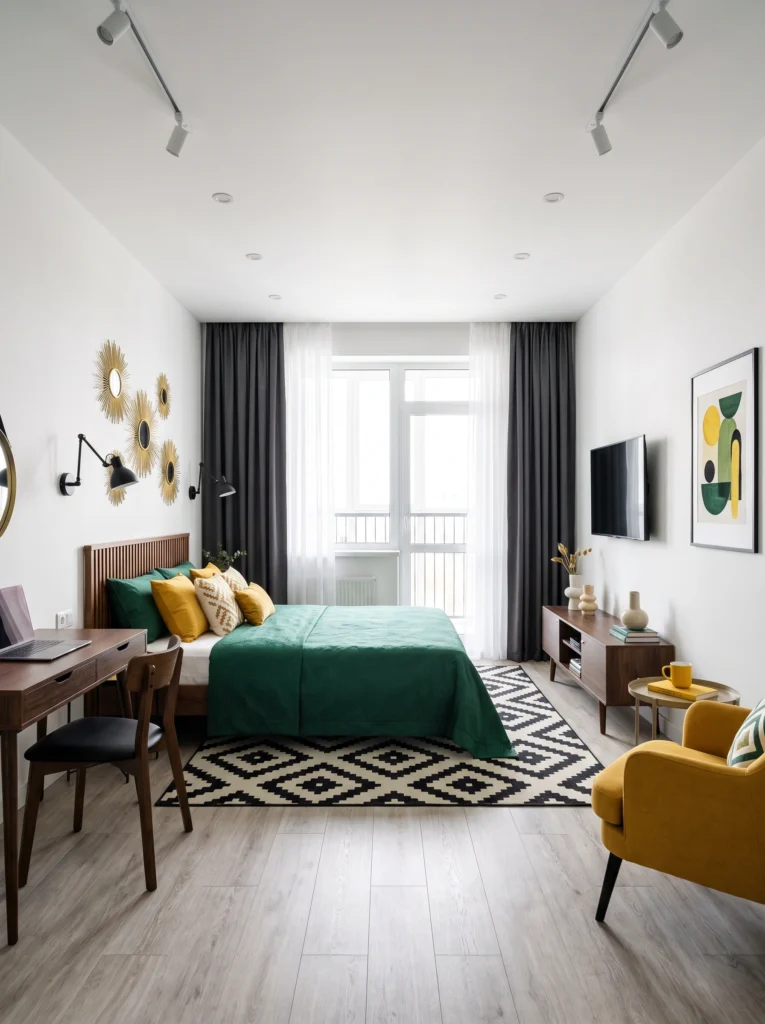
Not every studio needs to play it safe with neutrals. This space commits to emerald green, mustard yellow, and a graphic black-and-white rug — and it works because the walls stay crisp white. The walnut desk and mid-century chair ground the bold palette with warm wood tones. Track lighting and sunburst wall accents add personality without eating up floor space.
I’ve tested this: Bold colors in small spaces only work when you keep the backdrop neutral. White or light gray walls are non-negotiable if you’re going vivid with textiles.
6. Add a Pop of Color with Accent Pieces
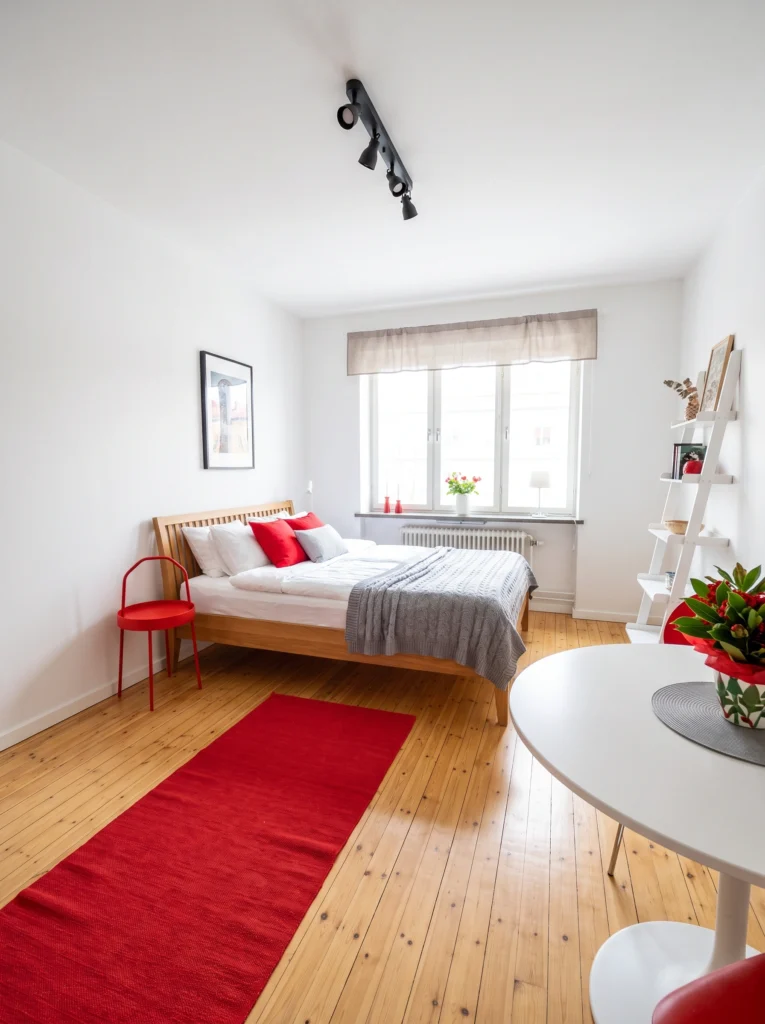
You don’t need to repaint or renovate to inject personality. A bold red runner rug, a matching side table, and a few red throw pillows turn this otherwise minimal Scandinavian studio into something memorable. The white ladder shelf adds vertical storage, and the small dining table proves you can fit a proper eating spot even in a tight layout. One color, strategically repeated, does the heavy lifting.
Budget vs. splurge: Save on the accent rug (you’ll swap it out eventually). Splurge on a solid wood bed frame — you’ll feel and hear the difference every night.
7. Carve Out a Dining Zone Without Losing Space
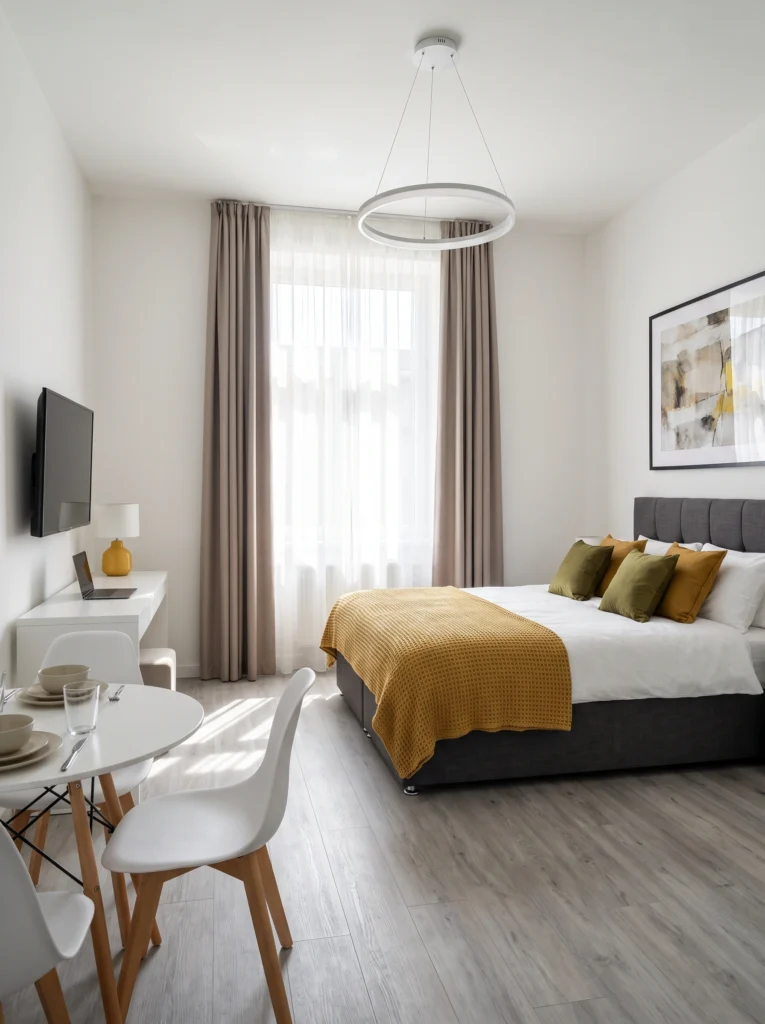
A lot of studio dwellers skip the dining table entirely — but you don’t have to. This space fits a small round table with two mid-century chairs right next to the bed, and it doesn’t feel crowded at all. The ring pendant light overhead helps define the area, and the mustard throw and olive pillows add warmth. Eating at a real table changes how your home feels. It’s worth the square footage.
My favorite: A round table for two. It takes up less space than a square one, has no sharp corners to bump into, and seats three in a pinch.
8. Try a Navy-and-Neutral Palette for Depth
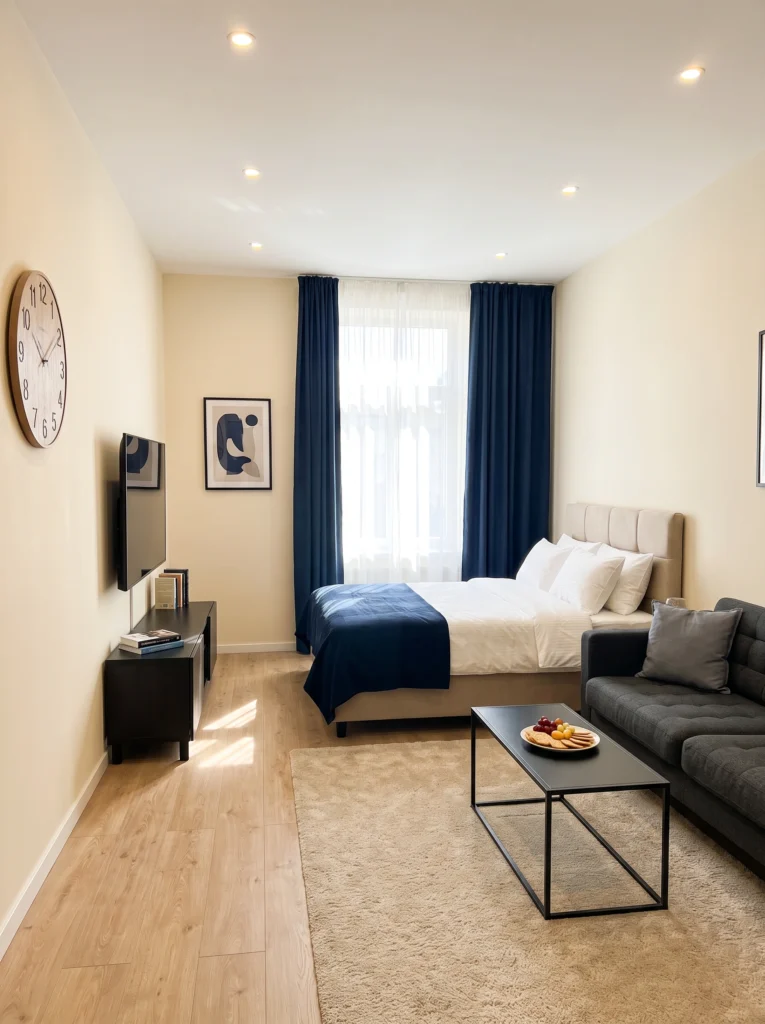
Dark tones in a small space can go wrong fast — but navy paired with warm beige is the exception. This studio balances deep blue curtains and a matching bedspread against creamy walls and light wood floors. The oversized wall clock adds character, and the black metal coffee table keeps the living side grounded. It feels cozy without feeling dark or heavy — that’s the sweet spot.
Pro tip: If you’re nervous about dark curtains in a small space, pair them with sheer white under-curtains. You get the richness during the day and full light control when you need it.
9. Create Drama with an Accent Wall
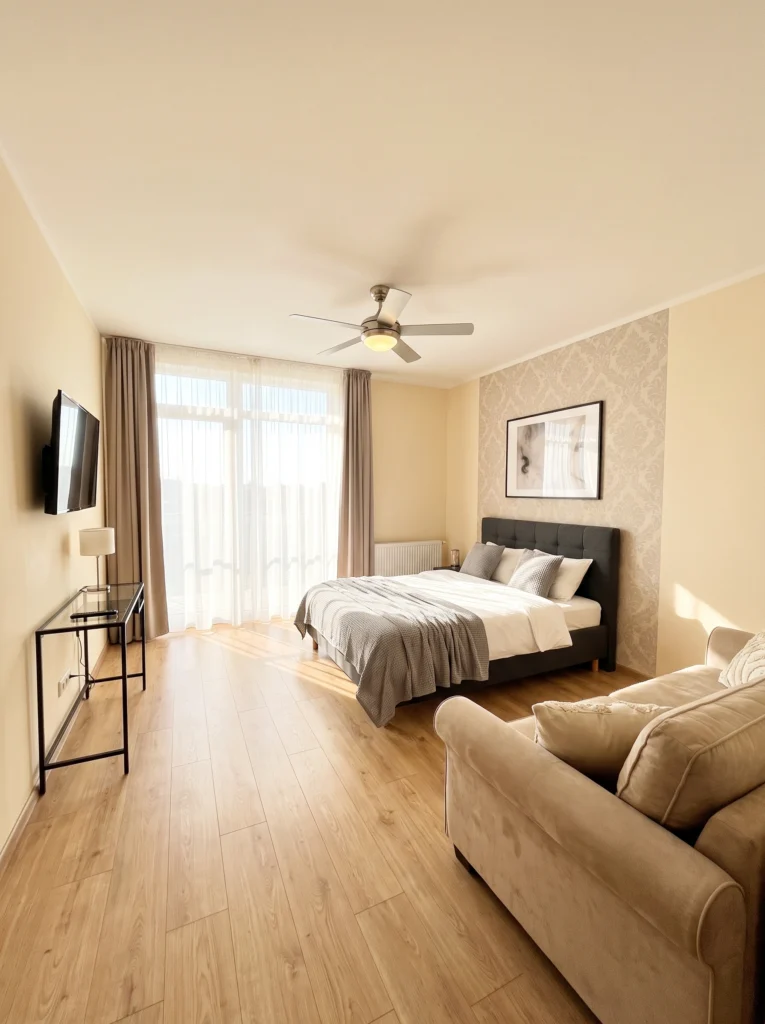
An accent wall behind the bed immediately signals “this is the bedroom zone” — even in a one-room apartment. This studio uses a subtle damask wallpaper in a warm tone that plays beautifully against the cream sofa and light wood floors. The ceiling fan adds function and a bit of charm. You don’t need bold paint to make a statement; a textured or patterned wall does it quietly.
Renter-friendly alternative: Peel-and-stick wallpaper gives you the same effect and peels off cleanly when you move. I’ve used it twice — zero damage, zero drama.
10. Use Mirrors to Double Your Visual Space
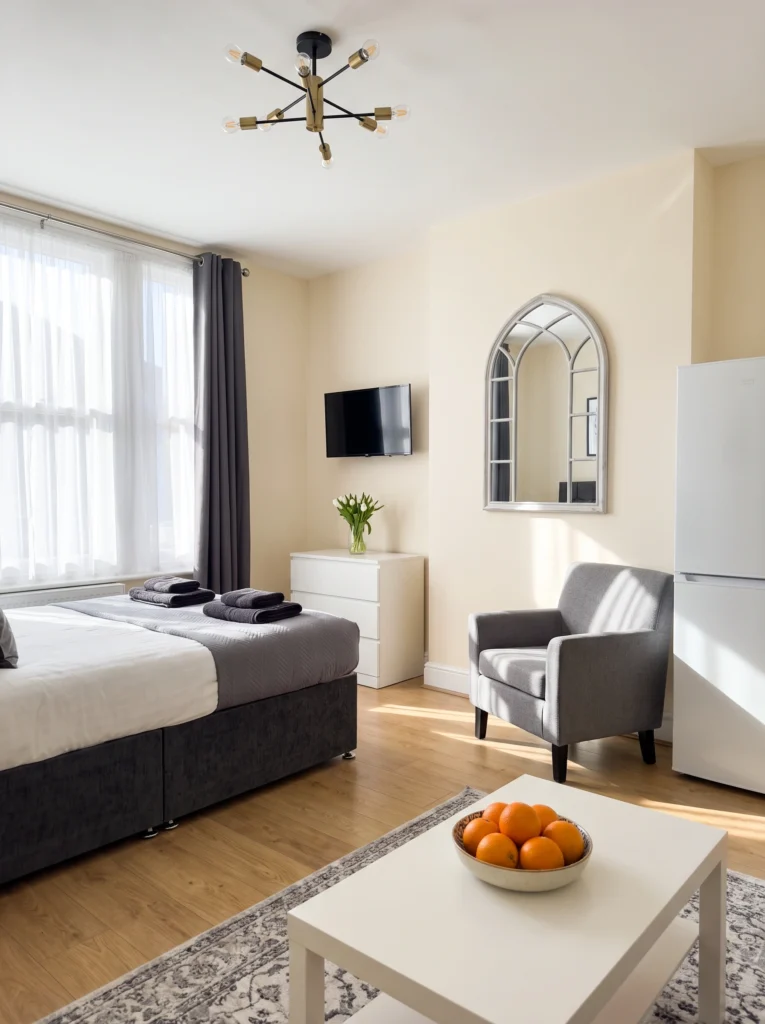
A well-placed mirror is the oldest trick in the small-space playbook — and it still works. This studio hangs a tall arched mirror on the wall opposite the window, which bounces natural light deep into the room and makes the space feel nearly twice as wide. The sputnik chandelier draws the eye upward, and the single armchair creates a cozy reading corner without crowding the layout.
Don’t waste your money on: Small decorative mirrors that don’t reflect anything useful. Go big — at least 40 inches tall — and place it where it can catch and bounce real light.
11. Build a Home Office Right Into the Layout
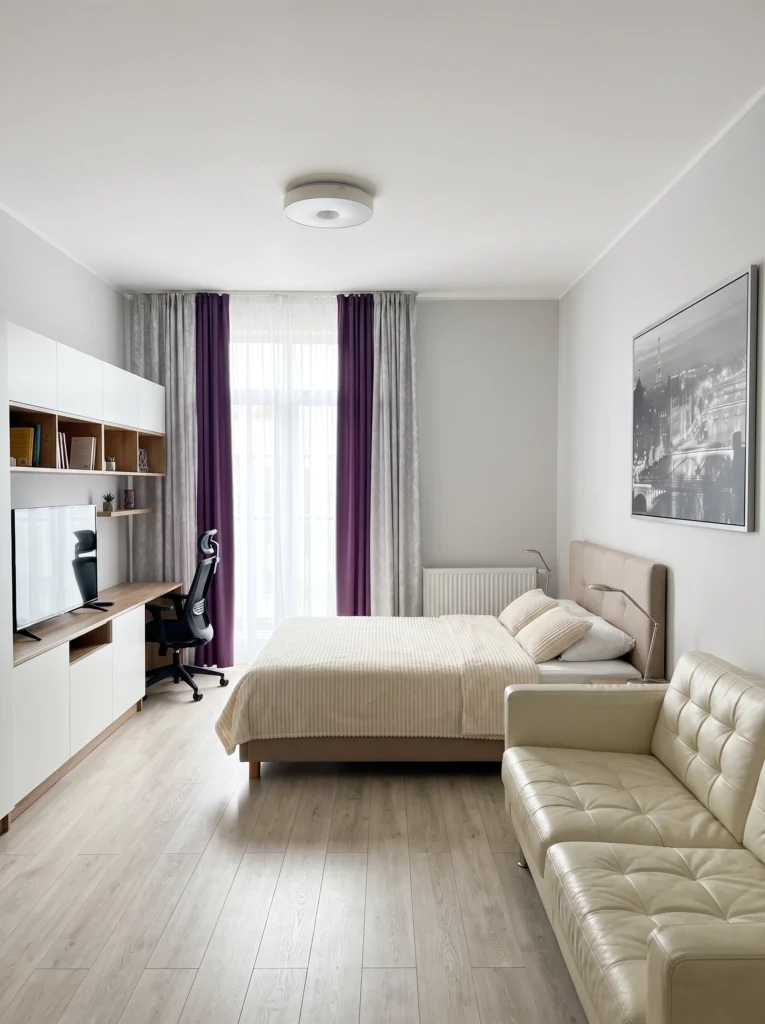
Working from home in a studio means your desk is always visible — so make it look intentional. This space integrates a desk into a full-wall shelving and storage unit, keeping everything tidy and contained. The ergonomic chair says “I take my work seriously,” while purple curtains add a subtle personality hit. The leather sofa divides work from rest without walls. Smart, functional, and clean.
Sofia’s honest take: If your desk faces your bed, you’ll never fully “leave” work. Even a 90-degree turn so you face a wall instead makes a real psychological difference.
12. Embrace the Open-Plan Kitchen Layout
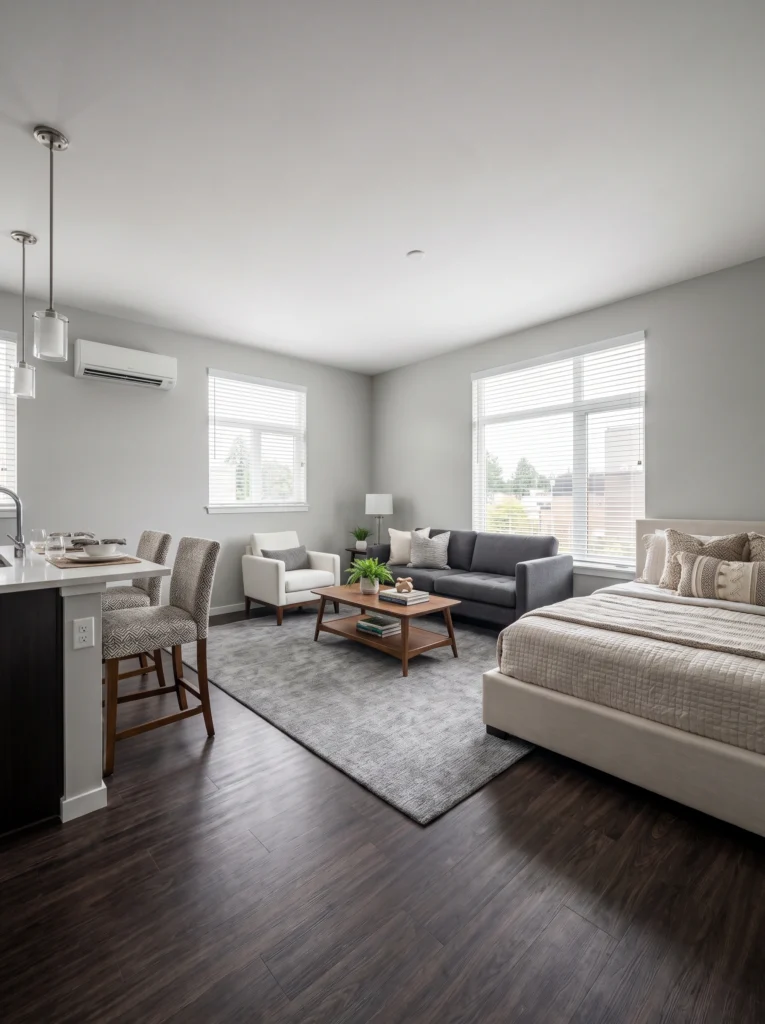
When your kitchen shares the room with your bed and sofa, lean into it instead of fighting it. This studio uses a kitchen bar with counter-height stools to create a natural boundary between cooking and living. The large gray area rug anchors the sofa and bed zones, while a walnut coffee table ties the two sitting pieces together. It feels like a real apartment — not a dorm room.
My tip: Bar stools at a kitchen counter double as your dining setup and save you the space of a separate table. Choose stools that tuck fully under the counter when not in use.
13. Play with Pastels for a Soft, Personal Touch
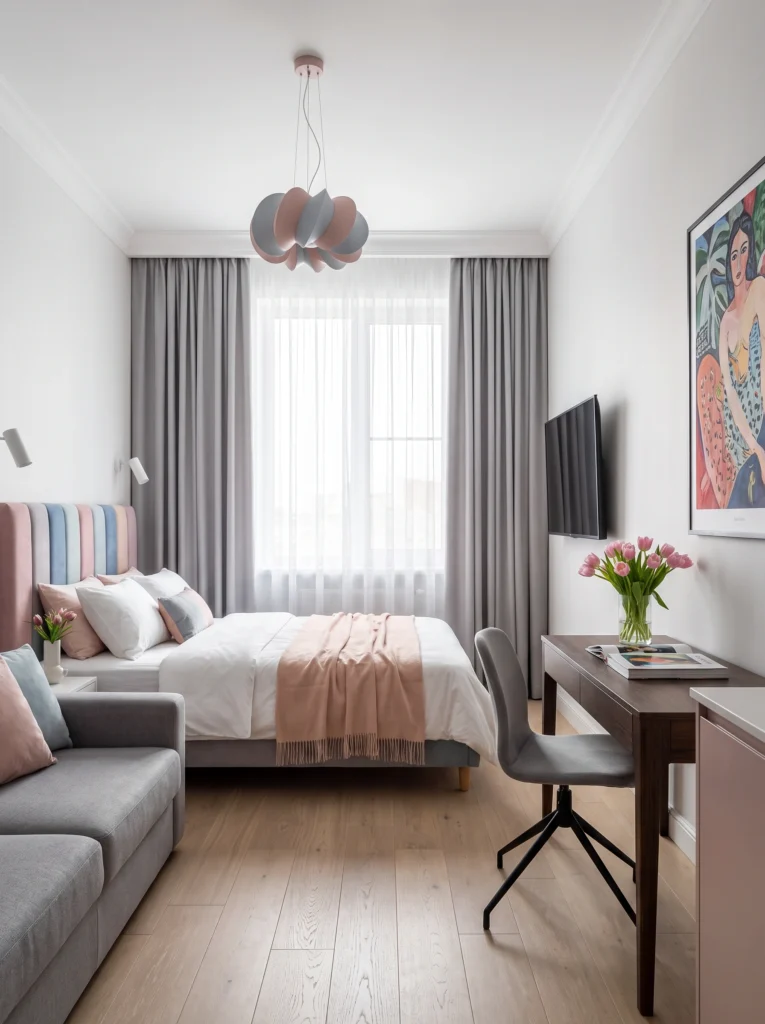
Pastels aren’t just for nurseries. This studio pairs a pink-and-blue upholstered headboard with a sculptural blush-gray pendant light and soft gray furniture for a look that’s playful, grown-up, and full of personality. The desk fits neatly against the wall, and fresh tulips bring the whole palette to life. It proves you can have fun with color and still look polished in a small space.
I’ve tested this: A colorful headboard is the single easiest way to add personality to a studio bedroom. You see it from every angle, and it anchors the whole sleeping zone.
14. Set the Mood with Warm Evening Lighting
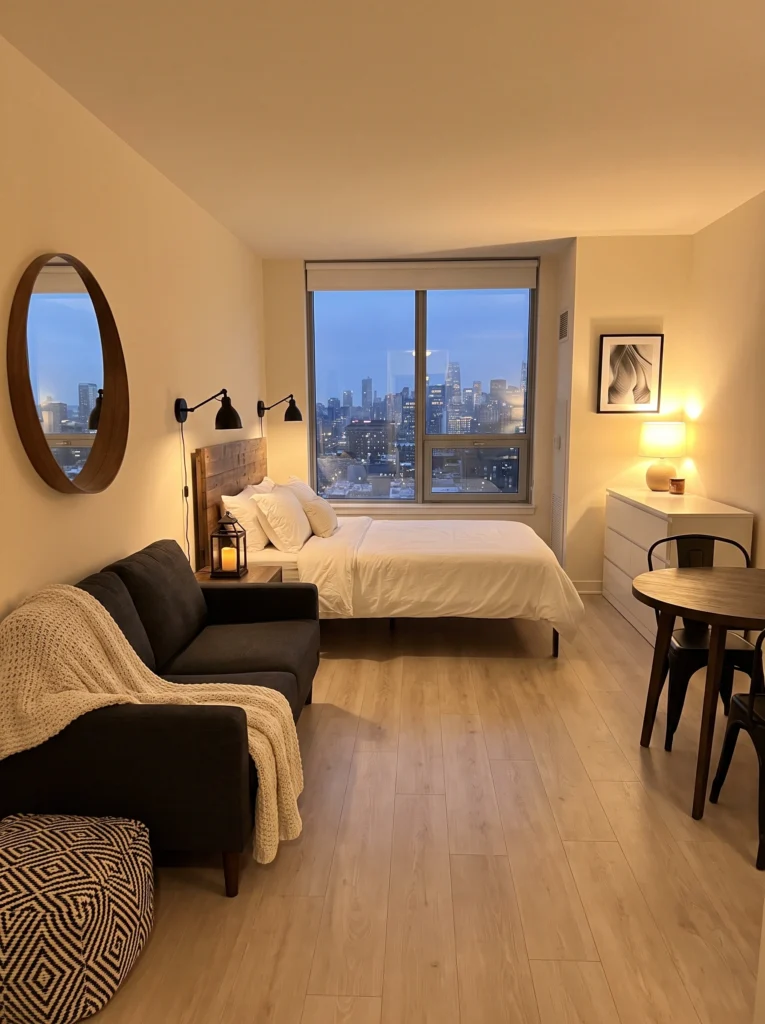
The right lighting turns a studio from “I live here” to “I love living here.” This city apartment uses a table lamp, a lantern-style candle holder, and wall-mounted sconces to create layers of soft, warm light at eye level. The round walnut mirror reflects it all back, and the small bistro dining set proves you don’t need a lot of room to feel like a grown-up. Ditch the overhead — go warm and low.
Pro tip: Three light sources at three different heights — table lamp, floor lamp or sconce, and a candle — is all you need to make any studio feel like a magazine photo at night.
15. Layer Textures for Bohemian Warmth
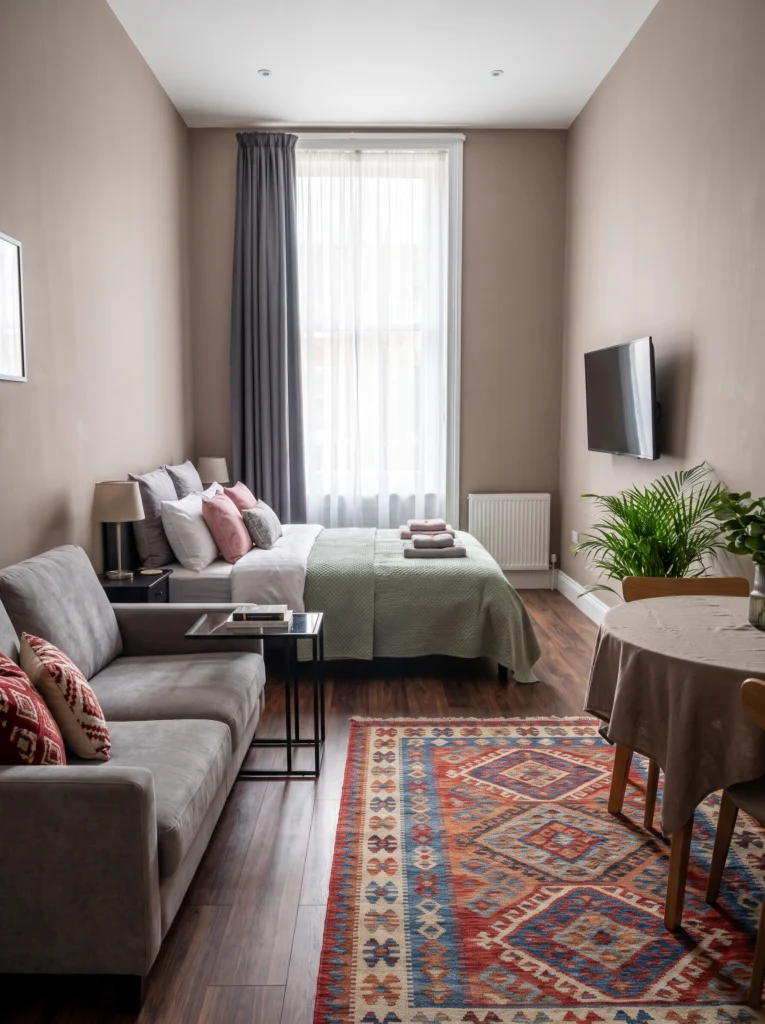
When your studio is short on square footage, texture does what extra furniture can’t — it makes a room feel rich and layered. This space combines a vibrant kilim rug, a woven table covering, velvet and knit pillows, and a large tropical plant for a bohemian feel that’s warm without being cluttered. The taupe walls give everything a grounded, earthy backdrop. It’s cozy, personal, and deeply livable.
My favorite: A kilim or vintage-style rug is the single fastest way to make a studio feel like a home instead of a rental. It adds color, warmth, and soul — all in one piece.
Final Thoughts
Studio apartment design isn’t about making do — it’s about making intentional choices that reflect how you actually live. Whether you gravitate toward bold color, quiet minimalism, or layered bohemian warmth, the key is the same: every piece earns its place, every zone has a purpose, and your space feels like you.
Pick one idea from this list. Just one. Try it this weekend. You’ll feel the shift the moment you walk through the door.
The best studio isn’t the biggest one — it’s the one that makes you genuinely happy to come home.