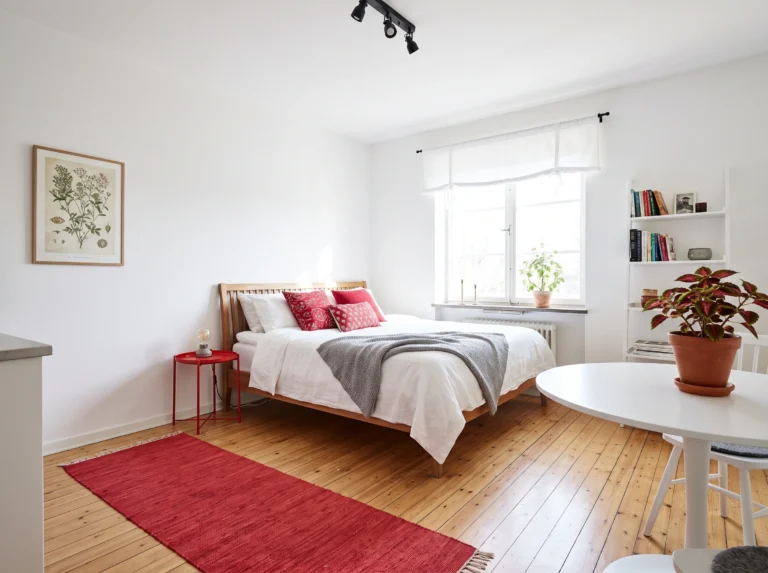
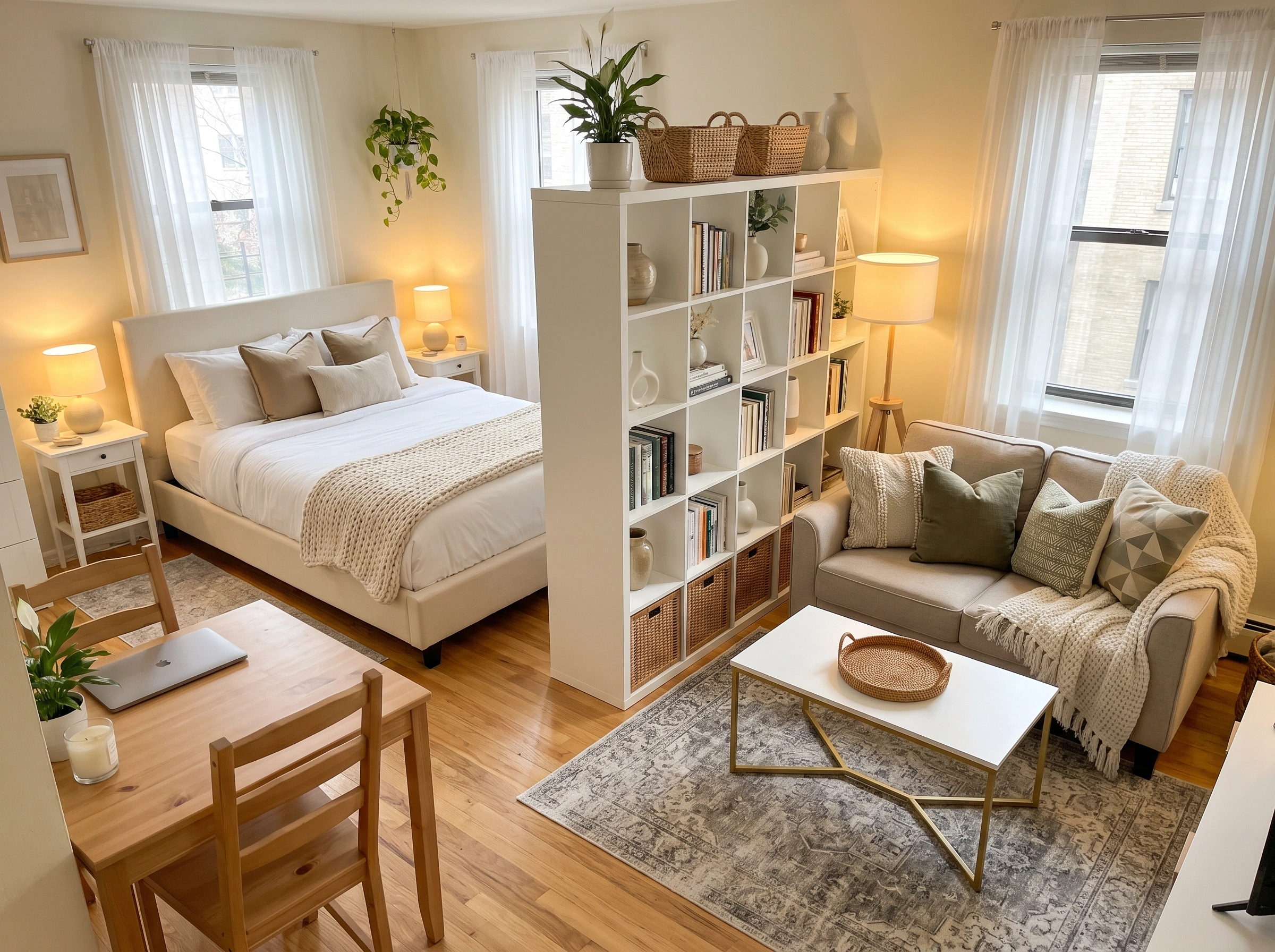
How to Pick the Right Rug Color for Your Studio Apartment
Here’s the thing about studio apartments — your rug does more work than any other piece in the room. It defines zones, sets the color story, and either grounds the whole space or throws it completely off balance. And color? That’s the make-or-break decision. Pick the wrong shade and your studio feels either flat or chaotic. Pick the right one and everything else falls into place. Here are twelve rug colors I’ve seen actually work in real studio apartments — and exactly when to use each.
1. Go Bold with a Chartreuse Statement
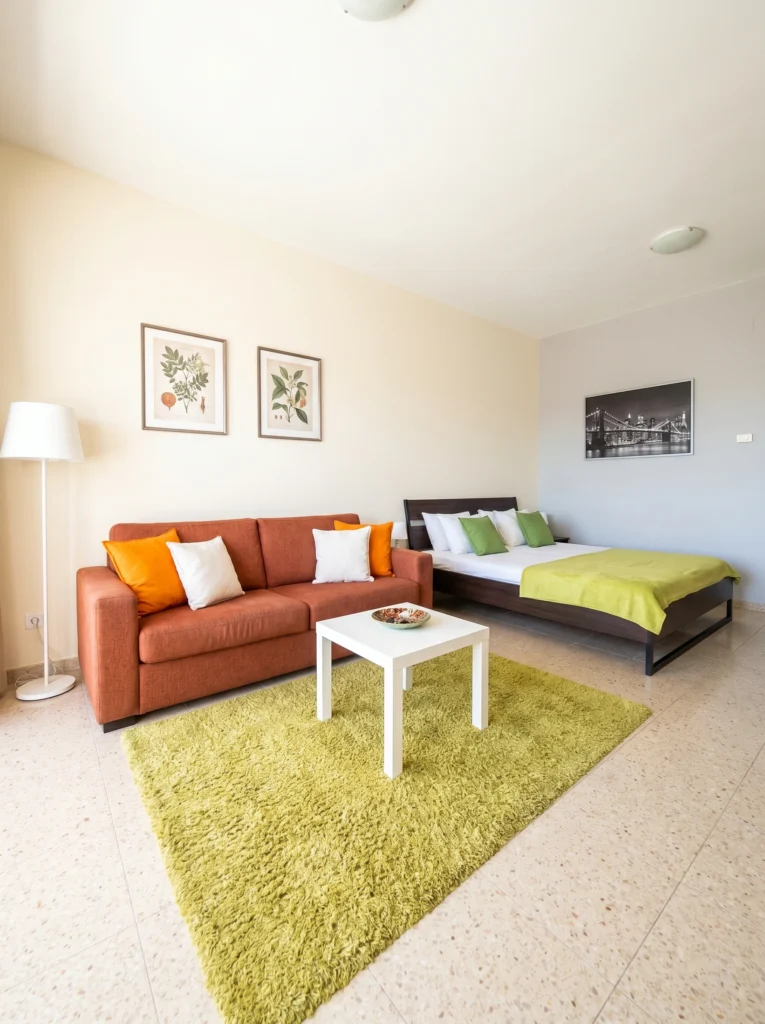
A saturated chartreuse rug turns a plain rental studio into something intentional. It picks up warmth from the terracotta sofa and cools it down with green, which is exactly the trick — a bold rug color needs at least one other element in the room to echo or contrast it. In a small space, this move works best when your walls stay neutral so the rug can actually breathe on its own.
Pro tip: Match one accent to your rug — a pillow, a throw, or even a book spine — so the color feels intentional, not accidental.
2. Black and White Pattern for Graphic Punch
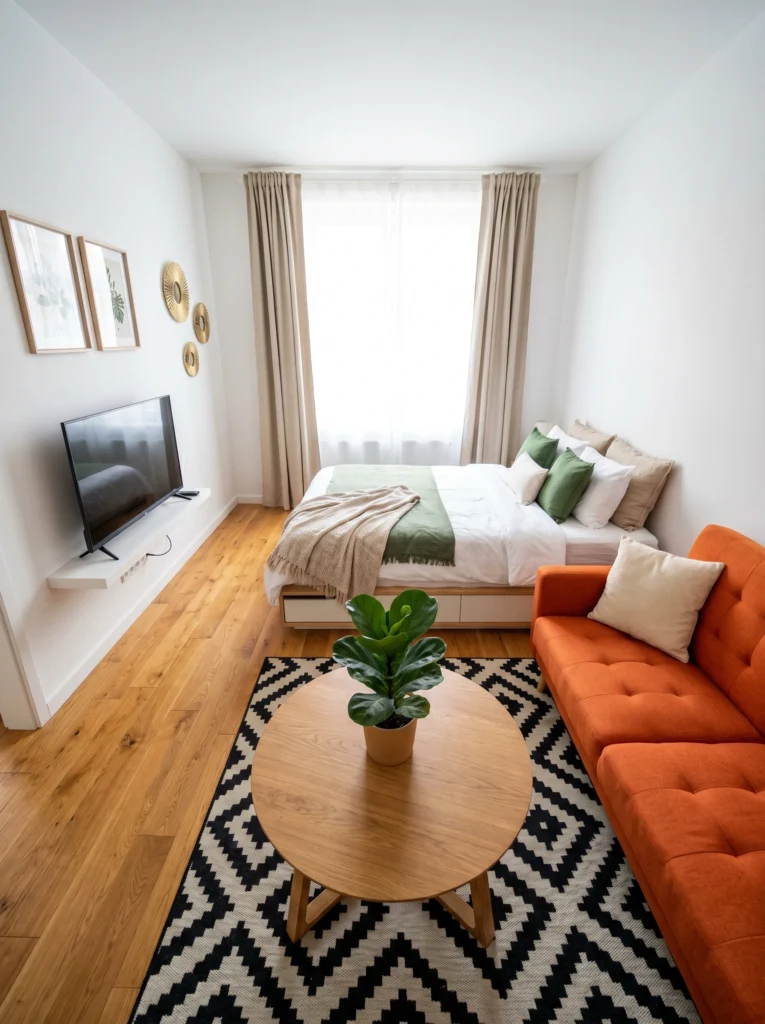
Pattern is color’s quieter cousin, and a bold black-and-white rug like this one does the same job as a saturated hue — it anchors the room. Against warm wood floors and an orange sofa, the geometric print keeps things grounded and sharp. Studios need a little edge, and pattern gives you that without forcing you to commit to a specific color you might tire of in six months.
Sofia’s honest take: I love black-and-white rugs for one reason — they never clash with anything. Change your sofa, your bedding, your everything, and this rug still works.
3. Faded Vintage Neutrals for Soft Layering
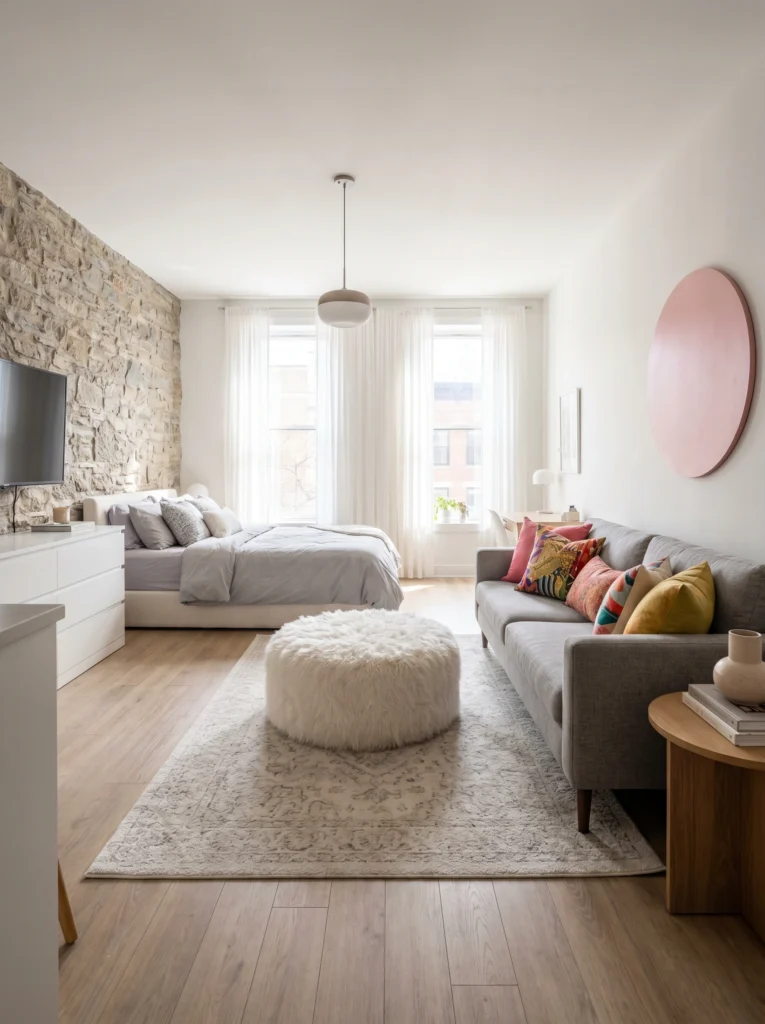
When the rest of your studio is already doing a lot — a stone accent wall, colorful pillows, a pink art piece — your rug should be the calm one. A faded vintage-style neutral in cream and soft beige lets everything else sing without competing for attention. It’s my favorite move for eclectic studios where you’ve collected pieces slowly and want them to actually coexist without visual chaos.
My tip: Look for “washed” or “distressed” Persian-style rugs. They hide dirt, hair, and daily studio life beautifully between cleanings.
4. Warm Earth Tones for Cozy Studios
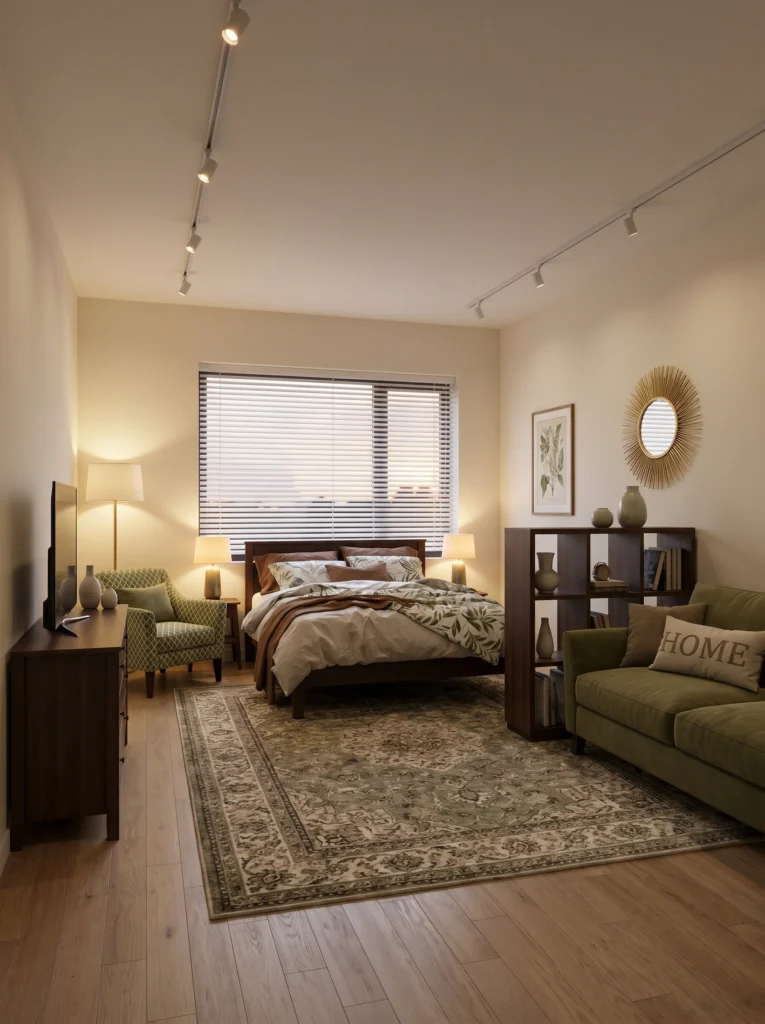
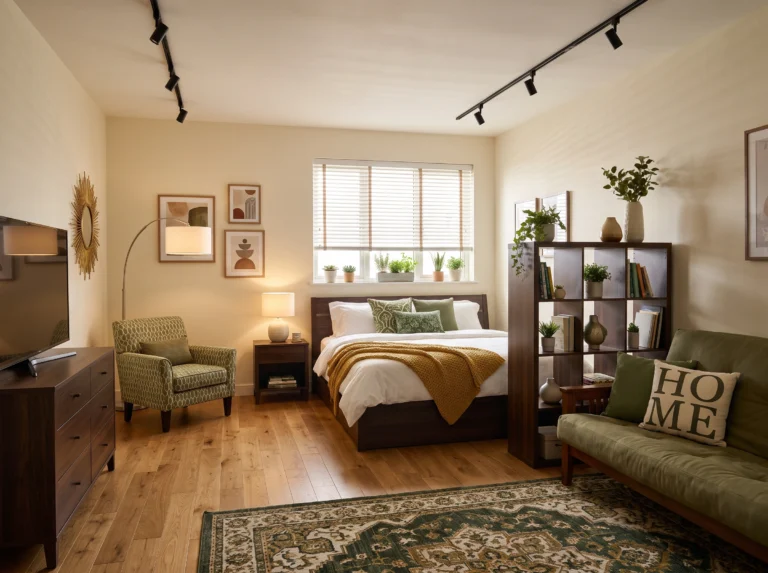
A traditional olive-and-cream Persian rug like this one wraps a studio in old-world warmth. It works because everything else in the room speaks the same language — green velvet, brown wood, brass mirror, warm lamp light. Earth-toned rugs feel especially right in studios with lower ceilings or dim natural light, where a cool gray rug would only make the space feel colder and more cave-like.
Budget vs. splurge: Splurge on a real wool Persian if you can swing it. Save with a machine-woven “traditional” version that mimics the look for a fraction.
5. Sunshine Yellow to Anchor a Colorful Studio
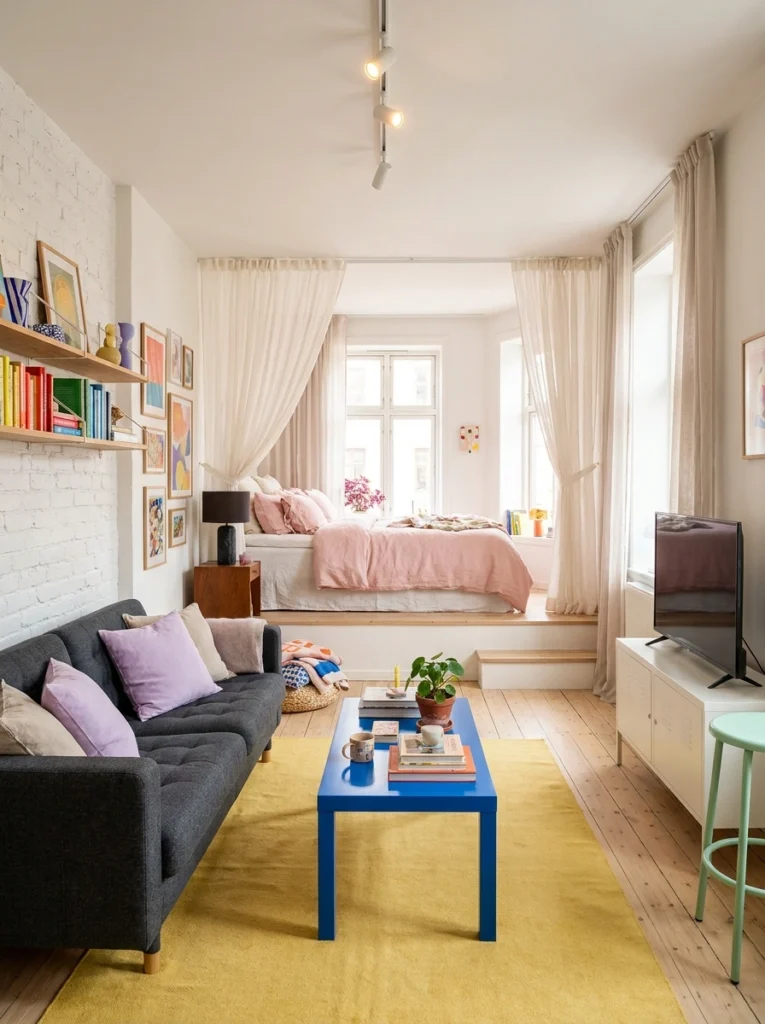
A mustard-yellow rug is a commitment, and I mean that as a compliment. This one anchors an already colorful studio — dark gray sofa, blue coffee table, pastel pillows — by giving all that energy something warm to sit on. Yellow rugs work best in studios with good natural light, where the shade reads sunny and cheerful rather than muddy or dated by afternoon.
My favorite: Pair a yellow rug with cool tones like gray, navy, or blue. The temperature contrast is what makes the whole palette sing.
6. Grounded Green to Balance Bold Bedding
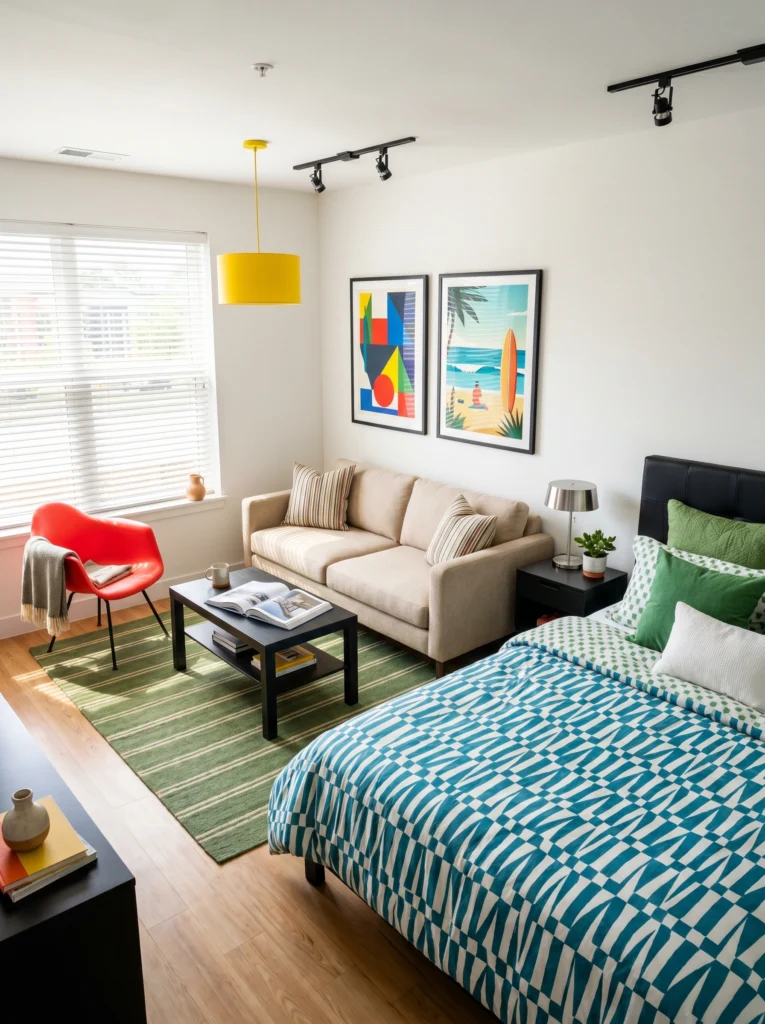
When your bedding is doing the heavy lifting — a bold blue geometric print, checkered accents, pop-art wall — a green rug pulls it all back to earth. Green is nature’s neutral. It plays well with almost every accent color and calms down a room that would otherwise feel like a color explosion. This olive-toned striped version is especially forgiving in a busy studio.
I’ve tested this: A green rug plus a red or orange accent chair is one of the most reliable color combos in decor. Complementary colors — they always work.
7. Natural Fiber for Effortless Warmth
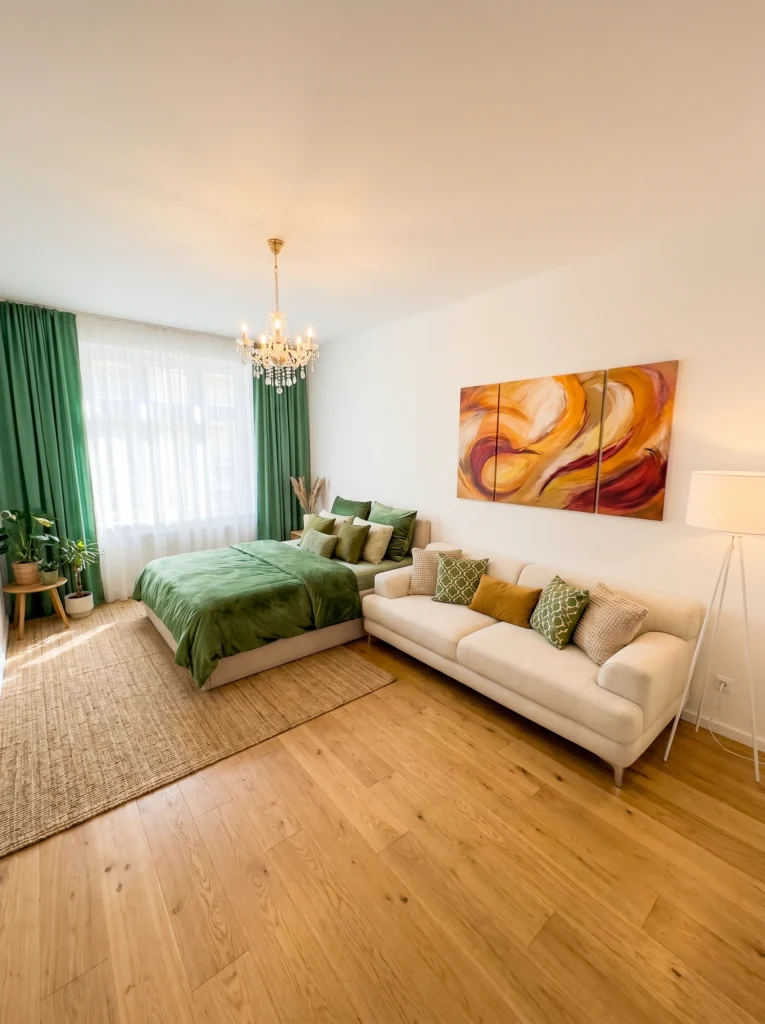
A jute or sisal rug is my go-to answer when someone asks “what color rug is safest?” It’s not really a color — it’s a texture. And that’s exactly why it works. Natural fibers add warmth and quiet contrast against wood floors, and they let the rest of your studio (like this bold green bedding and dramatic wall art) do the talking without competing.
Renter-friendly alternative: Jute rugs are cheap, durable, and hide small stains well. Perfect for a first apartment where you’re still figuring out your style.
8. Soft Gray for a Scandi Palette
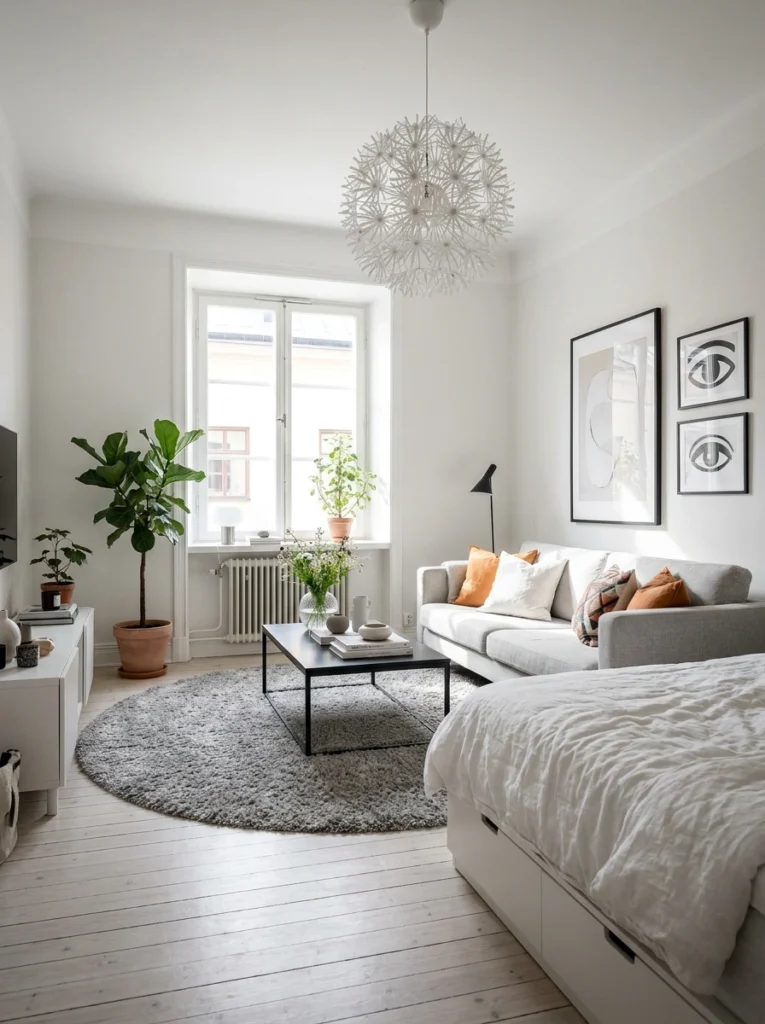
A soft gray round rug is the Scandinavian move — cool, calm, and completely uncontroversial. In an all-white studio with pale wood floors, a gray rug adds enough contrast to define the seating area without darkening the room. Round rugs also help in narrow studios because they soften the sharp lines of rectangular furniture and beds pushed hard against the walls.
Pro tip: Gray rugs come in warm and cool undertones. Warm grays (with a hint of beige) suit wood floors; cool grays suit painted or tile floors.
9. High-Contrast Geometrics in an All-White Space
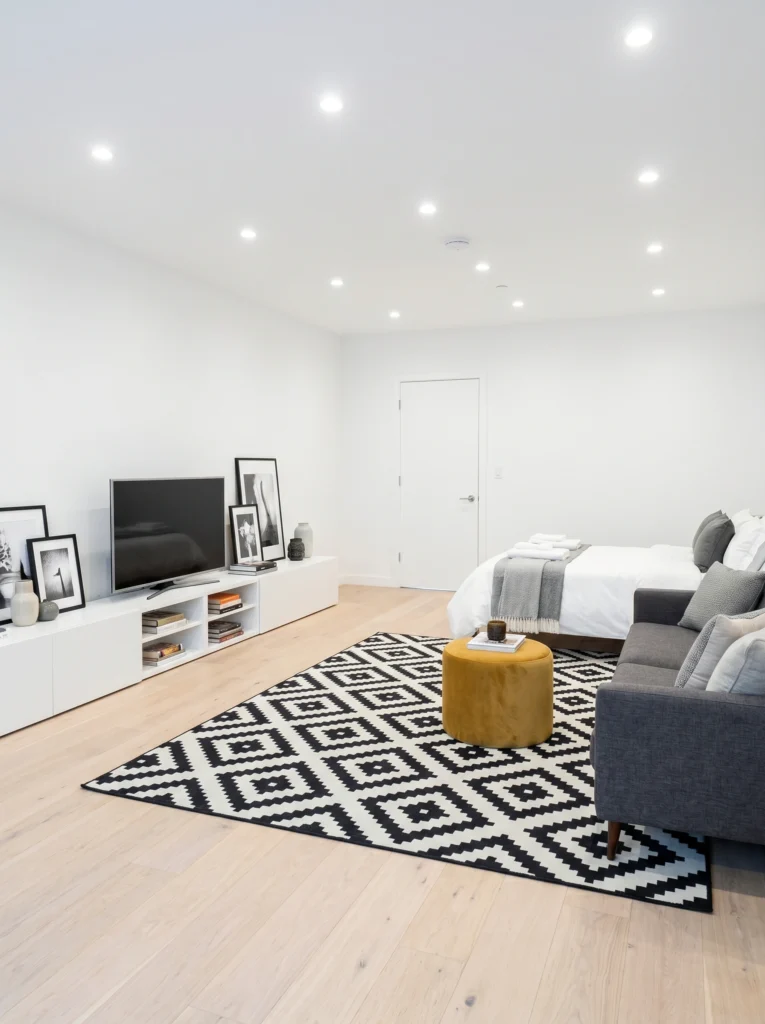
In a truly minimalist studio — white walls, white ceilings, pale floors, one mustard pouf — you need something graphic on the floor or the whole room reads like a hotel lobby. This black-and-white geometric rug is doing exactly that job. It creates a focal point, defines the living zone, and injects personality without adding a single new color to the palette.
Sofia’s honest take: Don’t be afraid of pattern in a small space. The old rule about “small rooms need solid rugs” is outdated — pattern actually adds interest and disguises spills.
10. Ivory-on-Ivory for Ultimate Serenity
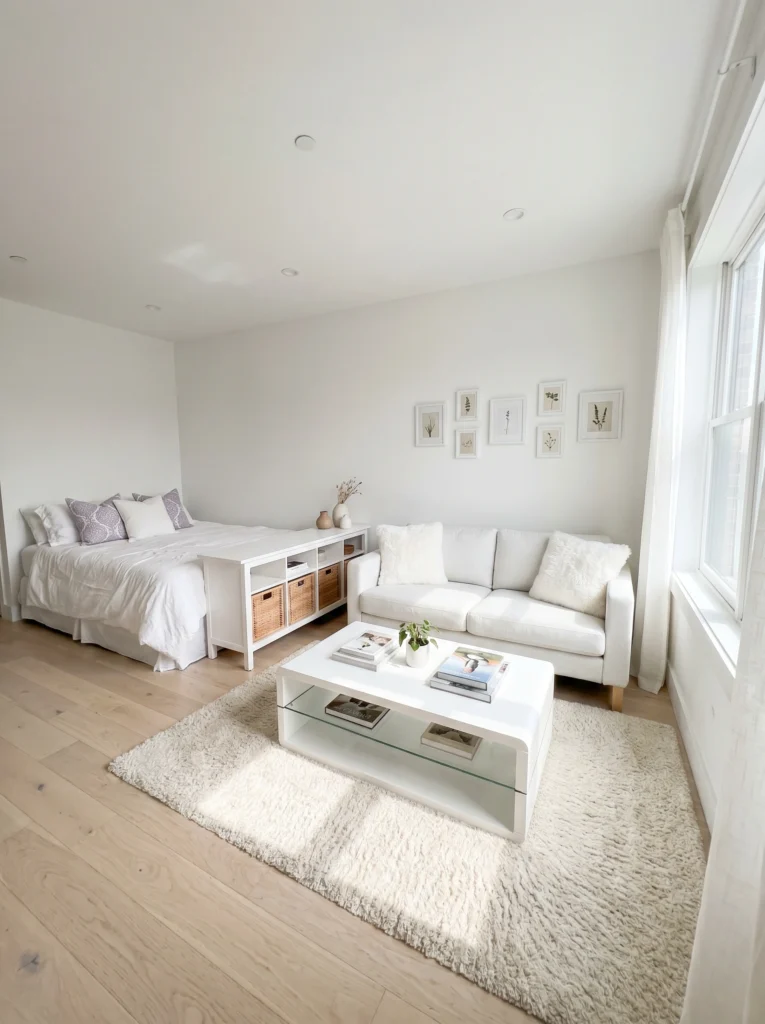
If your studio is already all-white and you love it that way, don’t fight it — layer more white. A soft ivory shag rug adds texture and warmth without breaking the palette, and the plush pile brings a physical softness a flat rug can’t match. This is the studio version of a spa. It’s calm, it’s restful, exactly what some people need to come home to after a long day.
Don’t waste your money on: A pure white rug if you have pets or drink coffee on the couch. Go with ivory or oatmeal instead — they read the same but forgive more.
11. Warm Tan to Balance a Painted Accent Wall
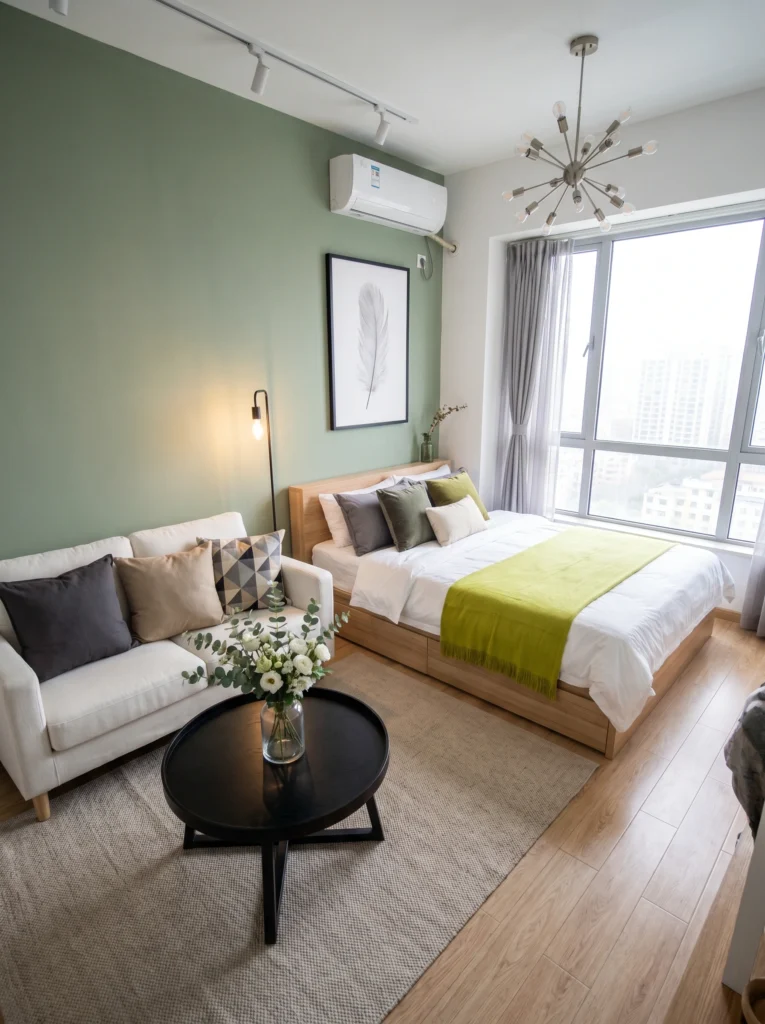
When you’ve committed to a colored accent wall — like this soft sage green — your rug needs to be a supportive character, not a leading one. A warm tan jute or wool rug balances the coolness of green walls with earthy warmth, without adding another loud color to the mix. Anything busier or brighter, and the room would quickly start to feel visually noisy.
My favorite: Pair painted walls with textural neutral rugs. Let the wall be the color moment; let the rug be the grounding one.
12. Subtle Stripes to Zone Your Studio
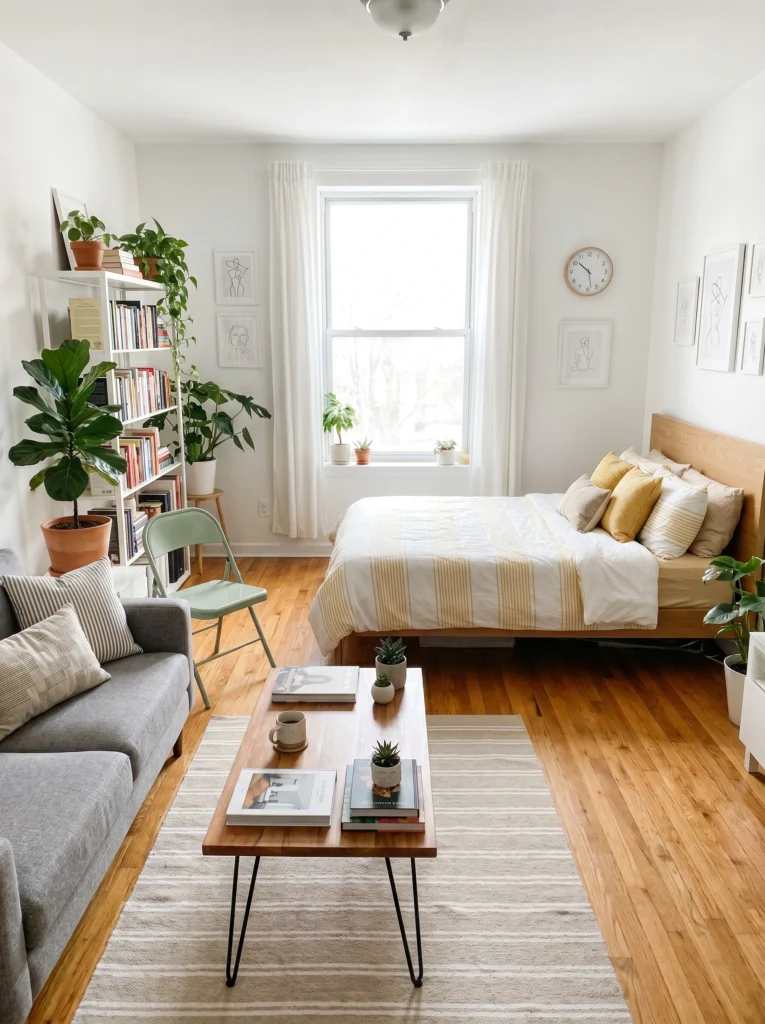
The best-kept secret of studio rugs: subtle stripes visually separate zones without cluttering your color palette. This barely-there cream-and-beige stripe under the seating area quietly says “this is the living room” while keeping the whole studio feeling open, bright, and connected as one space. Stripes also elongate a narrow footprint, which is a genuinely useful bonus in most rectangular studio floor plans.
My tip: Run stripes along the longer axis of your studio to make the room read longer, not wider. Direction matters more than color here.
Final Thoughts
The right rug color for your studio isn’t the trendiest one or the most expensive one — it’s the one that makes your specific space feel finished. If your studio feels busy, go neutral. If it feels flat, go bold. If it feels cold, go warm. If it feels chaotic, go patterned to distract or solid to calm.
Pick one rug this weekend. Live with it for a month. If it makes you happy every time you walk in — you got the color right.
Your rug is the foundation your studio stands on. Get the color right, and everything else has somewhere to belong.