13 Simple Studio Apartment Ideas That Actually Make a Difference
Living in a studio doesn’t mean settling for a space that feels like a dorm room with better rent. The truth is, most studios just need a few intentional choices — not a renovation, not a massive budget — to feel like a real, put-together home. These 13 ideas are ones I keep coming back to because they work in real life, not just on Pinterest.
1. Stick to a Neutral Palette with Warm Wood
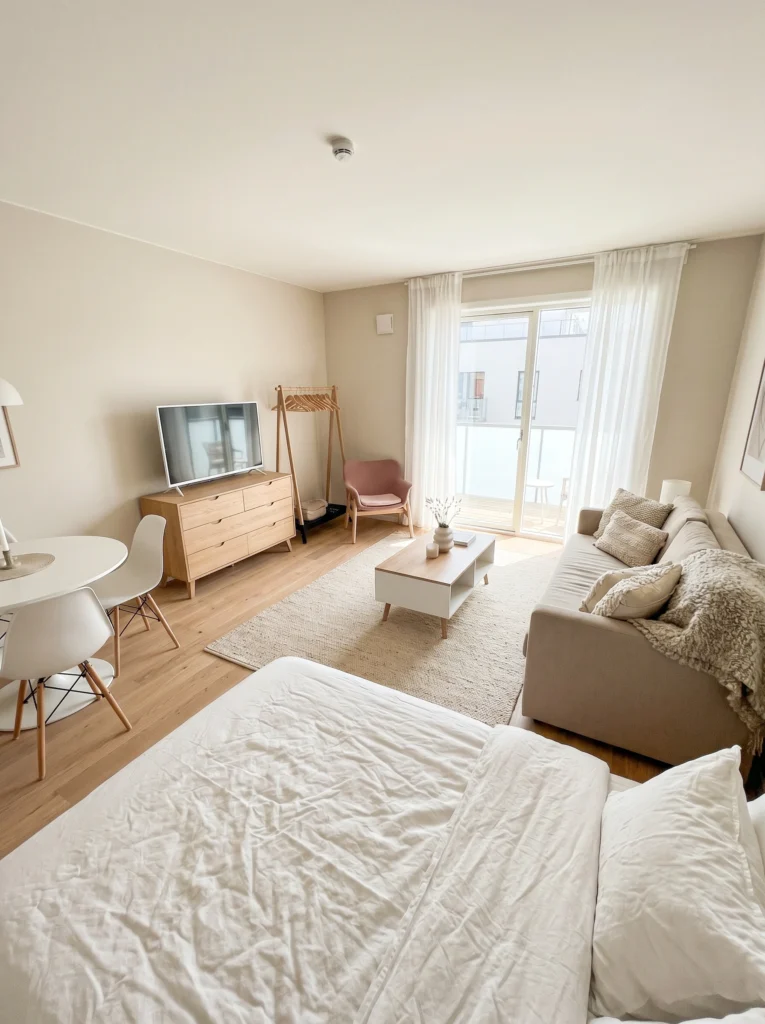
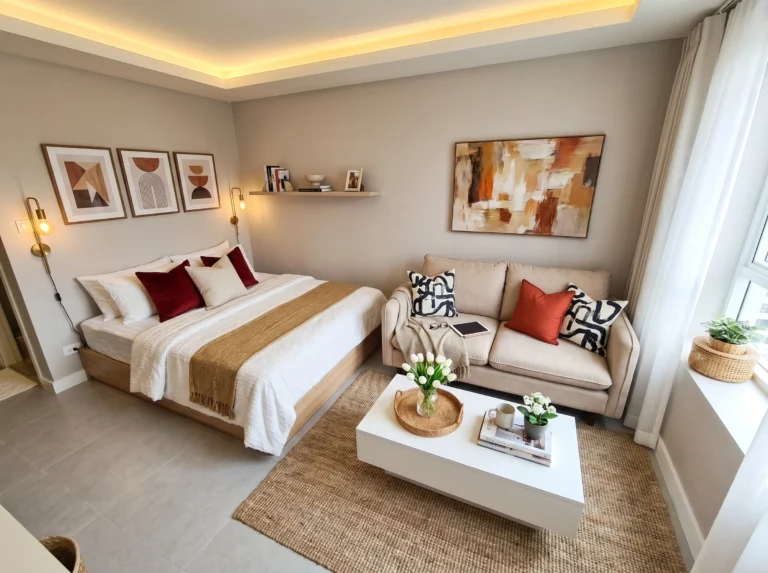
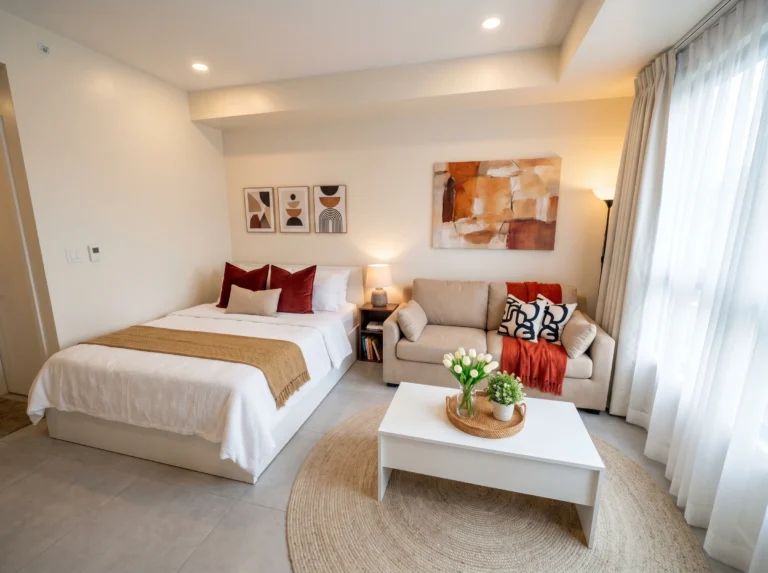
When your entire life happens in one room, a neutral color palette keeps things from feeling chaotic. Creams, warm whites, and soft beiges paired with light oak or natural wood furniture create a calm, cohesive backdrop. This doesn’t mean boring — it means everything breathes together instead of competing. Add texture through a jute rug or linen curtains so the space feels layered, not flat.
Pro tip: If you’re worried about looking too bland, introduce one subtle accent color — like a dusty pink chair or sage throw pillow — to give the eye somewhere to land.
2. Try Bold Color Blocking
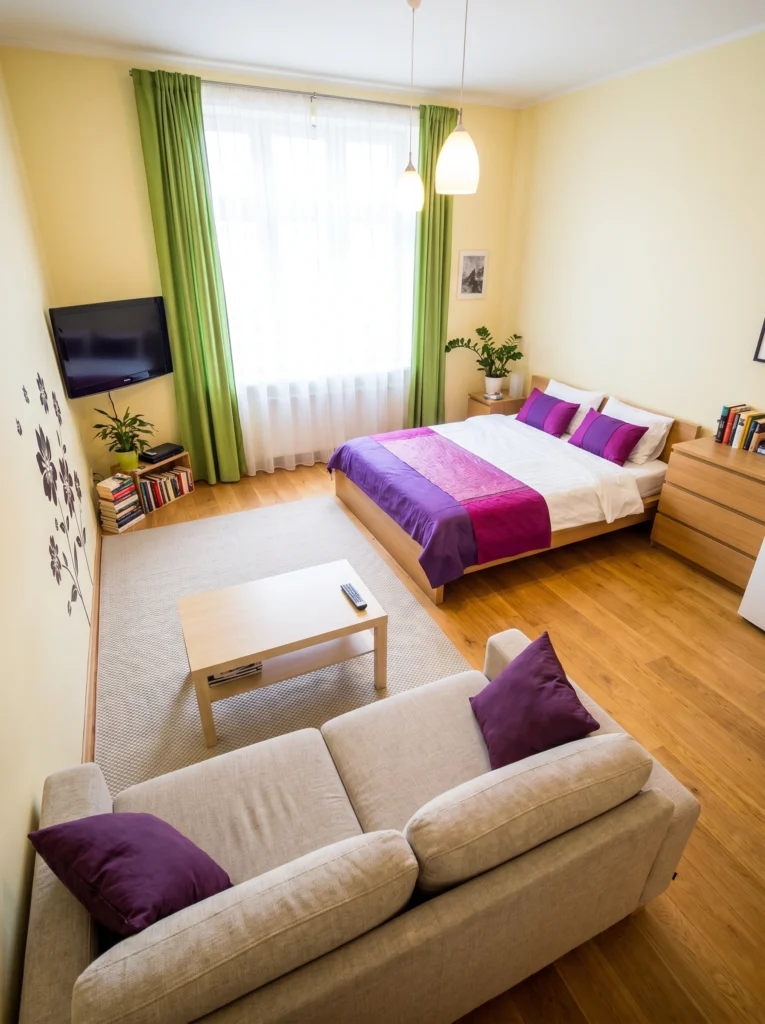
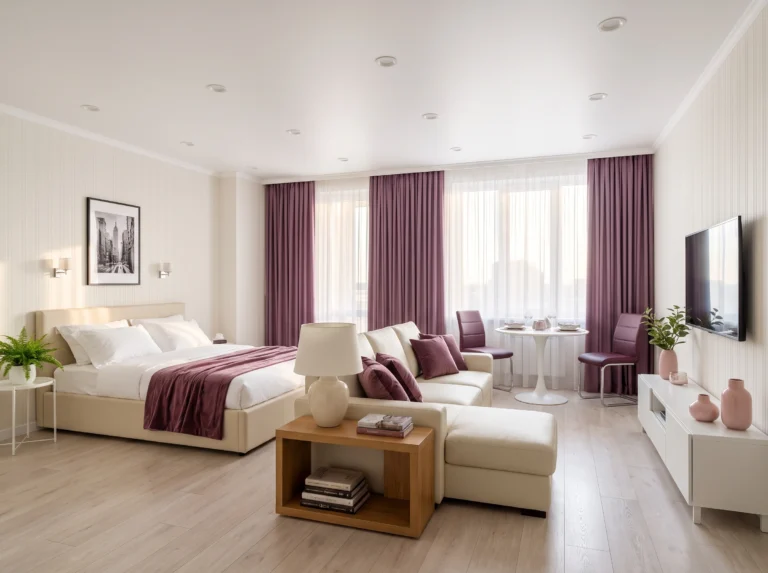
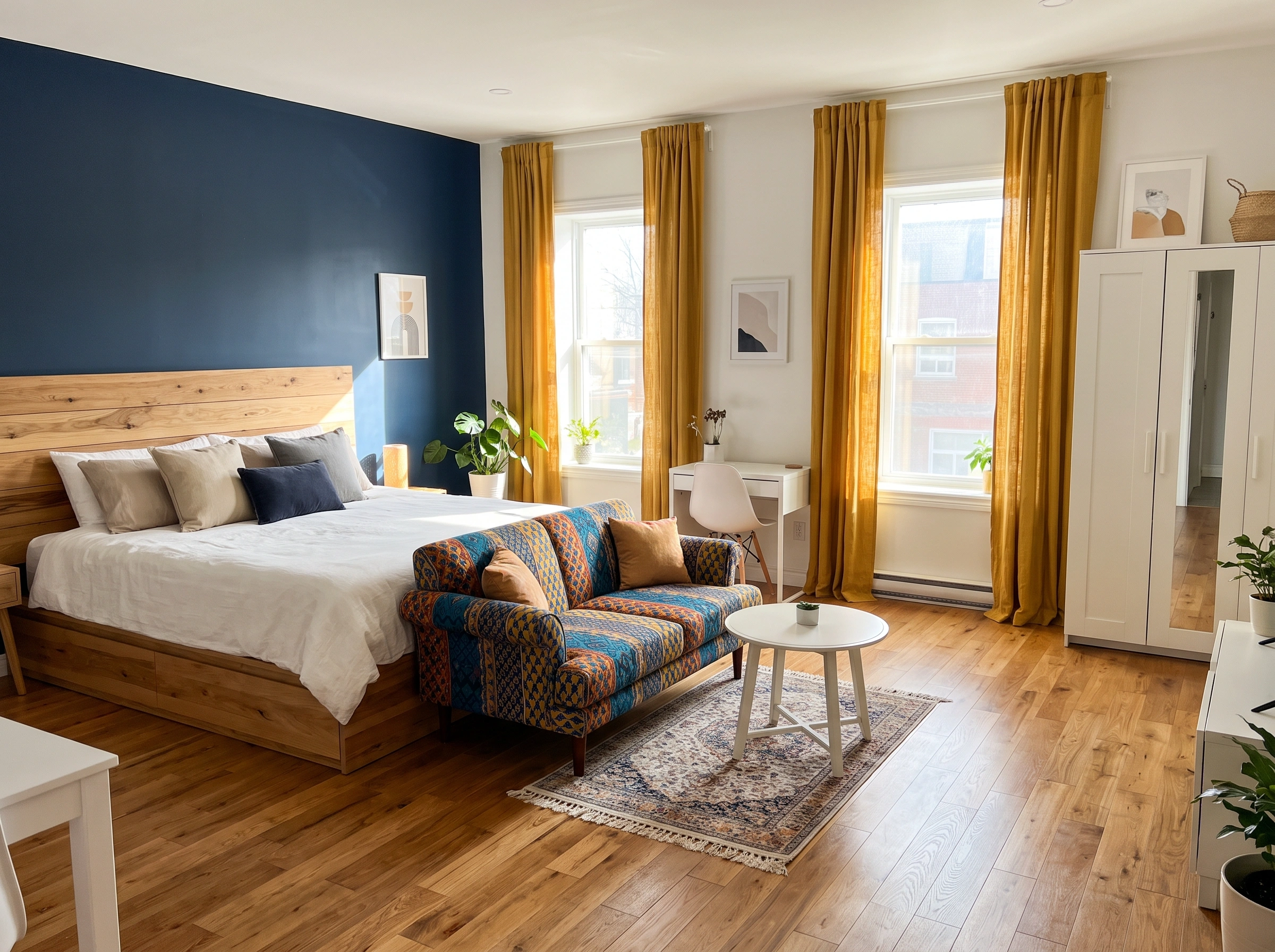
Not everyone wants a whisper-quiet palette, and that’s completely fine. Color blocking — pairing two or three bold, complementary colors — can make a studio feel vibrant and intentional rather than small. The trick is committing fully. Pick your palette, then carry it through your curtains, bedding, and accent pillows so the room reads as one designed space, not a random collection of bright things.
Sofia’s honest take: Bold color only works when it’s deliberate. Three coordinated colors looks curated. Seven random ones looks like a yard sale.
3. Use an Accent Wall to Define the Sleep Zone
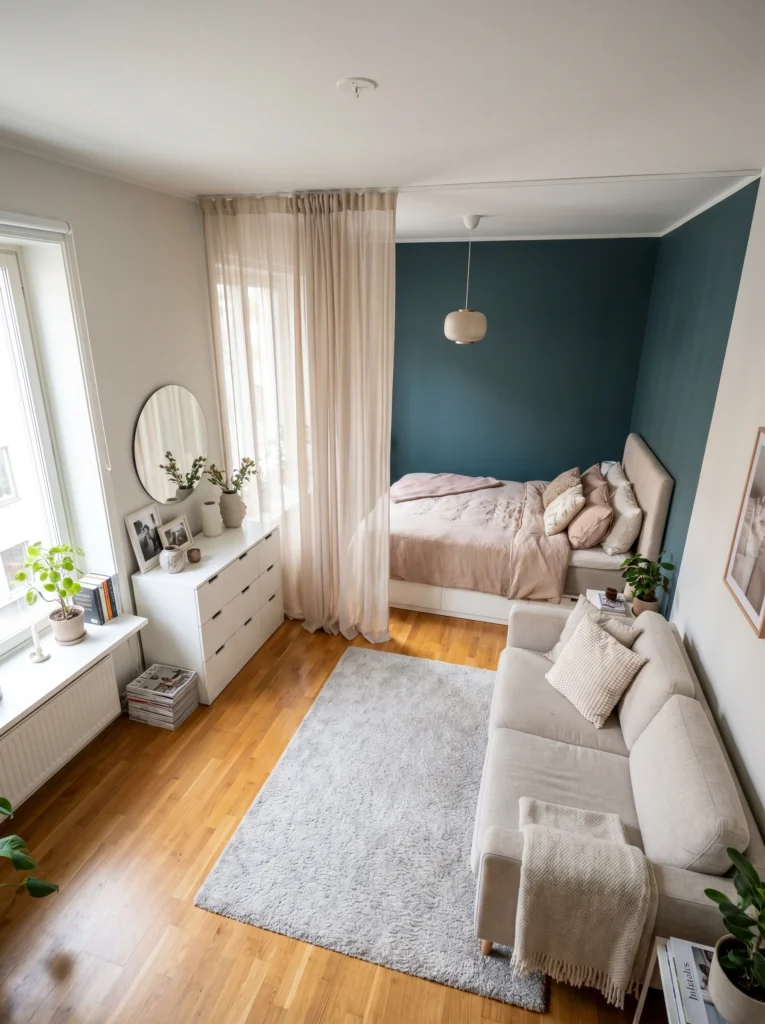
Painting one wall behind your bed a deeper shade — like this moody teal — instantly signals that the sleeping area is its own zone. Your brain starts reading it as a separate space even without a physical wall. Pair the accent wall with a sheer curtain divider, and you’ve got something that feels surprisingly close to a real bedroom without losing any square footage or natural light.
My tip: Renters, peel-and-stick paint or removable wallpaper gives you the same effect without risking your deposit. I’ve used both — they work.
4. Choose a Storage Bed to Free Up Floor Space
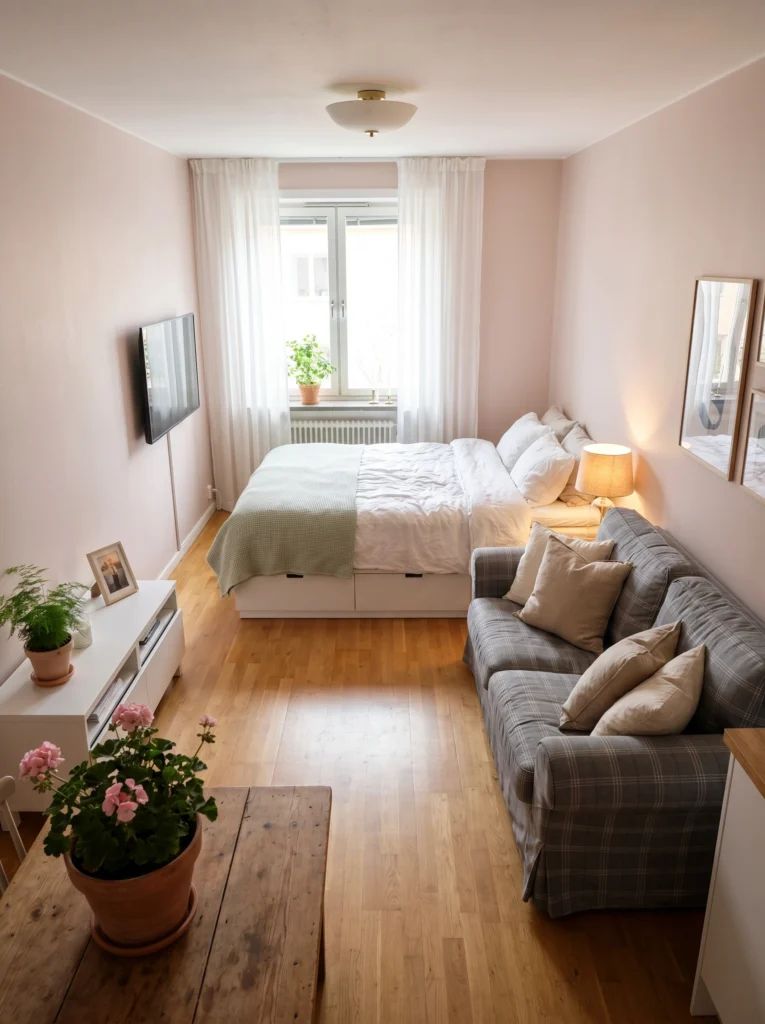
In a studio, your bed is taking up serious real estate — so it should earn its keep. A bed frame with built-in drawers eliminates the need for a separate dresser or bulky storage bins. That’s potentially an entire piece of furniture you no longer need, which in a studio means actual breathing room. Store off-season bedding, extra linens, or shoes underneath and keep your visible space clutter-free.
My favorite: IKEA’s BRIMNES and NORDLI lines are affordable options with clean lines that don’t scream “storage furniture.”
5. Hang a Ceiling-Mounted Curtain Divider
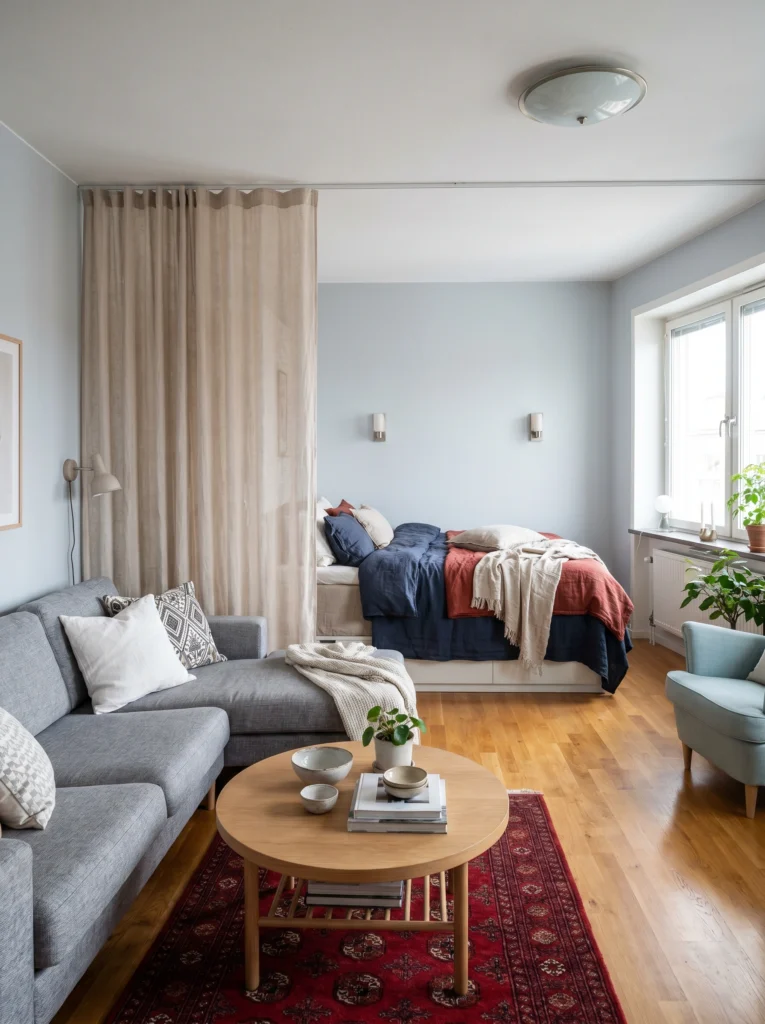
A curtain on a ceiling track is one of the simplest, most effective ways to separate your bed from your living area. When you want privacy or a visual break, close it. When you want the room to feel open and airy, pull it back. Linen or cotton blends in a neutral tone work best — they add softness without blocking light, and they look intentional rather than makeshift.
Budget vs. splurge: A basic IKEA VIDGA ceiling track runs around $15 and installs in minutes. Custom linen panels are prettier but not necessary to get the effect.
6. Double Up with Multi-Functional Furniture
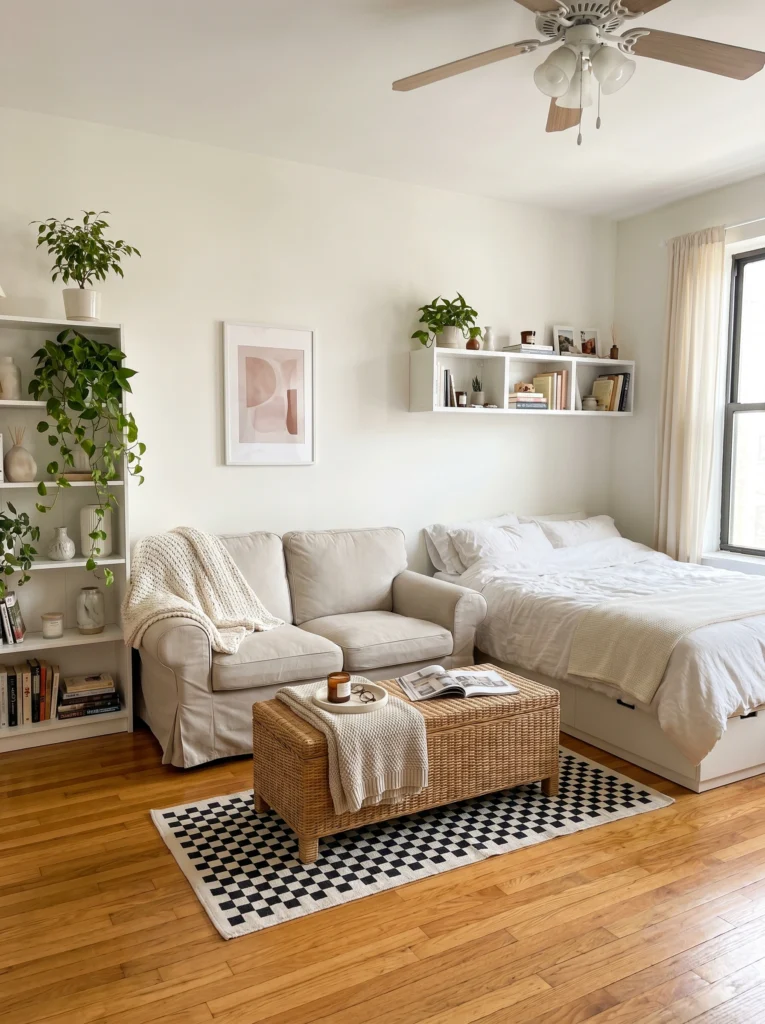
Every piece of furniture in a studio should do at least two jobs. A wicker trunk works as both a coffee table and hidden storage. A bookshelf holds your things and acts as a display wall. A loveseat fits the space without swallowing it whole. When you stop thinking of furniture as single-purpose objects, you start finding room you didn’t know you had.
Renter-friendly alternative: Wall-mounted cube shelves double as display and storage without needing floor space. Command strip versions exist if you can’t drill.
7. Match Your Sofa and Bed for Visual Cohesion
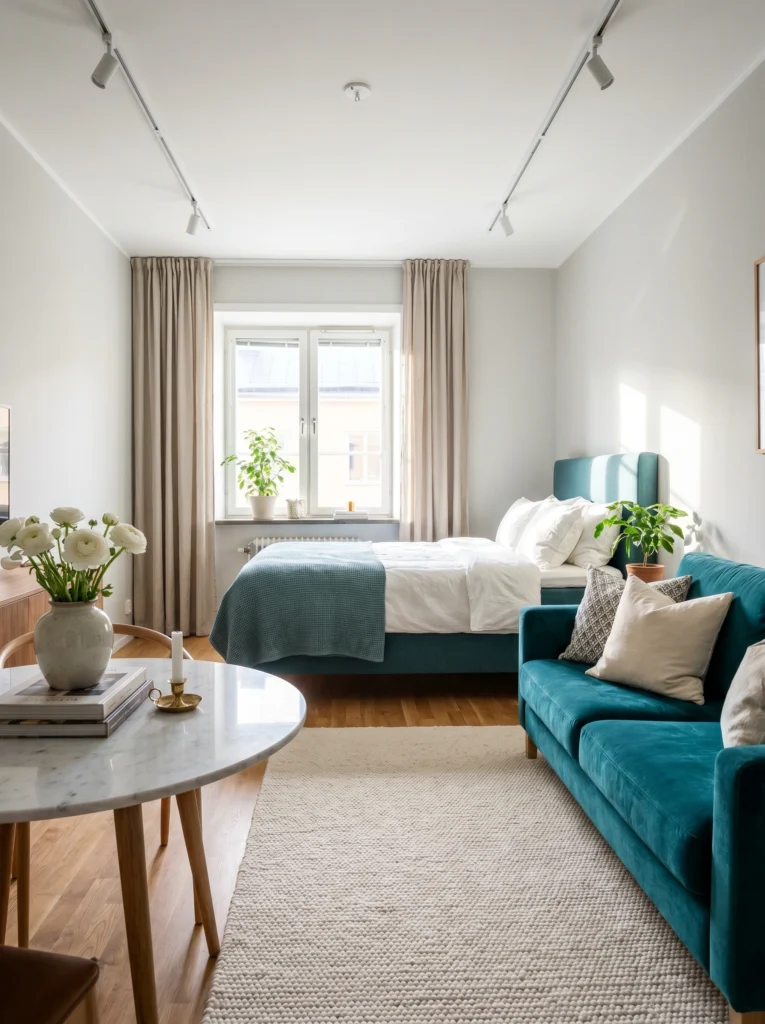
Here’s a trick designers use that most people skip: color-matching your sofa and bed frame. When both pieces share a color — like this rich teal — the room instantly looks curated and intentional. It ties the sleeping and living areas together visually, making the studio feel like one cohesive space instead of two awkward halves crammed together. Balance a bold shared color with plenty of neutrals around it.
I’ve tested this: You don’t need an exact match. Same color family within a shade or two reads as coordinated, not mismatched.
8. Use an Open Bookshelf as a Room Divider
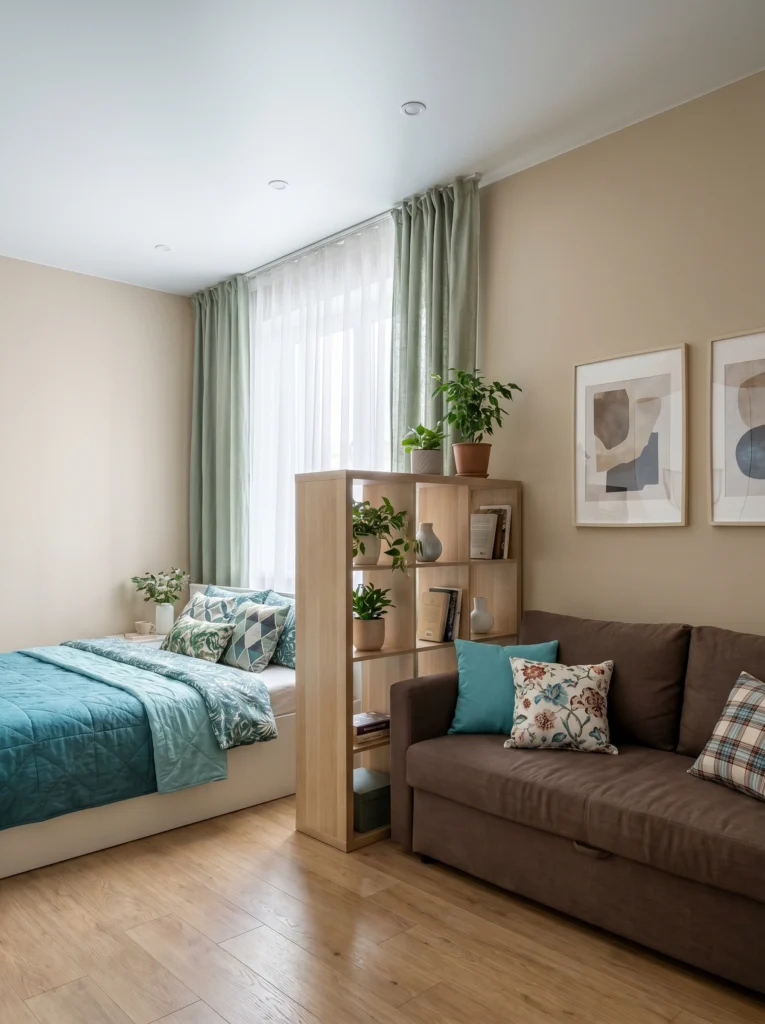
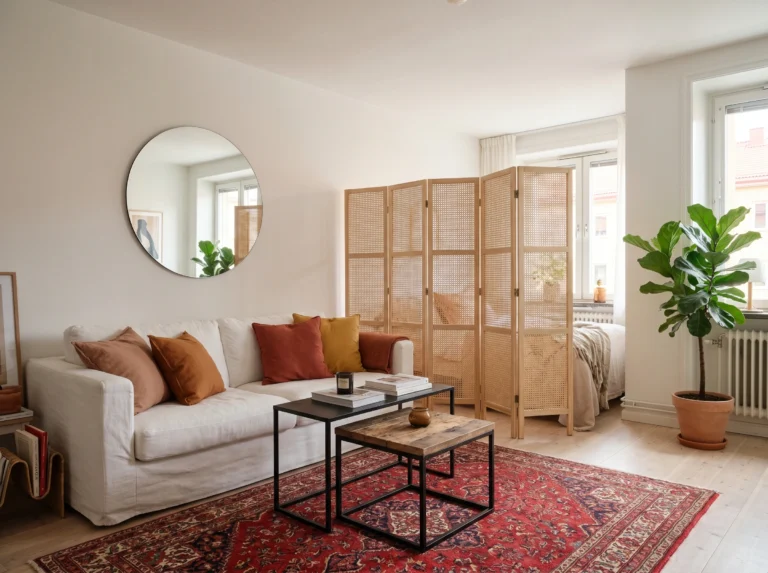
An open-back bookshelf is the studio apartment MVP. It creates a visual boundary between your bed and living area while still letting light pass through — something a solid wall or tall dresser can’t do. Style the shelves with a mix of plants, books, and a few ceramic pieces to keep it looking warm rather than clinical. It’s functional separation that doubles as your best decor moment.
Pro tip: Keep the top shelf lighter — tall, heavy objects up high make a small room feel top-heavy and closed in.
9. Install an L-Shaped Curtain Track
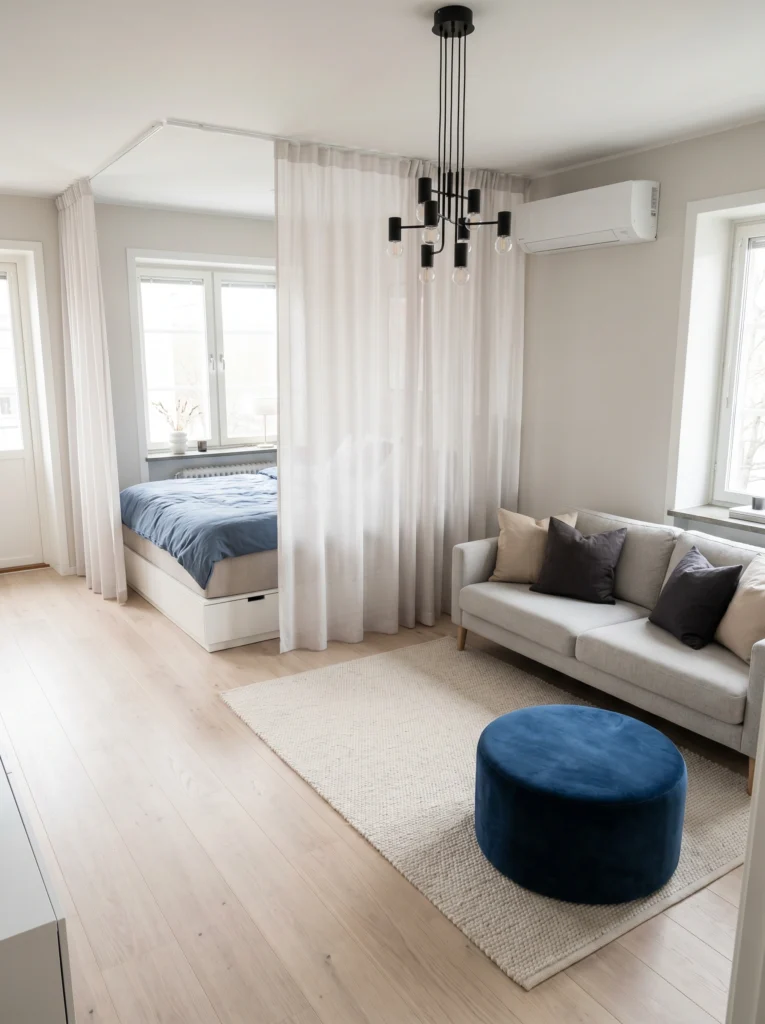
If a straight curtain divider doesn’t give you enough separation, an L-shaped ceiling track lets you wrap the curtain around two sides of the bed for a more enclosed, bedroom-like feel. Sheer fabric keeps things light while still giving you that crucial sense of privacy. It’s the closest you’ll get to a real bedroom partition without building anything permanent — and guests won’t even see your unmade bed.
Don’t waste your money on: Heavy blackout curtains for this purpose. They’ll make the sleeping corner feel like a cave and chop the room visually.
10. Go Scandinavian with Plants and Patterns
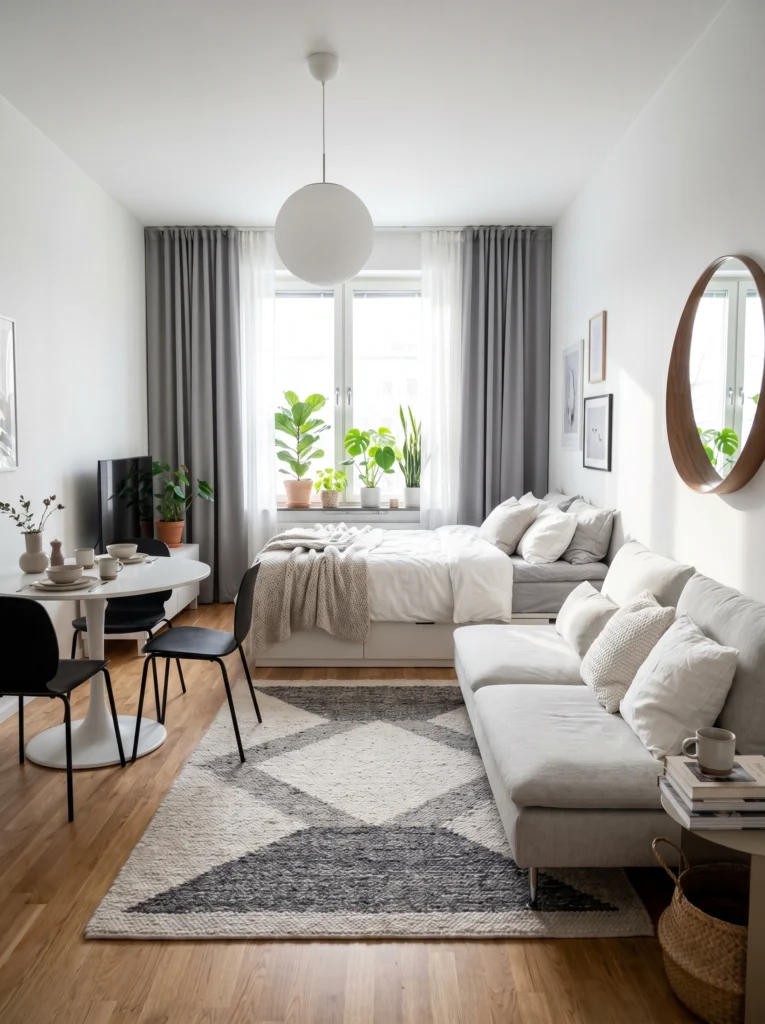
Scandinavian style was practically invented for small spaces. The formula is simple: light walls, functional furniture with clean lines, a geometric rug for visual interest, and enough greenery to make the room feel alive. A round mirror on the wall bounces light and makes the space feel twice as open. The whole approach prioritizes calm and order — exactly what a studio needs to not feel overwhelming.
Sofia’s honest take: You don’t need to go full IKEA showroom. Even three well-placed plants and one good rug shift the entire energy of a studio.
11. Create a Gallery Wall as Your Focal Point
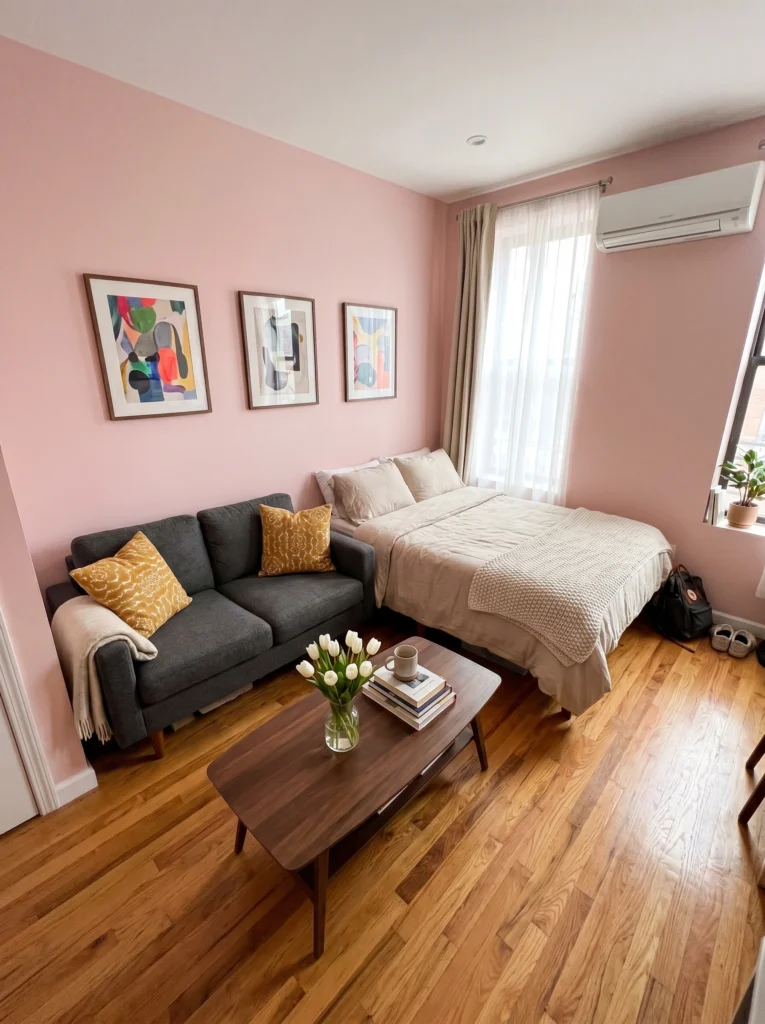
A gallery wall gives your eye a destination — and in a studio, that’s powerful. When guests walk in, they notice the art, not the bed three feet away. Group three to five prints in complementary frames above your sofa, and suddenly that wall becomes the main character of the room. Pick art with colors that echo your pillows or throw blankets so everything feels tied together, not random.
My tip: Lay your frames out on the floor first to test the arrangement before putting a single nail in the wall. Trust me, it saves holes.
12. Commit to a Decorating Theme
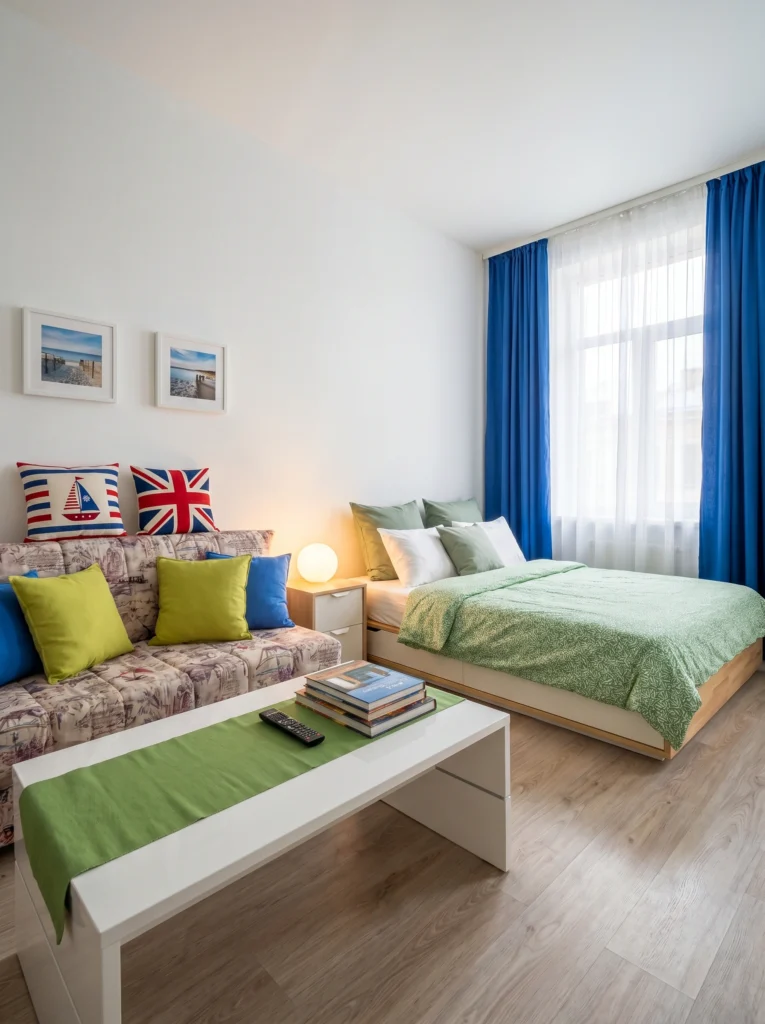
Themed decorating gets a bad reputation, but in a studio it actually works because it gives you a built-in decision framework. Coastal? Pick blues, whites, and natural textures. Every purchasing decision becomes easier because the theme filters out the noise. The key is keeping it subtle enough to live with daily — beach-print art and blue curtains read as themed. Seashells glued to everything reads as a gift shop.
I’ve tested this: A theme works best when you can describe it in two words — “coastal calm,” “modern rustic,” “warm minimalism” — and every piece fits that phrase.
13. Layer Your Lighting
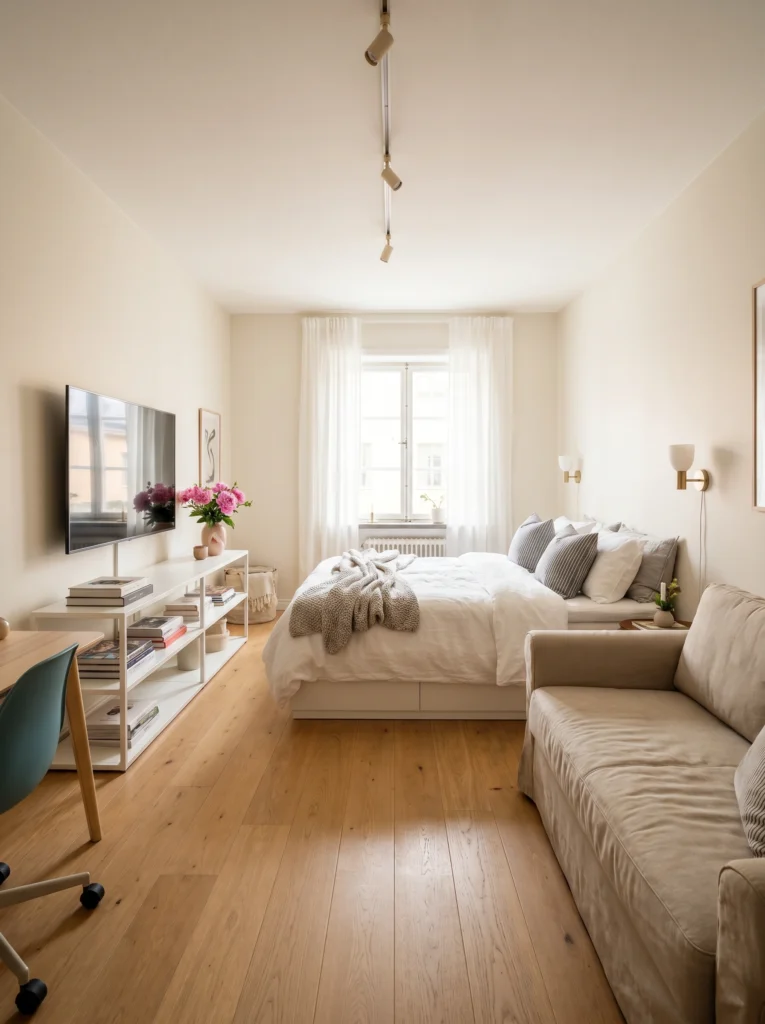
One overhead light is the fastest way to make any room feel flat, and in a studio it’s even worse because harsh light exposes every zone at once. Layer instead: wall sconces flanking the bed for a warm nighttime glow, track lighting for general illumination, and a table lamp or two near the sofa. Each light source creates its own pocket of atmosphere, making one room feel like it has several moods.
Budget vs. splurge: Save on plug-in sconces — plenty of stylish ones exist under $30. Splurge on warm-toned bulbs (2700K) because cheap cool-white bulbs will undo all your hard work.
Final Thoughts
The best studio apartments aren’t the biggest ones — they’re the ones where someone cared enough to make a few smart choices. You don’t need to tackle all thirteen ideas this weekend. Pick the one or two that match where you are right now, and build from there. Small spaces reward small, intentional moves more than any other type of home.
Your studio doesn’t need more square footage — it just needs a little more you.