How to Make a Studio Apartment Feel Bigger: 9 Tricks That Actually Work
Studio living gets a bad reputation. People assume small means cramped, dark, and depressing — like you’re forever apologizing for your space when friends come over. Here’s the thing: a good studio doesn’t feel small at all. It feels intentional. Cozy in the right corners, breezy in the others, with every square foot pulling its weight.
After years of helping readers fix tiny rentals and touring Pinterest-worthy studios, I can tell you that “bigger” is almost never about square footage. It’s about light, layout, and a handful of choices that trick the eye. Here are nine of them.
1. Draw the Eye Up With a Vertical Gallery Wall
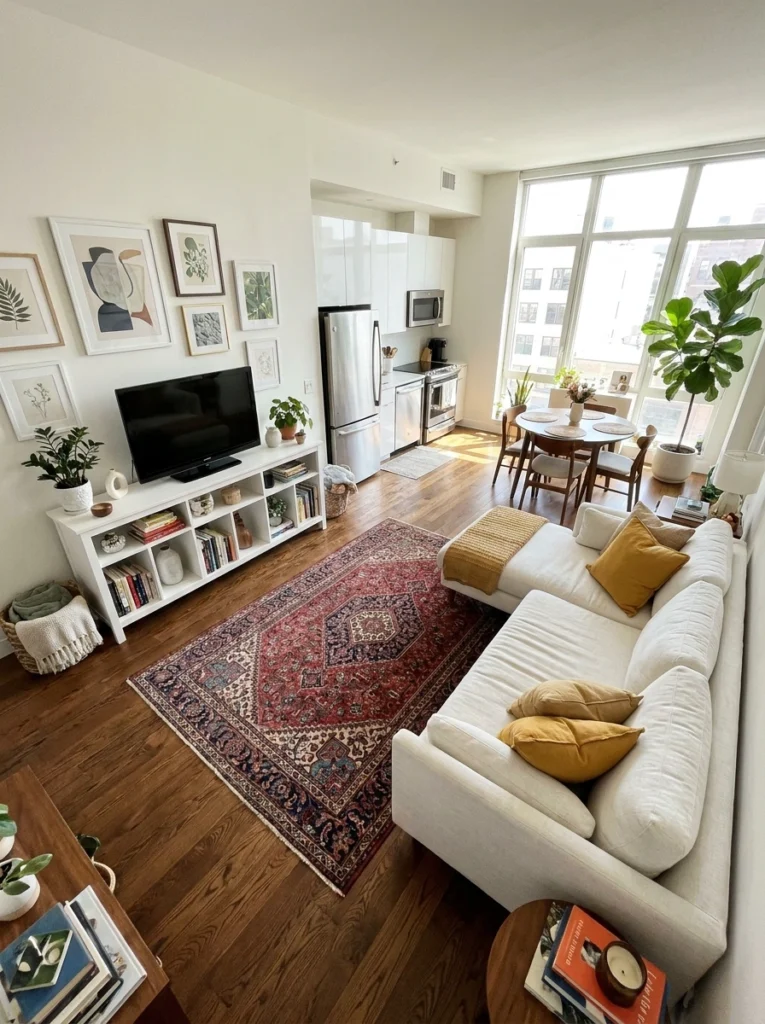
When your floor space is tight, the walls have to work harder. In a long, narrow studio like this one, a stacked gallery wall pulls your eye up and back, making the room feel taller and longer than it actually is. The trick is going vertical, not horizontal. Hang frames in a column or layered cluster that climbs toward the ceiling, mixing sizes and orientations so it looks collected, not staged.
Keep the rest of the room low-profile underneath — a slim TV console works perfectly here — and let the wall do the heavy visual lifting. Suddenly the ceiling feels a foot taller.
2. Use an Open Shelf as a Room Divider
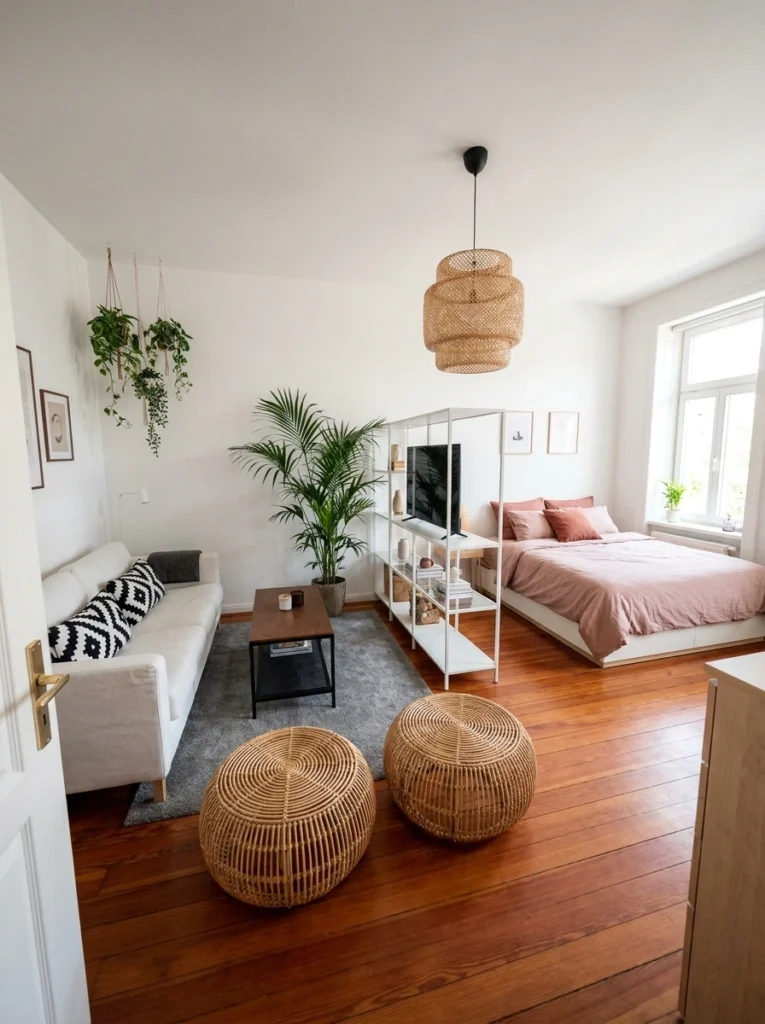
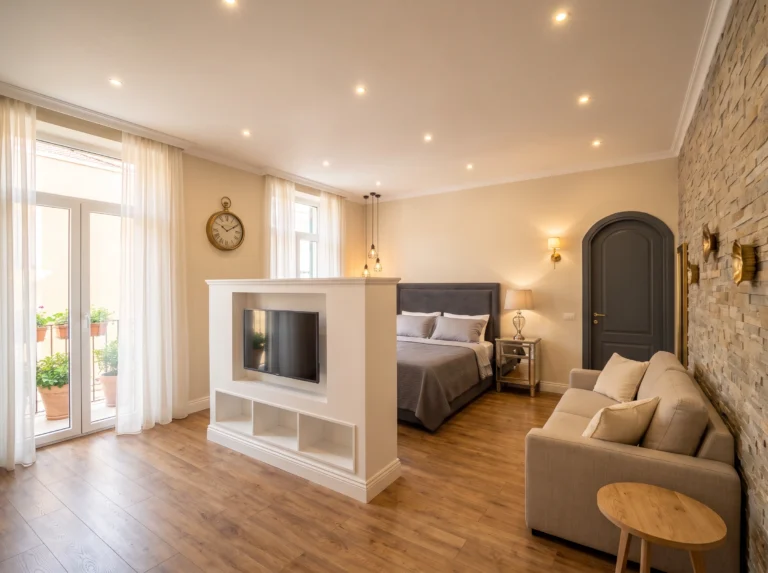
A solid wall divider chops your studio in half and steals the light. An open shelving unit does the opposite — it suggests separation without killing the airflow or the view. Here, a simple white shelf splits the living and sleeping zones while still letting sunlight pour through from the bedroom window into the lounge area.
Style it with a mix of books, plants, and a few sculptural objects so it looks intentional from both sides. Bonus: it doubles as storage, which in a studio is non-negotiable. One piece of furniture, three jobs done.
3. Define Zones With One Anchor Rug
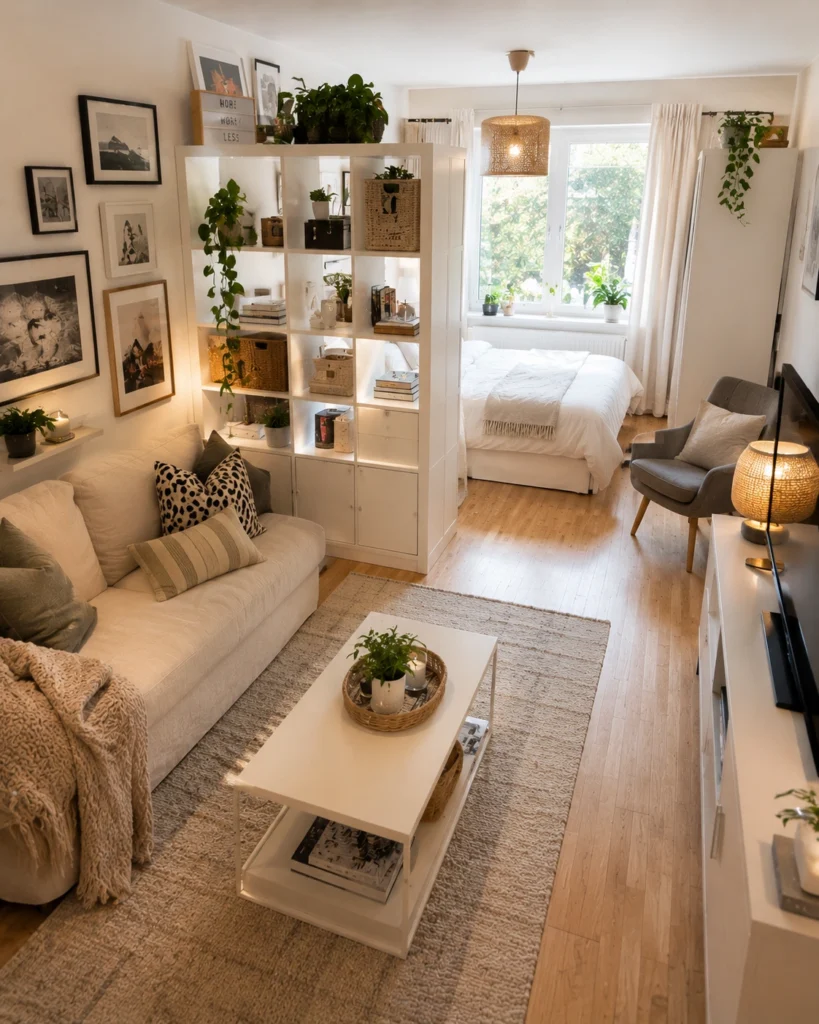
In an open studio, your living area can blur into the bedroom and suddenly nothing has a clear job. The fix is simple: drop a generous rug under your sofa and coffee table to claim that corner as the “lounge.” It pulls the furniture together into one tidy island and gives your eye a clear boundary. The neutral jute rug in this space does exactly that — it grounds the seating area without competing with anything else.
Pro tip: go bigger than you think. A rug that’s too small makes the whole zone feel like an afterthought, and the room reads choppier, not bigger.
4. Use Two Rugs for Two Zones
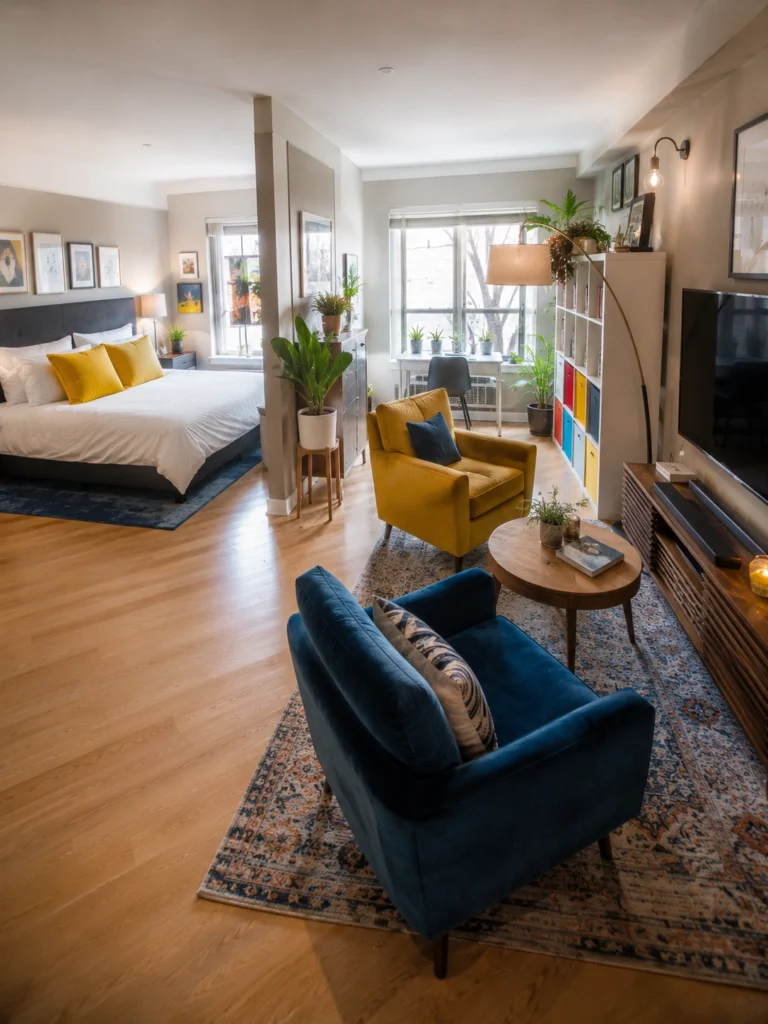
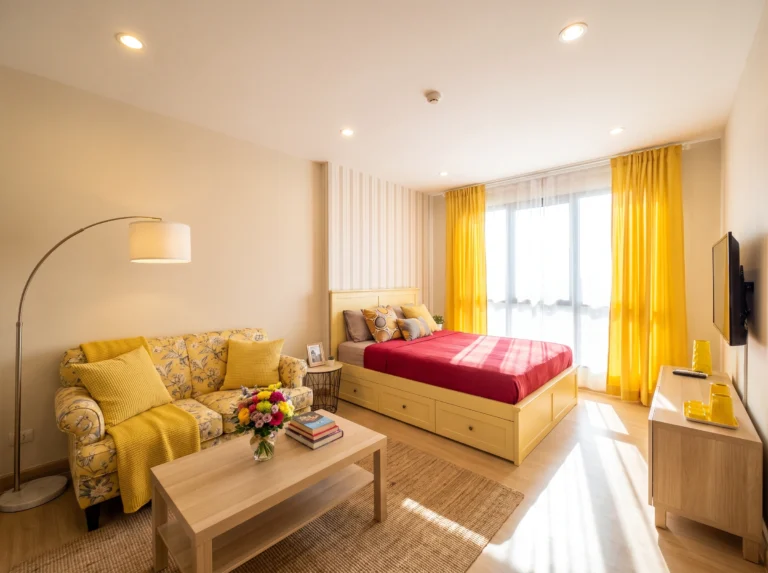
Here’s where the previous tip levels up. When you’ve got the floor space, drop a second rug under the bed and let the two rugs do the work of invisible walls. This studio uses a darker rug under the bed and a patterned one under the living set — same color story, different patterns. Your brain reads them as separate rooms instantly. The mustard chair and arc lamp anchor the lounge side; the bed gets its own quiet identity across the floor.
this single move makes a studio feel like a one-bedroom apartment. It’s the cheapest renovation you’ll ever do.
5. Keep Your Furniture Low and Let Light Through
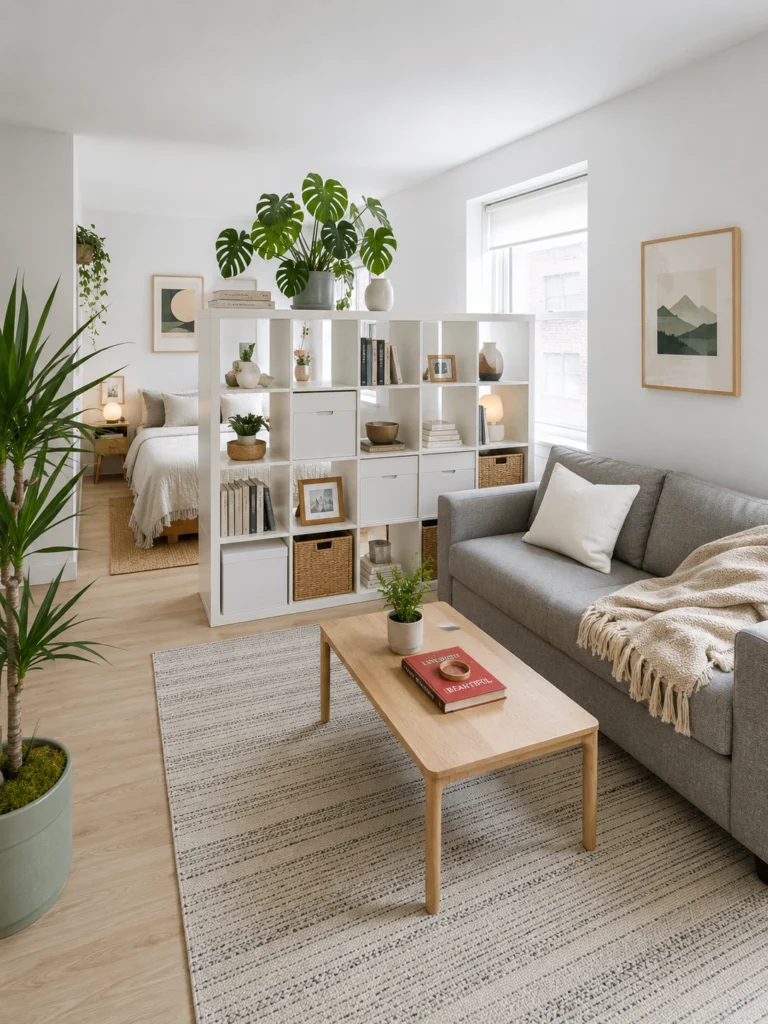
Tall, bulky furniture eats a studio alive. Low-slung sofas, slim coffee tables, and a divider you can see over instantly make the ceiling feel higher and the room feel airier. This Scandi space is a perfect example — nothing blocks the window, the shelf stops well below the ceiling, and the monstera on top adds height in a soft, organic way.
Pale wood floors and a light textured rug bounce daylight around the room. The whole space breathes. If a piece of furniture feels heavy on paper, it’ll feel ten times heavier the second it’s in your studio.
6. Choose Furniture That Does Two Jobs
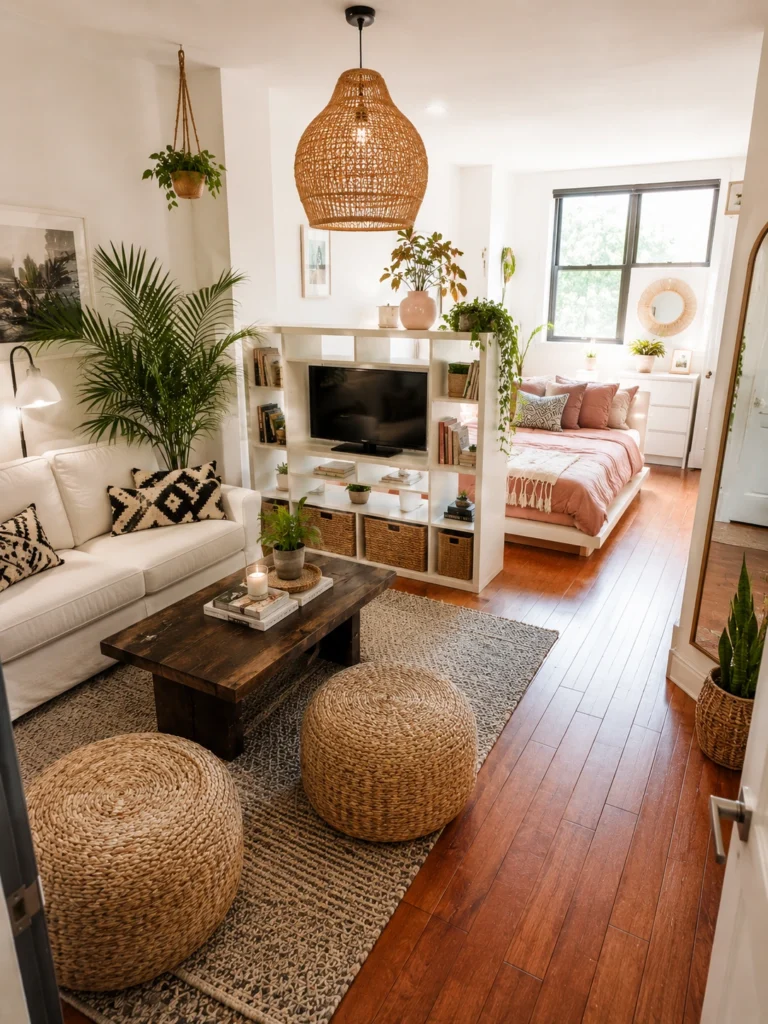
Every piece in a studio should pull double duty, and woven poufs are the unsung heroes. They’re a footrest when you’re watching TV, extra seats when friends drop by, and a side table when you toss a tray on top. This boho space uses two large jute poufs as the main floor seating — no bulky armchairs eating up the rug. Storage ottomans, nesting tables, sofa beds, lift-top coffee tables — anything that does two jobs is worth its price tag twice over.
Renter-friendly alternative: a couple of poufs cost less than one accent chair, and they move around the apartment with you.
7. Carve Out a Tiny Dining Nook
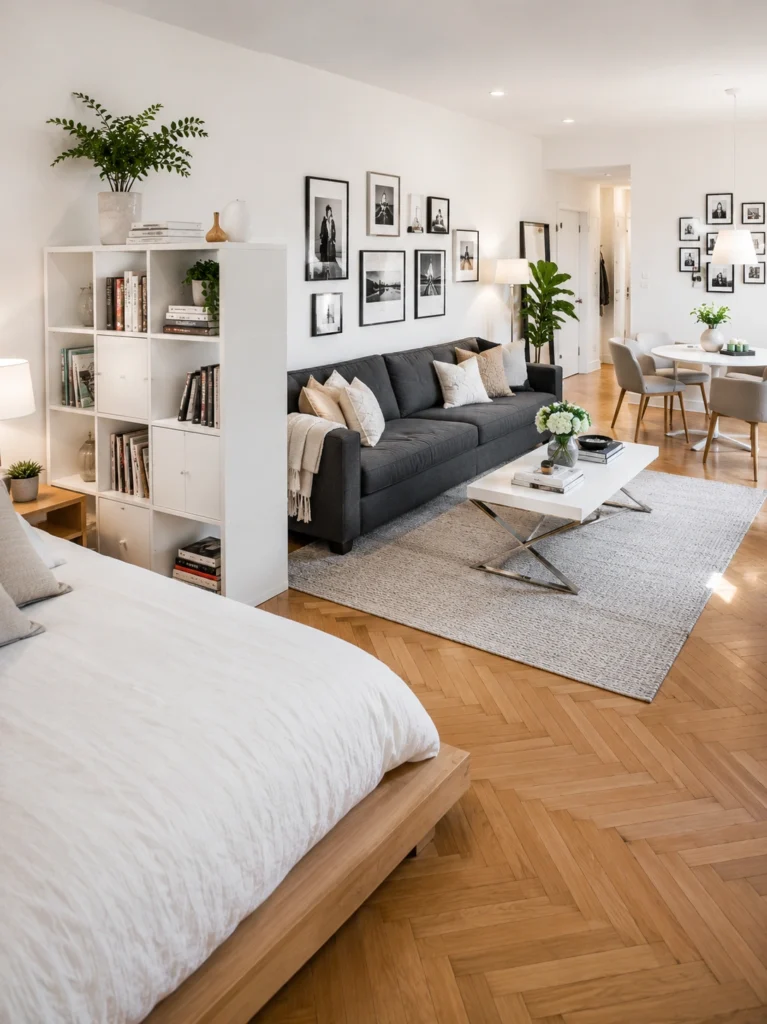
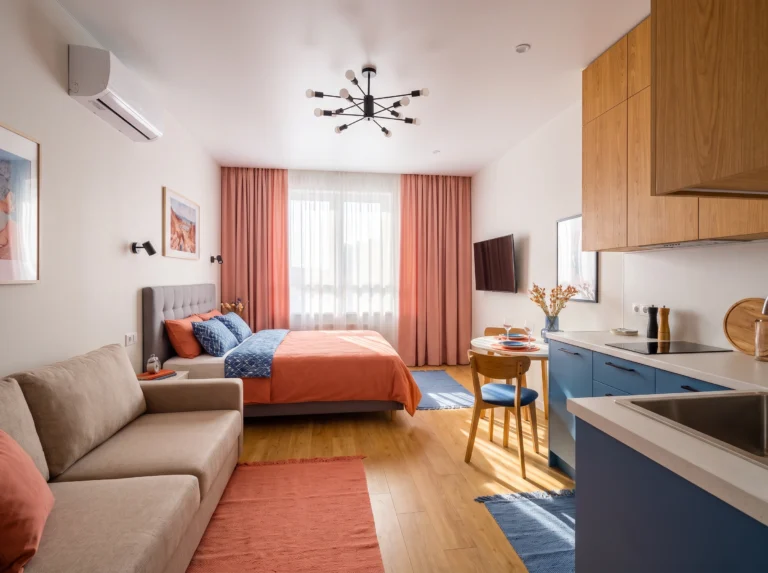
Most people skip the dining table in a studio because they assume there’s no room for one. There almost always is — you just have to scale it. A small round table with two chairs tucked into a corner reads as a complete dining “room” without taking up real estate.
This studio fits one neatly into the back wall, and suddenly the space goes from “sleeping area with a couch” to a real, full home. Round tables are your friend here: no sharp corners to bump into, and they fit into tight spots in a way square tables simply can’t.
8. Let Your Sofa Be the Bedroom Wall
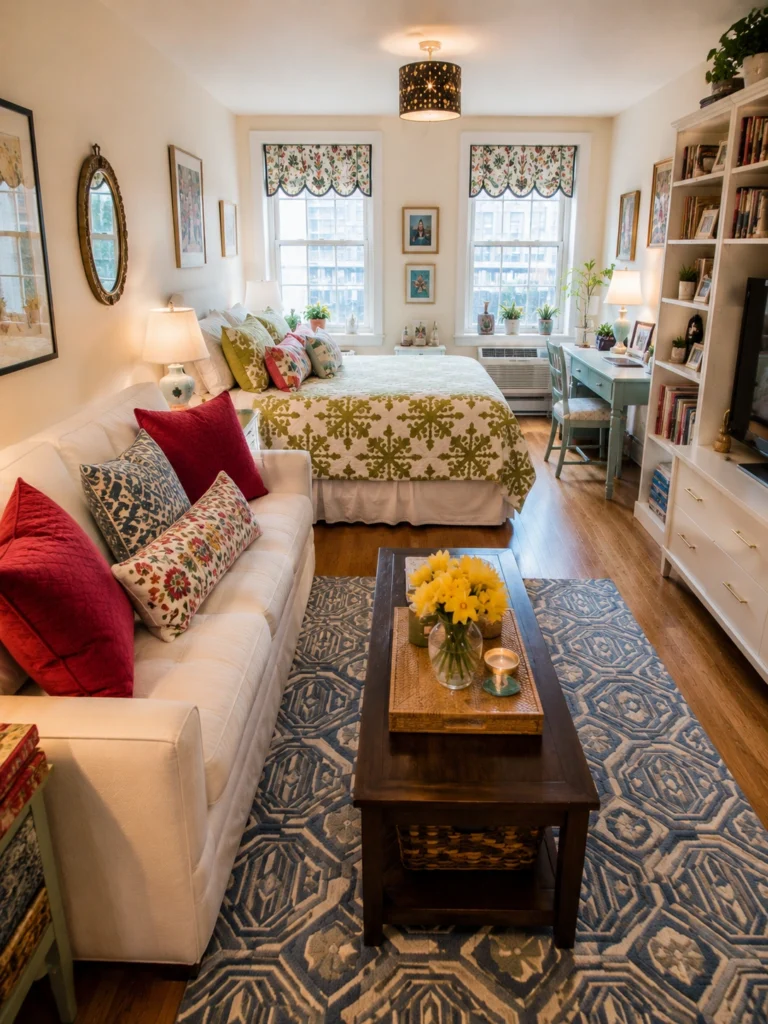
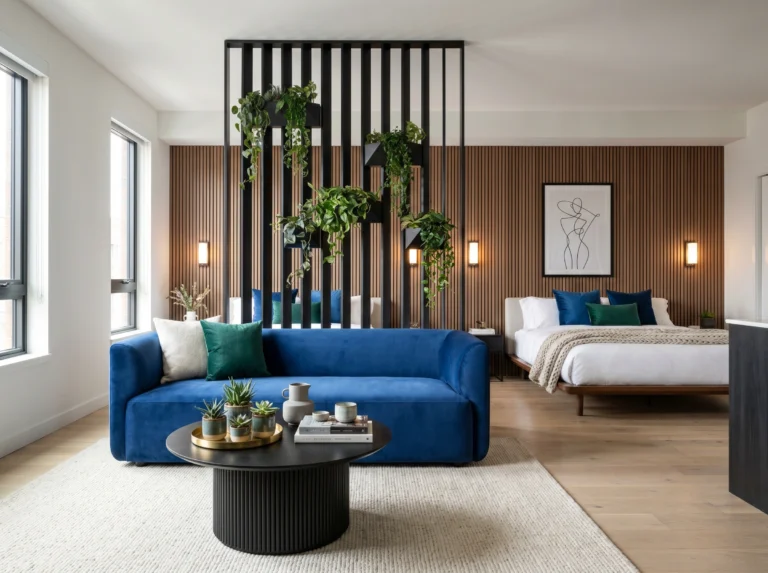
When you can’t add a divider, your sofa can do the job. Floating it in the middle of the room with its back facing the bed instantly creates a visual wall — your eye reads “two rooms” even though there’s nothing between them. This studio nails it: the cream sofa anchors the living zone, and the bed sits quietly behind it like a separate space.
Add a console table or a slim bookcase behind the couch to reinforce the line. It’s the easiest, most rental-friendly room divider on this list — and you already own the sofa.
9. Stick to One Tight Color Palette
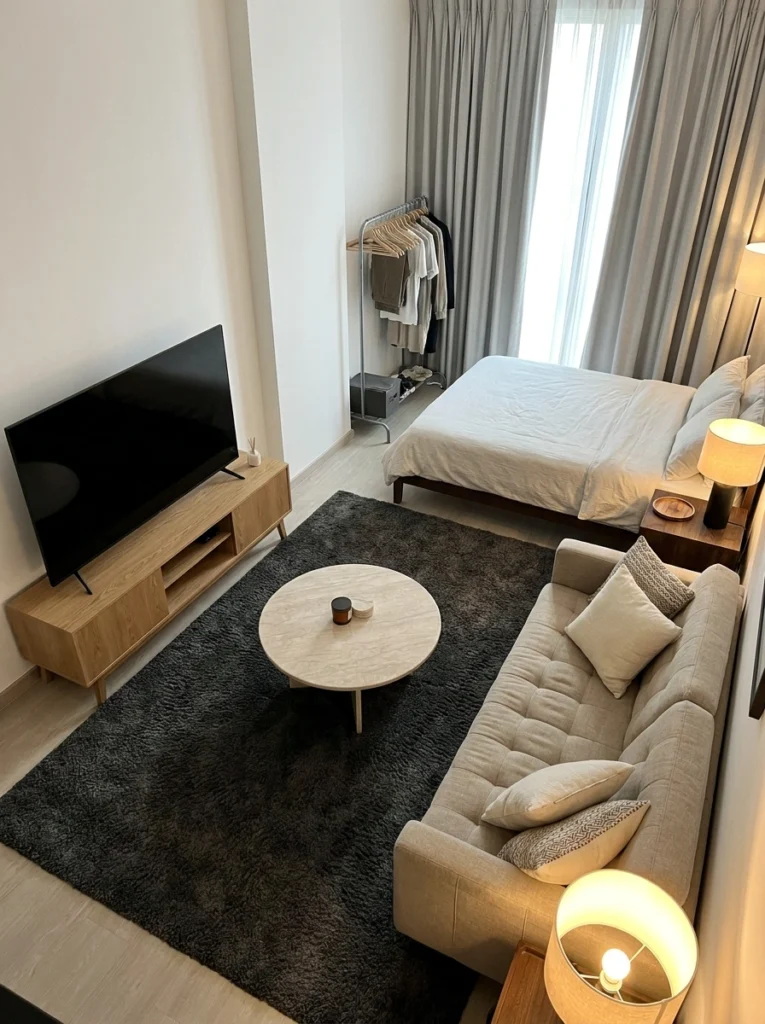
If you take nothing else from this list, take this. A studio feels bigger the second you stop mixing competing color stories. This room reads spacious because everything — the walls, sofa, rug, curtains, even the wood tones — sits in the same calm neutral family. Greys, beiges, soft whites, a touch of warm wood.
Your eye glides instead of bouncing around. Pick three or four shades that play nicely together and commit. Then layer in warm lamp light at night to soften the whole thing. Cohesion looks like square footage. Trust me on this one.
Final Thoughts
Making a studio feel bigger isn’t about expensive renovations or magic furniture. It’s a handful of small, repeatable choices: one calm color palette, low-profile pieces, defined zones, and furniture that pulls more than its weight. Pick the one tip that fits your space right now and try it this weekend. You’ll feel the difference before you even finish rearranging — and once you do, the rest will follow.
Your studio doesn’t need more square footage. It needs a few smart decisions — and you can make every one of them today.
Happy decorating, Sofia