Common Studio Apartment Design Mistakes (And How to Avoid Them)
Living in a studio is its own kind of art. You’re cooking, sleeping, working, and entertaining in the same room — and one wrong decision can throw the whole space off balance. Here’s the thing: most studios don’t feel cramped because they’re small. They feel cramped because of a few common mistakes most people don’t even realize they’re making.
I’ve lived in three studios over the years, and I’ve made nearly every mistake on this list. Here’s what I learned — and how to fix each one.
1. Cramming Everything Into One Visual Field
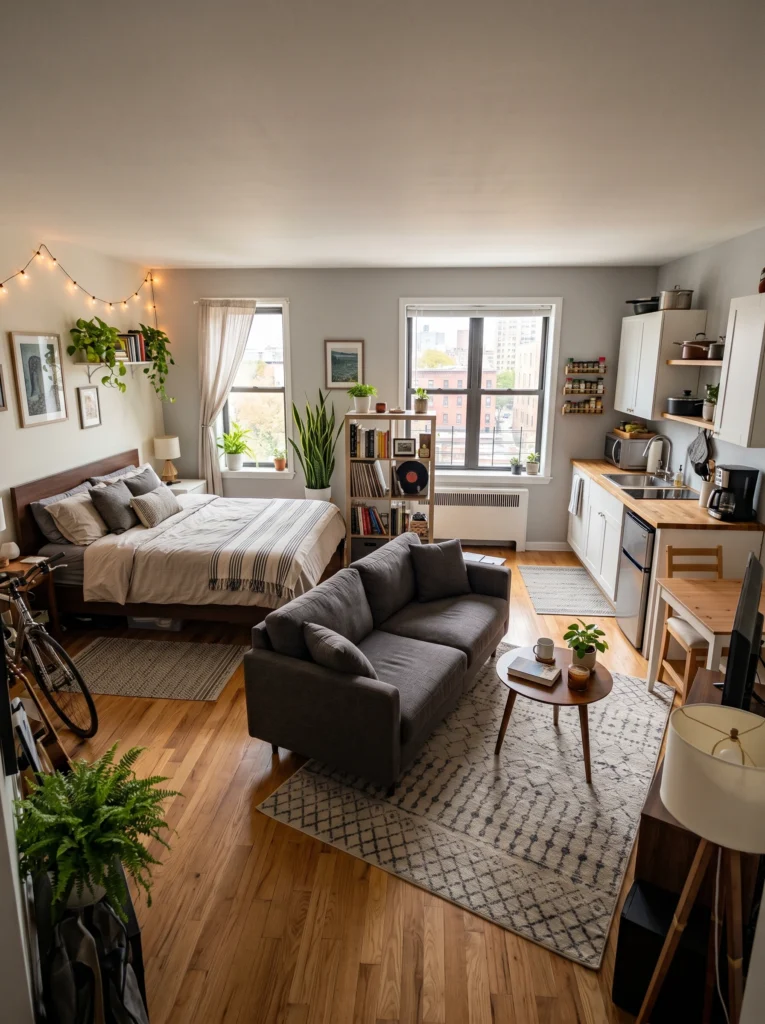
This is the most common studio mistake — every single thing you own is visible the second you walk in. Bike against the wall, bed three feet from the sofa, kitchen, plants, gallery wall, string lights, books — all competing for attention. It’s not that any one piece is wrong. It’s that there’s no visual rest anywhere.
Pro tip: Pick two “quiet” zones — usually a wall and a corner — and keep them deliberately empty. Negative space is what makes a small room breathe. Your eye needs somewhere to land.
2. Skipping Zone Separation Between Bed and Living Area
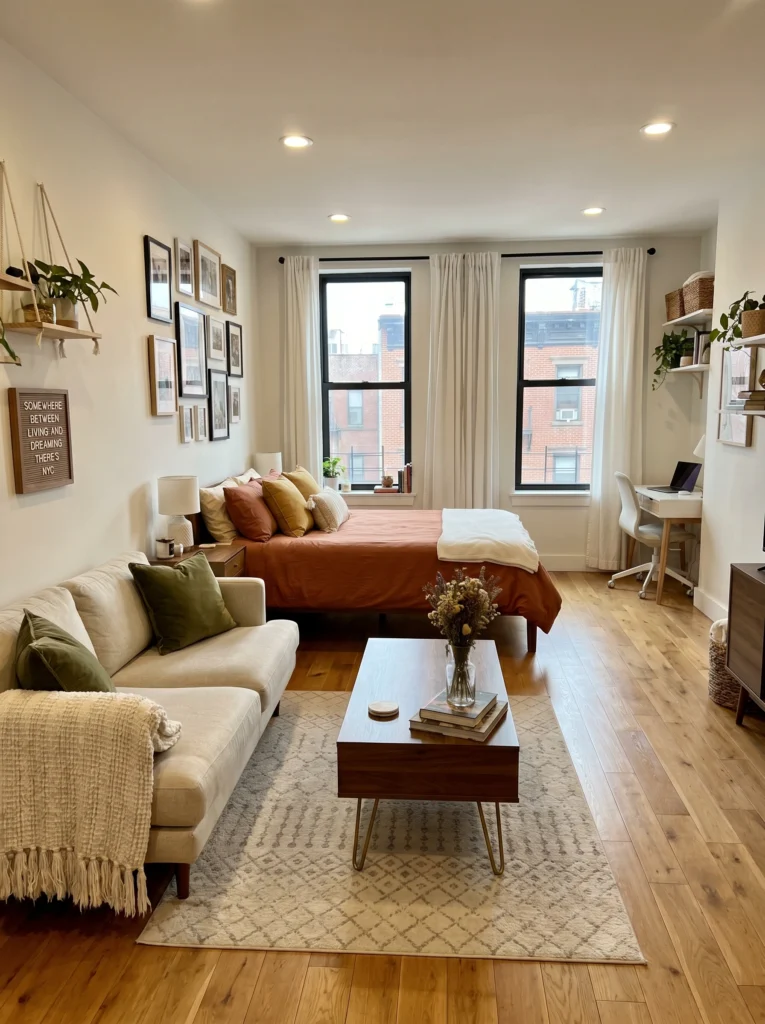
This studio is gorgeous — gallery wall, terracotta bedding, a desk tucked by the window. But the bed and sofa share the same floor, facing the same direction. It reads as one giant room instead of two. You’ll feel it most at night, when “living room mode” never quite switches off.
You don’t need walls to create zones. A separate rug under the sofa, a different orientation, or a low console behind the bed instantly tells your brain this part is for resting, this part is for living.
3. Going So Modern It Feels Like a Hotel
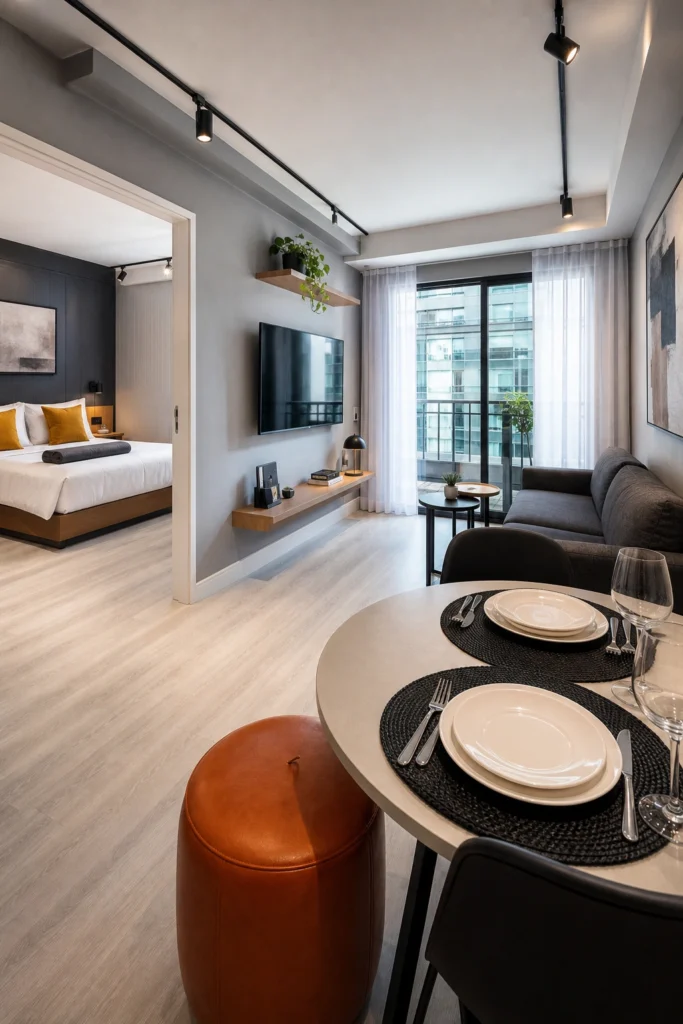
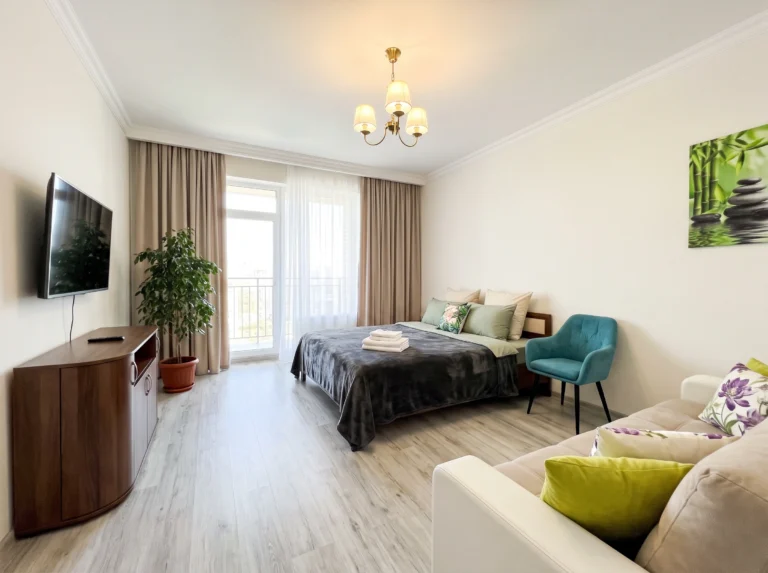
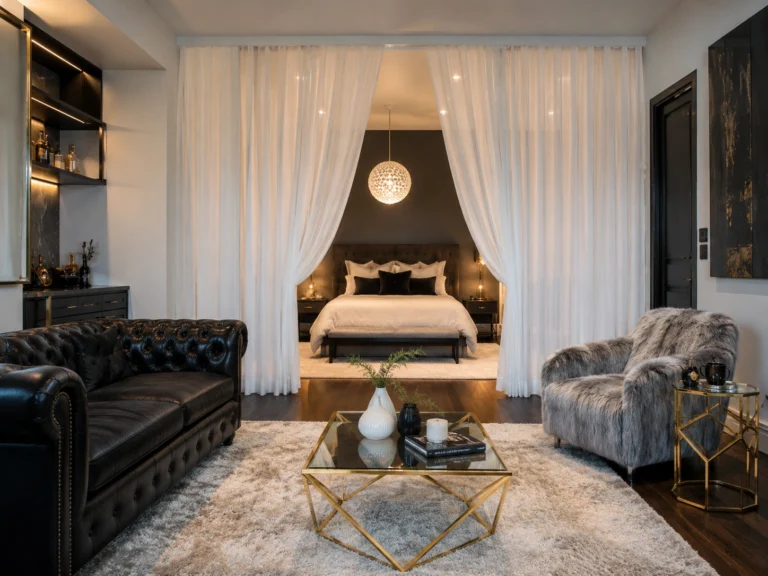
I get the appeal — clean lines, neutral palette, everything tucked away. But studios this minimal usually feel like an Airbnb you’re checking out of tomorrow. There’s nothing personal. Nothing soft. Nothing that says a real person lives here.
The fix isn’t to abandon modern style — it’s to layer warmth back in. A nubby throw on the sofa. A second lamp with a warm bulb. A stack of books you’ve actually read. One imperfect ceramic vase. Modern doesn’t have to mean sterile. The best minimalist studios still feel inhabited.
4. Blocking Your Own Light and Sightlines
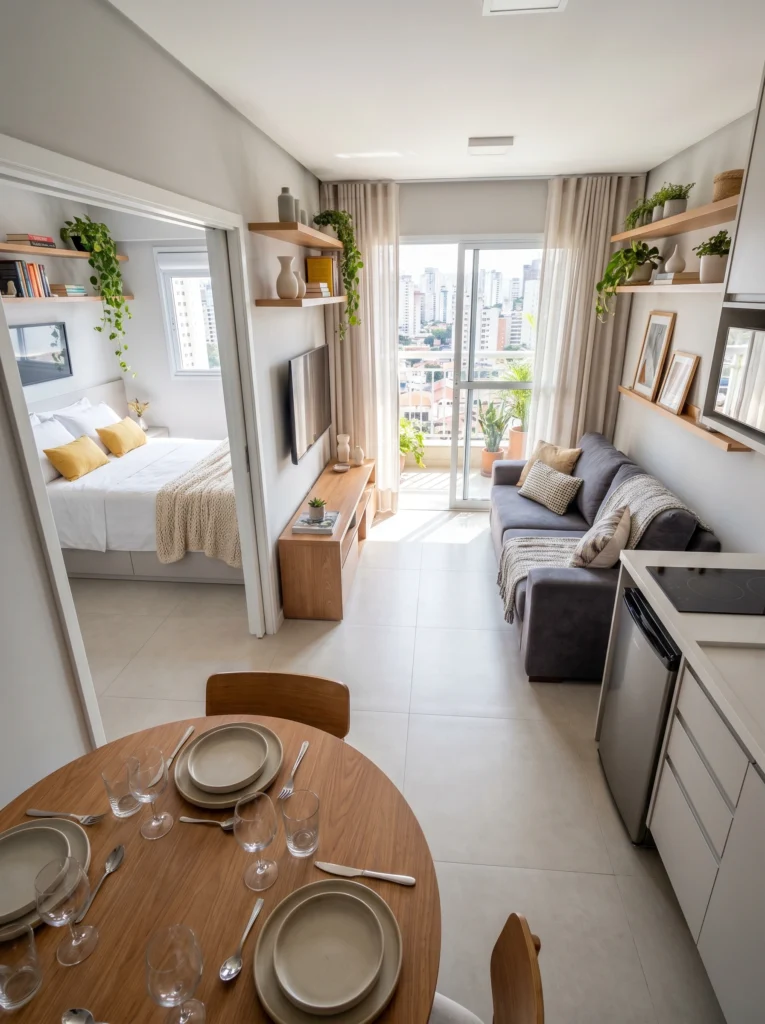
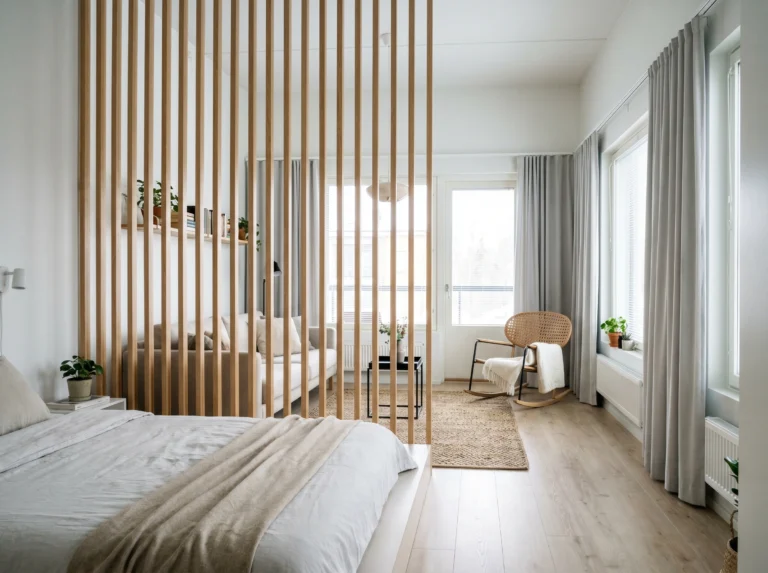
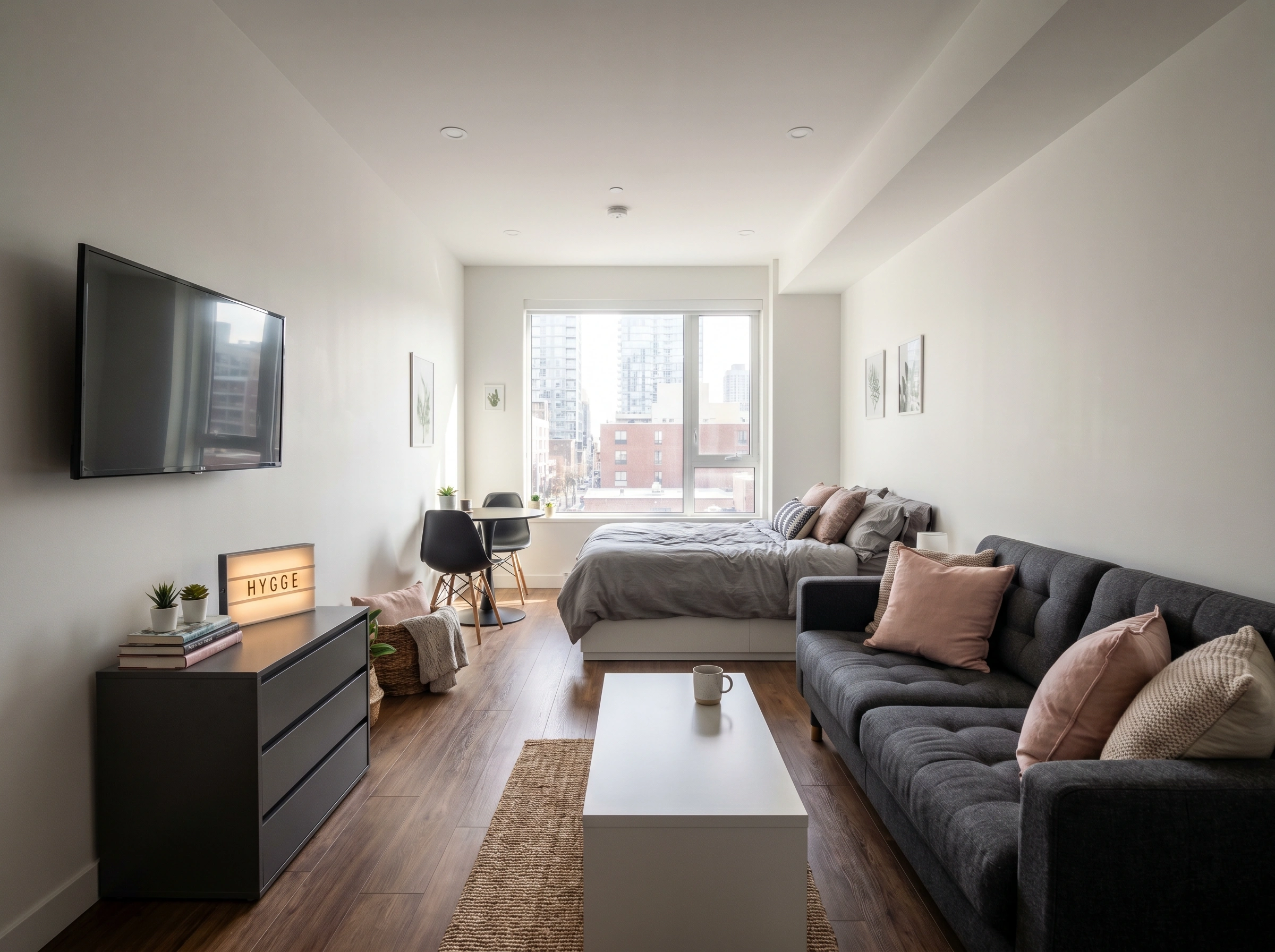
Long, narrow studios have one superpower: that window at the end. And the fastest way to ruin it is filling the path to it with tall, bulky furniture or floor-to-ceiling shelves on both sides. Suddenly your bright apartment feels like a hallway.
Keep the sightline to your main light source clear. Use lower furniture along the long walls. Hang shelves higher up so they don’t crowd at eye level.
My rule: if you stand in the doorway and can’t see the window in one clean visual line, something needs to move or shrink.
5. Pushing All the Furniture Against the Walls
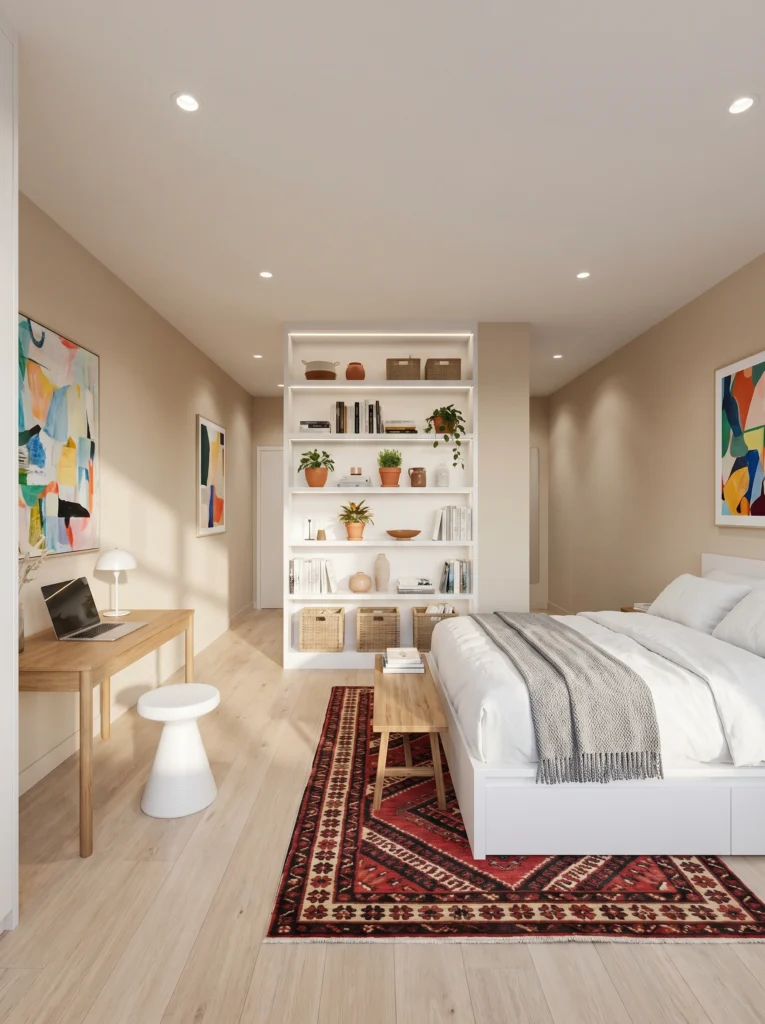
We all do it. We think pushing everything to the perimeter “opens up” the room. It actually does the opposite — it makes the middle feel like a runway and the edges feel crowded. This studio gets it right: the bookshelf acts as a divider, and the bench at the foot of the bed defines the sleeping zone.
Pro tip from someone who learned the hard way: Pull at least one piece — usually a sofa or shelf — a foot or two off the wall. The room instantly feels more intentional.
6. Letting Everything Match Too Much
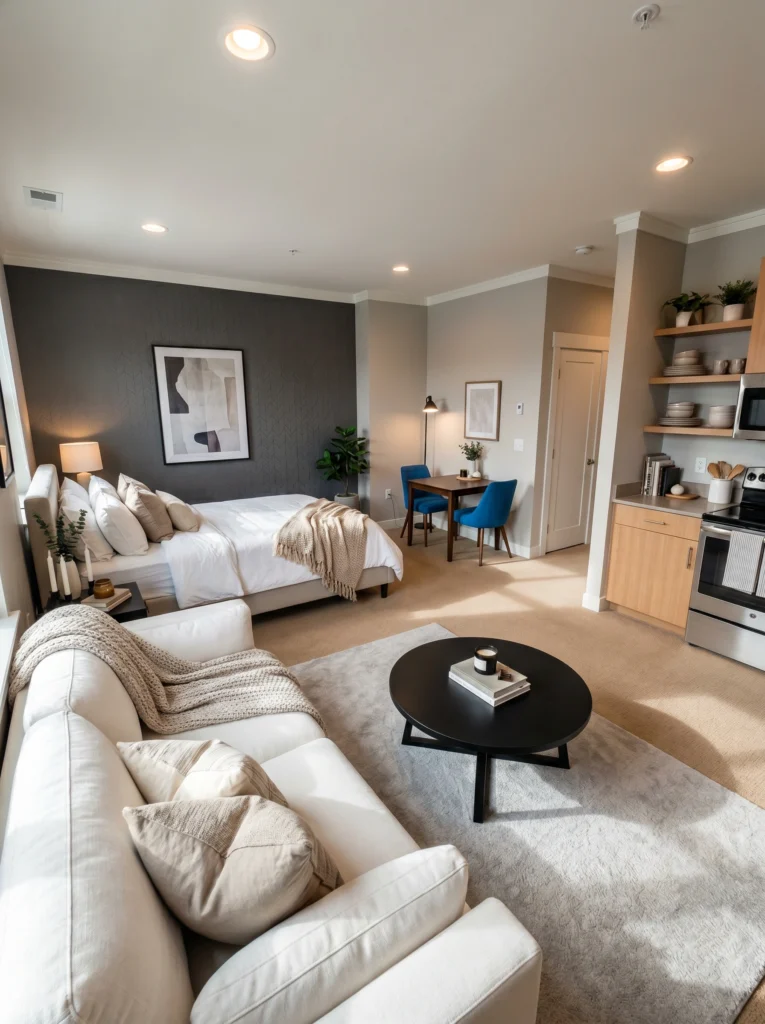
When every color in a small space is from the same beige-greige-cream family, the room can feel flat and a little washed out. There’s no anchor for your eye. This studio is pretty, but the two blue dining chairs are quietly doing the heaviest lifting in the whole room — they’re the only thing keeping it from melting into itself.
Trust me on this one: one unexpected color (a single moody armchair, a deep navy lamp, a rust-colored throw) does more for a neutral studio than ten more beige pillows ever will.
7. Relying on a Single Overhead Light
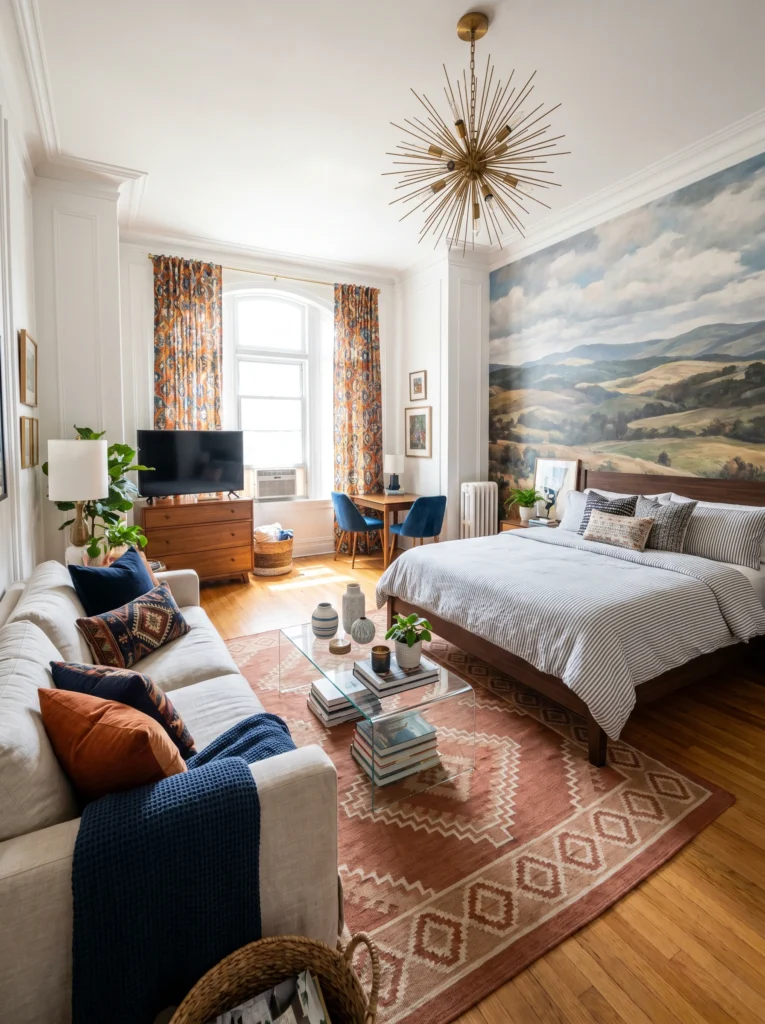
One ceiling light, no matter how stunning, can’t carry a whole studio. This sputnik chandelier is a showstopper — but look closer and you’ll see why the room feels warm: a table lamp by the sofa, another by the bed, light spilling through patterned curtains. Layered lighting at three heights.
This is the part most people skip — and that’s exactly why their studio feels cold at night. Aim for three light sources at different heights. A floor lamp, a table lamp, a string of warm bulbs. Your studio will glow instead of glare.
8. Forgetting to Define the “Bedroom”
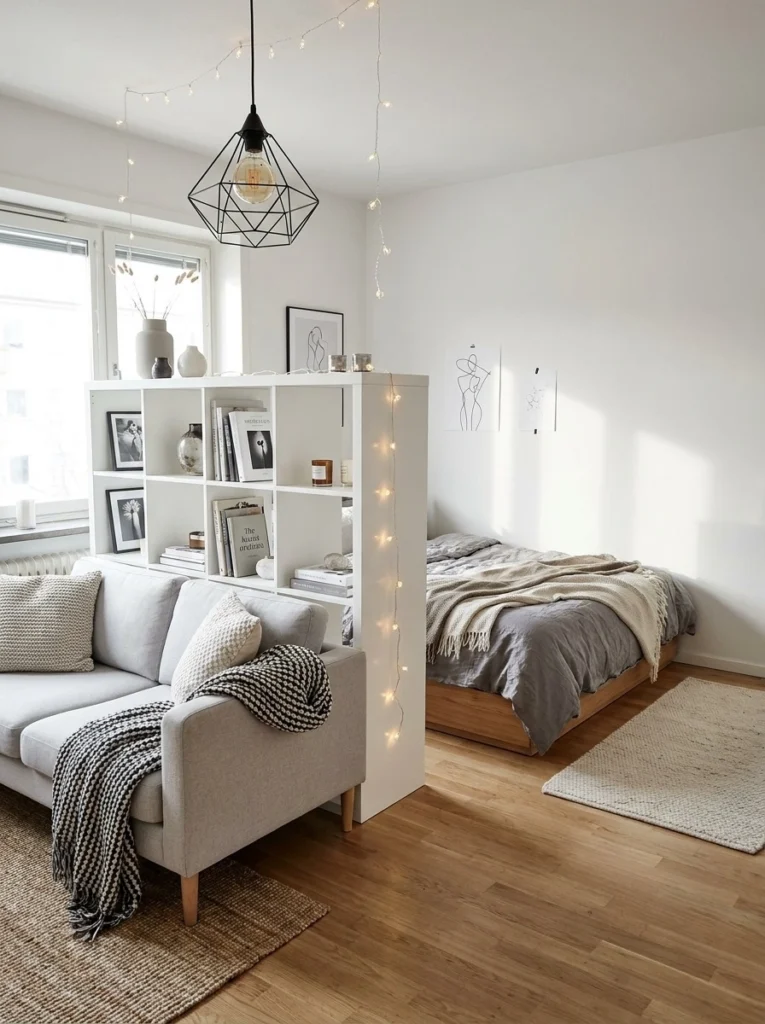
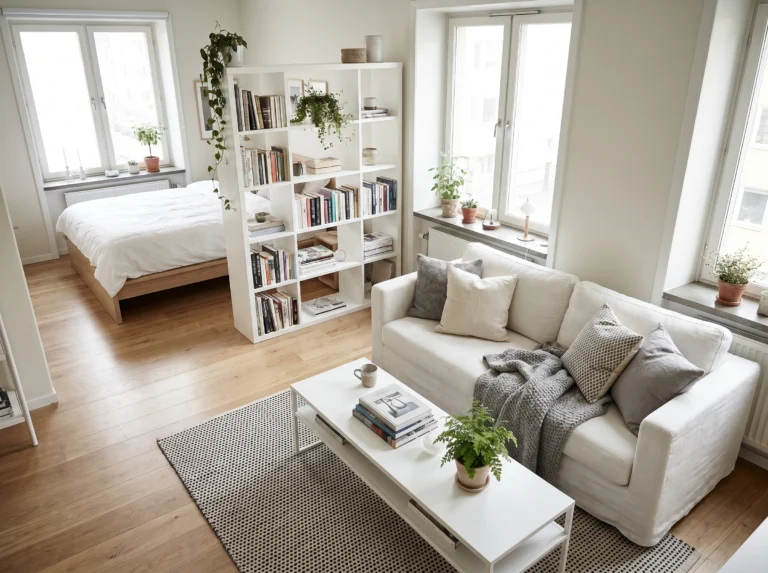
When your bed is the first thing every visitor sees, the whole studio reads as “bedroom with a couch in it.” Not the vibe. This Scandi studio nails the fix — a tall open shelf does double duty as a room divider and storage, without blocking light. The bed gets its own corner. The sofa gets its own corner. Both spaces feel like they have a purpose.
Renter-friendly alternative: A freestanding open bookshelf (IKEA Kallax is the classic) needs zero drilling and gives you instant separation. Style both sides.
9. Treating Furniture as Single-Purpose
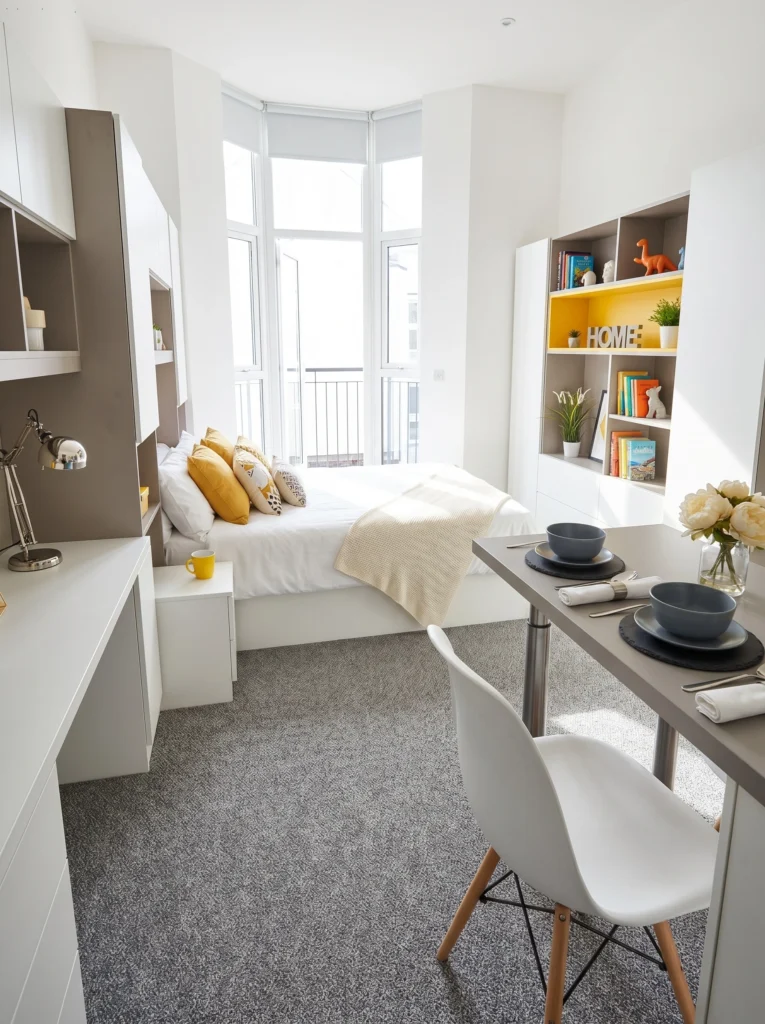
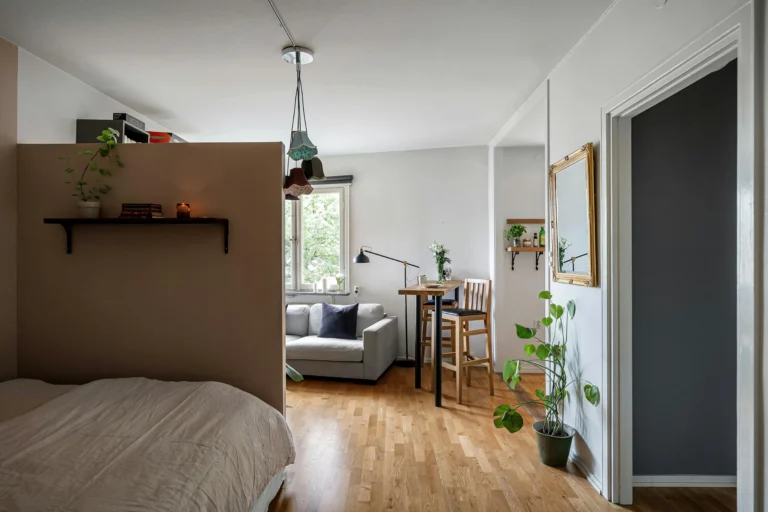
In a studio, every piece of furniture needs to earn its keep — ideally by doing at least two jobs. This bright little space gets it: that long table works as a desk by day, a dining table by night. The nightstand has drawers. The shelves hold books, decor, and break up the wall.
Budget vs. splurge: Save on the small stuff — pillows, baskets, frames. Splurge on the one or two pieces doing double duty. A real storage bed or an extending dining table earns its price back ten times over.
Final Thoughts
Studio living isn’t about pretending you have more space than you do. It’s about being honest with what you have — and making a few smart choices that let the space actually work for the way you live. Pick one mistake from this list. Just one. Maybe pull your sofa off the wall this weekend, or add a second lamp tonight. You’ll feel the difference immediately.
The truth is, the best studios in the world aren’t the biggest ones — they’re the ones with the most intention behind every piece.
Your studio doesn’t need to be bigger. It just needs to be more yours.
— Sofia