19 Cozy Studio Apartment Decor Ideas That Feel Like a Warm Hug
Studio apartments get a bad reputation. People act like one room is some kind of punishment — a place to survive until you can afford something bigger. Here’s the thing: I’ve lived in three studios across my twenties, and the ones that felt the best weren’t the biggest. They were the ones I actually decorated like I meant it.
If your studio feels more like a glorified bedroom than a home, the problem usually isn’t square footage. It’s the way the space is divided, lit, and softened. These 11 ideas are the ones I keep coming back to — real layouts, real palettes, all renter-friendly.
1. A Pink Palette Makes a Studio Feel Like a Sanctuary
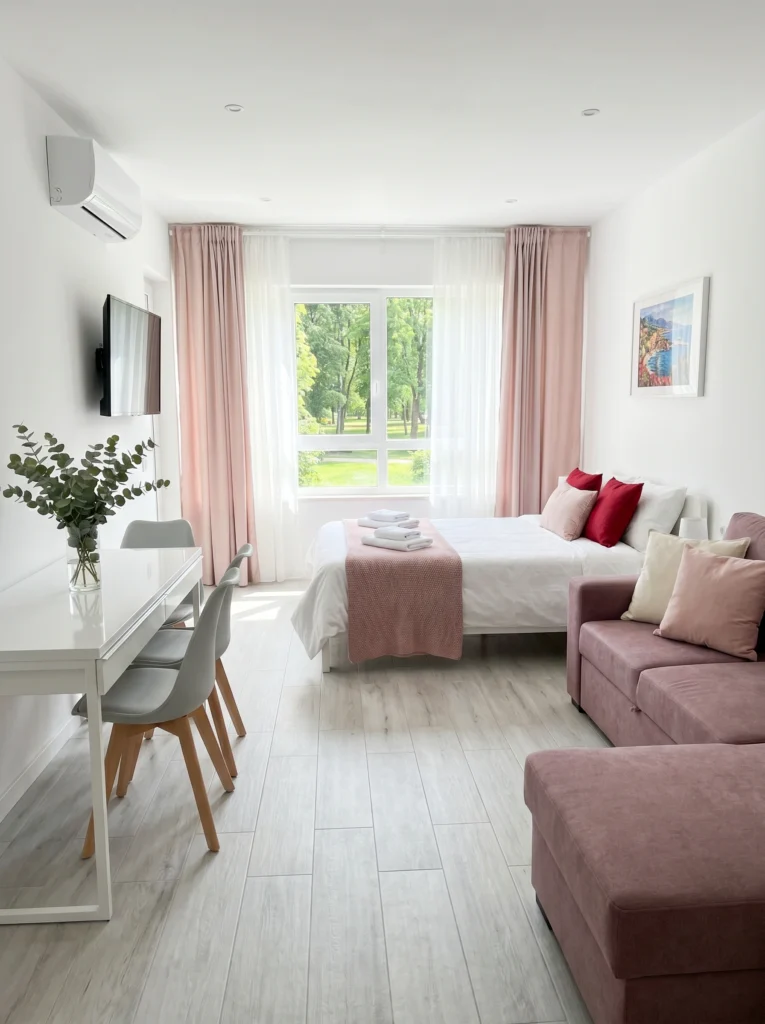
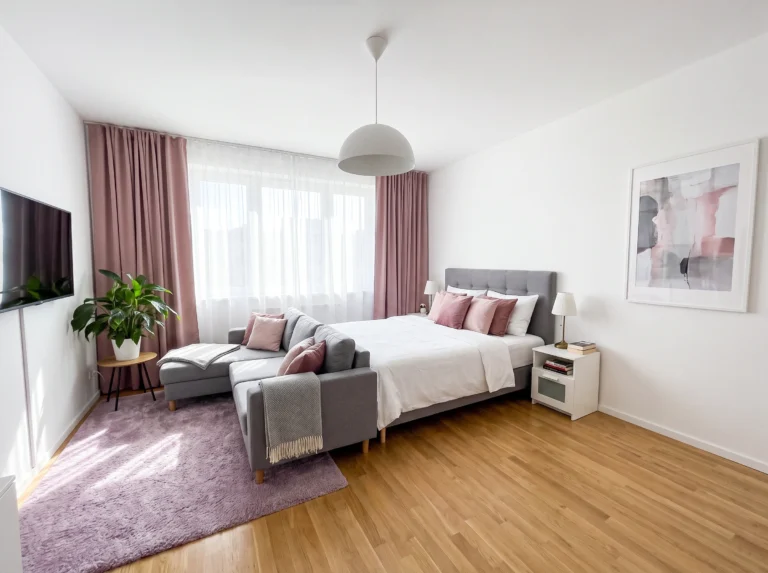
Pink in a studio isn’t bold — it’s smart. Blush walls, dusty rose sofa, pink curtains, and a pink bed throw all pull in the same soft direction, making the room feel cohesive rather than busy. The white dining table and grey chairs break it up just enough to keep things grounded. And that park view framed by the window? That green does everything the room needed for contrast. Nature is always the best accent color.
Pro tip: Tone-on-tone pink works because the eye reads it as one calm layer, not competing patterns. The secret is varying the shade slightly — dusty rose sofa, blush curtains, pale throw. Same family, different depths.
2. One Bold Sofa Color Is Enough
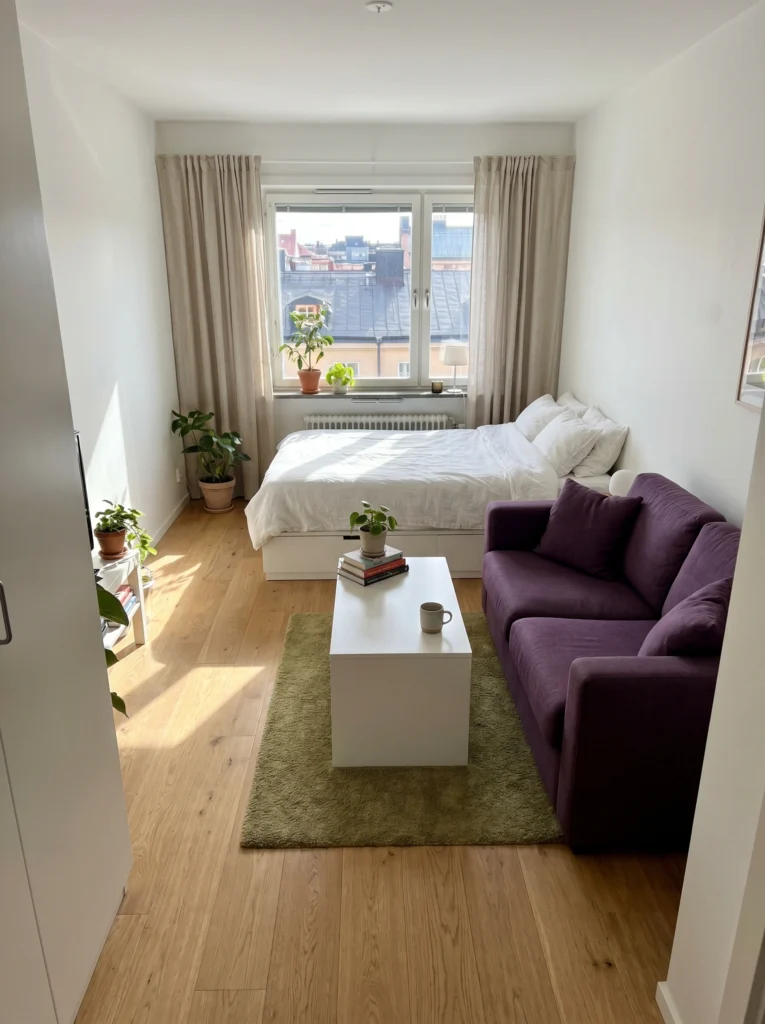
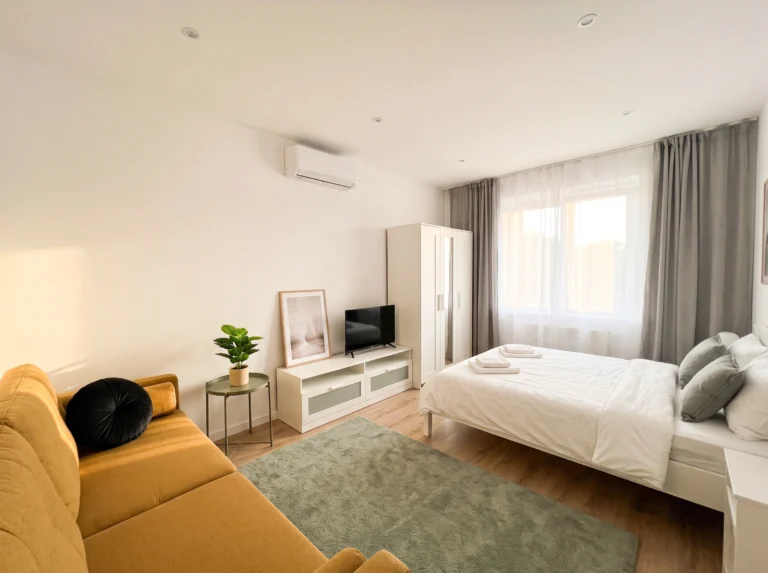
A deep plum sofa against white walls is a statement that needs almost nothing else around it. This studio keeps everything else restrained — white bed, white coffee table, beige curtains — so the purple and the olive rug can do their thing without competition. The terracotta pots along the window ledge add warmth without adding complexity. Trust me on this one: when you find the right sofa color, let it lead. Everything else follows.
Sofia’s honest take: Purple gets avoided because people think it’s hard to style. It’s actually one of the easiest — it pairs naturally with olive, terracotta, and white without any effort at all.
3. Contrast Two Wall Colors to Define Zones
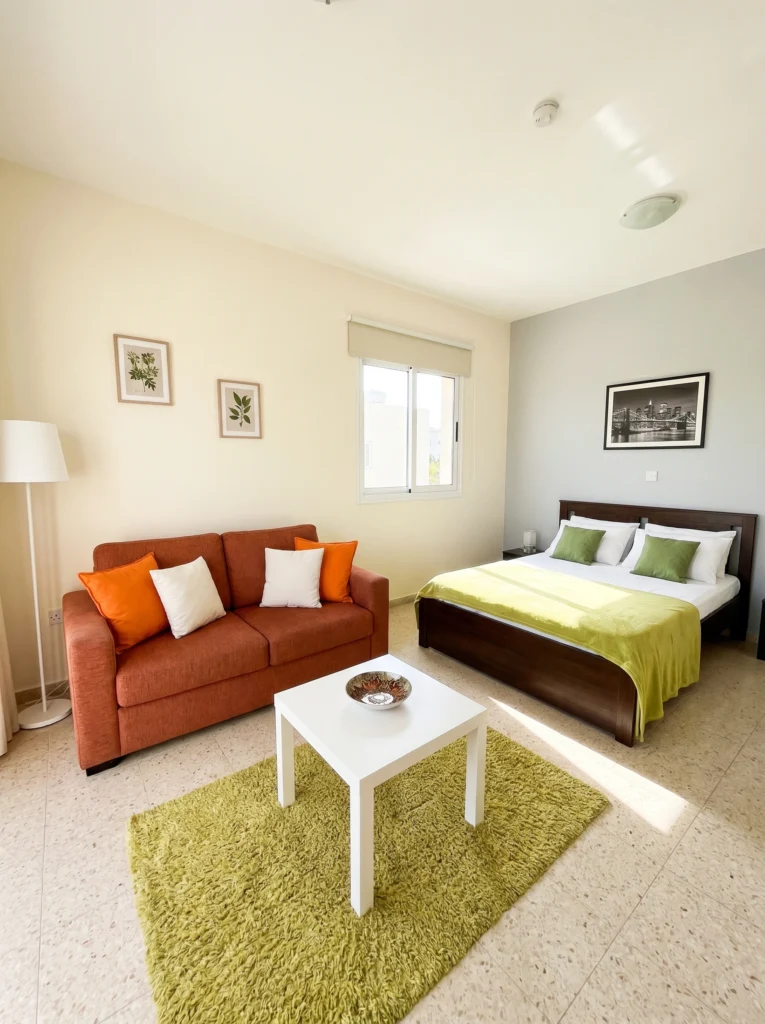
Two wall colors — warm cream on the living side, soft grey on the bedroom side — quietly divide this studio without a single piece of furniture doing the work. It’s a clever trick that costs nothing extra if you’re already painting. The terracotta sofa and lime green rug keep the living zone warm and energetic; the grey wall behind the dark walnut bed makes it feel contained and restful. Same room, two completely different moods.
Renter-friendly alternative: Can’t paint two colors? A large-format removable wallpaper panel on the bedroom wall achieves the same two-zone effect — and peels off cleanly when you move out.
4. Knit Poufs Are the Most Useful Thing in a Small Space
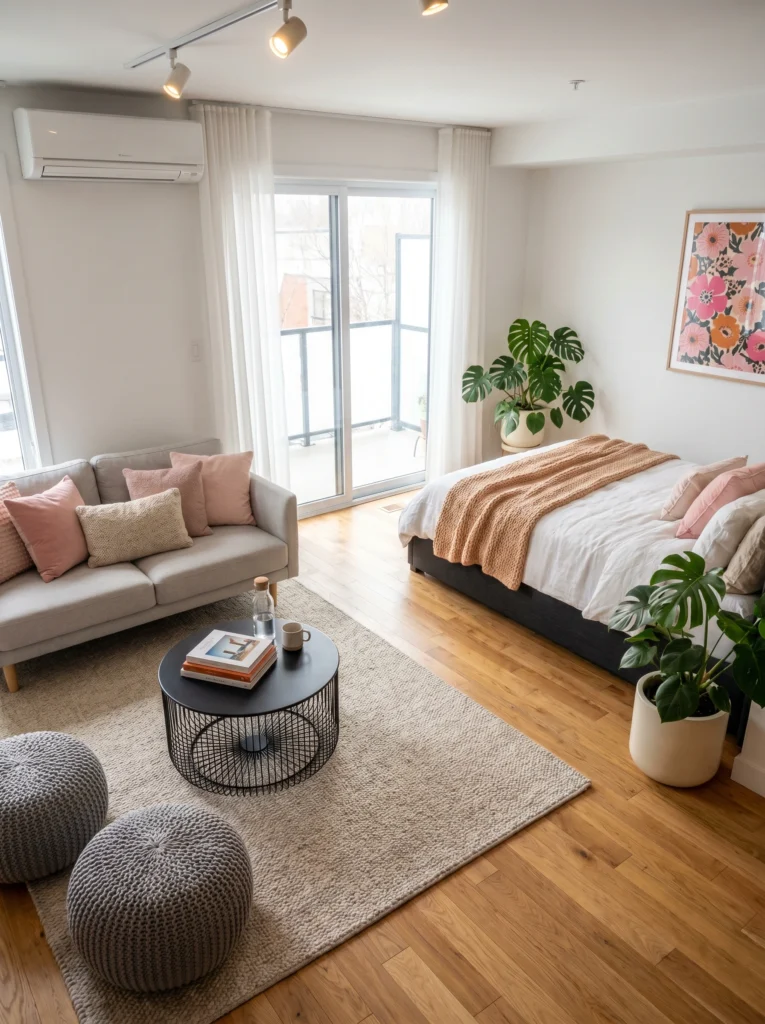
Knit poufs are one of those things that sound like a trend but are actually just practical. They work as extra seating, a footrest, a side table, or a plant stand depending on the moment — and when you don’t need them, you stack them in a corner. This studio uses two alongside a wire-frame coffee table that keeps the floor visually open. The huge monstera in the corner does as much decorating as any piece of furniture in the room.
Budget vs. splurge: Knit poufs run $25–$45 at most home stores and are genuinely worth it. Splurge instead on one good oversized plant — a monstera or fiddle-leaf fig changes a room’s scale immediately.
5. A Room Divider Shelf Can Hold Your Whole Life
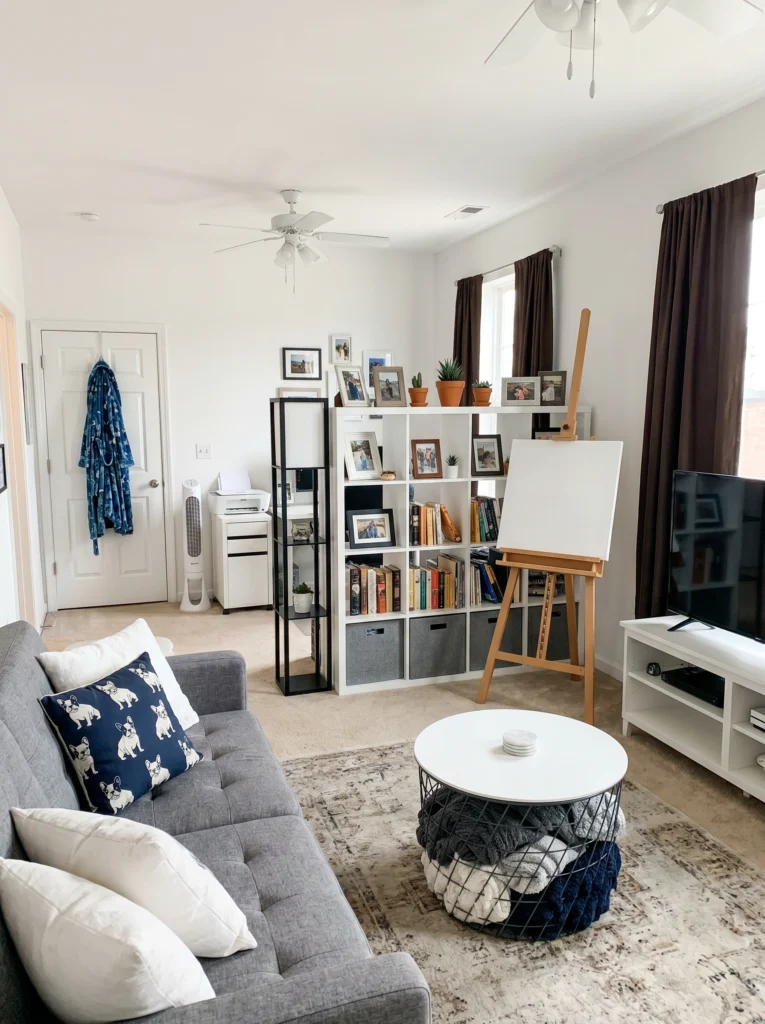
This studio uses an IKEA-style cube shelf as a full room divider — and loads it with everything: books, framed family photos, terracotta cactus pots, fabric storage bins. Behind it, an artist’s easel with a blank canvas signals a creative life happening here. The wire coffee table with blankets stuffed inside adds storage without looking like storage. It’s not minimalist. It’s maximalist with a system — and that distinction matters.
I’ve tested this: A cube shelf divider works best when you keep one or two cubes completely empty. The negative space lets the eye rest and stops the whole thing from looking chaotic.
6. Find One Coffee Table That Does Two Jobs
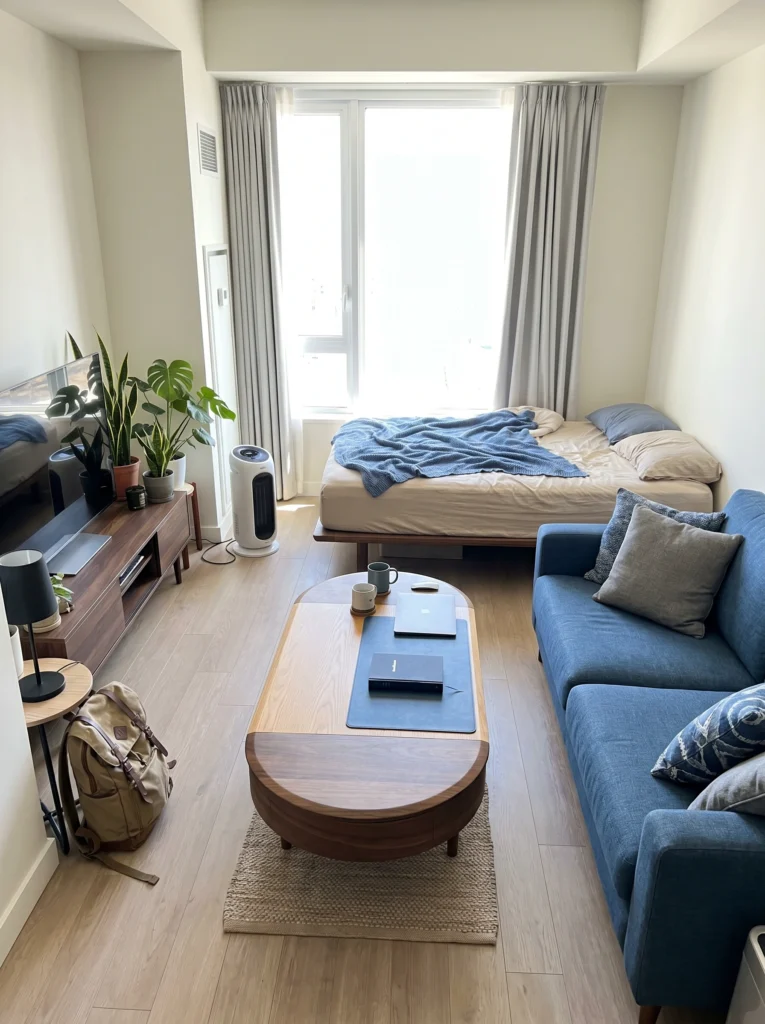
That oval walnut coffee table isn’t just a surface — it’s a desk, a dining spot, and a styling moment all at once. In a studio where every piece has to multitask, a coffee table with real surface area earns its place in a way a tiny side table never could. The denim blue sofa and walnut credenza keep the whole room in the same calm, grown-up palette. No art on the walls, no clutter on the shelves — the plants do everything.
My tip: An oval or rounded coffee table is significantly more livable in a small space than a rectangular one — you won’t clip your shins on corners, and it’s easier to navigate around when the room is tight.
7. Evening Lighting Is the Final Layer Every Studio Needs
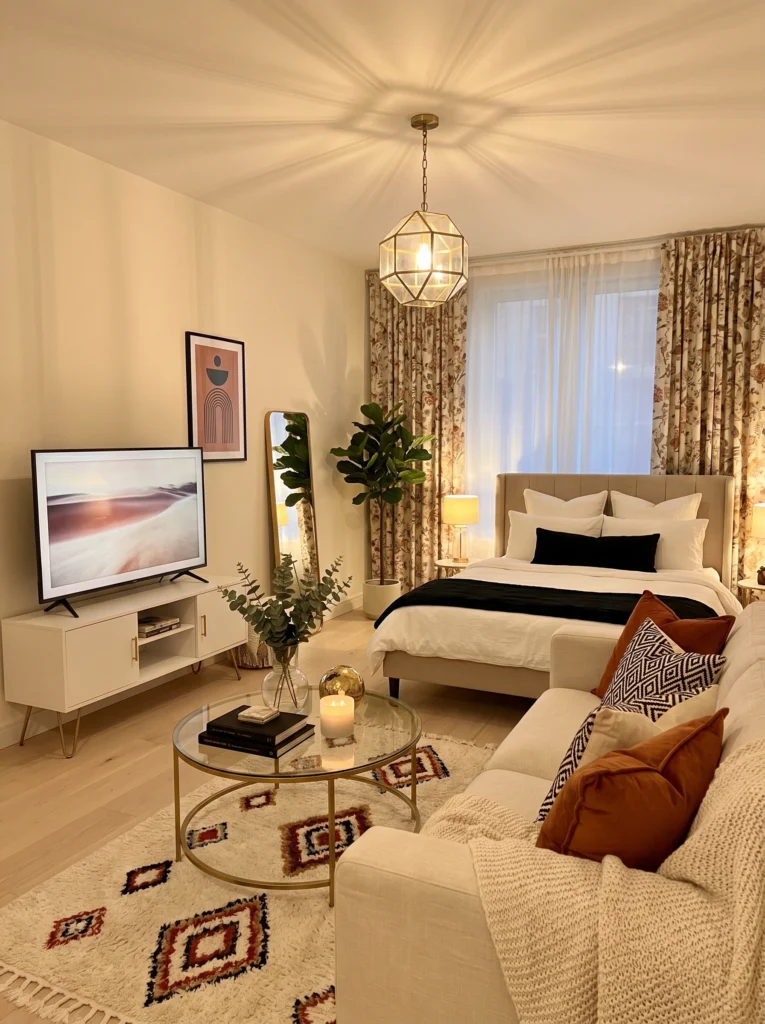
Look at that ceiling. That starburst shadow from the brass geometric pendant turns a plain white surface into something theatrical — and it costs nothing extra beyond the light fixture itself. This is what evening lighting does that no amount of daytime styling can replicate. The warm glow catches the bouclé sofa, the Moroccan rug, the gold coffee table, the lit candle. A studio that looks good in daylight but feels incredible at night — that’s the goal.
My favorite: A geometric brass pendant ($50–$120 online) gives you the warm glow of a chandelier with a fraction of the installation fuss. Most simply swap onto an existing ceiling fitting in minutes.
8. Dark Furniture Earns Its Place When It’s Consistent
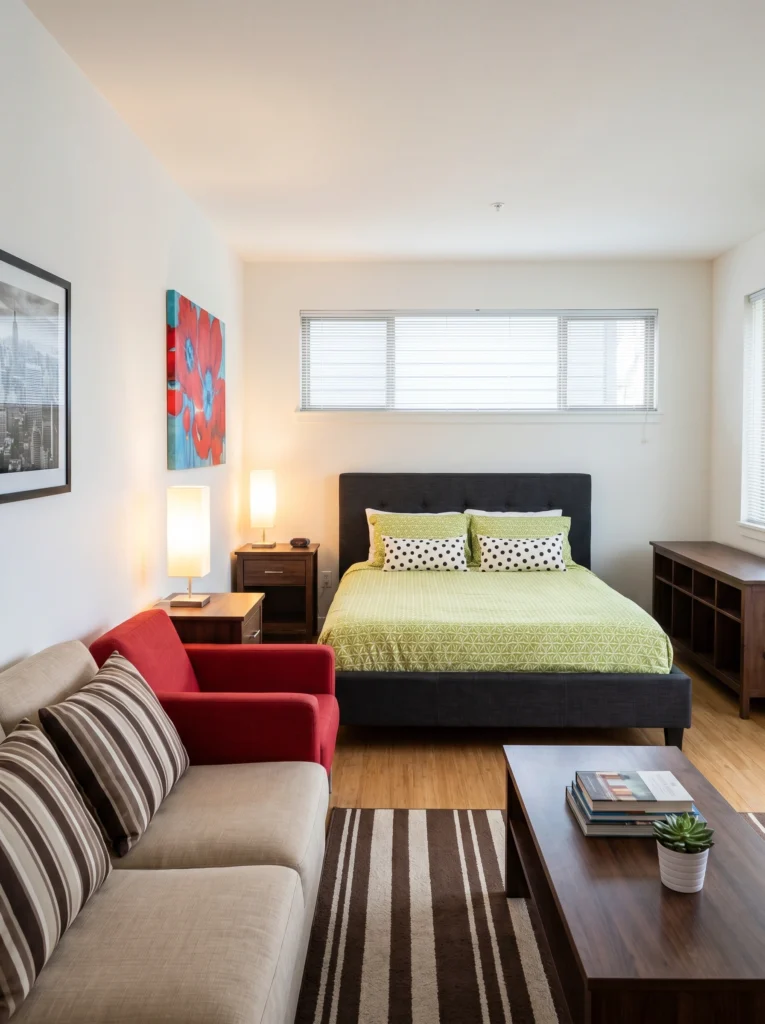
Dark charcoal bed, walnut nightstands, walnut coffee table, walnut storage unit — all the dark pieces run in the same warm-brown family, which is why it works. The lime green bedding and red chair pop against it without the room feeling chaotic. Two glowing column lamps create evening warmth that ties the whole layout together. This is the thing about bold furniture: it only looks intentional when you commit to a consistent dark tone across every piece.
Pro tip: If you’re mixing dark furniture, keep all pieces within the same undertone family — cool charcoal with cool grey, warm walnut with warm oak. Mixing warm and cool darks is what makes a room look accidental rather than designed.
9. A Round Coffee Table Opens Up the Whole Room
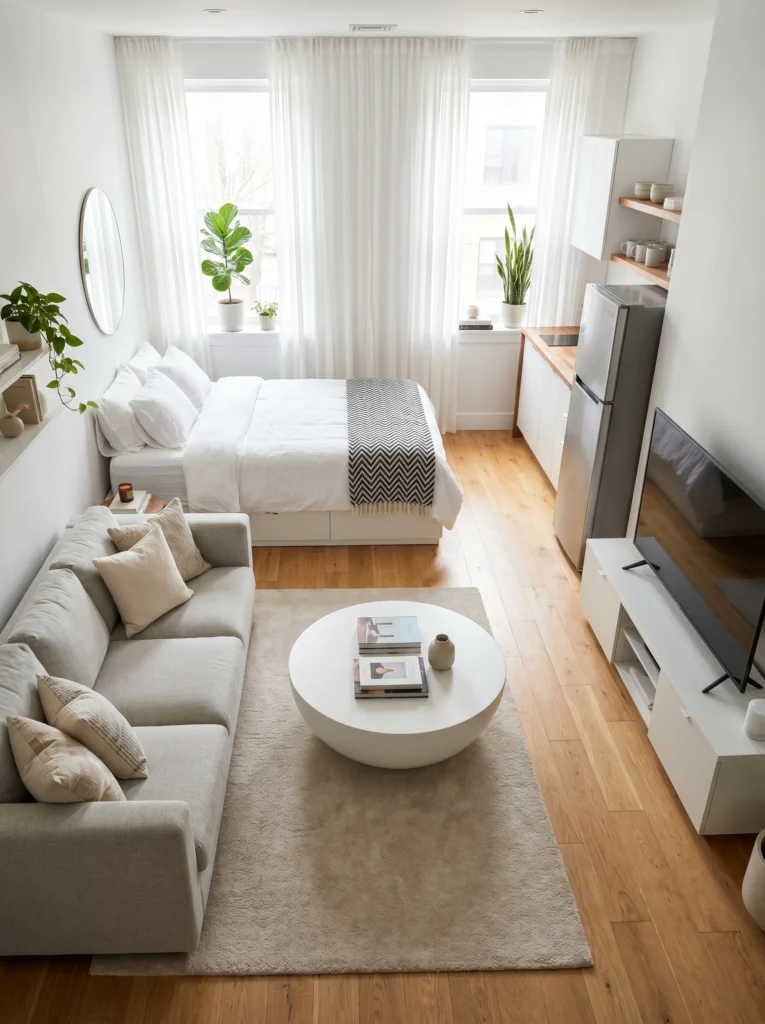
Everything in this studio is white or near-white — and it still manages to feel warm, layered, and genuinely livable. The secret is shape: that pill-shaped round coffee table, the circular mirror, the curved sofa silhouette. Rounded forms soften a small space in a way sharp corners never can. The fiddle-leaf fig and snake plant on the two window ledges bring the only color in the room — and honestly, that’s enough. Sometimes restraint is the boldest choice you can make.
Sofia’s honest take: All-white studios look effortless in photos but show every crumb in real life. If you love this look, invest in washable slipcovers and a good lint roller. Worth it — but go in with eyes open.
10. Red Accents on a Neutral Base Never Gets Old
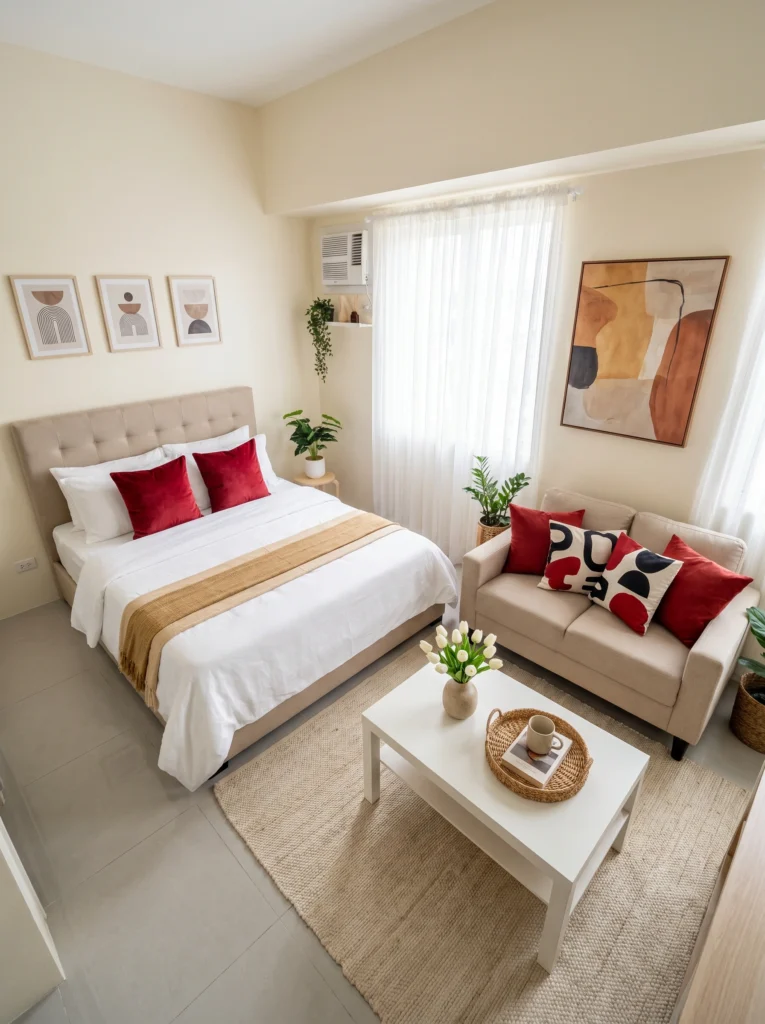
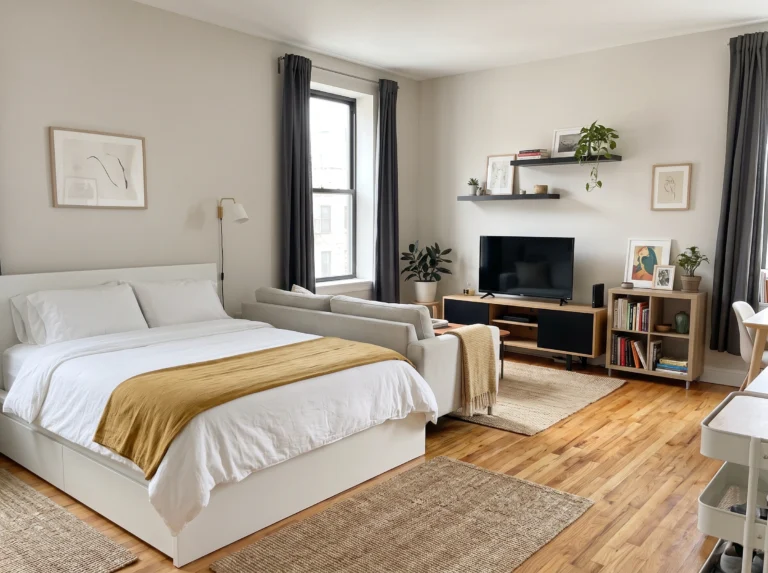
Cream walls, beige sofa, white bedding, jute rug — and then those deep red velvet cushions land on both the bed and sofa simultaneously, threading a single bold color through both zones at once. It’s one of the oldest decorating tricks, and it works every time. The large earth-tone abstract painting picks up terracotta and ochre rather than matching the red exactly — which is smarter than a perfect match and far more interesting to live with.
Renter-friendly alternative: Red velvet cushion covers are the fastest, cheapest way to test a bold accent color. If you love it after a month, add a throw in the same tone. If you don’t, swap them out for nothing.
11. A Jute Rug and Navy Sofa Is a Combination That Always Works
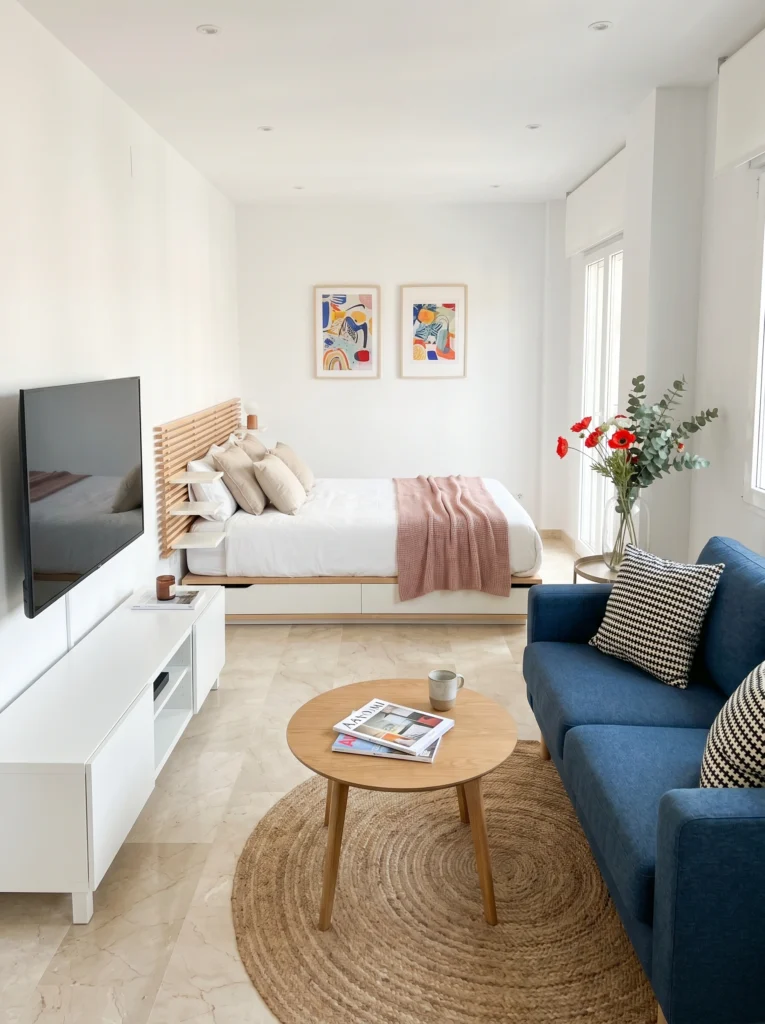
Navy and natural — it’s a pairing that brings the calm of the sea and the warmth of the earth into the same room without trying hard. The round jute rug grounds the sofa and coffee table into a clear living zone. The slatted oak headboard adds texture to an otherwise all-white bedroom corner. Two colorful abstract prints above the bed and a glass vase of red poppies are the only decoration this room needs. Simple, confident, complete.
Budget vs. splurge: A circular jute rug is one of the best-value purchases in home décor — most run $40–$90 and instantly add texture and warmth. Splurge on the sofa instead; a good navy linen or velvet holds its color and shape for years.
12. Build a Vertical Library Instead of a Wide Bookcase
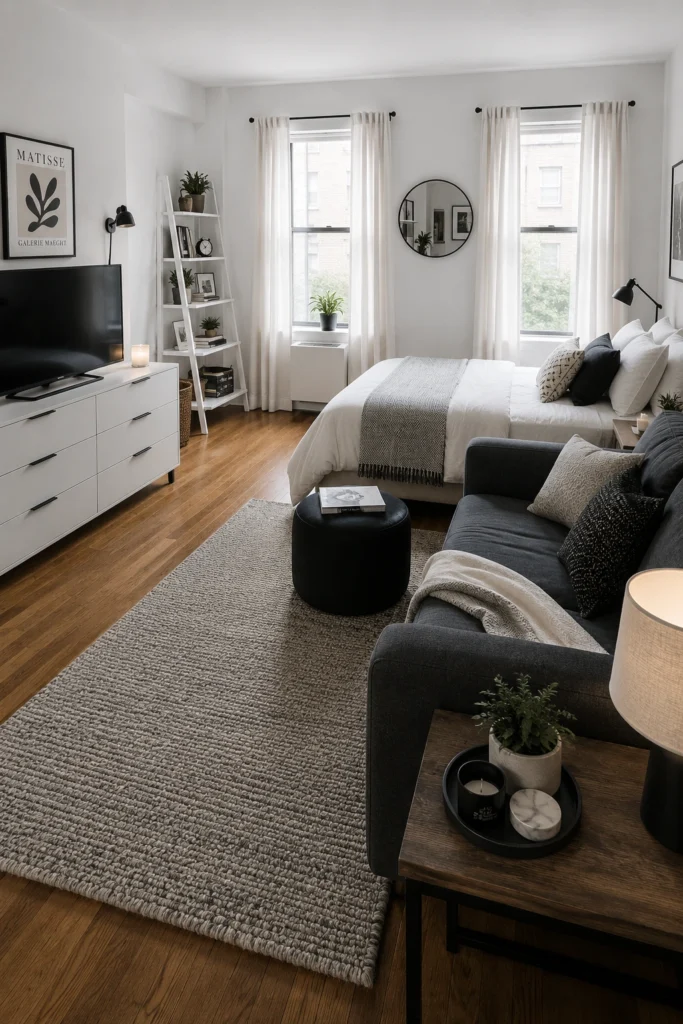
Floor space is gold in a studio. Wall space is free. A leaning ladder shelf or a narrow vertical bookcase gives you all the storage of a regular bookshelf without eating up half a room.
The white ladder shelf above is doing serious work: it holds books, plants, a clock, picture frames, and a basket — and it takes up maybe 18 inches of floor. Bonus points for the way it draws the eye up, which makes the ceiling feel higher than it is.
My favorite: the IKEA “Vittsjö” and the “Lerberg” shelves. Both are under $80, both look way more expensive than they are, and both fit in the trunk of a small car.
13. Don’t Be Afraid of a Darker Sofa
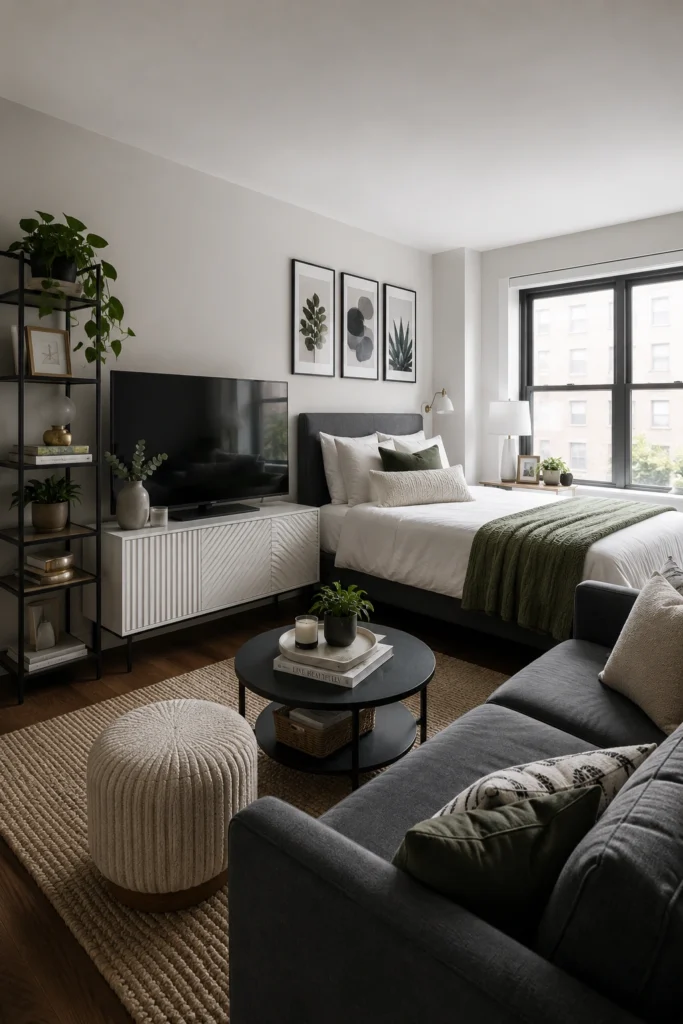
Everyone tells you to pick light furniture for small spaces. I’m telling you to ignore them. A light sofa shows every coffee stain, pet hair, and pizza crumb. A charcoal or dark grey sofa hides all of it and makes the room feel grounded, not floaty.
The studio above proves the point: the dark sofa is the visual anchor of the whole room. The bed is light, the walls are pale, the rug is jute — but the sofa pulls everything together. Without it, the space would feel like it was about to float away.
Budget vs. splurge: Save on throw pillows (you’ll swap them seasonally anyway). Splurge on a quality, washable-cushion-cover sofa. You’ll live on it more than your bed.
14. Anchor the Living Zone with a Rug
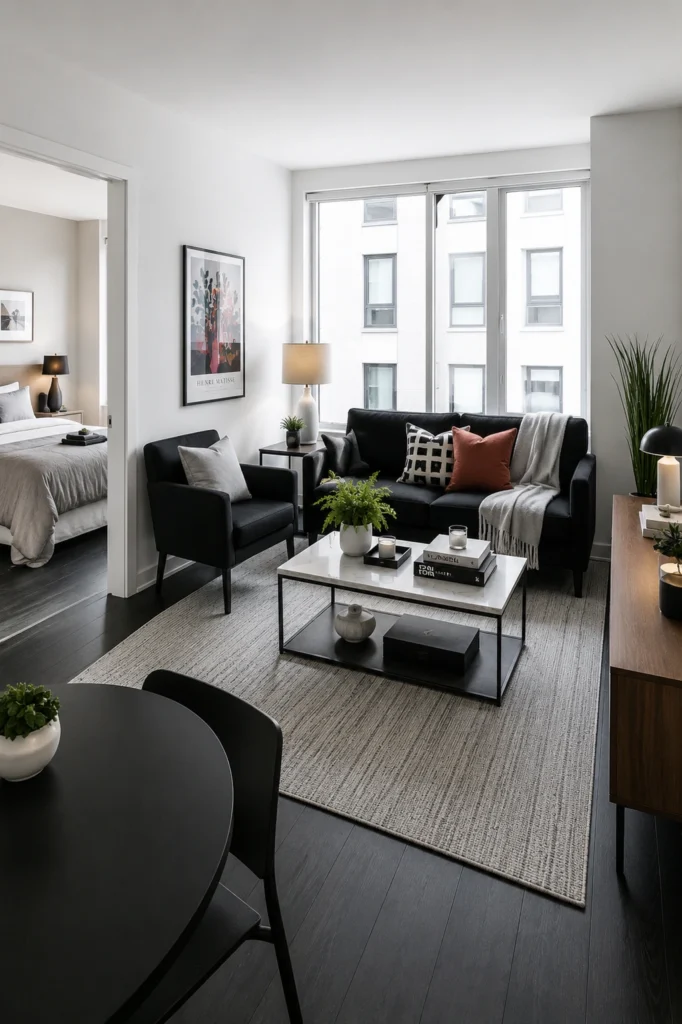
The single fastest way to make a studio feel like two rooms instead of one is a rug. A proper one — not a flimsy 4×6 floating in the middle of the floor. Your rug should sit fully under the front legs of every seat in the conversation area. That visual boundary tells your brain “this is the living room,” even when the bed is six feet away.
Look at the layout above: the soft, textured rug stops cleanly at the edge of the sofa zone, and the dark hardwood beyond becomes a natural “hallway” between living and sleeping areas. No walls required.
Pro tip: Go one rug size up from whatever you think you need. Small rugs make small rooms feel even smaller. Trust me on this one.
15. Zone Your Space With a Rug (It Does More Than You Think)
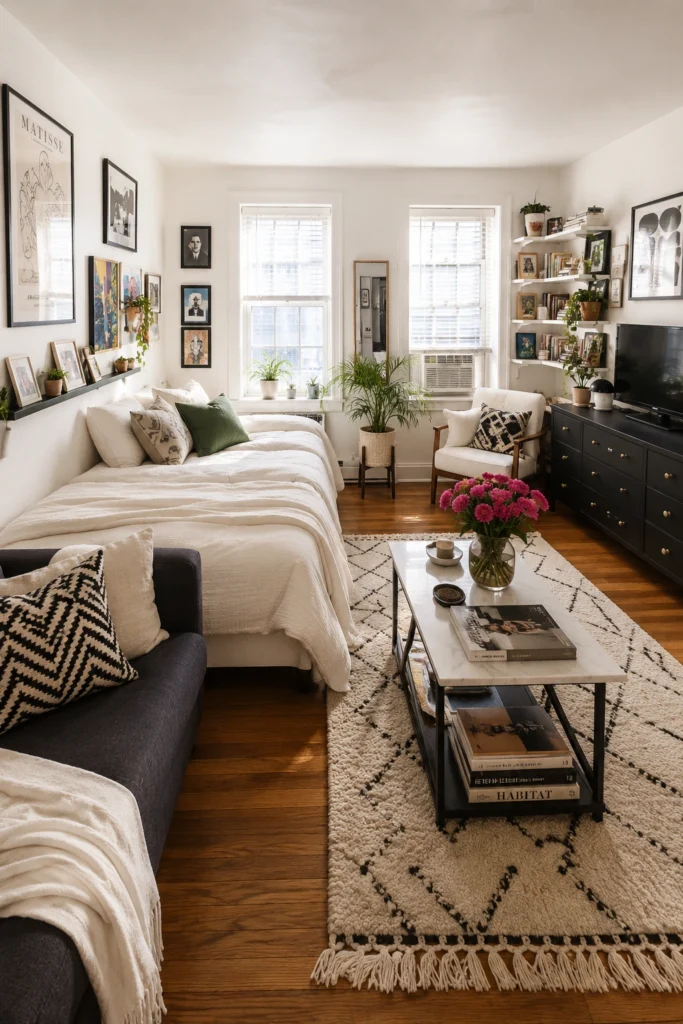
A rug is the single most underrated tool in a studio. It does the work of a wall without taking up an inch of floor space — visually telling your eye where the “living room” ends and the “bedroom” begins.
Pick a rug big enough to anchor your seating area, with at least the front legs of your sofa sitting on it. A small rug floating in the middle of the room makes the whole space feel like a doll’s house. Go bigger than you think, almost always.
Pro tip: A patterned rug — like a black-and-white Beni Ourain style — hides crumbs, pet hair, and the occasional spilled coffee far better than a plain cream one. I learned that the hard way.
16. Carve Out a Tiny Work Nook
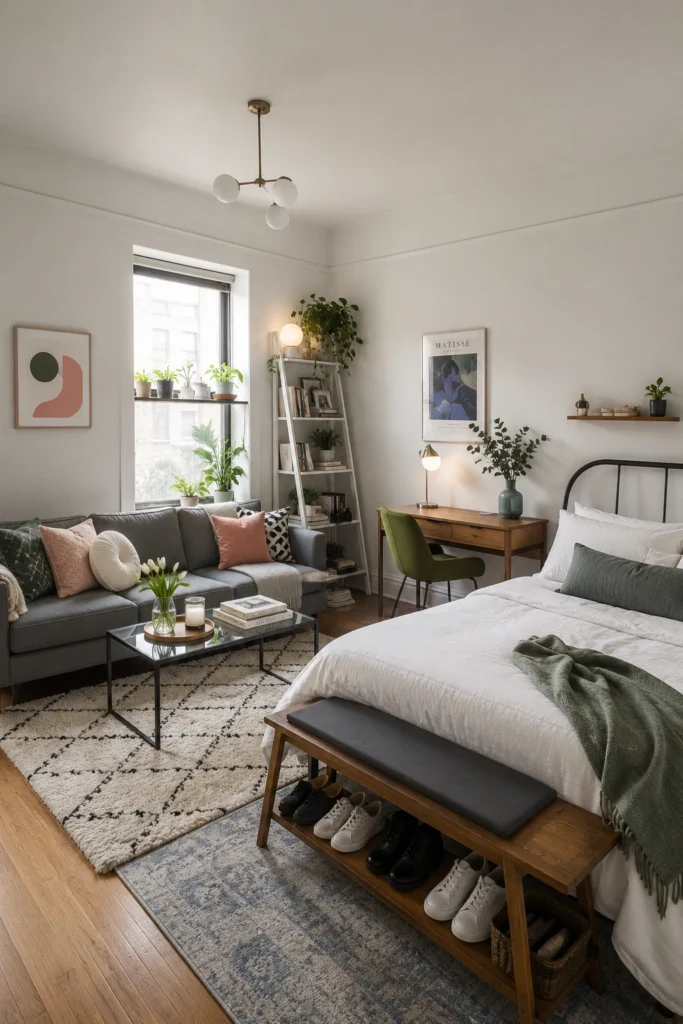
If you work from home — even part of the time — you need a dedicated work surface that is not your bed and not your dining table. I’m serious. Working from bed sounds cozy until your back gives out at 32.
The studio above squeezes a small wooden desk and a single chair between the sofa and the bed, right under a window. That’s it. No fancy office setup, no expensive ergonomic system. A drawer for cables, a lamp for evening hours, and a plant so it doesn’t feel like a punishment.
Pro tip from someone who learned the hard way: Face your desk away from the bed if you can. Looking at your unmade bed during a Zoom call is a special kind of psychological damage.
17. Use the Sofa as a Divider Between Sleep and Living
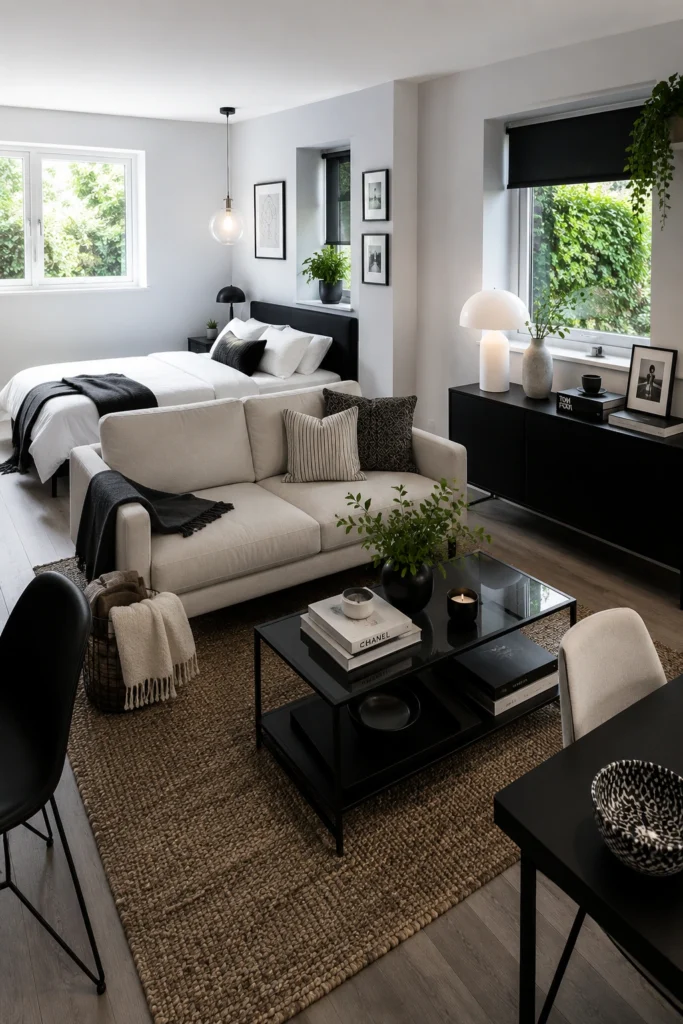
This is the part most people skip — and that’s exactly why their studio feels like a chaotic bedroom. Push your sofa so its back faces the bed. Suddenly you’ve created a hard psychological wall between “lounge” and “sleep,” even though no actual wall exists.
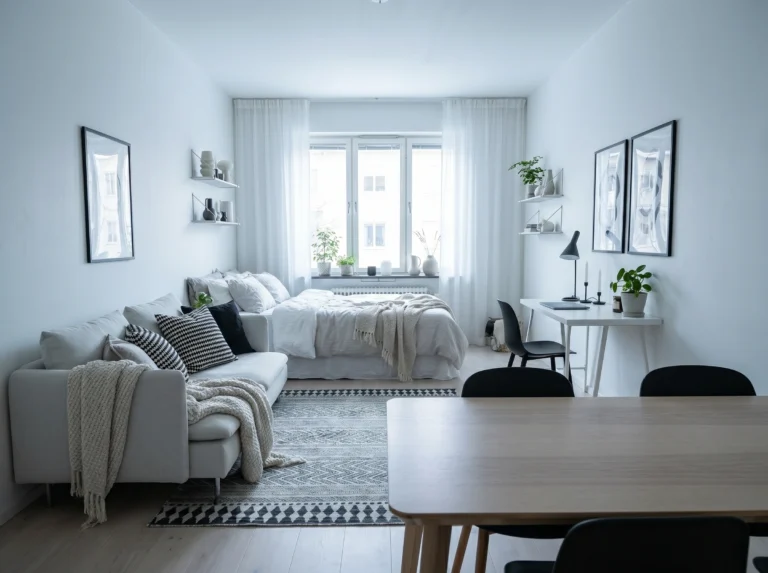
The cream sofa above does all the work. From the living side, you see a calm, styled lounge. From the bed, the sofa back acts like a low headboard for the whole room. It’s the most underrated furniture trick in small-space decorating.
Renter-friendly alternative: If your sofa is too short or has an ugly back, drape a thick throw over it or add a tall, slim console behind it with a lamp and a couple of books.
18. Lean Into Warm Wood and Soft Textures
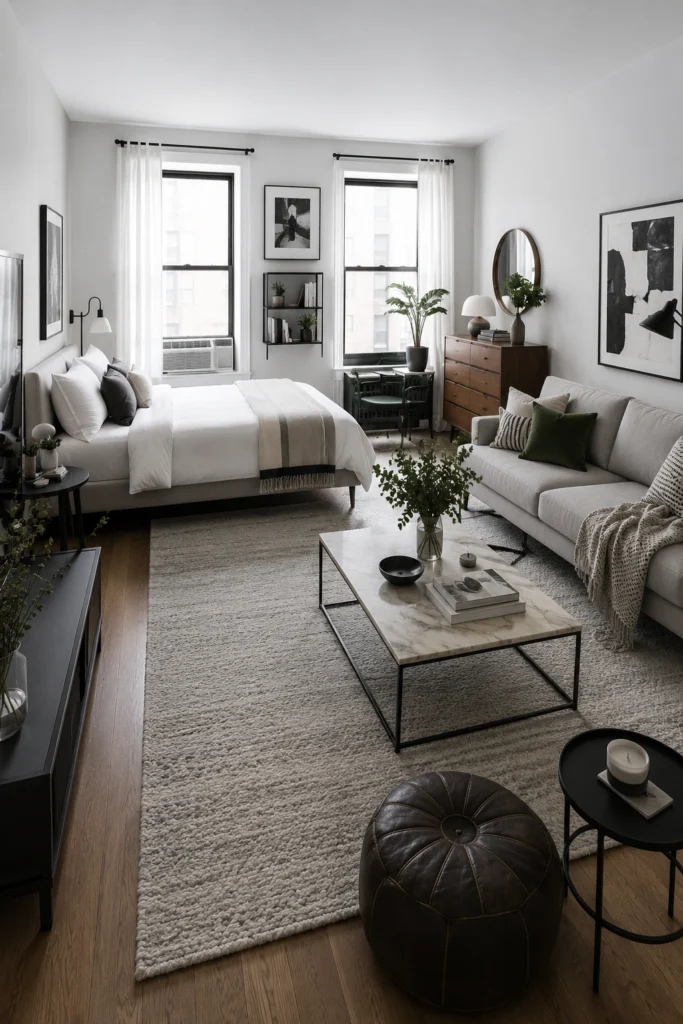
Studios full of cold materials — glass, metal, concrete, glossy white — feel like dentist offices. The cure is friction. Wool, leather, jute, oak, linen. Things your hand actually wants to touch.
The studio here is mostly neutral, but it never feels sterile because of the layering: warm oak floors, a chunky wool rug, the worn leather pouf, a marble coffee table that catches light, and walnut cabinetry. Five or six different textures in one frame, and the result feels like an exhale.
I’d skip the all-glass coffee table trend for studios. It looks “airy” in photos but feels weirdly cold in person. A marble or wood surface gives the room a heartbeat.
19. Mix Personality Into a Neutral Base
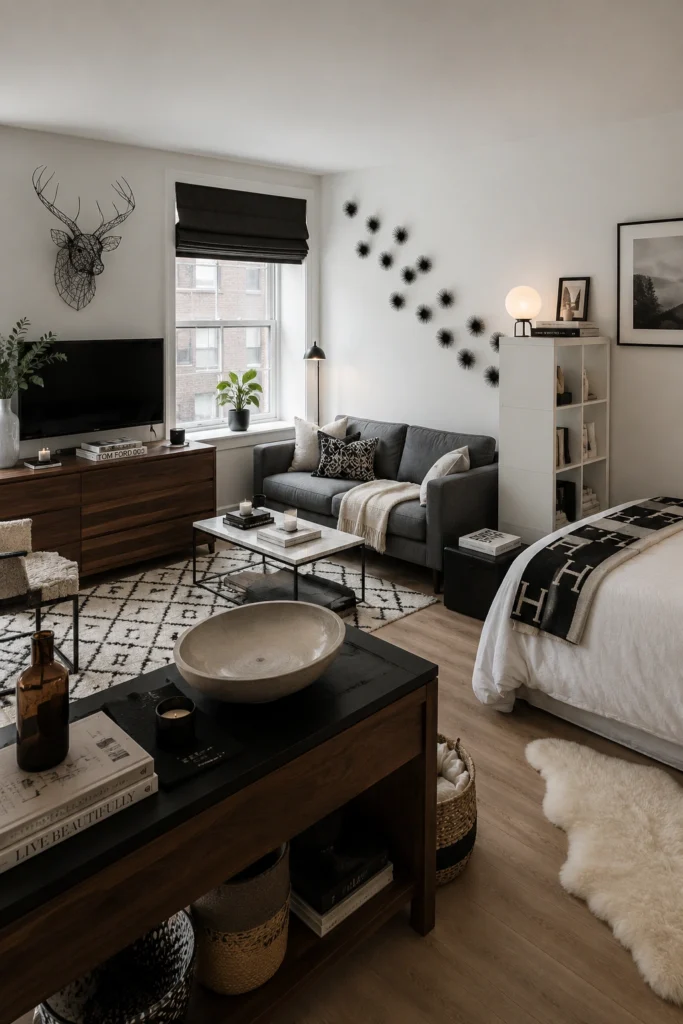
Here’s where a lot of studios go wrong: people pick a calm palette, then forget to add anything that makes the room feel like theirs. The result is a perfectly tasteful space that could belong to literally anyone.
The studio above is technically still neutral — black, white, cream, walnut — but it has opinions. The wire deer head sculpture, the black starburst wall art, the patterned throw on the bed, the chunky stone bowl. Each piece is small enough not to overwhelm the room, weird enough to make it interesting.
Your studio should look like a person lives there. Pick three or four pieces that make you smile, and put them somewhere you’ll see them every day.
Final Thoughts
A studio isn’t a smaller version of a real apartment. It’s its own thing — and when you stop trying to fake walls and start working with the openness, the whole place gets easier to love. Pick two or three of these ideas. Not all eleven. Just the ones that make sense for your floor plan and your budget, and start with the cheapest one this weekend.
You don’t need more space. You need a couple of intentional choices that make the space you already have feel like yours.
Your studio doesn’t have to be big to be a home — it just has to feel like one.