15 Bold Studio Apartment Decor Ideas That Instantly Transform Small Spaces
Here’s the thing about small apartments — everyone tells you to go neutral. Beige sofa, white walls, maybe a single dusty pink pillow if you’re feeling wild. And then you wonder why your place feels like a dentist’s waiting room.
The truth is, small spaces love color. They just need it used with a little intention. Below are 15 bold-color approaches that make compact apartments feel like the most interesting rooms in the building — not the most cramped.
1. Wall-Mount Everything You Can
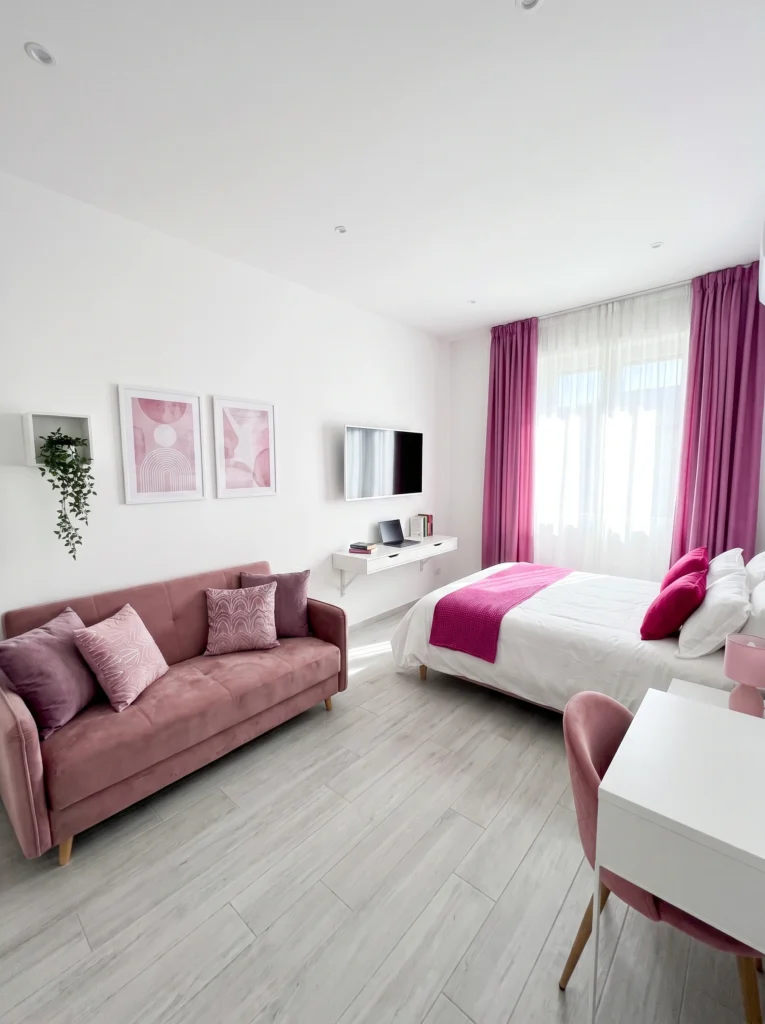
Wall-mounting the TV freed up the entire floor beneath it for a floating desk shelf — laptop, books, a small lamp, all tucked in without a single piece of furniture touching the ground. That’s the move. In a studio, every inch of visible floor makes the room breathe better. The all-pink palette — mauve sofa, fuchsia curtains, pink prints, red-pink bed — works because every shade stays in the same warm rose family without straying.
I’ve tested this: A floating desk shelf (about 90–120cm wide) mounted at standing-desk height doubles as a workspace and a media console. One bracket, two jobs, zero floor space consumed.
2. Wallpaper One Wall to Anchor the Whole Room
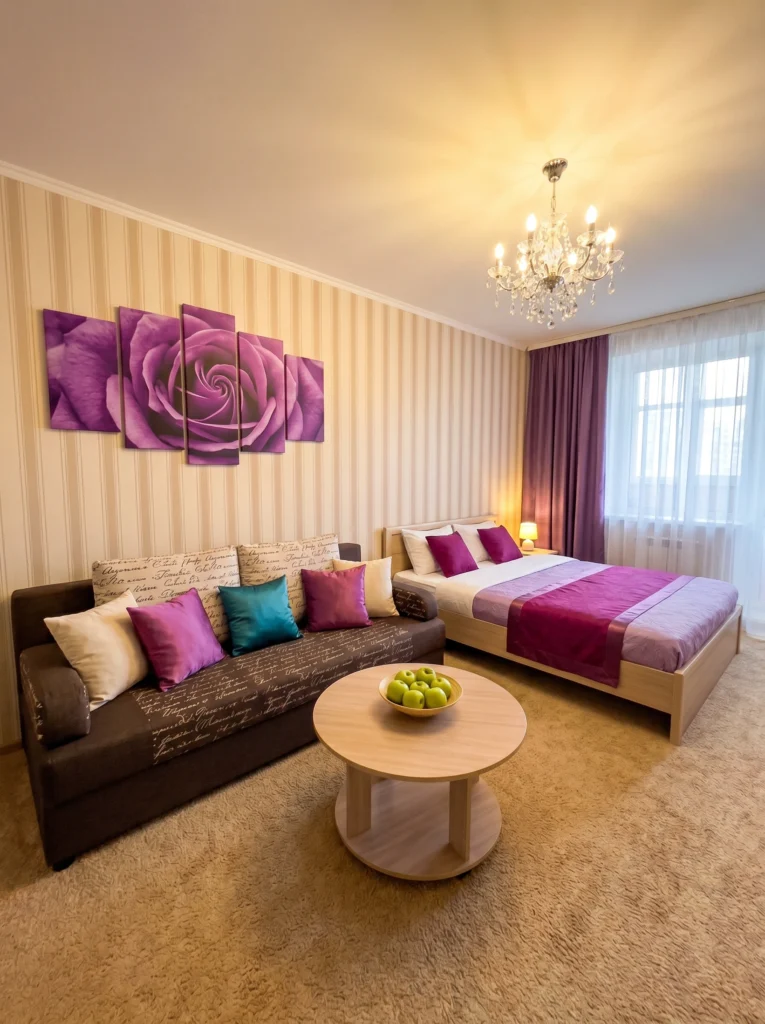
Vertical stripe wallpaper on a single wall does two things at once: it makes the ceiling feel taller and gives the room an anchor point that every other piece orients around. The five-panel purple rose canvas against it is bold — but the striped backdrop keeps it from feeling chaotic. Crystal chandelier above, warm lamp below, purple curtains framing the window. This room leans into maximalism with full commitment, and that’s exactly why it works.
My tip: Peel-and-stick wallpaper has genuinely improved — you can find stripe patterns that look identical to paste wallpaper, install them yourself in an afternoon, and remove them without damaging paint. Renter’s best friend.
3. Keep Furniture White When the View Is Your Feature
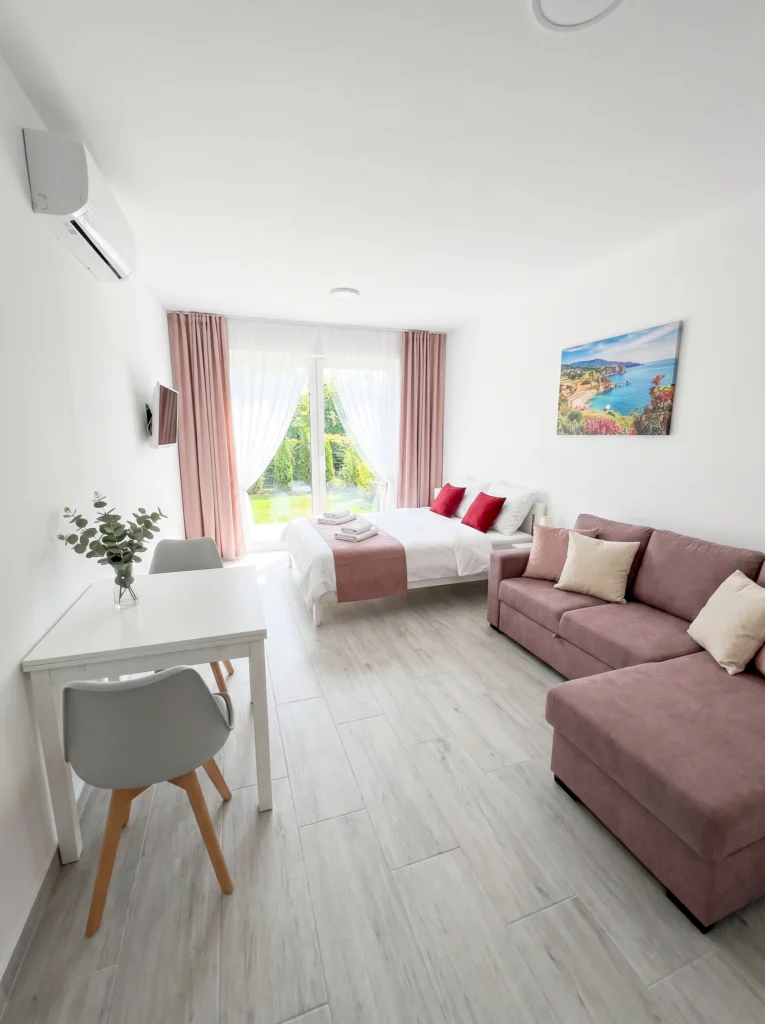
When your studio opens onto a garden, the smartest thing you can do is stay out of your own way. White walls, white furniture, white table — everything steps back so the greenery flooding through that glass door becomes the focal point. The mauve sofa and blush curtains add warmth without competing. A single eucalyptus stem in a clear vase on the table echoes the garden outside. Nature is doing the decorating. Your job is just not to block it.
My favorite: A glass or French door that opens onto even a tiny garden or courtyard makes a studio feel twice its size — if you have one, point your sofa toward it rather than away from it.
4. Two Colors, One Accent Chair, Done
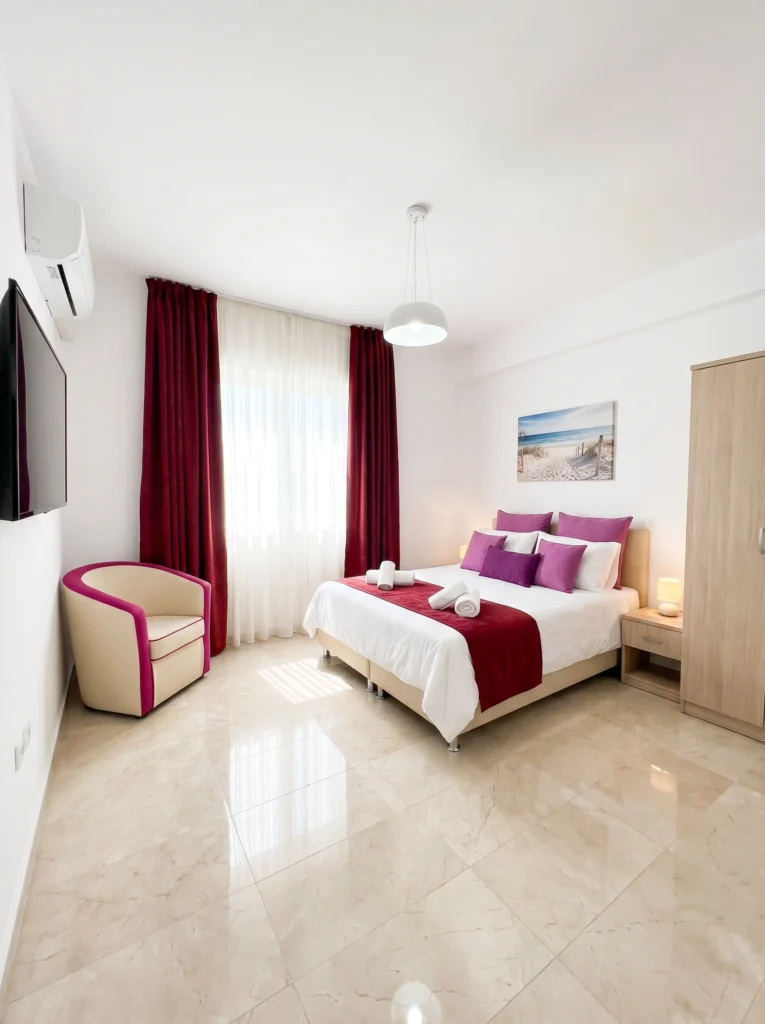
Crimson and violet is not a timid combination — and this studio doesn’t pretend otherwise. The deep burgundy curtains, crimson bed runner, and violet stacked pillows all push in the same rich, jewel-toned direction. The cream-and-crimson barrel accent chair picks up both colors in one piece, doing the work of a sofa in a fraction of the footprint. White walls and a glossy cream marble floor keep the room from closing in. Restrained? No. Beautiful? Absolutely.
Don’t waste your money on: A full sofa if your studio is genuinely compact. A curved accent chair in a bold color gives you seating, personality, and a visual focal point — all while taking up a third of the floor space.
5. Natural Wood Beats Painted Furniture Every Time
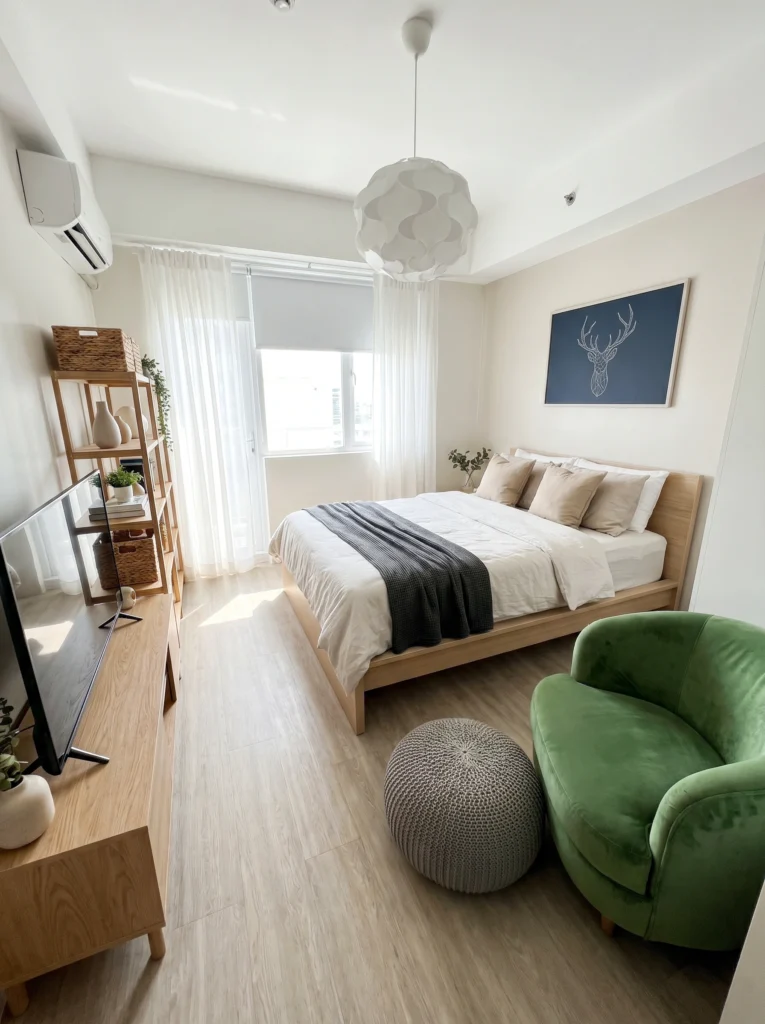
Cream walls, light oak floor, light oak bed, light oak shelving, light oak credenza — all running in the same warm blonde wood tone, making the room feel unified without feeling monotonous. The green velvet loveseat is the only real color punch, and it lands hard against all that natural wood and white. The navy stag art above the bed and the white cloud pendant add personality without disrupting the calm. This is how you do warm minimalism without it feeling cold.
Pro tip: When your walls, floor, and furniture all share the same warm undertone, you can introduce one bold color accent — a sofa, a rug, a single art piece — and it will always look intentional rather than random.
6. If You Love Color, Use All of It
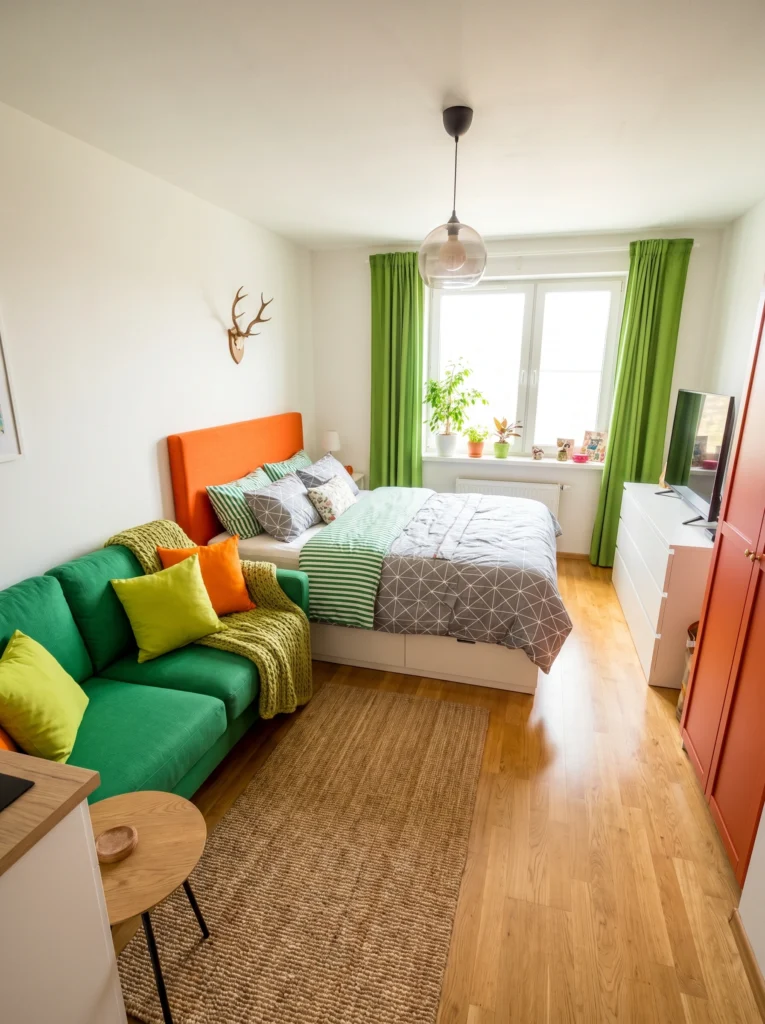
Green sofa. Orange headboard. Orange wardrobe door. Lime cushions. Green curtains. This studio is not interested in restraint — and it’s better for it. The white walls and honey oak floor give all that color somewhere to breathe, stopping it from becoming overwhelming. The jute rug and wooden deer antler mount ground the whole thing with natural texture. Here’s the thing: a room that reflects a real personality — fully, unapologetically — will always feel more alive than one that played it safe.
Sofia’s honest take: People talk themselves out of color because they’re afraid of getting it wrong. But a room with too much personality is always more interesting than one with too little. Pick what you love and go for it — you can always edit later.
7. Paint One Wall Green and Watch the Room Wake Up
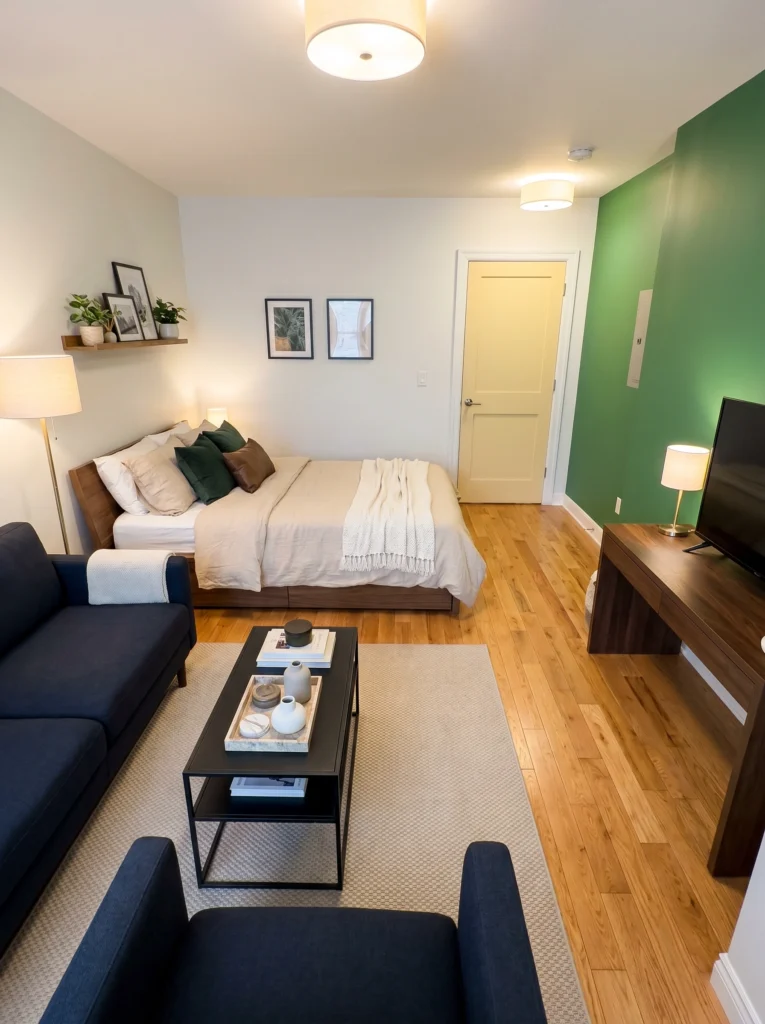
One forest green wall — just one — and the entire room has a reason to exist. It anchors the TV and credenza zone, making that corner feel deliberate rather than default. The navy sofa picks up the cool undertone of the green; the walnut bed and cream linen warm it back down. That yellow door is the unexpected touch that makes it personal. Nobody styling a room from a mood board would have thought to paint the door yellow. That’s why it works.
Renter-friendly alternative: A large-scale removable wallpaper panel in deep green gives you the full accent wall impact — same drama, no landlord conversation required. Most good peel-and-stick options run $60–$100 per wall.
8. Navy Curtains Are the Underrated Hero of Studio Design
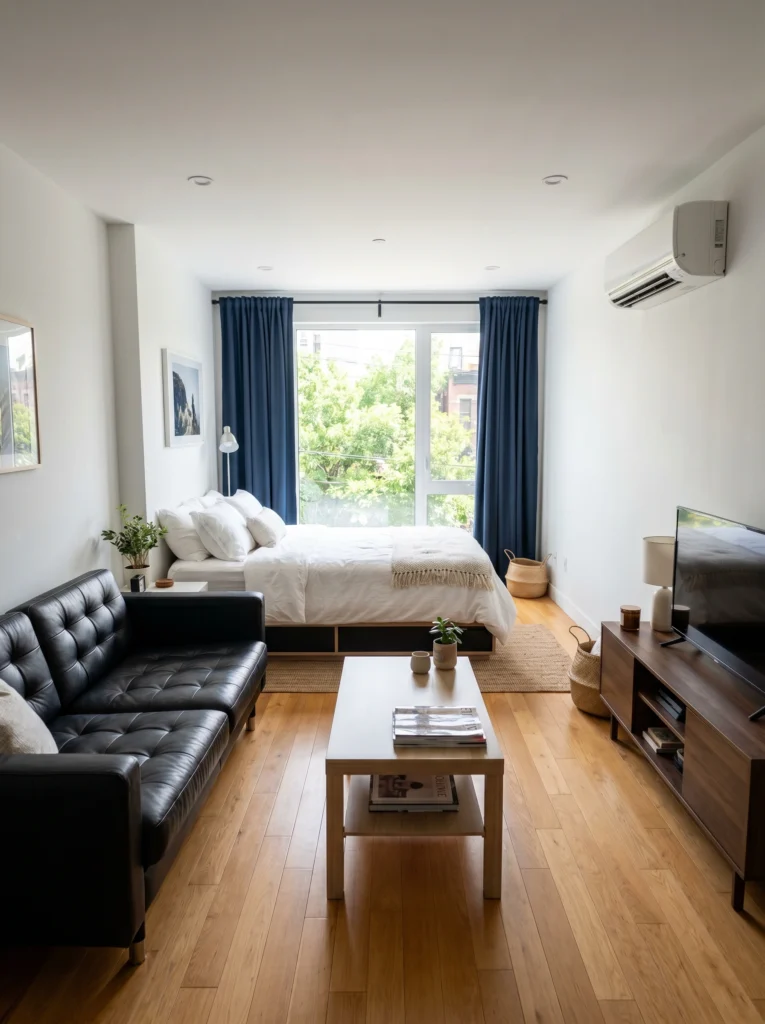
Floor-to-ceiling navy curtains flanking a full-width window do three things simultaneously: they make the ceiling feel higher, they frame the green tree view like a painting, and they give the white room a grounding anchor it would otherwise lack. Everything else stays deliberately restrained — black leather sofa, white coffee table, all-white bedding, walnut credenza. The curtains carry the whole room. When one element is doing this much work, the smartest move is to let everything else step back.
Budget vs. splurge: Save on the coffee table and side pieces. Splurge on floor-to-ceiling curtains in a quality fabric — linen or velvet in a deep tone. They’re the first thing anyone notices and the last thing you should cut corners on.
9. Match Your Sofa to Your Bedding for Instant Cohesion
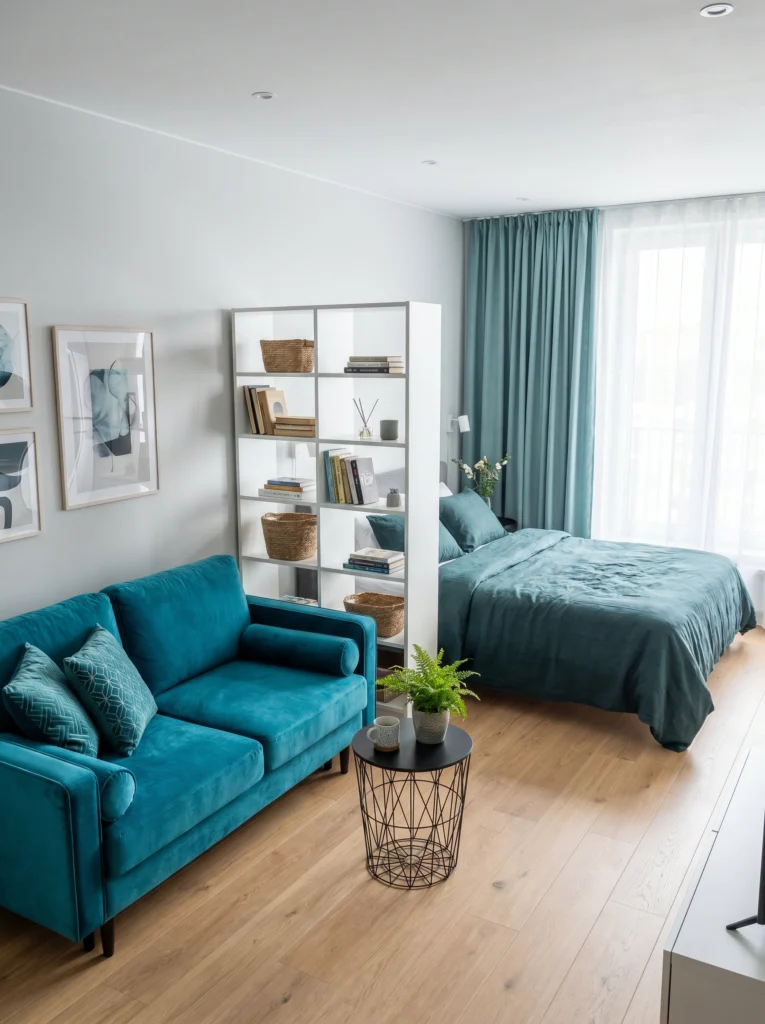
Teal sofa. Teal bedding. Teal curtains. When your living zone and your sleeping zone share the exact same signature color, the studio reads as one cohesive space rather than two awkward halves sharing a room. The white cube bookshelf divider keeps them visually separate while the teal thread pulls them back together. A black wire-frame side table and two cool-toned abstract prints complete the picture without adding visual noise. One color, total confidence.
I’ve tested this: Matching your sofa and bedding tones is the single fastest way to make a studio look designed rather than assembled. You don’t need a designer — you just need to pick one color and commit to it in both zones.
10. Bold Doesn’t Have to Mean Loud
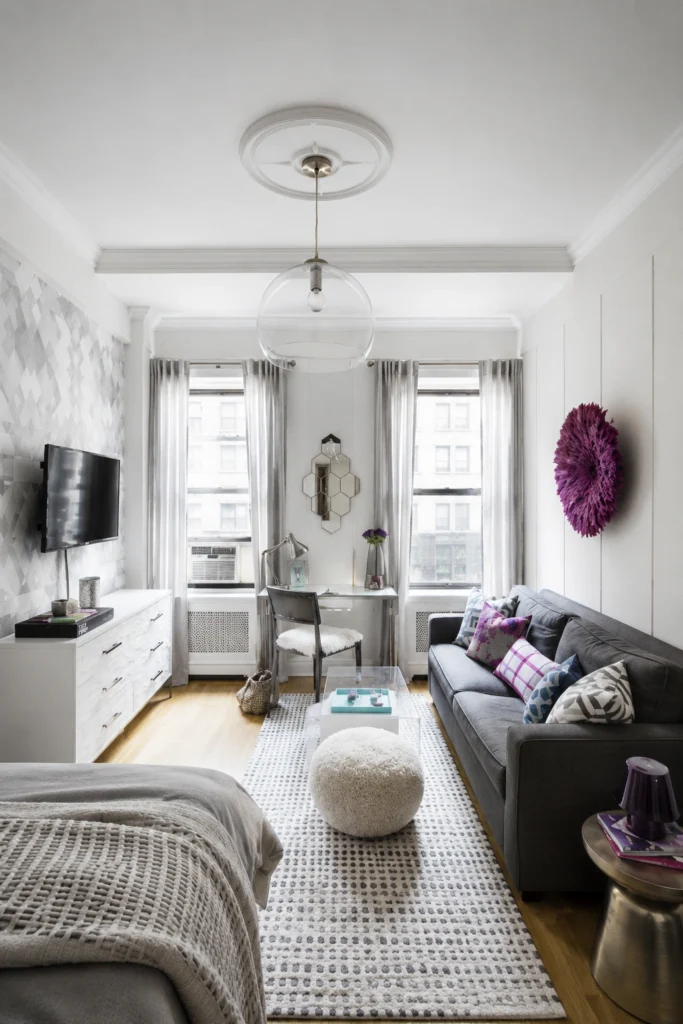
Here’s proof that one single bold object can carry a whole room. This studio is almost entirely gray, white, and cream — calm, controlled, sophisticated. And then there’s that magenta juju hat on the wall. It’s the only truly bold element, and it changes everything. Without it, the room is pretty but forgettable. With it, it has a heartbeat.
If you’re someone who loves neutral interiors but wants something — this is where to start. One bold piece of wall art, one unexpected color, one moment that makes a guest stop and say “oh, that’s cool.” That’s it. The room does the rest.
You don’t need to become a maximalist overnight. Some people are one-bold-object people. That’s a valid design identity, and it looks fantastic when done with intention.
11. Commit to a Color Family and Own It
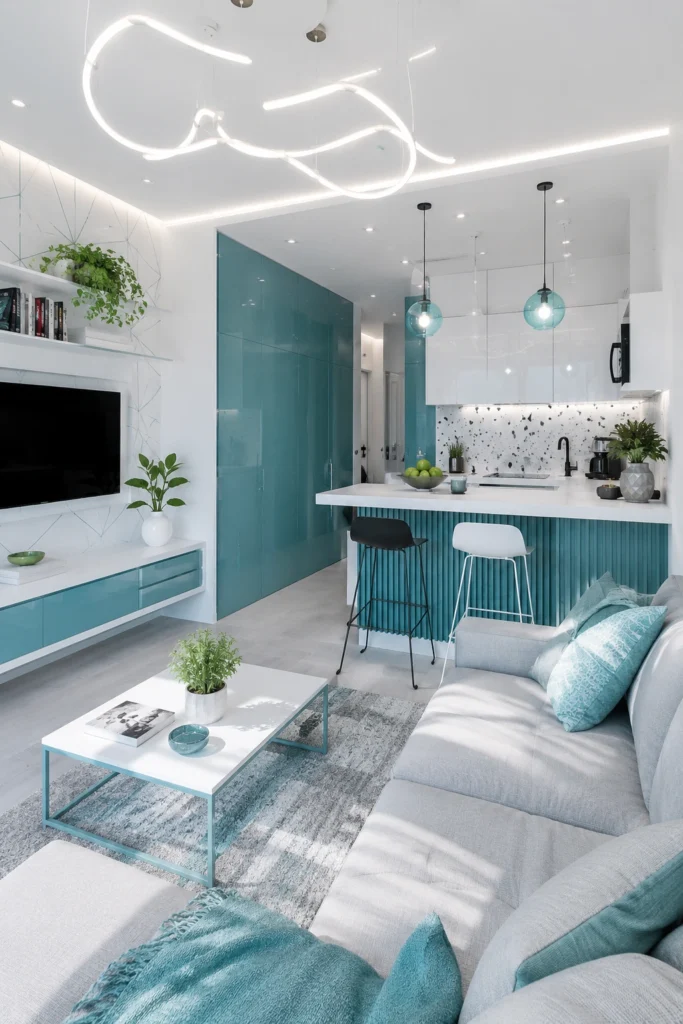
This apartment picked one color — teal — and ran with it everywhere. The kitchen island, the cabinet fronts, the pendant lights, the throw pillows, even the accessories on the coffee table. And because the base is crisp white and soft gray, the teal never overwhelms. It just coheres.
This is one of the easiest approaches for small open-plan apartments where the kitchen, living, and dining are all one room. When you thread one accent color through every zone, the whole space reads as one intentional room instead of three random areas crammed together.
Don’t waste your money on trying to make each “zone” a different color — in a small apartment, that creates visual noise. One color, repeated thoughtfully, is worth more than five colors fighting for attention.
12. Lean Into the Stained Glass + Eclectic Gallery Wall Combo
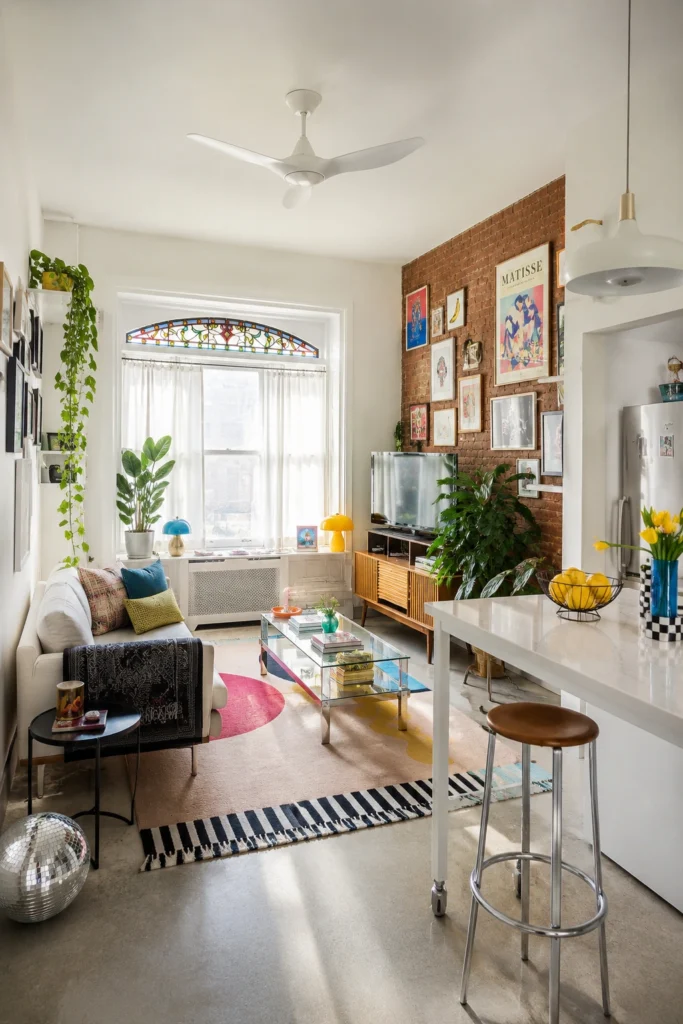
This is what happens when someone stops trying to “match” and just decorates with the things they actually love. A stained glass arch window, an exposed brick wall packed with framed Matisse prints and family photos, a mid-century walnut TV console, and a rug with pink and yellow shapes that somehow makes the whole thing click. Here’s the thing — bold color works in a studio precisely because the space is small. There’s nowhere for the personality to get diluted.
If you’re working with a rental and can’t expose brick, fake it with a peel-and-stick brick panel on one accent wall. The gallery wall is the real lesson here: don’t curate it to death. Mix prints, photos, weird little objects, mismatched frames. The “imperfection” is the entire point.
13. Pair a Jewel-Tone Sofa With a Statement Rug
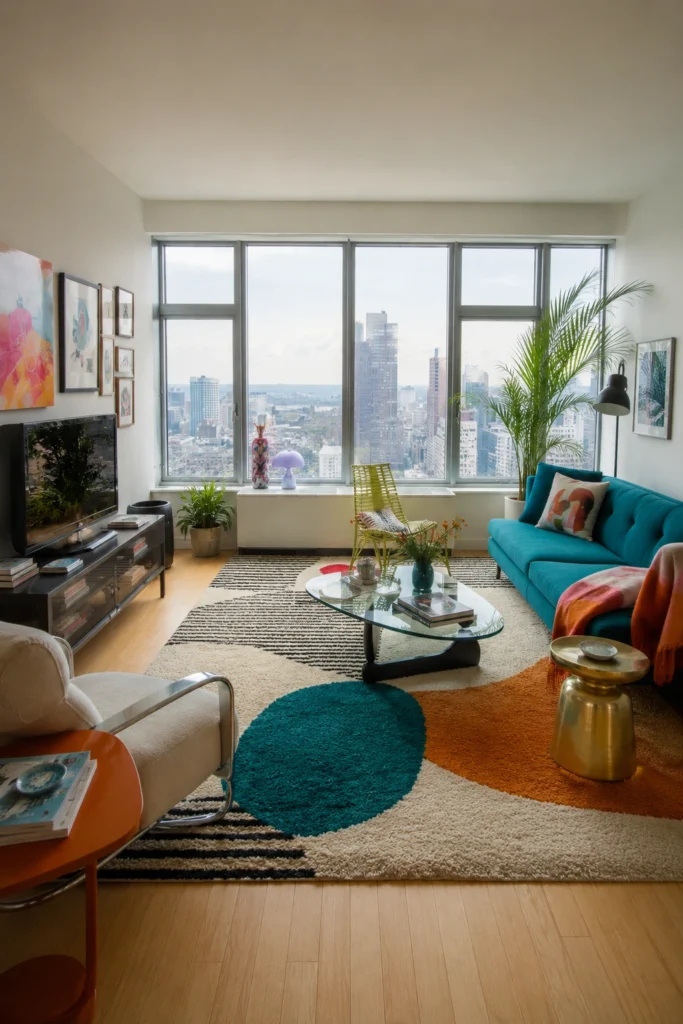
If you only do one bold thing in a studio, make it the sofa. A jewel-tone velvet — teal, emerald, mustard, deep coral — instantly gives a small space a point of view. This apartment pairs a teal sofa with an oversized abstract rug in cream, black, orange, and turquoise, and the rug is the secret weapon. It pulls the sofa’s color out and spreads it across the room, so the teal feels intentional instead of random.
The other lesson: keep the background simple when your hero pieces are loud. White walls, neutral curtains, light wood floors. Let the city view and the sofa do the talking.
Budget vs. splurge: Splurge on the rug — a big, well-made rug anchors everything and lasts forever. Save on the sofa by hunting Facebook Marketplace for a velvet piece in your color. They turn up constantly.
14. Go Glam With a Jewel-Tone Color Pair
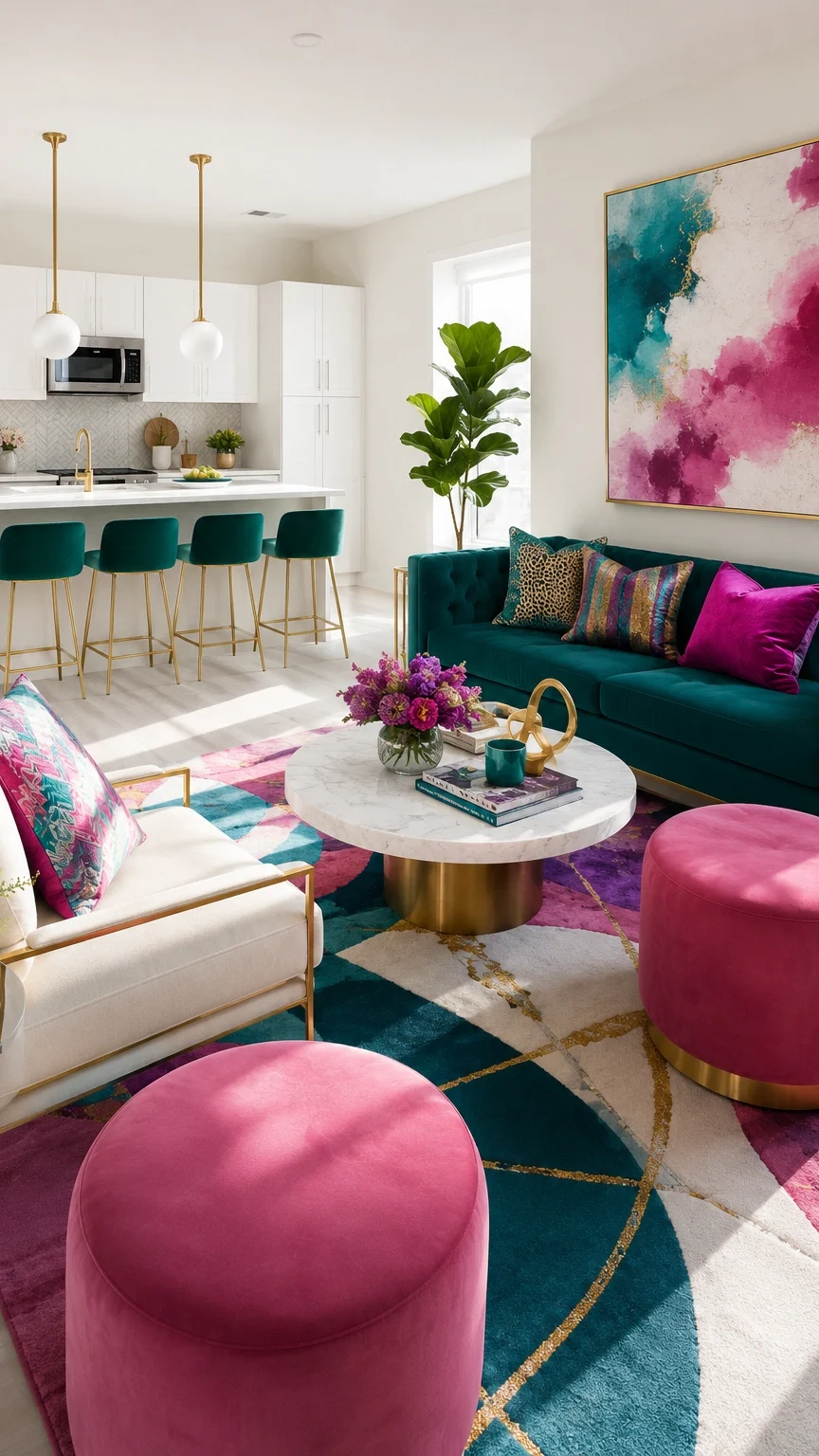
If you think bold color means bohemian or casual, this room would like a word. Teal and hot pink shouldn’t work together — but when you bridge them with gold and white, they become pure glamour. The marble coffee table and gold-legged furniture keep it polished, while the oversized abstract painting ties all the colors together in one single move.
This is the part most people skip — and that’s exactly why their room feels off. When you commit to two bold colors, you need a bridge. Here, it’s gold. Gold hardware, gold table bases, gold bar stools. Without it, teal and pink would fight. With it, they’re best friends.
Pro tip: If a two-color jewel-tone palette feels scary, start with your sofa as the hero and introduce the second color only through accessories — poufs, pillows, a vase. You can always remove them if you change your mind.
15. Layer In Color With Personality, Not a Plan
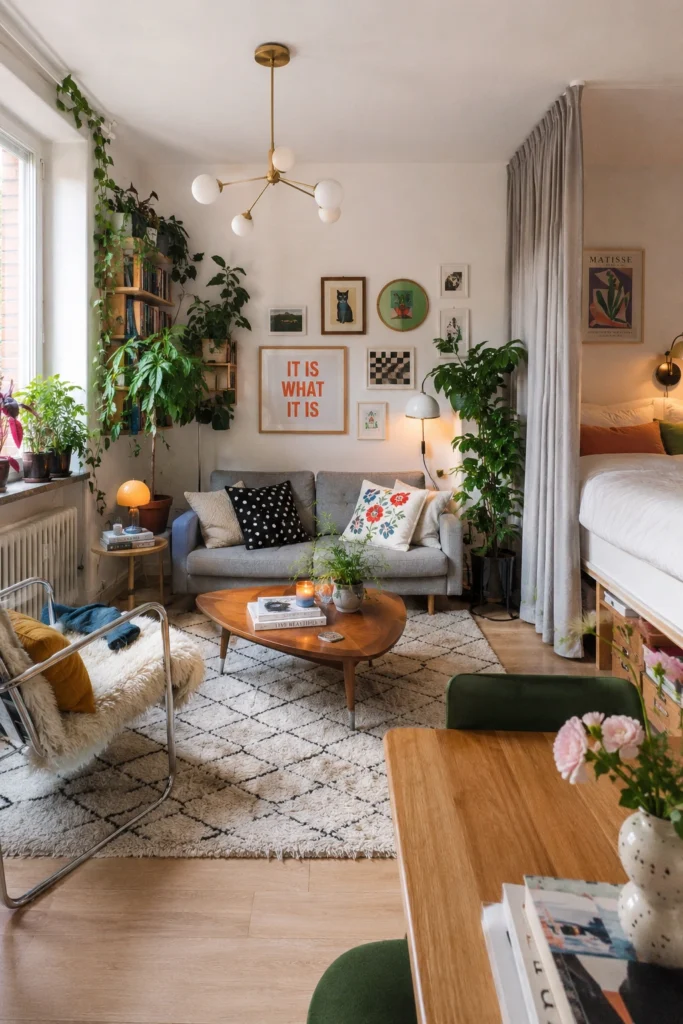
This is my favorite kind of room — the one that clearly wasn’t decorated in a weekend from a single store. The gallery wall is a mix of prints, not a matching set. The pillows are different patterns. The plants are a little overgrown. There’s a curtain acting as a room divider, a mid-century coffee table that was probably a thrift-store find, and a sheepskin thrown over a tubular steel chair because why not.
And it all works. Because when you layer in bold color through things you actually love — art, textiles, plants, vintage finds — the room has a warmth that no amount of careful “styling” can replicate. This is a room someone lives in. That’s the magic.
If you’re just starting out and don’t have much of a budget, this is your blueprint. Start with a neutral sofa and rug. Add color slowly, through things you find and love, not things you buy in a panic because the room feels empty. Over time, it layers up into something that’s yours.
Final Thoughts
Small apartments don’t need to be beige to feel spacious. They need to feel like you — and most of us aren’t actually beige people. We just got told for a decade that small spaces needed to “feel bigger,” and somewhere along the way that turned into “feel emptier.”
Pick one idea from this list. Just one. A bold pillow, a painted accent wall, a thrifted colorful rug — whatever feels least scary on a Sunday afternoon. Try it. Live with it for a week. The room will tell you if it’s working. And once you trust your eye on one bold move, the rest follows naturally.
The best home isn’t the most expensive one — it’s the one that makes you exhale when you walk through the door.