12 Pastel Studio Apartment Decor Ideas That Feel Grown-Up, Not Girly
Pastels in a studio are tricky. Go too light and the whole place looks like a nursery. Go too sweet and you can’t invite anyone over without an apology. But when pastels are done right — paired with the right textures, anchored with the right contrast, layered into a tight footprint — a studio apartment turns into something soft, calm, and quietly elegant.
Here’s the thing: every idea on this list is built for small space living. No 2,000-square-foot living rooms. No “just knock down a wall.” Just real, livable studio ideas you can borrow today.
1. Sage Green and Blush Pink Is the Softest Combo in Small-Space Design
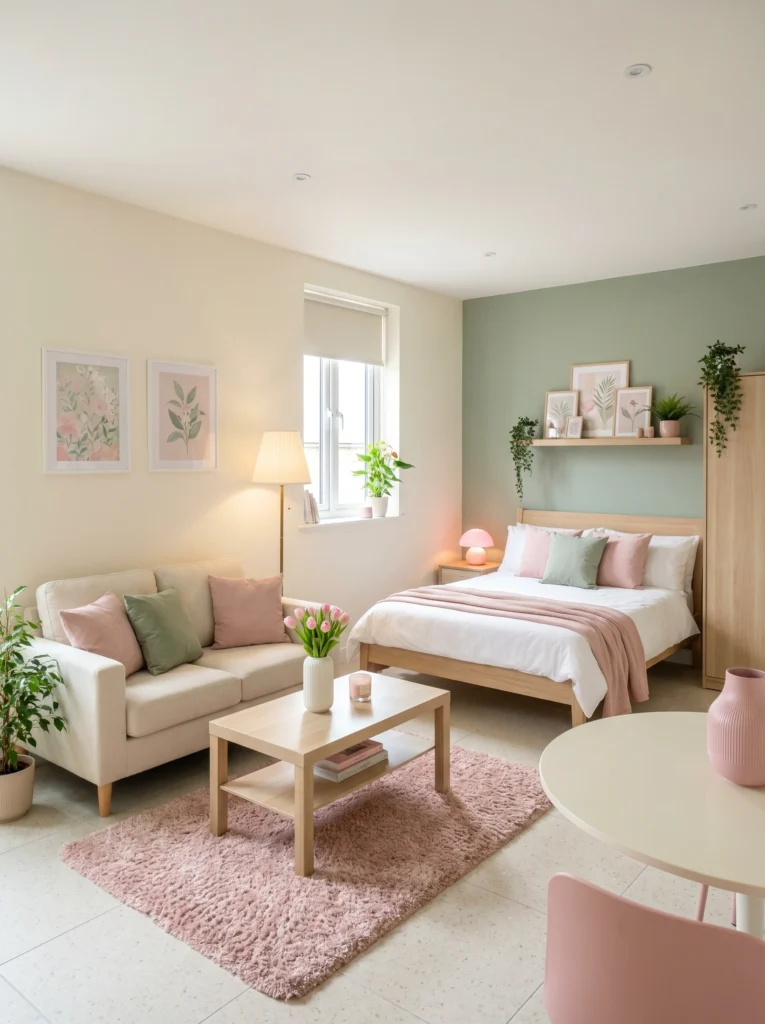
Sage green and blush pink sounds like it shouldn’t work — and then you see a room like this and wonder why you ever doubted it. The sage accent wall anchors the bedroom zone while the cream walls keep the living side open and airy. Everything in between — the cushions, the rug, the lamp, the tulips — carries one or the other tone. Light oak furniture ties it together without competing. The result is genuinely the most restful color story a studio can tell.
Don’t waste your money on: Matching cushion sets. Buy individual cushions in your two chosen tones and mix them freely across the sofa and bed — it looks more intentional than a pre-packaged set every single time.
2. Anchor a Pink Sofa With Grown-Up Neutrals
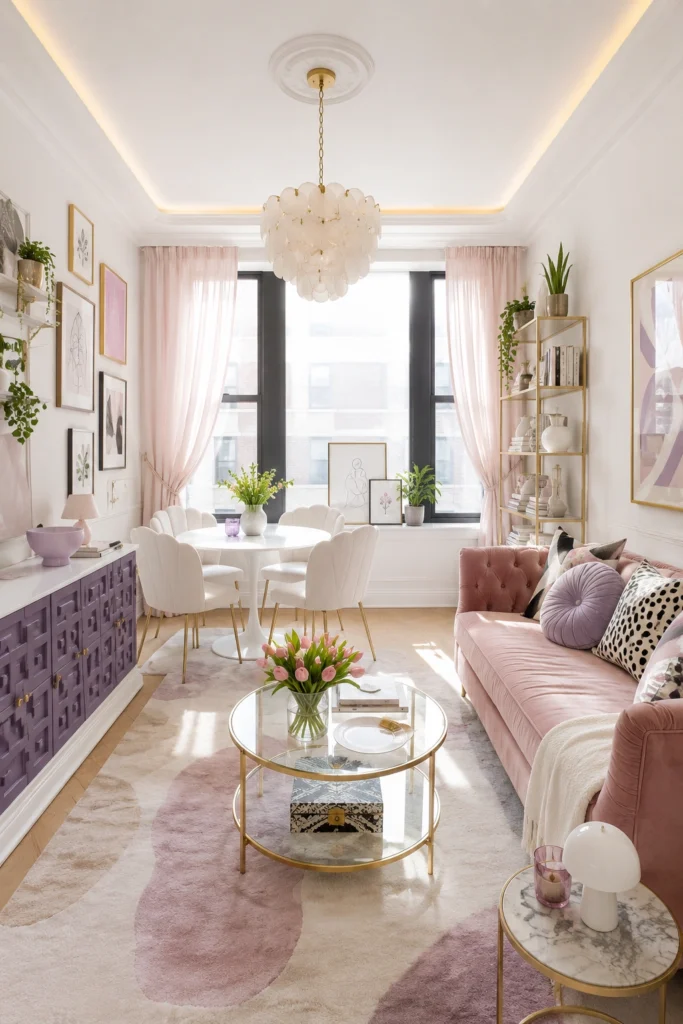
A pink sofa is a commitment. If you’re worried it’ll feel like a teenager’s bedroom, the fix is contrast. Anchor it with something architectural and grounded — a deep purple cabinet, walnut floors, brass details, black window frames.
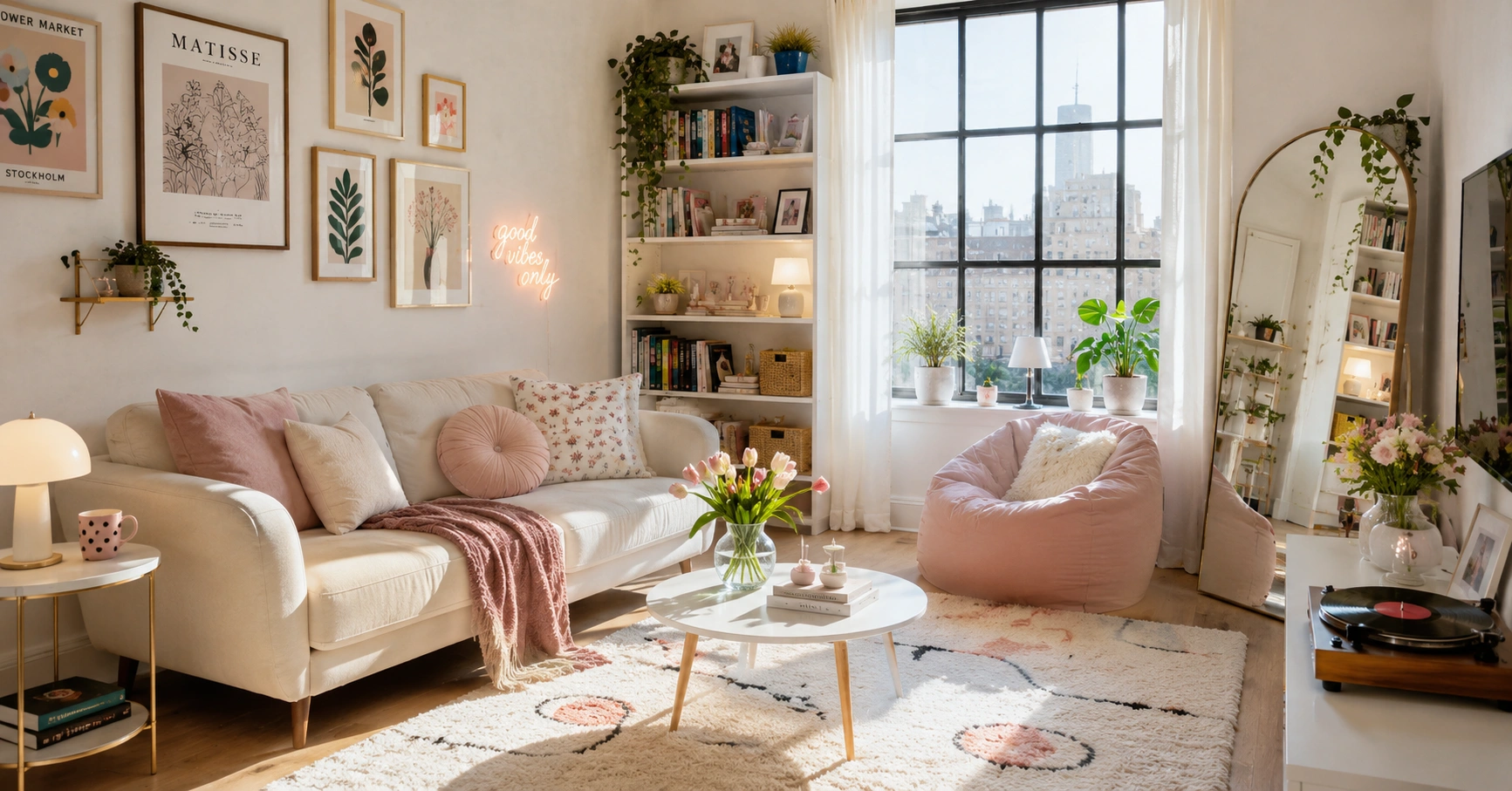
Notice how the dusty pink velvet in this space doesn’t read as childish? That’s because almost everything else in the room is doing the heavy lifting. The dotted pillow, the polka pattern, the gallery wall of mixed art — they break up the sweetness and add visual rhythm.
If you’re going to splurge on one pastel piece in a studio, make it the sofa, and make sure the fabric is performance velvet. You will spill coffee on it. Ask me how I know.
3. Mix Pink and Sage — It’s the Pastel Power Couple
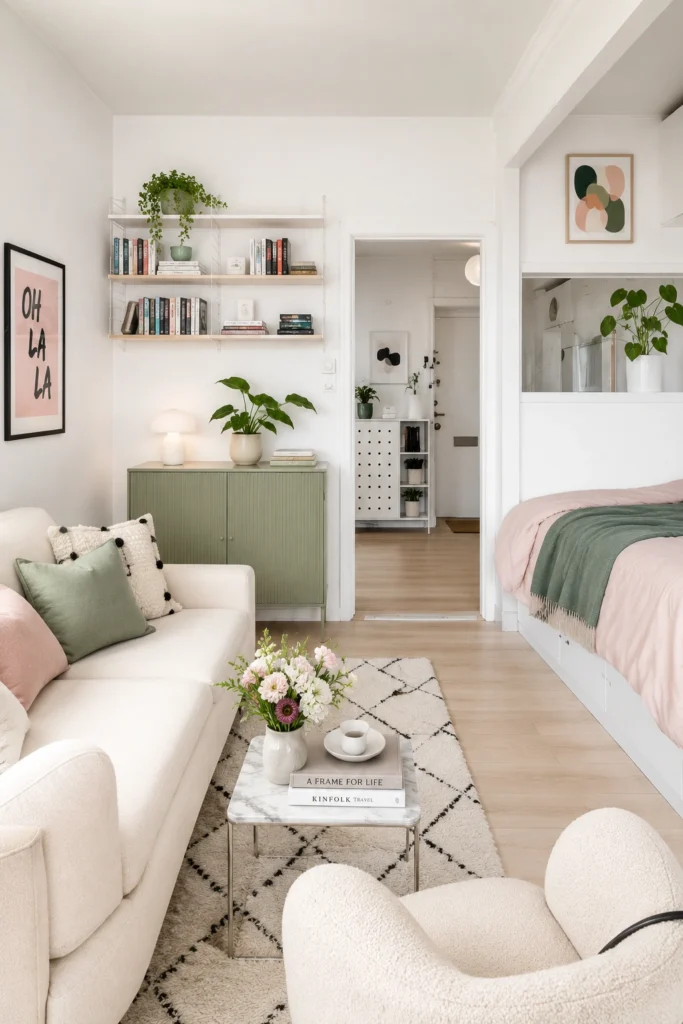
If you only remember one color combo from this entire article, make it this one. Soft pink and sage green are the most forgiving pastel pairing you can use in a small space. Pink warms things up. Sage keeps it from getting saccharine. Together, they read as fresh and adult, not bridal-shower.
You can layer this combo in a hundred ways: a sage cabinet with pink throw pillows, a pink bedspread with sage curtains, a pink lamp on a sage console. The proportions don’t have to match — one color always wins, the other supports.
4. Pastel-Wash a Dark Studio With Light Pink Walls
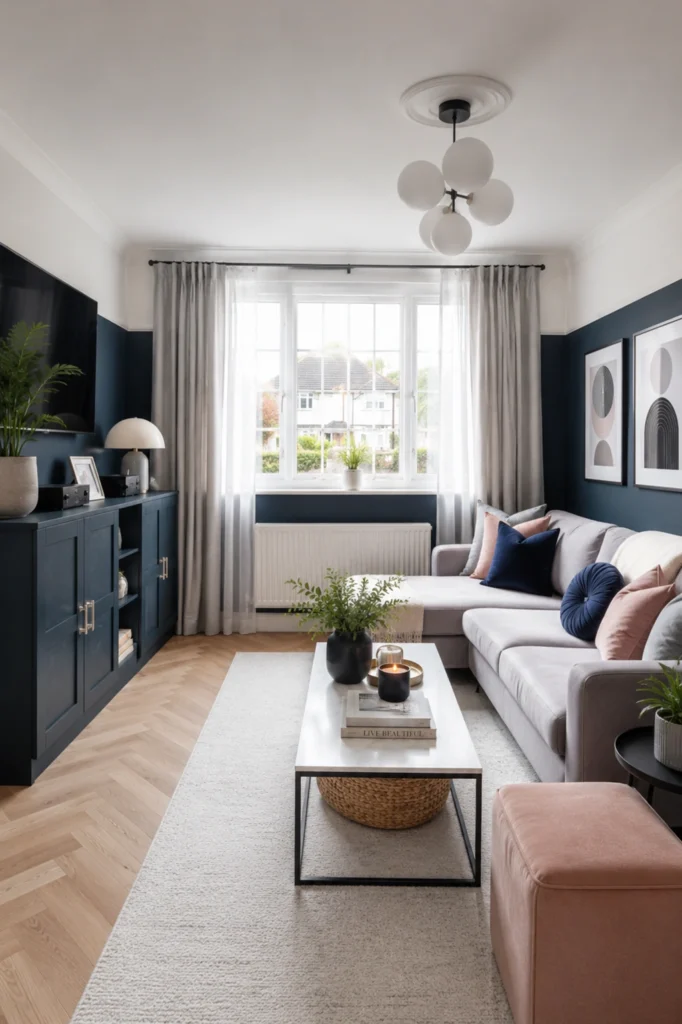
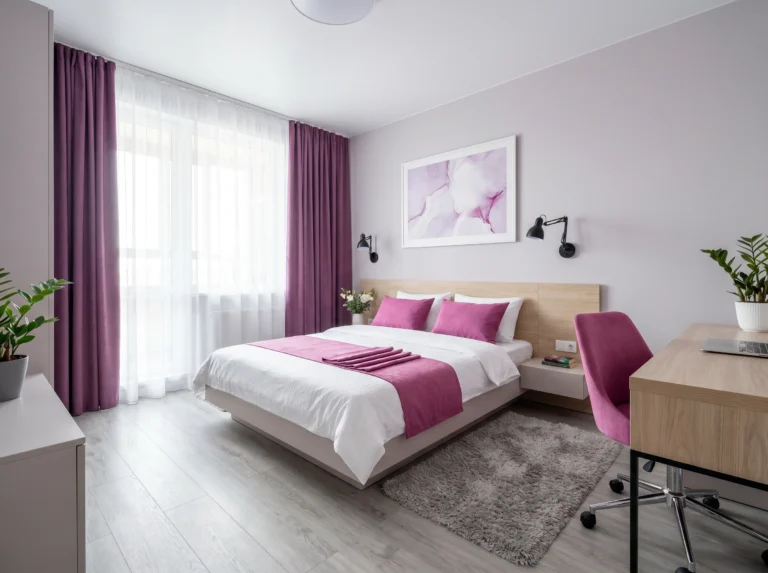
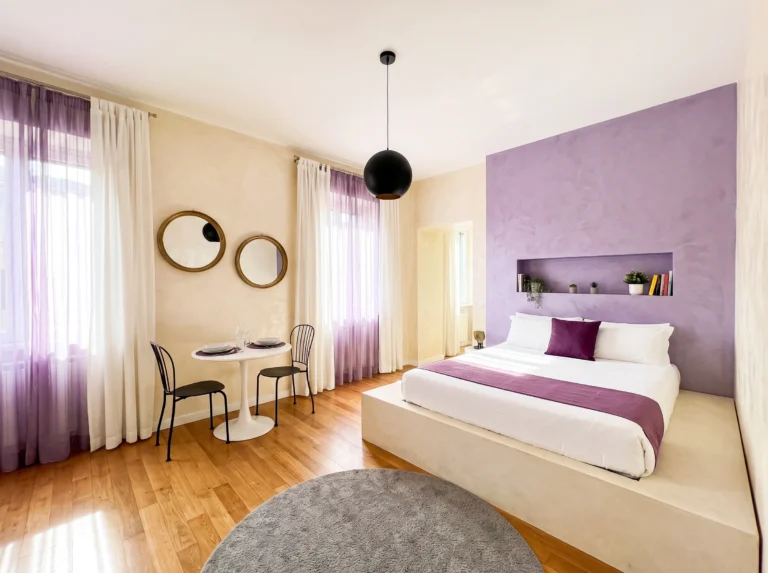
Studios on lower floors or in shaded buildings often feel like caves. Pastels — especially blush, lavender, or pale peach on the walls — completely change the temperature of a room without making it feel washed out.
Lavender walls in particular do something interesting: they read as neutral in daylight and turn soft and dreamy at night. Pair with cream curtains, warm wood floors, and pastel velvet seating, and you’ve turned a dim apartment into something out of a Paris hotel. On a budget. In one weekend.
Pro tip: Always test paint on the actual wall, in three spots, at different times of day. Pastels especially can read totally different at 9 a.m. vs. 6 p.m.
5. Layer a Soft Pink Shag Rug for Instant Cozy
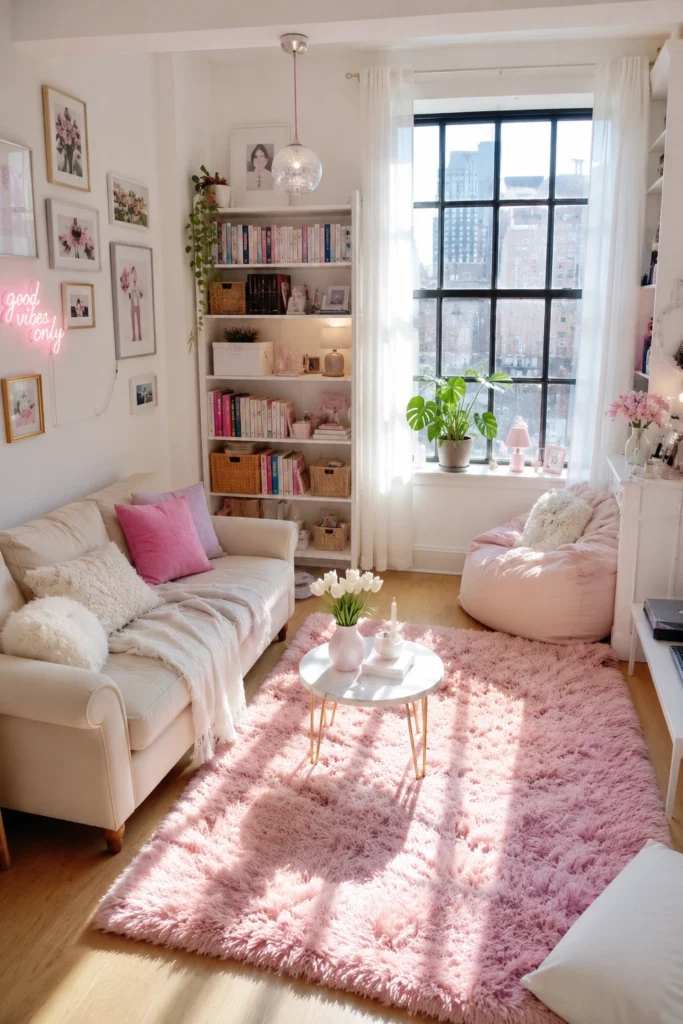
A studio apartment lives or dies by its rug. In a pastel studio specifically, a soft pink shag or high-pile rug pulls double duty: it adds warmth underfoot, defines the “living room” zone (critical when your bed is twelve feet away), and gives the eye a soft place to land.
I know “pink shag” sounds intimidating. But a muted pink — closer to dusty rose or blush than bubblegum — reads as elegant in person. Avoid anything that looks neon or candy-colored in the listing photos. If you can’t tell from the photo, it’s neon. Skip it.
6. Define Zones With Pastel Color Blocking
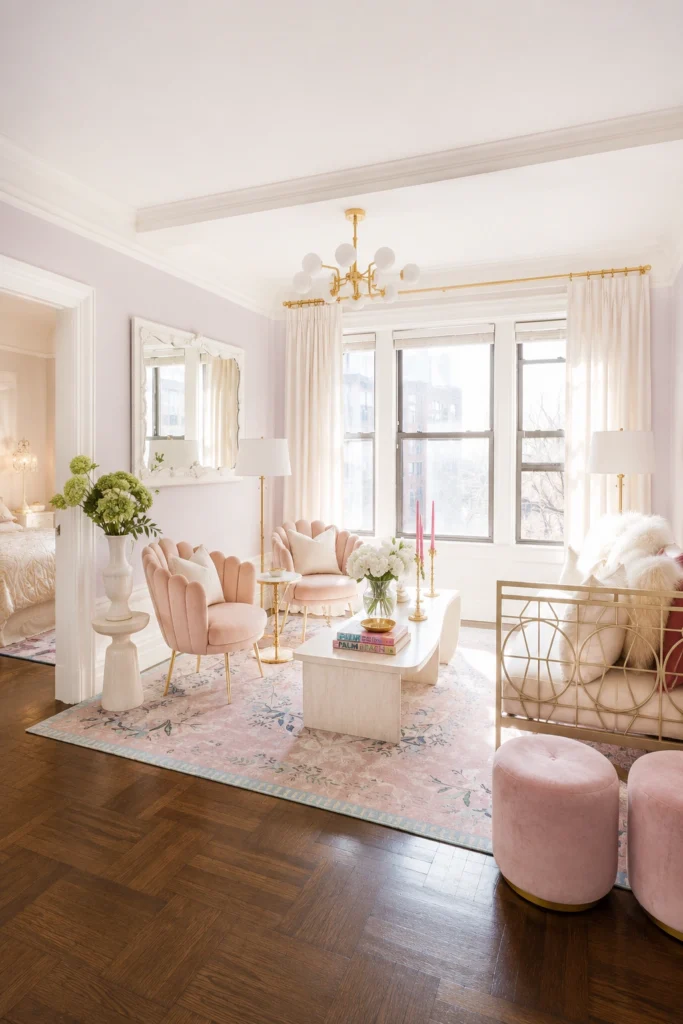
In a studio, the hardest design problem is making the living area feel separate from the sleeping area, the kitchen, and the entryway — all without walls. Pastel color blocking is a clever solution.
A different pastel on each “zone” (a sage section here, a blush corner there, a pale blue ceiling overhead) creates visual boundaries that read as intentional rather than chopped up. The trick is sticking to one tonal family — all dusty, all soft, all in the same temperature range. Mix dusty with bright and the whole thing collapses.
7. Lean Into Mint and Soft Green for a Calmer Studio
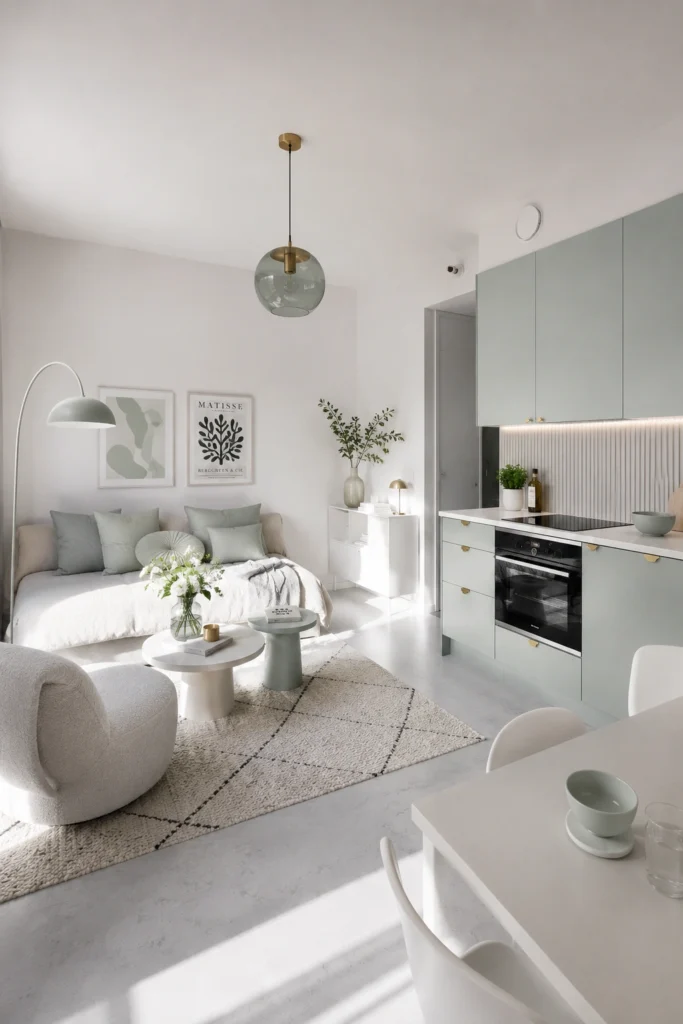
Pink isn’t the only pastel. If “girly” is your hard no, soft mint and sage green are your friends. They give you all the softness of pastels without any of the sweetness.
A sage kitchen, a mint backsplash, eucalyptus branches in a vase, framed Matisse prints — none of this reads as pastel-overload. It reads as calm. In a studio, where everything happens in one room, that calmness is everything. You sleep, work, cook, and unwind in the same space. The colors should let you exhale.
If you want pastels but live with someone who hates “girly” stuff, lead with sage. It’s the diplomat of the pastel family.
8. Use a Pastel Accent Wall (Not Four Pastel Walls)
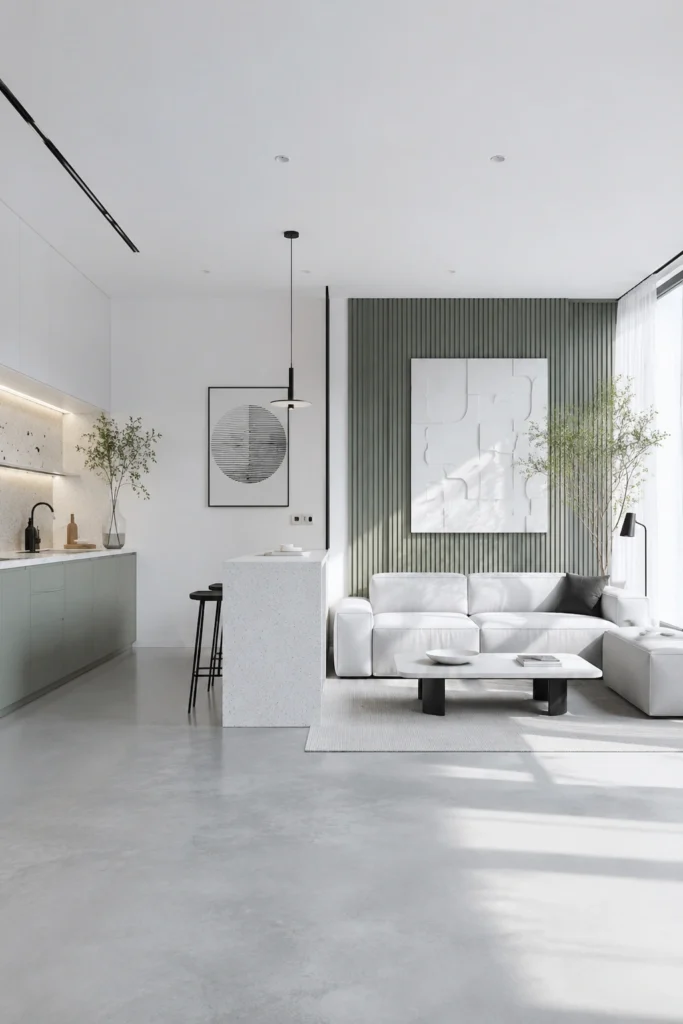
Painting all four walls a pastel color is almost always a mistake in a studio. The room loses depth, and the color stops feeling special. A single accent wall — especially a textured one with vertical slats, paneling, or wallpaper — gives you the pastel impact without the overload.
The sage slatted wall in this space is doing the work of about four decor accessories at once: color, texture, vertical lines (which make ceilings look taller), and a focal point behind the sofa. One wall. That’s all you need.
9. Add a Floral Wallpaper Wall in the Bedroom Zone
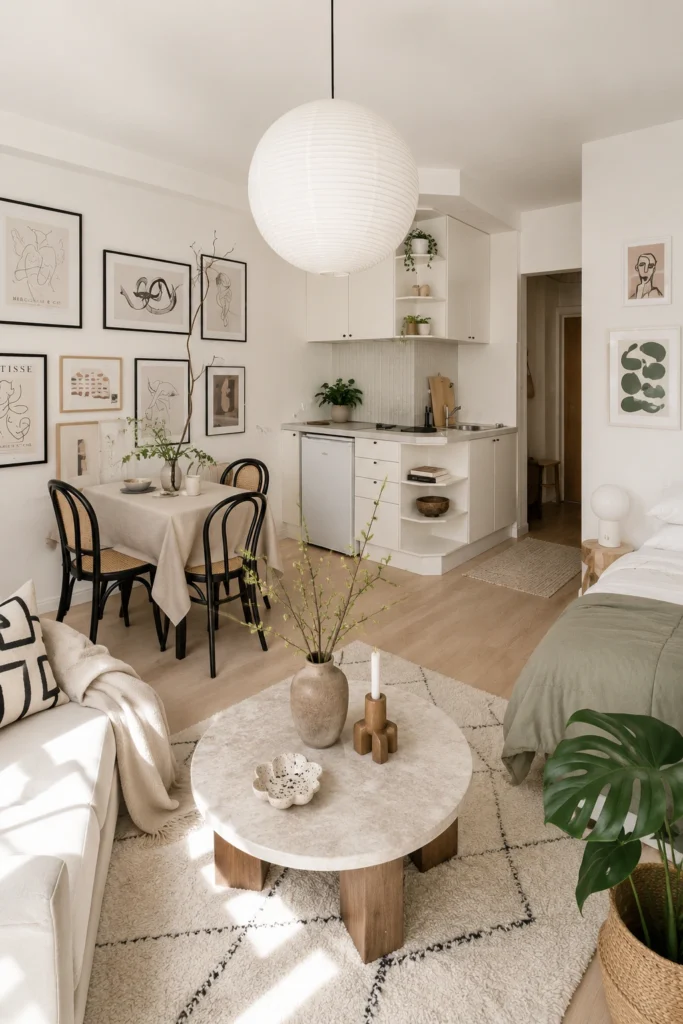
A floral wallpaper feature wall behind the bed is one of the easiest ways to make a studio feel like it has actual rooms. The wallpaper defines the “bedroom” without a single piece of construction.
Look for botanical or wildflower patterns on a cream background — they read as soft and pastel without screaming for attention. The bedding can stay simple (white sheets, blush throw, sage pillow) because the wallpaper is doing the visual heavy lifting.
Renter-friendly alternative: Peel-and-stick floral wallpaper has come a long way. Brands like Tempaper and Chasing Paper come off cleanly, and most patterns look just as good as the permanent kind.
10. Keep the Bed Visible — But Make It Beautiful
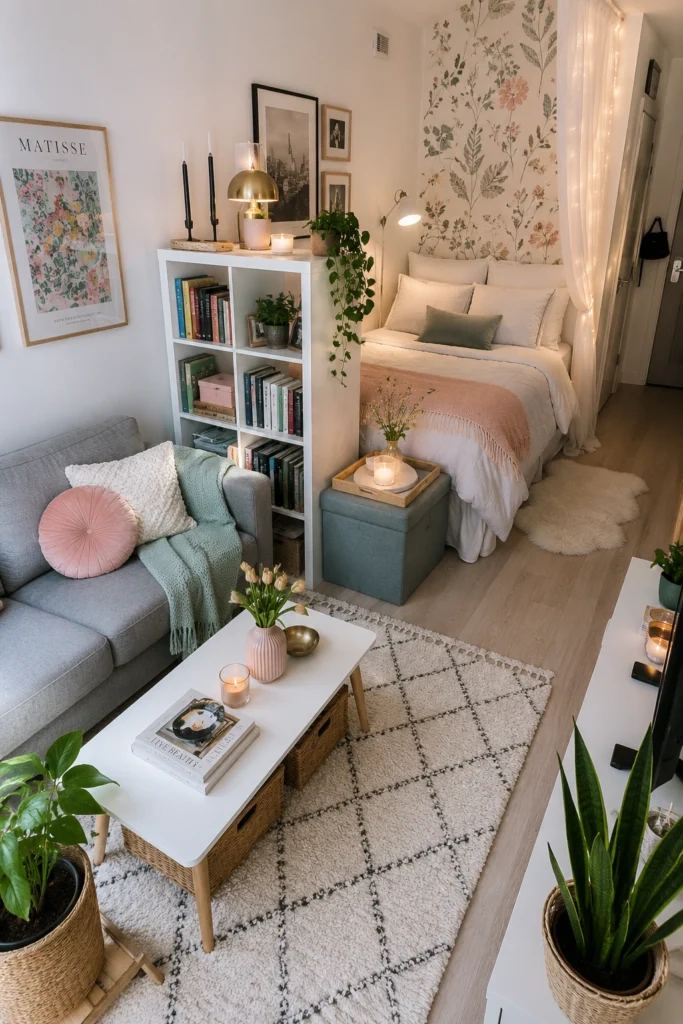
A lot of studio dwellers spend money trying to hide the bed. Curtains, room dividers, fake walls — and usually the result looks awkward. Here’s a better approach: stop hiding it. Style it like a daybed instead.
Use hotel-quality white bedding, a blush throw at the foot, two pastel pillows, and that’s it. When the bed looks intentional, it stops feeling like a “bedroom in the wrong place” and starts feeling like another piece of furniture. A studio with a beautifully styled bed is way more impressive than a studio with a cheap room divider hiding a tangled duvet.
11. Bring in Pastel Through Art, Not Furniture
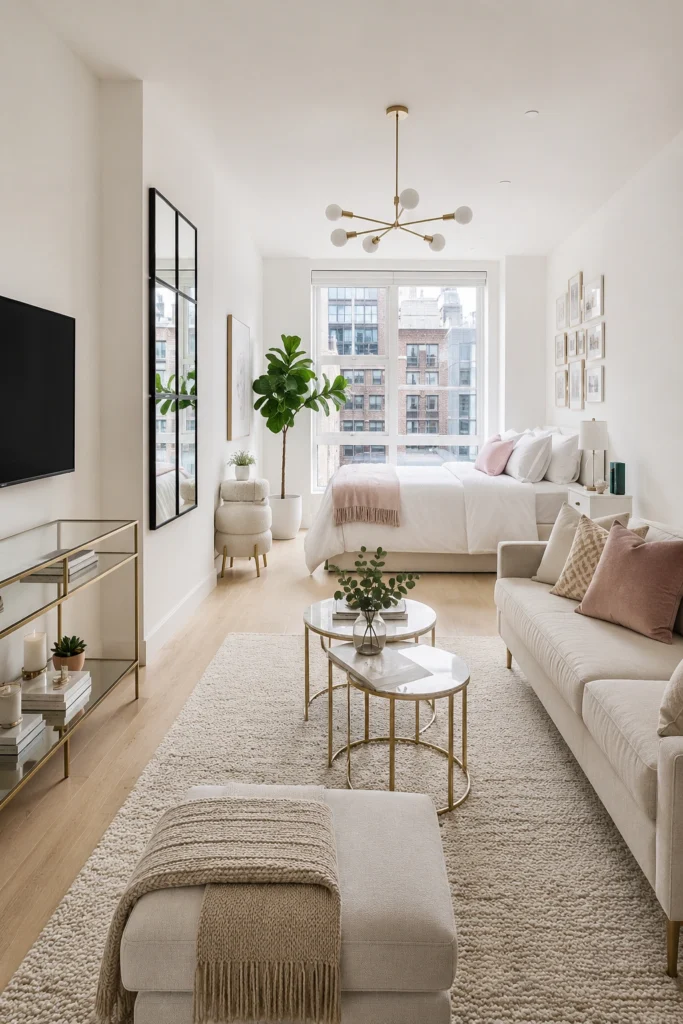
If you’re commitment-averse, this is your move. A gallery wall of pastel art lets you change your mind every six months without buying a new sofa.
Stick to a loose color story (cream, sage, dusty pink, soft black accents) and mix botanicals, abstracts, line drawings, and one or two text prints. The Matisse-style cutouts are a small space favorite for a reason — they’re affordable, they come in every pastel shade, and they read as art-museum-curated even when they’re $12 prints from Etsy.
Pro tip: Lay all the frames on the floor first. Move them around for ten minutes. Take a phone photo. Then hang them. You’ll save yourself thirty unnecessary nail holes.
12. Add a Pastel Kitchen Without Renovating
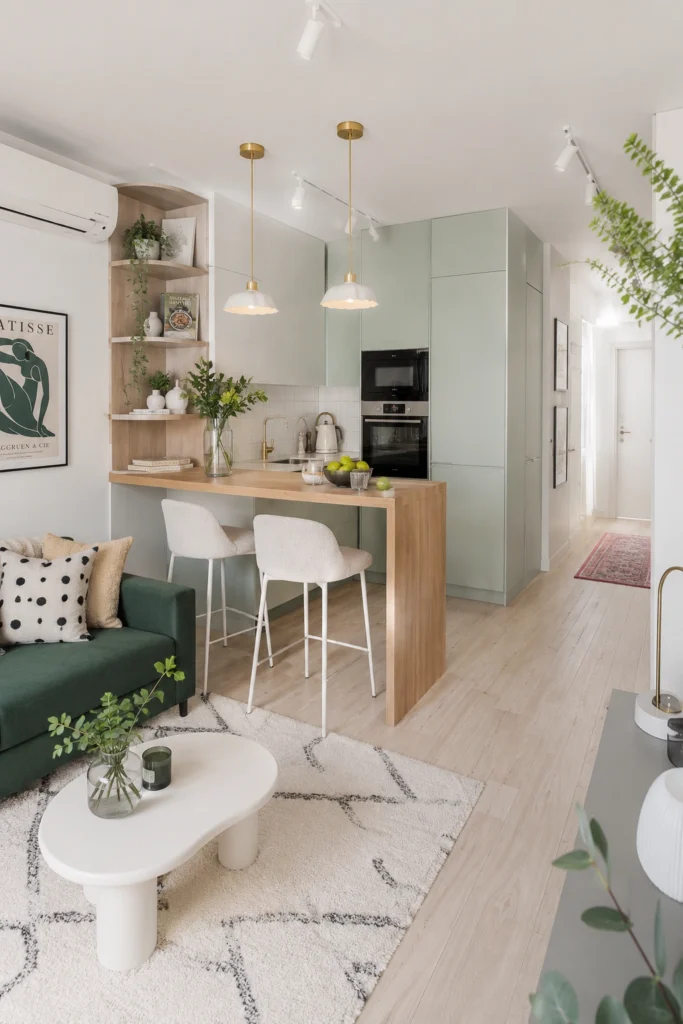
In a studio, the kitchen is part of the living room whether you like it or not. If your cabinets are builder-grade white or dingy beige, a pastel paint job (or peel-and-stick cabinet covers) is the single biggest upgrade you can make.
Sage green cabinets are the current quiet favorite for a reason — they go with warm wood, white walls, brass hardware, and basically every other pastel in this article. If you can’t paint, try a removable adhesive film. It’s cheap, it lasts a couple of years, and it comes off when you move out.
Don’t bother trying to paint laminate cabinets yourself unless you’re prepared to sand, prime, and seal them properly. I’ve watched too many friends try the “easy” version and end up with peeling cabinets six months later. Hire it out or use removable film.
Final Thoughts
Pastels in a studio aren’t about turning your home into a dollhouse — they’re about choosing a soft, livable palette that lets a small space breathe. The key is restraint: pick two or three pastel shades, anchor them with something darker or richer, and don’t try to use every idea on this list at once.
Start with one change this week. Maybe a sage throw pillow. Maybe a pink lamp. Maybe peel-and-stick wallpaper on one wall. Pastels work in layers, and one layer at a time is exactly the right pace.
A studio apartment doesn’t need more square footage to feel beautiful — it just needs colors that make you want to stay home.