16 Mini Studio Apartment Shelving Ideas
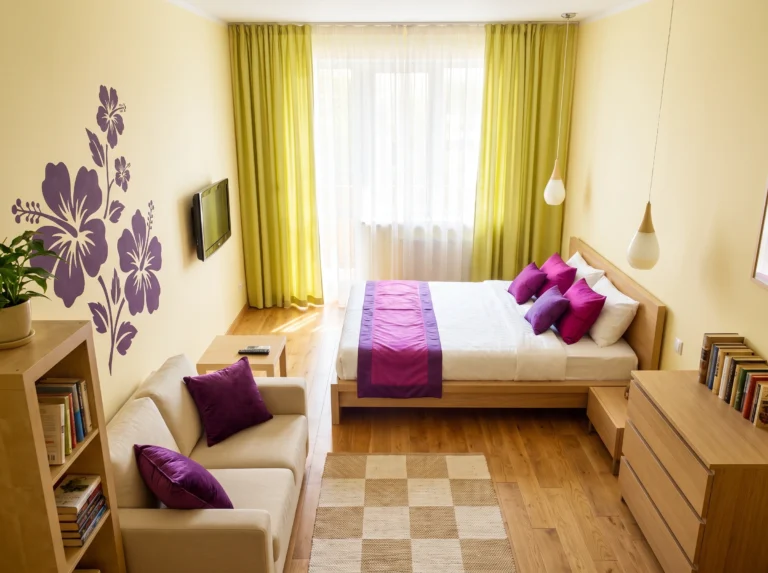
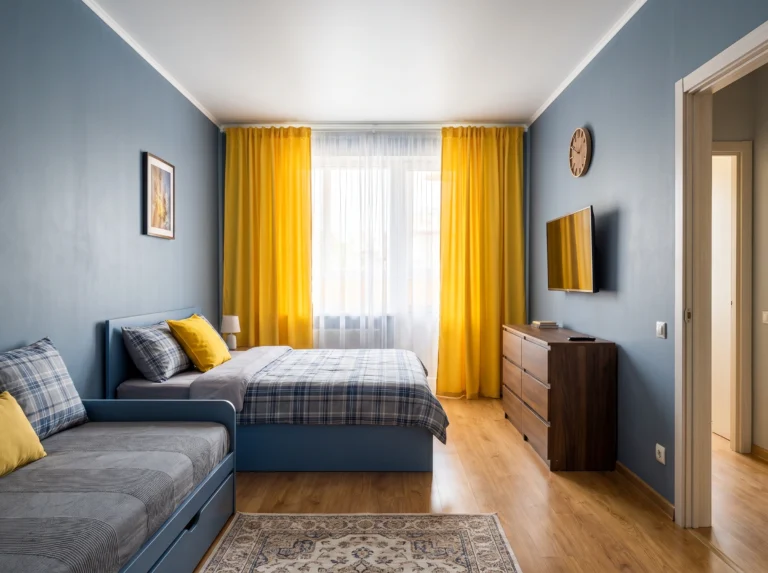
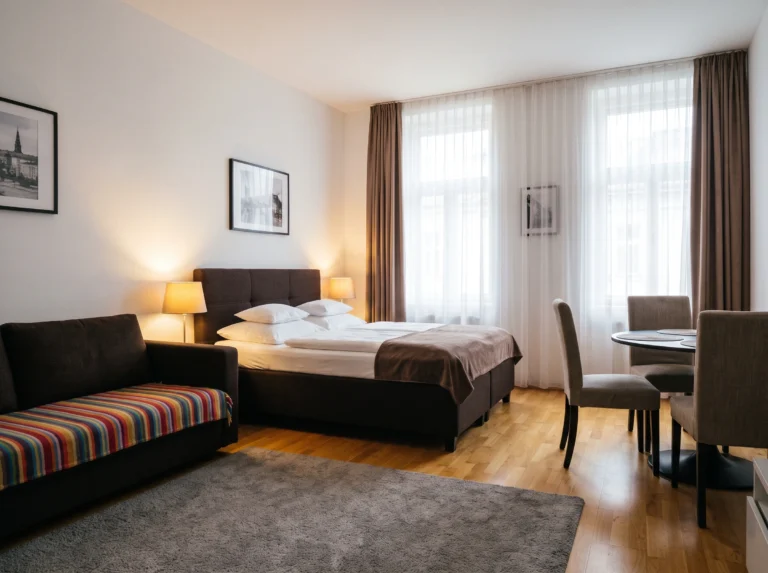
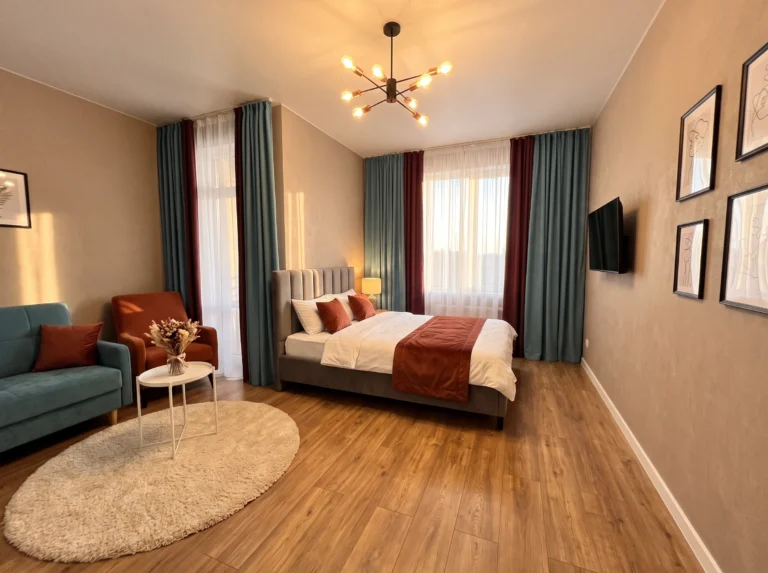
You know that moment when you look around your studio and realize every surface is covered — the nightstand, the kitchen counter, the floor next to the couch? That’s not a clutter problem. That’s a shelving problem. The right shelf in the right spot can organize your stuff, define your zones, and honestly make your entire studio feel twice its size. Here are 16 ideas that actually work.
1. Mount Wall Cubbies for Storage Without Losing Floor Space
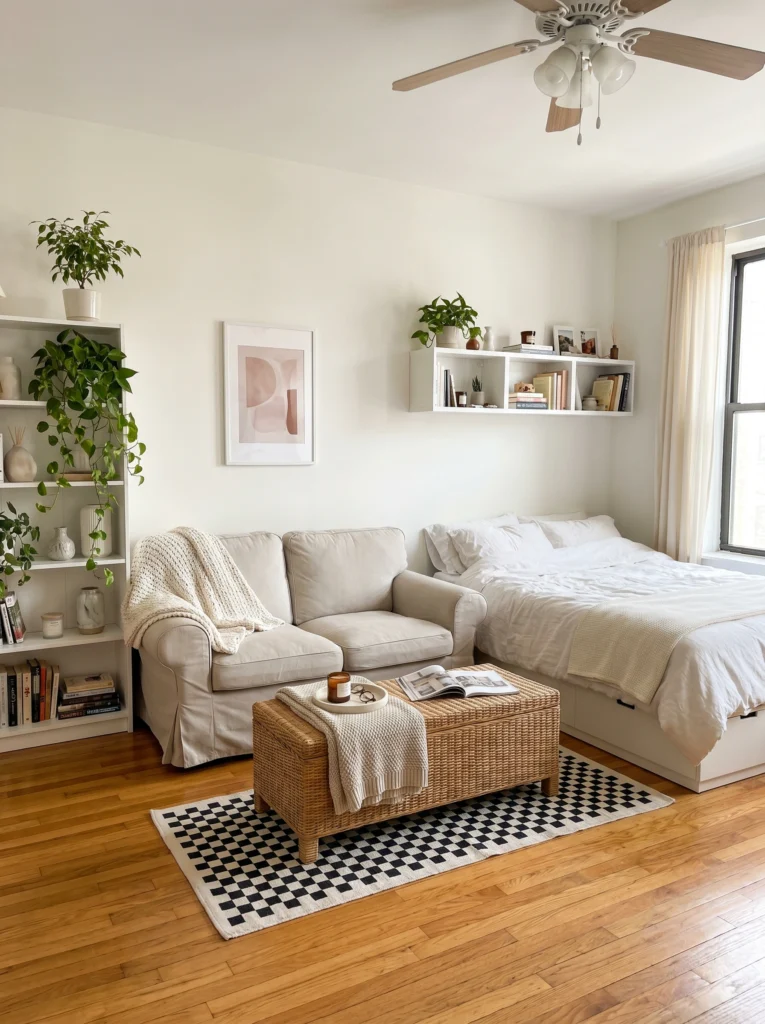
When every square inch of floor space counts, go vertical with wall-mounted cubbies. A set of three or four mounted above your sofa or bed holds books, plants, and small decor without a single piece of furniture touching the ground below. Pair them with a freestanding shelf nearby for heavier items, and you’ve created a storage system that wraps around the room instead of crowding into one spot.
My tip: Stagger the cubbies at different heights instead of lining them up in a row. It looks more dynamic and hides any wall imperfections.
2. Add Color With Painted Box Shelves on the Wall
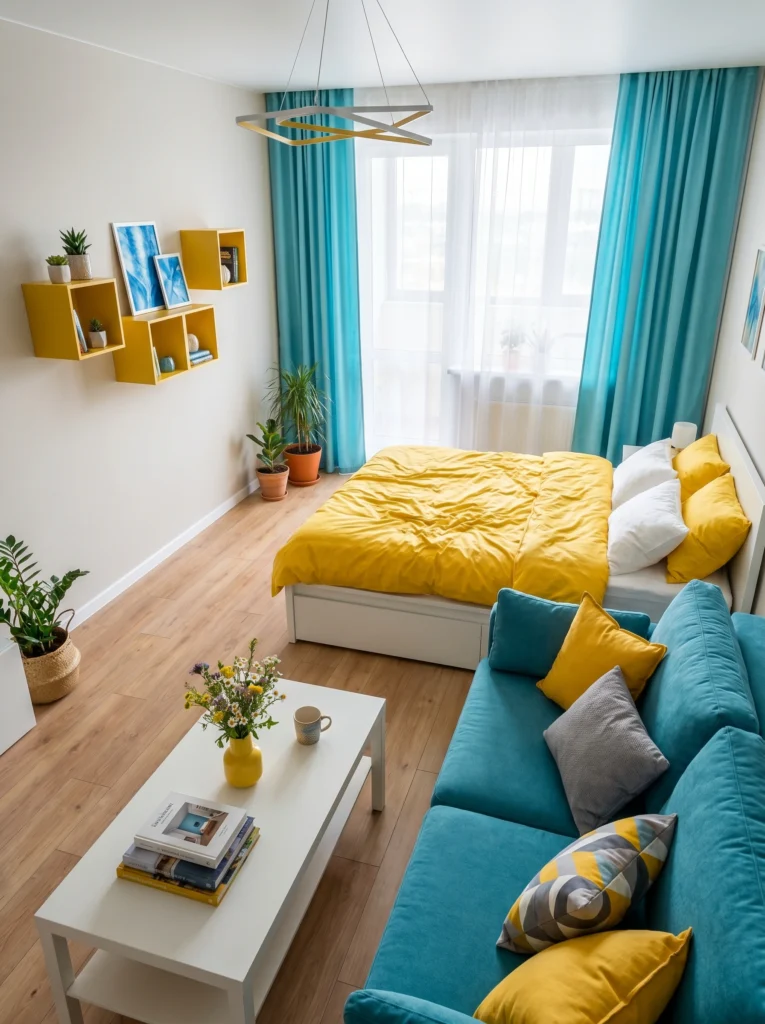
Who said shelves have to be neutral? Painted box shelves in a bold color — mustard, teal, terracotta — turn functional storage into wall art. Mount three or four in an asymmetric pattern and fill them with small plants, art prints, and a few curated objects. In a studio where the walls are usually white and the furniture does all the talking, colored shelves let the walls join the conversation for once.
Renter-friendly alternative: Use removable adhesive strips rated for heavy objects. Or lean the box shelves on existing furniture instead of mounting them.
3. Use an Open Shelving Unit as a Media Center and Display Wall
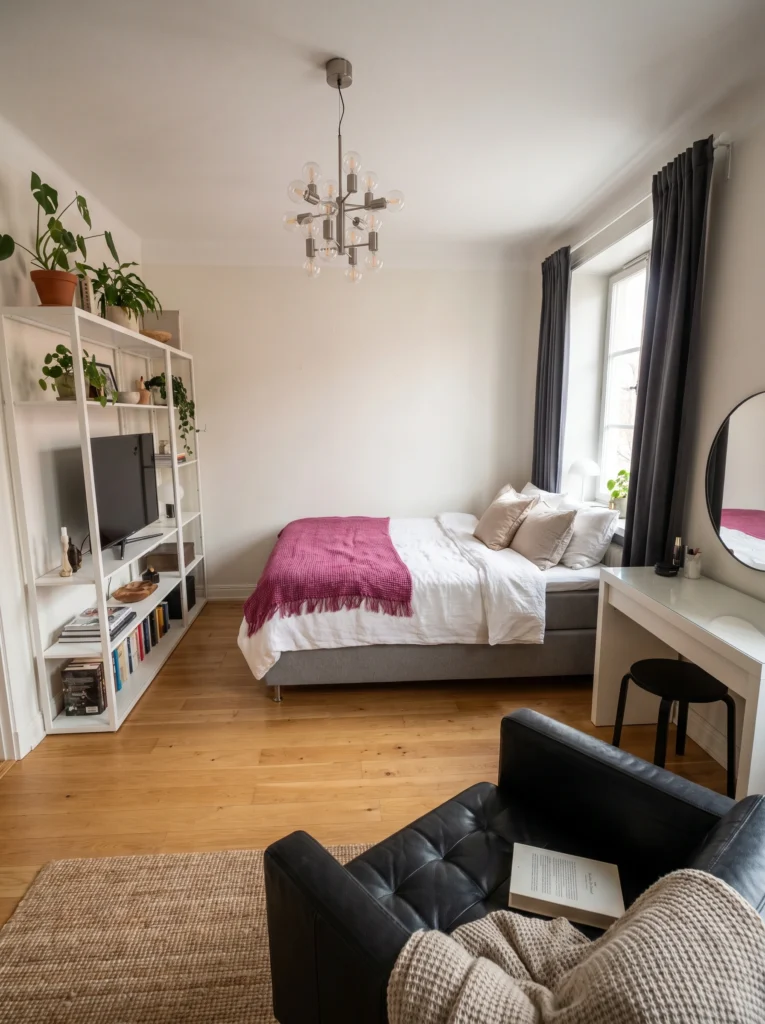
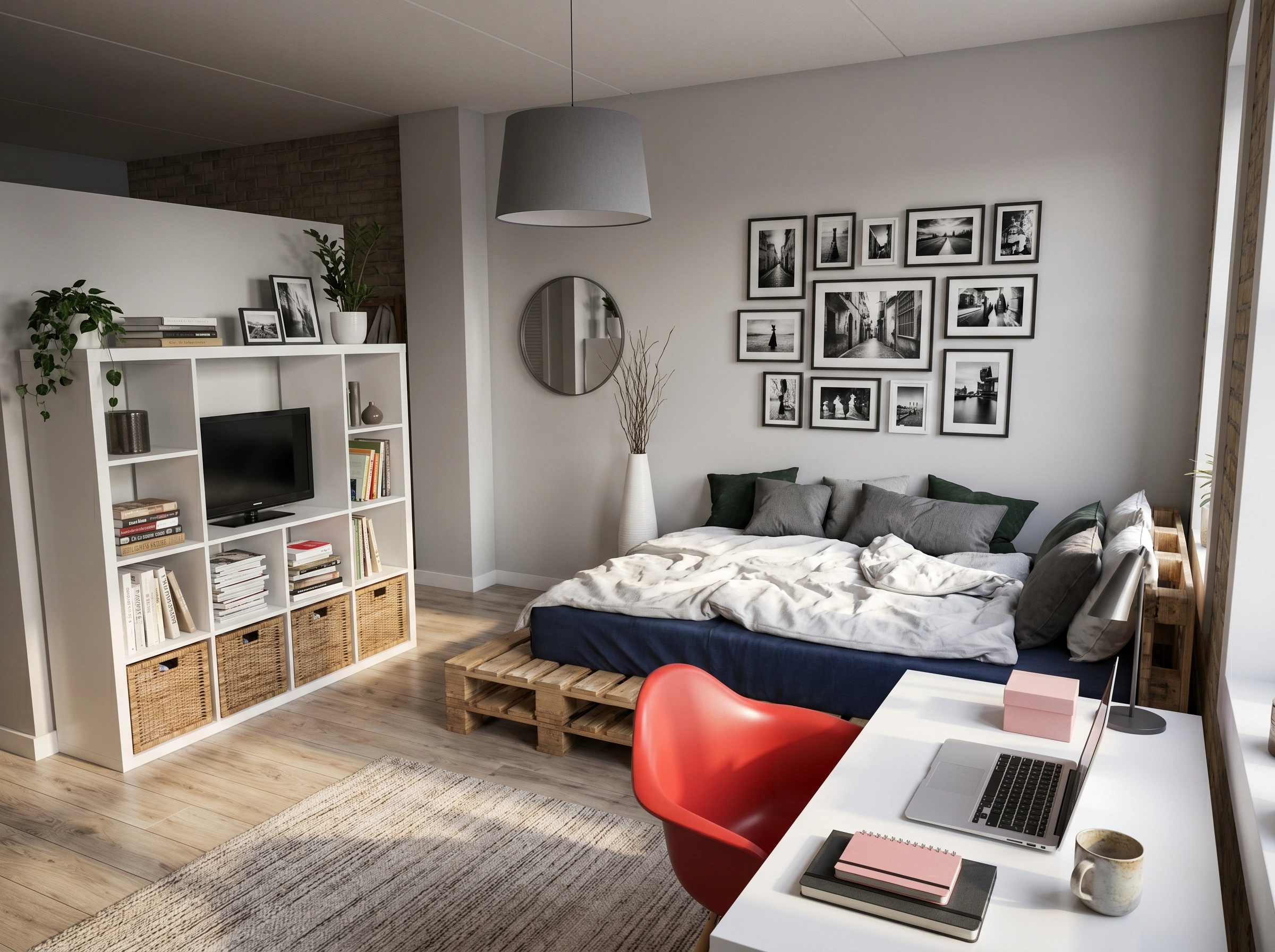
An open shelving unit does triple duty when you load it right. Place your TV on a middle shelf, stack books below, and let trailing plants drape from the top. The see-through design keeps your studio feeling airy instead of boxed in. This kind of setup works especially well along the wall opposite your bed, giving the living area its own identity without eating up floor space.
Pro tip: Stick to one material — all white shelves, or all wood — so the unit reads as furniture, not storage clutter.
4. Add a Ladder Shelf for Vertical Storage Near the Window
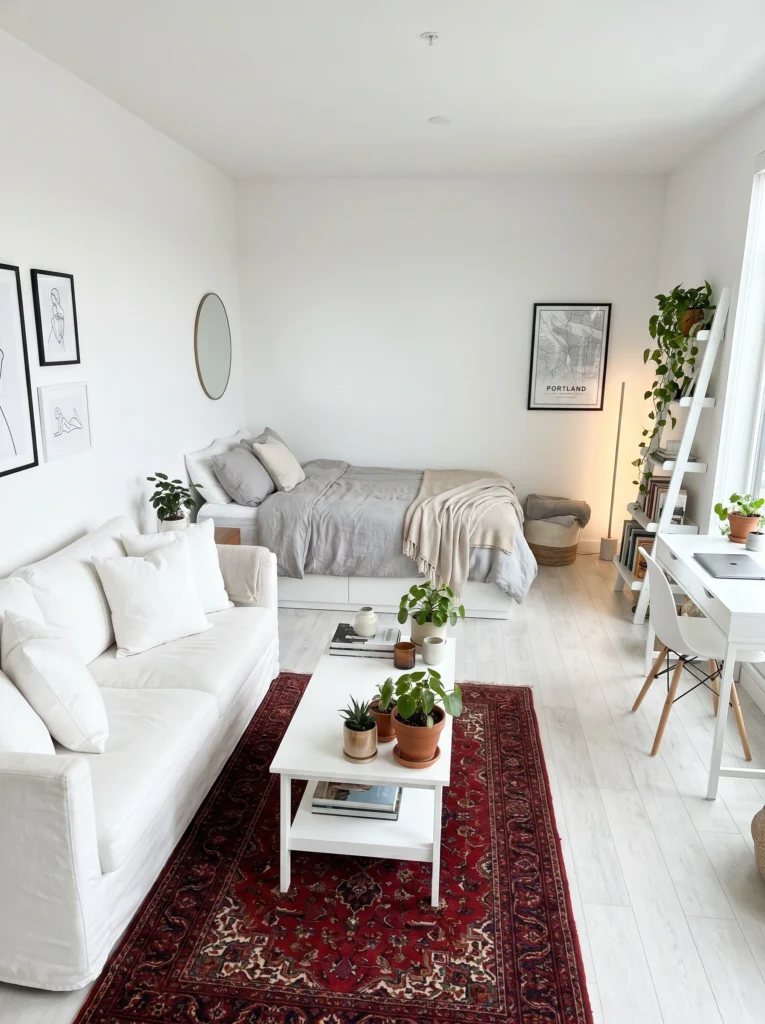
Ladder shelves are practically designed for studios. They lean against the wall, take up maybe twelve inches of floor space, and give you four or five tiers of storage. Position one near your window so plants get natural light on the upper shelves while books and decor fill the lower ones. The tapered shape keeps the room feeling open at the top, which matters when your ceiling is your only luxury.
Renter-friendly alternative: Most ladder shelves just lean — no drilling, no anchoring, no damage. Perfect for rentals.
5. Pair a Bookshelf With Curtains for a Private Sleeping Nook
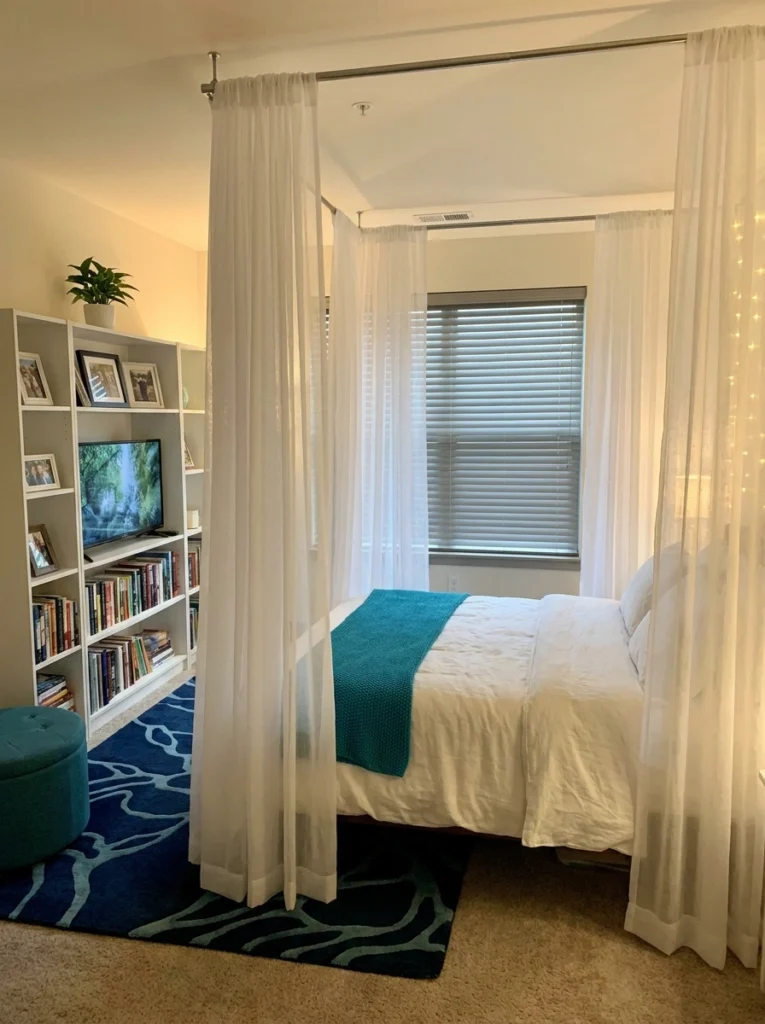
Here’s the thing — a bookshelf alone gives you visual separation, but adding ceiling-mounted curtains alongside it gives you actual privacy. Use the shelf to hold your personal items and photos while the curtains close off the bed area completely. When you pull them open during the day, the space feels large again. When you close them at night, you’ve basically built yourself a bedroom out of fabric and furniture.
Budget vs. splurge: A tension rod with sheer curtains runs about $20. Ceiling-track curtains look more polished but cost $50–$80.
6. Go With an Open Shelf and Storage Bed Combo
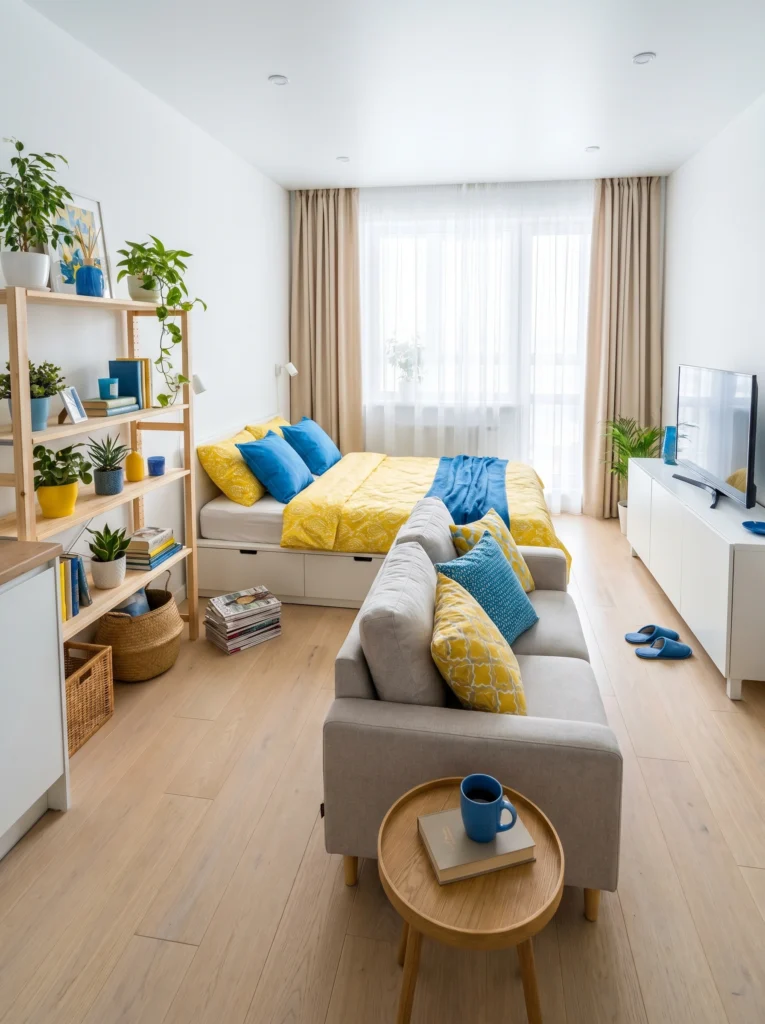
When you’re short on square footage, every piece of furniture needs to earn its spot twice over. Pair a lightweight open shelf unit with a bed that has built-in drawers underneath. The shelf handles display and daily-use items like books and chargers, while the bed drawers swallow up linens, off-season clothes, and anything you don’t need every day. Together, they replace a closet you probably don’t have.
I’ve tested this: Storage beds with side drawers beat lift-up styles in studios — you actually use drawers you can reach without moving furniture.
7. Use a Tall Wooden Bookshelf as a Full Room Divider
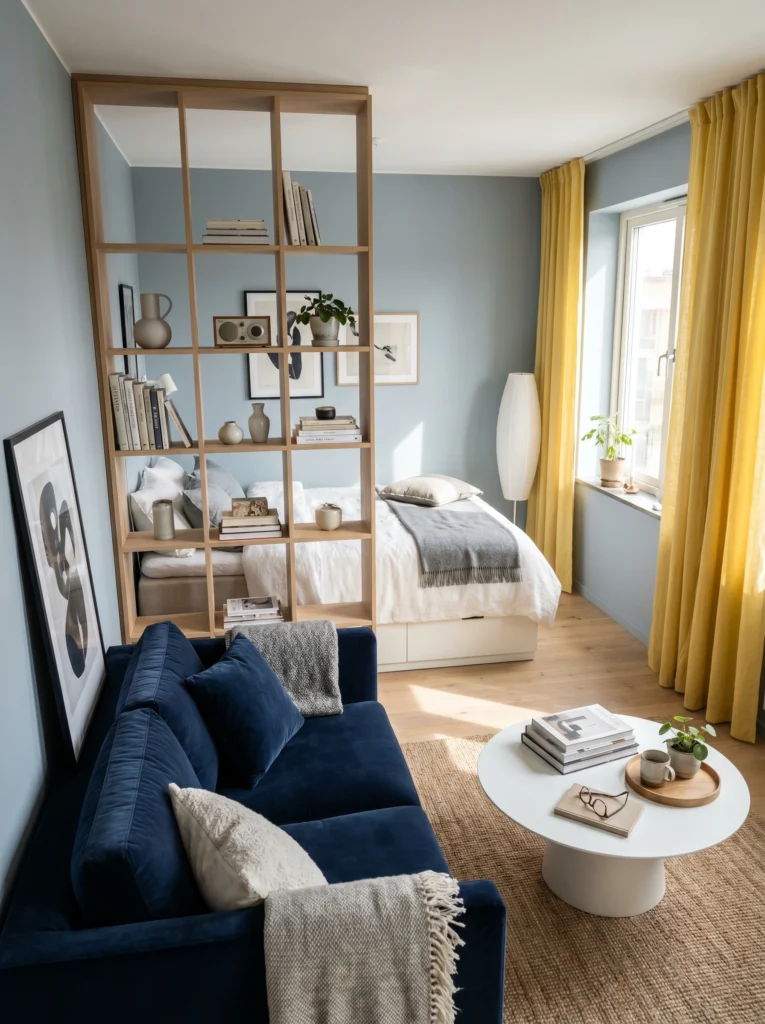
A floor-to-ceiling wooden shelf unit placed perpendicular to the wall is one of the most effective studio dividers you can buy. It creates two distinct rooms without blocking all the light. Fill it with a mix of books, ceramics, and small plants so it looks intentional from both sides. The key is leaving a few cubbies empty — that negative space keeps it from feeling like a wall of stuff.
My tip: Oak or walnut-tone shelving adds warmth in a way that white laminate just can’t match. Worth the upgrade if your budget allows.
8. Dedicate a Tall Bookshelf to Books and Personal Display
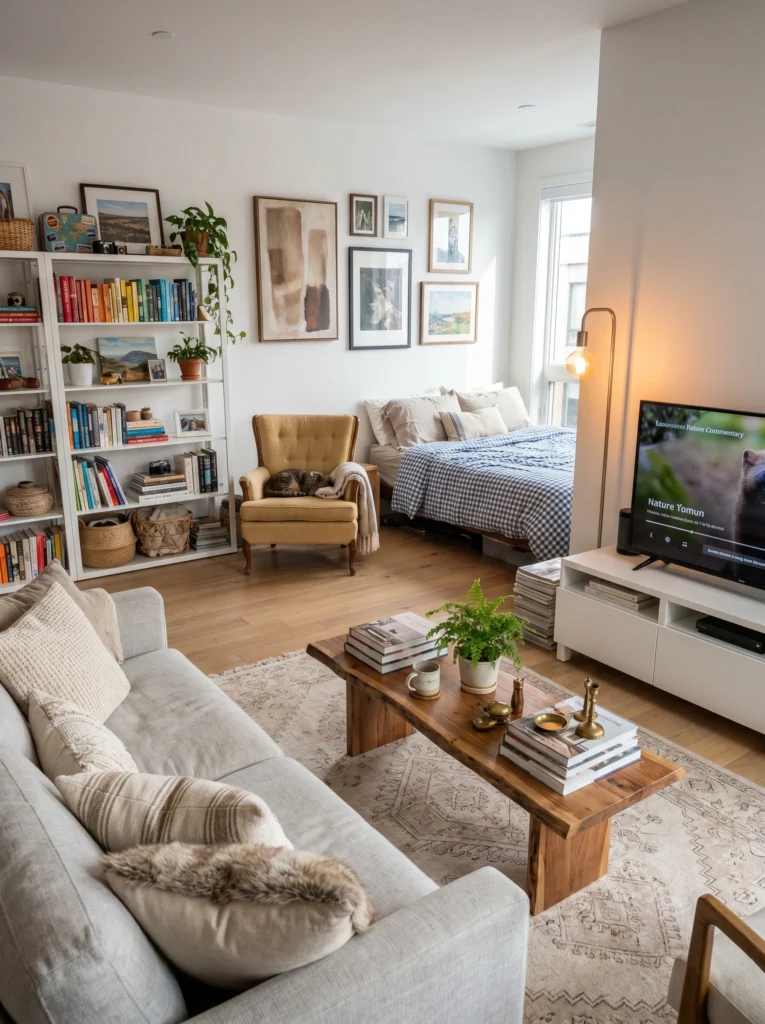
Not every shelf needs to divide a room. Sometimes a tall bookshelf against the wall is just a tall bookshelf — and that’s enough. Fill it with your actual book collection arranged by color, add a few travel souvenirs, and let it become the most personal thing in your apartment. In a studio where everything serves a purpose, a shelf that exists purely for personality is a luxury worth having.
Sofia’s honest take: Color-sorted bookshelves photograph beautifully, but if you actually read your books, organizing by genre is more practical.
9. Combine Floating Wall Shelves With a Freestanding Unit
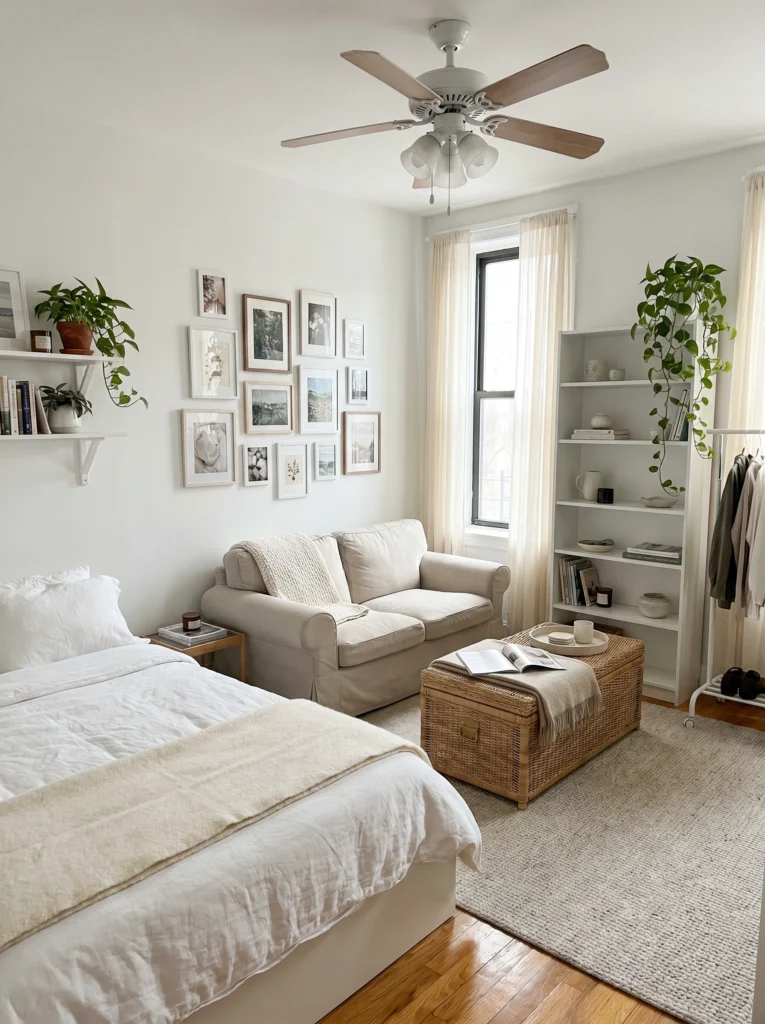
Why choose one type of shelf when you can layer two? Mount a couple of floating shelves on the wall above your bed or sofa for lightweight display — a candle, a small plant, a framed photo. Then pair that with a freestanding shelf on the adjacent wall for heavier items like books and baskets. This distributes your storage across vertical surfaces instead of crowding it all into one corner.
Renter-friendly alternative: Command strip floating shelves hold up to seven pounds each and come off cleanly. No holes, no drama.
10. Style a Metal Open Shelf With Trailing Plants
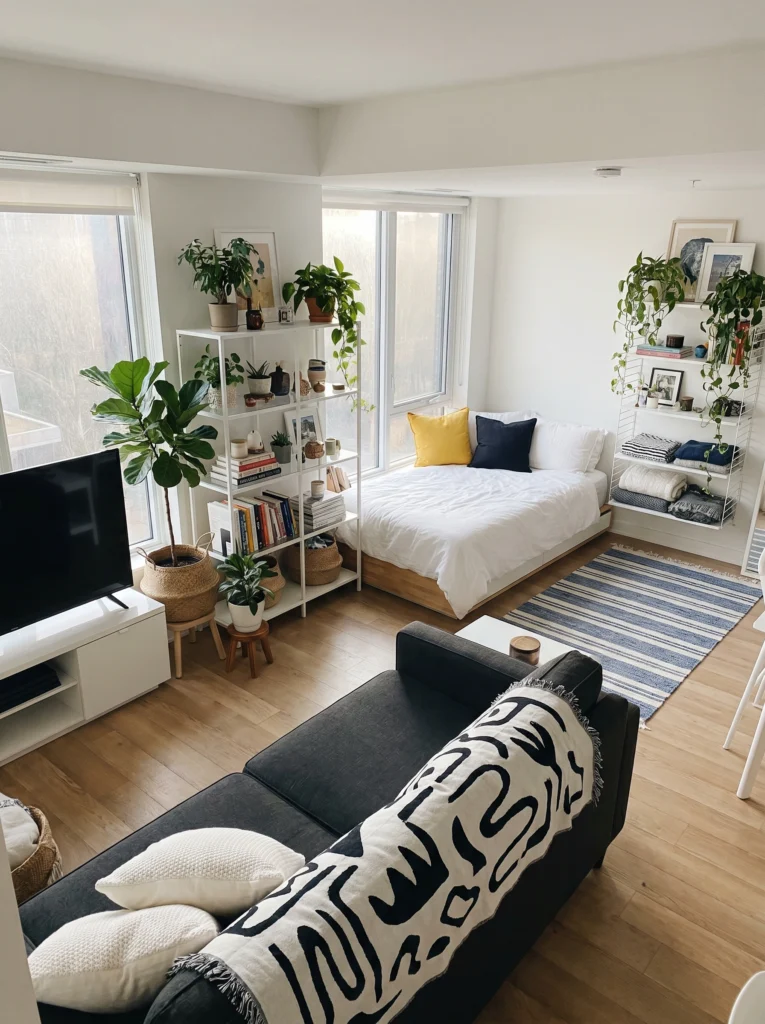
Metal shelving units have that clean, industrial-meets-modern look that works in almost any studio. But the real trick is letting trailing plants do the decorating for you. A pothos or string of hearts cascading from the top shelf softens the metal and makes the whole unit feel alive. Place it between your sofa and bed, and the greenery creates a living screen that’s way more interesting than a blank wall.
Pro tip: Use small terracotta pots on the upper shelves — they’re heavy enough to stay put and add a warm, earthy tone against white metal.
11. Turn a Shelving Unit Into an Entertainment Center
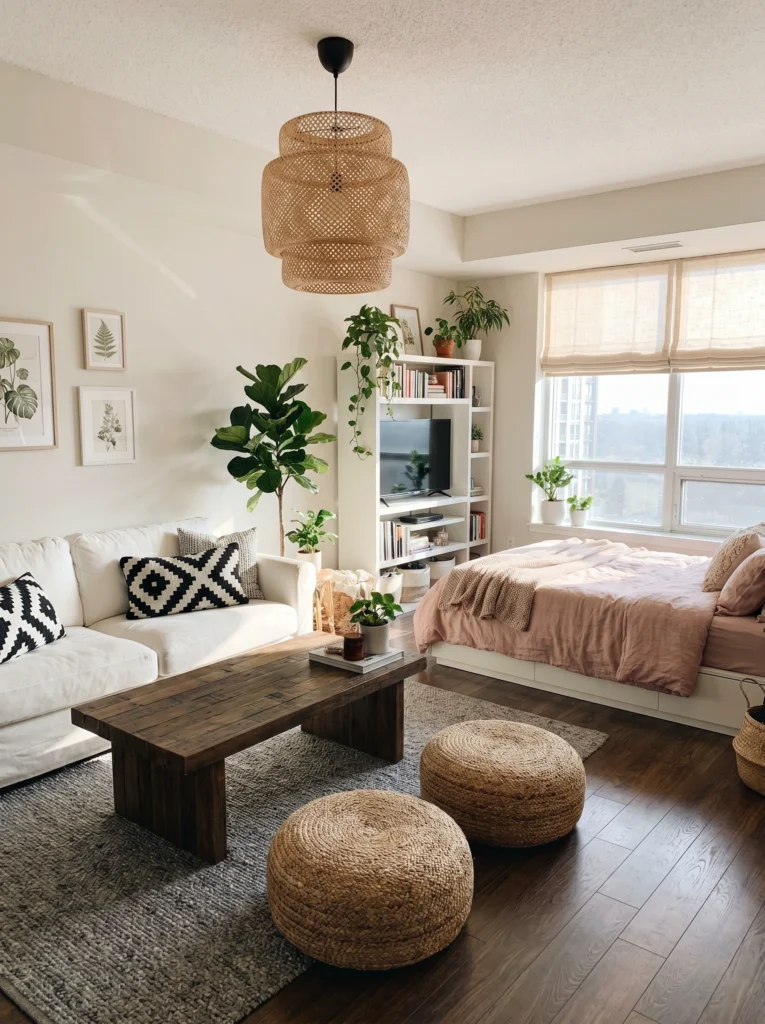
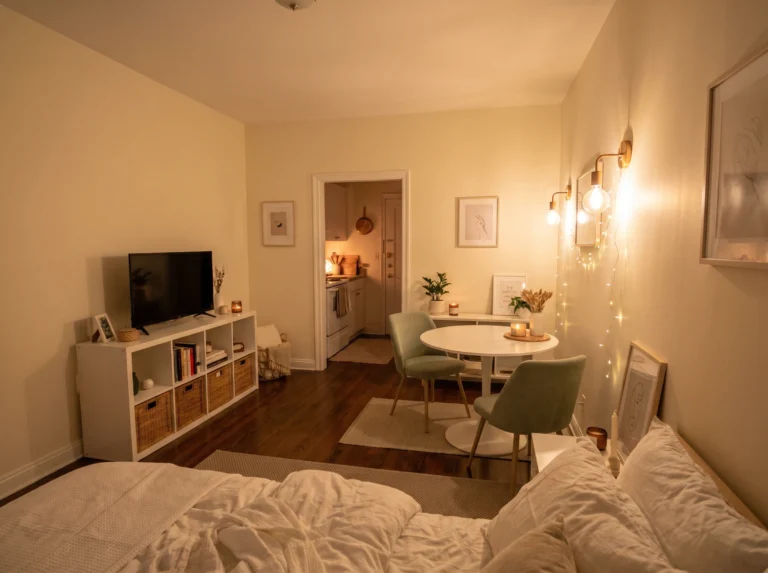
Skip the bulky TV stand. A cube-style shelving unit holds your television on top and gives you six to eight cubbies underneath for books, baskets, speakers, and decor. In a studio where you can’t afford single-purpose furniture, this one piece replaces a console, a bookshelf, and a side table all at once. Style the cubbies with a mix of open and basket-filled slots so it looks curated, not cluttered.
My favorite: The IKEA KALLAX in the 2×4 configuration is basically designed for this exact setup, and it costs under $100.
12. Flank the Living Area With a Shelf Unit for Balance
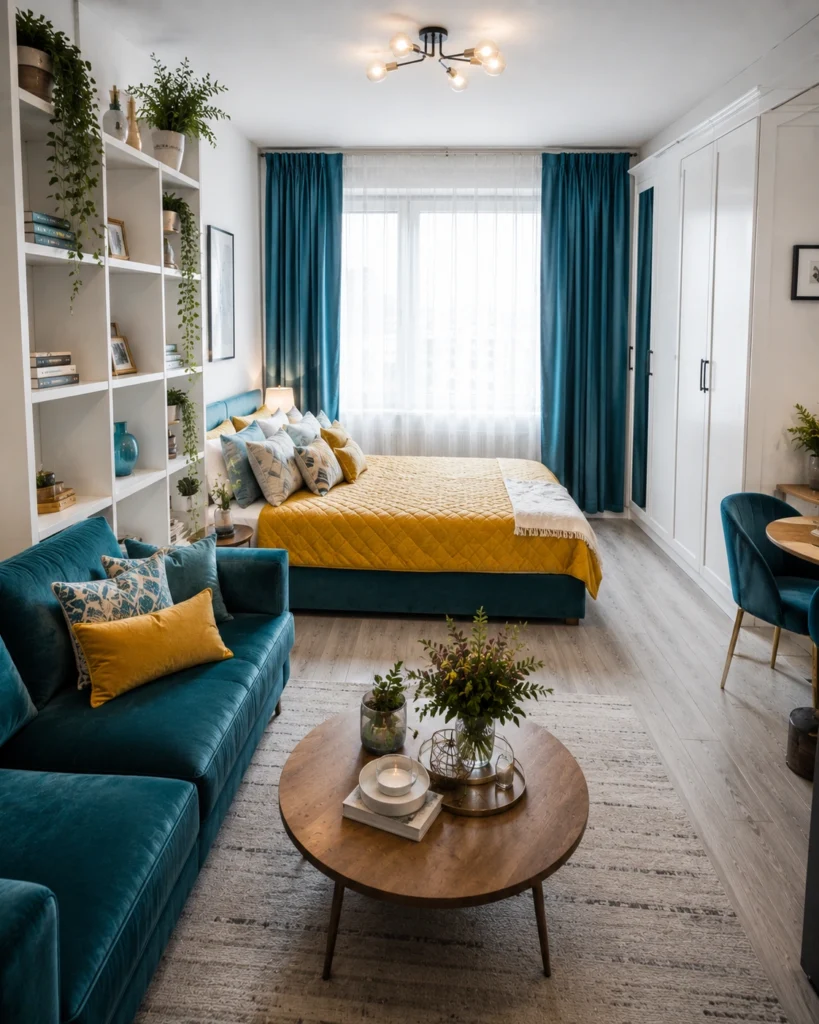
Placing a shelving unit along the side wall of your living zone creates a visual anchor that balances the room. It grounds the sofa area and gives you a spot for trailing plants, framed photos, and small decor pieces without stealing attention from the rest of the layout. This works especially well when your sofa and bed sit parallel — the shelf fills that awkward gap and makes the arrangement feel deliberate.
Don’t waste your money on: Deep shelves wider than 12 inches for side-wall placement. They’ll jut out and eat your walkway in a studio.
13. Use Shelving With Ambient Lighting for an Evening Mood
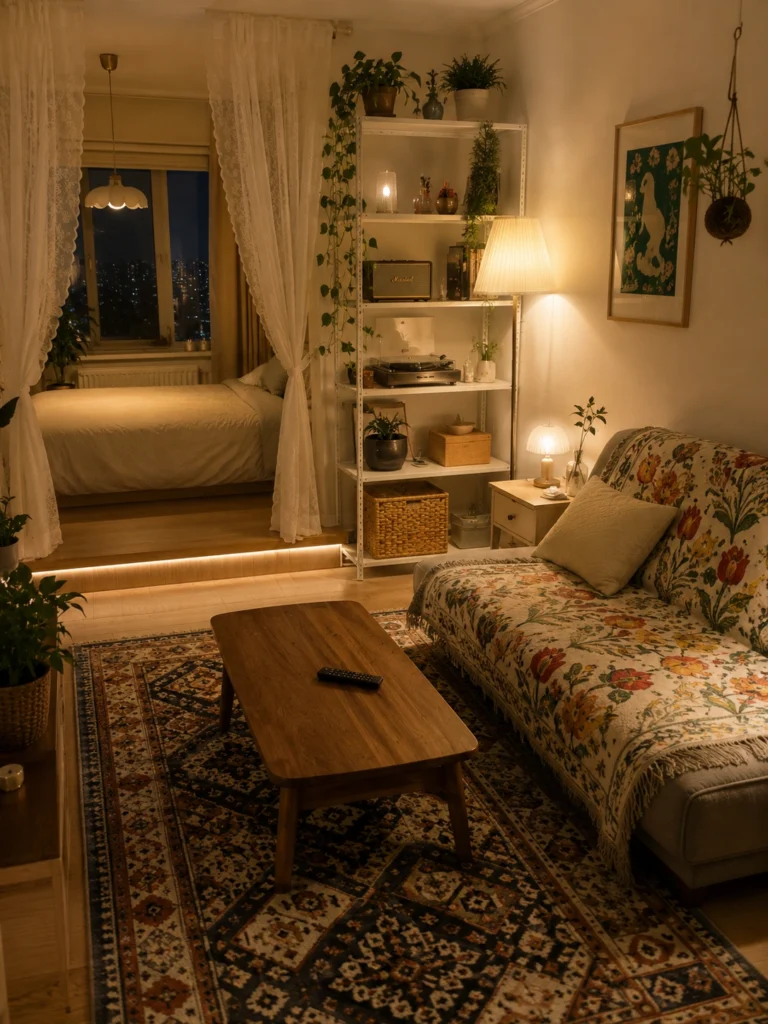
A shelf unit doesn’t just store things — it can set a mood. Place small table lamps or LED strip lights on two or three shelves, and suddenly your divider becomes a glowing focal point at night. The warm light filters through the open shelves and creates depth that overhead lighting never can. This is the kind of detail that makes a studio feel like a home instead of a room you happen to sleep in.
Save vs. splurge: Battery-operated LED puck lights cost $8 for a pack and stick anywhere. Hardwired shelf lights look better but aren’t worth the hassle in a rental.
14. Pick a Cube Shelf Unit for a Clean, Modern Divider
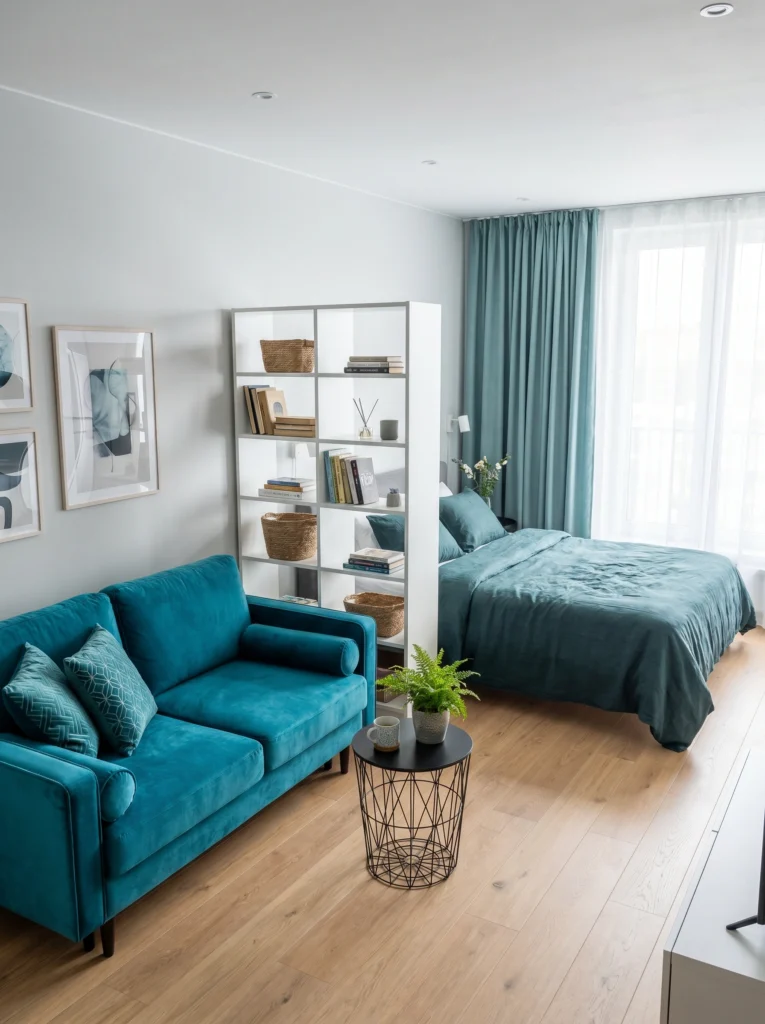
Cube shelving is the studio apartment workhorse for a reason. The uniform grid looks tidy from every angle, and the open-back design lets light pass through both sides. Position it perpendicular to the wall between your sofa and bed, and fill alternating cubes with baskets and books. The symmetry reads as intentional design rather than a desperate attempt to block the view of your unmade bed — which, let’s be honest, it sort of is.
I’ve tested this: A 2×3 cube unit is the sweet spot for most studios. Tall enough to create separation, short enough to see over.
15. Use a Low Cube Shelf as a Sofa-to-Bed Transition
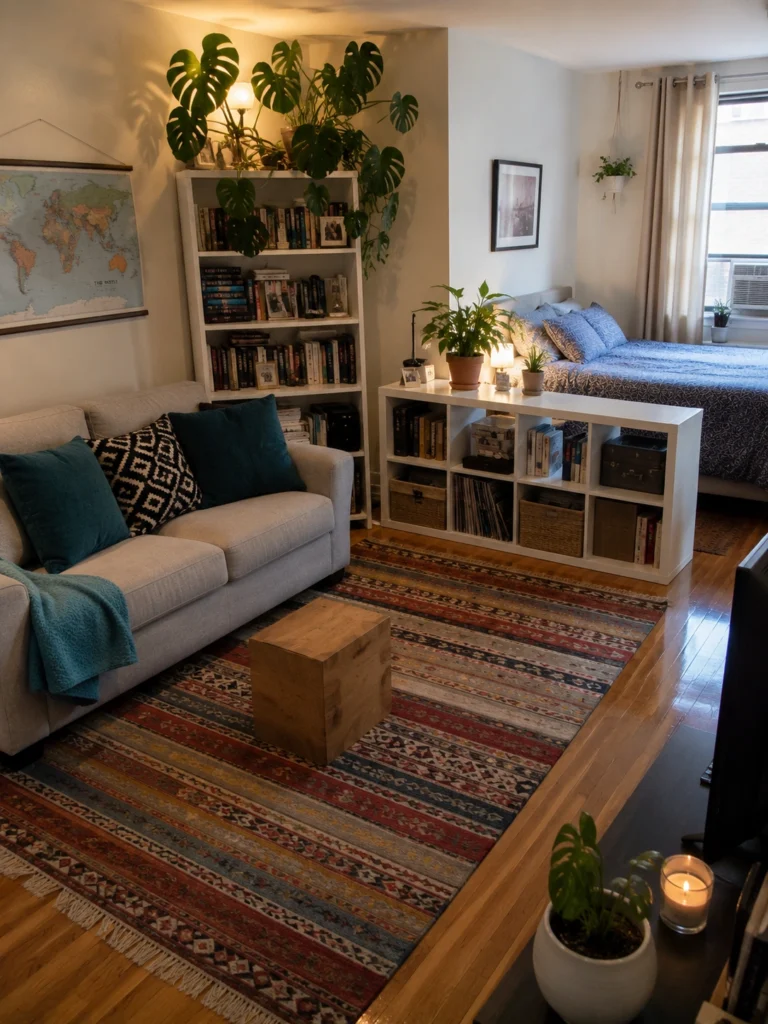
A low, horizontal cube shelf placed right between your sofa back and your bed creates a gentle boundary without closing anything off. It doubles as a headboard, a display surface, and a nightstand if you set a lamp on one end. The cubes hold baskets and vinyl records, books and small boxes. It’s functional, it’s unobtrusive, and it makes the transition between zones feel thoughtful instead of abrupt.
Budget vs. splurge: An IKEA KALLAX 2×2 runs about $50 and handles this perfectly. A custom wood version looks stunning but costs five times that.
16. Place a Low Bookshelf Behind the Sofa to Separate the Bed
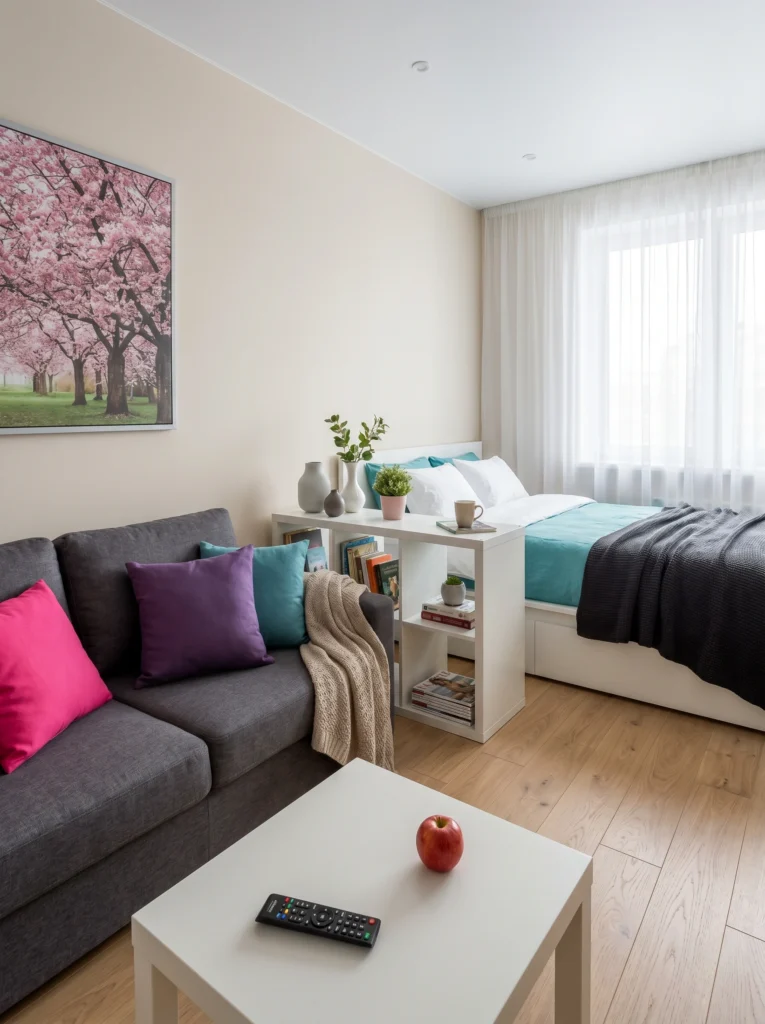
A waist-height bookshelf tucked behind your sofa creates a natural border between sleeping and lounging without blocking light. Use the top surface for a small plant, a mug, or a reading lamp. The shelves themselves hold books, magazines, and decorative objects. It’s a visual cue that says “this side is for living, that side is for sleeping” — and your brain will actually respect it.
Sofia’s honest take: This only works if you keep the top surface clear. The moment it becomes a dumping ground, the whole effect falls apart.
Final Thoughts
Shelving in a studio isn’t just about storage — it’s about structure. The right shelf can divide your space, display your personality, and keep the chaos at bay without making your apartment feel smaller. You don’t need all sixteen ideas. Pick one or two that solve your biggest pain point right now, and start there. Once you see how much a single shelf changes the room, the rest will follow.
Your studio doesn’t need more space — it needs smarter shelves.