Living in a Studio Apartment? Here’s How to Pick a Sofa Color
Your sofa is probably the biggest piece of furniture in your studio — and in a space where everything is on display, its color sets the entire mood. Pick the wrong shade and the room feels cramped, chaotic, or just off. Pick the right one and suddenly your 400 square feet looks intentional, pulled together, and actually stylish.
Here are 13 sofa color ideas that actually work in small spaces.
1. Go Bold With a Green Sofa
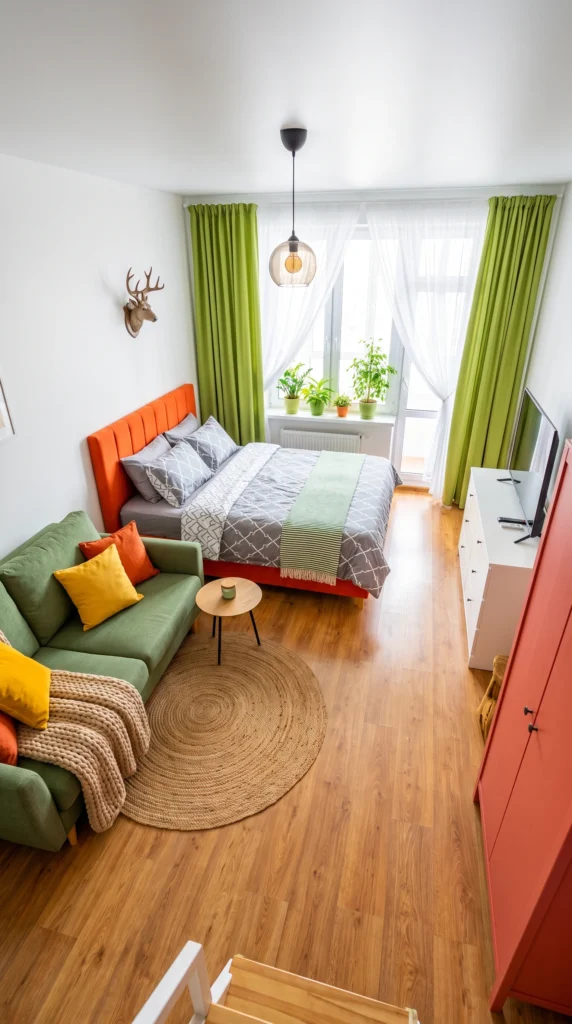
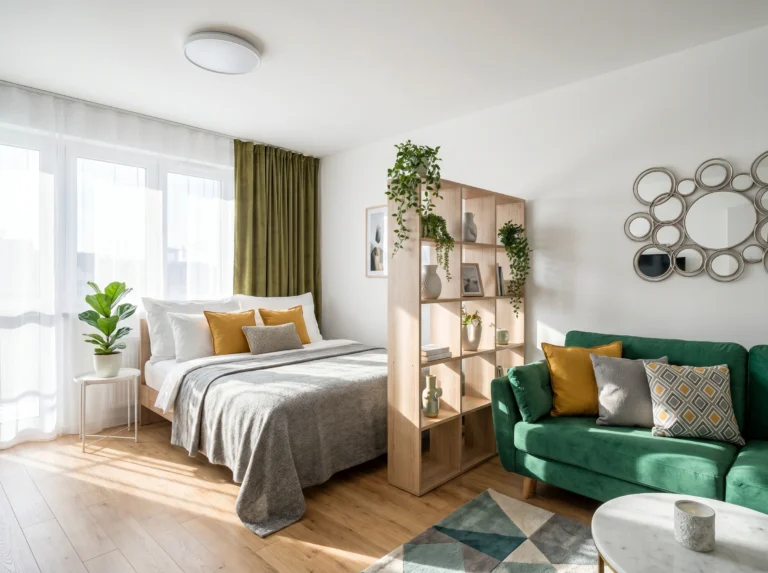
A green sofa is one of those choices that sounds risky until you see it in action. In this studio, the olive-toned sofa pairs beautifully with warm wood floors and a jute rug, grounding the space without competing with the bold orange headboard. Green works because it reads as natural and calming, even when the shade is saturated. Pair it with mustard or burnt orange accents for a palette that feels alive but not chaotic.
Pro tip: Stick to muted or earthy greens like olive, sage, or forest. Neon or lime green ages fast and clashes with almost everything.
2. Classic Grey for a Cool-Toned Studio
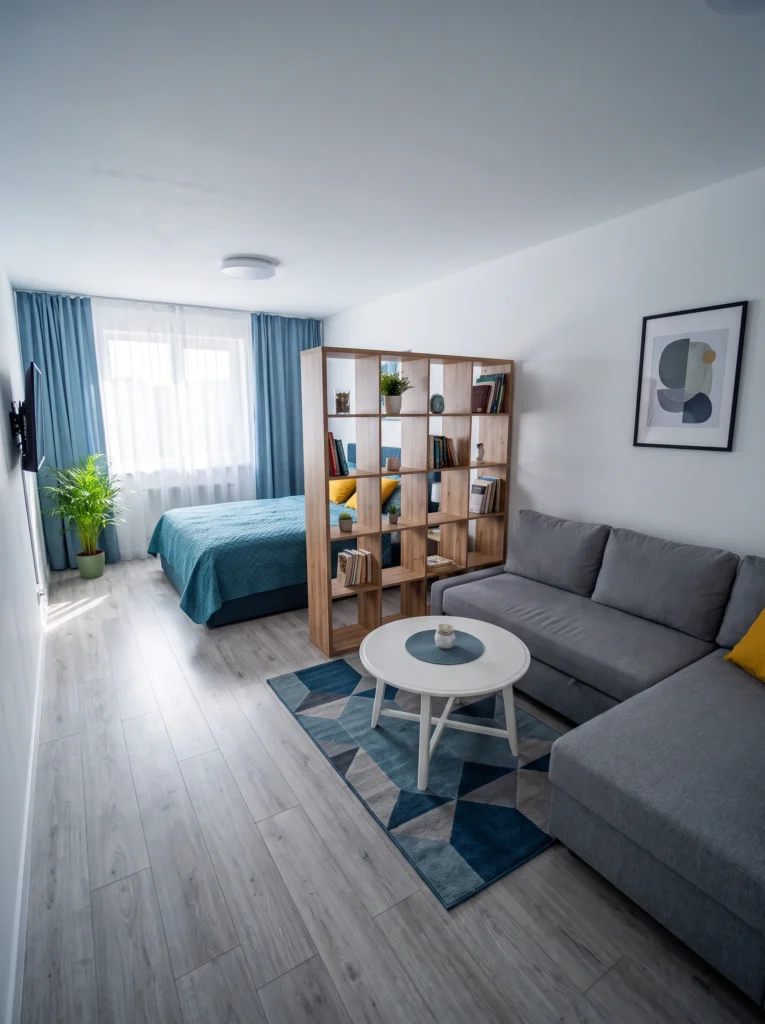
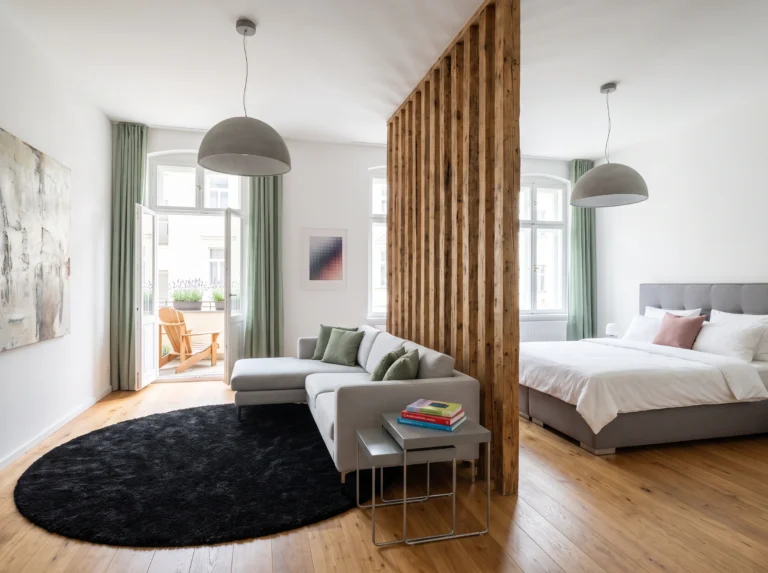
Grey is the safe pick for a reason — it disappears into almost any color scheme and lets your accents do the talking. This studio pairs a grey sectional with teal blue textiles and a wooden bookshelf divider, creating a layered look that feels intentional rather than boring. The key is adding enough texture and color around it so the grey doesn’t flatten the room. Think patterned rugs, colorful pillows, and warm-toned wood.
Sofia’s honest take: Grey is only boring if you treat it like the whole personality. It’s a canvas — decorate around it.
3. Light Grey in a Monochrome Scheme
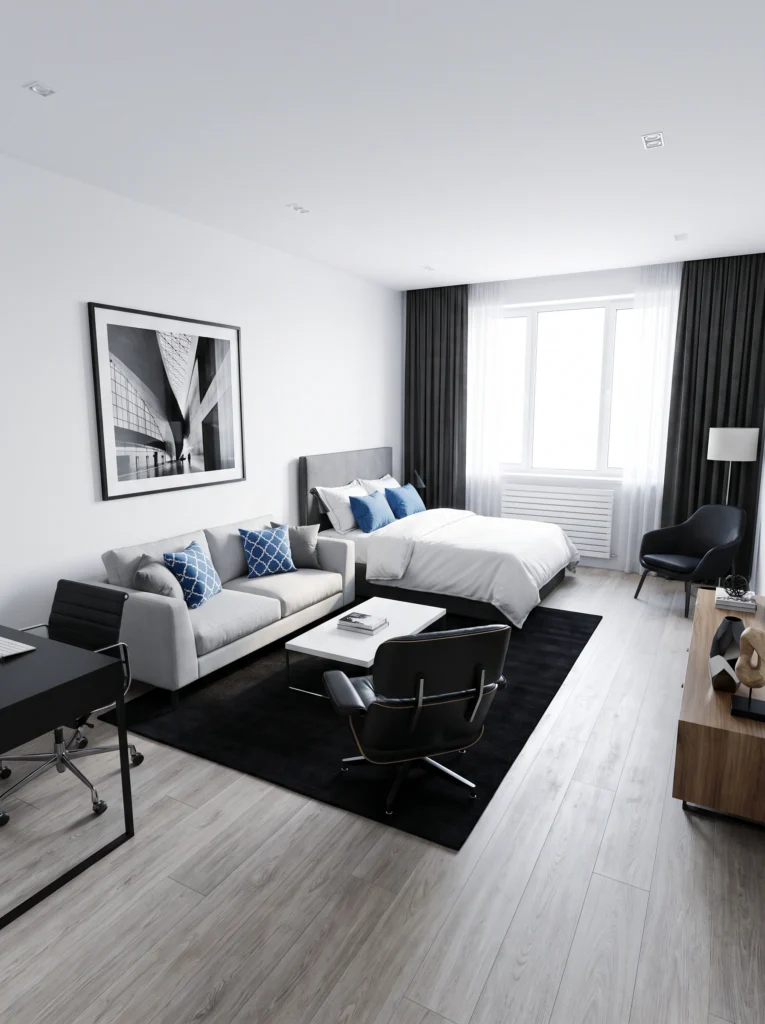
If your style leans modern or minimal, a light grey sofa inside a black-and-white palette creates a studio that looks like it belongs in a design magazine. This space uses contrast — dark curtains, a black area rug, and structured furniture — to keep the light grey from washing out. The result is sophisticated without feeling sterile. Add one accent color through pillows or a throw to keep it from feeling like an office lobby.
My tip: In a monochrome studio, vary your textures aggressively. Velvet, leather, linen, and wool keep one palette from feeling flat.
4. A Patterned Sofa With Traditional Warmth
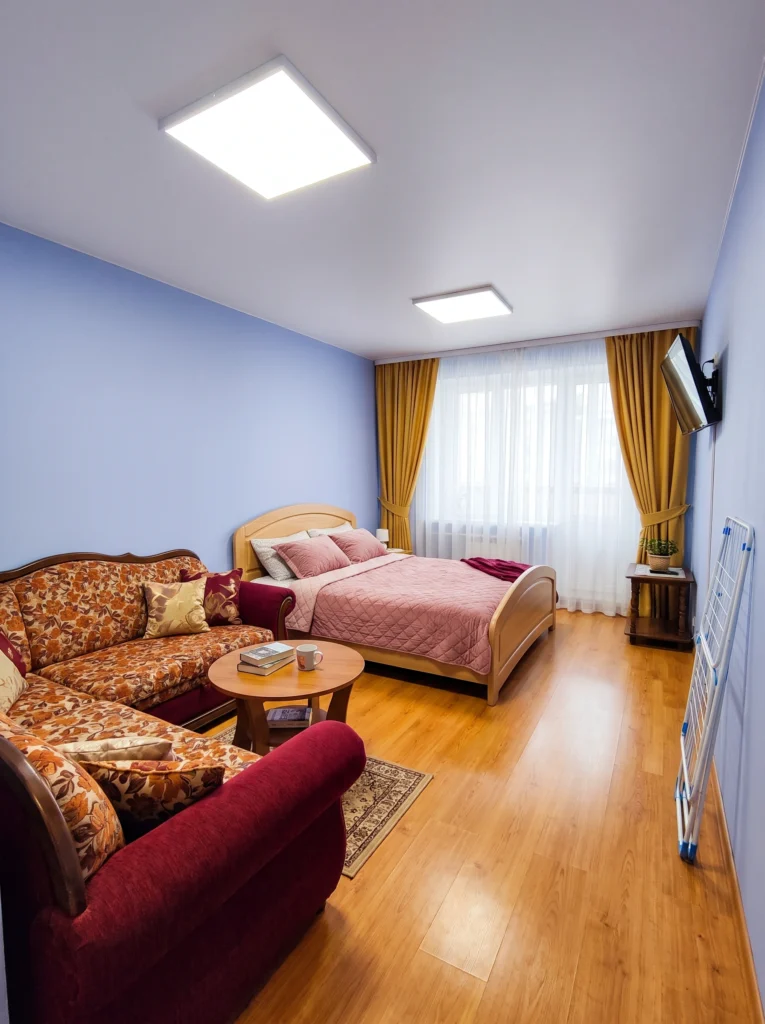
Not every studio needs a sleek modern sofa. A patterned burgundy piece with floral upholstery brings instant warmth and character to a room that might otherwise feel too simple. The trick is keeping the rest of the space relatively restrained — let the sofa be the star. Solid-colored bedding in a complementary shade, like pink or dusty rose, ties the room together without overwhelming the eye with competing patterns.
My favorite: Vintage-style patterned sofas from secondhand shops. They cost a fraction of new ones and bring way more personality.
5. Mustard Yellow for a Warm Statement
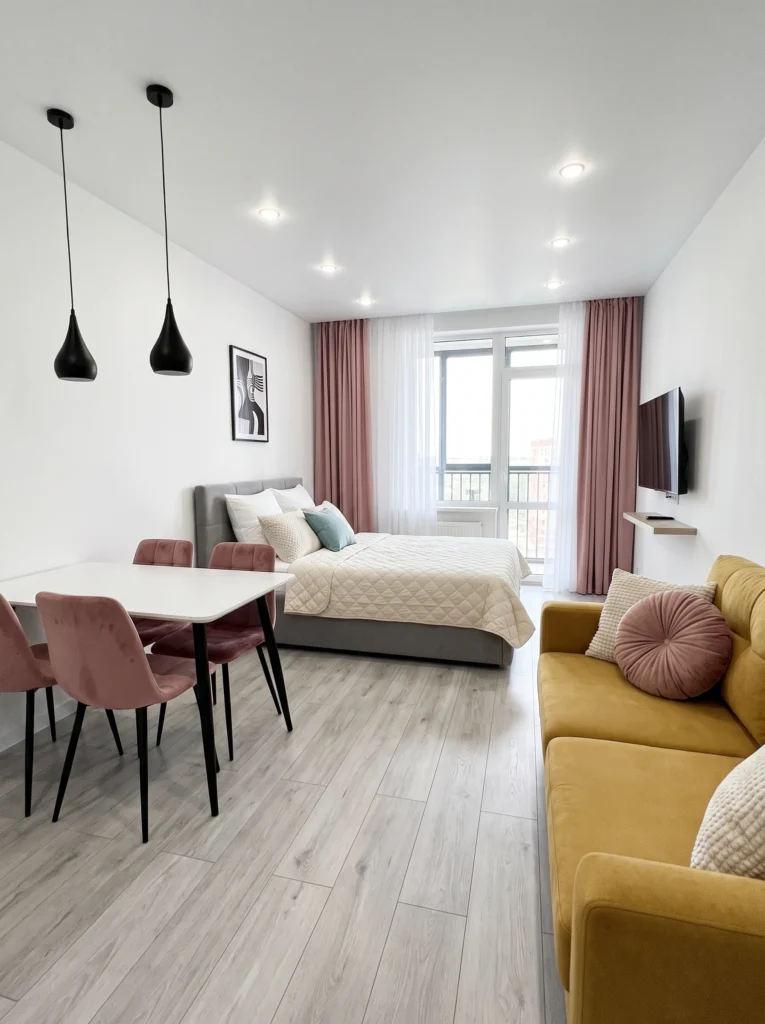
Mustard yellow is one of those colors that instantly warms up a studio, especially one with white walls and light flooring. It’s bold without being aggressive, and it pairs surprisingly well with blush pink, grey, and cream. In this studio, the yellow sofa anchors the living zone while dusty pink chairs define the dining area. It’s proof that small spaces can handle strong color — you just need to balance it with quieter tones elsewhere.
Budget vs. splurge: Save on the dining chairs (IKEA has great velvet options under $60). Splurge on the sofa — you sit on it every day.
6. Brown Sofa for a No-Fuss Classic
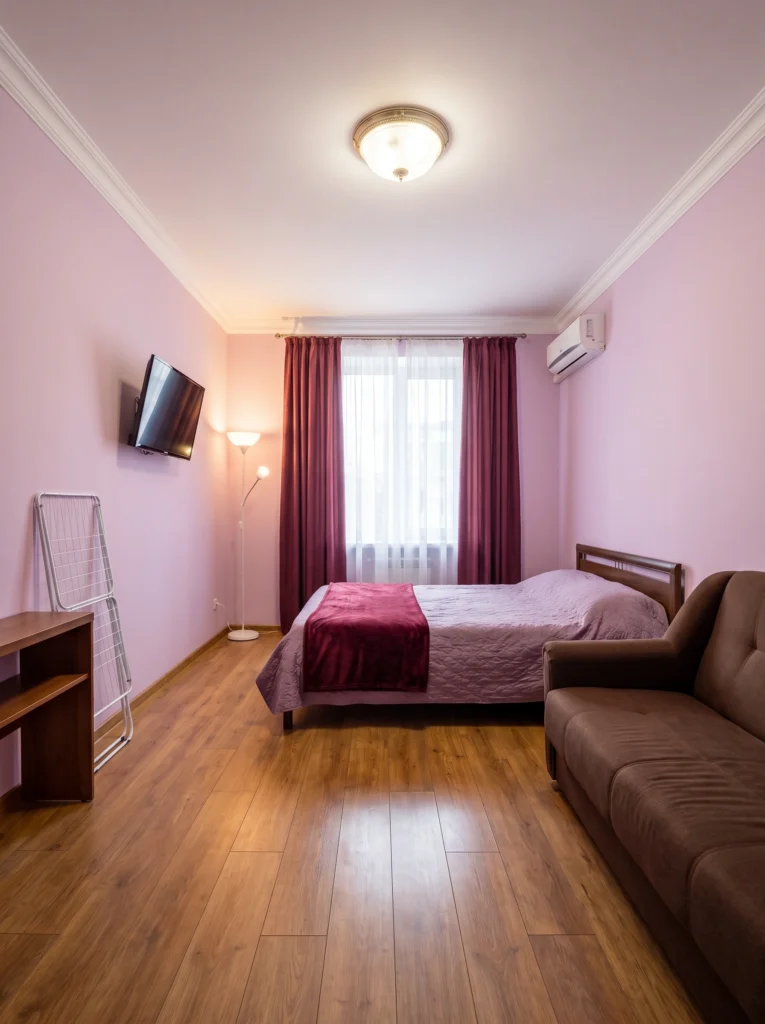
Brown gets overlooked because it doesn’t photograph as excitingly as jewel tones or pastels. But in real life, a brown sofa is incredibly forgiving — it hides stains, works with nearly every wall color, and ages well. This studio keeps things simple with a brown sofa against soft pink walls and a matching burgundy throw. The warm wood floor ties everything together. It’s not flashy, but it’s comfortable and practical for everyday living.
Renter-friendly alternative: Can’t paint the walls? Use a warm-toned throw blanket and coordinating pillows to build your color story around the brown.
7. Soft Beige-Grey for a Muted Palette
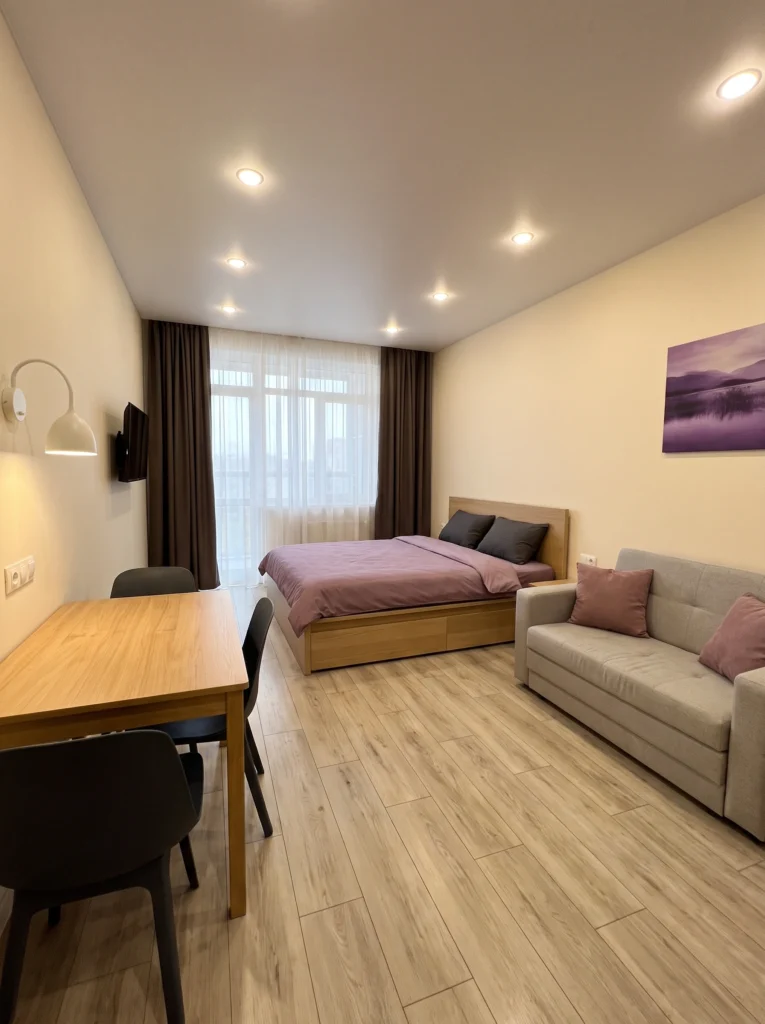
When you want your studio to feel calm and cohesive, a beige-grey sofa is your best friend. It’s neutral without being cold, and it blends seamlessly with warm wood furniture and soft-toned textiles. This space layers mauve bedding, dusty pink pillows, and warm recessed lighting over a quiet sofa color — and the result feels like a hotel suite, not a cramped apartment. Let the sofa recede and build atmosphere through lighting and fabric.
I’ve tested this: Beige-grey upholstery shows less dust and pet hair than pure white or charcoal. Practical and pretty.
8. Burnt Orange for Maximum Personality
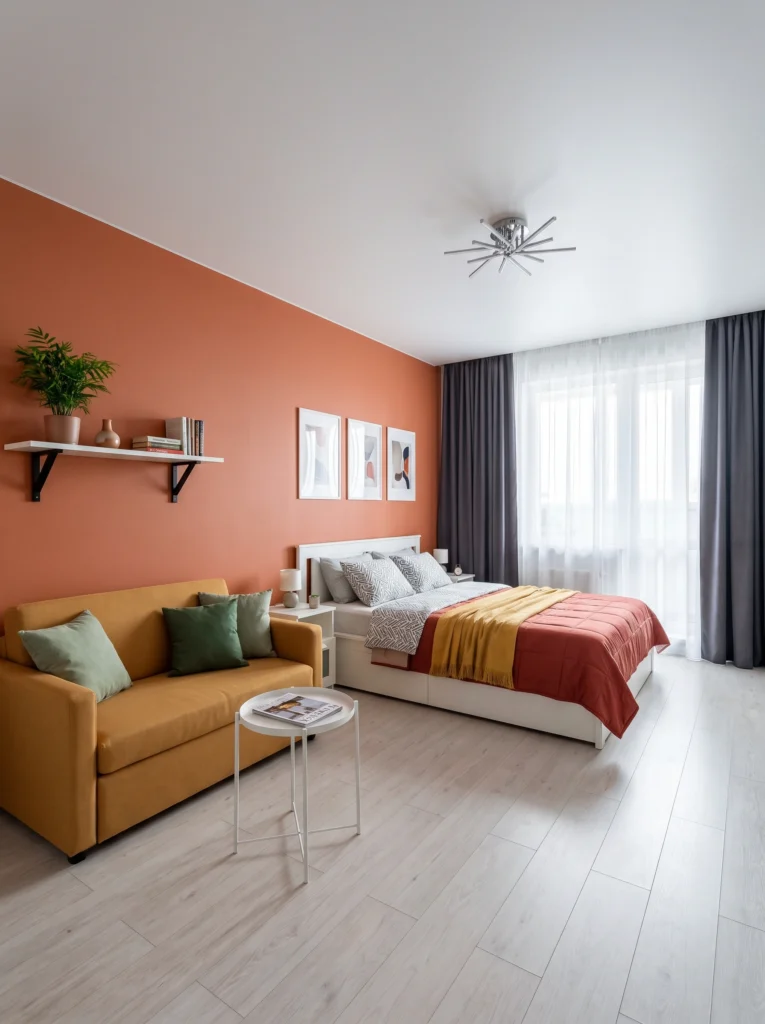
If you want your sofa to be the first thing people notice, burnt orange delivers. It’s warm, energetic, and surprisingly versatile when paired with the right wall color. This studio commits fully with a terracotta accent wall behind the sofa, creating a tonal effect that feels curated rather than chaotic. Green accent pillows and layered bedding in mustard and red round out a palette that’s bold but balanced. This approach works best in studios with lighter flooring.
Don’t waste your money on: Matching everything to one exact shade. Tonal variation — different oranges, reds, and corals — looks richer than a perfect match.
9. Royal Blue for a Confident Pop
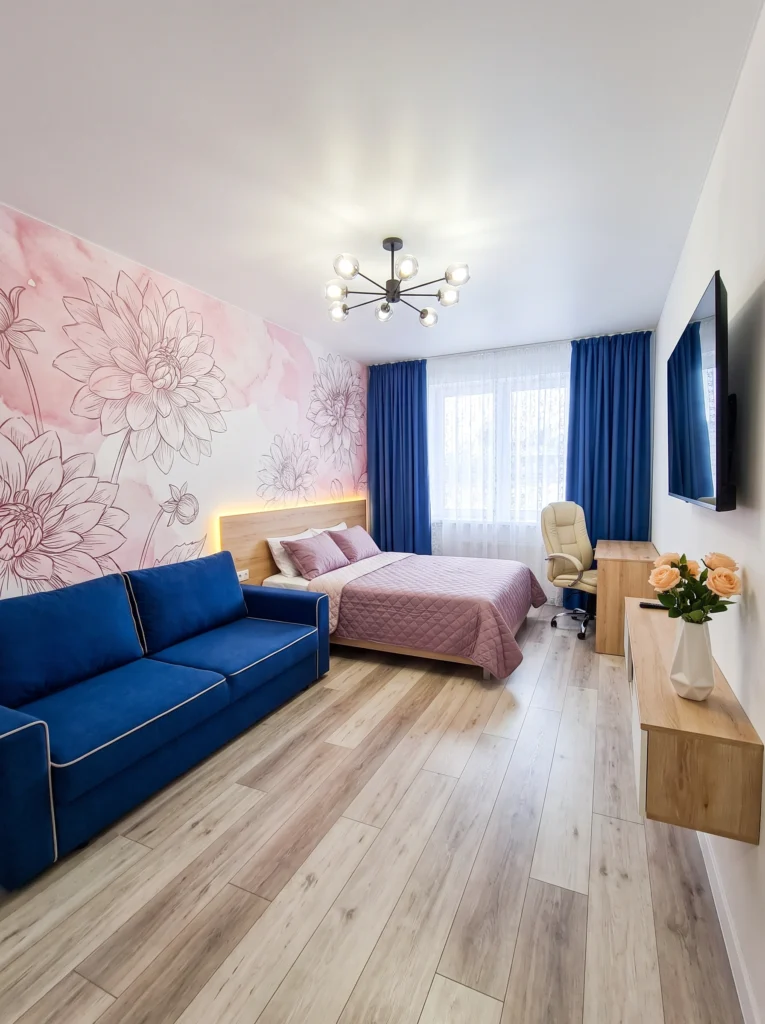
Royal blue is one of the most underused sofa colors in small spaces, and that’s a shame. It’s dramatic without being dark, and it pairs beautifully with pink, blush, and warm metallics. This studio goes all in with a blue velvet sofa against a pink floral accent wall, creating a space that feels curated and intentional. The blue curtains echo the sofa color, pulling the eye toward the window and making the room feel longer.
Pro tip: Blue velvet shows dust easily. Keep a lint roller nearby and vacuum the cushions weekly — it stays gorgeous with minimal effort.
10. Cream and Beige for a Tonal Look
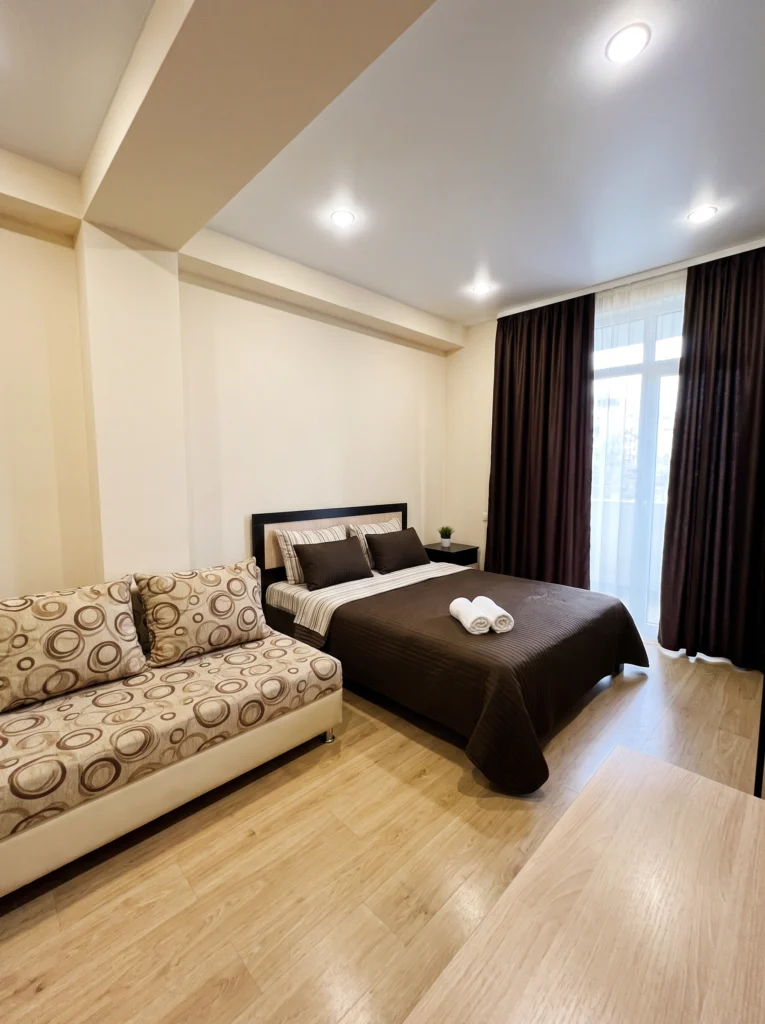
A cream or beige sofa in a tonal studio creates a cocoon-like feeling that’s hard to beat. When everything stays within the same warm neutral family — tans, browns, creams, and dark chocolates — the space feels unified and intentionally designed. This studio uses a patterned cream sofa alongside dark brown bedding and curtains for depth without contrast shock. It’s a quieter approach, but it makes small spaces feel surprisingly spacious and serene.
Sofia’s honest take: Tonal rooms photograph beautifully but need texture variety in real life. Without it, everything blurs together into beige mush.
11. Charcoal for a Versatile Dark Neutral
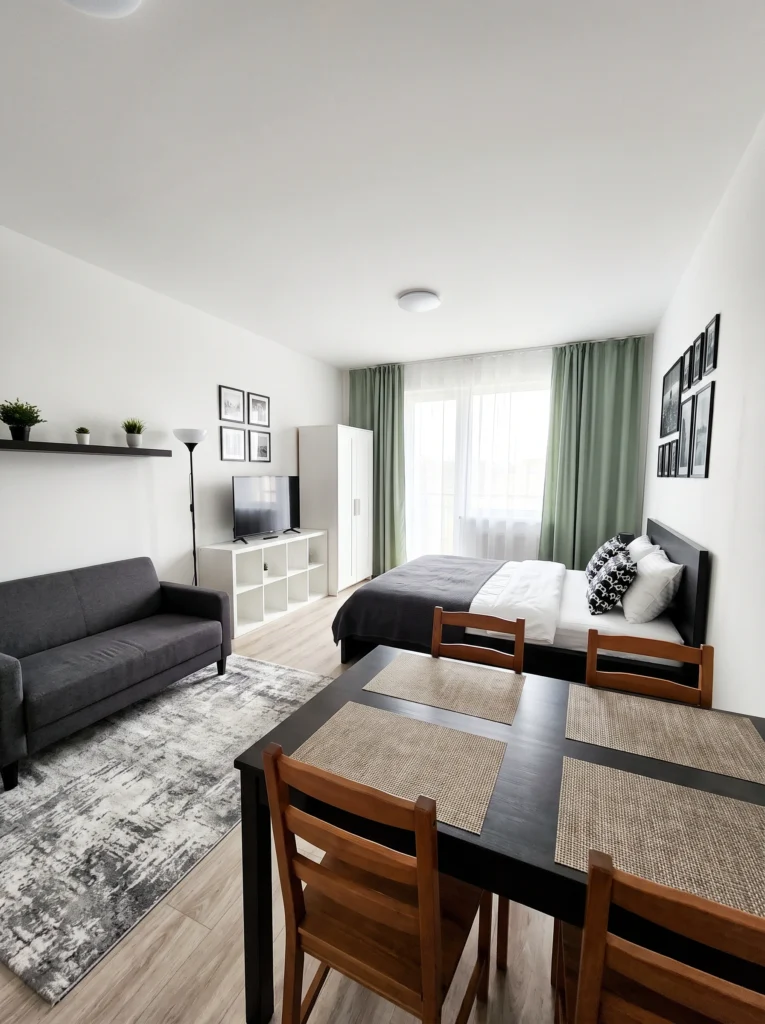
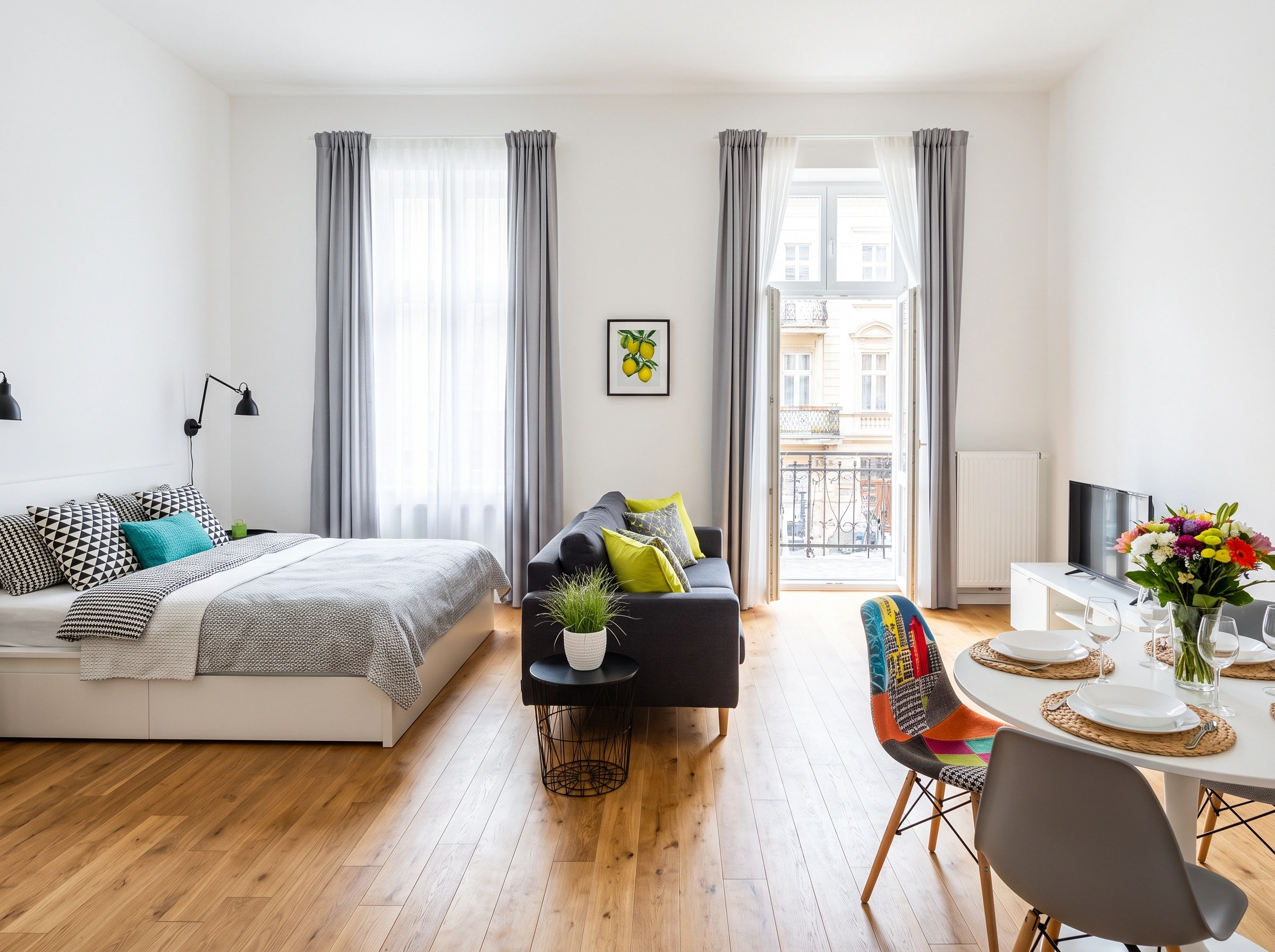
Charcoal grey sits in the sweet spot between too-light and too-dark, making it one of the most versatile sofa colors for studios. It grounds the room without absorbing all the light the way black furniture can. In this space, the charcoal sofa works alongside green curtains, a black dining table, and framed gallery walls for a layered look that feels grown-up and settled. White storage furniture keeps the room from feeling heavy.
My tip: Charcoal pairs with literally every accent color. Start with the sofa and build your palette later — you can’t go wrong.
12. Dark Grey With Warm Neutrals
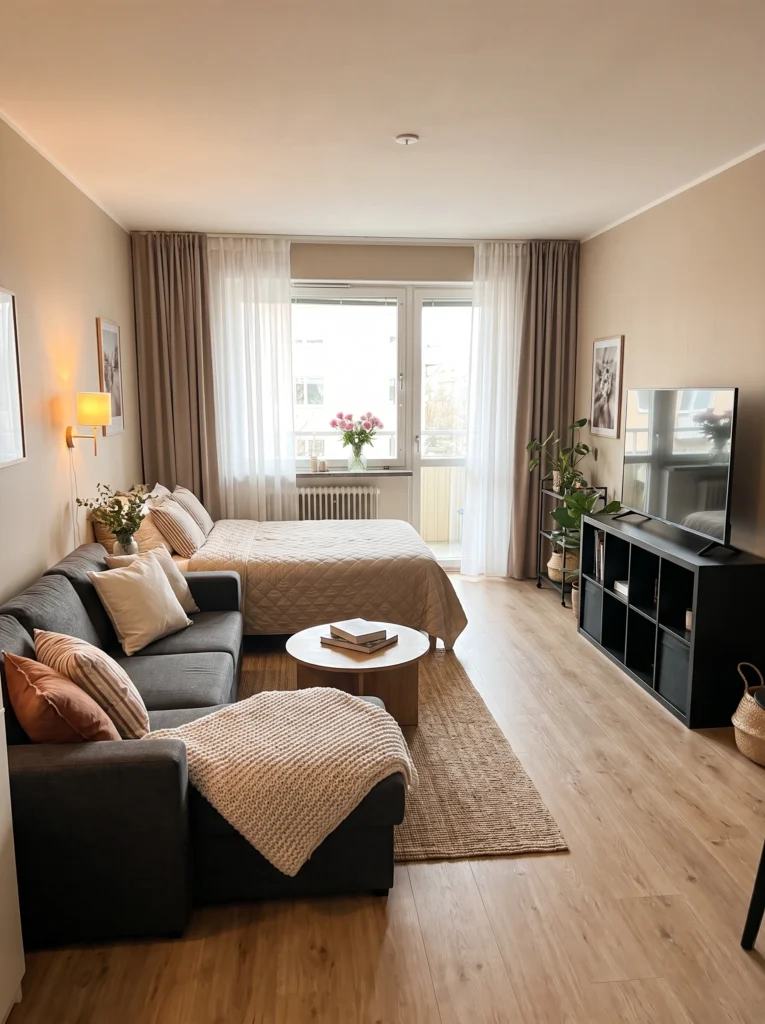
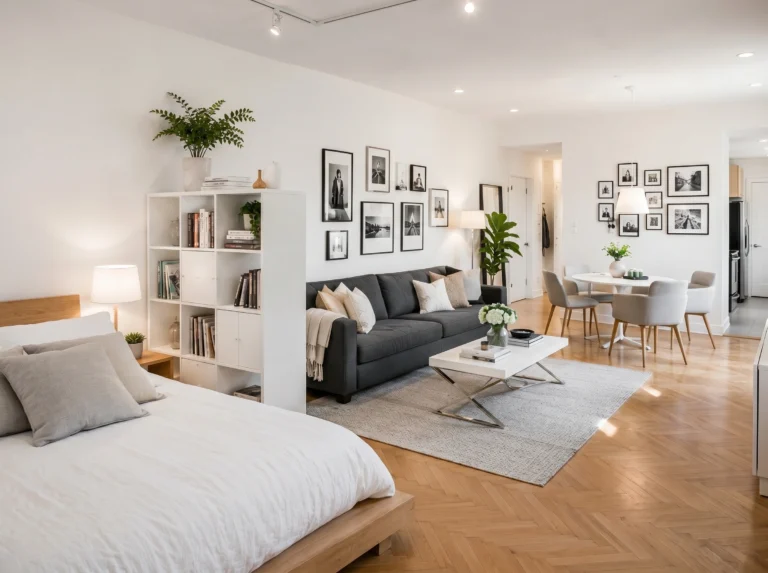
Dark grey gets a bad reputation for making small rooms feel smaller, but it works beautifully when surrounded by warm tones. This studio wraps a dark grey sectional in blush pillows, a chunky knit throw, and a jute rug that adds natural warmth underfoot. The beige walls and soft wall sconces create a glow that keeps the grey from feeling cold. The lesson here is simple: dark sofas need warm lighting and organic textures to sing.
My favorite: A chunky knit throw in cream or oatmeal draped over a dark sofa. It’s the easiest way to add warmth in under ten seconds.
13. Taupe for a Minimalist Studio
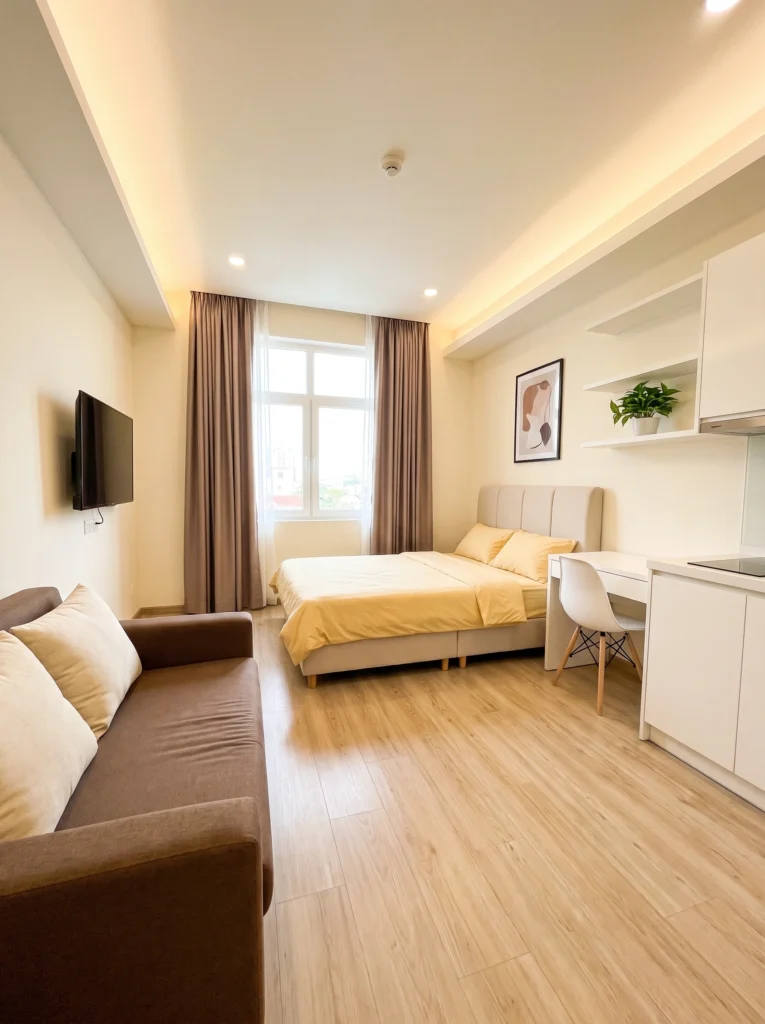
Taupe is the color for people who want something warmer than grey but quieter than brown. In a minimalist studio with clean lines and light wood, a taupe sofa anchors the room without drawing too much attention. This space proves that minimal doesn’t mean boring — the yellow bedding adds a cheerful punch, and the white desk area stays crisp and functional. Taupe works especially well in studios with lots of natural light and simple furniture.
Budget vs. splurge: Save on the desk (a basic IKEA one works fine). Splurge on bedding you actually love — you see it all day in a studio.
Final Thoughts
Choosing a sofa color for your studio isn’t just about what looks good on a Pinterest board — it’s about how the color makes your actual, everyday space feel. Whether you go bold with burnt orange or play it safe with charcoal grey, the right sofa color should make your studio feel like a complete room, not a furniture showroom. Start by looking at your walls, your flooring, and the light you get throughout the day. Then pick the color that makes you want to sit down and stay awhile.
Your studio is one room — make sure your sofa color makes you happy every single time you walk through the door.