How to Arrange Furniture in a Small Living Room (12 Easy Steps That Actually Work)
Arranging furniture in a small living room can feel like a puzzle. The sofa blocks the window, the coffee table is in the way and there’s never quite enough room to walk. The good news is that a few simple layout rules can make even a tiny living room feel open, balanced and comfortable. Here’s how to arrange furniture in a small living room, step by step, using ideas from real homes.
1. Divide Living and Dining With an Open Shelf
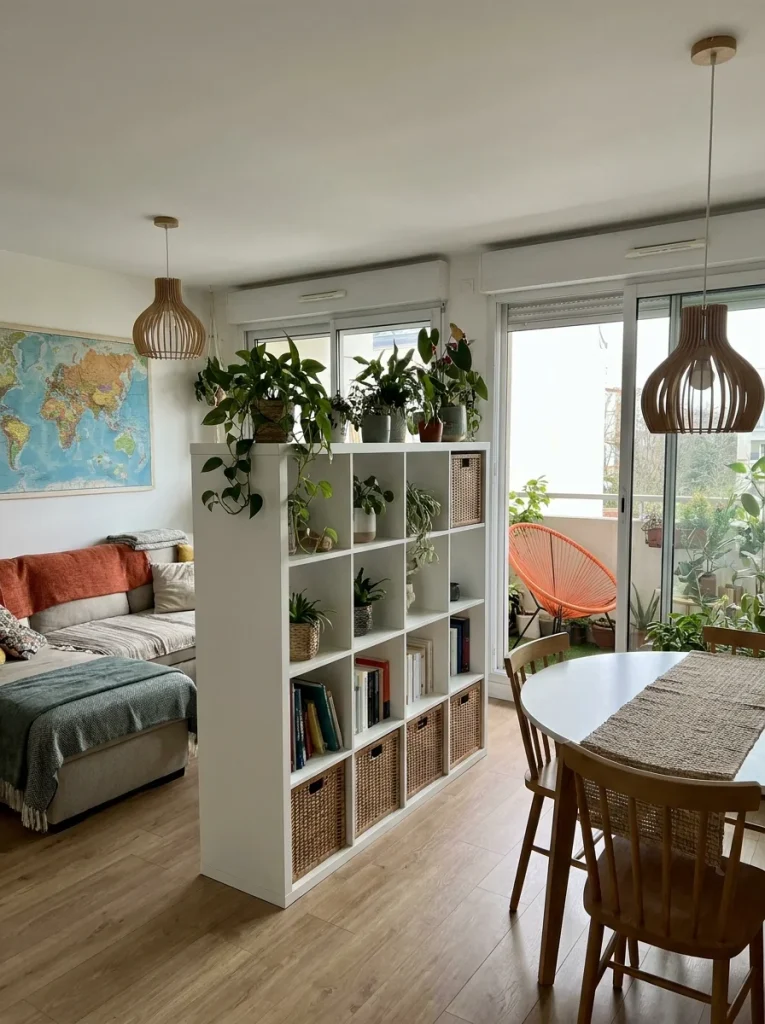
If your small living room also holds a dining table, use an open cube shelf to separate the two areas. It creates a clear boundary without blocking light or making the room feel closed. Fill it with books, baskets and plants, and leave some cubes open so you can see through. This gives each zone its own purpose, character and storage too.
Pro tip: Place the open side toward the living area so storage stays easy to reach.
2. Add a Small Dining Nook by the Window
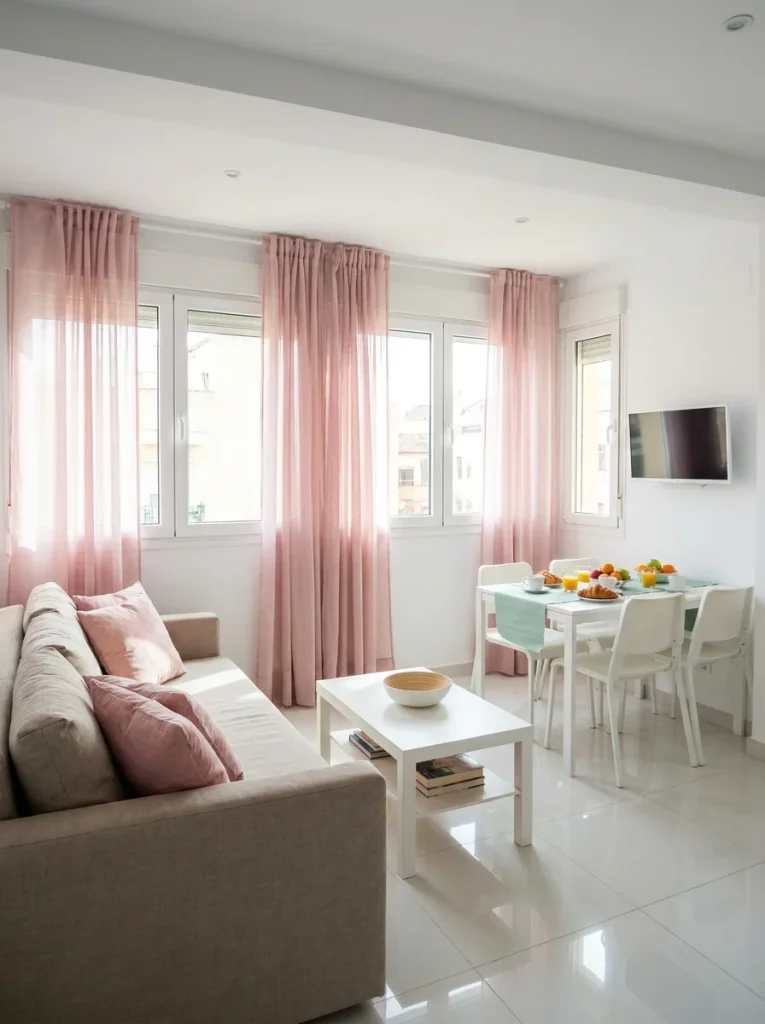
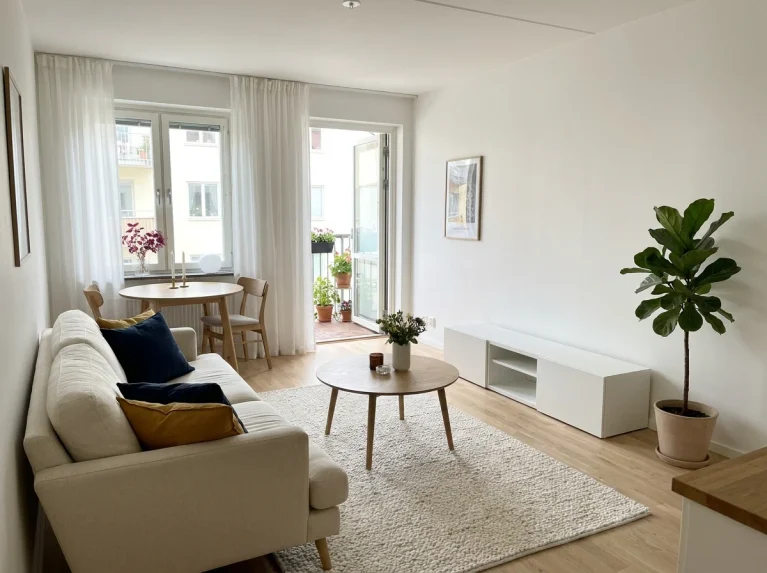
A small dining table placed near the window makes great use of natural light and keeps the center of the room open. Choose a compact table with light chairs that tuck neatly underneath. Placing the sofa along the opposite wall or under the window creates two clear zones in one small room. It’s perfect for morning coffee, meals and working from home.
My tip: Round or drop-leaf tables are easier to walk around and save more space than square tables.
3. Go Vertical With Wall Storage
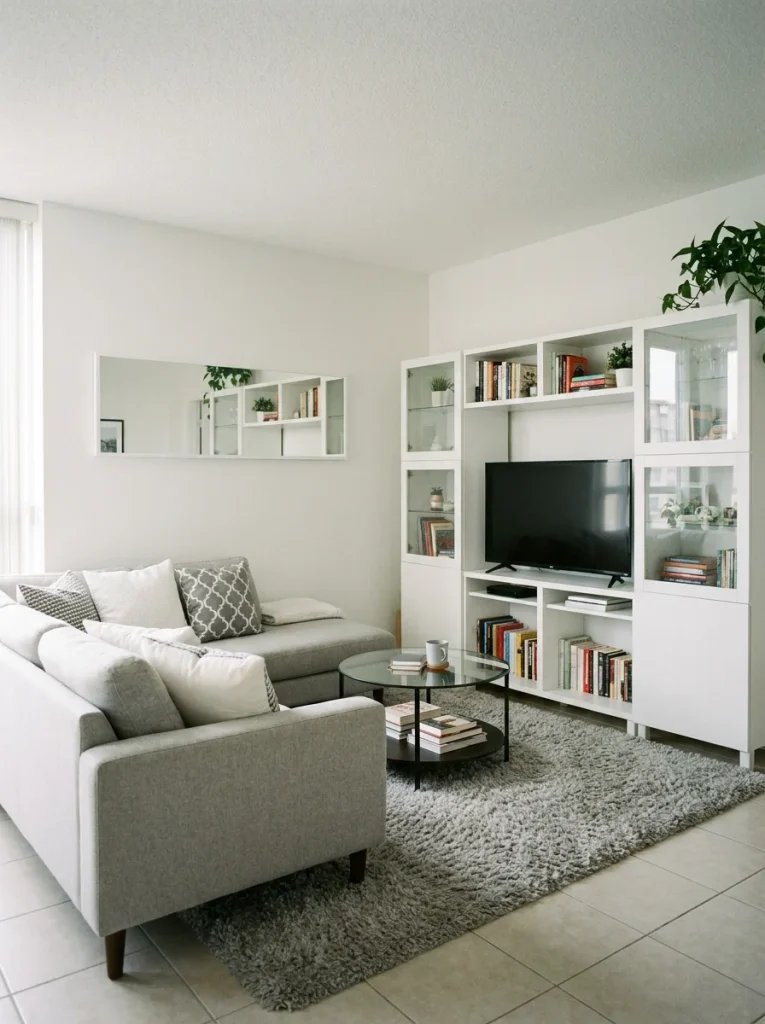
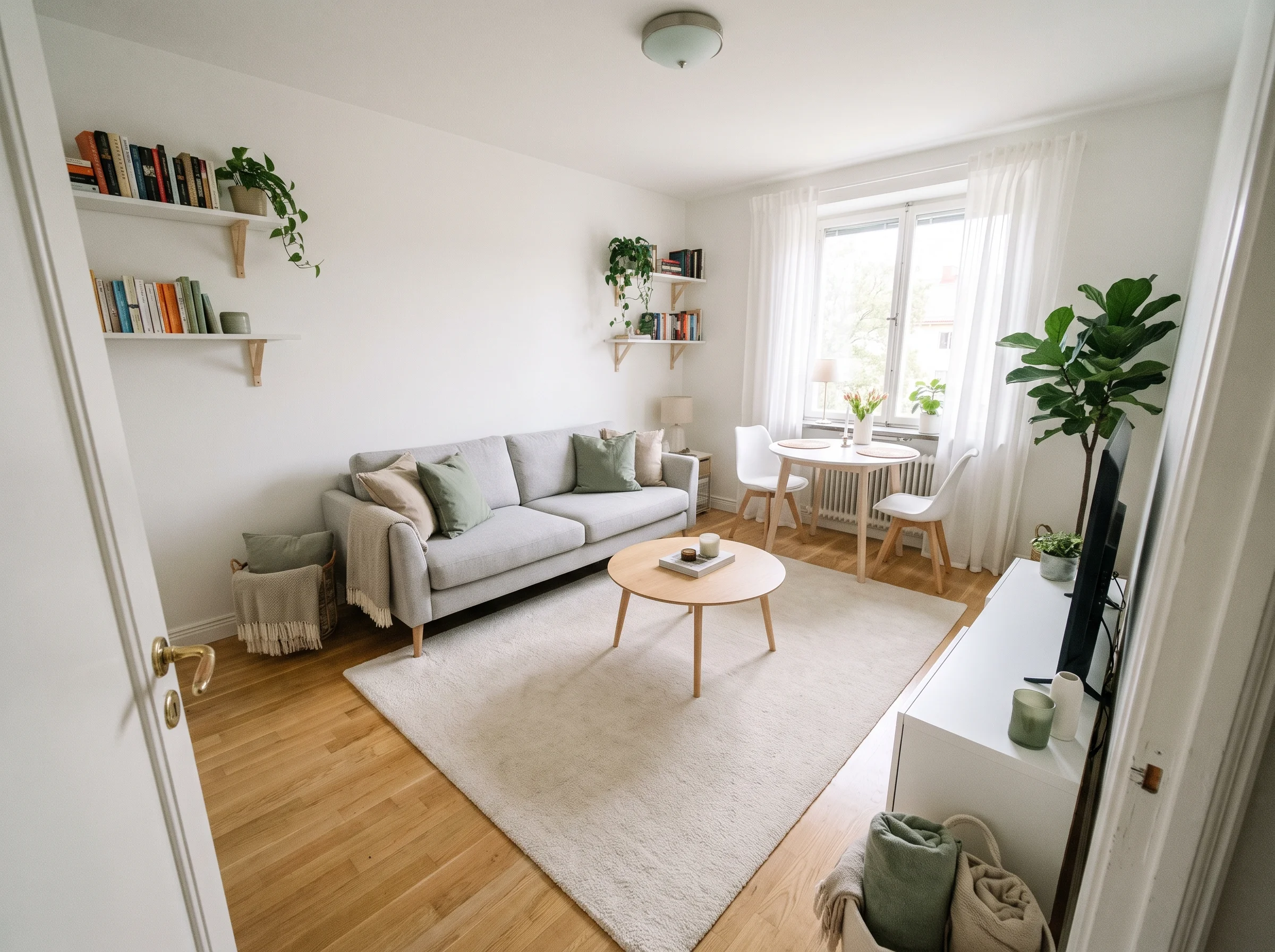
When floor space is limited, use your walls. Floating shelves, a tall bookcase or a wall-mounted TV unit with open shelves keep books, plants and decor off the floor. Vertical storage also draws the eye upward and makes the room feel taller. Keep the shelves lightly styled with a mix of books, baskets and greenery so they look fresh rather than cluttered.
Budget vs. splurge: Simple floating shelves cost little and look just as good as custom built-ins.
4. Start With One Clear Focal Point
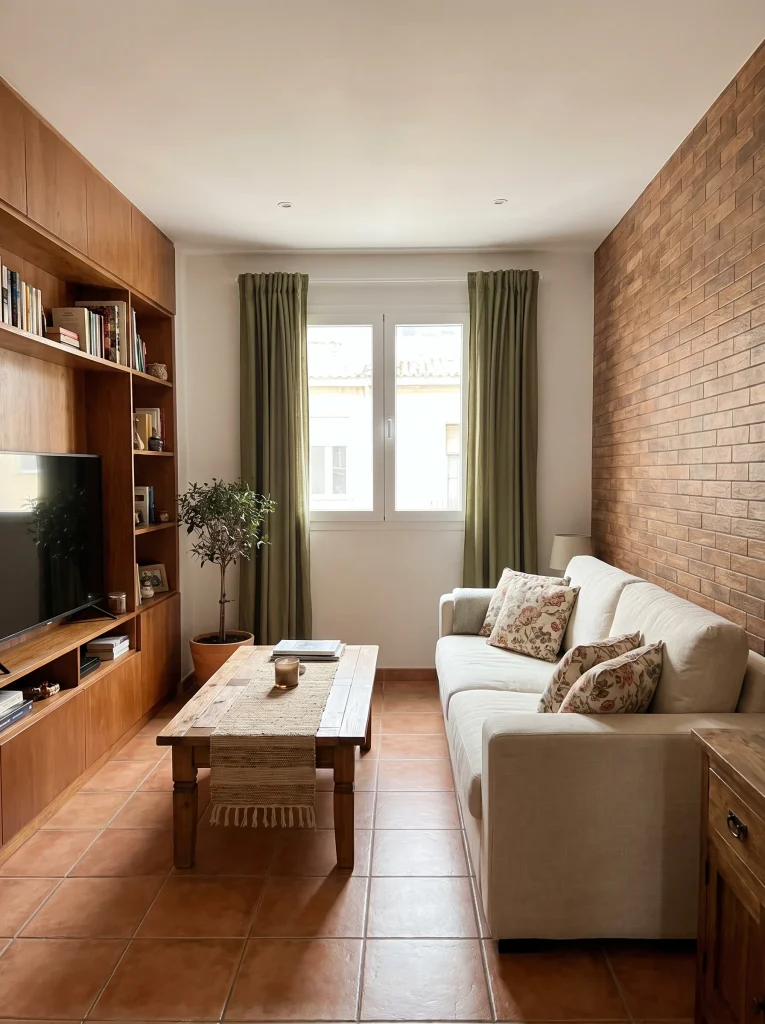
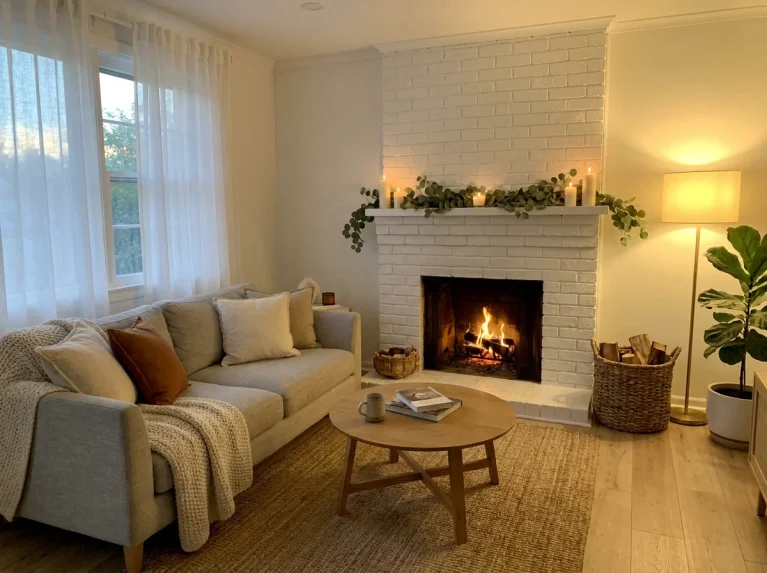
Every small living room needs one main focal point, like a TV, a window with a view, a fireplace or a large piece of art. Decide what yours is before moving anything, then place the sofa so it faces it. Arrange the rest of the furniture around that first decision. With one clear anchor, the room feels calm and organized instead of scattered and busy.
Pro tip: If your TV and window are on different walls, angle the seating so both stay easy to enjoy.
5. Tuck an L-Shaped Sofa Into a Corner

An L-shaped sofa placed in a corner gives you lots of seating without taking over the room. It uses the corner that is often wasted and leaves the center open. Pair it with a small round coffee table and a round rug to soften all the straight lines. Add floating shelves above the TV unit to keep the floor clear and the room feeling light.
Budget vs. splurge: A small modular sectional lets you add or remove seats as your space changes.
6. Face Two Small Sofas for Easy Conversation
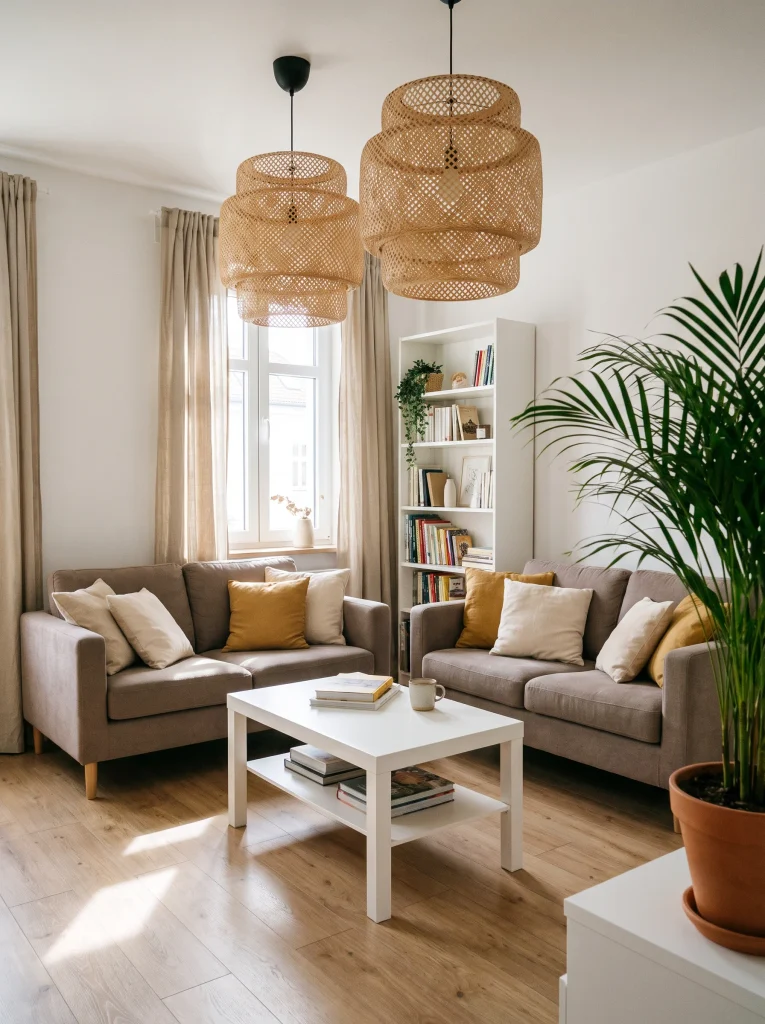
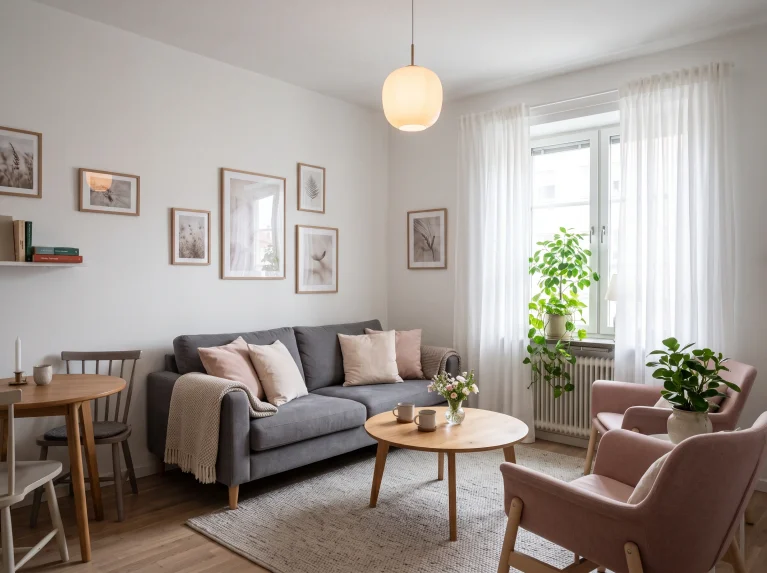
If your living room is more about chatting than watching TV, place two compact sofas or a loveseat and two chairs facing each other. Put a rectangular coffee table in the middle so everyone can reach it. This layout feels warm, balanced and social. It works especially well in square rooms, and it keeps the walkway clear along one side of the room.
I’ve tested this: Two loveseats often fit better than one big sofa and feel far more inviting.
7. Keep Walkways Clear and Wide
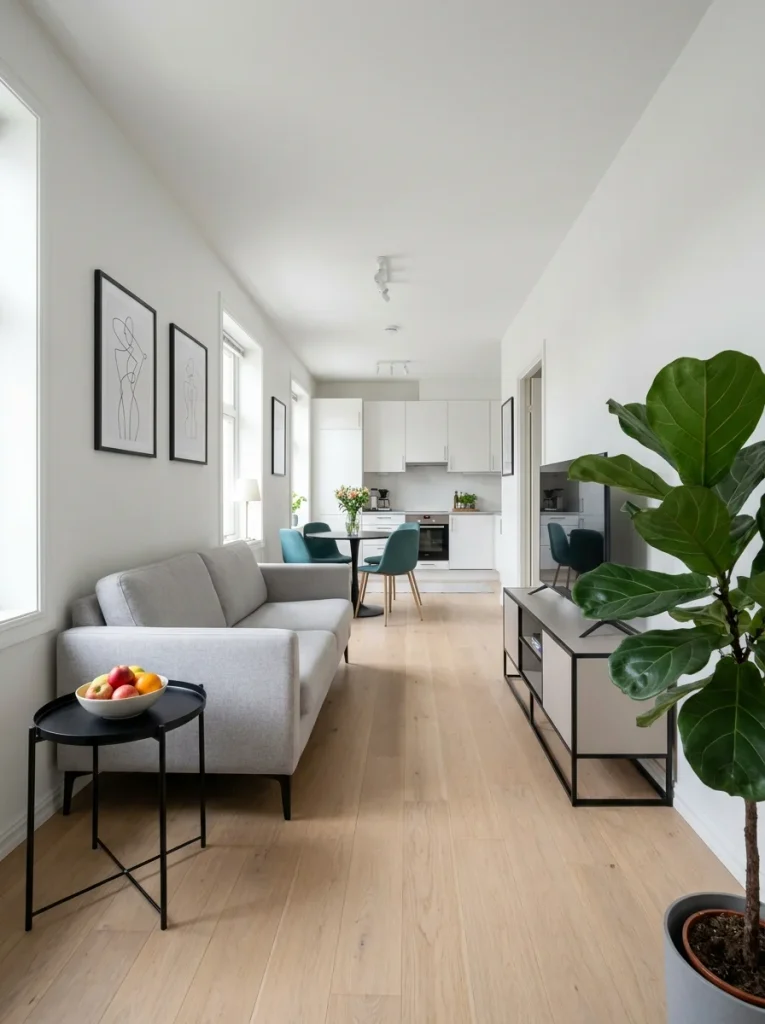
Good flow is what makes a small living room feel comfortable. Leave a clear path of about 75 to 90 cm between the door and the main seating, and around 45 cm between the sofa and the coffee table. Keep furniture on one side of long, narrow rooms so the walkway stays open. When you can move easily, the whole space feels bigger and more relaxed.
Renter-friendly alternative: Swap a bulky coffee table for two small nesting tables you can move aside.
8. Choose a Rug That Anchors the Seating
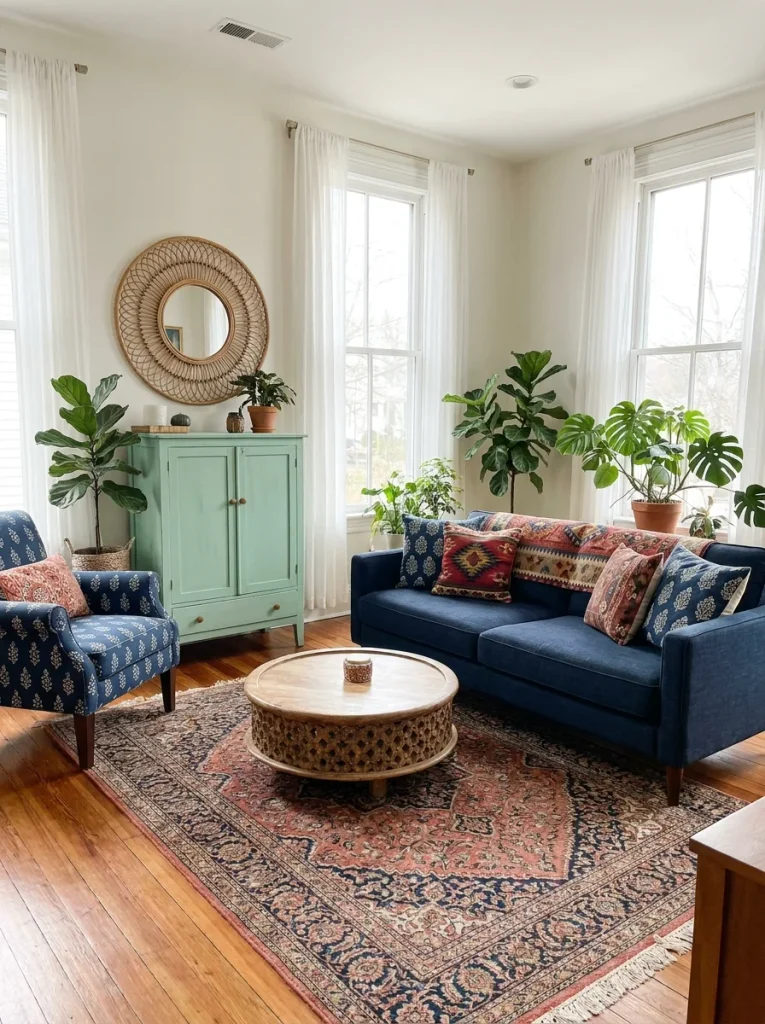
A rug that’s too small makes furniture look like it’s floating and the room look smaller. Choose a rug big enough for at least the front legs of the sofa and chairs to sit on it. This ties the seating area together and defines the living zone. In a small open space, the rug also shows exactly where the living room starts and ends.
My honest take: A bigger rug almost always looks better than a small one, even in a tiny room.
9. Place the TV at the Right Distance
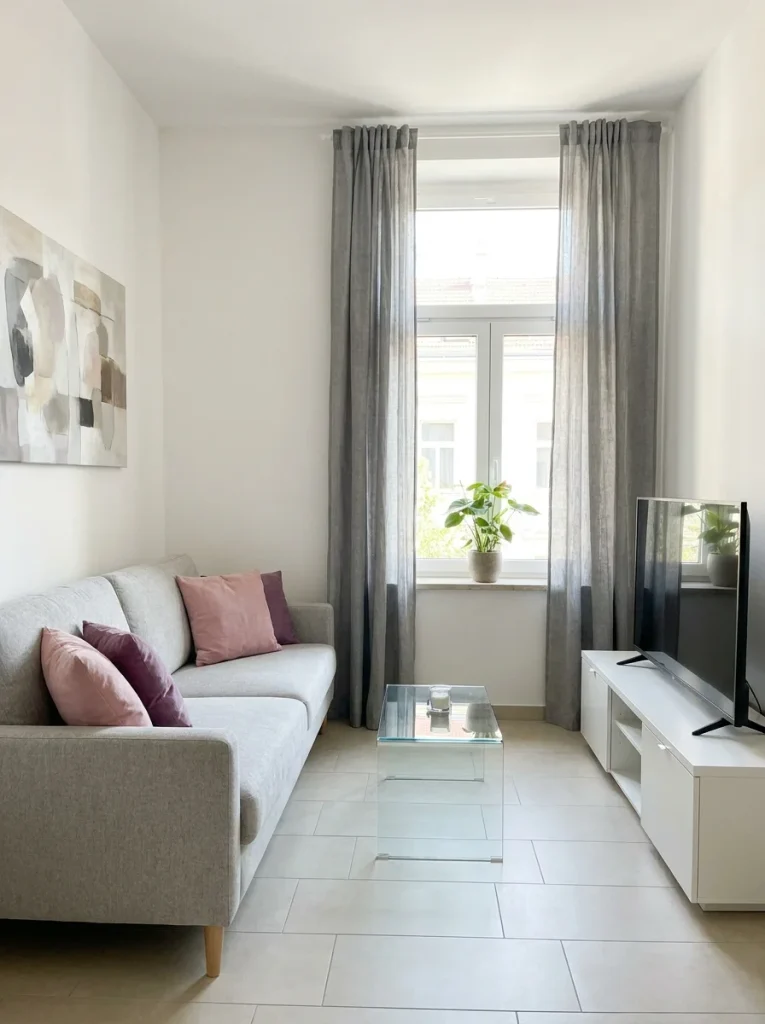
Place the TV directly opposite the sofa so no one has to twist to watch. A good rule is to sit about one and a half to two times the screen width away. Choose a low, slim TV console instead of a bulky unit, or mount the TV on the wall to free up floor space. Keep cables hidden so the setup looks neat.
Don’t waste your money on: Oversized entertainment centers. A slim console or wall mount saves precious space.
10. Pick Furniture That Fits the Scale of the Room

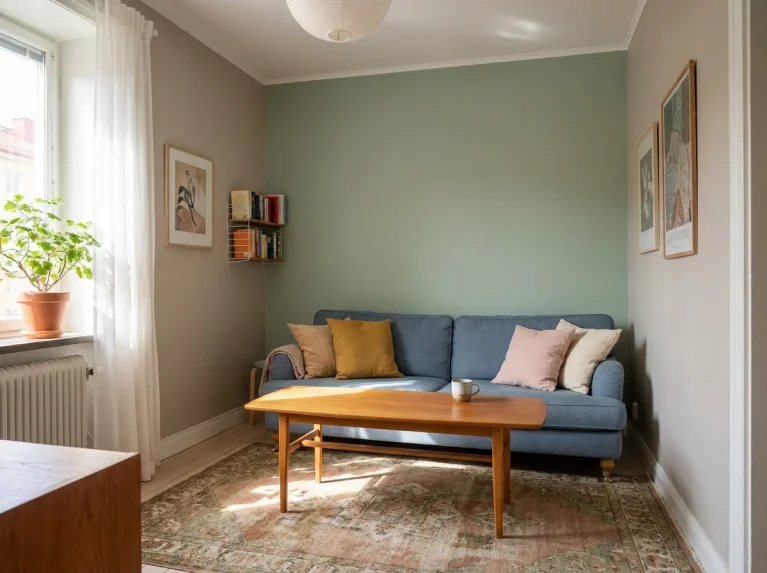
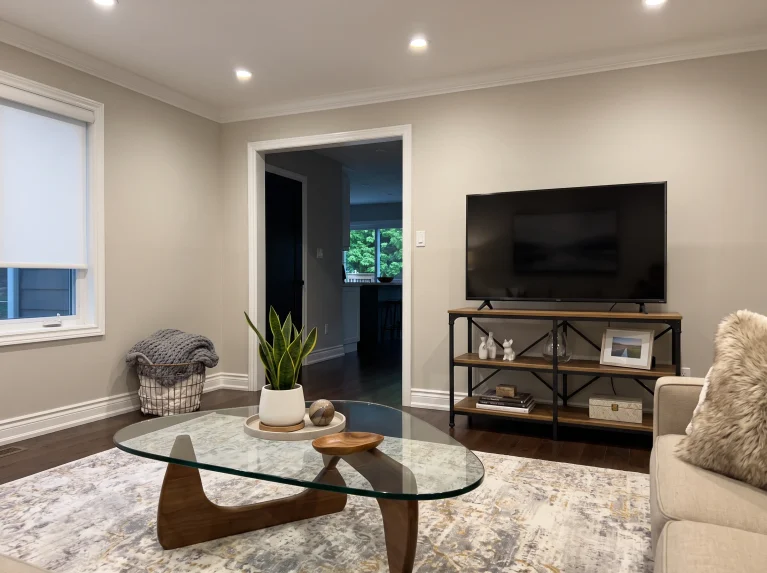
In a small living room, the size of each piece matters as much as where you put it. Choose a sofa with slim arms and raised legs, a light coffee table and pieces in pale colors. Furniture with visible legs shows more floor, which makes the room feel bigger. Avoid filling every corner, and leave a little empty space so the room can breathe.
I’ve tested this: Glass, acrylic or slim wooden tables keep a small room feeling open and light.
11. Measure the Room Before You Move Anything
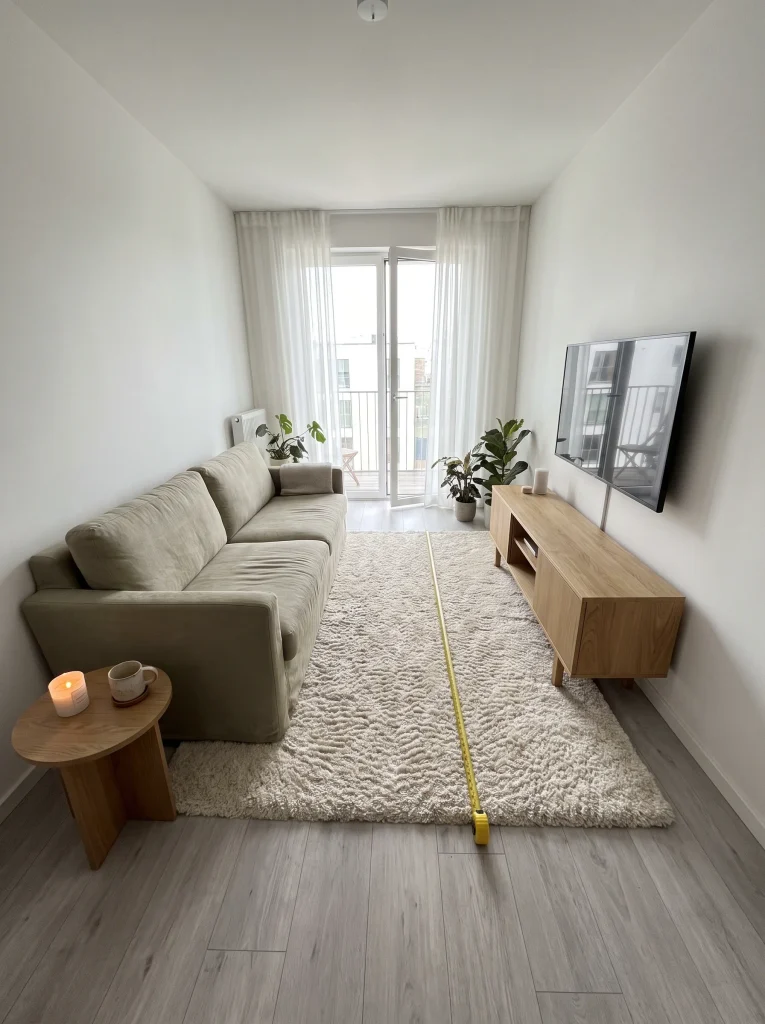
Measure the length and width of the room, plus the positions of doors, windows, radiators and outlets. Sketch a simple plan on paper or in a free app, then test your furniture sizes on it first. This saves you from heavy lifting and costly mistakes. In narrow rooms especially, a few inches can decide whether a sofa fits comfortably or blocks the path to the balcony.
My tip: Use painter’s tape on the floor to outline big pieces before you buy or move them.
12. Pull the Sofa Slightly Away From the Wall

It sounds strange, but pushing every piece against the walls can make a small room feel emptier and less cozy. Pull the sofa a few inches forward to create breathing room behind it and a tighter, friendlier seating area. This small gap also lets curtains hang freely and light flow around the furniture. The room instantly feels more intentional, relaxed and thoughtfully styled.
My favorite: Even 10 to 15 cm of space behind the sofa makes the layout look more designed.
Final Thoughts
Arranging furniture in a small living room is all about balance and flow. Start with a focal point, measure everything, choose furniture that fits the scale of the room and keep walkways clear. Use rugs, open shelves and smart zones to give every area a purpose, and use your walls for storage. With these simple steps, your small living room will feel open, cozy and perfectly put together.