13 Long and Narrow Living Room Layout Ideas That Actually Work
A long and narrow living room can be one of the hardest spaces to arrange. Furniture ends up lined against the walls, the room feels like a hallway and one end often goes unused. But with the right layout, that awkward shape becomes an advantage, giving you space for several zones, a clear path and plenty of light. Here are 13 long and narrow living room layout ideas that actually work, all inspired by real homes.
1. Split the Room Into Two Zones
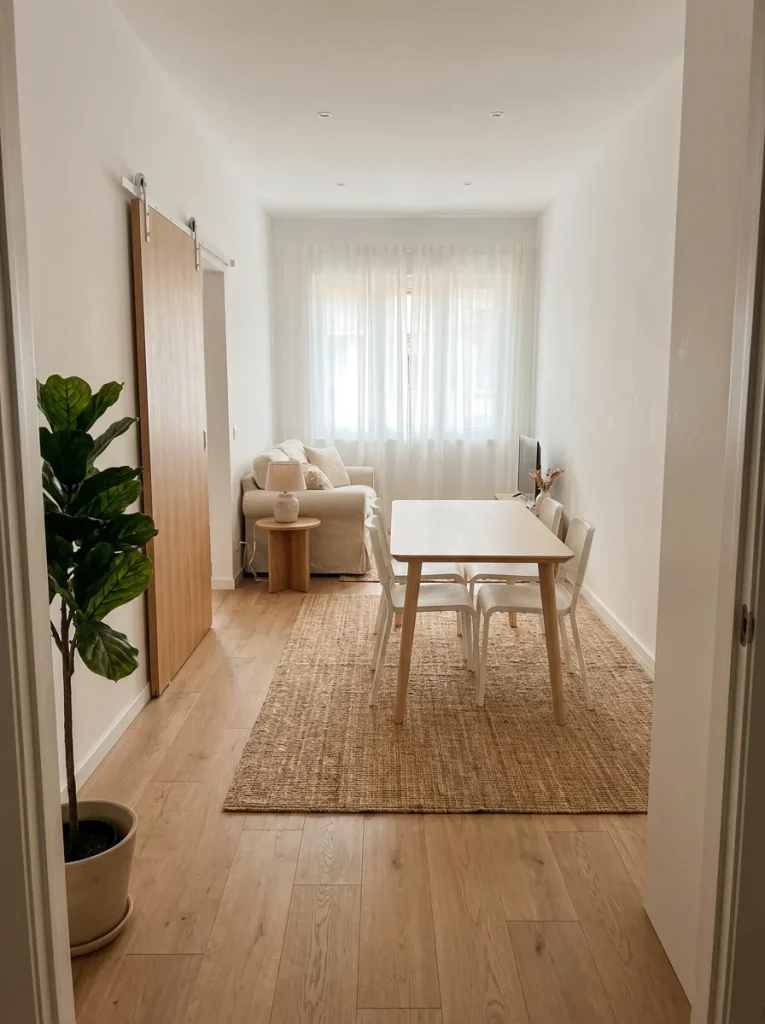
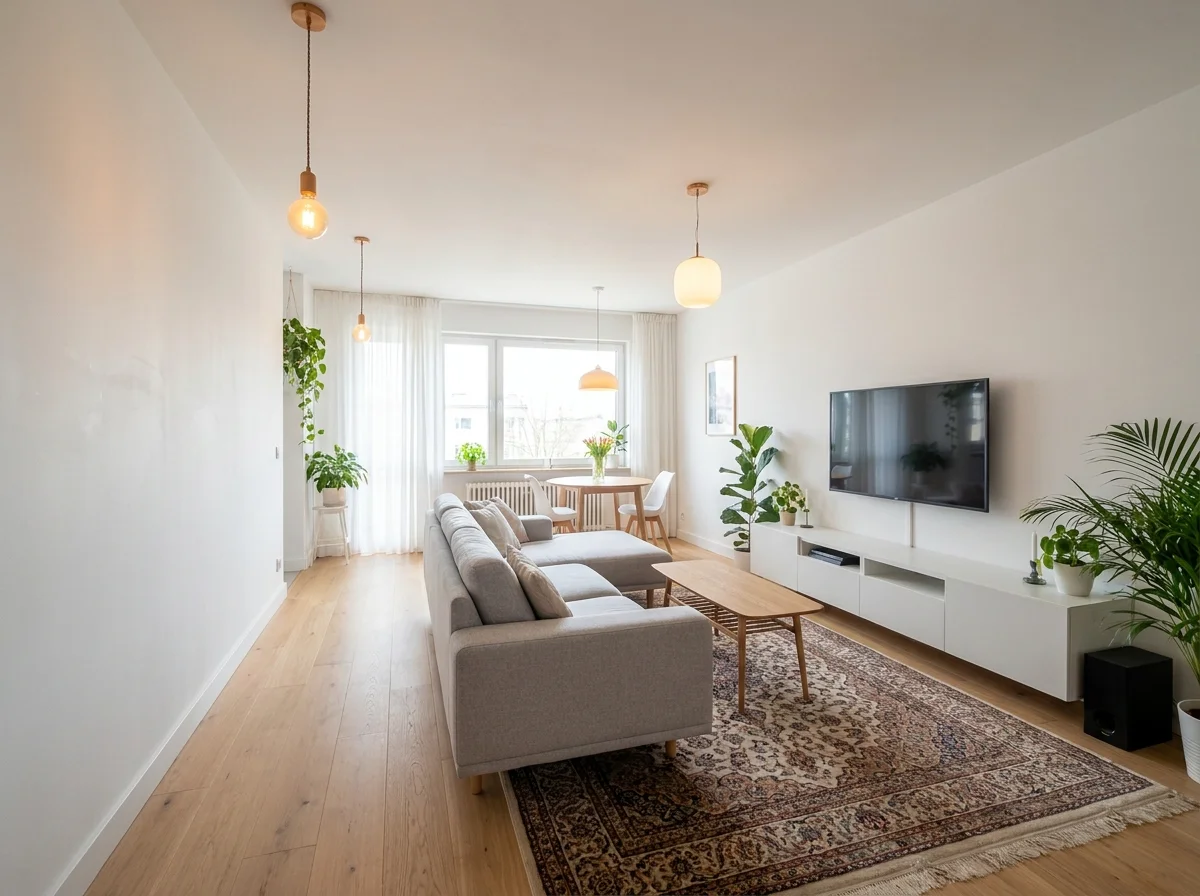
The best way to handle a long room is to stop treating it as one space. Divide it into two clear zones, such as a living area and a dining area. Place the sofa at one end and the dining table in the middle or at the other end. Each zone gets its own purpose, and the room instantly feels balanced instead of stretched out and empty.
Pro tip: Use a different light fixture above each zone to make the division feel natural.
2. Put the Dining Table by the Far Window
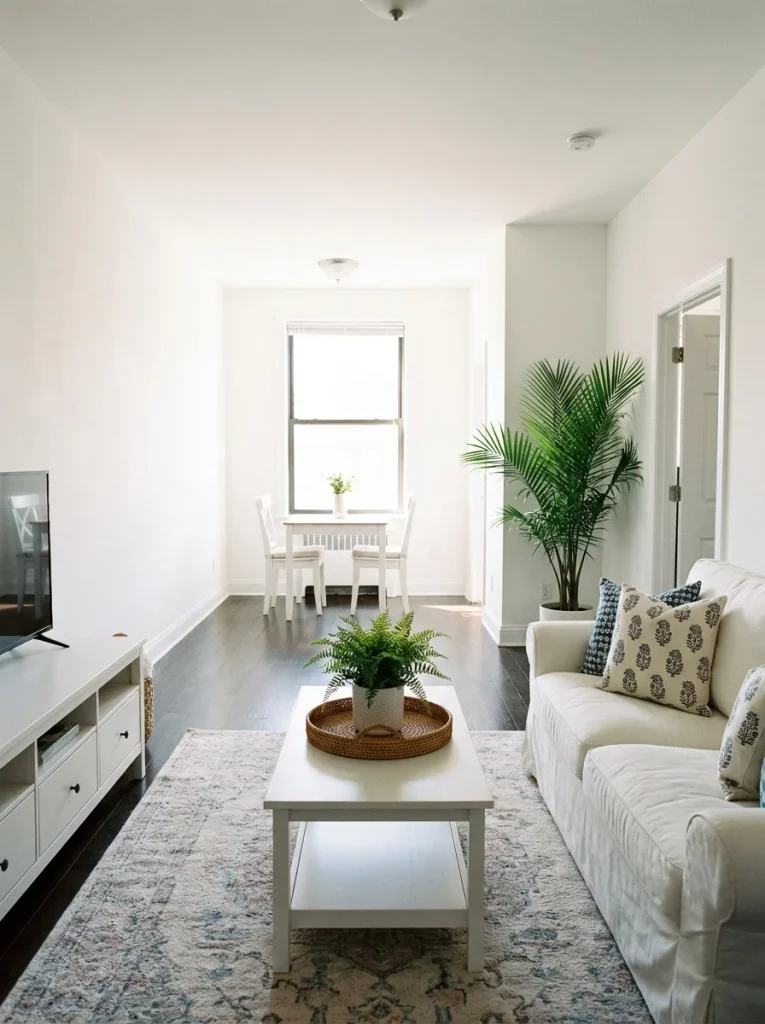
Placing a dining table at the far end of a long room gives that often-forgotten space a real job. It also draws the eye to the window, which makes the room feel more open. Keep the living area close to the entry with a sofa and coffee table, and let the dining nook enjoy the best daylight. It’s a simple layout that feels fresh and practical.
My tip: A small round or square table works better than a long one at the end of a narrow room.
3. Float the Sofa to Create a Walkway Behind It
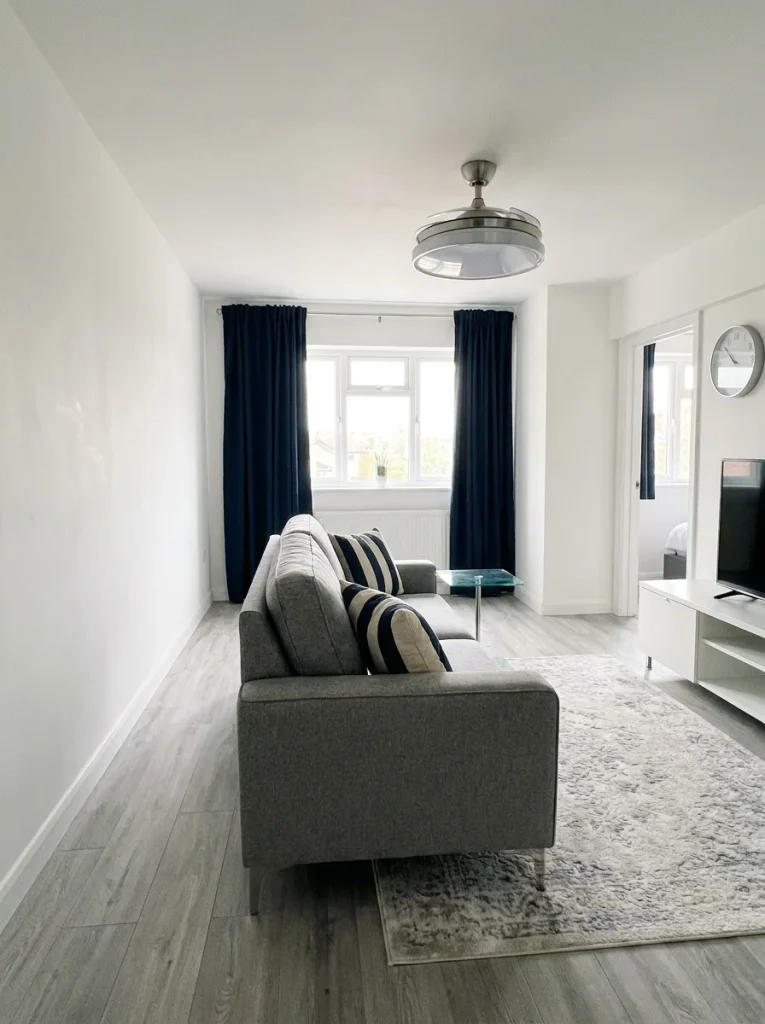
Instead of pushing the sofa against a long wall, place it across the room with its back to the dining area. This creates a natural divider and a walkway behind the sofa. The seating area becomes cozier because it faces the TV or window directly. Add a slim console or a rug to anchor the zone and make the layout look intentional.
My favorite: A floating sofa. It’s the quickest way to turn a corridor-like room into two real rooms.
4. Place the Sofa and TV on Opposite Long Walls
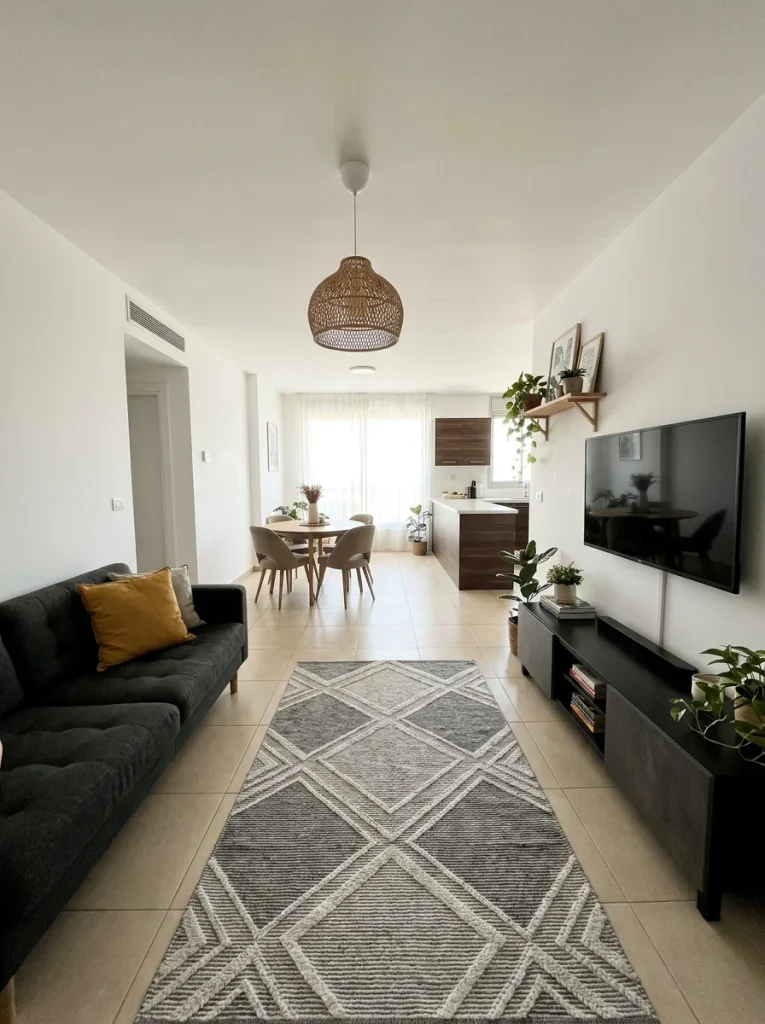
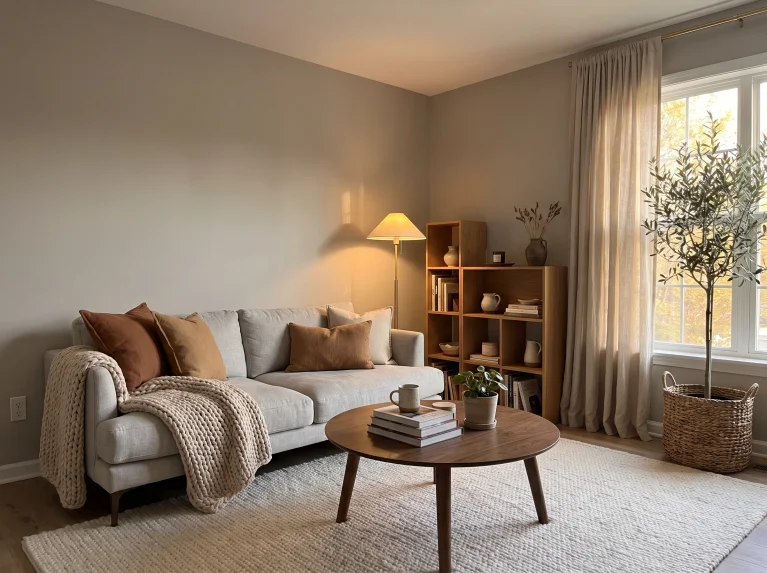
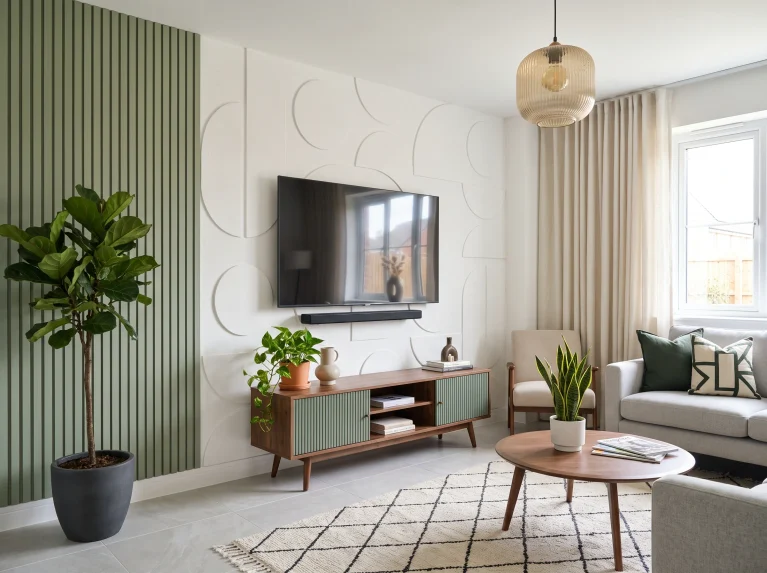
In many narrow rooms, the classic layout still works best: sofa on one long wall and TV on the opposite one. Keep the media unit low and slim to save depth, and choose a sofa that isn’t too deep. This leaves a clear path through the middle and frees up the far end for dining or a reading corner. Use a geometric rug to define the seating zone.
Budget vs. splurge: A slim, wall-hung media unit costs less than built-ins and saves just as much floor space.
5. Keep Furniture on One Side for a Clear Path
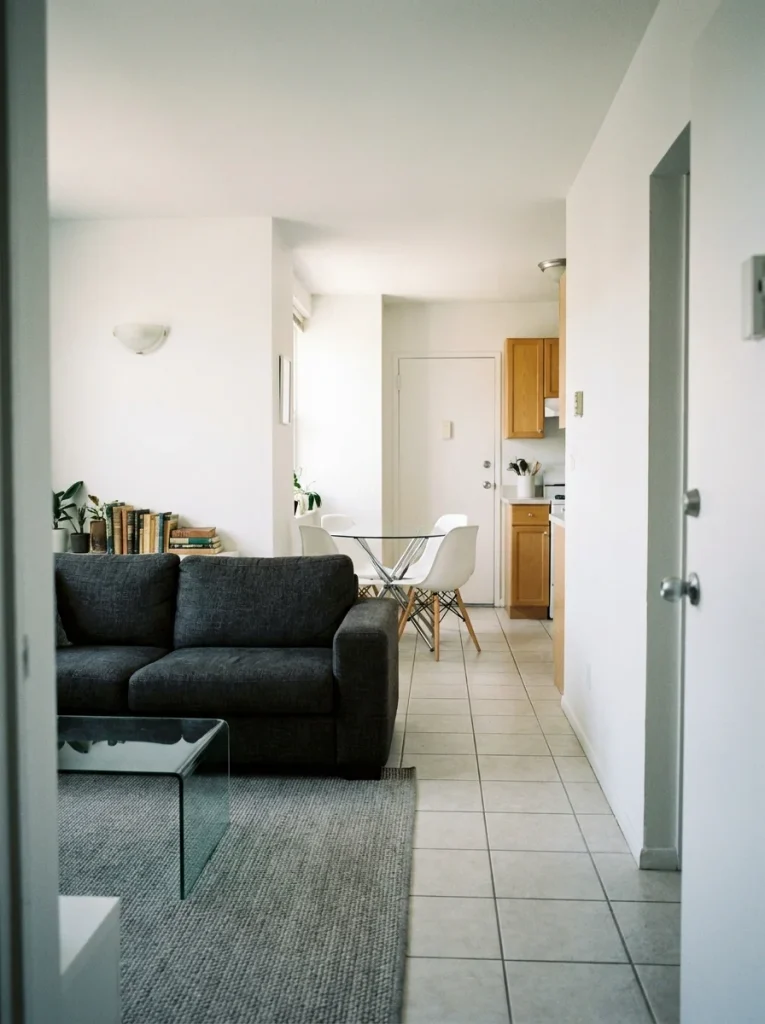
When a room is really narrow, put all the main furniture along one long wall and keep the other side completely clear. This creates an easy path from the door to the kitchen or balcony without bumping into anything. Use a glass or slim coffee table to keep things light. The room feels more open, and daily movement becomes much easier.
I’ve tested this: Clear floor on one side makes even a very narrow room feel twice as wide.
6. Use a Long, Narrow Coffee Table
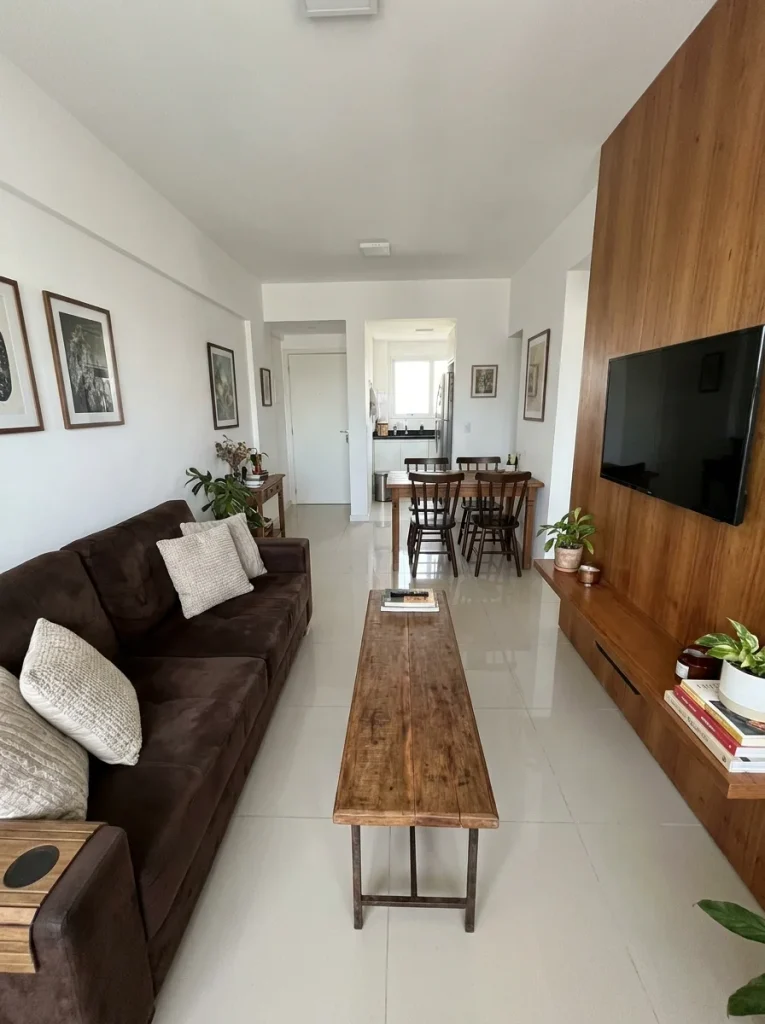
A round or square coffee table can block the flow in a narrow room. A long, slim rectangular table follows the shape of the space and keeps the walkway open. It also gives everyone on the sofa a place to set a drink. Choose a rustic wood or light metal design, and leave about 45 cm between the table and the sofa for comfort.
Renter-friendly alternative: A narrow bench works as a coffee table and can move against the wall for guests.
7. Wall-Mount the TV to Save Depth
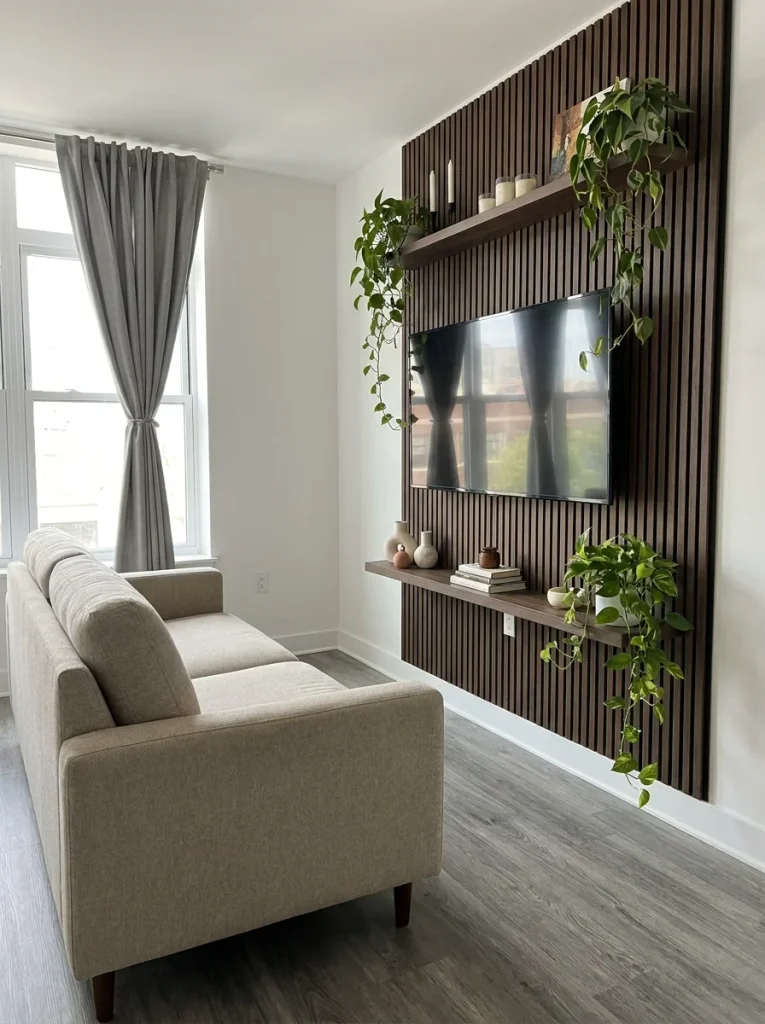
In a narrow living room, every centimeter of depth counts. Mounting the TV on the wall instead of setting it on a deep stand frees up space between the sofa and the screen. Add a slim floating shelf below for a router or decor. A wood or dark panel behind the TV makes it look like a built-in feature and adds warmth to the room.
My honest take: Wall-mounting is the single biggest space saver in a narrow room with a TV.
8. Run a Long, Low Storage Unit Along One Wall
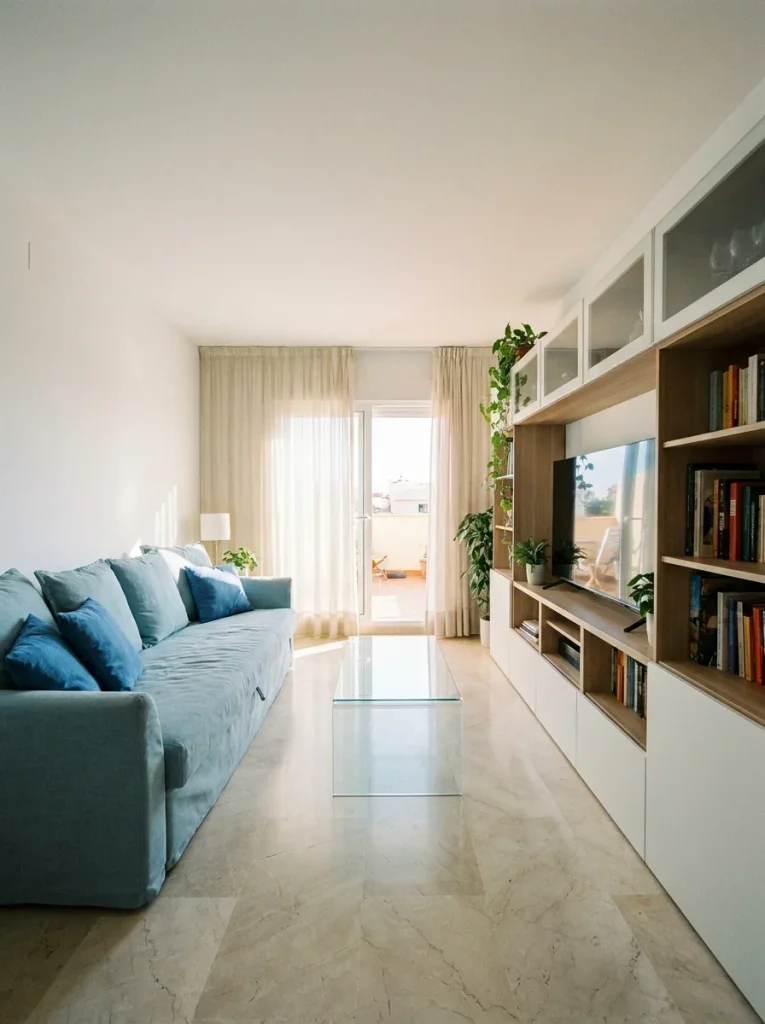
A long, low storage unit along one wall emphasizes the room’s length in a good way and holds everything from books to baskets. Choose one with open and closed sections so you can display a few pretty things and hide the rest. Keep the top lightly styled with plants and candles. Paired with a long sofa opposite, it creates a balanced, organized living room.
Don’t waste your money on: Tall, deep wall units. They make narrow rooms feel even tighter.
9. Use Round Tables to Soften the Corners
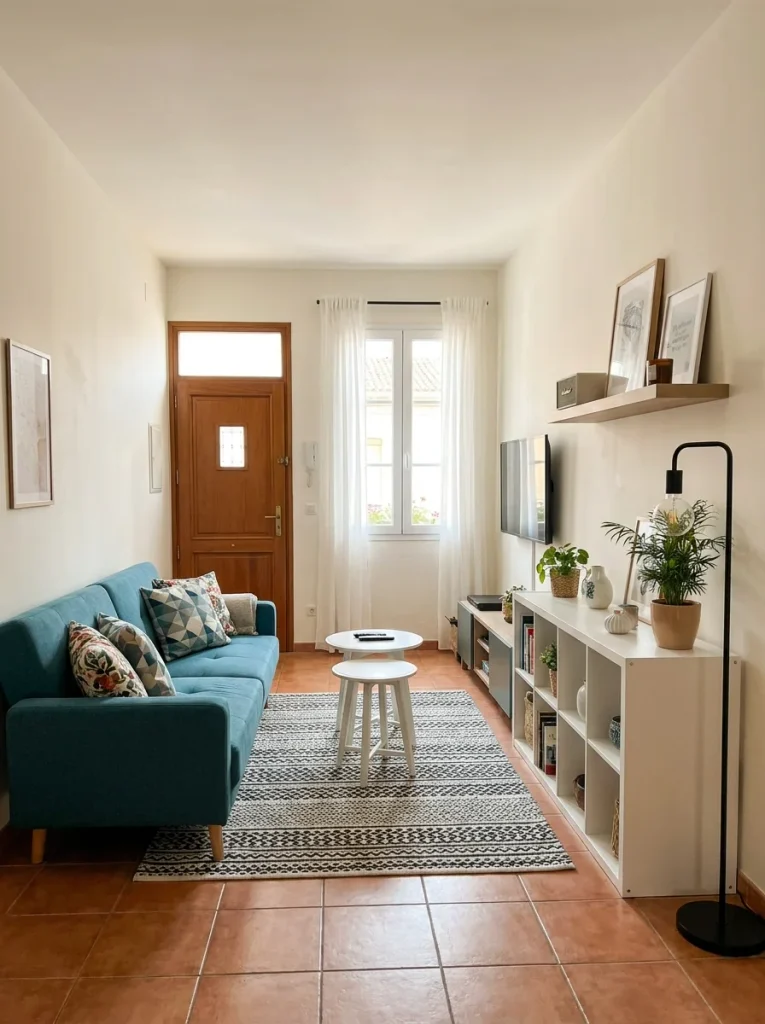
Long, narrow rooms are full of straight lines. Round coffee tables and side tables soften them and are easier to walk around. Two small round tables placed side by side work better than one large rectangle, and you can separate them when you need more space. Add a round rug or a curved lamp to repeat the soft shape around the room.
Pro tip: Nesting round tables give you extra surface for guests without crowding the room every day.
10. Create Two Seating Areas
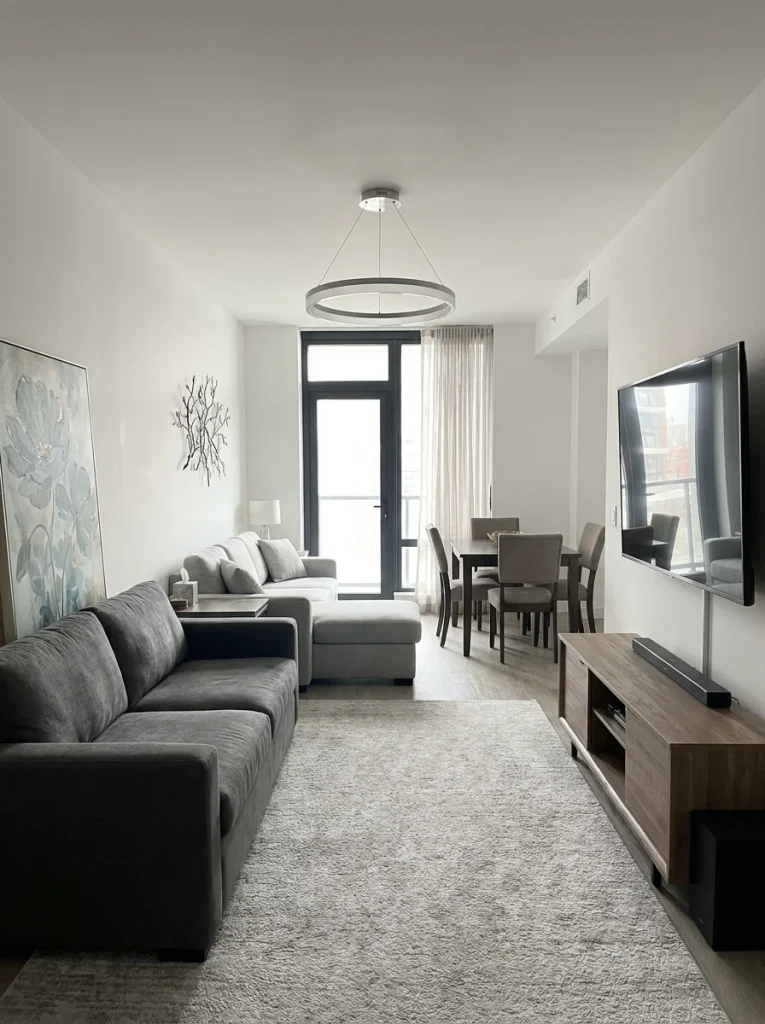
If your living room is long enough, create two seating areas instead of one. Place the main sofa facing the TV and add a chaise, loveseat or two chairs in a second zone for reading or chatting. Keep the dining table near the window. This layout works well for families and anyone who loves hosting, and it uses every part of the room.
My tip: Keep both seating zones in the same color family so the room still feels connected.
11. Define Each Zone With Its Own Rug
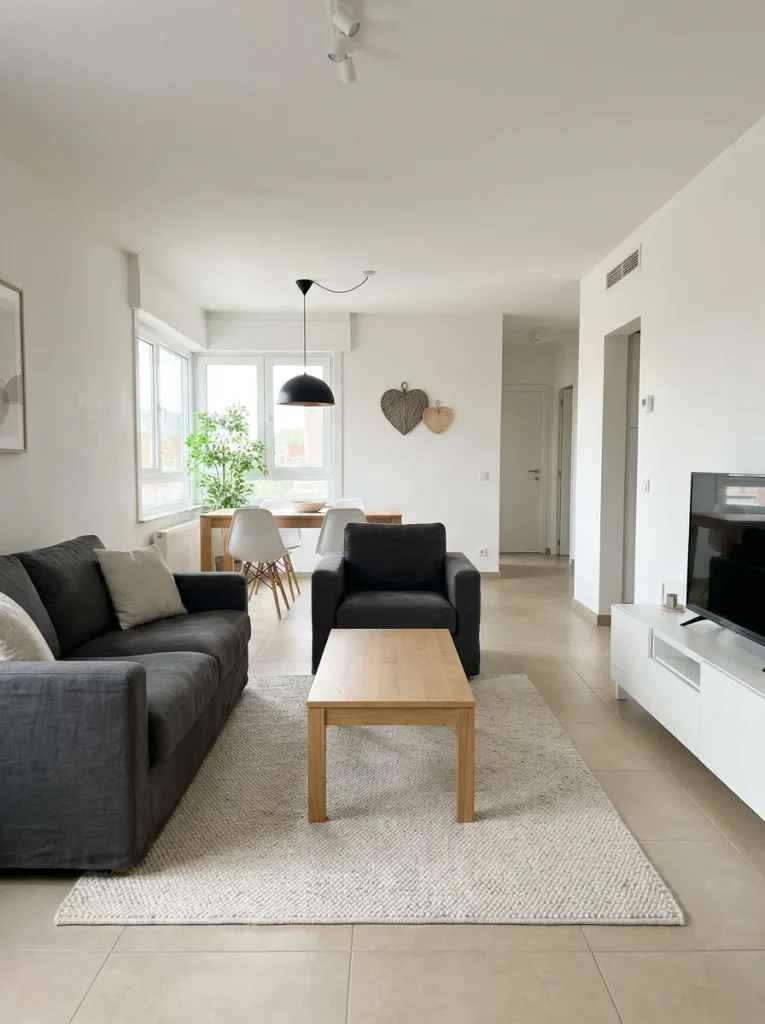
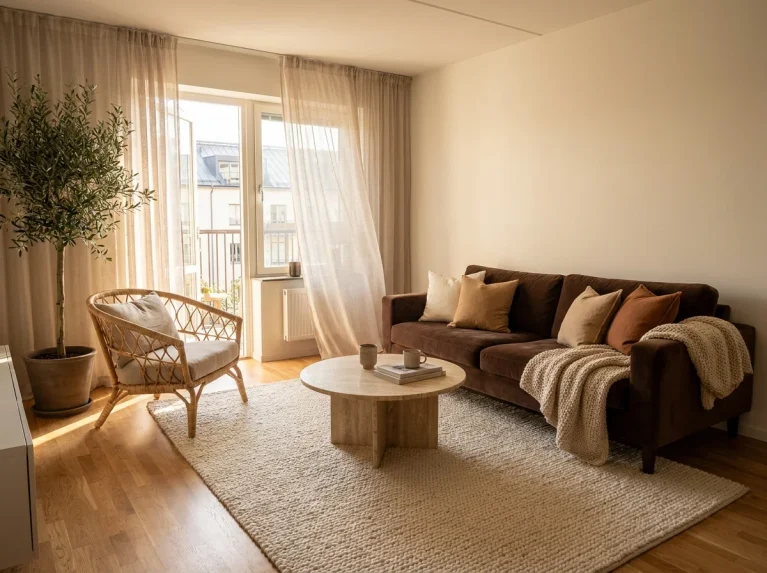
Rugs are the easiest way to show where one zone ends and another begins. Use one rug under the sofa and coffee table, and keep the dining zone on bare floor or a separate rug. Make sure the rugs complement each other in color or pattern. This simple trick breaks up the long floor and makes each part of the room feel cozy.
Budget vs. splurge: Flat-woven rugs are affordable, easy to clean and perfect under dining chairs.
12. Paint the Short End Wall a Bold Color
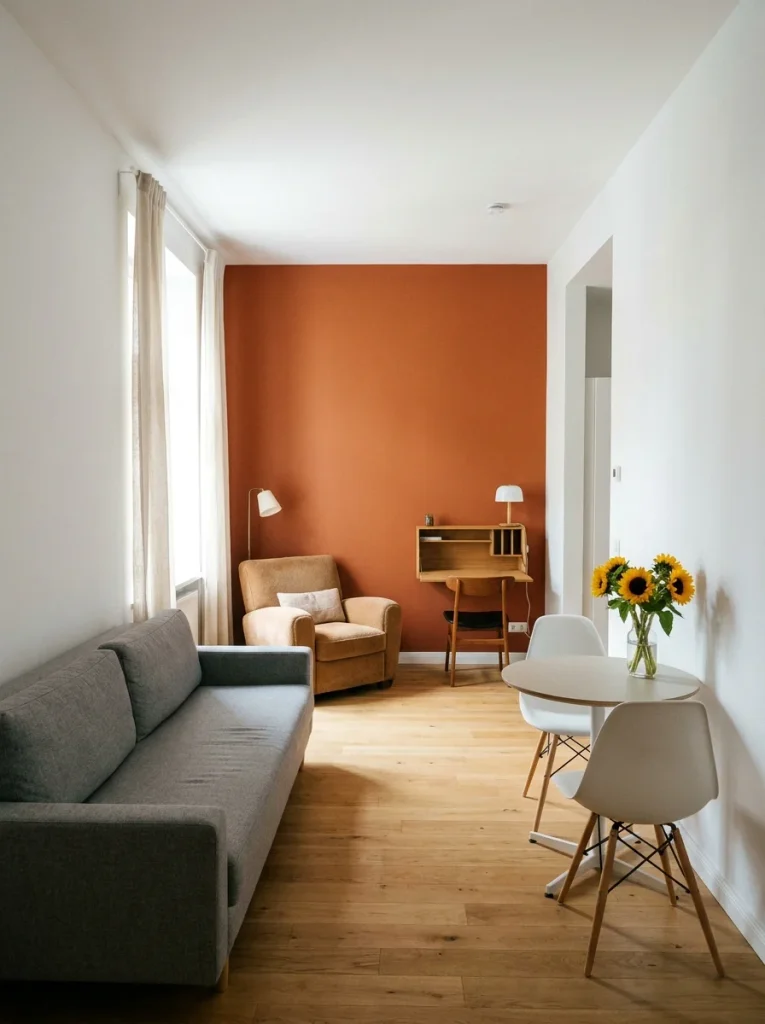
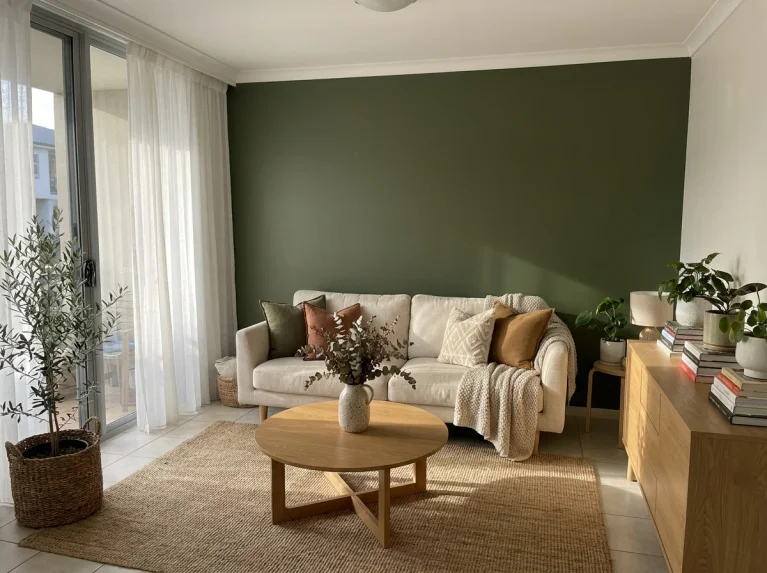
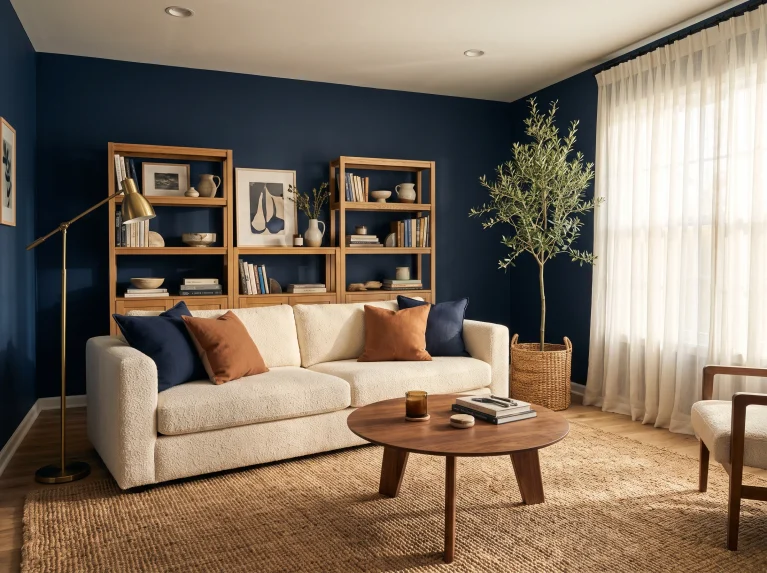
Painting the short wall at the far end of the room a warm or deep color makes it look closer. That simple trick visually shortens a long room and makes it feel more square and cozy. Burnt orange, terracotta, olive or navy all work beautifully. Place a reading chair or a small desk against it to create a cheerful nook that draws you in.
I’ve tested this: A bold end wall changes the proportions of a long room more than any piece of furniture.
13. Hang Mirrors and Art on the Long Wall

A wide mirror on the long wall above the sofa reflects light and makes a narrow room feel wider. Pair it with a few pieces of art spaced along the wall to lead the eye across the room, not just down its length. Keep frames light and simple. With soft lighting and plants, the long wall becomes a feature instead of a blank, stretched surface.
My favorite: A long horizontal mirror above the sofa. It adds width and bounces daylight across the room.
Final Thoughts
A long and narrow living room works best when you stop fighting its shape. Split it into zones, keep a clear walkway, choose slim furniture and use rugs, lighting and color to define each area. Float the sofa, wall-mount the TV and give the far end a real purpose like dining or reading. With these layout ideas, your long living room will feel balanced, comfortable and full of life.