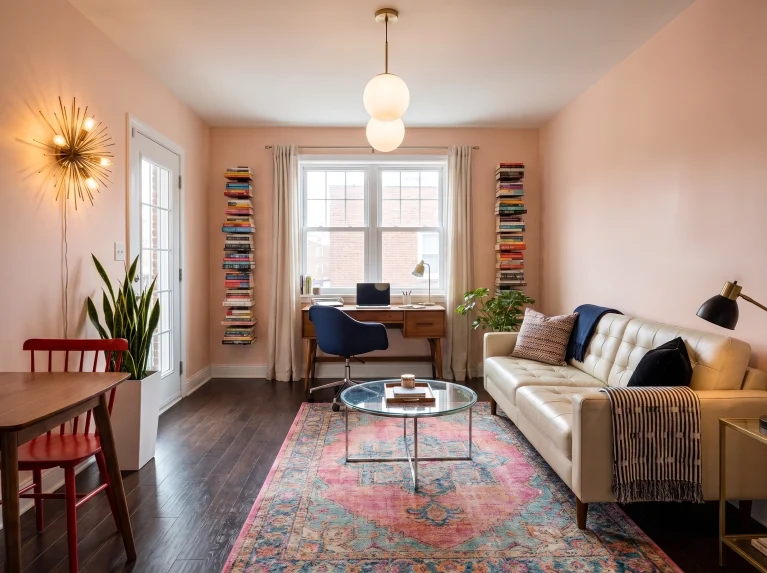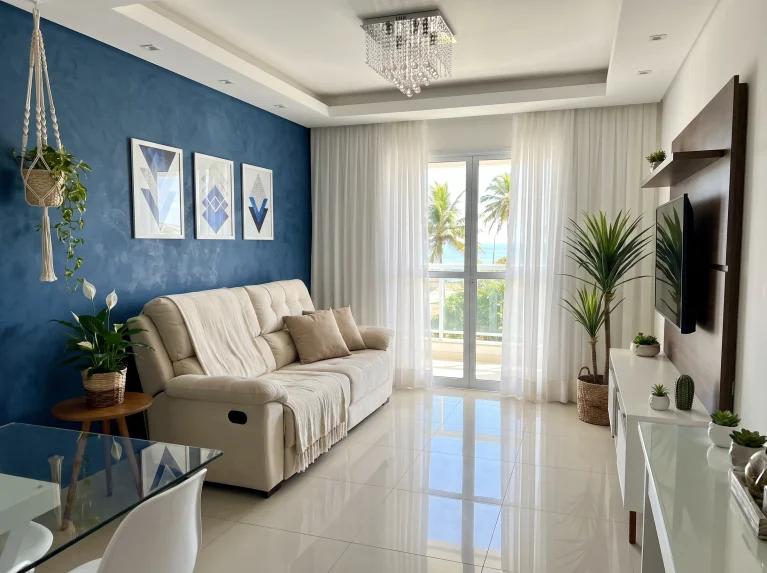
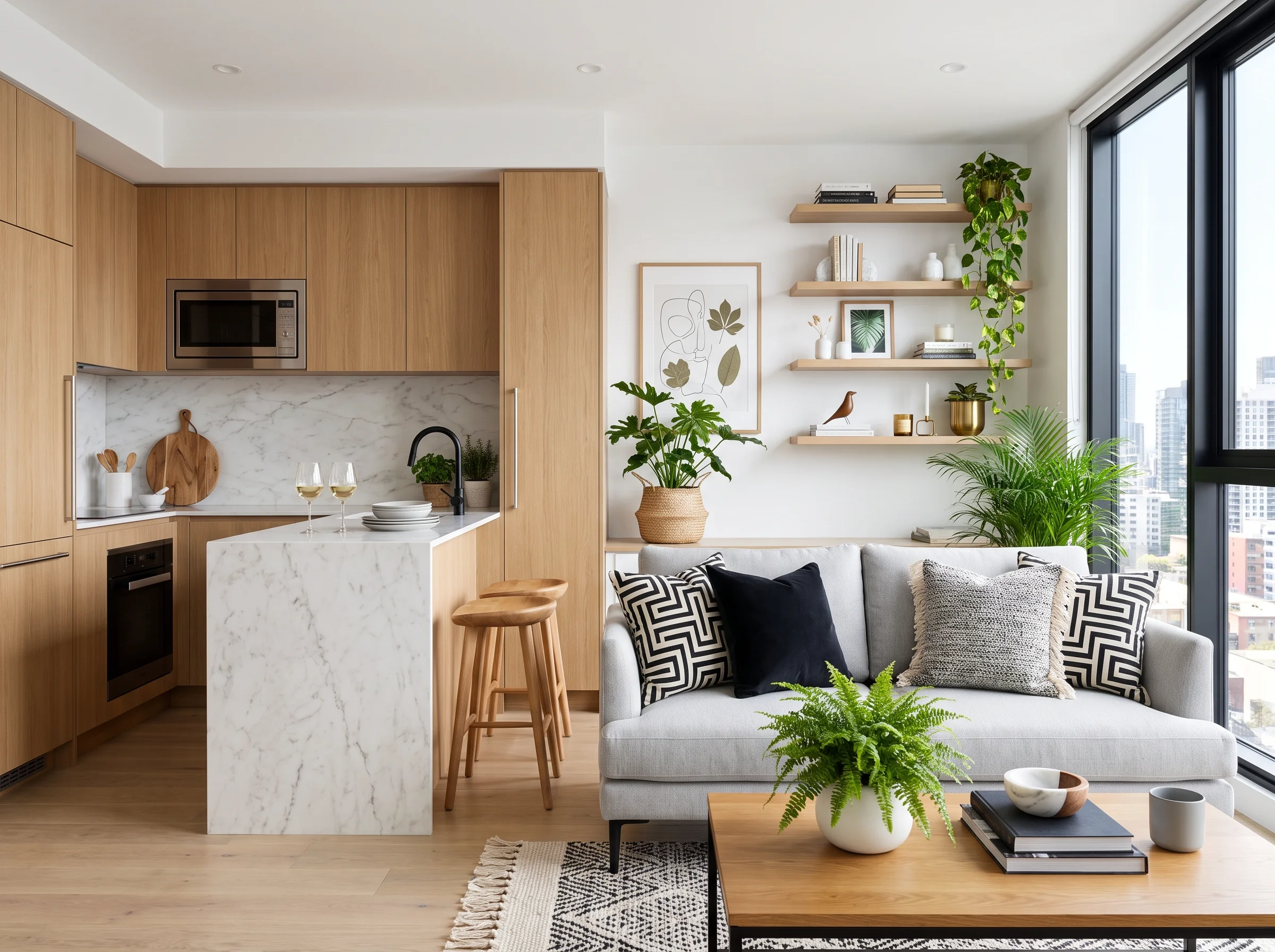
17 Tiny Apartment Tricks That Make Your Space Look Bigger
Small apartments have a way of feeling smaller the longer you live in them. Here’s the thing: square footage is only half the story — the other half is what your eye does the second you walk in. I’ve lived in tiny spaces for years, and these 17 tricks are the ones that actually fool the eye, most of them without a single renovation.
1. Pick a Rug With a Directional Pattern
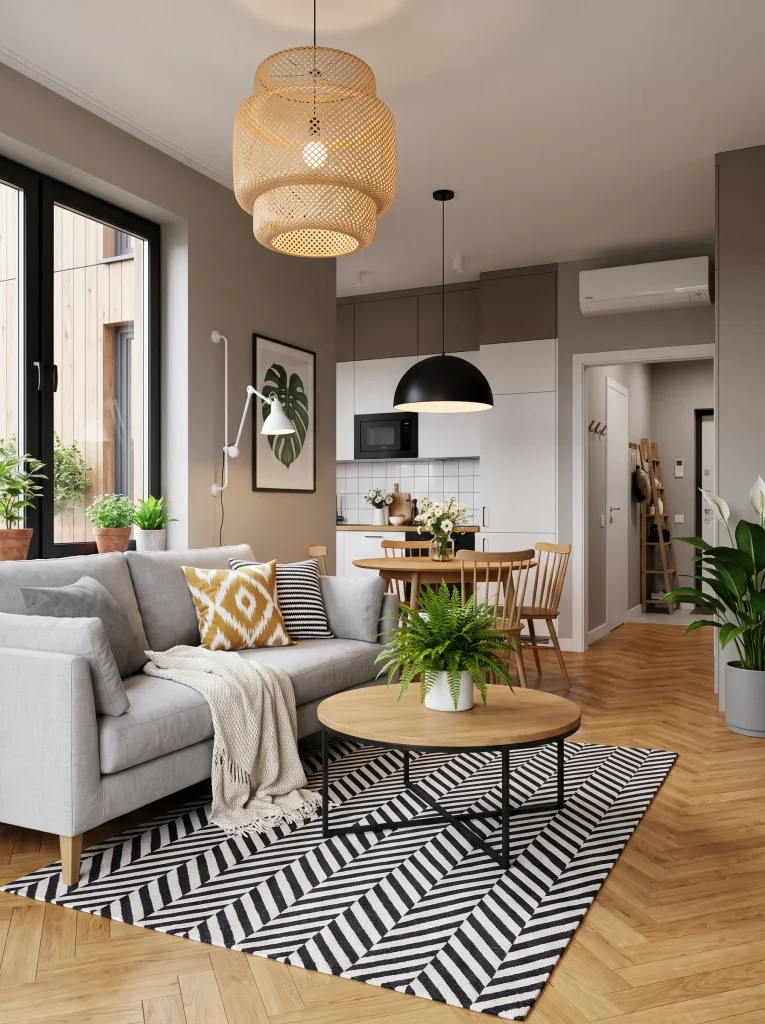
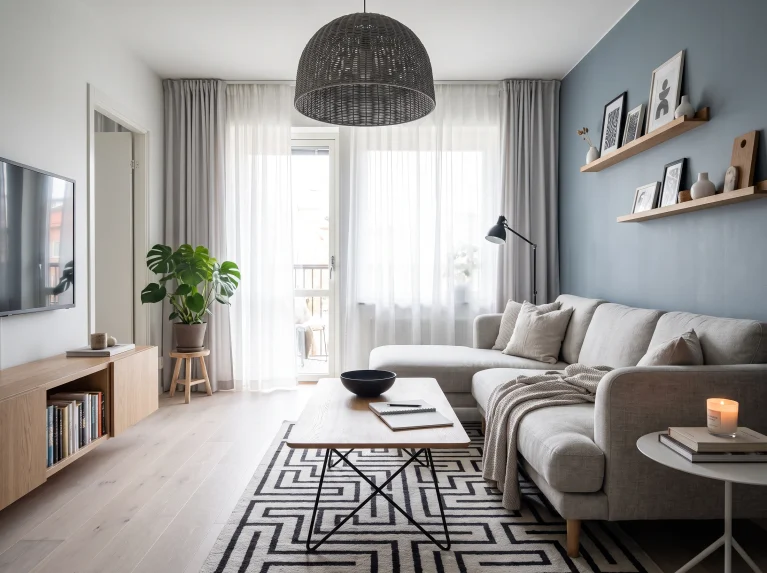
A striped chevron rug does more than add personality — it pulls your eye across the floor and makes the room read longer than it is. In this open living space, the black-and-white zigzag points straight toward the dining nook, visually linking the two zones. Pair it with a round coffee table on slim metal legs so the pattern stays visible underneath. The swing-arm wall lamp is another quiet win: zero floor footprint.
Pro tip: Lay stripes along the longest wall, not across it.
2. Pair a Dark Wall With an Oversized Round Mirror
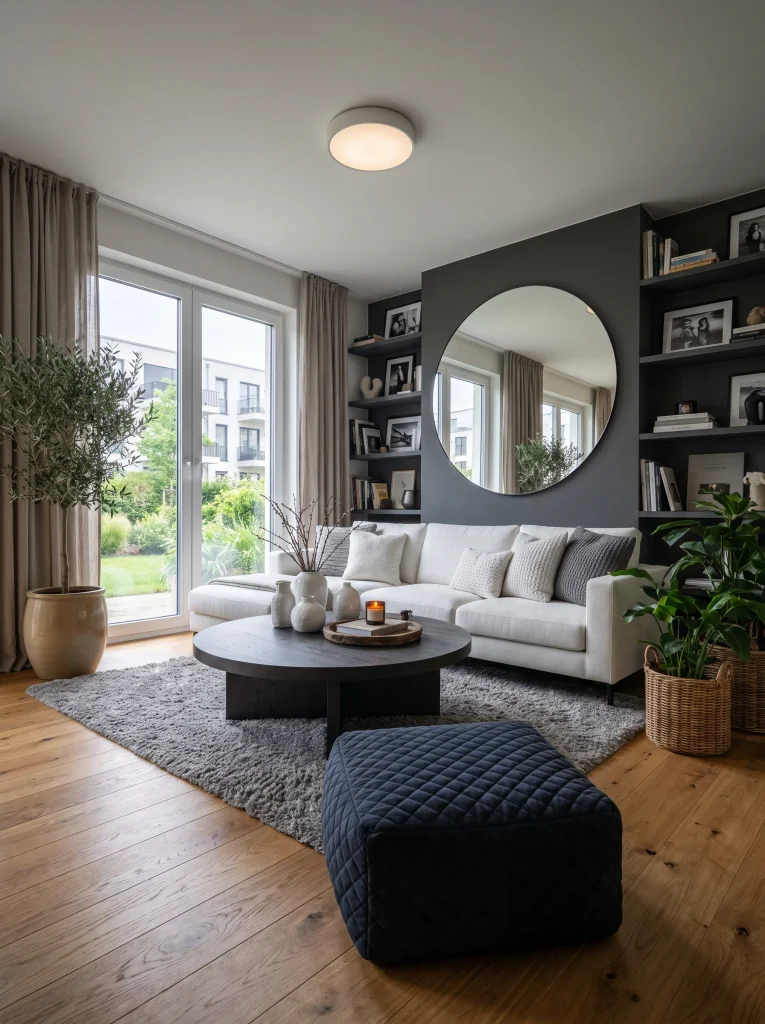
It sounds backwards, but a deep charcoal wall can make a small room feel deeper. Dark colors recede, so the corners blur and the wall seems farther away. The giant round mirror set into this one does the rest — it bounces the garden view straight back into the room. Built-in shelves on either side keep books and frames off the floor, so the whole wall works as storage and illusion at once.
Go dark on one wall only. Four dark walls in a studio is a cave, not a cocoon.
3. Hang Sheers Wall to Wall
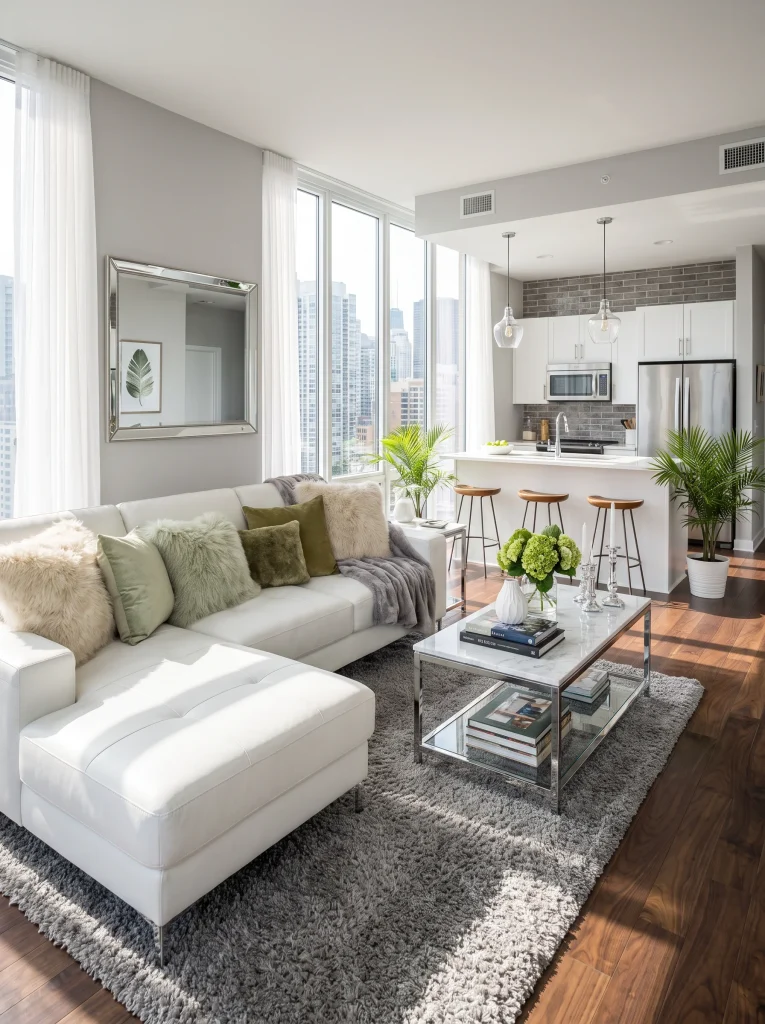
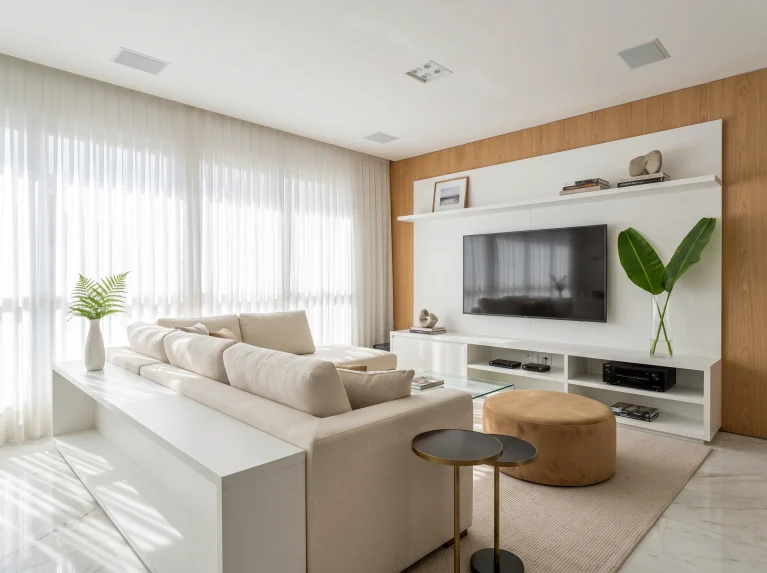
Heavy drapes chop a window wall into pieces. Floor-to-ceiling white sheers running across every window do the opposite — they turn the whole wall into one soft, glowing surface. In this high-rise apartment, the sheers filter light without blocking the skyline, and the white leather sectional and white kitchen keep that brightness bouncing around. Light walls, light fabric, light accents: the room simply feels like it has more air in it.
Budget vs. splurge: Save on the sheers — IKEA panels cost next to nothing. Splurge on a ceiling-mounted track if your landlord allows it.
4. Light Every Corner With Matching Lamps
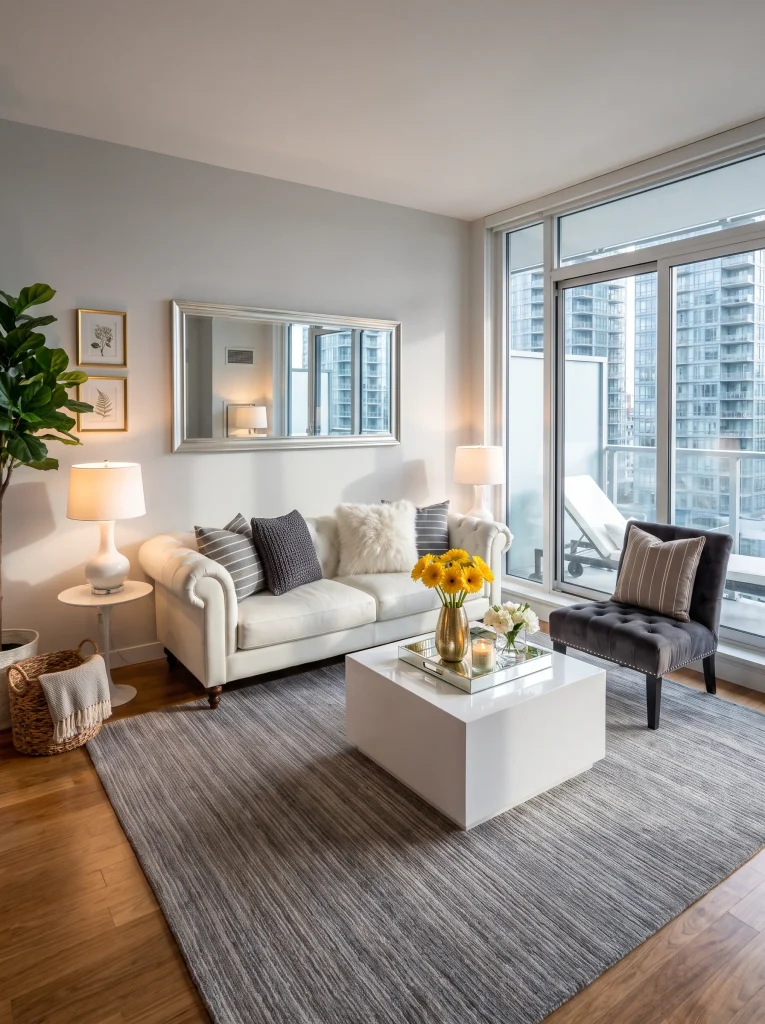
Dark corners are space thieves. When the edges of a room fall into shadow, your eye stops short and the room shrinks. This living room fixes that with two white ceramic table lamps flanking the tufted sofa, washing both corners in warm light. The symmetry also makes the layout feel calm and intentional. Add a low white cube coffee table and a gray slipper chair, and nothing blocks the view to the balcony.
My tip: Use warm white bulbs (around 2700K) in both lamps. Mismatched bulb colors make a room look patchy.
5. Add Cove Lighting to Lift the Ceiling
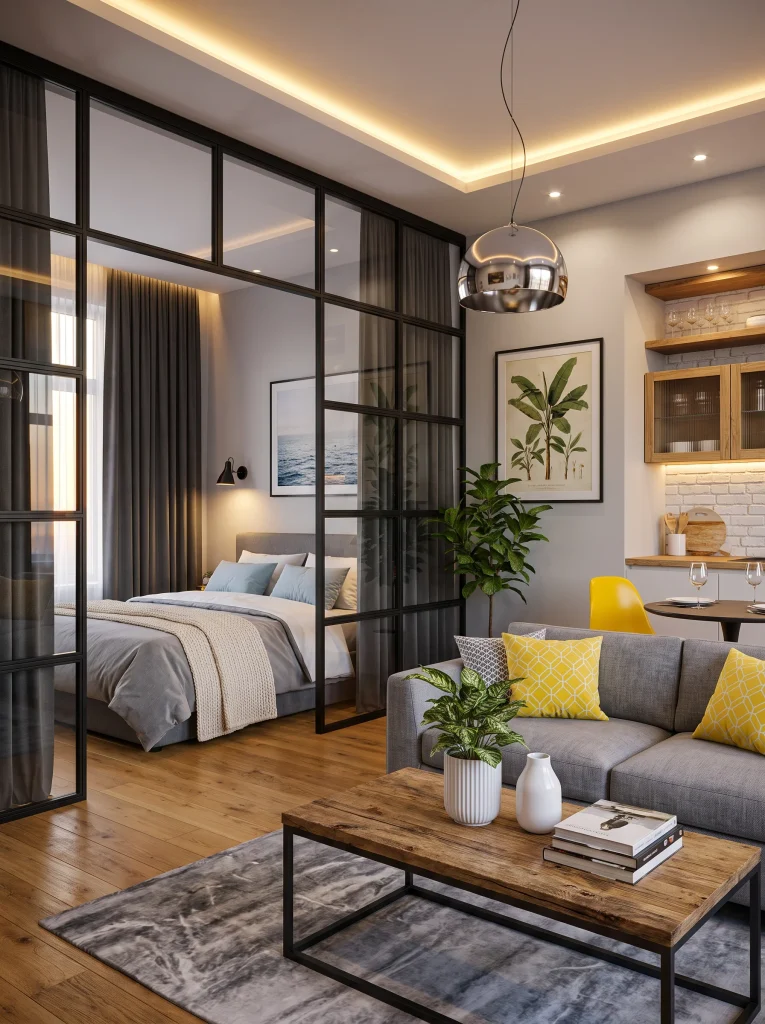
If your ceiling feels low, light it from the edges. The LED strip tucked into this dropped ceiling glows around the perimeter, making the ceiling look like it’s floating higher than it is. It also gives the whole studio a hotel-like warmth at night. Notice how the glass partition with smoky curtains keeps the bedroom zone private without a solid wall — the cove light carries straight through both spaces.
Renter-friendly alternative: Stick an adhesive LED strip along the top of a bookcase or wardrobe, pointed at the ceiling. Same glow, no electrician.
6. Divide Zones With Open Shelving
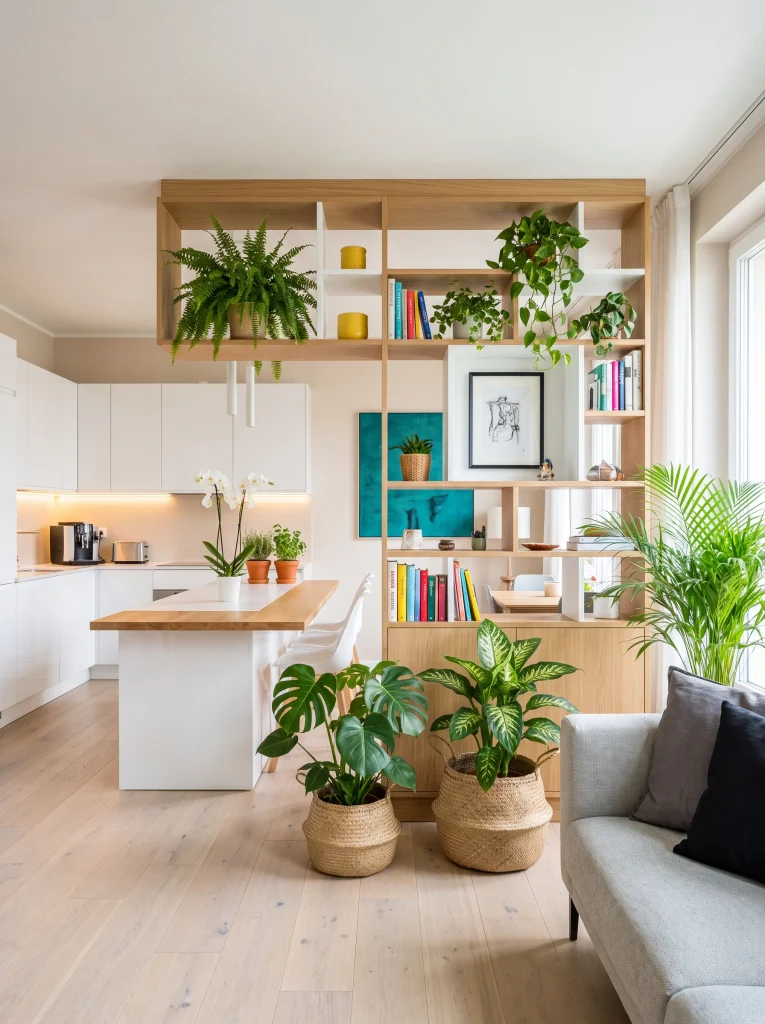
A solid wall between your kitchen and living area eats light and space. An open shelving divider like this one separates zones while letting sunlight pass through. The oak frame reaches the ceiling, so the eye follows it upward, and the cubbies double as storage for books, ceramics, and trailing pothos. Two woven baskets holding a monstera and a dieffenbachia soften the base and make the unit feel like part of the room.
Don’t waste your money on: Filling every cubby. Leave a third of them empty or the divider turns into a visual wall.
7. Hang a Mirror Where It Catches the Window
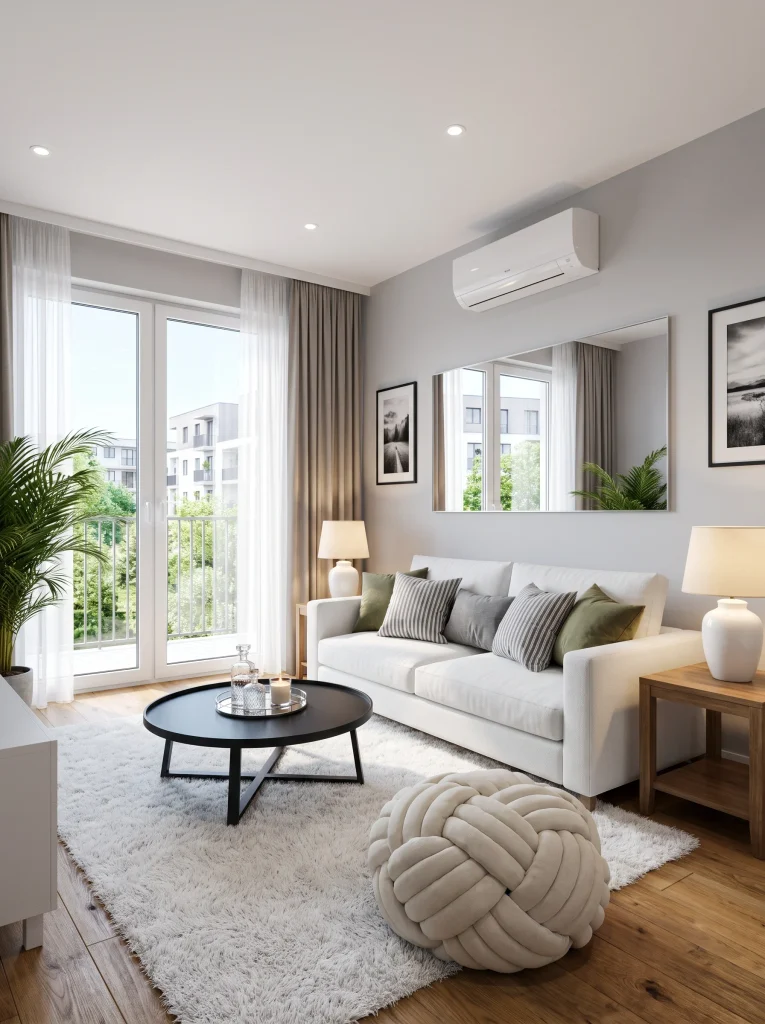
A mirror only makes a room look bigger when it has something worth reflecting. This wide frameless one sits on the wall beside the balcony door, so it doubles the greenery, the daylight, and the curtains. Suddenly the room seems to have two windows instead of one. The white sofa, matching ceramic lamps, and chunky knot pouf keep everything light and low, so the reflection stays the star of the room.
I’ve tested this: I moved one mirror two feet in my old studio so it faced the window. The room felt noticeably brighter the next morning.
8. Choose a Glass-Top Coffee Table
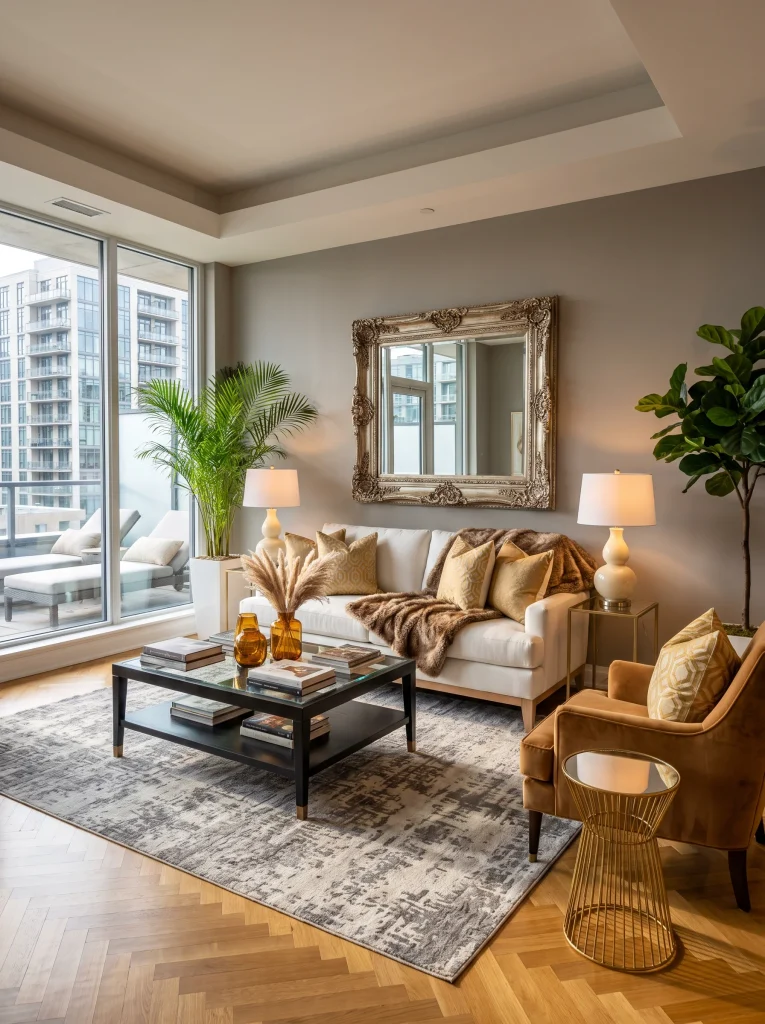
Every piece of furniture has visual weight, and a solid coffee table in the middle of a small room is heavy. A glass top lets you see the rug underneath, so the floor feels uninterrupted. Here, the glass table with an open lower shelf holds stacks of books without looking bulky, while a gold wire side table beside the camel velvet chair pulls off the same trick on a smaller scale.
My favorite: Wire and glass side tables. They practically disappear, yet still hold a coffee mug and a candle.
9. Hang Curtains at the Ceiling, Not the Window Frame
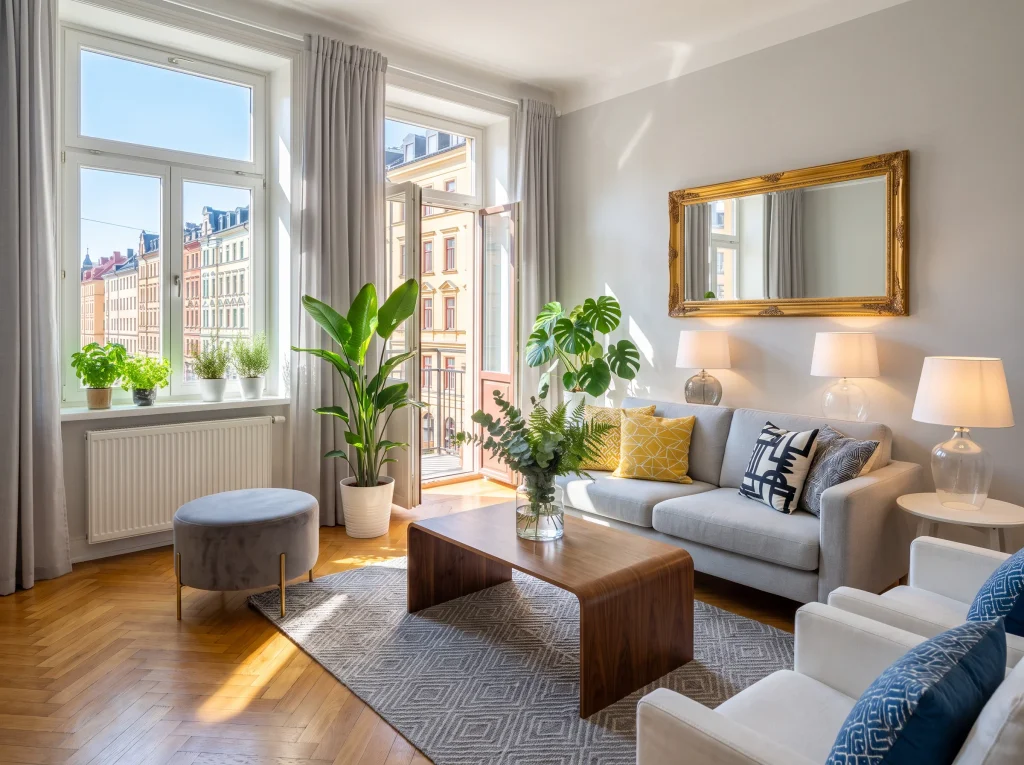
This is the part most people skip — and that’s exactly why their room feels off. Mounting the rod just above the window frame cuts the wall in half. Push it right up to the ceiling, like these pale gray pinch-pleat panels, and the windows suddenly look twice as tall. Let the fabric kiss the floor and keep the color close to your walls so the curtains read as height, not clutter.
Pro tip: Extend the rod 6 to 8 inches past each side of the frame so open curtains don’t cover any glass.
10. Back Your Sofa Against a Low Console
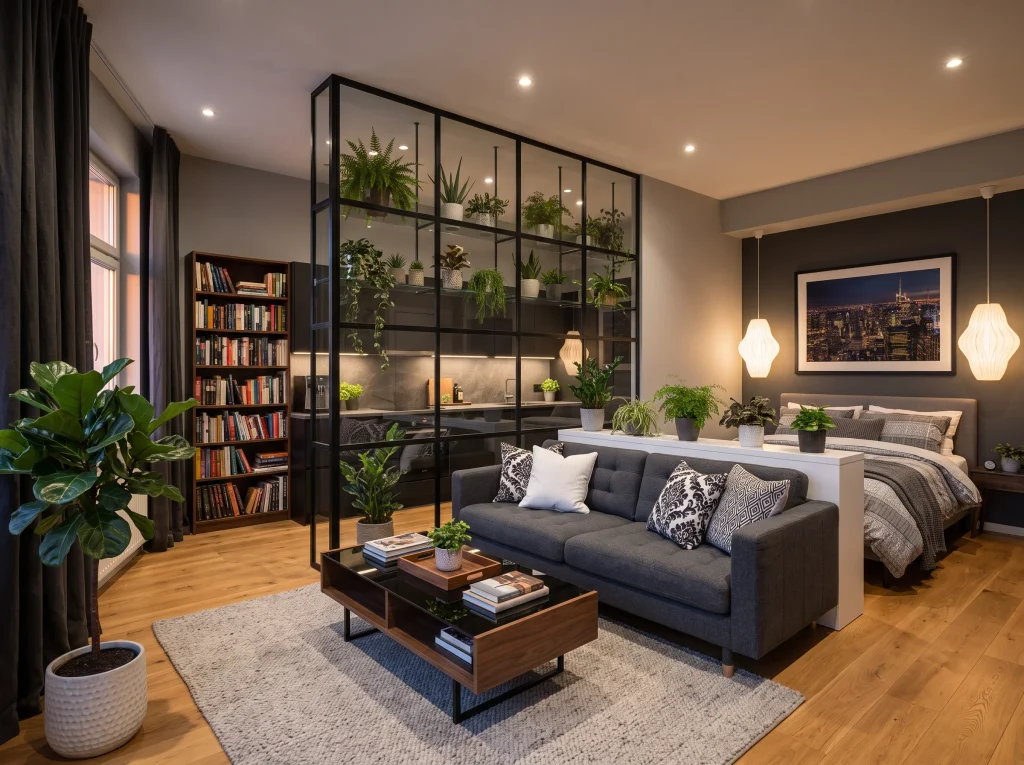
In a studio, the sofa can be the wall. Here the charcoal sofa backs onto a low white console that separates the living area from the bed, topped with a row of potted plants for a soft, living border. Because the divider stays below eye level, the room still reads as one big open space. The glass-and-steel plant shelf nearby frames the kitchen without closing it off.
Keep that console no more than a few inches above the sofa back. Any taller and you’ve built a barricade.
11. Swap Extra Chairs for Woven Poufs
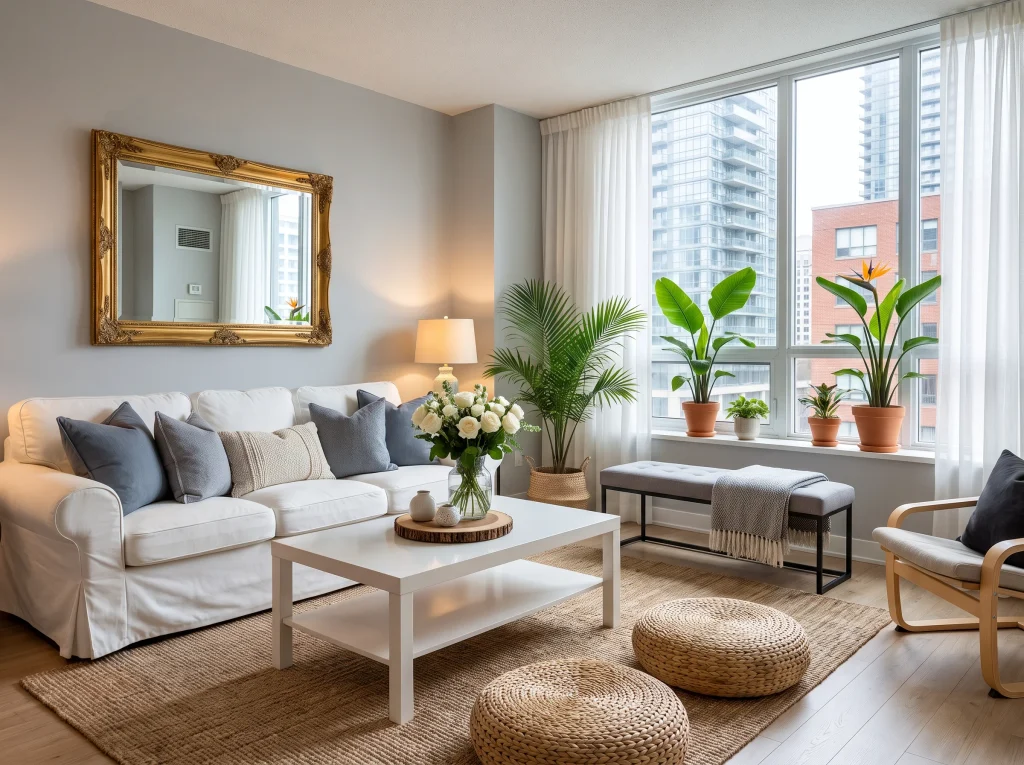
A second armchair takes up a surprising amount of floor. Two woven jute poufs, like these, give you extra seating that slides under the coffee table or into a corner when you don’t need it. They pick up the texture of the jute rug, so they blend in rather than stand out. A slim upholstered bench under the window adds even more seats without crowding the walkway.
Budget vs. splurge: Save on poufs — thrifted or HomeGoods ones work fine. Splurge on a washable slipcovered sofa you’ll keep for years.
12. Stick to a Tone-on-Tone Palette
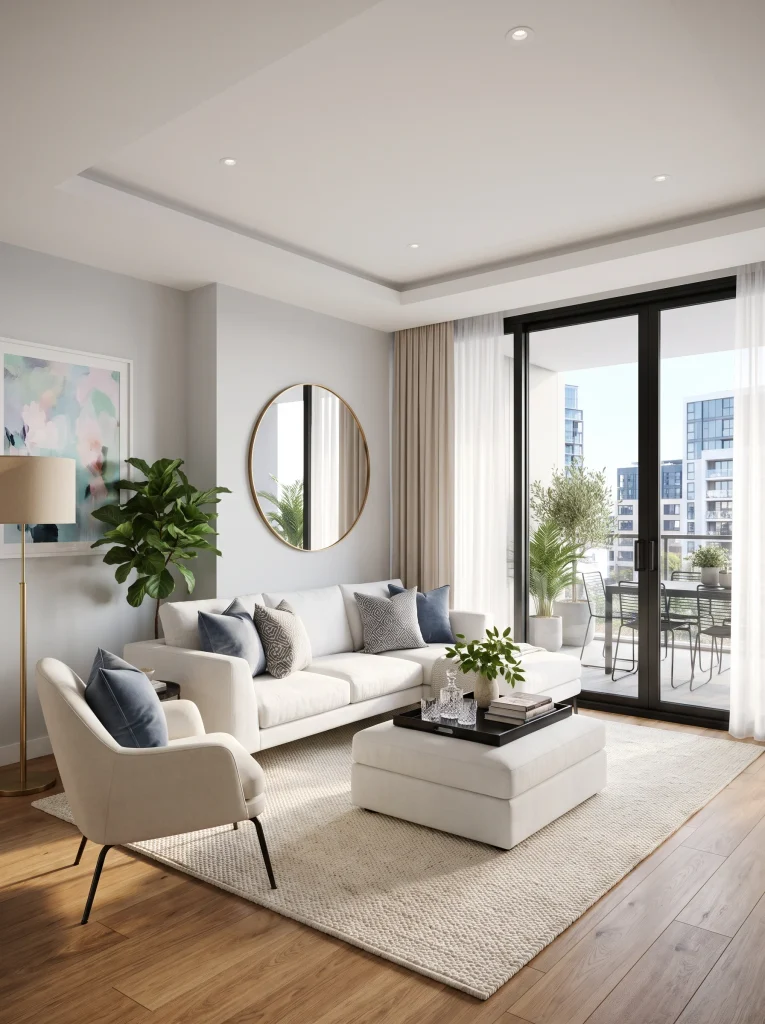
When your sofa, armchair, ottoman, rug, and walls all live in the same soft white-and-cream family, the edges of each piece melt together. That’s the trick: fewer visual breaks means the room reads bigger. This apartment layers texture instead of color — nubby wool rug, linen curtains, crisp sheers — then adds a few navy pillows so it doesn’t feel flat. The upholstered ottoman replaces a coffee table and softens the traffic path.
Renter-friendly alternative: Can’t paint? Match your textiles to your existing wall color instead. Same blended effect.
13. Stretch a Wide Mirror Above the Sofa
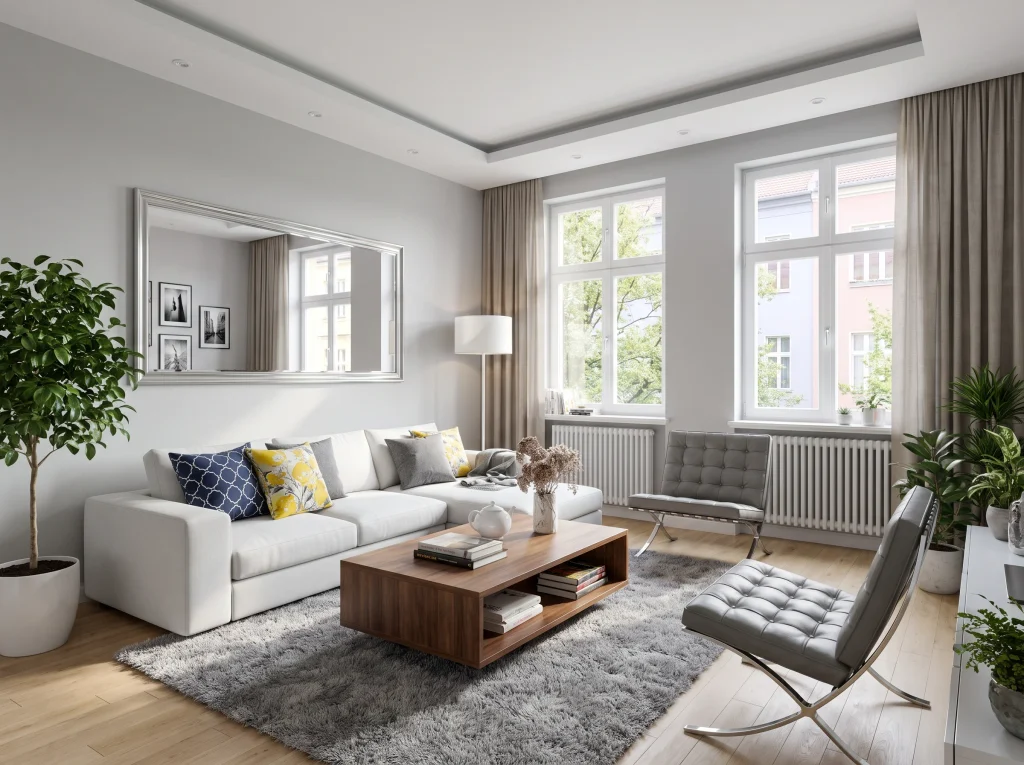
A long, horizontal mirror over the sofa acts like a second window, especially when it reflects real windows across the room. This silver-framed one runs almost the full width of the sectional, doubling the light from the two tall windows and the leafy view outside. Keep the frame slim and close to your wall color. Two gray Barcelona-style chairs and an open walnut coffee table keep the rest of the room airy.
Don’t waste your money on: Tiny mirrors scattered around. One big mirror does more than five small ones.
14. Build a Slatted Wood-and-Glass Bedroom Nook
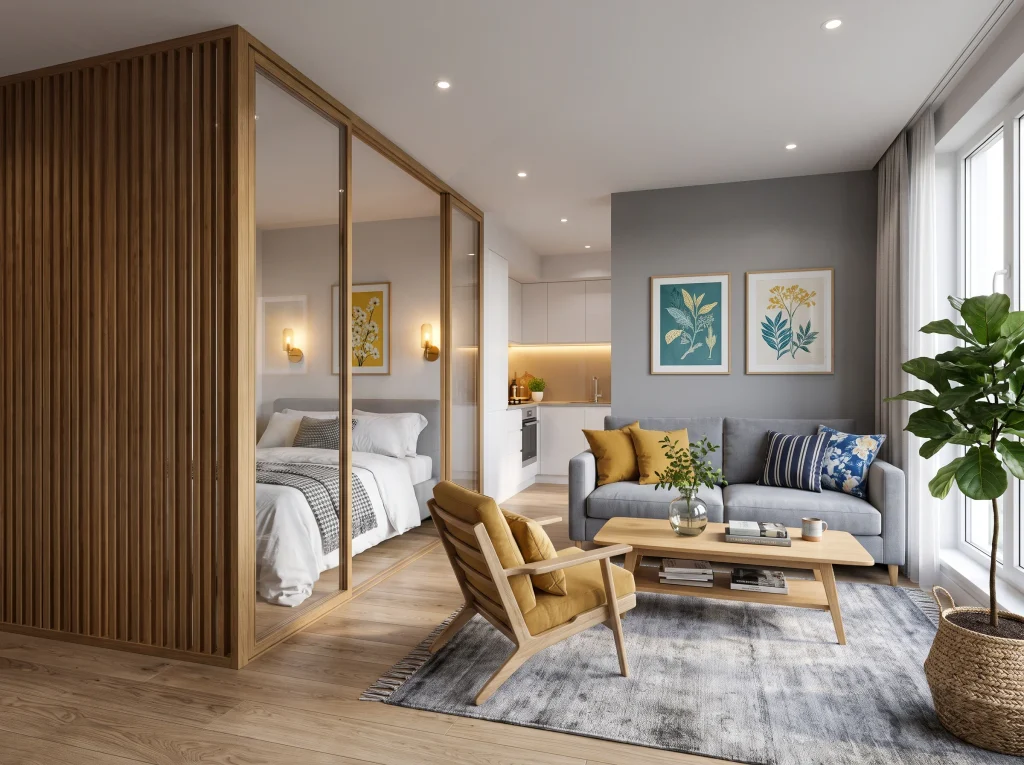
Want a real bedroom without losing the light? This studio wraps the bed in vertical oak slats on one side and clear glass panels on the other. The slats give privacy from the entry, while the glass lets daylight and warm sconce light flow between zones. Vertical lines also draw the eye upward. Out front, a mustard lounge chair and a gray sofa keep the living corner cheerful and compact.
My tip: Match the slat wood to your floor tone. It makes the nook look built-in rather than added on.
15. Choose a Black-Framed Glass Wall
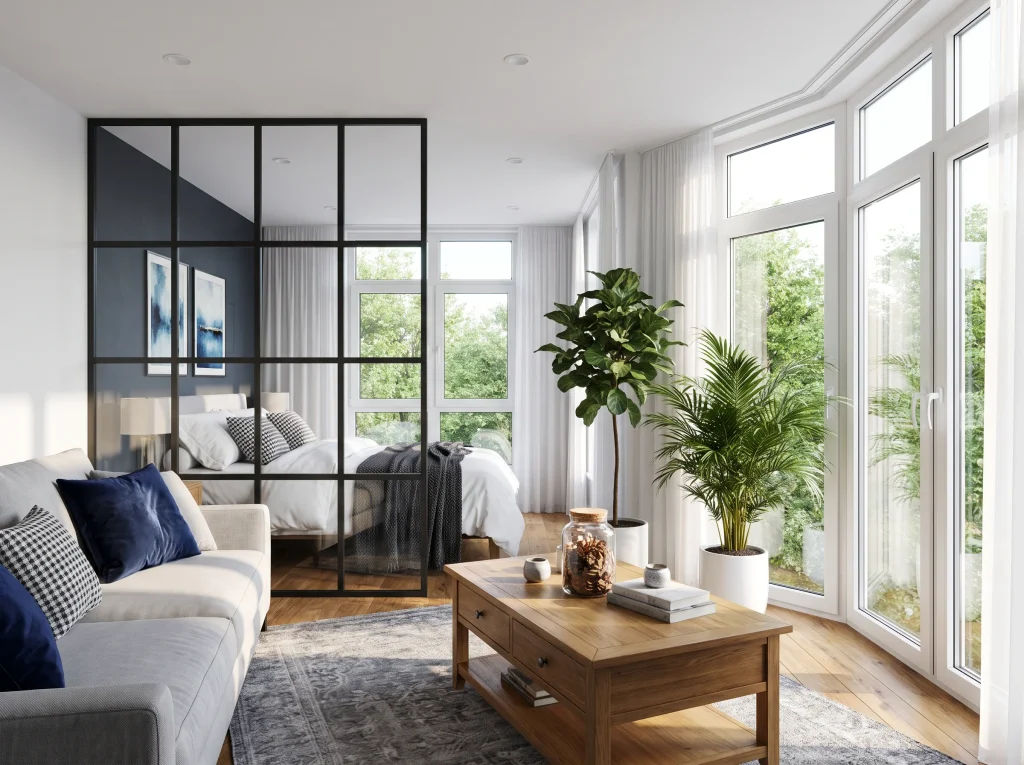
A grid glass partition gives the bedroom its own room while keeping the whole apartment in one sightline. In this bright corner studio, you can see straight through the black steel frame to the navy accent wall and the windows beyond, so nothing feels boxed in. The slim black lines add a crisp, industrial edge. Sheer white curtains, tall potted plants, and a solid oak coffee table keep the living side fresh and grounded.
My favorite: A sheer curtain on the bedroom side of the glass for nights when you want privacy but still love the soft light.
16. Go Round and Curvy With Furniture
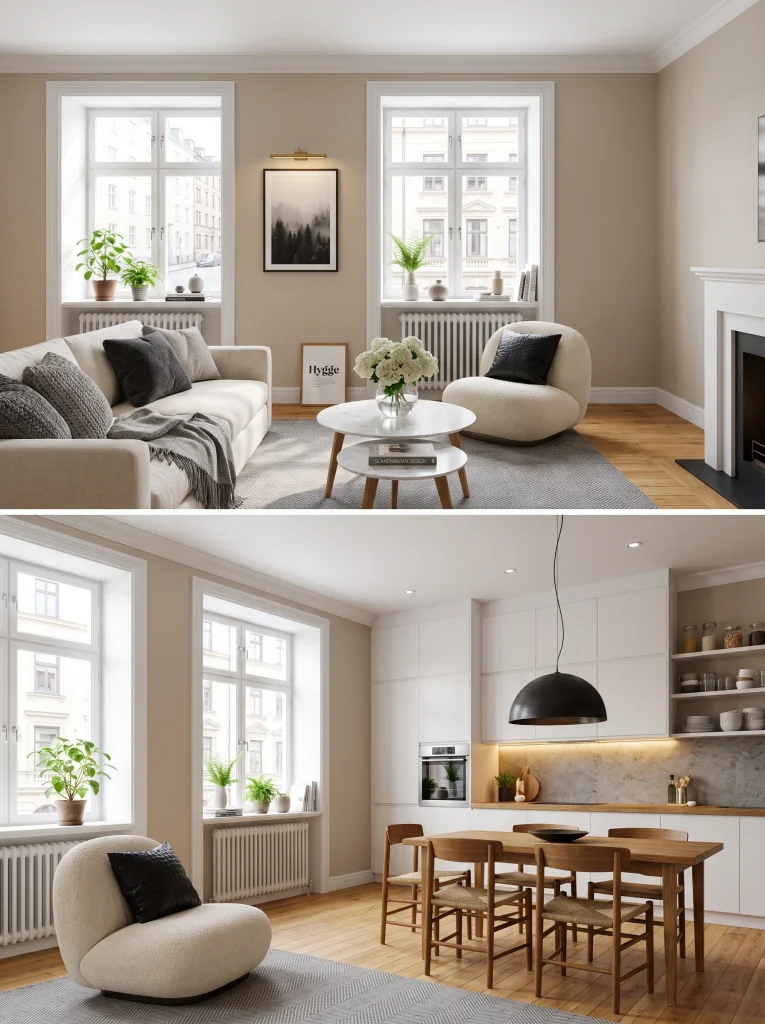
Sharp corners stop your eye and your shins. Round and rounded pieces let both flow around the room. This Scandinavian apartment uses a two-tier marble coffee table, a plump bouclé lounge chair, and a domed pendant over the dining table, so every walkway feels generous. Warm beige walls, tall white-framed windows, and slim oak dining chairs keep the palette soft, while a gray throw and charcoal pillows add just enough contrast.
Pro tip: Two-tier or nesting round tables give you double the surface in the same footprint.
17. Use Sliding Glass Doors Instead of Swinging Ones
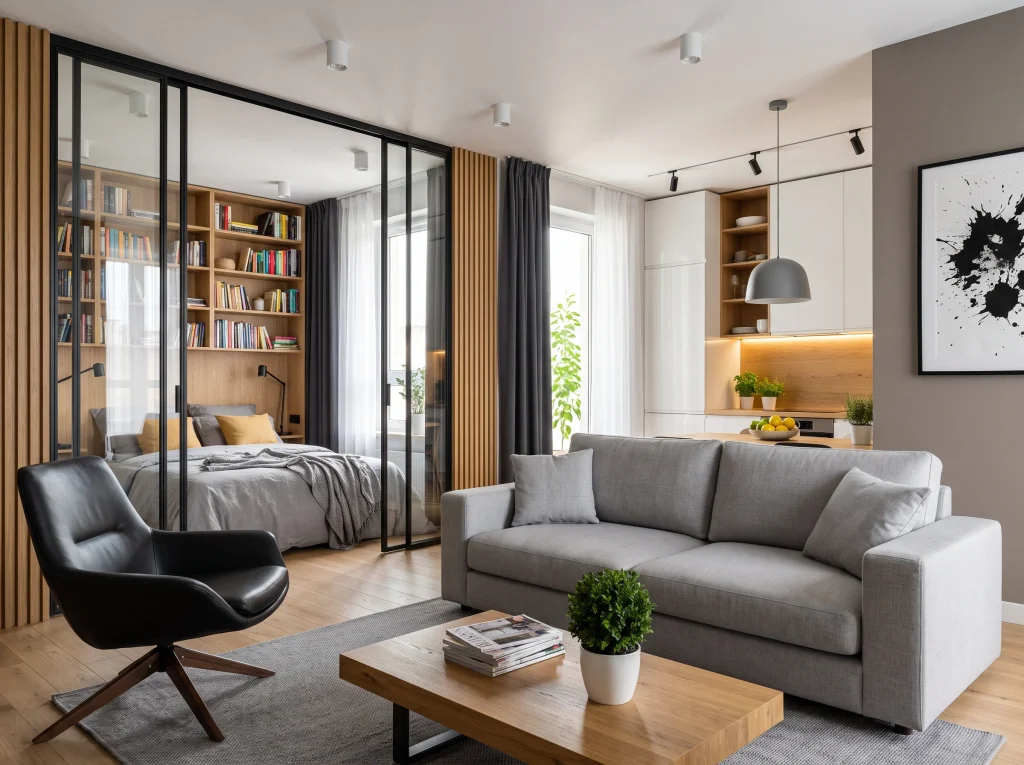
A swinging door needs a surprising chunk of clear floor just to open. Sliding glass doors need none. In this studio, black-framed sliding panels close off the bedroom and its built-in oak bookcase while keeping every bit of daylight in play. Wood slat panels on either side add warmth, and dark curtains handle privacy at night. The gray sofa and black leather swivel chair sit close without ever blocking the track.
Sofia’s honest take: Glass doors don’t block sound. If you share a studio with a night owl, add a thick curtain behind them.
Final Thoughts
Small apartments don’t need more square footage — they need smarter tricks. Light, reflection, open sightlines, and furniture that doesn’t hog the floor will do more for your space than any renovation. Pick one idea from this list. Just one. Try it this weekend, then stand in the doorway and notice how much bigger the room suddenly feels.
A small home isn’t a problem to fix — it’s a space to outsmart. And every trick here is one you can start with today.