How to Create a Bedroom in a Studio Apartment
There’s a moment every studio dweller knows: you’re lying in bed, and your bed is also your living room, and somewhere a TV is staring back at you from six feet away. Carving out a real bedroom feel inside one open room isn’t about walls — it’s about zones, layering, and a few smart choices that tell your brain “this part is for sleeping.” I pulled together eleven real studio layouts that all nail this in different ways, from moody and dramatic to bright and Scandinavian. Steal whatever fits your space.
1. Anchor the Bed With a Bold Accent Wall
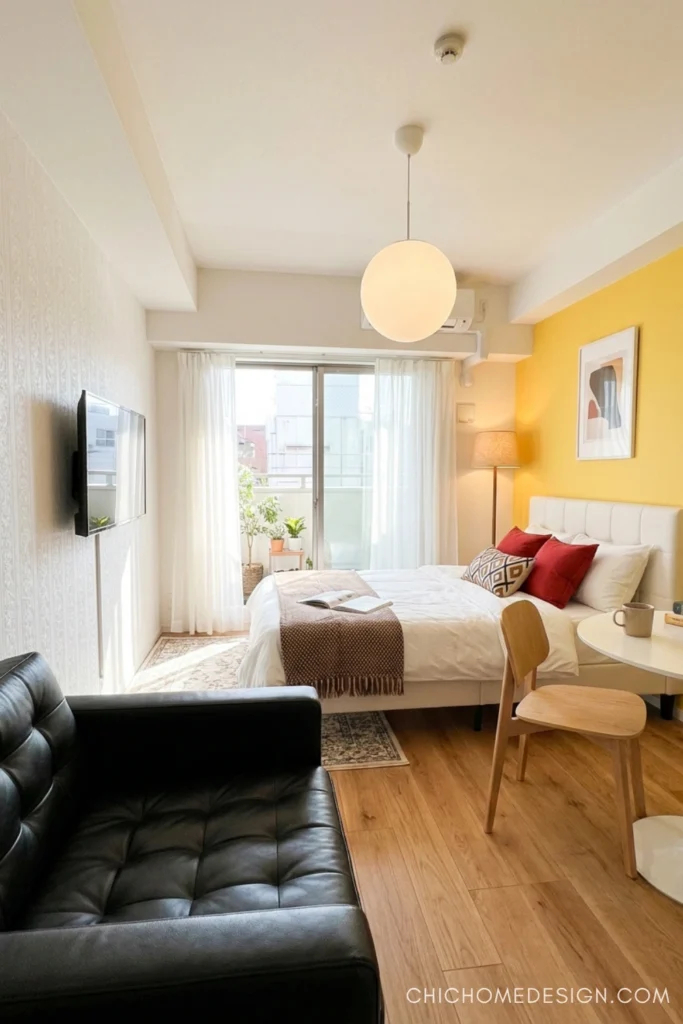
A single yellow wall does more work here than any piece of furniture could. It draws a visual line around the bed without needing an actual divider, and it warms up what would otherwise be a fairly neutral room. The white tufted headboard keeps things from feeling too loud, and the red pillows pick up the wall’s energy instead of fighting it.
Pro tip: Paint just the wall behind your headboard, not the whole room — it reads as intentional “zoning,” not a color commitment you’ll regret in six months.
2. Let the Bed and Sofa Share a Sightline
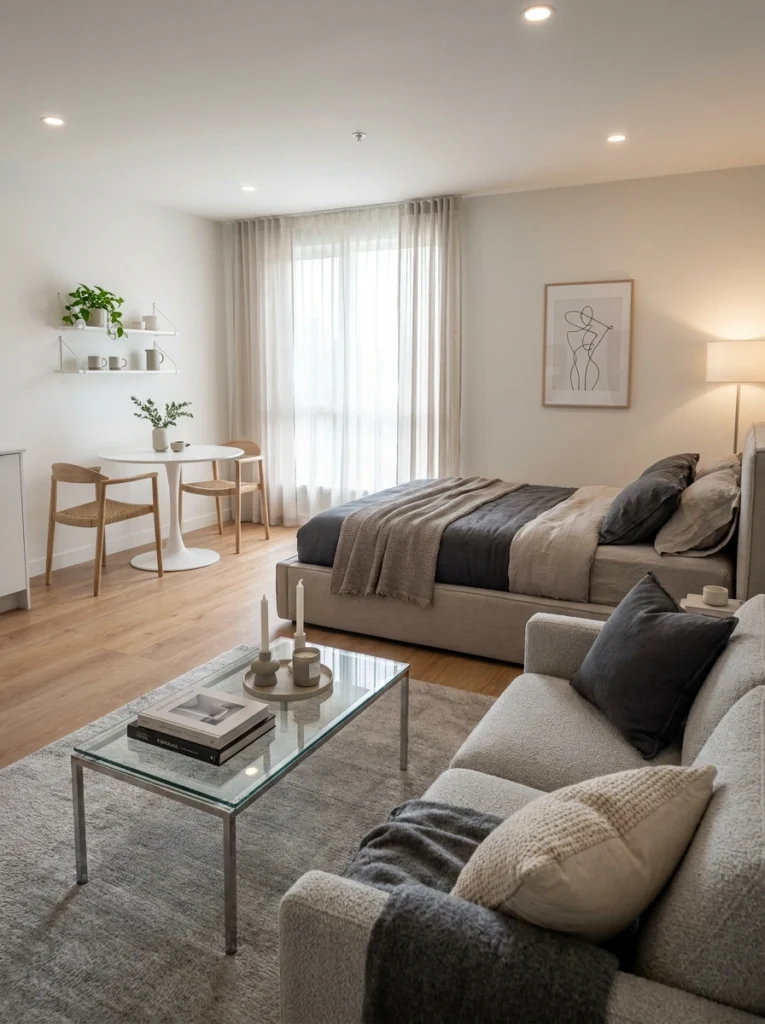
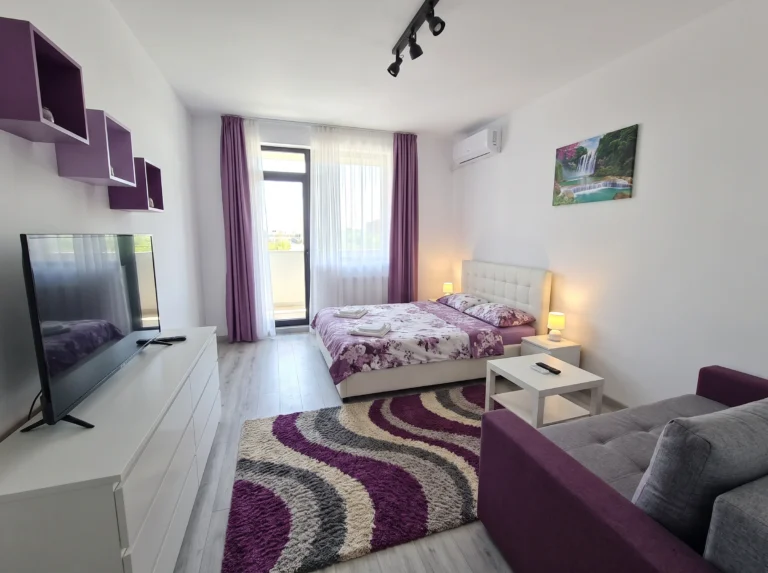
Placing the bed and sofa back-to-back is one of the most underrated studio moves out there. It splits the room into two clear halves using furniture you already need anyway, and it means neither zone faces the other directly. Here the soft gray palette ties both halves together so the split feels seamless, not chopped up.
Sofia’s honest take: This only works if your headboard (or the back of your bed) is finished enough to look at — a footboard or storage frame works even better than a bare mattress edge.
3. Go Moody and Let the Bed Be the Star
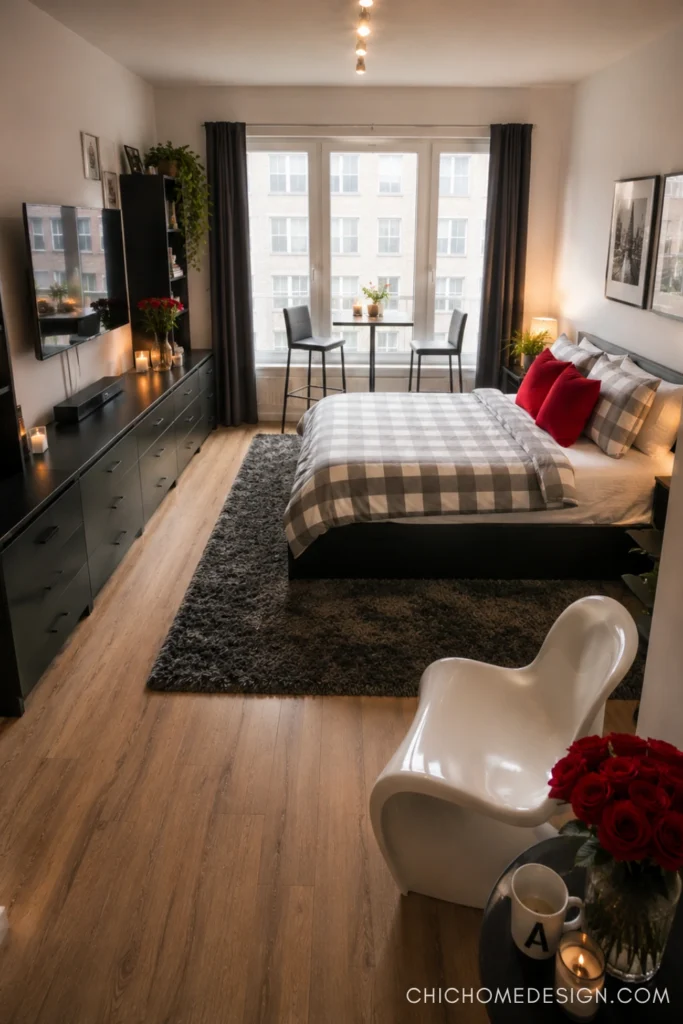
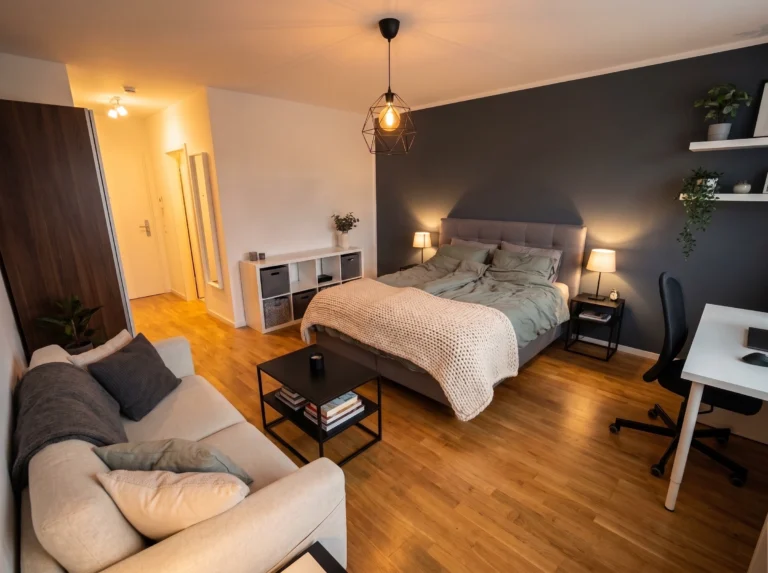
Not every studio needs to be bright and airy — this one leans into dramatic, hotel-room energy, and it works because every dark element (the dresser, the rug, the curtains) is intentional, not accidental. The long black dresser doubles as your dining storage and TV console, which matters in 400 square feet. Red accents and a few lit candles keep it from feeling like a cave.
Pro tip: Dark furniture against light walls actually makes a small room feel more grounded, not smaller — it’s busy patterns and clutter that shrink a space, not dark tones.
4. Push the Bed Into an L-Shape With Your Seating
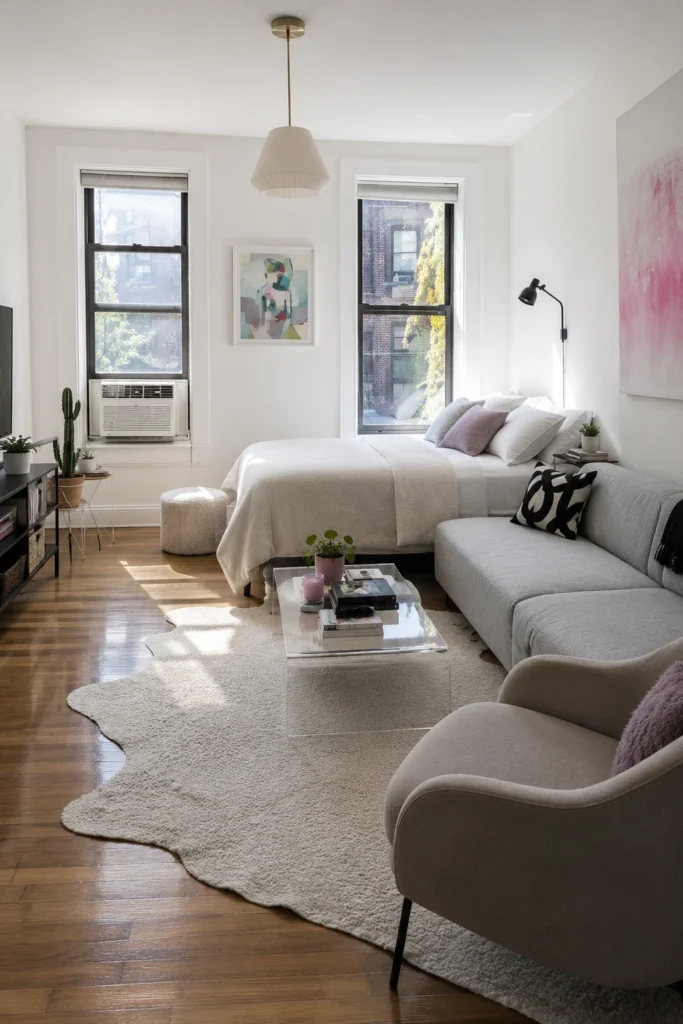
When your studio is more square than long, an L-shaped layout lets the bed and sectional hug two walls instead of competing for the same stretch of floor. This frees up the entire center of the room for a coffee table and walking space. The neutral palette with one pink pillow and one graphic black-and-white pillow keeps it from feeling flat.
Renter-friendly alternative: Skip nailing anything to the wall — a clear acrylic coffee table like the one here visually disappears, so the room feels bigger even with two big furniture pieces in it.
5. Use a Bookshelf as Your Room Divider
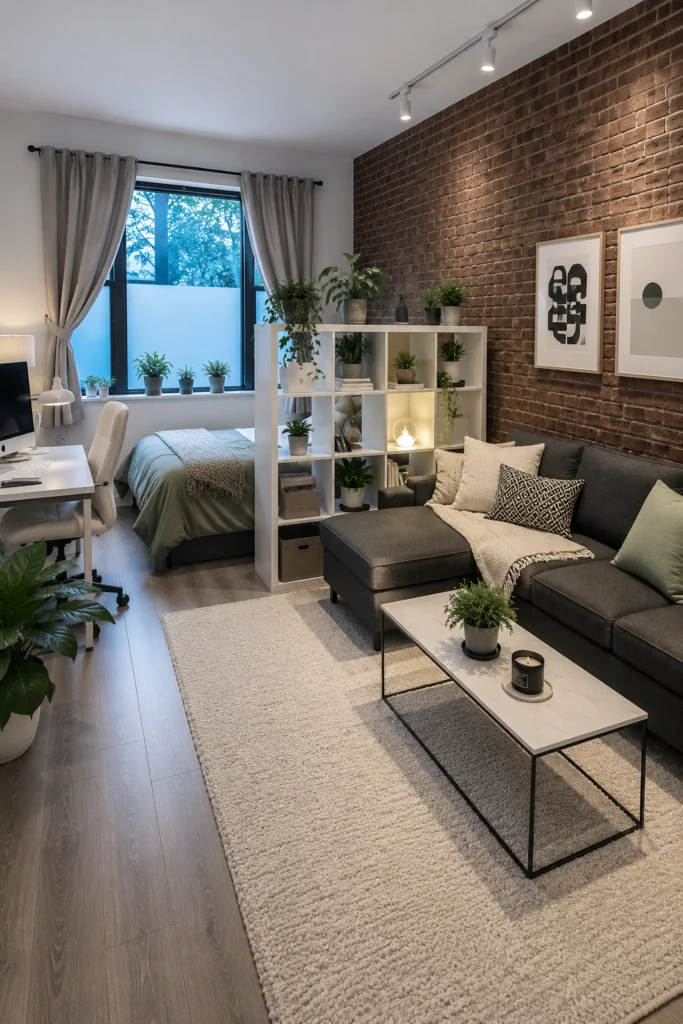
This is the move if you want an actual physical boundary without losing storage. The open-cube shelf splits the bed from the sofa while staying see-through, so the room doesn’t feel chopped in half. Loaded with plants and books on the living-room side, it also doubles as your decor — no extra wall space required. The exposed brick keeps the whole thing from feeling too tidy.
Pro tip: Keep the bottom two rows of any divider shelf open or in baskets — that’s prime hidden storage for things you don’t want on display.
6. Make a Single Bed Feel Intentional, Not Temporary
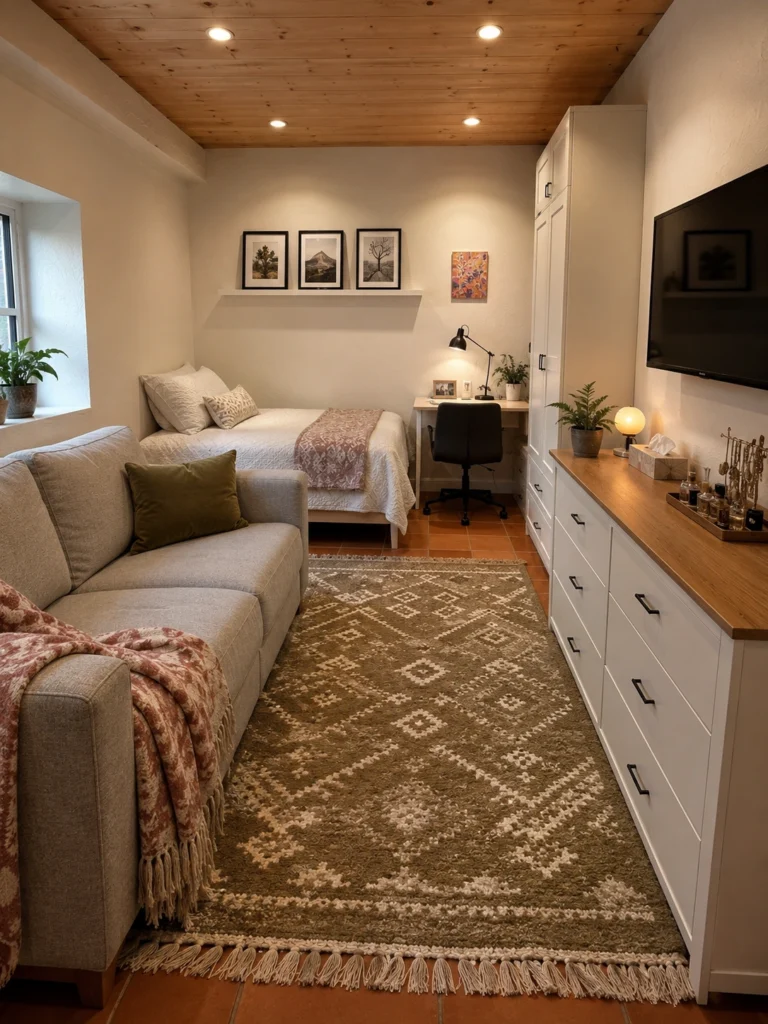
A single or daybed against the wall can read as an afterthought — unless you treat it like a real bed. Here, three framed prints and a floating shelf above the headboard do exactly that, plus a textured Moroccan-style rug grounds the whole layout. The wood ceiling and warm lighting add coziness that a lot of studios skip entirely.
Renter-friendly alternative: Layer two or three pillows even on a daybed and skip a built-in headboard entirely — a single flat pillow is what makes a bed look like an afterthought, not the size of the mattress.
7. Bring in Color to Soften an All-White Studio
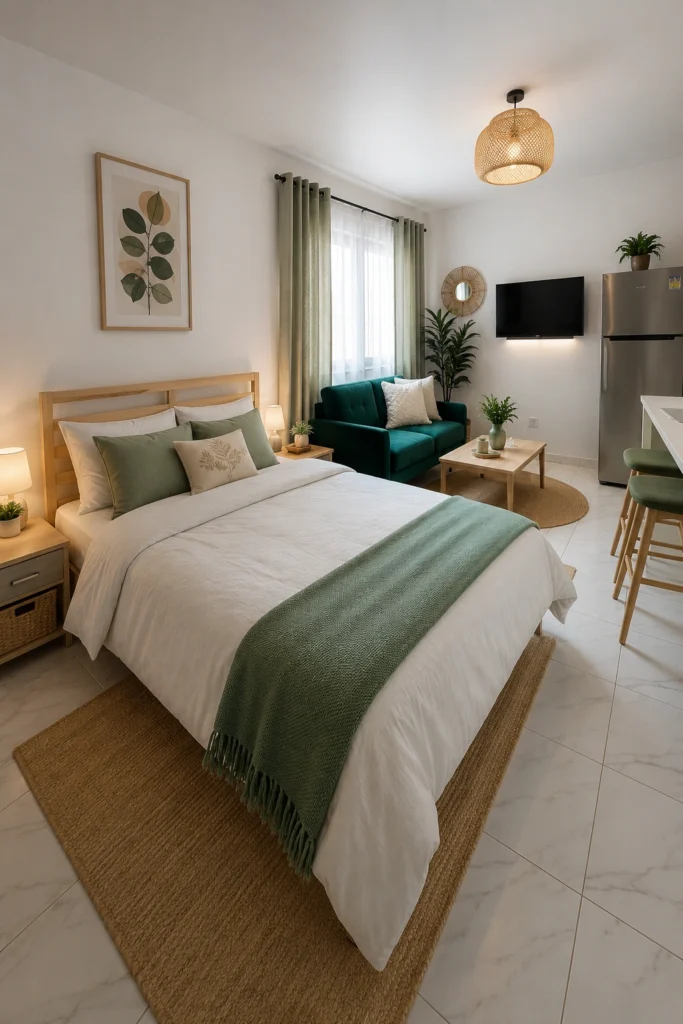
If your studio came with white tile floors and white walls, a sage and forest-green palette is the easiest way to add warmth without repainting anything. The green throw on the bed and the velvet loveseat across the room create a color thread that pulls your eye through the whole space, even with the kitchen visible in the background.
Budget vs. splurge: Save on the throw blankets and pillow covers — swap colors seasonally for under $40. Splurge on the velvet sofa; it’s the one piece holding the whole palette together.
8. Build a Gallery Wall Behind the Headboard
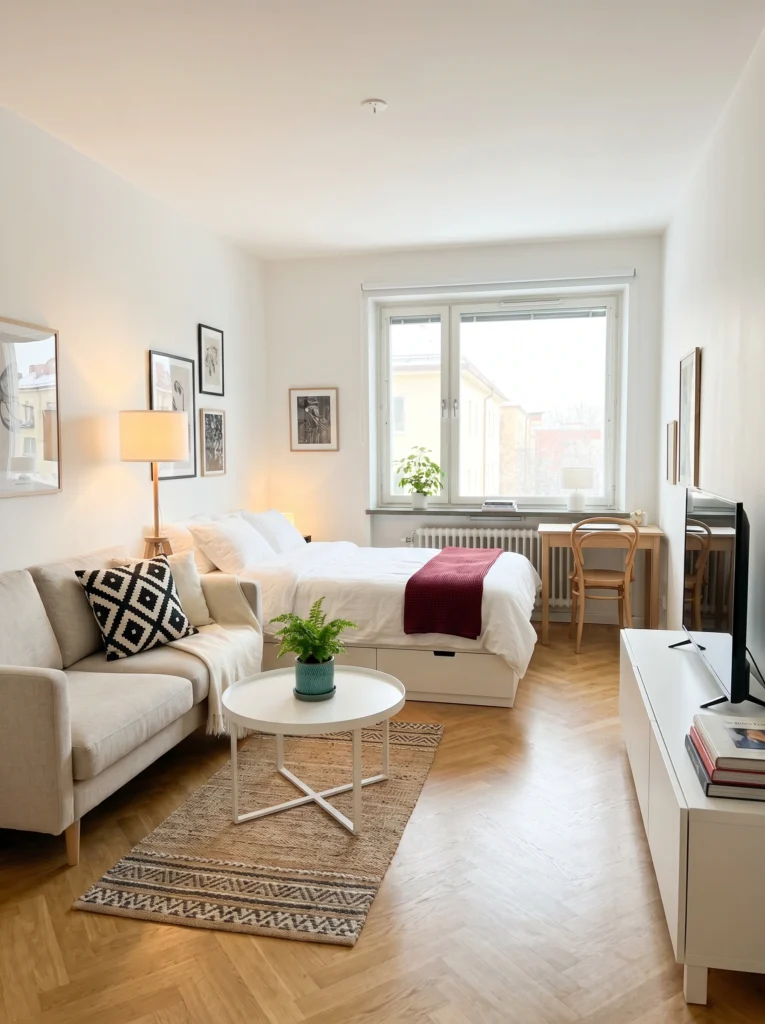
A cluster of black-and-white framed prints behind the bed does what a headboard usually does — it gives the eye something to land on and signals “this is the bedroom wall.” The herringbone floors and a small desk tucked by the window round this layout out so it functions as bedroom, office, and living room without feeling crowded.
Renter-friendly alternative: Use adhesive picture hooks rated for your frame weight — most hold up to 10–16 lbs and come off without marking the wall.
9. Keep It Simple With a No-Fuss Platform Bed
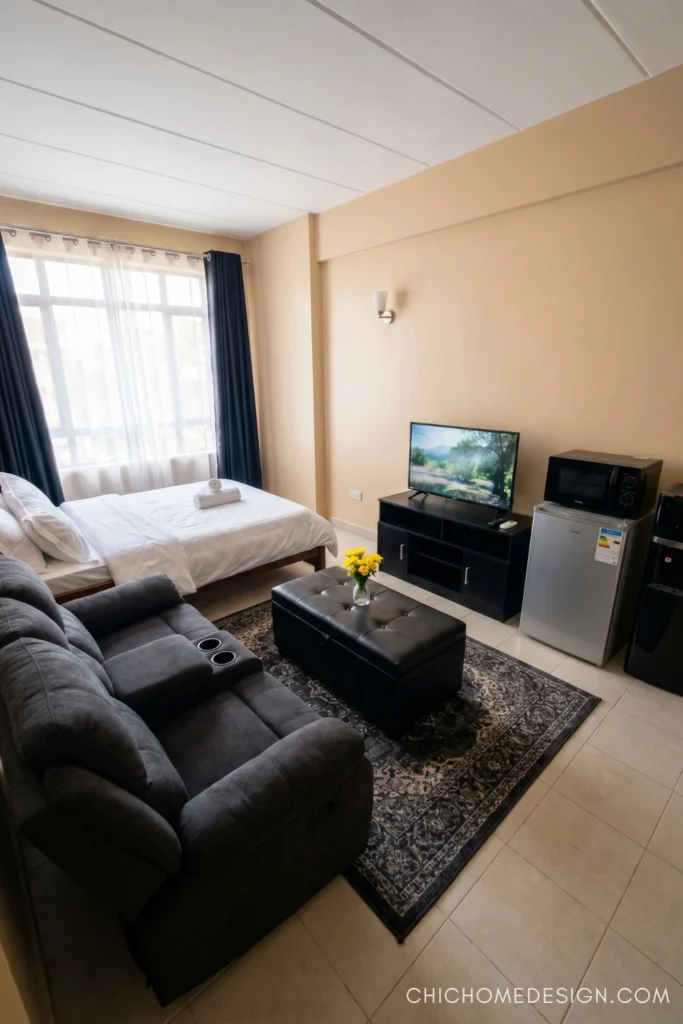
Not every studio bedroom needs layers of styling to work. This one keeps the bed simple — crisp white linens, no headboard drama — and lets the warm wall color and a few fresh flowers do the talking. The reclining sofa with built-in cupholders is doing double duty as both your living room seating and your nightly wind-down spot.
Sofia’s honest take: A plain platform bed isn’t a placeholder until you can afford “better” — clean lines like this actually photograph and live better than an overly fussy frame in a small room.
10. Let Negative Space Do the Heavy Lifting
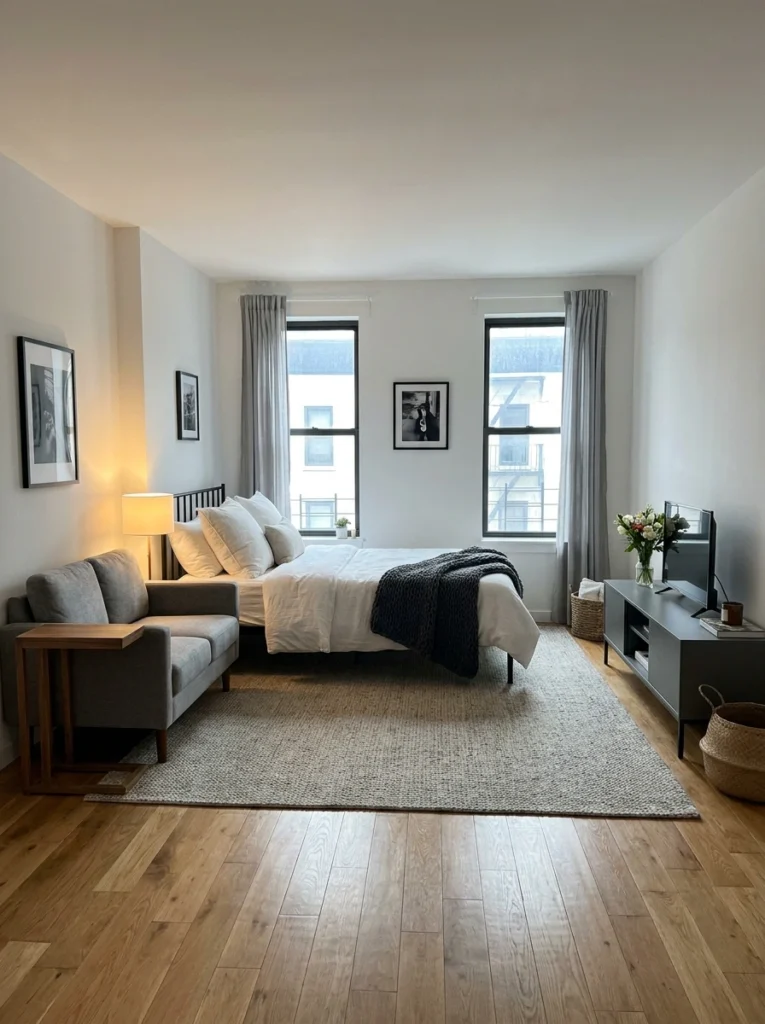
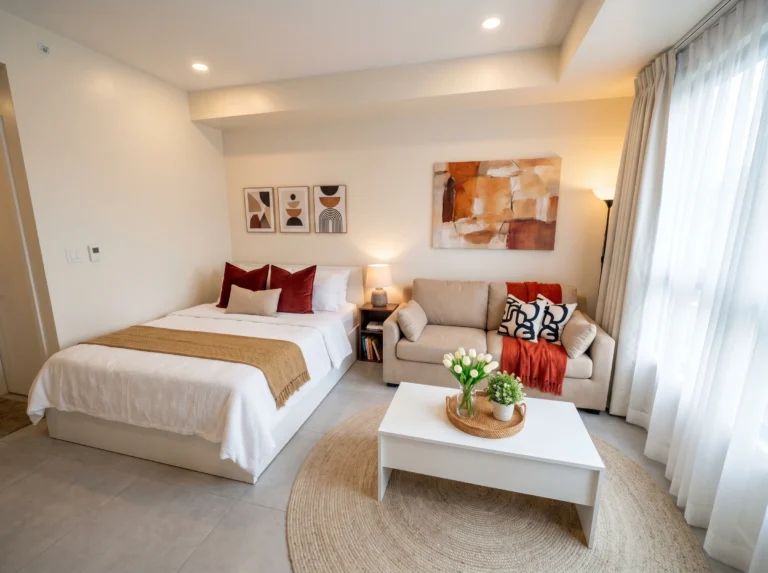
Sometimes the best move is restraint. This studio uses a slim black metal bed frame, one loveseat, and a single wood side table — and leaves the rest of the floor empty. Two tall windows flood the room with light, which is doing more visual “enlarging” work than any furniture choice could. A jute rug grounds the bed area without boxing it in.
Pro tip: If your studio gets good natural light, resist the urge to fill every wall — empty space next to a window is part of what makes a room feel calm.
11. Mix Warm Wood and Dark Textiles for a Grounded Look
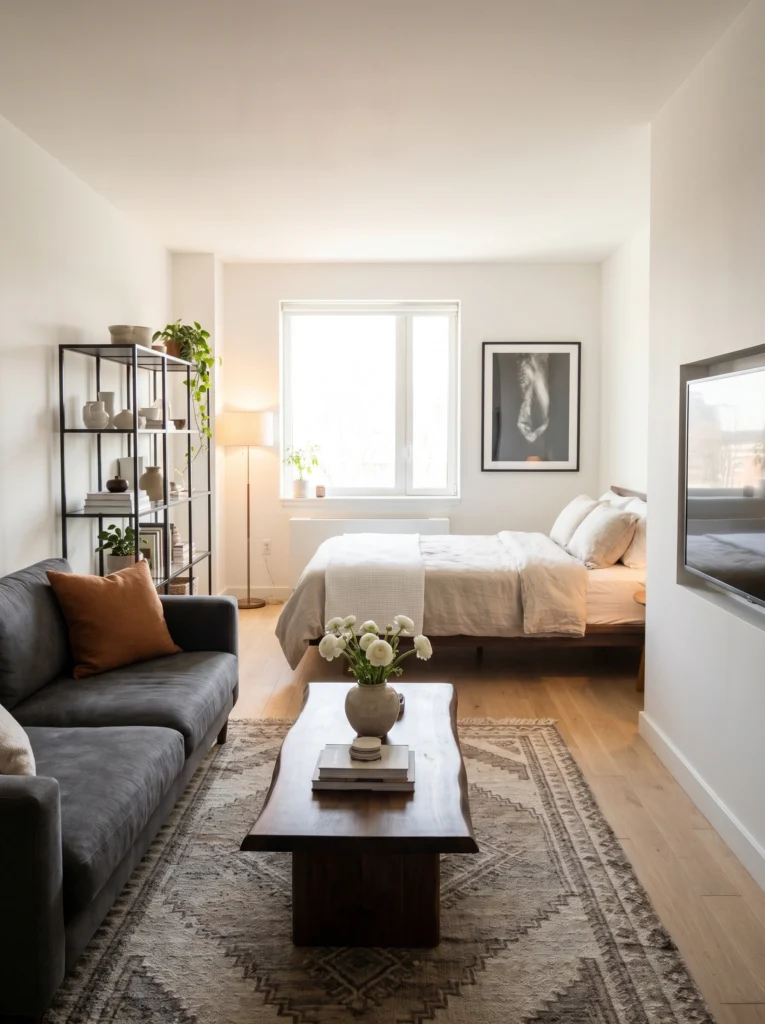
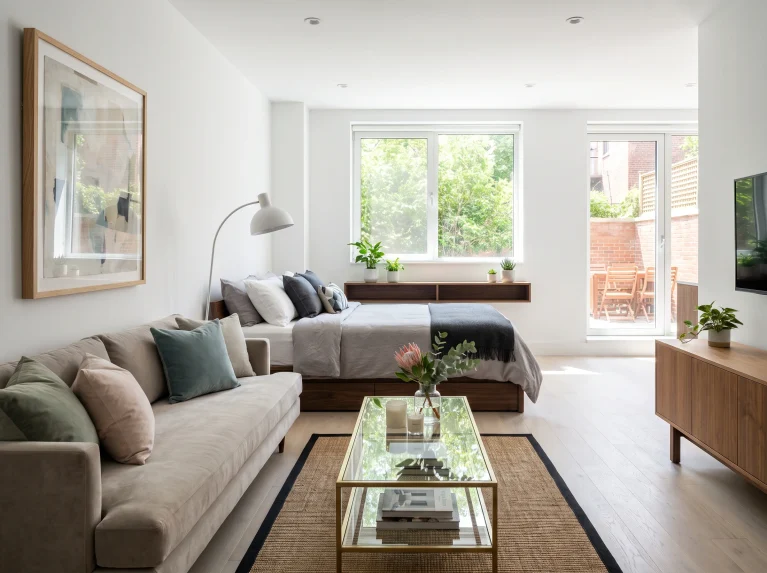
This layout pairs a low wood platform bed with a charcoal velvet sofa and a black metal shelf — three different materials that still feel cohesive because the color palette stays tight. The live-edge wood coffee table and a single framed photograph keep the styling minimal instead of busy. It’s proof that “grounded” doesn’t have to mean dark or heavy.
Sofia’s honest take: Stick to two or three materials max (here: dark wood, black metal, charcoal velvet) — that’s the real trick to making mixed furniture look curated instead of mismatched.
Final Thoughts
Eleven studios, eleven completely different moods — and not one of them used an actual wall to separate the bedroom from everything else. Whether it’s a bold paint color, a loaded bookshelf, or just two pieces of furniture pushed back-to-back, the bed always reads as its own space when you give it a clear visual signal. Pick the one that matches your actual life, not your Pinterest board, and start there.
A bedroom in a studio doesn’t need four walls — it just needs to feel like one room knows where it ends.