15 Studio Apartment Divider Ideas That Are Perfect for Renters
Living in a studio means every square foot pulls double duty. Your bedroom is your living room is your office — and after a while, that all-in-one arrangement starts to wear on you. The good news? You don’t need walls, a contractor, or your landlord’s permission to carve out real zones. These 15 divider ideas are renter-friendly, removable, and genuinely stylish.
1. Curtain Rods Around the Bed Zone
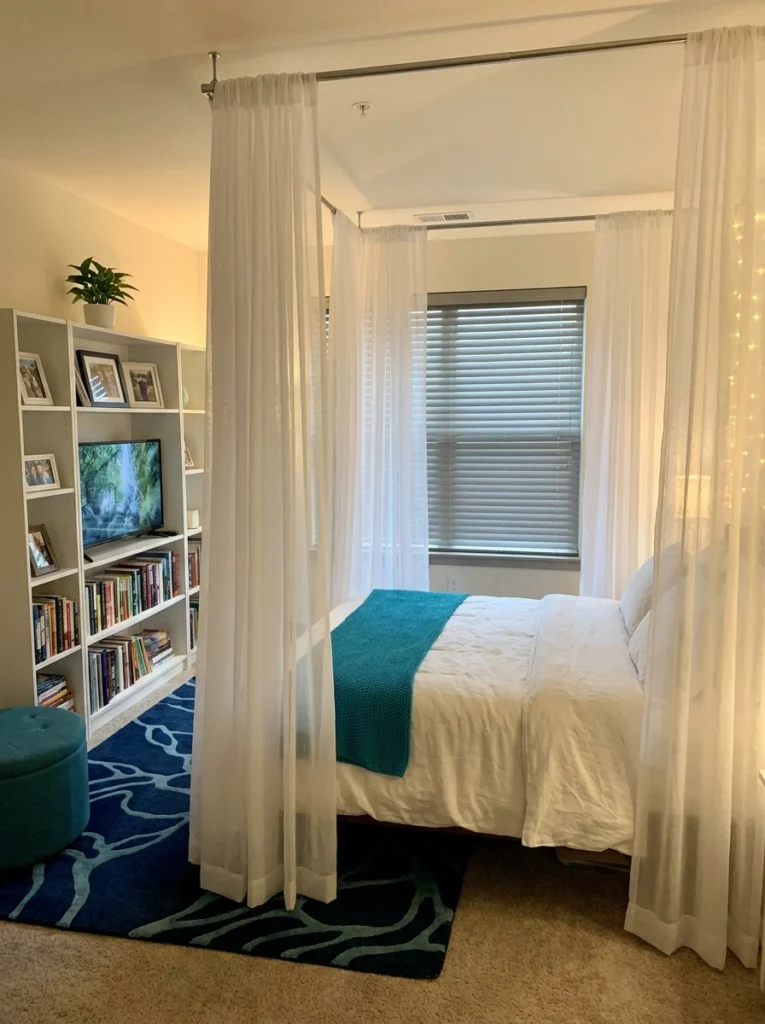
Curtain-rod dividers feel like actual architecture once they’re up. This setup uses a ceiling-mounted rod to wrap sheer white panels around the bed, creating a soft enclosure without blocking light or airflow. No drilling required if you use a tension rod, and the curtains pull back completely when you want the space open. Add fairy lights along the rod for a cozy finish. It’s one of the most budget-friendly and reversible approaches out there — and it genuinely works.
Pro tip: Use sheer panels rather than blackout fabric — you keep the airy feeling without sacrificing the sense of separation.
2. Open Bookshelf as a Full-Height Room Divider
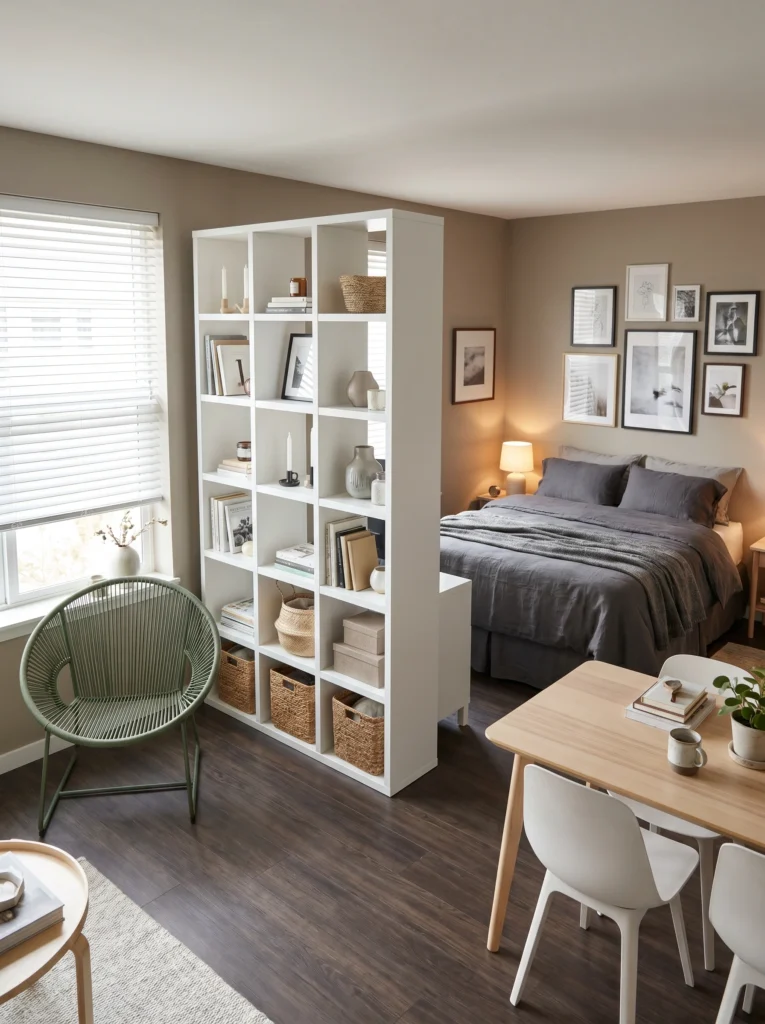
A floor-to-ceiling open shelf does everything at once: it divides your space, stores your stuff, and gives you a display surface on both sides. This one separates a sleeping area from a dining nook, styled with baskets, books, and candles. Because it’s open, light still passes through and the room doesn’t feel chopped in half. Freestanding means it moves with you when you leave.
Sofia’s honest take: Face the prettier side toward your living area. The bedroom side can hold the practical stuff — no shame in that.
3. A Bold Patterned Curtain Panel
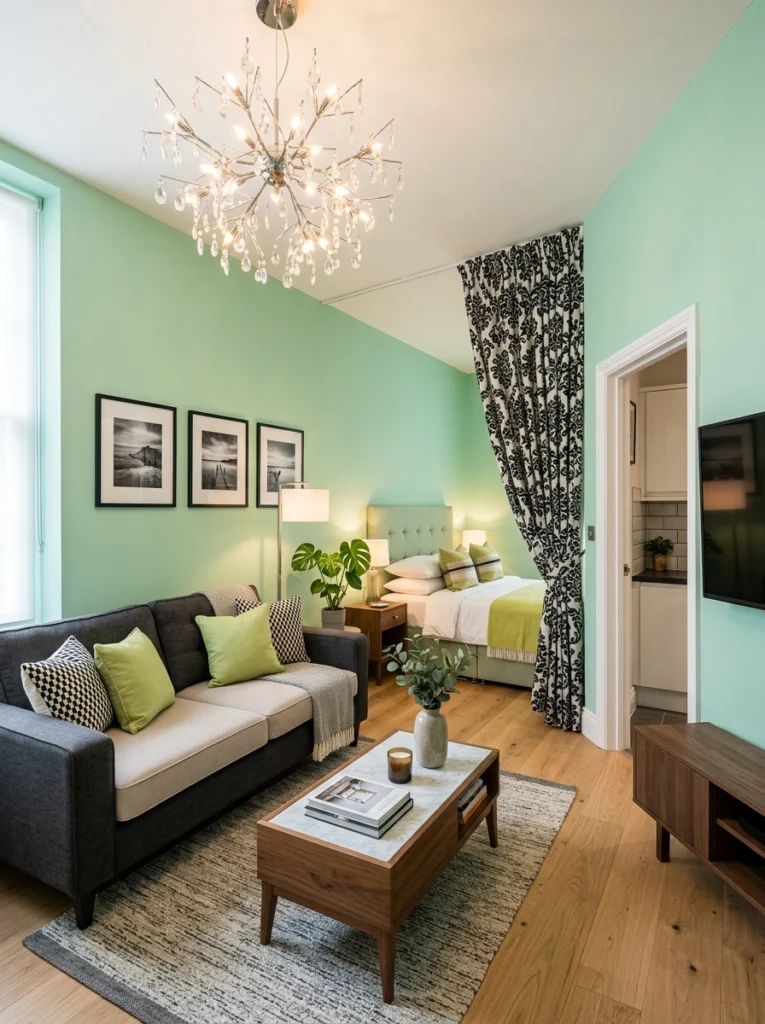
Who said your divider had to be subtle? A statement curtain panel — hung from a ceiling track or tension rod — doubles as your room’s focal point. This black-and-white damask against mint green walls is genuinely striking. The curtain pulls fully open when you want the space to flow, or closes for a proper sleeping nook. It costs a fraction of any furniture divider and swaps out whenever your taste changes.
Renter-friendly alternative: Use a ceiling-mounted track with adhesive hooks — many hold well on smooth ceilings with no drilling needed.
4. Ceiling-Track Curtain with Luxe Fabric
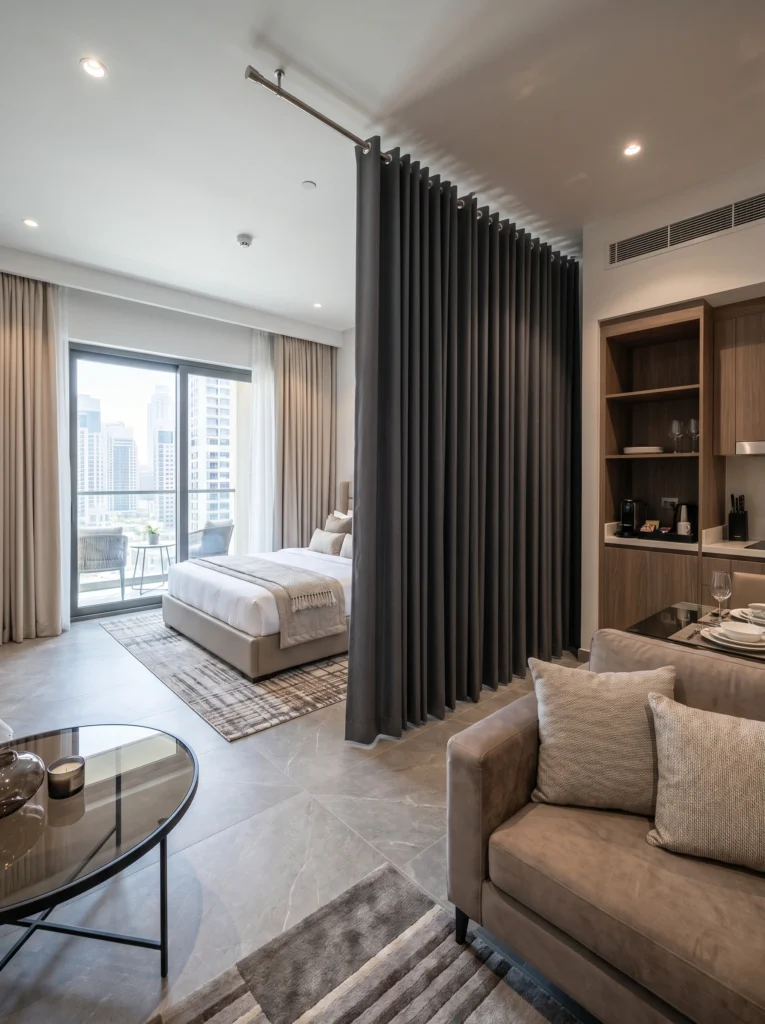
Want something that looks like intentional design rather than a workaround? Upgrade your curtain fabric. This studio uses a ceiling-mounted track with heavy charcoal curtains — the kind of weighted, floor-to-ceiling drape you’d see in a boutique hotel. It completely seals off the sleeping zone while keeping the living area polished. When open, the curtain disappears to the side. Linen, velvet, or heavy cotton all read as deliberate rather than improvised.
Save vs. splurge: IKEA’s KVARTAL curtain track system is the budget-smart choice here. Works exactly like the high-end version.
5. Bookshelf Divider with Plants on Top
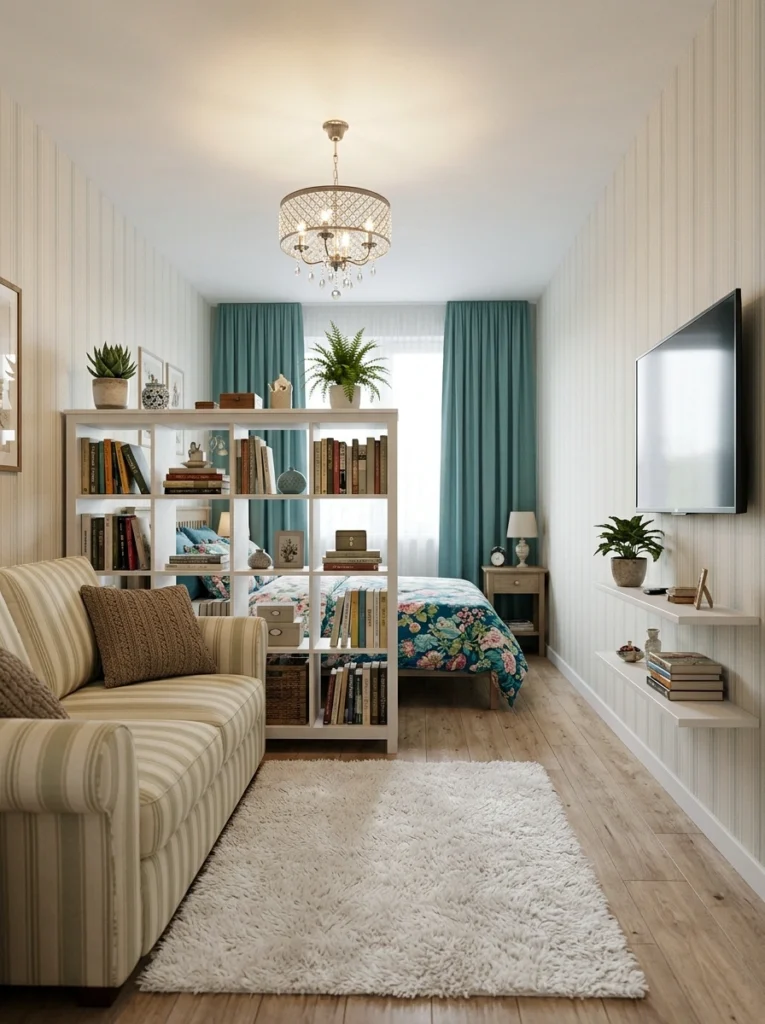
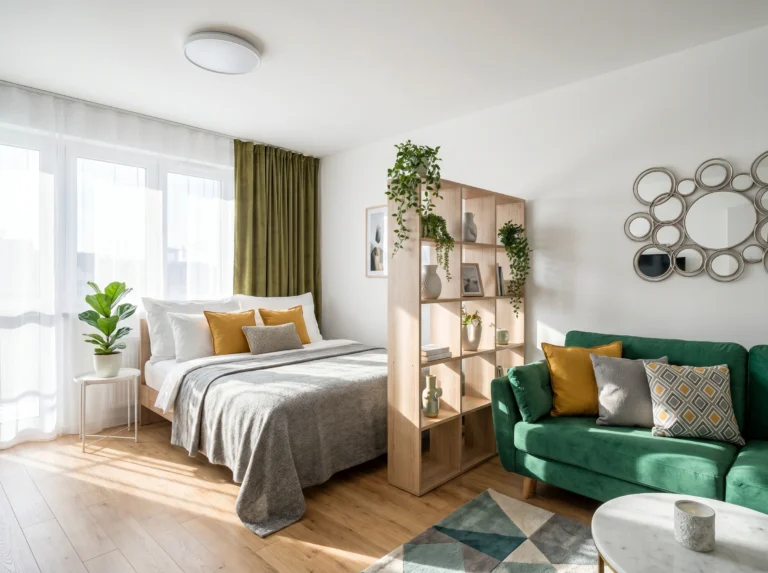
A mid-height open bookshelf styled with books, small objects, and potted plants along the top creates warm, lived-in separation between your sofa side and sleeping side. Plants add height and softness that makes the divider feel organic rather than constructed. It’s a classic approach that works because books and plants are things you already own. No extra investment beyond the shelf itself — and it looks genuinely personal.
Pro tip: Keep the top row consistent — all plants, or plants plus one lamp. Mixing too many categories up there reads as cluttered from across the room.
6. White Sheer Ceiling-Track Curtains
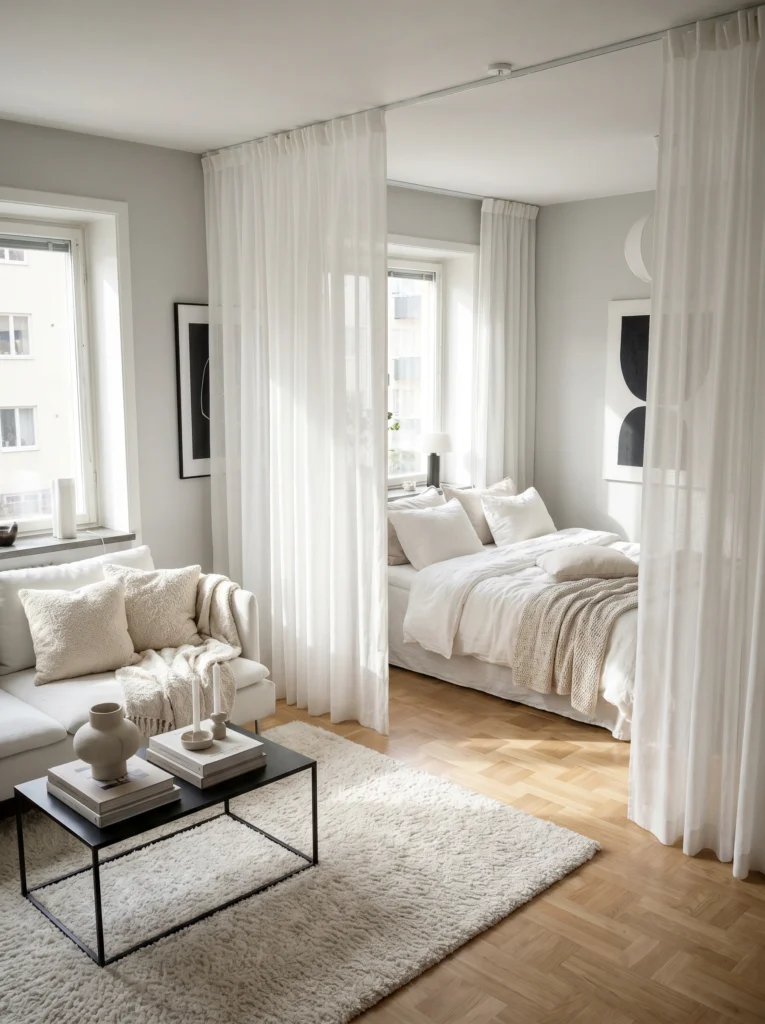
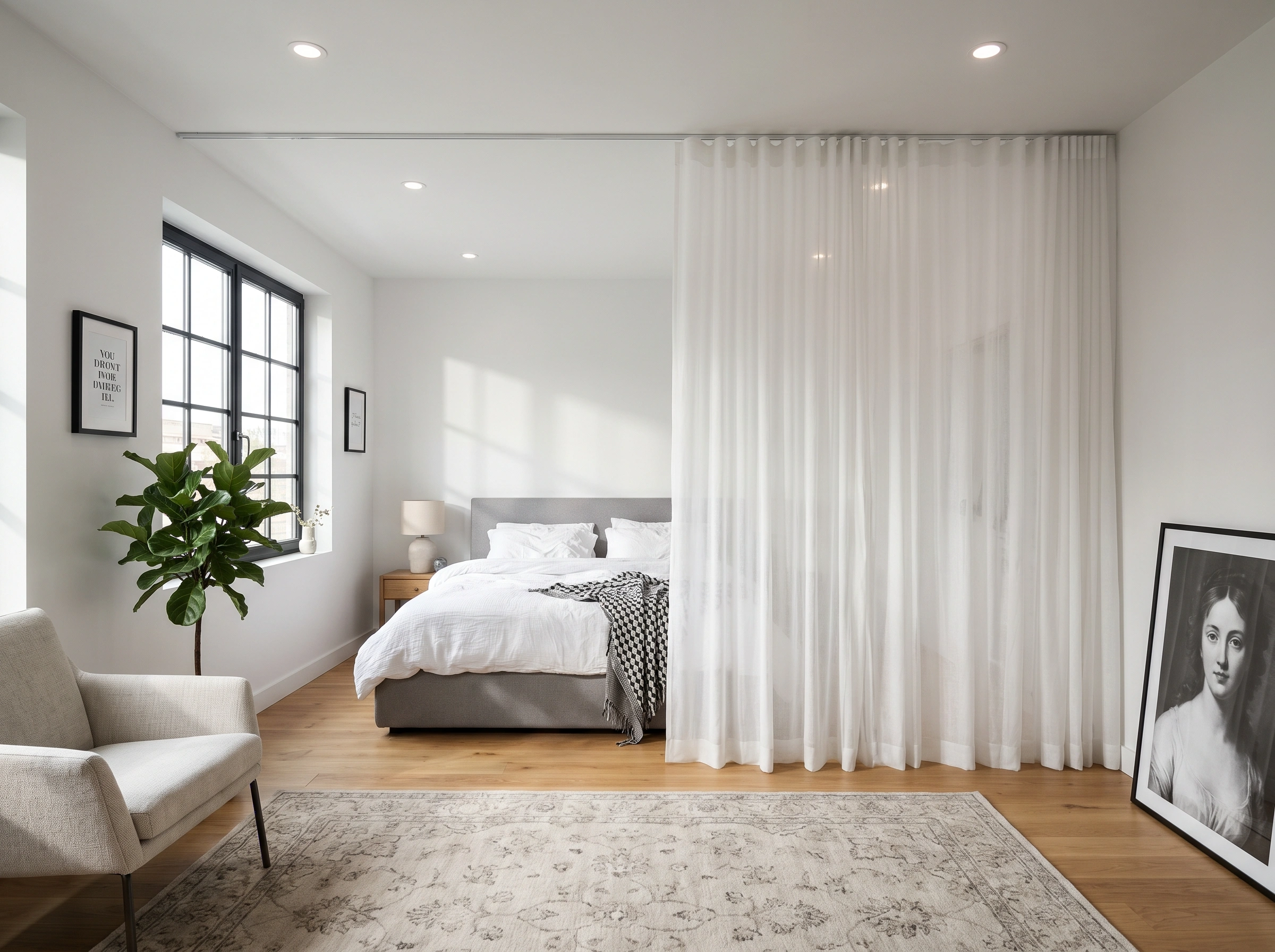
This is the purist version — all-white, wall-to-wall sheers on a slim ceiling track, barely there but doing all the work. In this Scandinavian studio, the curtains filter light into the sleeping nook while keeping the living area bright and spacious. Because the panels are translucent, neither zone feels boxed in. It’s especially effective in small apartments where you can’t afford to lose any light. Quiet, calm, and genuinely beautiful.
Budget vs. splurge: IKEA GJERTRUD sheers ($15 per panel) are nearly identical to curtains three times the price. Stack two panels per hook for more body.
7. Shoji-Style Folding Screen with Hanging Plants
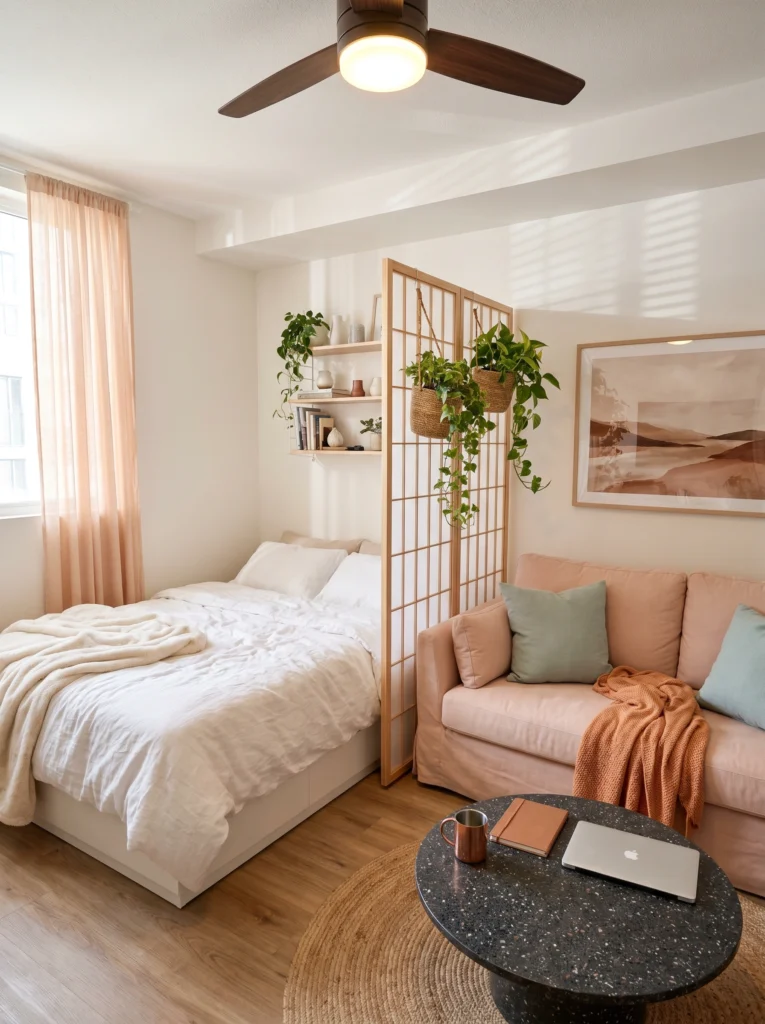
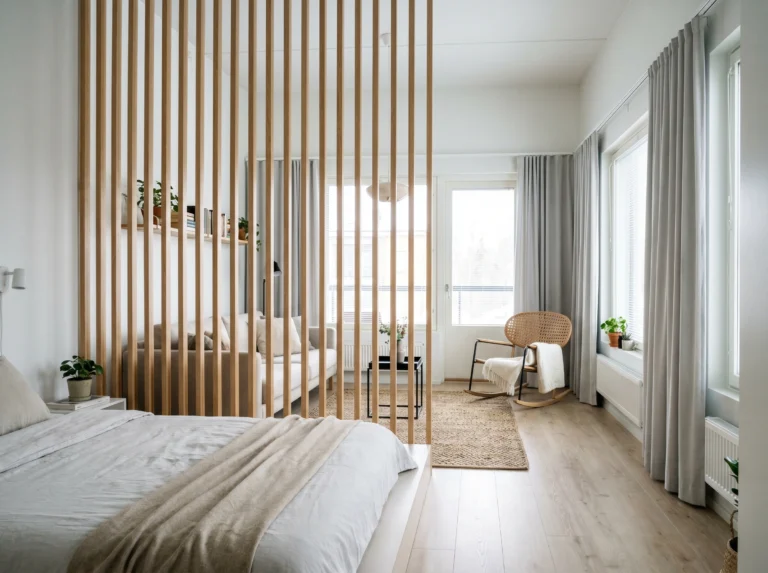
A shoji-inspired wooden screen brings calm, Japandi-adjacent energy and gives your plants something to hang from. Trailing pothos woven through the grid panels makes the divider feel like a living wall rather than furniture. It folds flat in seconds, stands without anchoring anything to walls or ceiling, and adds serious visual warmth. Perfect if your aesthetic leans earthy, minimal, or botanical.
Sofia’s honest take: These screens tip easily in high-traffic spots. If that’s a concern, a freestanding shelf is more stable for everyday use.
8. Cube Shelf Divider with Storage Baskets
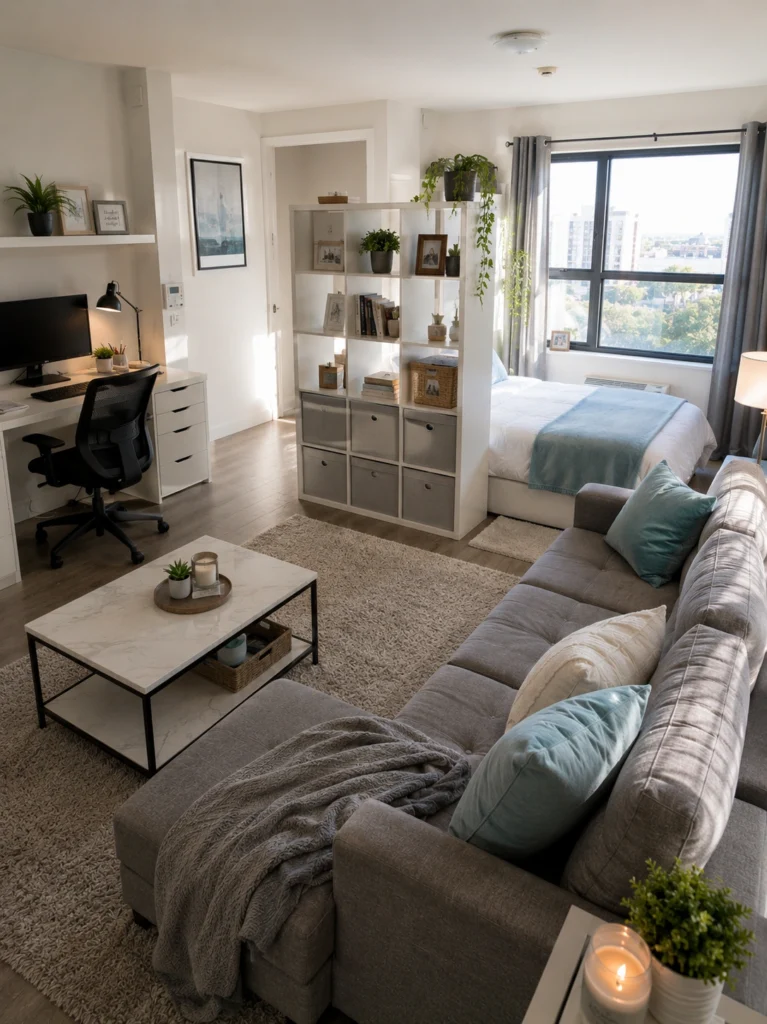
This overhead view shows how much a well-placed cube shelf can accomplish. One KALLAX-style unit carves three distinct zones — a home office corner, a living area, and a sleeping nook — from a single open-plan space. Lower cubes hold fabric storage bins, keeping clutter out of sight while keeping the divider functional. It’s not the most glamorous setup, but it’s one of the hardest-working. Every cube does something. That’s studio living done right.
Pro tip: Anchor your KALLAX to the wall through the back panel using a basic furniture strap — it takes five minutes and keeps everything stable.
9. Geometric Metal Panel Divider
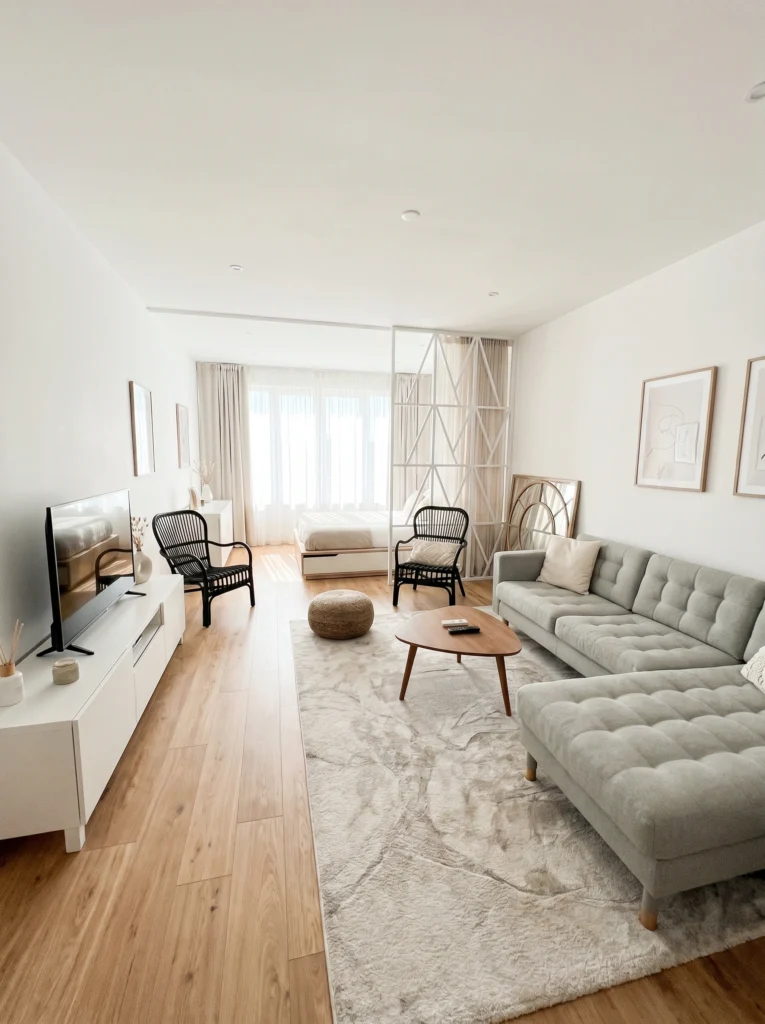
For a more architectural look, a geometric lattice panel brings structure without solid walls. This slim white metal-frame divider echoes Scandinavian design lines — separating zones while allowing natural light to pass through completely. Because the open geometry never fully closes either space, the apartment maintains its airy proportions. Freestanding versions require zero installation, and the look is polished enough to pass for a real design feature rather than a workaround.
Renter-friendly alternative: Freestanding decorative metal panels from Amazon or Wayfair start around $80 and require no installation whatsoever.
10. Low KALLAX with a Palm Tree Accent
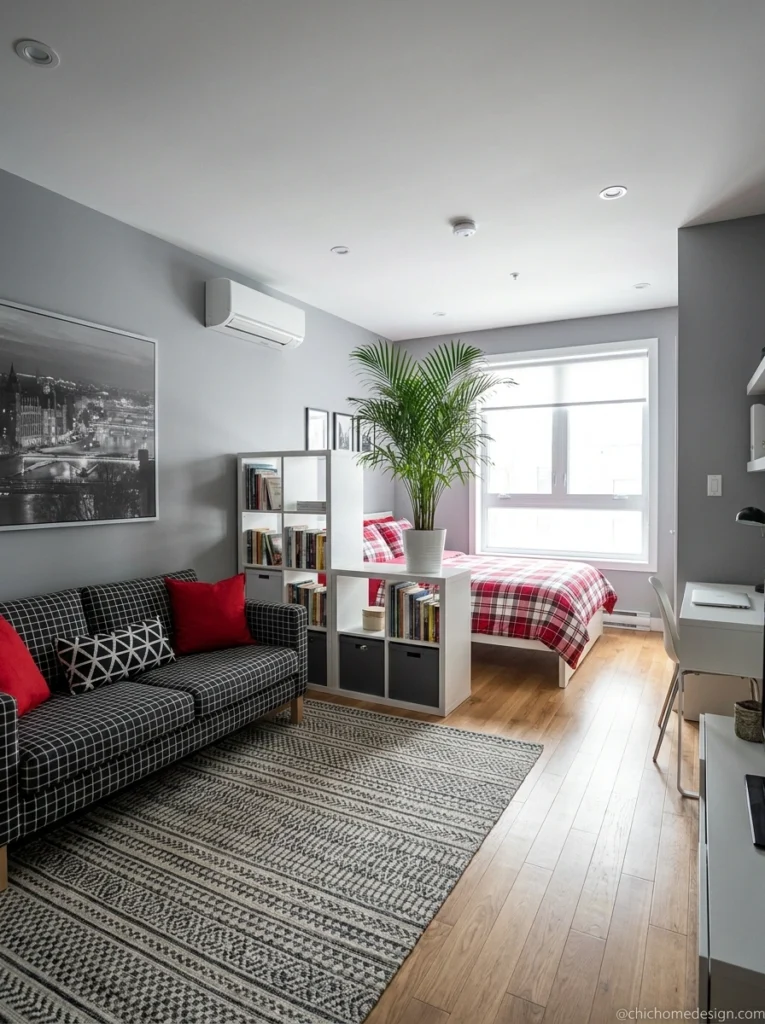
Sometimes the most effective divider is the one that makes you smile. A low four-cube shelf plus a tall indoor areca palm together create a soft visual boundary between the living space and the bed. The palm adds height, greenery, and warmth — and it doesn’t cost more than a decent lamp. The bold tartan bedding and red pillows here keep the whole thing from feeling too serious. Sometimes a plant and a shelf is exactly enough.
Save vs. splurge: IKEA KALLAX 2×2 unit runs around $50. A healthy areca palm is $30–$60 at most garden centers.
11. Walnut Shelf + Ceiling Curtain Combo
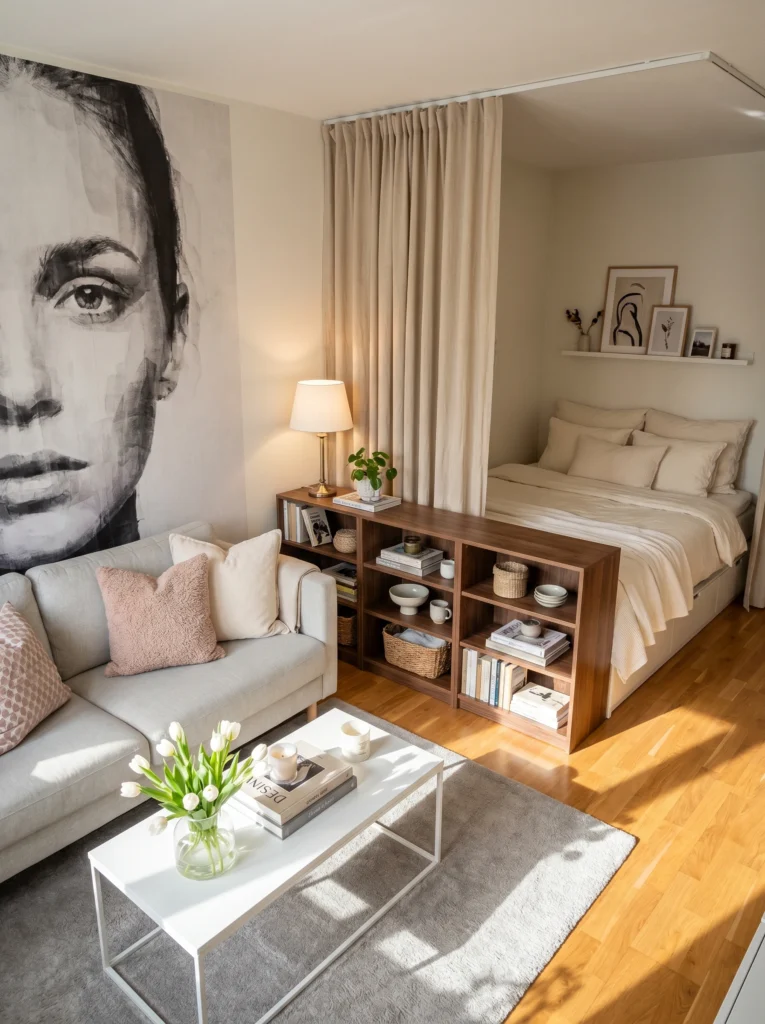
Why choose one divider when two work better together? This studio pairs a low walnut-finish cube shelf with a linen ceiling curtain behind it. The shelf defines the foot of the bed; the curtain closes off the sleeping zone when needed. Open both for a spacious daytime feel, pull the curtain for full privacy at night. Layered dividers give you flexibility that single solutions can’t match.
Pro tip: When combining a shelf and curtain, keep them in the same color family — warm wood plus warm linen — so it reads as one intentional system rather than two random pieces.
12. Floor-to-Ceiling Taupe Curtain Divider
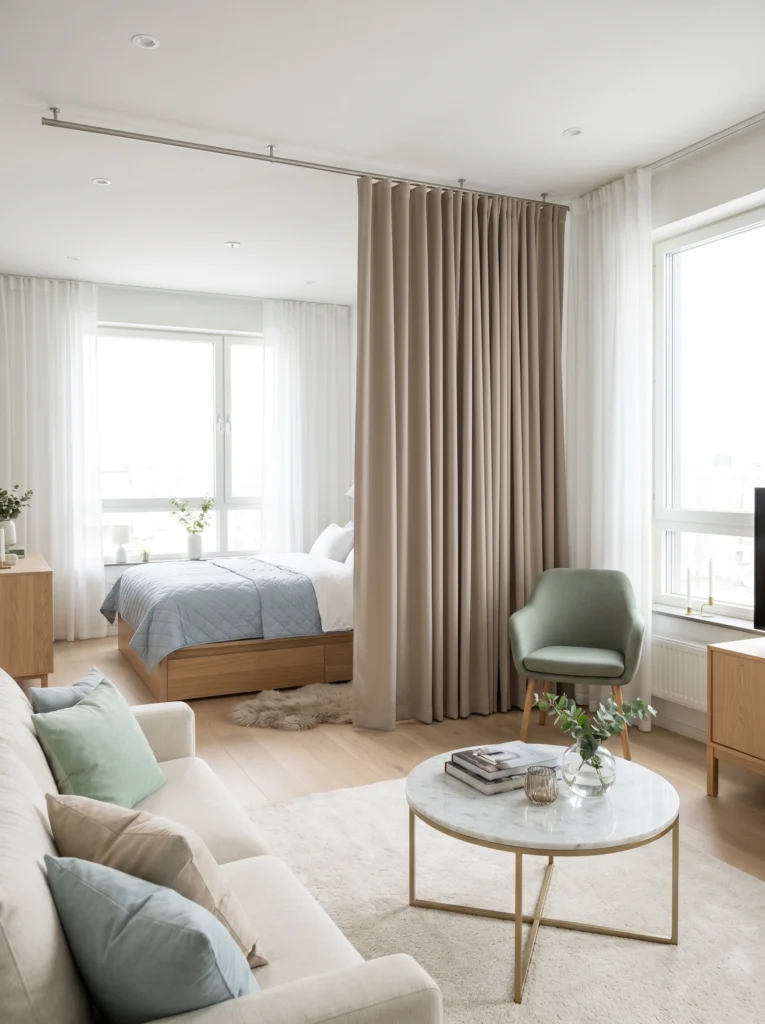
Neutral doesn’t mean boring. This taupe ceiling-track curtain is a study in quiet confidence — it divides the sleeping zone from a living area styled with a sage green armchair and marble-top coffee table. The muted color lets everything else in the room breathe. When you pair a simple curtain divider with thoughtfully chosen furniture, the divider stops looking like a workaround and starts looking like a design decision.
Sofia’s honest take: Taupe, oat, and warm linen tones are more forgiving long-term than stark white — they don’t show dust on the fabric the same way.
13. Dramatic Gray Curtains with a Blue Accent Wall
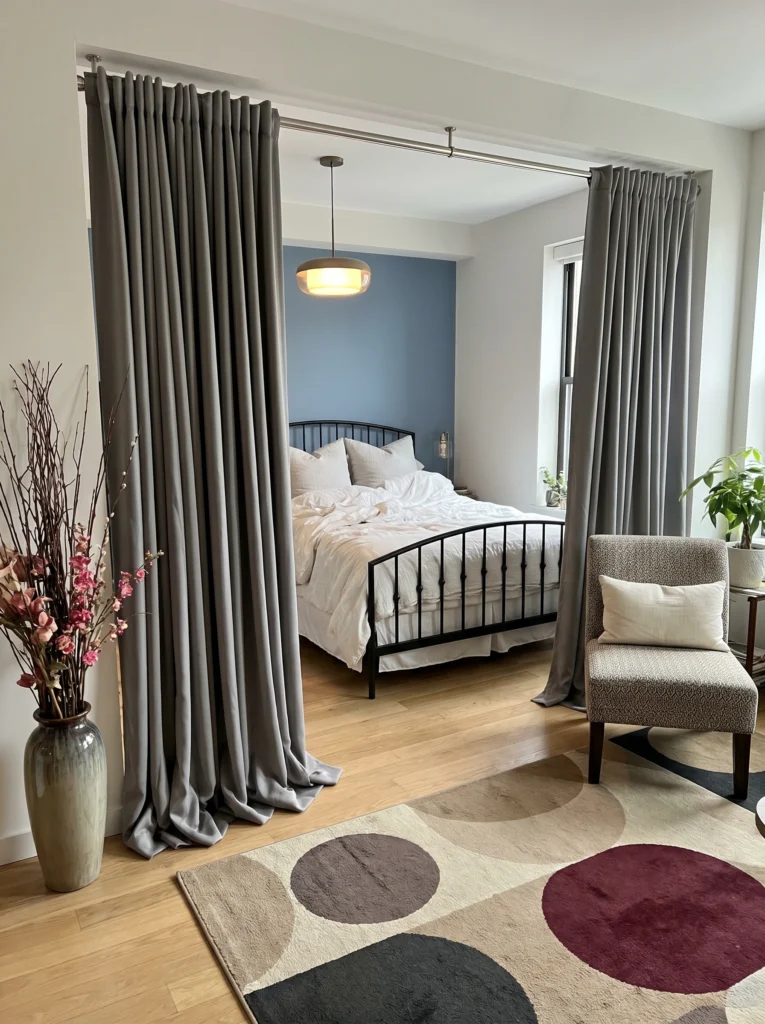
This is for renters who want their sleeping zone to feel like a separate room entirely. Ceiling-mounted gray curtains frame the bed on both sides like stage curtains — when parted, they reveal a blue accent wall, an iron bed frame, and a pendant light that makes the nook feel genuinely distinct. The bold geometric rug and floral arrangement anchor the living side. Drama without permanence. That’s the goal.
Renter-friendly alternative: If you can’t paint the accent wall, use a large-format removable wallpaper panel behind the bed. Nearly identical effect, fully reversible.
14. White Sheer Divider in a Monochrome Scandi Studio
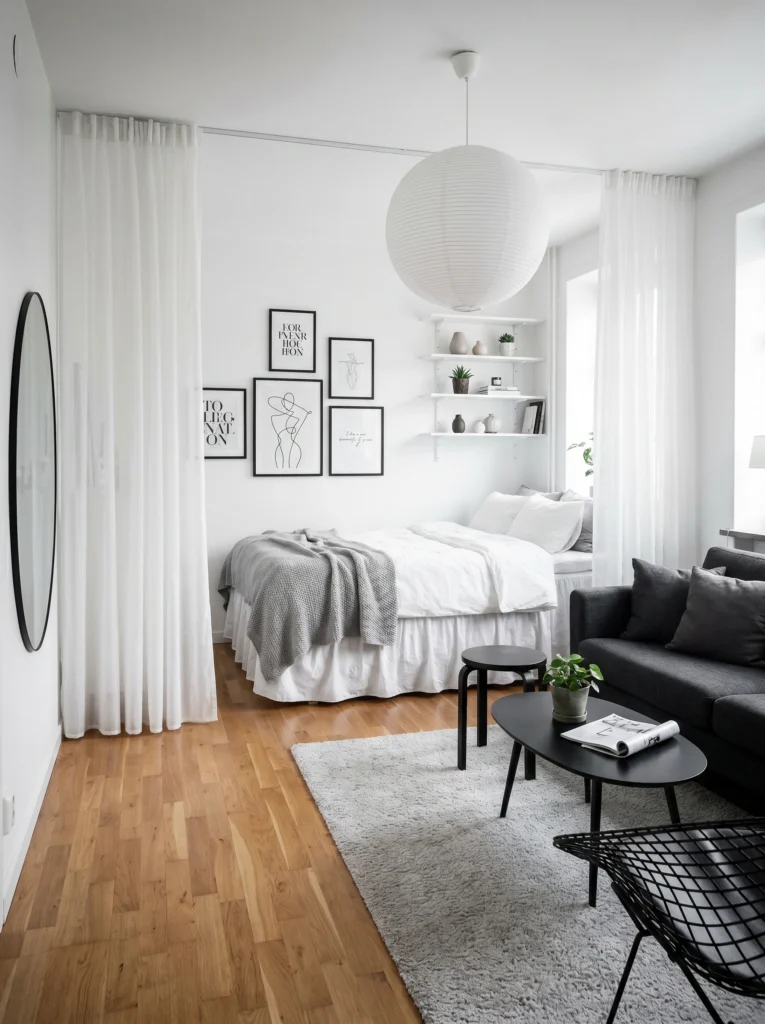
Black, white, and wood — that’s the full palette here, and it’s more effective for its restraint. White sheer panels on a ceiling track divide the sleeping area from the living space, while the bed zone gets a gallery wall, floating shelves, and a paper lantern pendant. On the living side: a charcoal sofa and matte black coffee tables. The sheer curtain keeps light flowing through both zones. Simple, cohesive, genuinely liveable.
Pro tip: A gallery wall above the bed gives the sleeping nook its own identity — it pulls the eye away from how compact the space actually is.
15. Asymmetric Wood Shelf Divider with Greenery
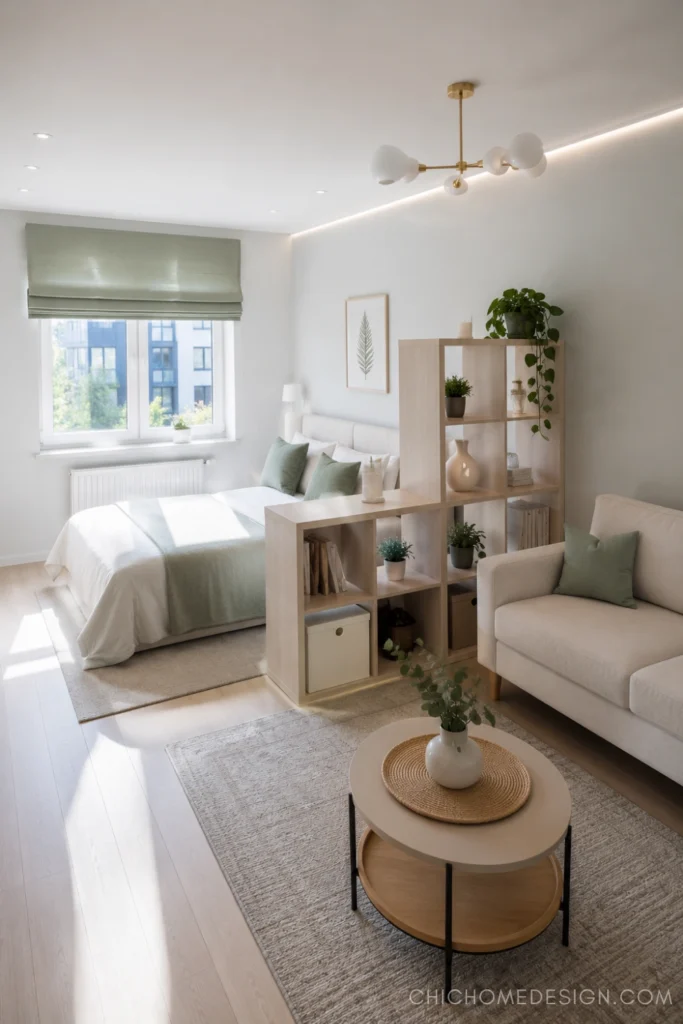
If you want something that feels designed rather than improvised, an asymmetric staircase-style shelf is the move. This light oak unit graduates in height from low to tall, creating a soft visual boundary that doesn’t close off either zone. Open cubes are styled with trailing plants, ceramic vases, and neatly stacked books. Paired with sage green accents and a gold chandelier, it’s a studio that looks considered — because it is.
Save vs. splurge: IKEA KALLAX units stacked and arranged to mimic this staircase effect come in well under $150. Style the cubes similarly and the result is nearly identical.
Final Thoughts
You don’t need a second bedroom to have a space that feels organized, private, and intentional. The right divider — whether it’s a set of IKEA sheers or a freestanding walnut shelf — can turn one chaotic open room into a home that actually functions. Start with whatever fits your lease, your budget, and your style. Even one clear boundary between sleeping and living makes a bigger difference than you’d expect.
The best studio apartments aren’t the ones with the most square footage — they’re the ones where someone made a few smart decisions about where one thing ends and another begins.