How to Stay Safe in a Studio Apartment When You Live Alone
You hear the elevator stop on your floor at 1 a.m. and you freeze, mentally mapping the distance between your bed and your front door — which, in a studio, is about eleven feet. There’s no hallway to muffle a sound, no second bedroom to retreat to, no roommate stirring in the next room. Just you, one room, and one door between you and the rest of the building.
Here’s the thing: feeling on edge in your own home isn’t paranoia, and it isn’t you being “dramatic.” Living alone in a small space comes with a very specific kind of vulnerability — and you deserve to feel genuinely safe in the place you pay for. This guide walks you through exactly how to lock down a studio: renter-friendly gear with real prices, layout tweaks, and a few habits that cost nothing but change everything. No drilling, no deposit drama, no fear-mongering.
Let’s Be Honest About Why a Studio Is Different
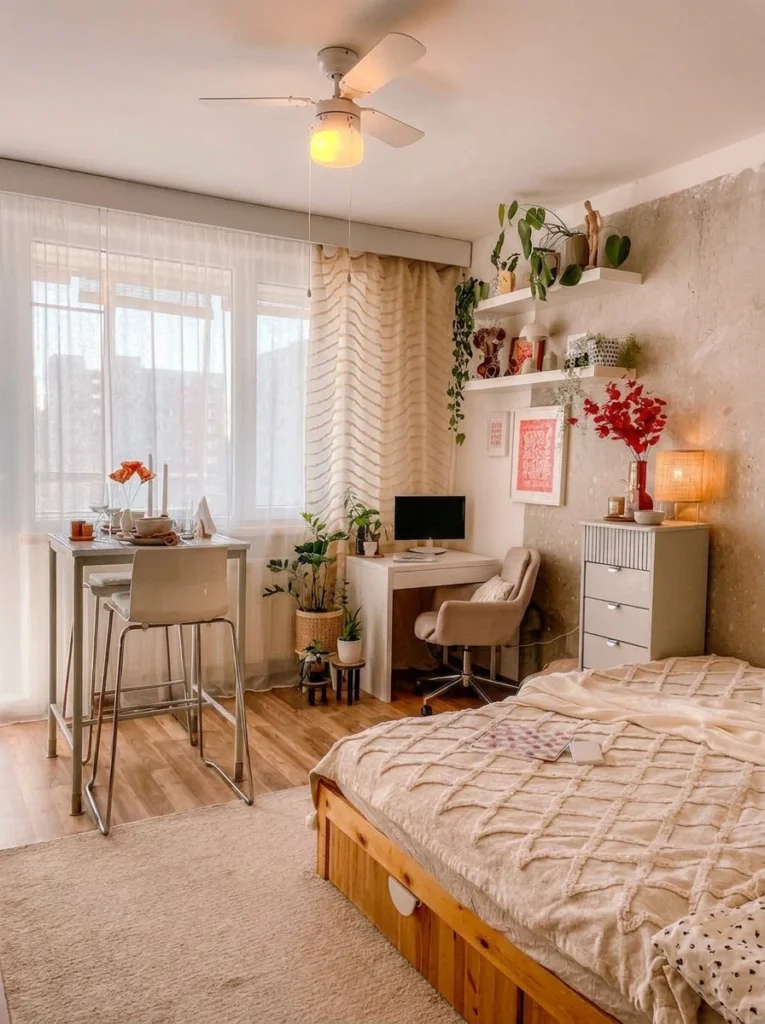
A studio isn’t just a small apartment. When it comes to safety, the layout creates real challenges a two-bedroom doesn’t.
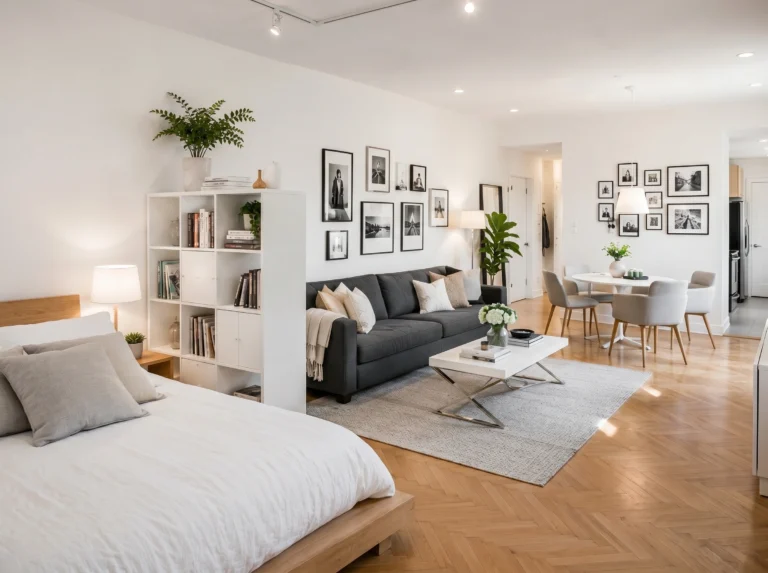
Everything you own is visible the moment your door opens — your bed, your laptop, your whole life, all in one sightline. There’s nowhere to create distance between you and someone at the door, and no interior door to put a second barrier between you and a hallway. And because so many studios sit in dense buildings with shared entries, stairwells, and laundry rooms, your “front door” is rarely the only thing standing between you and a stranger.
None of this means a studio is unsafe. It just means the usual generic advice — “lock your doors!” — doesn’t go far enough. You need layers.
1. Add a Portable Door Lock That Works Even With a Master Key
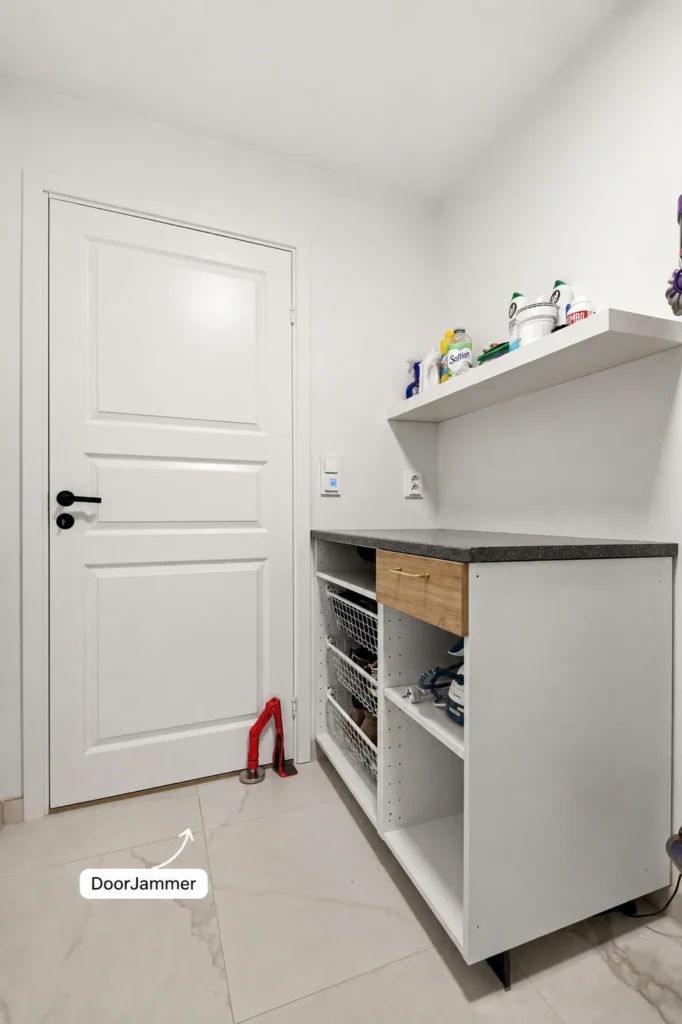
What it solves: A landlord, super, ex, or anyone with a copy of your key being able to walk in. Effort level: 30-second fix Cost: $13 – $30
This is the single highest-impact thing you can do, and it costs less than a takeout dinner. A portable door lock — like the Addalock (around $25) or a DoorJammer (about $30) — turns any inward-swinging door into something that physically cannot be opened from the outside, even by someone holding a key.
The Addalock hooks its claws into your strike plate, then you close the door and it locks in place — no tools, no installation, no marks on the frame. The DoorJammer wedges under the door and uses the harder-someone-pushes-the-more-it-resists principle; it needs a gap of at least a quarter inch under your door to fit. Both pack into a drawer and come with you when you move.
Pro tip: Keep it engaged whenever you’re home, not just at night. The whole point is that it protects you in the moments you’d never see coming — including from anyone who’s “supposed” to have access.
2. Put a Stick-On Camera Where Your Door Meets the Room
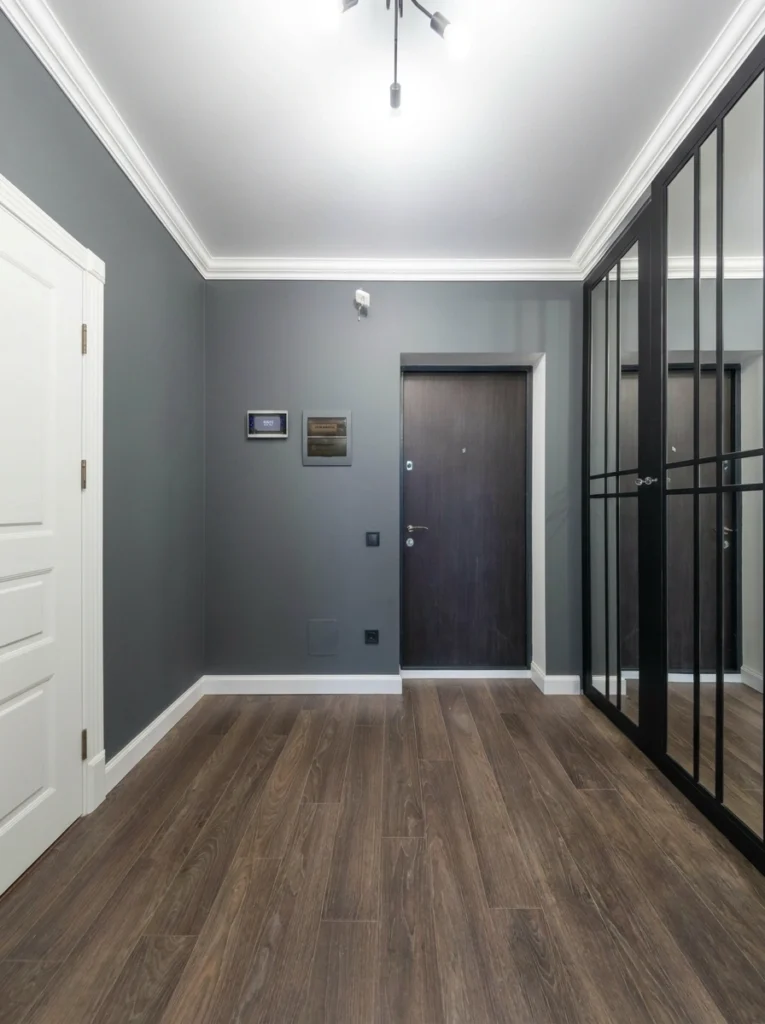
What it solves: Not knowing who’s outside, and having no record if something happens. Effort level: 15-minute setup Cost: $20 – $35
You don’t need a six-camera surveillance rig in 400 square feet. You need one good indoor camera pointed at your entry. The Wyze Cam v4 runs about $20–$35, shoots in sharp 2.5K, has solid color night vision, and sends motion alerts straight to your phone. Set it on a shelf or windowsill facing the door — no drilling, just place it.
In a studio, a single camera near the entry covers almost everything, because almost everything is near the entry. You’ll get a ping if your door opens while you’re at work, and you’ll have footage if you ever need it for the building or the police.
Renter-friendly alternative: If you want eyes on the hallway without touching your lease, a Ring Peephole Cam replaces your existing peephole with a video version and reverts back when you move. No new holes, deposit intact.
Skip the cameras that require a monthly subscription to do anything useful. Wyze lets you record to a microSD card with no fee. Pay monthly only if you genuinely want cloud backup — don’t get guilted into it.
3. Use Lights and Sound to Look “Not Home Alone”
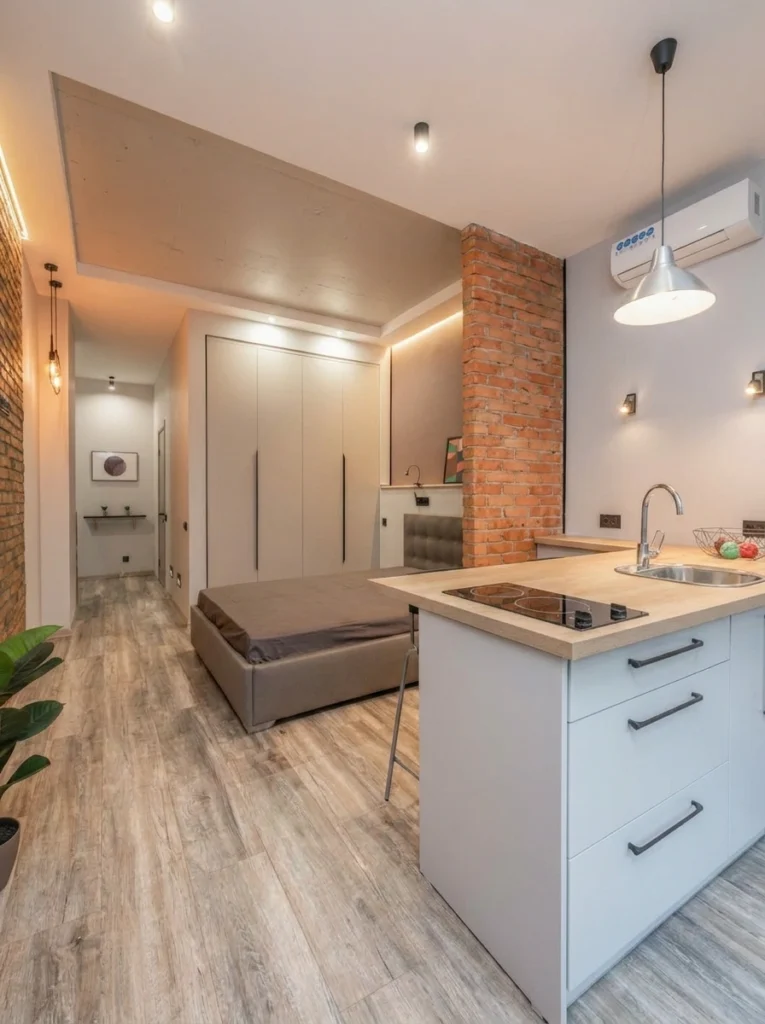
What it solves: The single-occupant signal — anyone watching can tell one person lives here. Effort level: Zero effort after setup Cost: $10 – $30 (or free)
A studio gives off obvious cues: one window glowing, one light, total silence. A couple of cheap smart plugs (a 4-pack runs around $25) let you schedule a lamp to flick on at dusk and off at bedtime, so your place looks lived-in whether you’re home, traveling, or just out late.
The free version of this: leave a light on in the bathroom or kitchen when you head out at night, and leave a radio or TV playing low. It sounds almost too simple, but ambiguity is your friend. Someone scoping out an easy target wants certainty, and you’re taking that away.
Pro tip: When you order food or a package, list it under just a first initial and last name — “A. Martin,” not your full name. Tiny detail, real difference.
4. Reclaim Your Windows and Sightlines
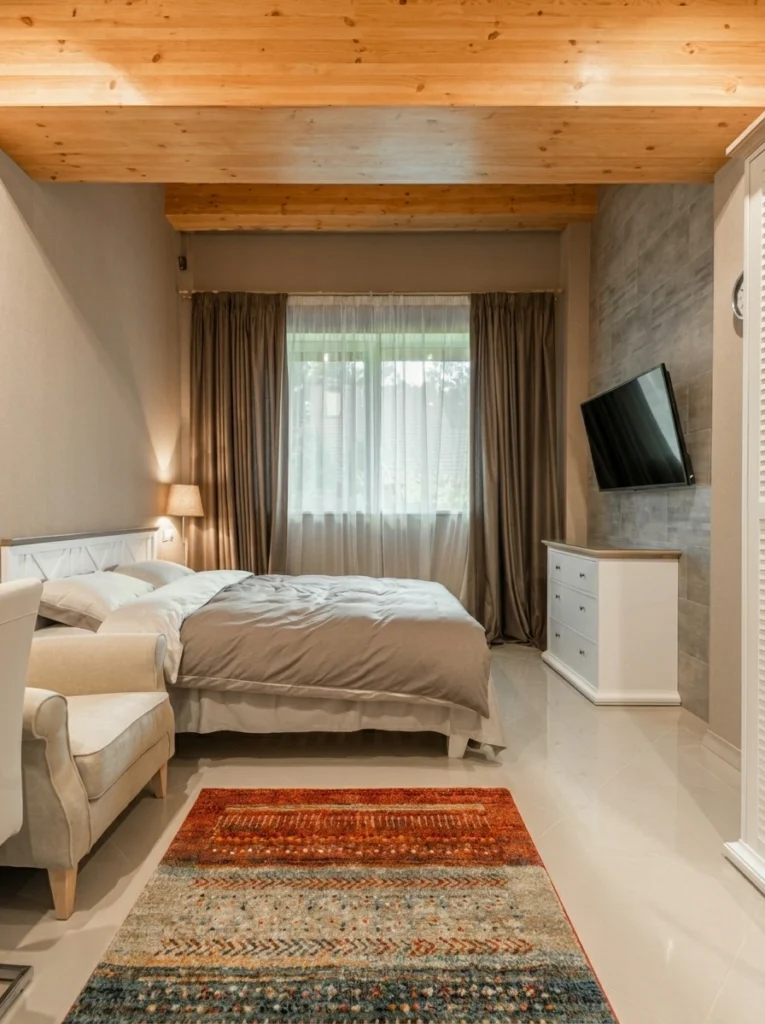
What it solves: Strangers being able to see straight into your entire home. Effort level: Weekend project Cost: $20 – $50
In a studio, one window often looks onto your bed, your couch, and your kitchen at once. If you’re on a ground or second floor, that’s a lot of your life on display. You don’t need to live in the dark — you need control over the sightline.
- Bottom-up cordless shades (around $30 at IKEA or on Amazon) cover the lower half of the window for privacy while letting light pour in up top. They’re tension-mounted, so no drilling.
- Privacy window film (about $15 a roll) goes on with water, peels off clean, and blurs the view in while keeping daylight. Perfect for renters.
- A simple café curtain on a tension rod does the same job for under $20 and comes down in seconds.
Renter-friendly alternative: Everything above is no-drill and removable. If your lease is strict, the static-cling privacy film leaves zero residue — I’ve peeled it off a rental window with nothing but a fingernail.
5. Build a Two-Layer Entry Zone
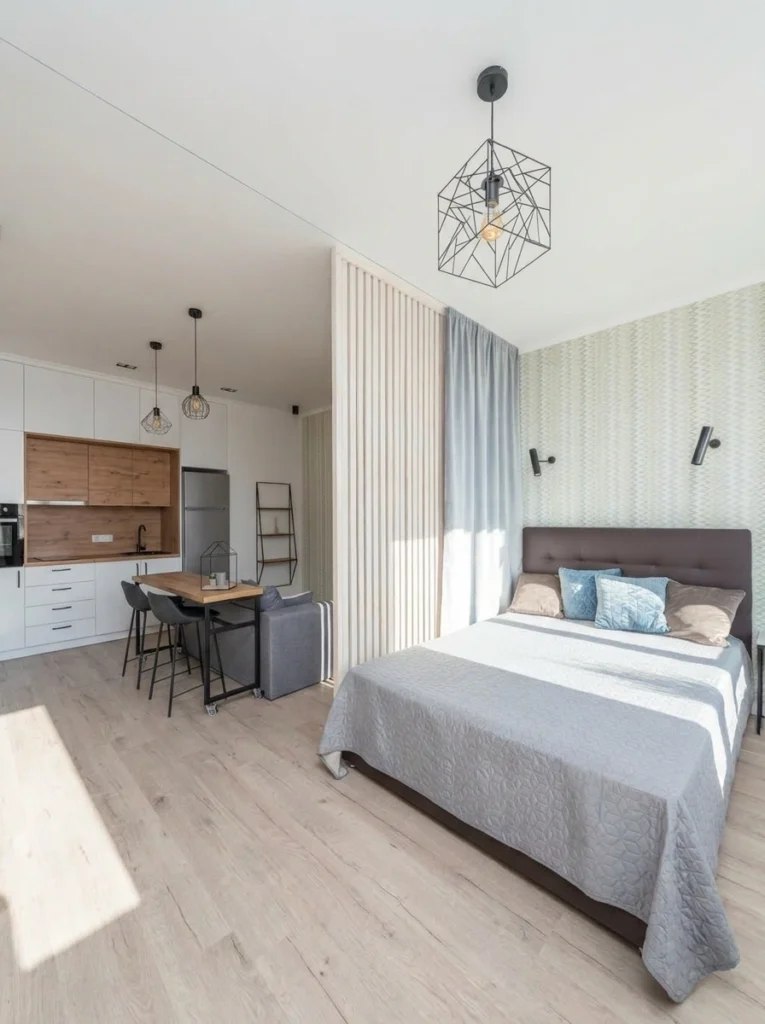
What it solves: Having no buffer between your front door and your living space. Effort level: Weekend rearrange Cost: Free – $80
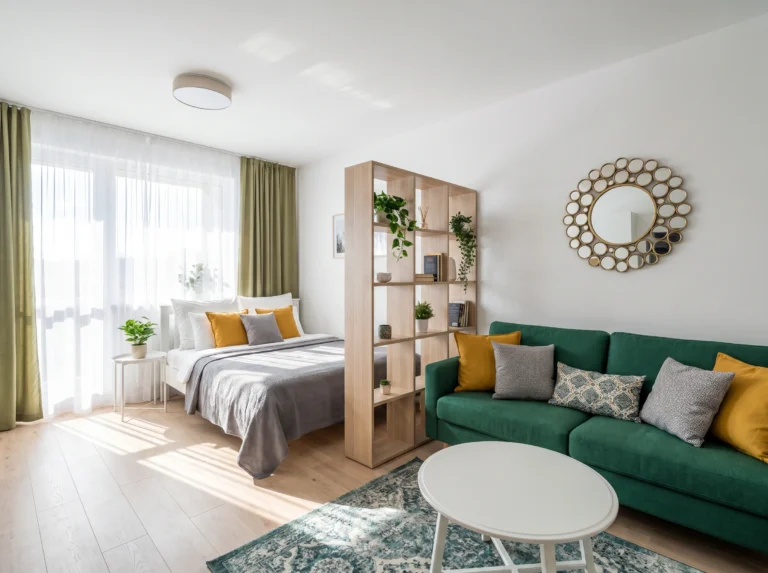
This is the part most people skip, and it’s exactly why a studio can feel exposed. You can’t add a wall, but you can create a psychological and physical buffer near the door so your bed and valuables aren’t the first thing visible.
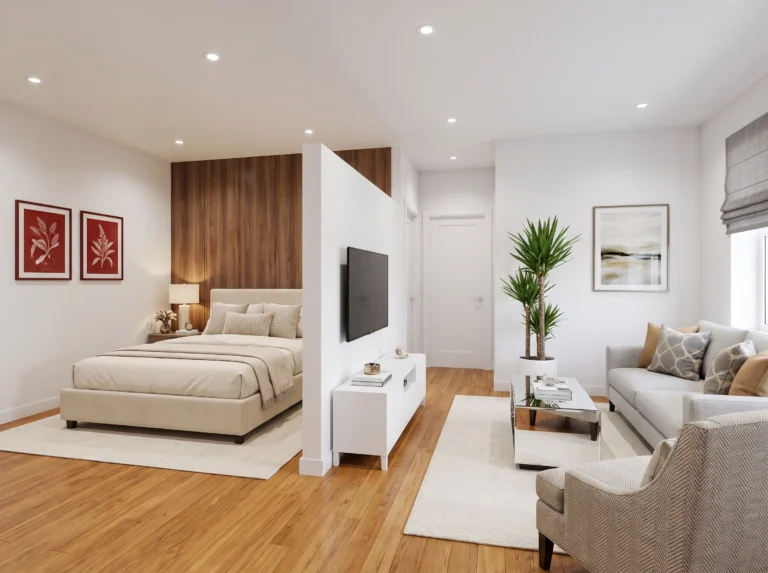
Position a bookshelf or open shelving unit about three to four feet inside the entry, angled to block the direct line of sight from the doorway to your bed. A 72-inch IKEA Kallax-style shelf (around $80) does this beautifully and doubles as storage. Even a tall plant and a small console table create a “you’ve entered a space, not a bedroom” moment.
The bonus: this buffer gives you a second or two of warning and a place to keep your keys, your portable lock, and a flashlight right where you’ll grab them.
6. Keep Your Address Off the Internet
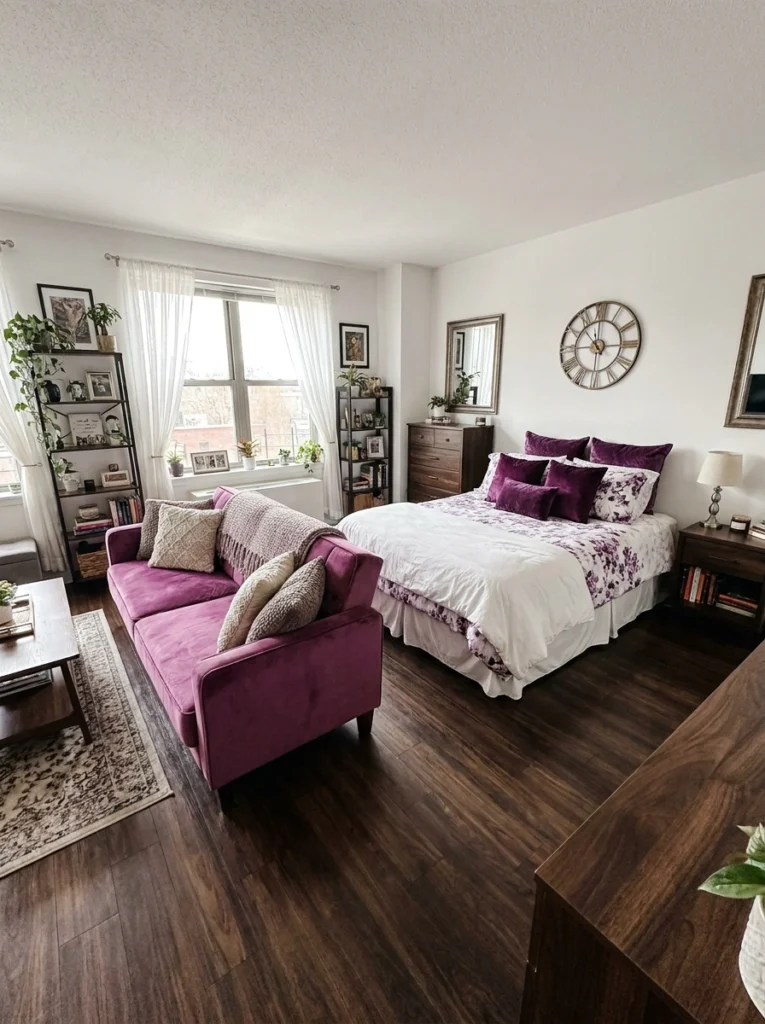
What it solves: Someone finding out where you live without ever coming near your building. Effort level: One focused afternoon Cost: Free
Physical locks matter, but a huge amount of risk is digital. Spend an afternoon doing this once:
- Turn off precise location tagging on your photos and social posts. Don’t post the front of your building or your unit number.
- Search your own name plus your city on data-broker sites (Whitepages, Spokeo, etc.) and request removal — most have an opt-out page.
- Set deliveries to a parcel locker, building office, or an Amazon Hub if your name-on-the-door makes you uneasy.
This is the unglamorous safety work nobody Instagrams, and it might matter more than any gadget. A lock stops someone at your door. Keeping your address private stops them from showing up at all.
How This Looks in a 400 sqft Studio
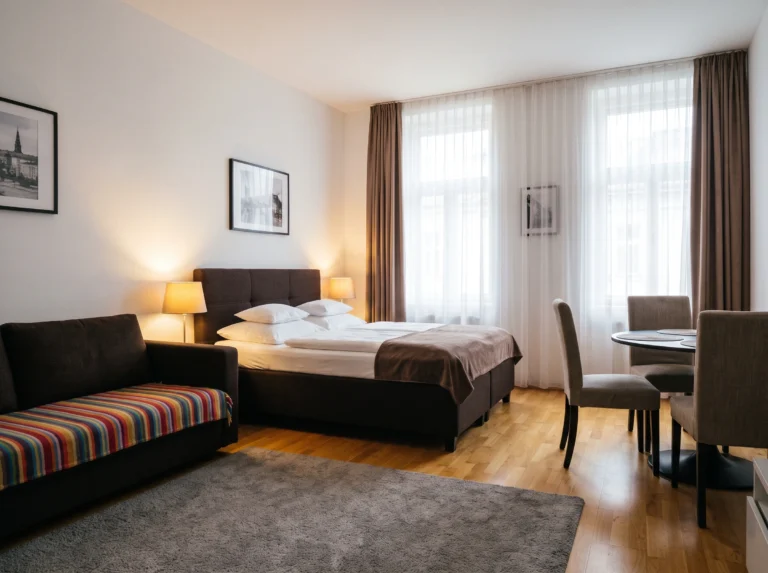
Picture a typical 400-square-foot studio: front door on the entry wall, kitchen along the same wall to the left, one big window on the far wall, bed in the far corner, couch and TV in the middle.
Start at the door. Your portable lock lives on a hook on the entry wall, right where you drop your keys. Three to four feet in, your 72-inch shelf sits angled so that when the door opens, a visitor sees the shelf and living zone — not your bed in the back corner. Your Wyze camera sits on top of that shelf, facing the door, capturing everyone who comes and goes.
Across the room, the window gets bottom-up shades or privacy film, so your bed (about ten feet from the glass) stays out of view from outside. A smart-plug lamp sits by the couch on the entry side, scheduled to glow at dusk — the part of your home most visible from the hallway or street.
Leave at least 30 inches of clear walkway between the shelf and the kitchen so your entry never feels boxed in. The result: layers between you and the door, nothing valuable in the immediate sightline, and a home that always reads as “lived-in and aware.”
Mistakes to Avoid When Securing a Studio
Relying only on the lock the building gave you. That standard deadbolt has been keyed for who-knows-how-many past tenants, and your landlord and super both have copies. You usually can’t legally rekey it yourself, but you can add a portable lock that no master key defeats. Layer, don’t replace.
Buying a camera that films your whole apartment. A camera pointed at your bed and couch is a privacy risk if it’s ever breached — and indoor cameras do get hacked. Point it at the door, the one spot that matters, and you get the security without turning your home into a livestream of yourself.
Blacking out every window. In the rush to feel private, people seal themselves into a dark box, which tanks your mood and your sense of safety more than it helps. The goal is controlling the sightline, not eliminating daylight. Bottom-up shades and film let you have both.
Announcing that you live alone. A “welcome to my single-girl apartment!” post, your full name on the buzzer, a single nameplate — these are small signals that add up. You don’t have to invent a fake roommate, but you don’t have to advertise, either. A little ambiguity is free protection.
Your Studio Safety Checklist
- Install a portable door lock (Addalock or DoorJammer, ~$25) and use it whenever you’re home
- Place one indoor camera facing the entry, not the room
- Schedule a lamp on a smart plug to mimic an occupied home
- Add bottom-up shades or peel-off privacy film to street-facing windows
- Angle a shelf 3–4 feet from the door to block the sightline to your bed
- Remove your address from data-broker sites and strip location tags from posts
- Keep keys, lock, and a flashlight in one grab-and-go spot by the door
- Trust your gut — if a hallway, person, or situation feels off, act on it without apologizing
Making Your Studio Feel Like Home Again
Living alone in a studio is one of the most freeing things there is — your space, your rules, your peace. Safety isn’t the opposite of that freedom; it’s what protects it. Once the door situation is handled and your sightlines are yours, you stop bracing every time the elevator stops on your floor, and the room finally feels like yours instead of somewhere you’re keeping watch.
If you’re still figuring out the rest of your layout, our guide to making a small studio feel like home covers the cozy side — warmth, texture, and the touches that turn a secure box into a sanctuary.
Your space is small. Your sense of safety doesn’t have to be.
A home you feel safe in isn’t a luxury — it’s the floor, not the ceiling. Start with the door tonight, and build from there.
Image credits: All photos via Pexels