13 Folding Room Divider Ideas for Studio Apartments
One single room. Your bed, your living space, your kitchen — all sharing the same air. There’s nothing wrong with that, but after a while, sleeping three feet from your couch starts to feel less “cozy” and more “chaos.” A folding room divider fixes that without drilling a single hole in the wall. Here are 13 ideas, pulled from real studio setups, to help you carve out the zones your space desperately needs.
1. The Arched Rattan Screen That Does Everything Right
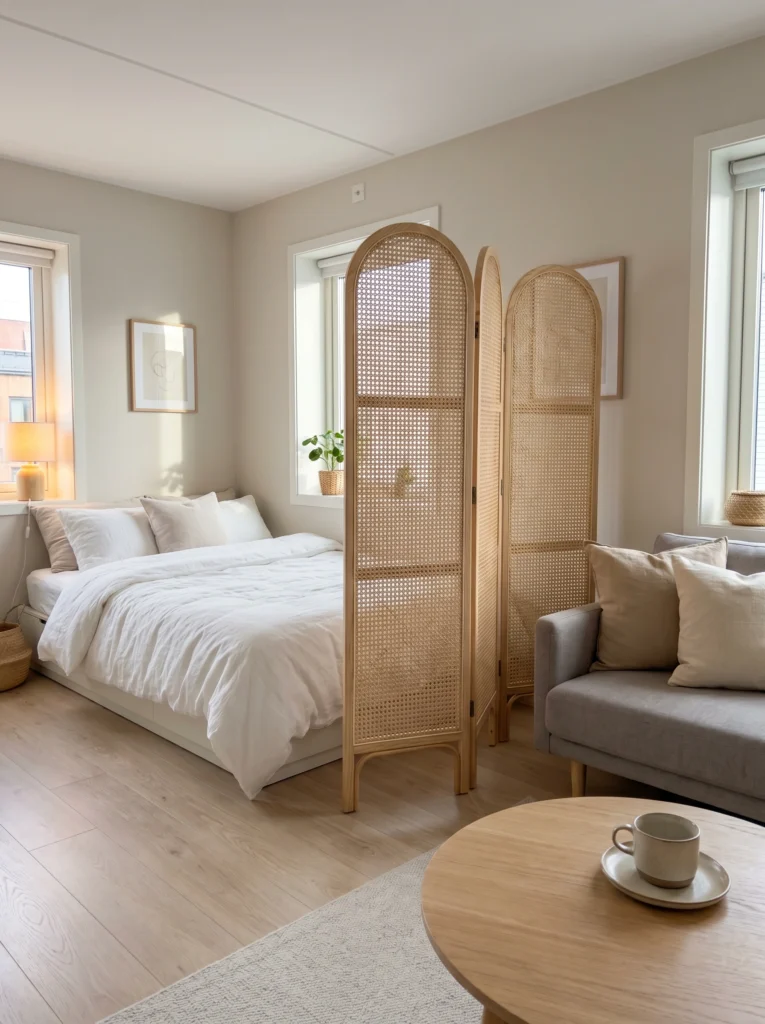
This is the divider I’d buy tomorrow if I were setting up a new studio. Three arched rattan panels in a warm natural tone — placed between the bed and the sofa — and suddenly you have two rooms. The cane weave lets light pass through, so nothing feels blocked or closed off. It’s beautiful as a standalone piece too, not just a functional fix. Pair it with a low platform bed, a round wooden coffee table, and warm-toned textiles, and you’ve got yourself a genuinely polished space.
Pro tip: Arched tops soften the visual height and make the divider feel intentional — not like a last-minute fix.
2. The Bold Black Lattice Statement Divider
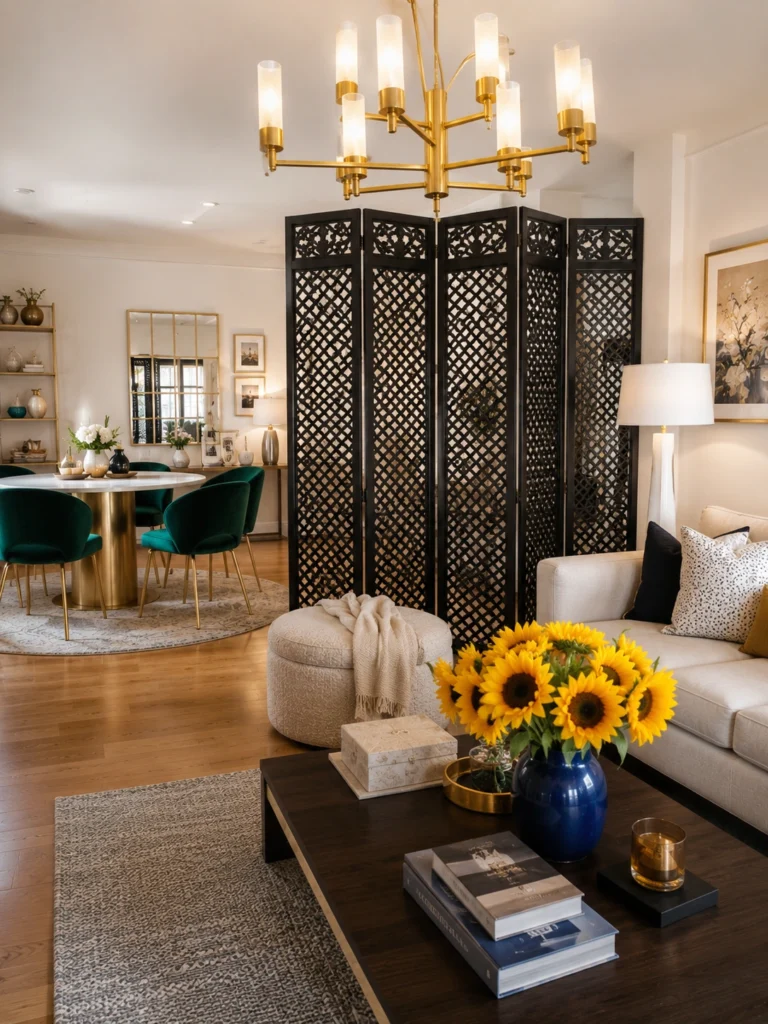
Not every studio apartment wants the natural-rattan-and-linen look — and that’s perfectly fine. This six-panel black lattice screen is doing something completely different: it’s the focal point of the room, not a background player. Paired with emerald green velvet chairs, a gold chandelier, and a bold sunflower centerpiece on a dark coffee table, it anchors the divide between a living and dining zone with real style. If your space leans maximalist or glam, lean fully into it. A statement divider can tie an entire room together.
Sofia’s honest take: Go big or go home. A weak divider in a bold room looks indecisive.
3. The Boho Studio With Rattan and Pattern Play
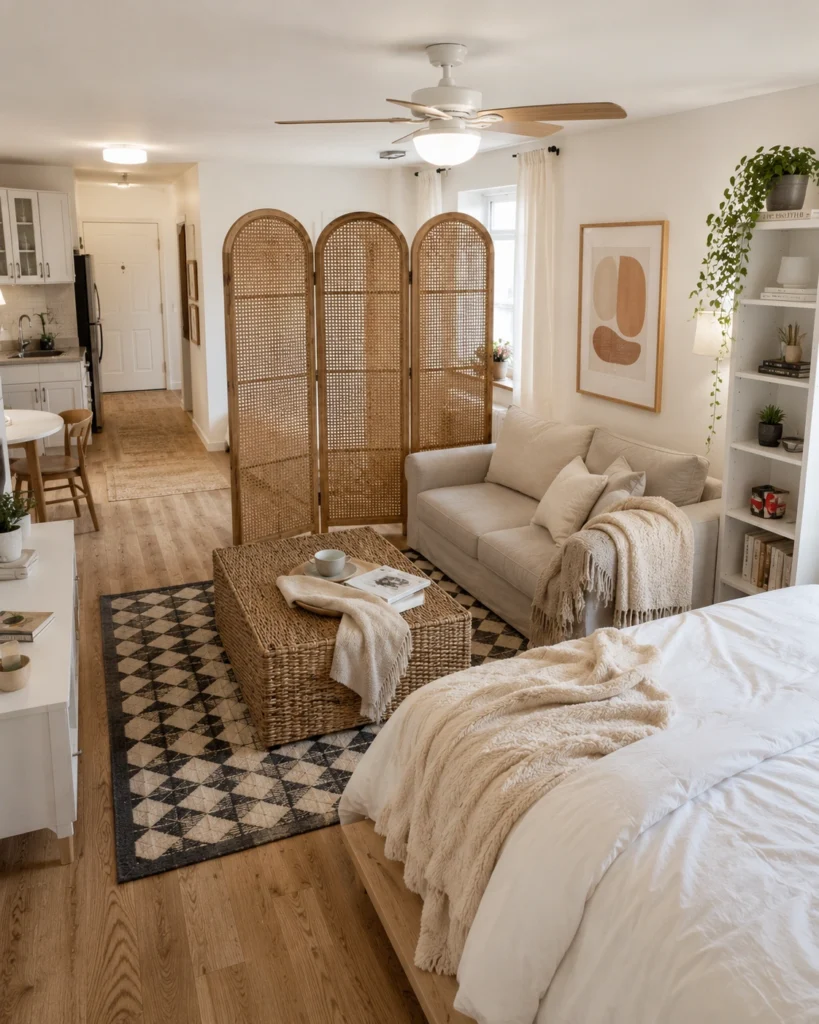
Three arched rattan panels, a black-and-cream diamond rug, a wicker ottoman doubling as a coffee table, a trailing pothos on a white shelf — this studio is a masterclass in layered texture. The divider separates the sleeping area from the living space without closing it off from the kitchen beyond. What makes this work is the consistency of the warm neutral palette carried across every single zone. The divider feels like a natural piece of furniture placed with intention, not a partition thrown in as an afterthought.
Pro tip: Ground your divider zone with a rug underneath the living area. It signals “room” more clearly than the screen alone.
4. The Laser-Cut Screen That Doubles as Art
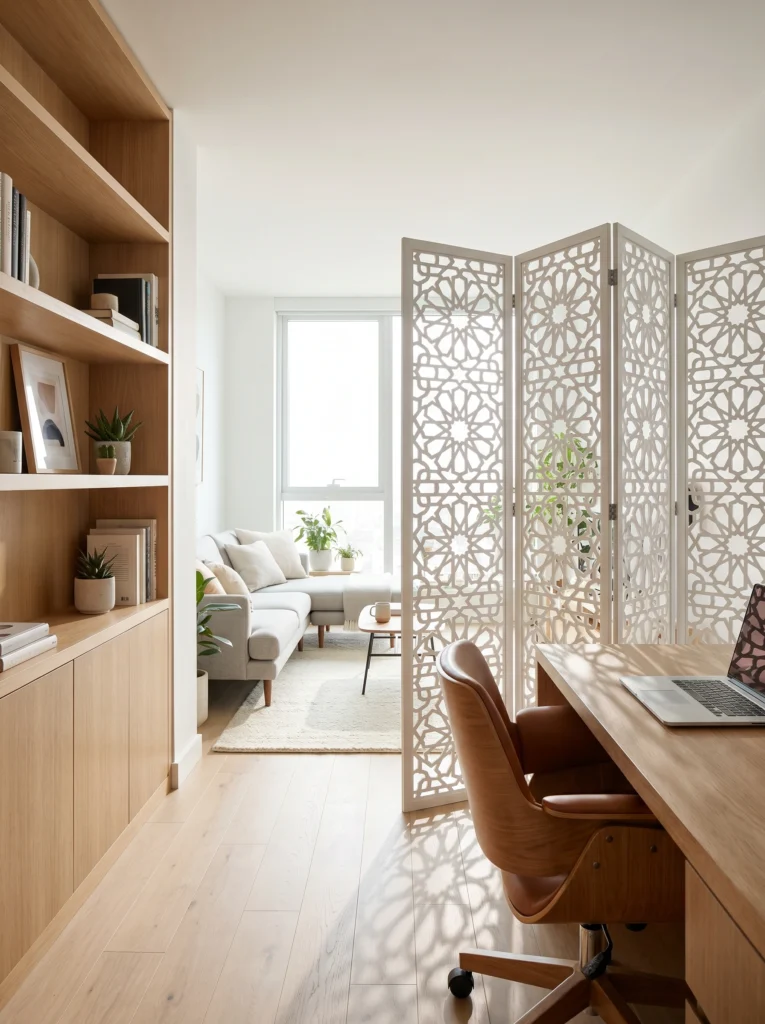
Here’s what I love about this setup: the laser-cut geometric screen doesn’t just divide the home office from the living area — it casts gorgeous shadow patterns across the floor when the light hits it. The desk sits on one side, the sofa on the other, and that carved white screen does the separating without making the space feel tight. The warm wood shelving on the left keeps it from getting too cold. If you work from home in a studio, this is the kind of divider that earns its square footage.
Renter-friendly alternative: No-drill, no-anchor. Just position and fold.
5. The Cane Circle Panel Divider for Narrow Studios
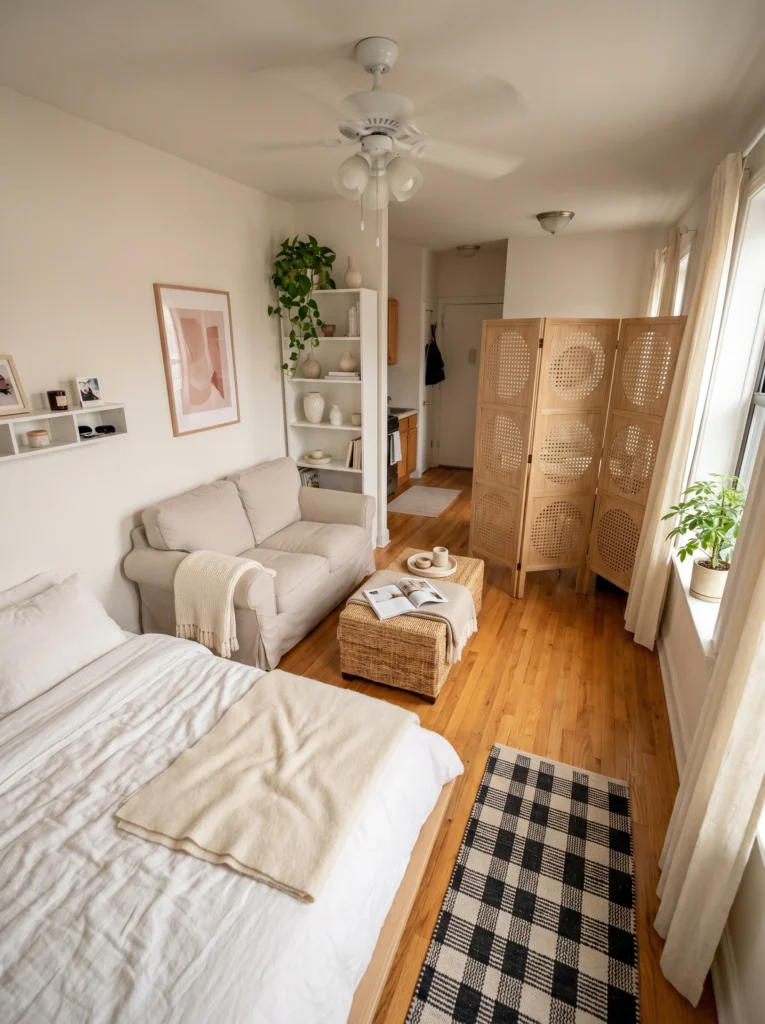
Narrow studio? This layout has you covered. A three-panel cane divider with circular cutout patterns sits beside the bed — not behind it — which is a smart approach for a long, thin floorplan. The sofa faces the coffee table on the living side, and the divider creates a soft visual boundary without eating precious width. Black-and-white plaid rug, cream curtains, a pothos trailing from a high shelf, a plant by the bright window — it all keeps the eye moving without the space ever feeling cluttered or closed in.
Pro tip: In a narrow studio, place your divider parallel to the long wall, not across it.
6. The Circle-Cutout Rattan That Separates Kitchen From Living
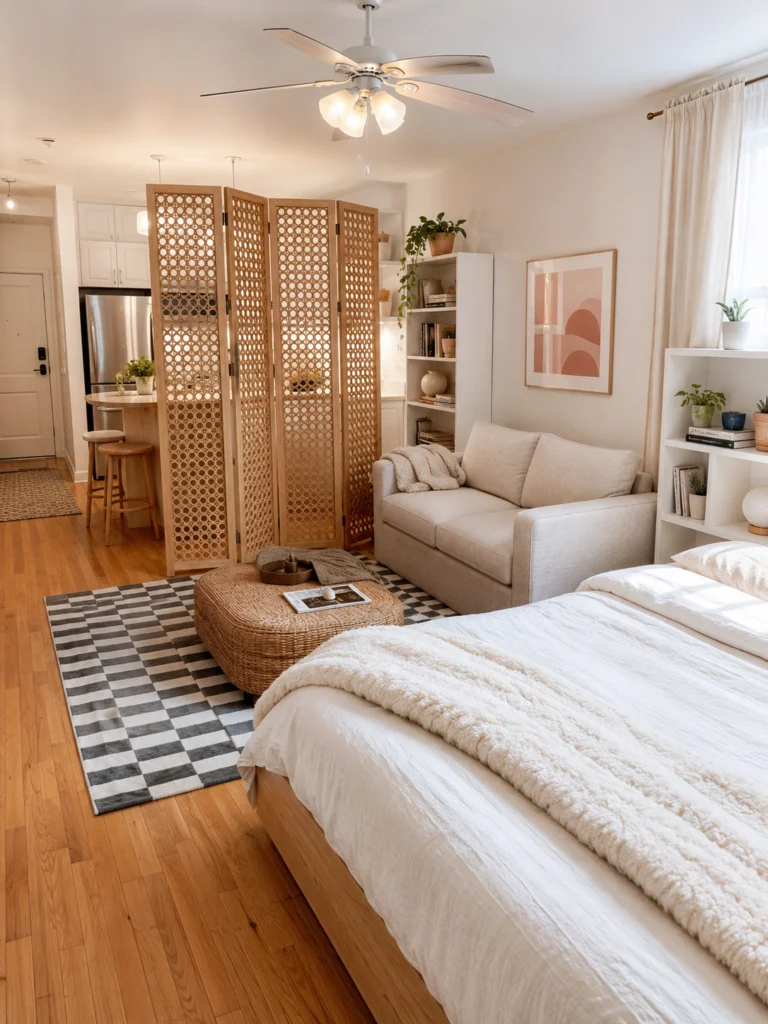
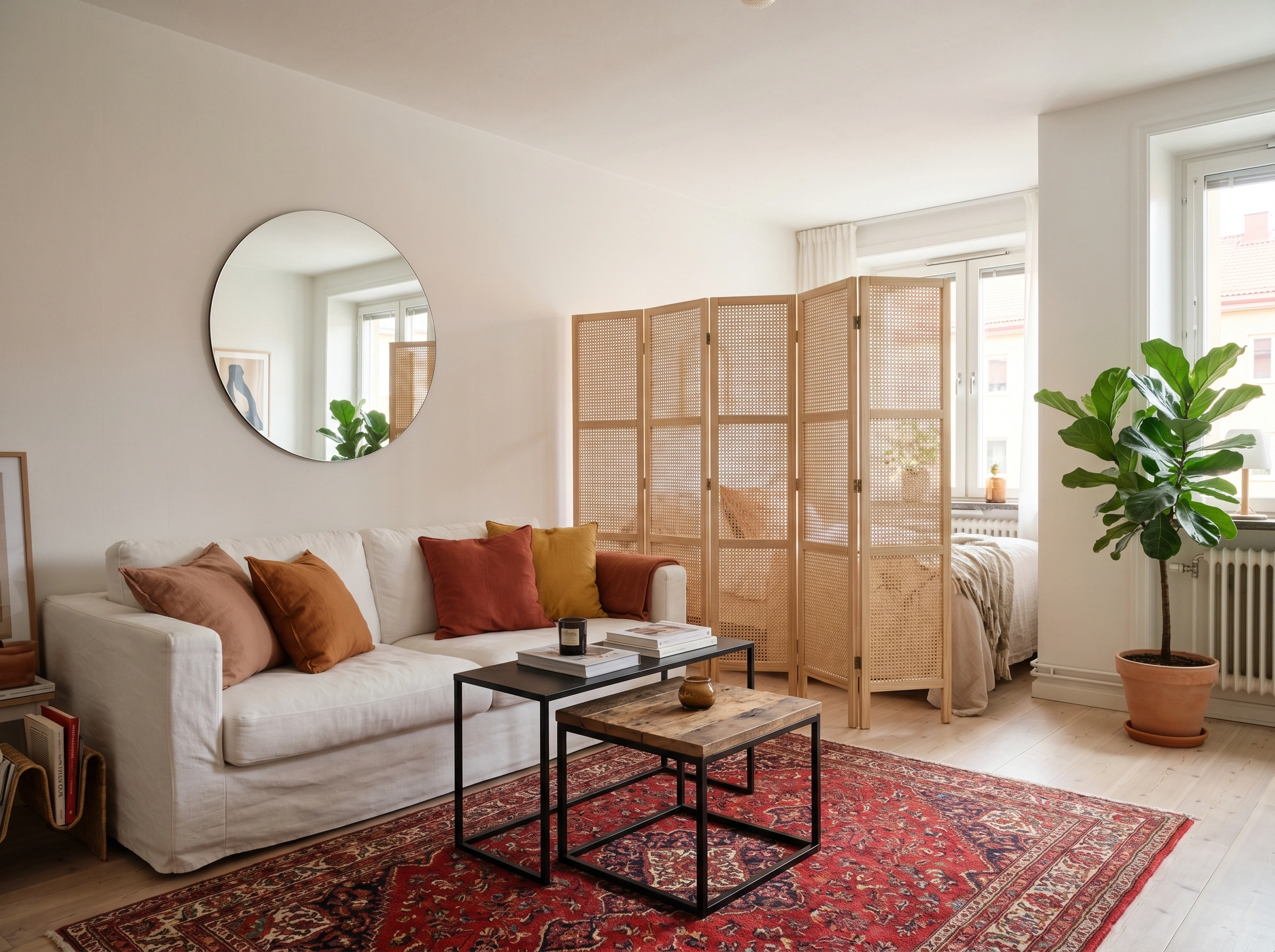
Five panels of warm rattan with circle cutouts — this divider is doing heavy lifting. It blocks the direct sightline from the bed to the kitchen without shutting down the airflow or light. The living area on the right side feels intentional and complete: a cream linen sofa, a wicker ottoman, white shelving styled with plants, a framed pink-toned print. The checkered rug ties the zones together. When your studio is essentially one long corridor, a wide multi-panel divider like this gives every zone its own identity.
Save vs. splurge: The rattan screen — splurge slightly. The styling behind it — all budget finds work.
7. The Two-Panel Cane Divider for a Work-From-Home Setup
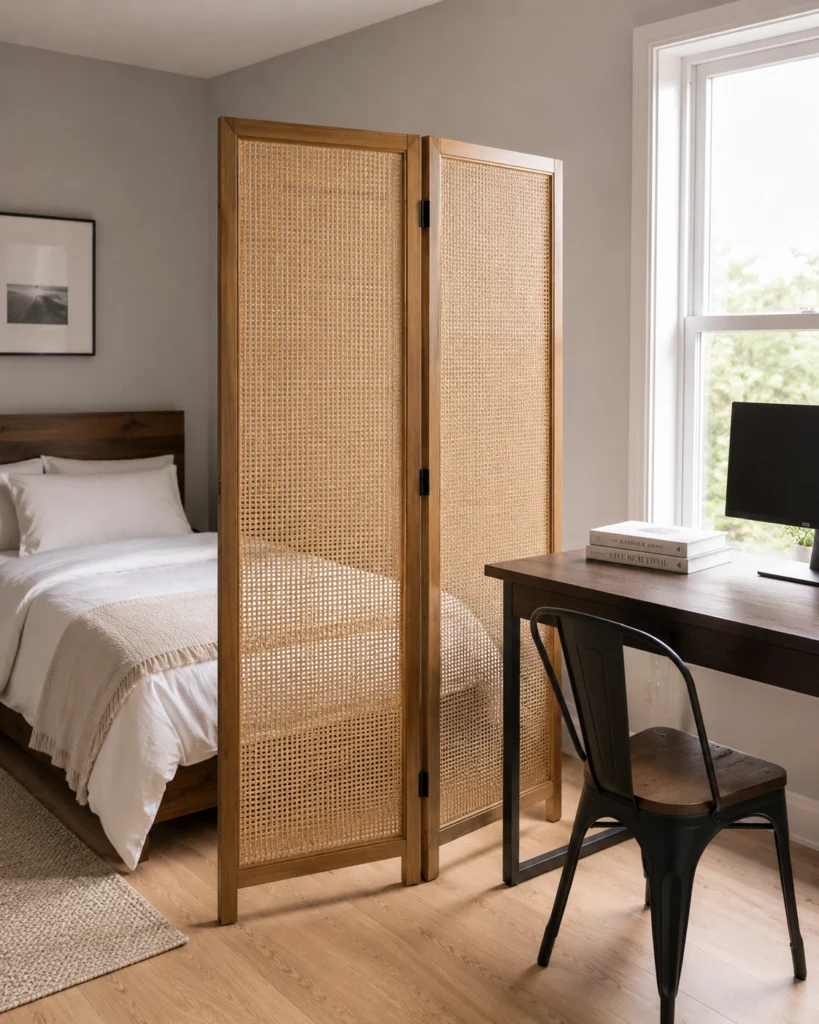
Sometimes you don’t need a lot of panels — just two will do. This walnut-framed, two-panel cane divider sits right between the bed and the desk, and the visual separation it creates is surprisingly strong. The desk zone feels focused. The bed zone feels like rest. Both feel calm. The industrial metal chair next to the warm wood desk is a nice counterpoint, and the natural light from the window makes the whole setup feel airy rather than cramped.
Sofia’s honest take: Two panels are enough if you position them thoughtfully. You’re zoning, not building a wall.
8. The Classic Cane-and-Linen Combo in a Bright Studio
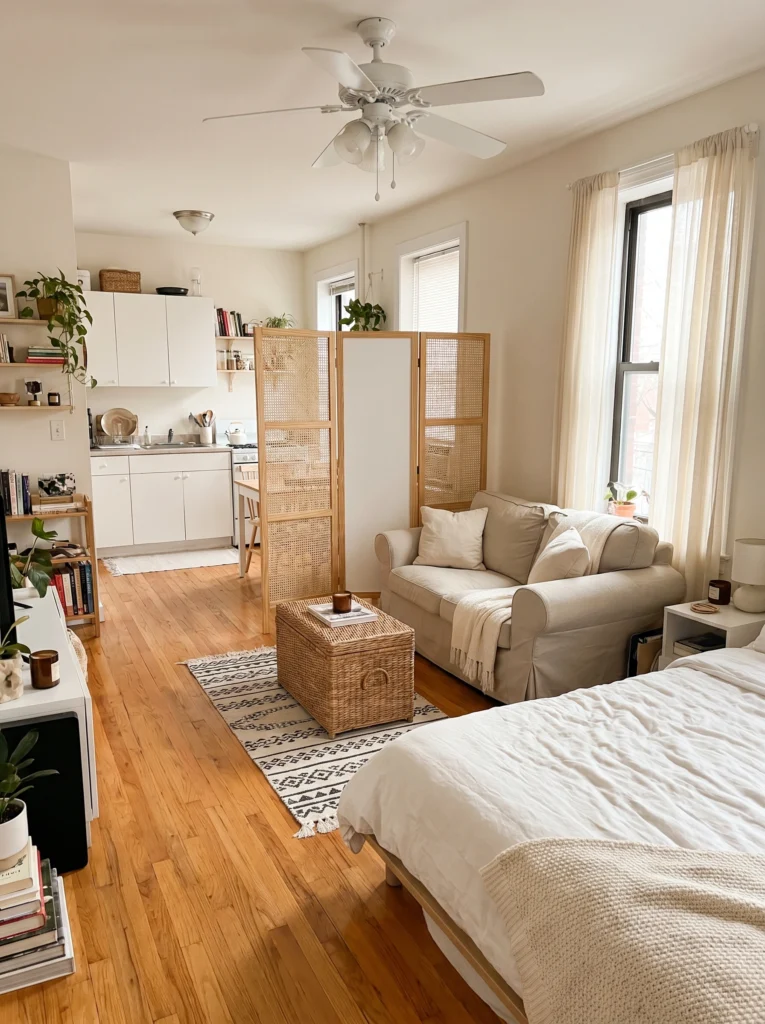
This divider has an interesting detail: alternating cane and solid linen panels. The result is a mix of transparency and privacy — some areas let light through, others block the kitchen view. It’s a clever choice for studios where you want partial separation without going fully opaque. The cream sofa, wicker storage ottoman, and sheer curtains keep the palette consistent and calm. A woven rug under the living zone finishes the look. This is a studio that knows exactly what it’s doing.
Pro tip: Mixed-panel dividers (part cane, part solid) give you more control over privacy without sacrificing light.
9. The All-White Moroccan Screen in a Bright Apartment
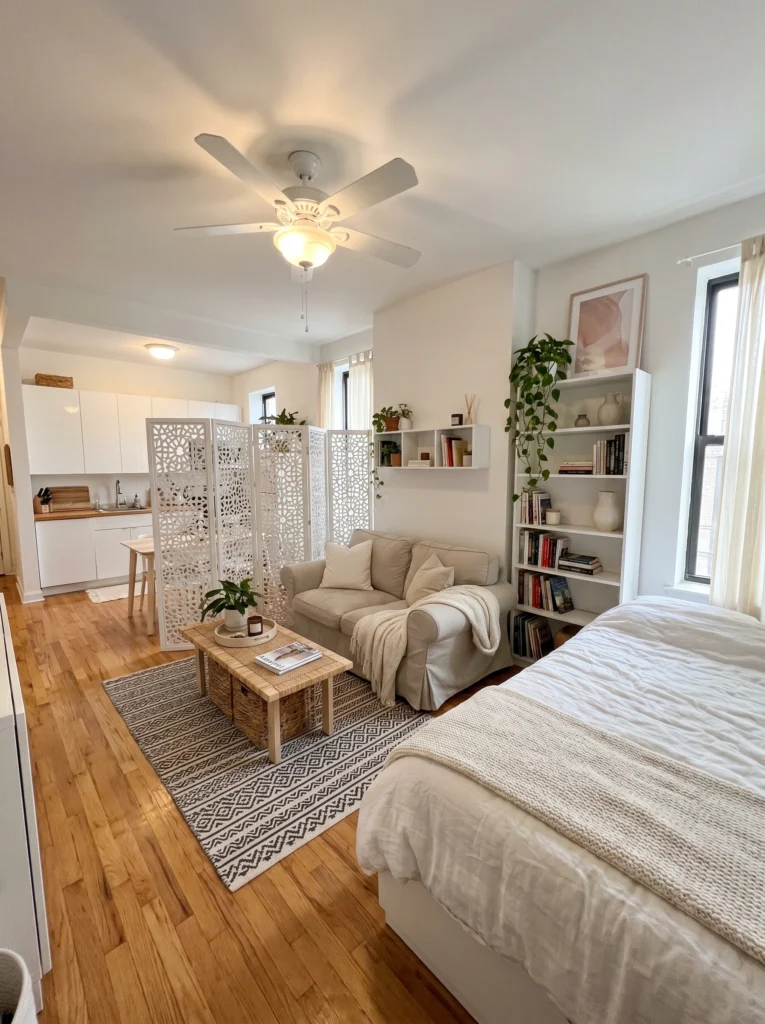
An all-white studio with a white Moroccan-cutout divider — this one commits to the look completely and it pays off. The geometric screen blends into the walls just enough to keep things airy, while the cutout pattern adds texture without visual weight. The living area has a cream sofa, a rattan-top coffee table with basket storage underneath, and a well-styled tall bookshelf. Plants everywhere — on the shelf, on ledges, trailing from the bookcase. It feels lived-in and intentional at the same time.
Budget vs. splurge: White laser-cut screens are widely available at budget-friendly prices. The plants cost more long-term than the divider.
10. The Scandinavian Studio With a Two-Panel Rattan and Reading Corner
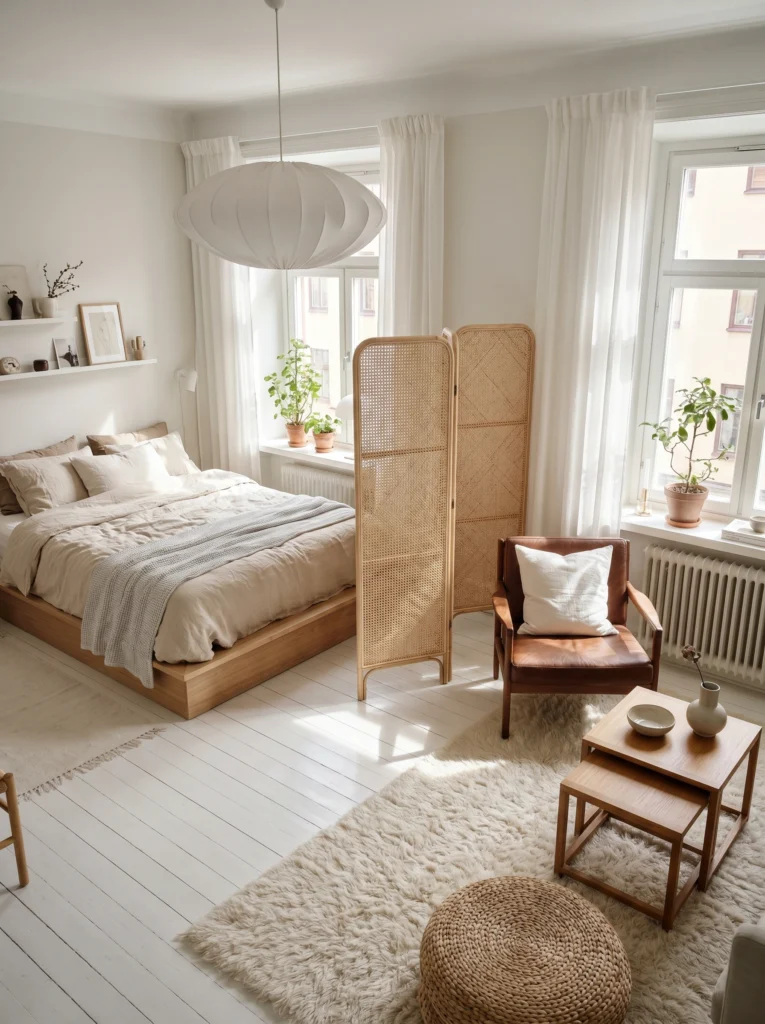
This Scandinavian studio takes a quieter approach: just two slender rattan panels placed between the bed platform and a leather armchair reading nook. The divider isn’t trying to block anything dramatically — it’s just creating a visual pause. A large fluffy white area rug, a sculptural pendant light, sheer floor-length curtains, and potted plants on every sill make the room feel expansive rather than divided. Sometimes the most effective room divider is one that almost disappears into the scene.
Pro tip: A two-panel divider works beautifully when paired with a reading chair — it gives the corner a sense of enclosure and purpose.
11. The Arched Rattan With the Round Coffee Table Momentv
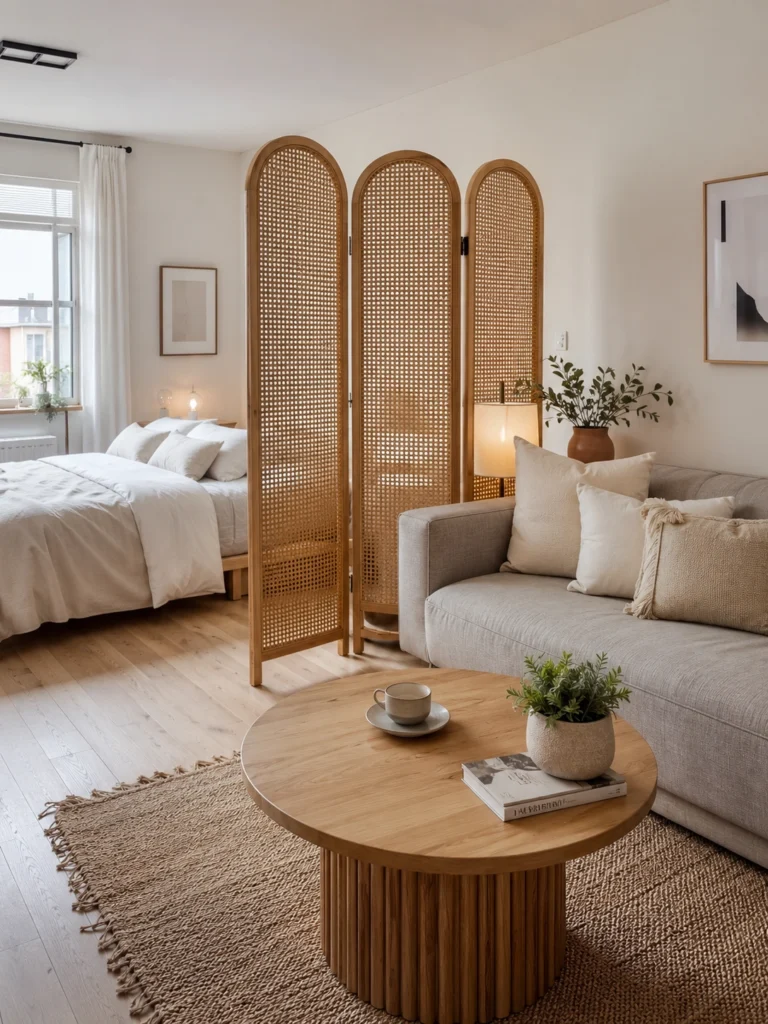
Three arched panels in natural rattan, a round fluted-base coffee table in warm oak, a gray linen sofa with textured throw pillows, and a warm lamp glowing just behind the screen — this studio has atmosphere. The lamp placement is especially smart: tucked behind the divider, it creates a soft backlit glow that makes the rattan panels look almost luminous in the evening. The jute rug underfoot anchors the living zone. It’s a simple setup that somehow feels genuinely cozy.
Pro tip: Place a lamp directly behind your rattan divider. The warm glow through the cane weave at night is stunning.
12. The White Lattice Screen Against a Warm-Toned Studio
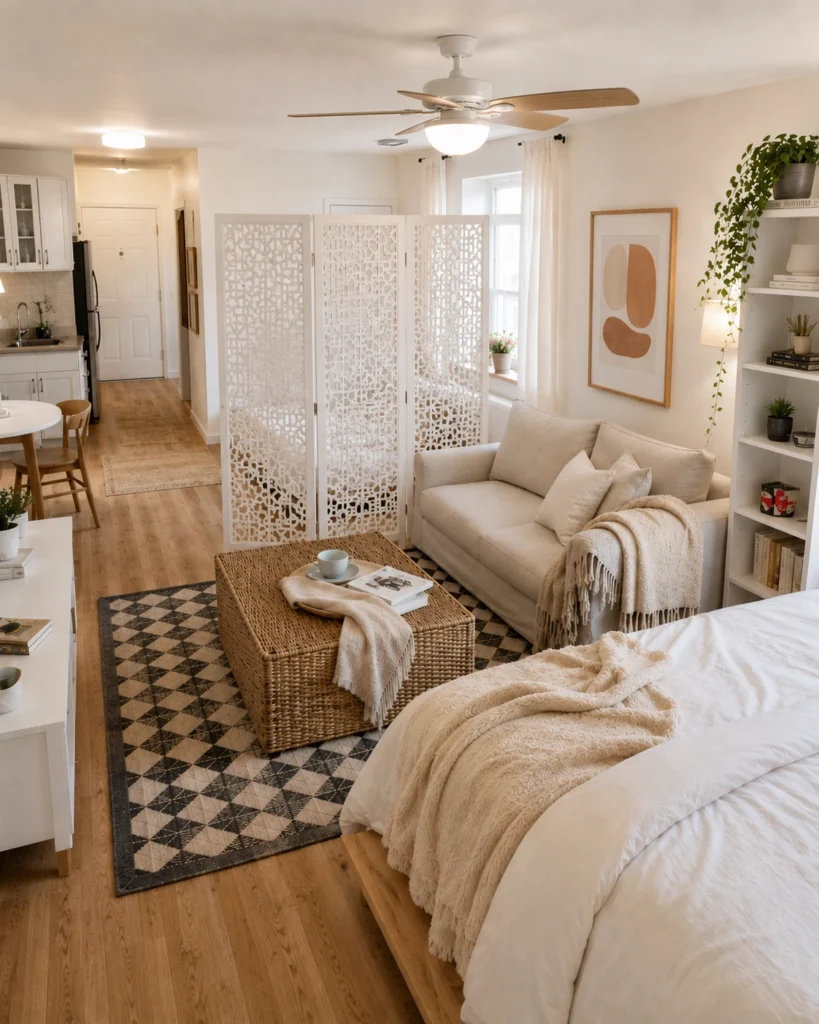
White lattice meets warm wood floors — the contrast here is doing a lot. The four-panel screen separates the kitchen from the living area in a long studio, and the intricate cut pattern means it looks like art even from a distance. Cream sofa, wicker storage ottoman, dark-and-cream diamond rug, a trailing pothos cascading from a high shelf — this room has personality from every angle. The warm framed print on the wall and the soft shelf lighting keep the space from feeling clinical despite all the white.
Renter-friendly alternative: White lattice screens are freestanding — no installation, no deposit risk.
13. The Minimal Walnut Cane Divider for a Work-From-Home Studio
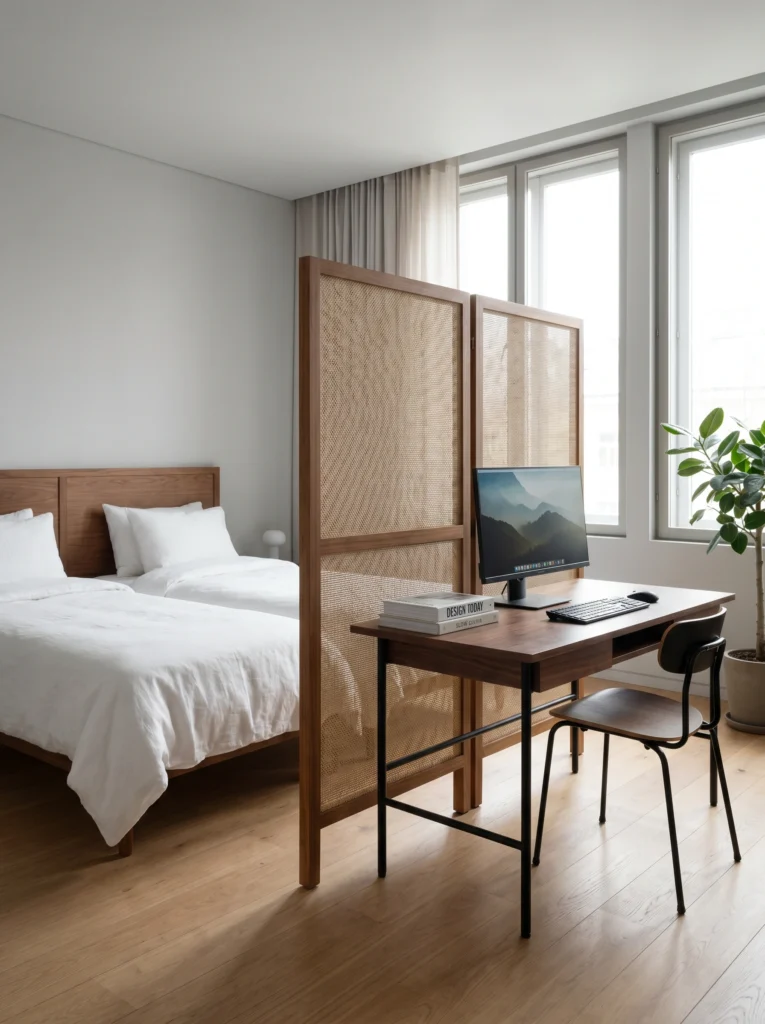
Clean lines, dark walnut, white bedding, a monitor setup that means business. This is the studio apartment of someone who works from home and refuses to let it feel like they never left the office. The two-panel cane divider in rich walnut wood creates a clear boundary between sleep and work — and that psychological separation matters more than people realize. A rubber plant in the corner, sheer curtains for soft light, and zero clutter. Sometimes the most effective design choice is the most restrained one.
Sofia’s honest take: If you work from home in a studio, a divider between your bed and your desk isn’t a luxury — it’s a mental health necessity.
Final Thoughts
A folding room divider is one of the most versatile, renter-friendly, high-impact things you can add to a studio apartment. No holes in the wall, no landlord approval, no contractor. Just a screen, a bit of intention, and suddenly your single room feels like it has actual zones — a place to sleep, a place to live, a place to work. The style options are genuinely endless, from arched rattan to bold black lattice to delicate white Moroccan cutouts.
Pick the one that matches your space and your vibe. You don’t need to do all thirteen. Just one, placed right, makes the whole apartment feel different.
A studio apartment isn’t a limitation — it’s just a room waiting for a little structure. Start with a screen.
Happy decorating, Sofia