12 Tiny Studio Apartment Organization Hacks for Busy Single Parents
Raising a kid in a studio apartment is its own kind of marathon. You’re cooking, sleeping, working, and refereeing toy meltdowns inside the same four walls — and by Tuesday, the place looks like a laundry tornado hit it. Here’s the thing: you don’t need a bigger apartment. You need a smarter one. These twelve hacks come from real studios lived in by real parents, and they all start with one truth — small spaces reward people who think in inches, not square feet.
1 Use a Large Rug to Define Zones
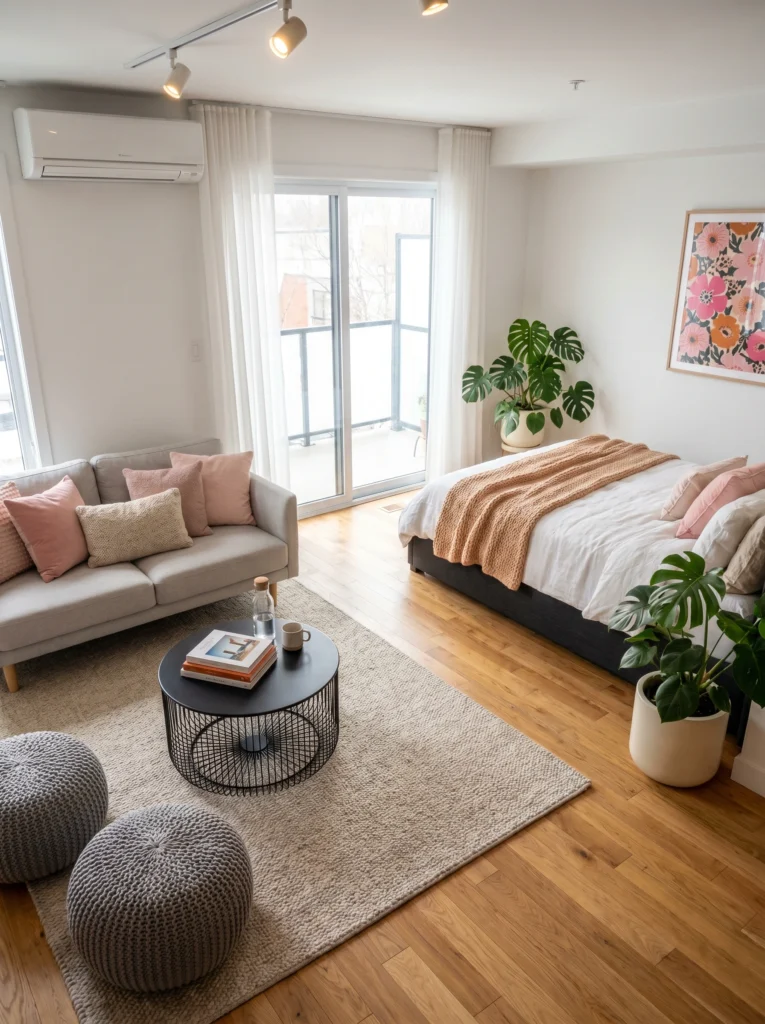
One of the fastest wins in a studio? A rug. When sofa, bed, and dining all share one room, a well-placed rug under your living area instantly tells the eye: this is a separate zone. It doesn’t need to be expensive — a neutral jute rug from IKEA or Ruggable does the job. Just make sure it’s large enough that at least the front legs of your sofa sit on it.
Pro tip: Two smaller rugs — one under the sofa, one at the bedside — define two zones without cluttering the floor.
2 Use an Ottoman Instead of a Coffee Table
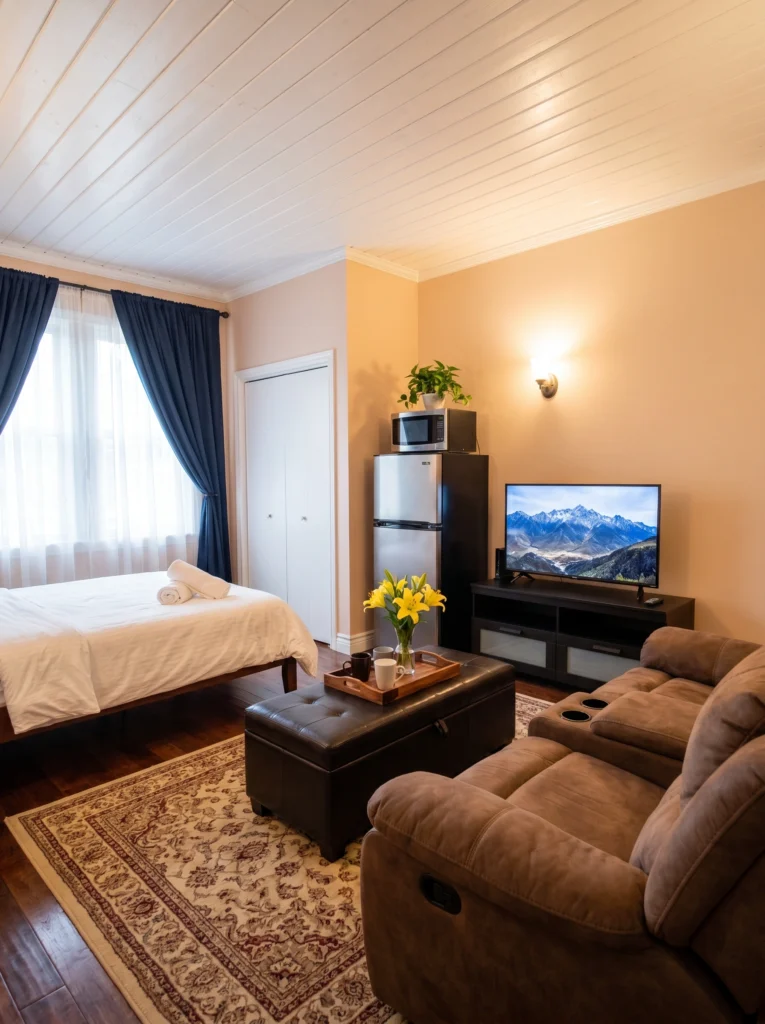
When you’re juggling kids, work, and a tiny studio, every piece of furniture needs to do double duty. A tufted storage ottoman is a coffee table, extra seating, and toy/blanket storage in one footprint. Place a wooden serving tray on top and it looks intentional, not makeshift. The one in this room holds a breakfast setup and flowers — proof that practical doesn’t have to feel boring.
Sofia’s honest take: This is the single furniture swap I recommend to every single parent in a small space. Get it.
3 Carve Out a Real Workspace
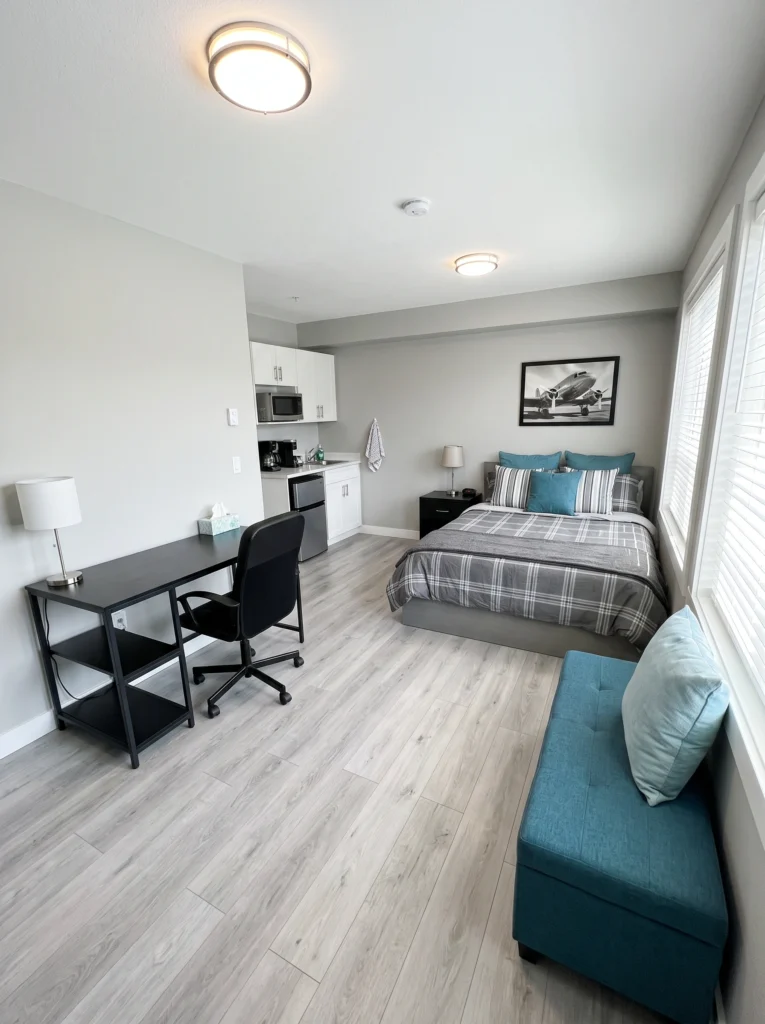
Working from home in a studio is tough when there’s no dedicated office. The solution: a slim desk against a wall, a proper chair, and a task lamp. That’s it. This keeps work physically separated from the bed, which matters for focus and mental rest. Choose a desk with open shelves underneath for paper, craft supplies, or a basket of kids’ school stuff.
My tip: Clip a small tension rod under the desk shelf to hang a fabric panel — instant privacy screen that folds away.
4 Add a Small Round Dining Table
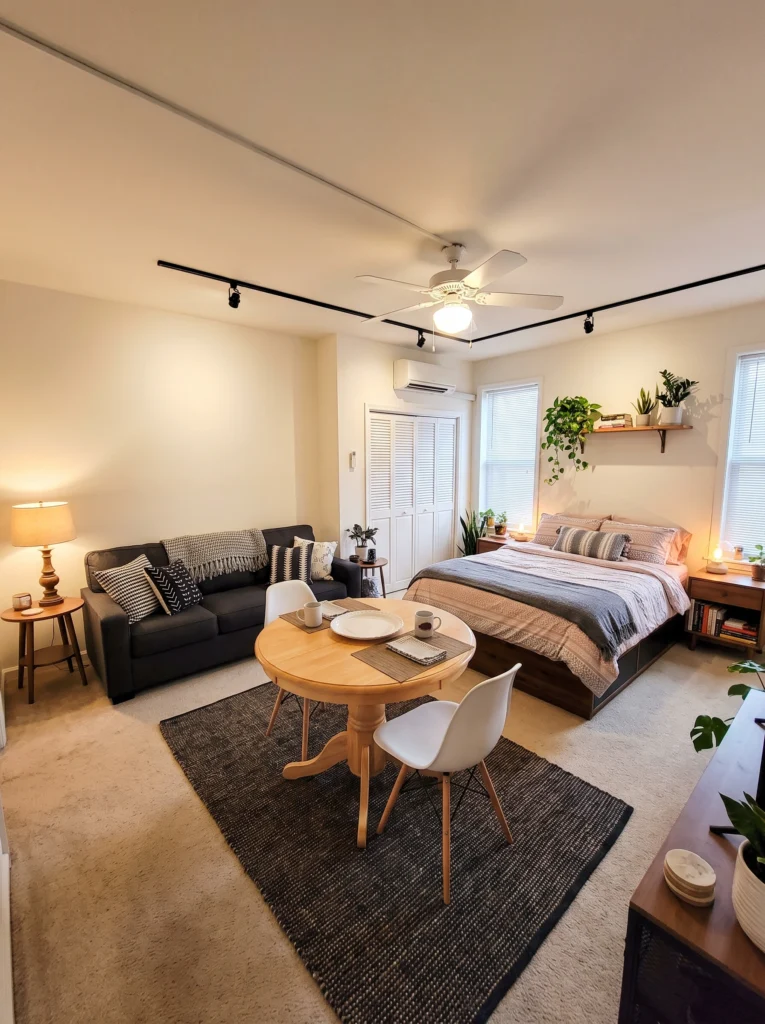
Eating on the couch every night isn’t great for kids or for you. A compact round table — 32 inches fits two chairs comfortably — gives your family a spot to eat, do homework, and talk. Round tables are ideal here because there are no sharp corners and they take up less visual space than rectangular ones. Tuck it between the sofa and bed zone, just like this cozy room does.
Renter-friendly alternative: Look for pedestal-base bistro tables — they fold flat against a wall when not in use.
5 Use Floor-Length Curtains as Zone Dividers
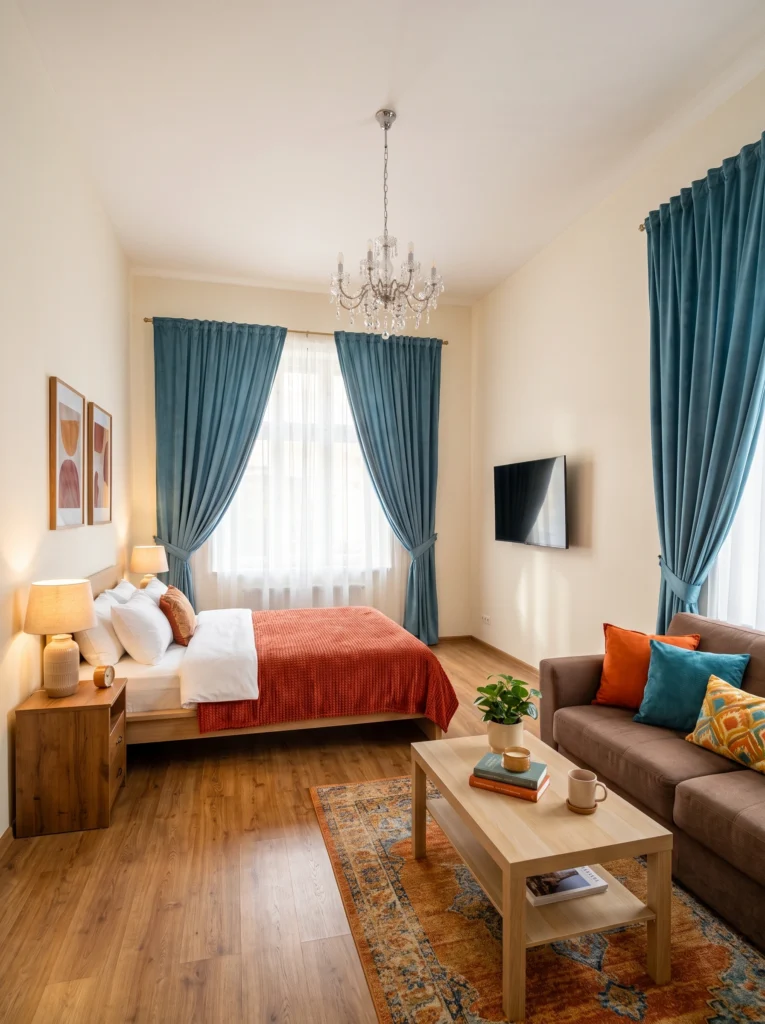
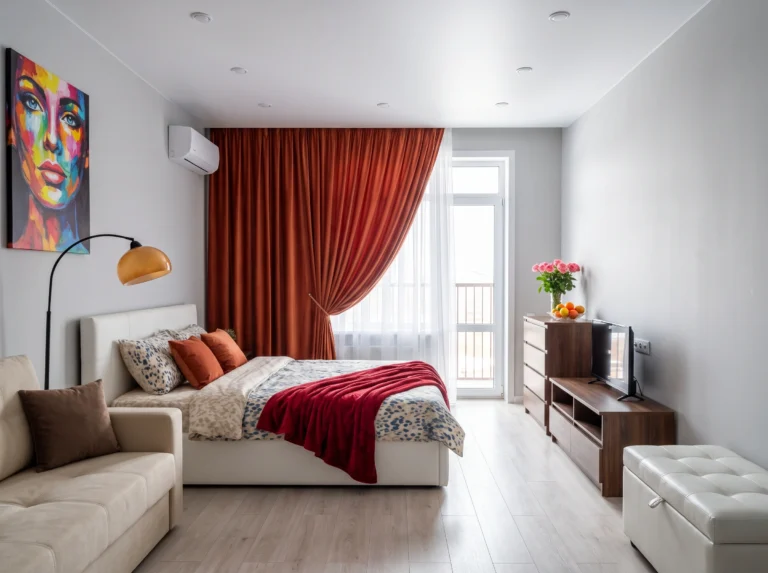
Curtains aren’t just for windows. Hanging floor-to-ceiling panels on a ceiling-mounted rod is one of the most affordable ways to separate your sleep zone from the rest of the studio. Teal velvet curtains like these add serious style while absorbing sound — helpful when you’re trying to get kids to sleep. Pull them back during the day and your space feels completely open again.
Budget vs. splurge: Save on curtain panels. Splurge on a quality ceiling track that glides smoothly and doesn’t sag.
6 Let Color Do the Organizing
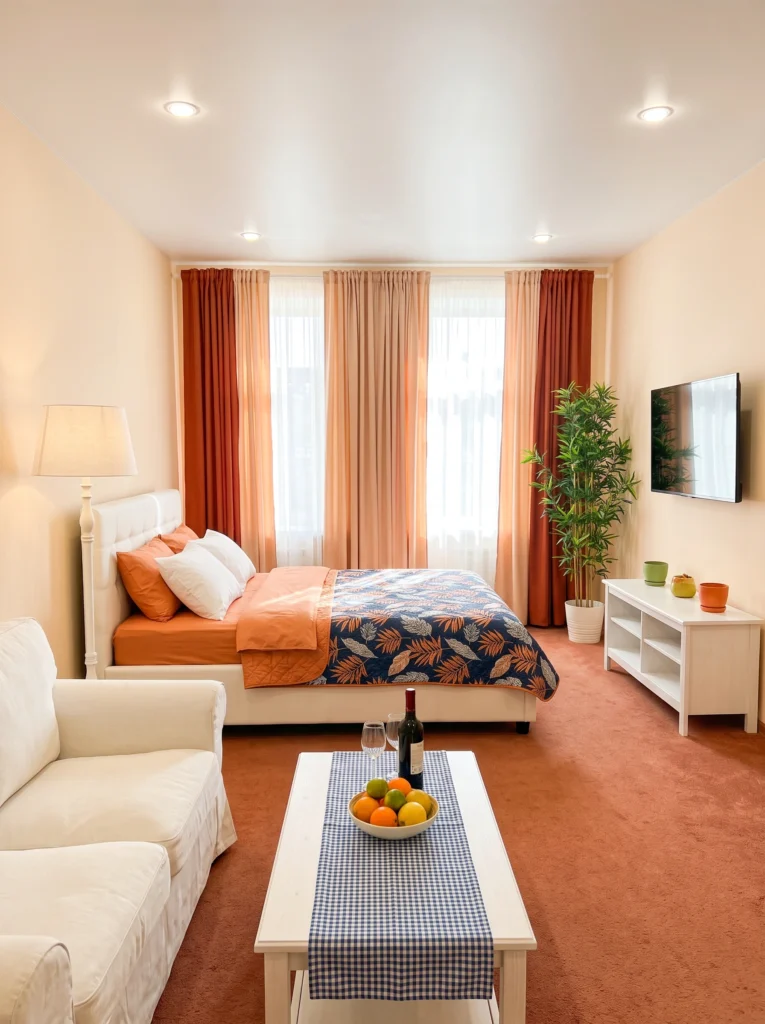
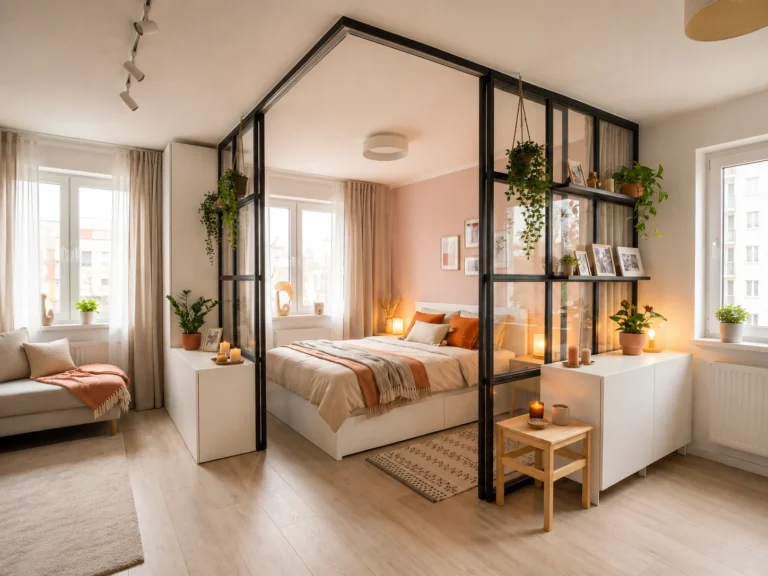
In a studio with no walls, color becomes your floor plan. This room pulls it off brilliantly: the warm orange palette in the bed area creates a visual boundary without any furniture dividing the zones. Even renters can achieve this with bedding, throw pillows, and a matching rug. Choose one accent color per zone and stick to it — your eye will start reading each area as a separate room.
I’ve tested this: Warm tones for the sleep zone, cool tones for the living area — works especially well in rectangular studios.
7 Use Open Shelving as a Room Divider
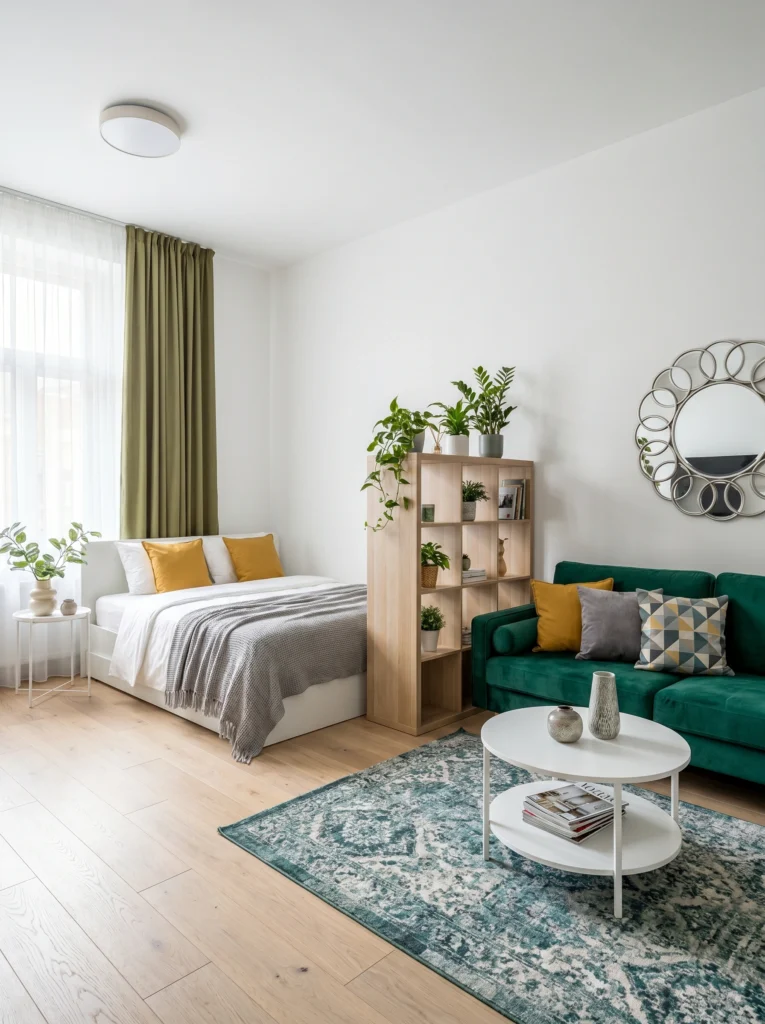
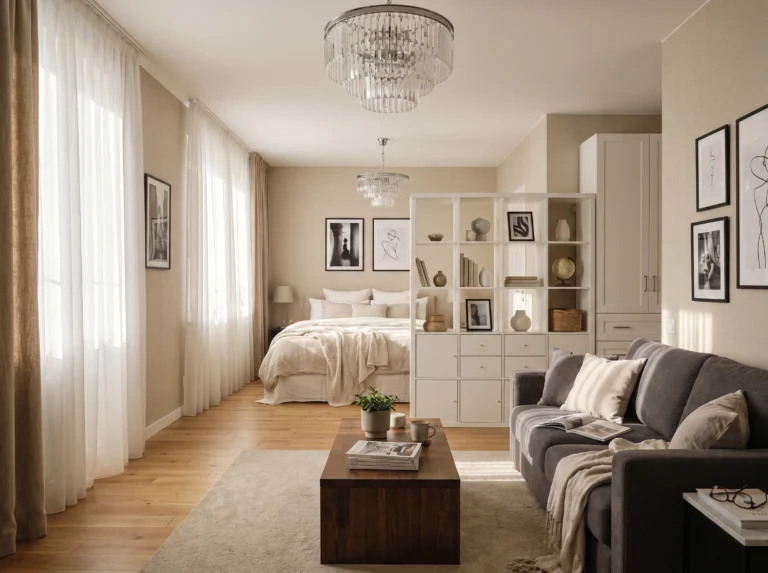
A freestanding open bookshelf — the IKEA KALLAX is the classic — does three things at once: divides sleep from living space, displays plants and books, and adds storage. This studio nails it with a light wood unit topped with trailing pothos. The open design lets light pass through so the space never feels chopped up. For a parent, the lower cubbies hold kids’ baskets and school bags perfectly.
Don’t waste your money on: Folding room divider screens. They tip, wobble, and hold nothing. A shelving unit is the smarter buy.
8 Create an Accent Wall Behind the Bed
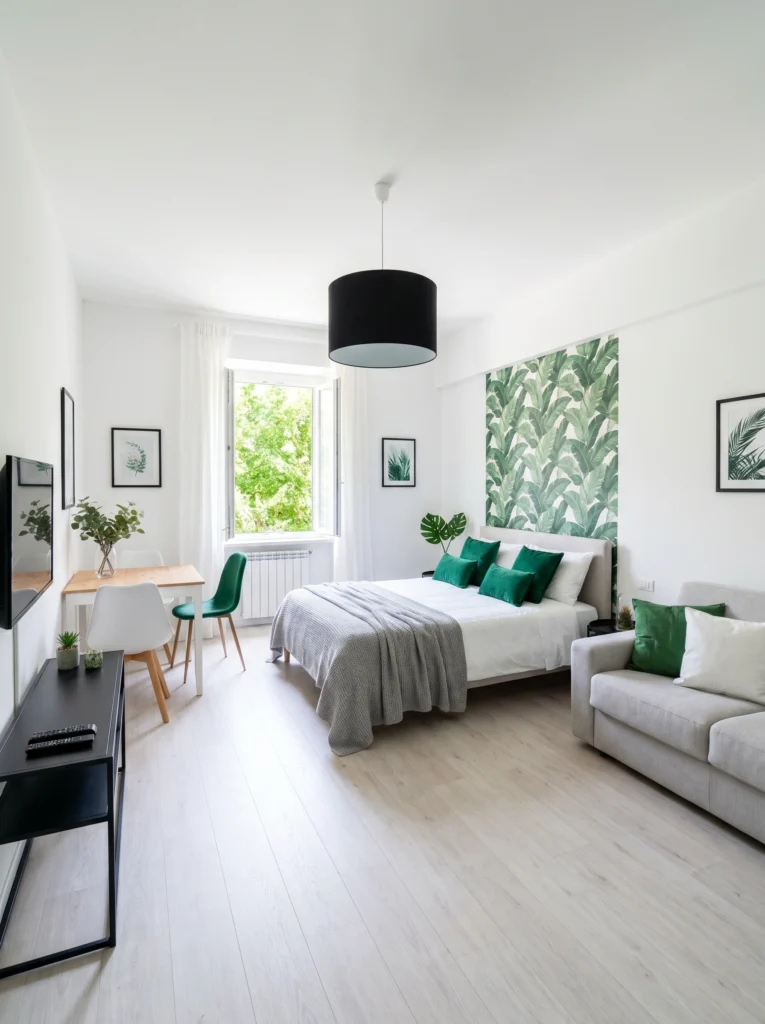
When a studio is all-white, your eye doesn’t know where to land — and the space feels chaotic. A botanical wallpaper panel behind the bed, like this one, signals: this is the sleep zone. It anchors the bed visually and brings calm to the whole room. Peel-and-stick versions are completely renter-safe and go up solo in under an hour. No landlord permission needed.
My favorite: Chasing Paper and Tempaper make gorgeous peel-and-stick designs under $150 for a panel this size.
9 Anchor the Room With Art and Greenery
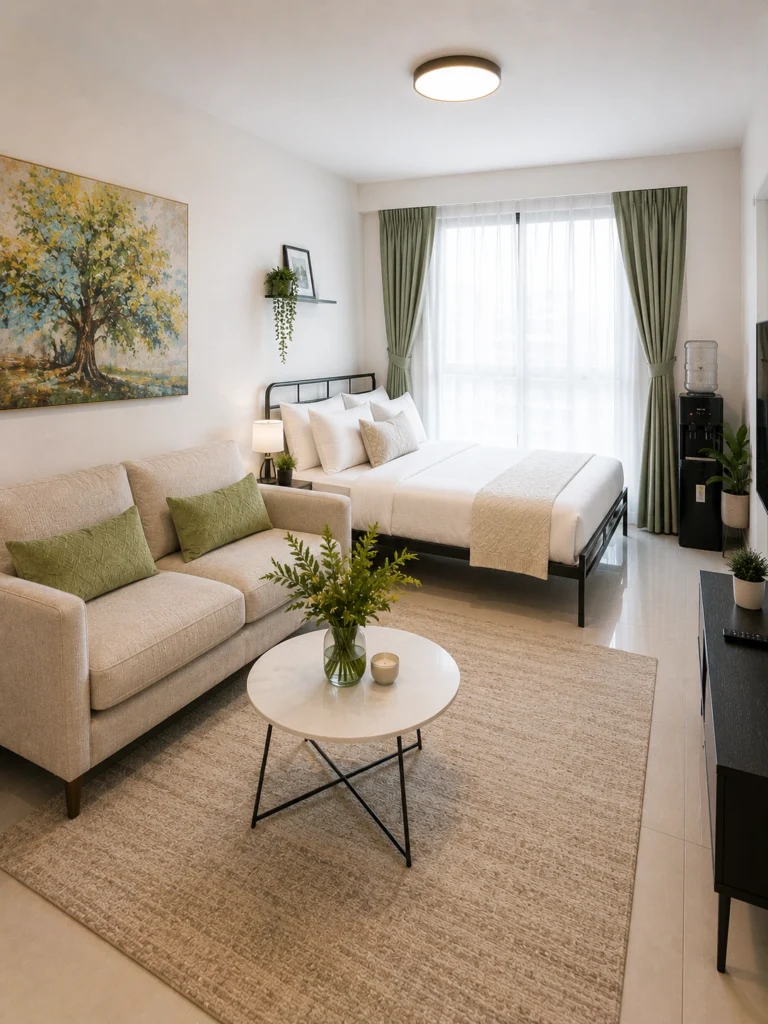
Large-scale artwork and a few real plants are underrated organizational tools. When your eye has intentional anchor points — a big canvas, a trailing pothos on a shelf — the space reads as curated, not cramped. This warm, sage-toned studio feels genuinely serene because every element points back to the same calm palette. For busy parents, a visual anchor reduces that overwhelmed feeling the moment you walk through the door.
My tip: One large print beats five small ones every time. Go big, and build the rest of the room around it.
10. Start by Seeing Your Space Honestly
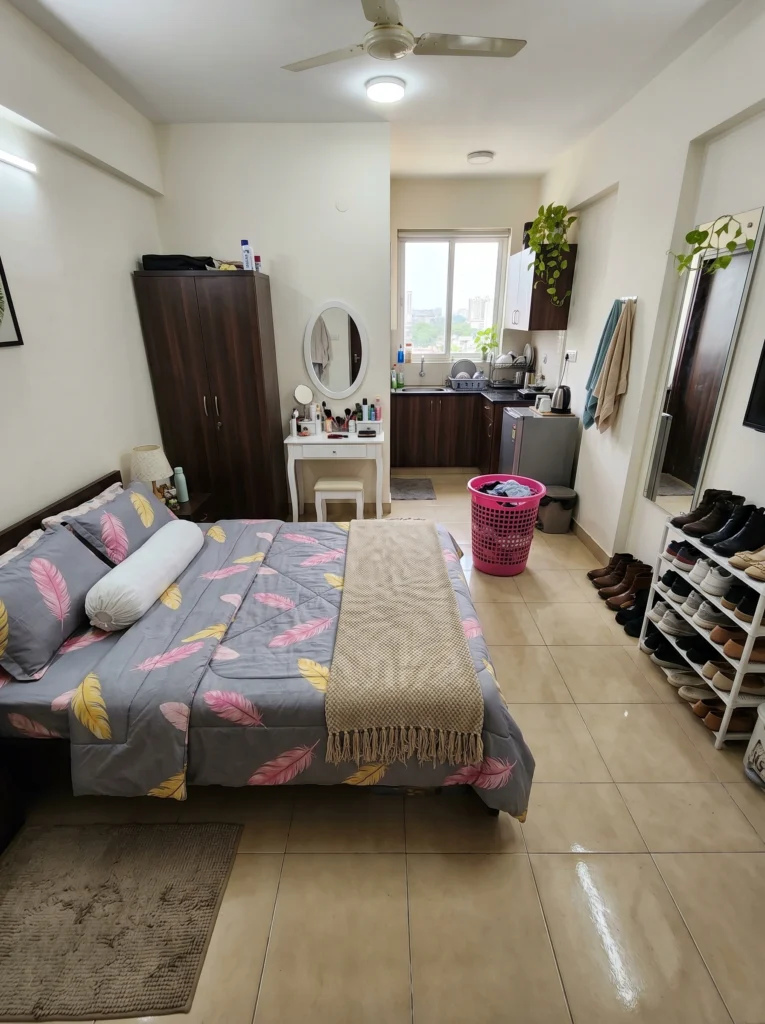
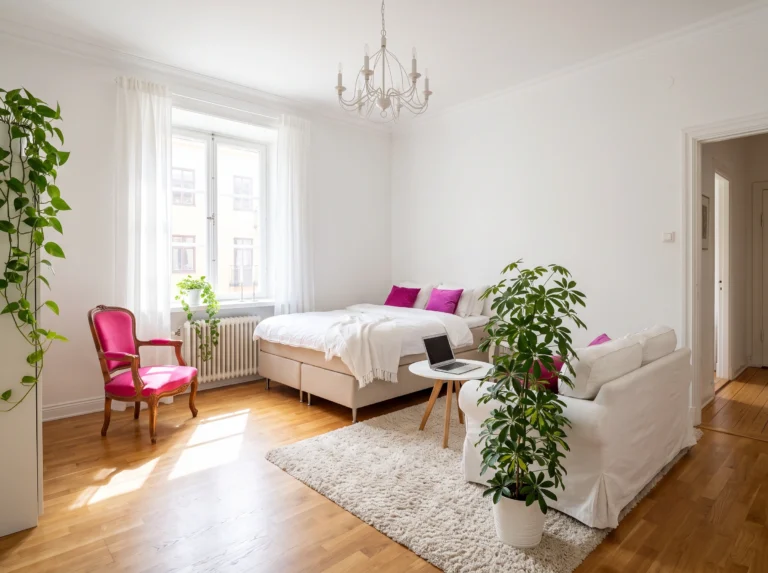
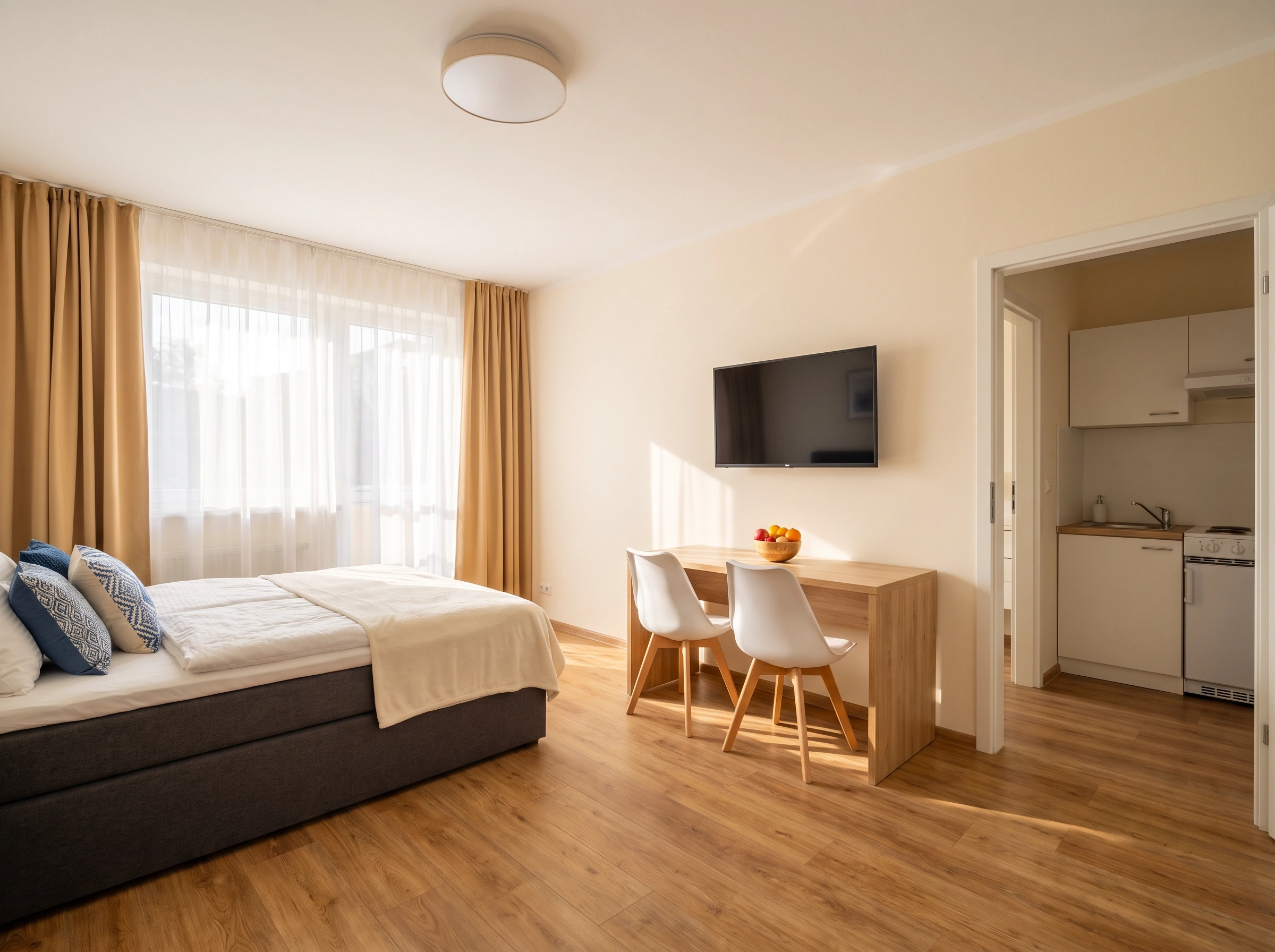
Before you buy a single basket, just stand in the doorway and look. Really look. This is what most studios actually look like on a Wednesday — bed slightly unmade, shoes lined up, a laundry basket in the middle of everything. And that’s fine. The goal isn’t a magazine spread. It’s noticing where the friction is. Where do you stub your toe every morning? Where does the kid’s stuff always end up?
Pro tip: Take a phone photo of your space. You’ll spot problems in the picture you’ve stopped seeing in person.
11. Zone the Room Into Job Stations
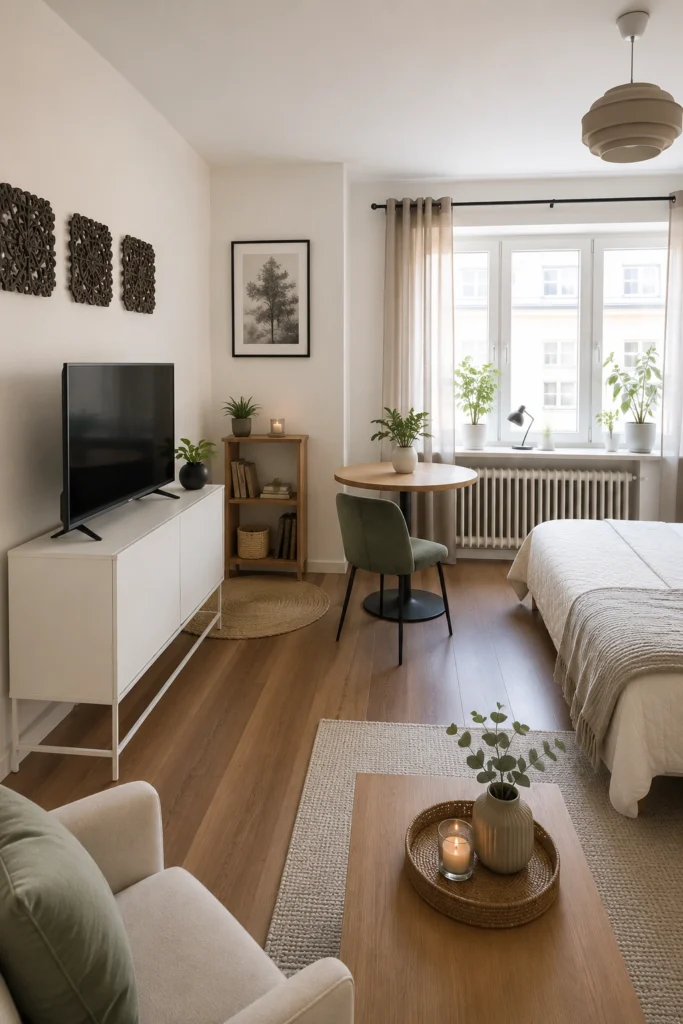
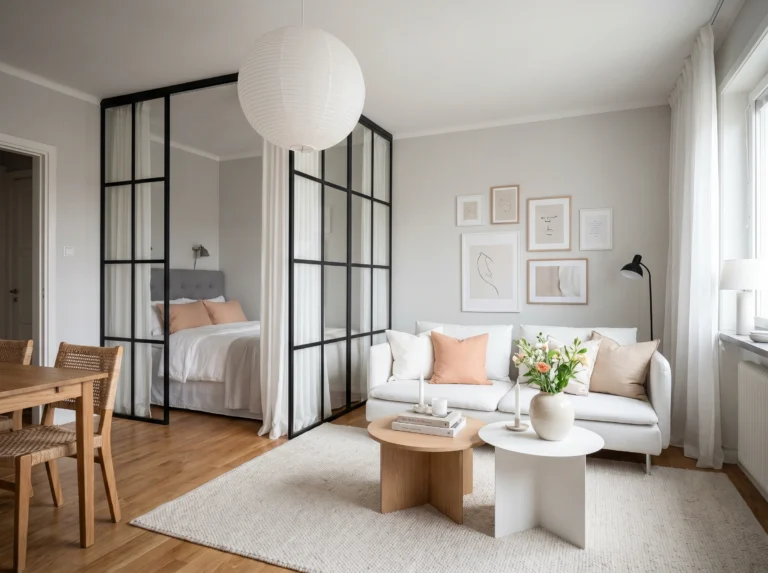
When one room does everything, your brain never gets to switch off. Fix that by giving each corner a job. One wall is the TV-and-lounge zone. One window gets the dining table. The bed lives in its own pocket. You’re not building walls — you’re using a rug, a console, or even a tall plant to draw invisible lines.
This is the part most people skip, and it’s exactly why their studio feels chaotic. Zoning is free, takes one afternoon, and instantly makes the room feel three times bigger.
12. Use a Shelf as a Room Divider
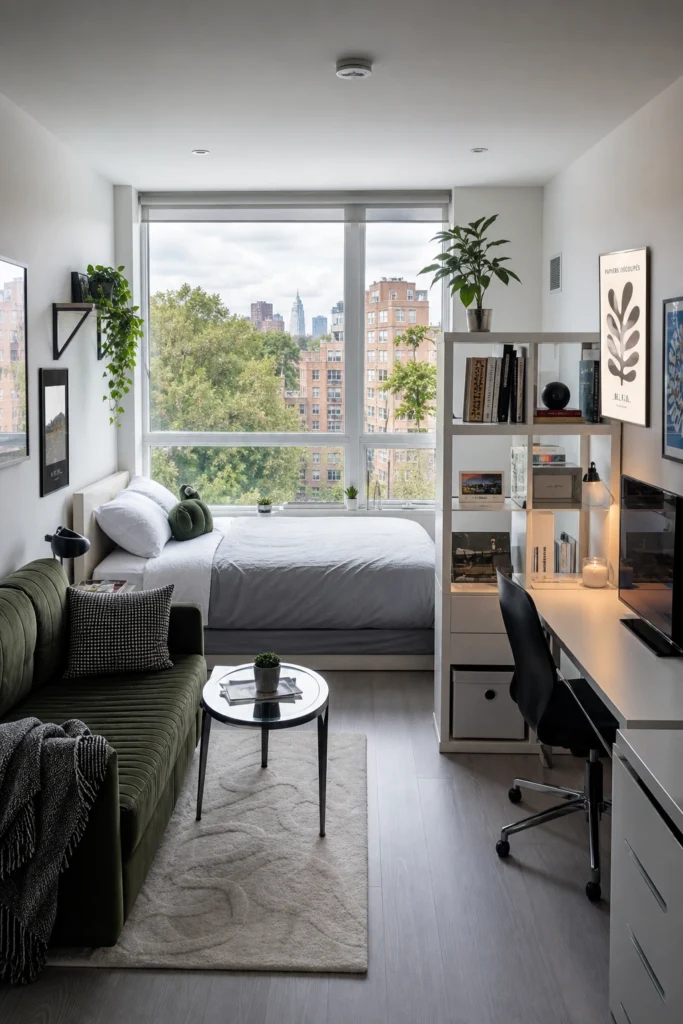
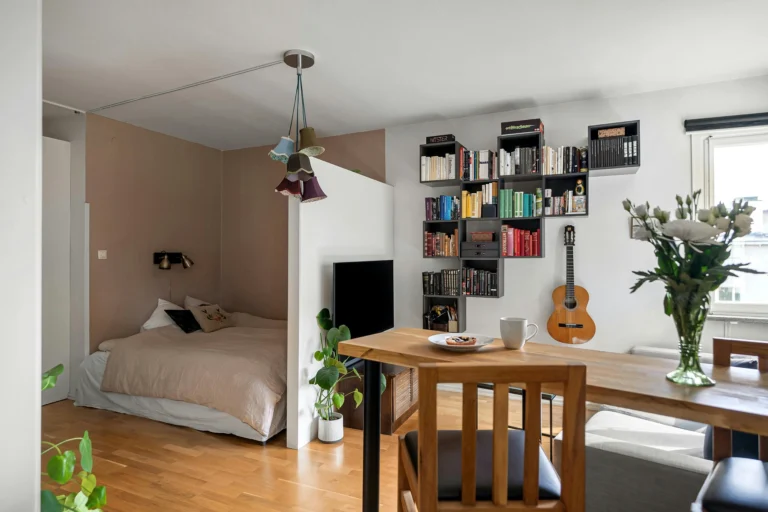
If you can’t have walls, fake them. An open shelf placed perpendicular to the wall gives you two rooms in one — bedroom on one side, work area on the other. The key word is open. A solid wall of shelving will make the room feel chopped up. Open shelving lets light pass through and keeps both sides connected. Style it from both sides — books, a plant, a framed photo.
My tip: Anchor it to the wall or ceiling if you have a curious toddler. A climbing kid plus a tall bookshelf is a story you don’t want to write.
Final Thoughts
A small apartment isn’t a downgrade. It’s a discipline — and once you get the rhythm of it, it can actually be the calmest, coziest home you’ve ever had. You don’t need more space. You need less stuff, better zones, and ten minutes a night. Pick one hack from this list and try it tonight. Just one. The rest will follow on their own.
Your home doesn’t need to be bigger — it just needs to work for the life you’re actually living in it.
Happy decorating, — Sofia